World Cup Group K Scenarios: Qualification Paths Explained
To qualify from World Cup 2026 Group K, the top two teams advance automatically. The third-place team can also advance if it finishes among the eight best third-placed teams across all 12 groups. For Portugal and Colombia, the target is straightforward: win and you’re in. For DR Congo and Uzbekistan, the battle for third place is a viable path, but it demands at least a win and a draw, coupled with a healthy goal difference.
Most analysis stops at the four-point safety net. They ignore the travel. Finishing first or second in Group K sends you to a specific knockout bracket with a known first opponent and a mapped route through North America. Finishing third is a lottery—you could play your Round of 32 match in Los Angeles one day and be headed to Toronto for the next round. That logistical chaos changes how managers approach the final group match.
This guide breaks down every realistic scenario for Portugal, Colombia, DR Congo, and Uzbekistan. We will map the points needed, the tiebreakers that will decide it, and the concrete knockout opponents waiting for each finishing position.
Key Takeaways
- Finishing third in a group is no longer an exit ticket. Eight of the twelve third-place teams advance.
- Goal difference is the primary tiebreaker and the single most important metric for any team aiming for third.
- The Group K winner avoids the Group L runner-up (likely England or Croatia) and gets a theoretically easier path.
- The final match between DR Congo and Uzbekistan on June 27 is essentially a playoff for a potential knockout spot.
- Portugal vs. Colombia on June 27 will likely decide first place, but a draw could complicate Colombia’s path if goal difference slips.
The 2026 Format Changes Everything
Forget the old 32-team World Cup math. The 2026 tournament with 48 teams splits teams into twelve groups of four. The top two from each group—24 teams—advance to the Round of 32. That is the simple part.
The complexity, and the opportunity, lies in the eight additional spots. These go to the best third-placed teams across all groups. Your team can lose two matches, finish third, and still make the knockout stage. This fundamentally alters strategy, especially for the underdogs.
The 2026 FIFA World Cup qualification system awards advancement to the top two teams in each of the 12 groups, plus the eight best third-placed teams based on points, then goal difference, then goals scored. This marks a significant departure from previous 32-team formats where third place almost always meant elimination.
The new system makes every goal matter. A 1-0 loss is better than a 3-0 loss. A 2-2 draw is more valuable than a 0-0 draw. Coaches in tight groups will be doing mental arithmetic from the first whistle, because the difference between a minus-one and a minus-three goal difference could be the difference between a flight home or a flight to the next host city.
TL;DR: Third place can still qualify. Every goal scored or conceded directly impacts your chances of being one of the eight best third-place teams.
Group K Teams: Strengths, Weaknesses, and Scenarios
Portugal enters as the heavy favorite. Their squad depth and the attacking threat of players like Cristiano Ronaldo and Rafael Leão make them the presumptive group winner. The real drama is for the other three spots.
Portugal: The Favorite’s Calculus
Portugal should win this group. Their opening match against DR Congo is a must-win to build goal difference. The match against Uzbekistan is where they can seal top spot. The final game against Colombia might be a dead rubber for Portugal if they have six points, allowing them to rotate.
The only real danger for Portugal is a shock loss or draw against DR Congo, which would throw the group into chaos. Barring that, their primary goal is to win the group. Finishing first means avoiding the Group L runner-up in the Round of 32.
Common mistake: Assuming Portugal will cruise and can afford to experiment. A rotated side against Colombia, if first place isn’t secure, risks dropping to second and a much harder knockout draw.
Colombia: The Likely Runner-Up
Colombia’s path is clear: beat Uzbekistan and DR Congo, then get a result against Portugal. Their opening match against Uzbekistan is critical. A win there sets them up for a showdown with Portugal where a draw might be enough for second place.
Their weakness, highlighted in recent friendlies, is a sometimes-fragile defense. Conceding early against Uzbekistan or DR Congo forces them to chase the game, which hurts goal difference. For Colombia, second place is the realistic target. That means their match against Portugal is their World Cup final within the group stage.
A deep run often depends on a solid defensive midfield structure to protect the back line, something manager Néstor Lorenzo will prioritize.
DR Congo vs. Uzbekistan: The Third-Place War
This is where the new format matters most. Both DR Congo and Uzbekistan will look at each other as their most likely source of points. Their head-to-head match on the final day could be a straight knockout for a chance at the last 32.
DR Congo returns to the World Cup for the first time in over 50 years. They are physical, organized, and will aim to frustrate Portugal and Colombia before targeting a win against Uzbekistan. A single point from their first two matches would be a massive success.
Uzbekistan is the tournament debutant. They are tactically disciplined but lack top-level experience. Their match against Colombia is a brutal introduction. Their entire campaign likely hinges on getting something from the DR Congo game.
For both, the target is third place with three points and a positive goal difference. Four points would be a dream and almost certainly see them through.
| Team | Primary Target | Realistic Points Goal | Key Match |
|---|---|---|---|
| Portugal | Win Group | 7-9 points | June 23 vs. Uzbekistan |
| Colombia | Secure 2nd Place | 6-7 points | June 27 vs. Portugal |
| DR Congo | 3rd Place (3+ pts) | 3-4 points | June 27 vs. Uzbekistan |
| Uzbekistan | 3rd Place (3+ pts) | 3 points | June 27 vs. DR Congo |
The Tiebreakers That Will Decide It
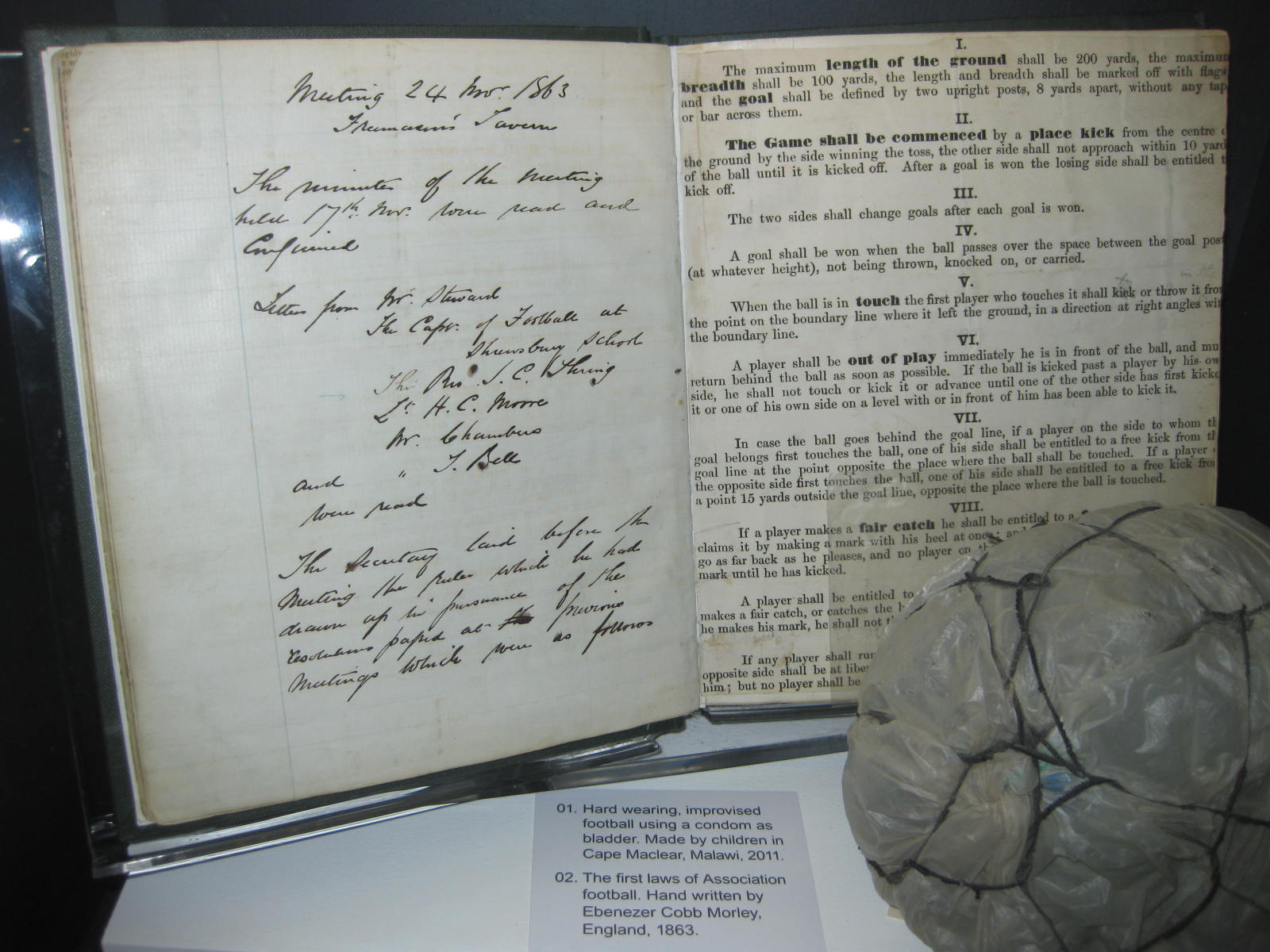
Photo: Adrian Roebuck / Wikimedia Commons / CC BY-SA 3.0

When teams finish level on points, the tie is not broken by who scored first or who had more possession. FIFA has a strict, mechanical order.
- Goal Difference: Total goals scored minus total goals conceded. This is king.
- Goals Scored: If goal difference is equal, the team that scored more goals finishes higher.
- Head-to-Head: The result between the tied teams. If more than two are tied, it becomes a mini-league.
- Fair Play Points: Yellow cards (-1 point), indirect red (-3 points), direct red (-4 points). Fewest negative points wins.
- Drawing of Lots: FIFA officials literally pull a name from a bowl.
Goal difference is the one you can control from the first minute. A team losing 1-0 in the 85th minute still has a huge incentive to push for a goal. That minus-one could be the difference between advancing and going home.
Consider a scenario where Colombia, DR Congo, and Uzbekistan all finish on four points. The head-to-head records between them would be calculated first. If that doesn’t separate them, it goes back to overall goal difference. This is why running up the score in a win matters, and why limiting a loss matters just as much.
The drama of tiebreaker scenarios is a staple of tournament football, and in a group this balanced, we are likely to see it.
Third-Place Math: Your Path to the Knockouts
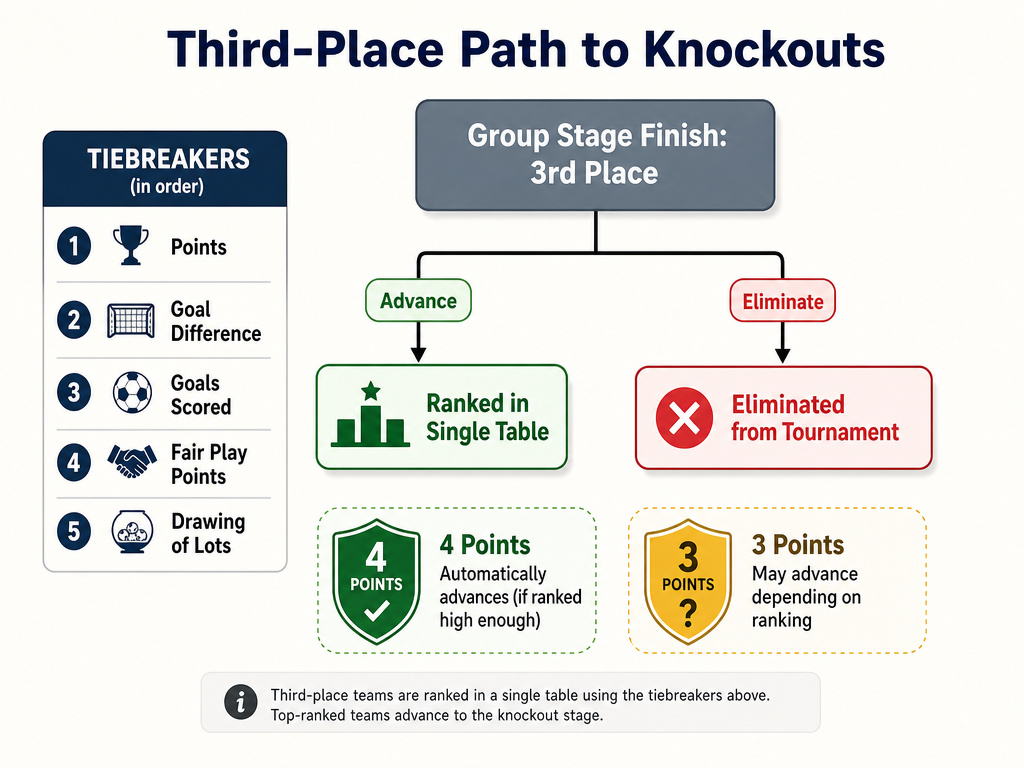
Finishing third is not a consolation prize. It is a legitimate second chance. But not all third-place finishes are equal.
The eight best third-placed teams are ranked in a single table across all groups. They are ordered by:
1. Points
2. Goal Difference
3. Goals Scored
4. Fair Play Points
5. Drawing of Lots
Based on historical data from expanded tournaments, here is what third-place teams need:
- 4 Points: Virtually guaranteed advancement. It is extremely rare for a third-place team with four points to miss out.
- 3 Points: Usually enough, but it depends on goal difference. A zero or positive GD is safe. A negative GD of one or two might still sneak in, but it’s tense.
- 2 Points: Risky. You need a very good goal difference and help from other groups. It has happened, but it’s the exception.
- 1 Point: Almost certainly going home.
For DR Congo and Uzbekistan, the mission is clear: win one match and draw another. Four points seals it. Three points puts you in the mix, making every goal in every match critical.
This system rewards attacking play and punishes parking the bus for a 0-0 draw. A 2-2 draw is objectively more valuable than a 0-0 draw if you finish third.
Group K Schedule and Locations
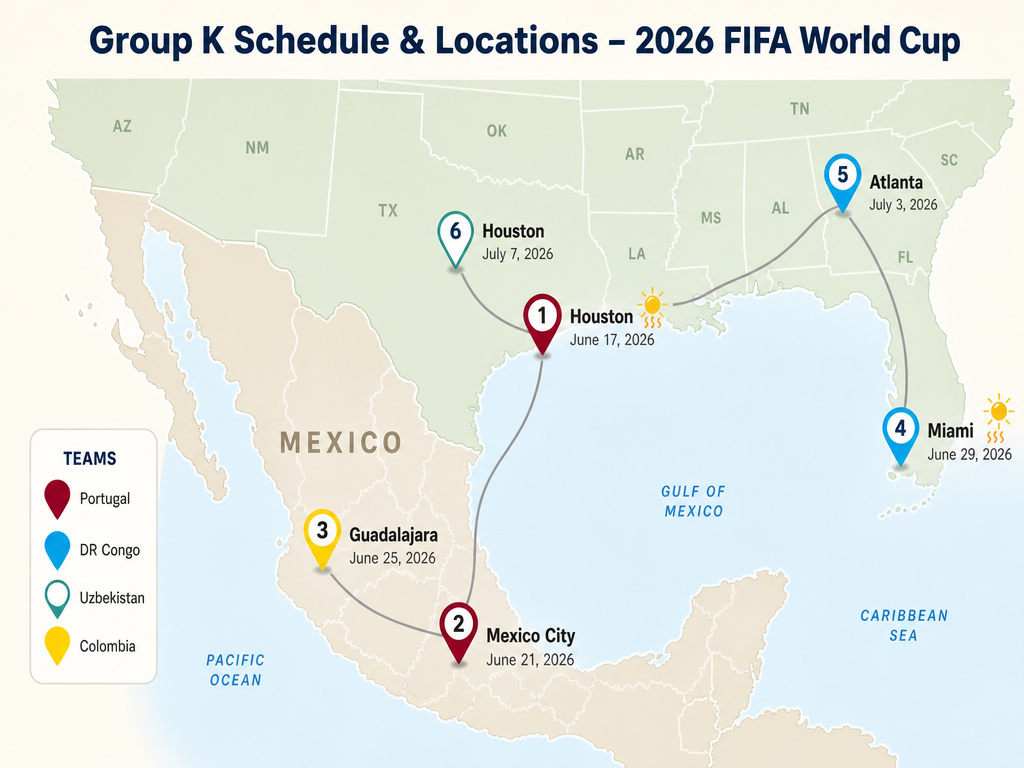
The matches are spread across the southern United States and Mexico. Travel and climate become factors.
| Date | Match | Location |
|---|---|---|
| June 17, 2026 | Portugal vs. DR Congo | Houston, Texas |
| June 17, 2026 | Uzbekistan vs. Colombia | Mexico City, Mexico |
| June 23, 2026 | Portugal vs. Uzbekistan | Houston, Texas |
| June 23, 2026 | Colombia vs. DR Congo | Guadalajara, Mexico |
| June 27, 2026 | Colombia vs. Portugal | Miami, Florida |
| June 27, 2026 | DR Congo vs. Uzbekistan | Atlanta, Georgia |
Portugal plays twice in Houston’s heat and humidity before flying to Miami. Colombia starts in the altitude of Mexico City, goes to Guadalajara, then finishes in Miami. That travel schedule favors Colombia slightly, as their final two matches are in similar climates. Uzbekistan faces the toughest travel: Mexico City to Houston to Atlanta.
The simultaneous kick-offs on the final matchday prevent any collusion. DR Congo and Uzbekistan will kick off at the same time as Colombia vs. Portugal, so no team will know exactly what result they need.
Specific Scenarios for Each Team
Let’s get into the nitty-gritty. What does each team actually need?
What Portugal Needs to Win the Group
Win the first two matches. It is that simple. Four points might be enough if Colombia drops points elsewhere, but six points guarantees it. Portugal’s superior goal difference is a massive cushion. Even a draw against Colombia should see them finish first unless they suffer a shock loss elsewhere.
A manager’s understanding of the modern 3-5-2 tactics could be key if Portugal needs to shut up shop against Colombia to protect a point and top spot.
What Colombia Needs to Finish Second
Four points from the matches against Uzbekistan and DR Congo is the baseline. That gets them to four points before facing Portugal. A draw against Portugal then lands them on five points, which should secure second. If they beat Uzbekistan and DR Congo but lose to Portugal, they still finish on six points and are almost certainly through.
The nightmare scenario is dropping points to Uzbekistan or DR Congo. That would force them to beat Portugal, a tall order.
What DR Congo Needs to Reach the Knockouts
Take a point from either Portugal or Colombia. That is the first step. Then beat Uzbekistan. That gives them four points and an excellent chance to advance in third. If they lose to both Portugal and Colombia, they must beat Uzbekistan by multiple goals to have a chance with three points and a decent goal difference.
Their match against Uzbekistan is everything.
What Uzbekistan Needs to Reach the Knockouts
A draw against Colombia would be a monumental result. More realistically, they must beat DR Congo. If they lose to Colombia and Portugal, they must beat DR Congo and hope their goal difference is better than other third-place teams. A draw against DR Congo with zero points from the other games sends them home.
Knockout Round Matchups and Travel
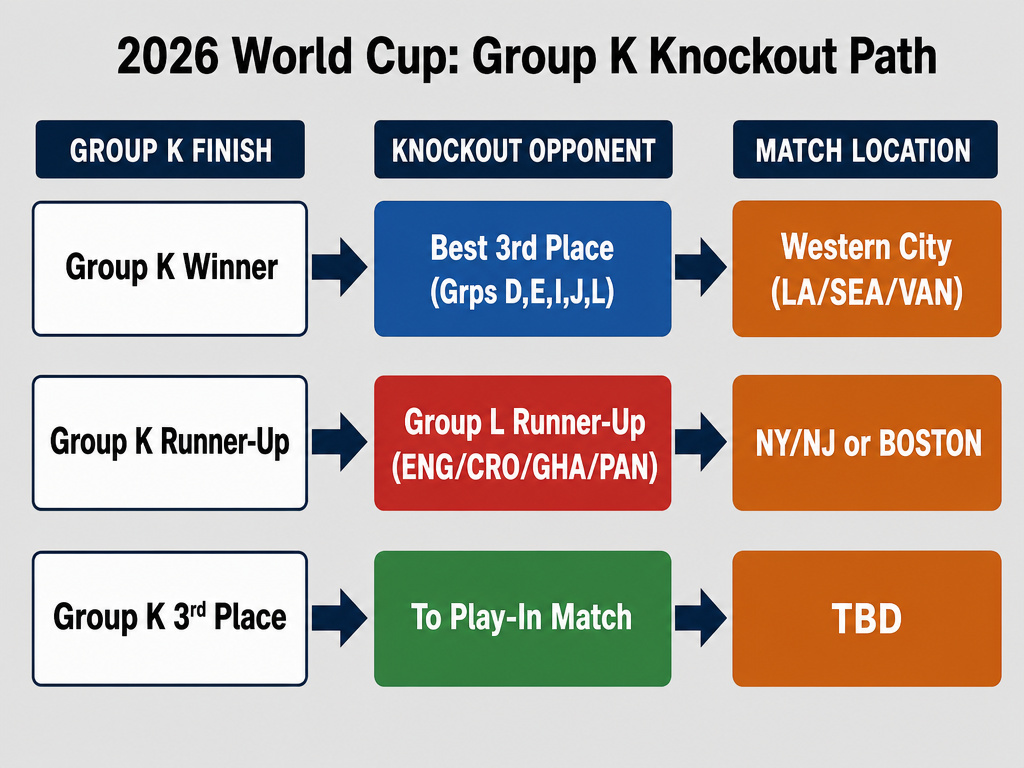
Where you finish in Group K determines who you play and where you go next. This is crucial for fans planning trips.
- Group K Winner: Plays the best third-place team from Groups D, E, I, J, or L. This is the easier path. The match will be in one of the western host cities (likely Los Angeles, Seattle, or Vancouver).
- Group K Runner-Up: Plays the Group L Runner-Up. Group L contains England, Croatia, Ghana, and Panama. Finishing second likely means a Round of 32 match against England or Croatia in New York/New Jersey or Boston. That is a brutal draw.
- Group K Third Place (if they advance): Plays the Group A, B, C, or D Winner. This is a complete lottery. You could face the host nation (USA, Canada, or Mexico) or a European heavyweight. The match location could be anywhere.
Finishing first isn’t just about prestige. It is a tangible competitive advantage, offering a less daunting opponent and a more predictable travel schedule for the next round.
The Key Players Who Will Decide It
Tactics set the stage, but players decide matches.
- Portugal – Cristiano Ronaldo: Even at 41, his movement and finishing in the box are a constant threat. He only needs one chance.
- Colombia – James Rodríguez: When he is fit and motivated, he is the creative engine. His set-piece delivery could be the difference in a tight game.
- DR Congo – Yoane Wissa (Brentford): The pace and directness of the forward is their main offensive outlet. He is the one who can produce a moment of magic against the odds.
- Uzbekistan – Abdukodir Khusanov (Lens): The young center-back is the rock of their defense. How he handles the physicality of DR Congo and the clever movement of Portugal’s attackers will define their tournament.
These individuals will operate within their team’s chosen strategic playbook, but a moment of individual quality often breaks open these cagey group-stage matches.
Frequently Asked Questions
What happens if two teams are tied on points in Group K?
The tie is broken first by goal difference, then by total goals scored, then by the head-to-head result between the tied teams. If still tied, it goes to Fair Play points (fewest yellow/red cards).
Can third place in Group K qualify for the Round of 32?
Yes. The eight best third-placed teams from all twelve groups advance. A third-place finish with 4 points is very likely to qualify. Three points gives you a fighting chance, depending on goal difference.
Who will the Group K winner play in the Round of 32?
The Group K winner will face the best third-placed team from Groups D, E, I, J, or L. This is generally considered a more favorable draw than facing a group runner-up.
Who will the Group K runner-up play?
The Group K runner-up will face the runner-up from Group L. Group L is likely to be won by England, with Croatia fighting for second place. This sets up a very difficult knockout match.
What is the most likely outcome for Group K?
Portugal finishes first. Colombia finishes second. DR Congo and Uzbekistan fight for third, with the winner of their head-to-head match having a strong chance to advance as one of the best third-placed teams.
Before You Go
The new 48-team format makes Group K more than a three-game slog for Portugal and Colombia. It creates a genuine, high-stakes tournament within a tournament for DR Congo and Uzbekistan. Every goal in every match has amplified importance because of the third-place ranking table.
For fans, the travel map is part of the strategy. Rooting for a first-place finish isn’t just about bragging rights; it is about avoiding a potential heavyweight like England in the first knockout round. Watch the goal difference column from Matchday One. It is the silent tiebreaker that will send one team home and another on a cross-continent journey to the Round of 32. The group stage is no longer just about surviving. It is about positioning.

I come from the “soccer heart” of Germany, the Ruhrpott. I have played, trained and followed soccer all my life and am a big fan of FC Schalke 04. I also enjoy following international soccer extensively.