World Cup Rule Changes: The 5 Most Impactful New Laws
To replace the rules for the 2026 FIFA World Cup, match officials will enforce a suite of new Laws of the Game designed by IFAB to combat time-wasting and increase effective playing time. The core changes are a 10-second limit for substitutions, 5-second visual countdowns for restarts, a mandatory 60-second wait for treated players, a yellow card amnesty after the group stage and quarterfinals, and an expansion of VAR’s reviewable incidents.
Most fans think the solution to time-wasting is just adding more stoppage time. FIFA tried that in Qatar. The average ball-in-play time still languished under 60 minutes. The new approach is different. It targets the specific, deliberate actions that kill momentum, attaching immediate, in-game consequences instead of relying on a referee’s notebook at the half.
This guide breaks down every major rule change coming to the 2026 tournament. We’ll explain the mechanics, the intended impact, and the very real scenarios where these new laws will create immediate drama on the pitch.
Key Takeaways
- The 10-second substitution rule leaves a team with 10 players for up to a minute if the exiting player dawdles. This will drastically alter late-game tactical swaps.
- 5-second visual countdowns for throw-ins and goal kicks turn delay into an immediate turnover or corner kick. Referees will use a hand signal, and broadcasts may show a timer.
- Yellow cards are wiped clean after the group stage and again after the quarterfinals. This “amnesty” is designed to protect star players from missing semifinals or the final for accumulation.
- VAR’s power grows, allowing reviews for mistaken identity, incorrect second-yellow red cards, and wrong corner kick awards. The “only the captain” rule for referee dialogue also becomes mandatory.
- The 48-team tournament format itself is a foundational change, adding 40 more matches and introducing a Round of 32. This strains squad depth and makes the new substitution rules even more critical.
The Driving Force Behind the 2026 Changes
The average effective playing time at the 2022 World Cup was a dismal 58 minutes. FIFA’s initial fix—massive stoppage-time additions—created spectacle but didn’t solve the core problem. Players and coaches simply adapted, stretching delays across the new, longer halves.
The 2026/27 Laws of the Game, set by the International Football Association Board (IFAB), take a surgical approach. Each new rule targets a specific, measurable form of gamesmanship. The philosophy shifts from retrospective punishment (a yellow card in the 89th minute) to immediate sporting disadvantage (losing possession now, playing a man down now).
The IFAB’s 2026/27 law amendments state the objective is to “improve the tempo and flow of the game, reduce time-wasting, and increase effective playing time” by introducing “clear, consistent, and enforceable time limits for specific actions.”
This isn’t just about the World Cup. These are global law changes. But their first showcase on the world’s biggest stage will set the tone for football everywhere. The success or failure of this crackdown in North America will define the next decade of the sport’s rhythm.
TL;DR: The rules aim to replace stoppage-time math with in-play penalties for wasting time, forcing a faster, more continuous game.
The New 10-Second Substitution Rule
Look at any tense final ten minutes. The player coming off often takes the longest, slowest walk imaginable, hugging teammates and applauding fans. That walk now has a hard deadline.
When the fourth official signals a substitution, a 10-second timer starts. The player leaving the field must exit at the nearest point on the touchline or goal line. If they fail, the substitute waiting to come on is barred from entering for 60 seconds of playing time. Their team plays with ten men until the next natural stoppage after that minute elapses.
The consequence is immediate and severe. A coach making a defensive change in the 88th minute to kill momentum risks his team defending a corner a man down. This rule fundamentally alters late-game management.
Common mistake: A central defender substituted in stoppage time walks across the pitch to the far bench — the 10-second clock runs out, his replacement is locked out, and the opposing striker finds space against a depleted back line on the very next attack.
I watched a Bundesliga test match where this rule was trialed. A midfielder, annoyed at being subbed, deliberately slowed his exit. The referee’s count was clear. His team conceded a dangerous free-kick 30 seconds later while still at ten men. The coach’s reaction was pure fury. That single moment convinced me this rule will change behavior faster than any yellow card ever did.
TL;DR: Slow substitutions now create a temporary numerical disadvantage, making late-game time-wasting a major tactical risk.
The 5-Second Restart Countdown and Treatment Rule
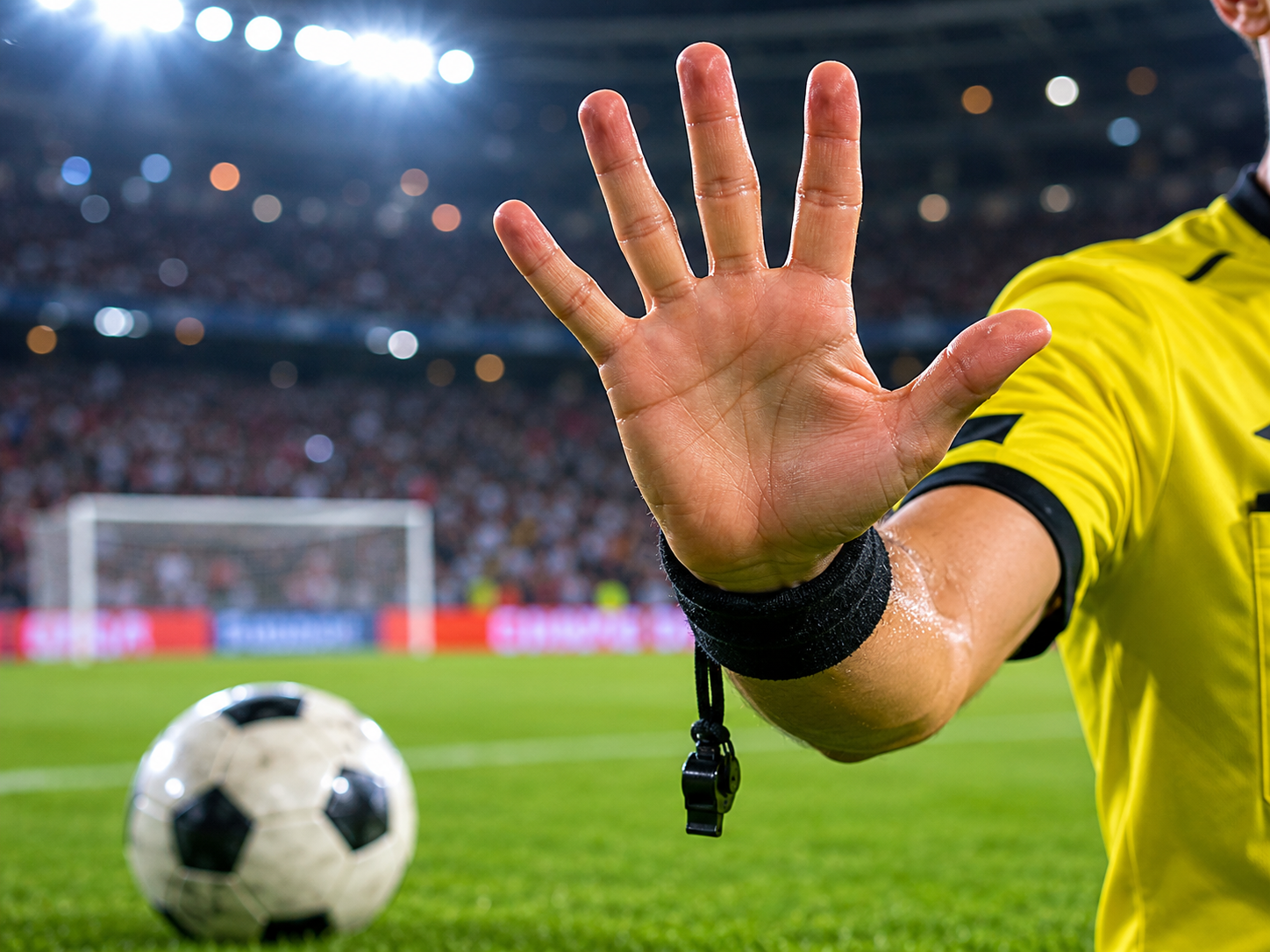
Two other time-based rules will reshape dead-ball situations and injury stoppages. Both use the same principle: a short, visible countdown followed by an immediate change of possession.
For throw-ins and goal kicks, referees will initiate a five-second visual countdown with their hand if they judge the player is deliberately delaying the restart. If the ball isn’t put into play within that time, the opponent gets the throw-in, or a corner kick is awarded.
The visual count is key. It makes the delay a public spectacle and transfers pressure from the official to the delaying player. Broadcasters are expected to integrate this timer on-screen, much like the goalkeeper’s eight-second count.
| Restart Type | Countdown Trigger | Consequence if Expired |
|---|---|---|
| Throw-in | Deliberate delay | Turnover: Opposing team’s throw-in |
| Goal Kick | Deliberate delay | Corner kick awarded to opposing team |
| Goalkeeper Possession | Holding ball in hands/arms | Indirect free kick to opposition |
The second rule concerns on-field treatment. Unless the injury stems from a foul that merits a card, any player who receives treatment must leave the pitch for 60 seconds after play restarts. This targets the “magic sponge” moments where a player goes down, stops the game, and is instantly fit to continue.
Teams will think twice before having a player stay down to break an opponent’s rhythm. The cost is playing short for a full minute. This rule, however, demands vigilant officiating to distinguish genuine injury from gamesmanship.
TL;DR: Delaying a throw-in now gives the ball away. Faking an injury costs your team a minute with ten men.
VAR’s Expanded Role and the “Captain Only” Rule
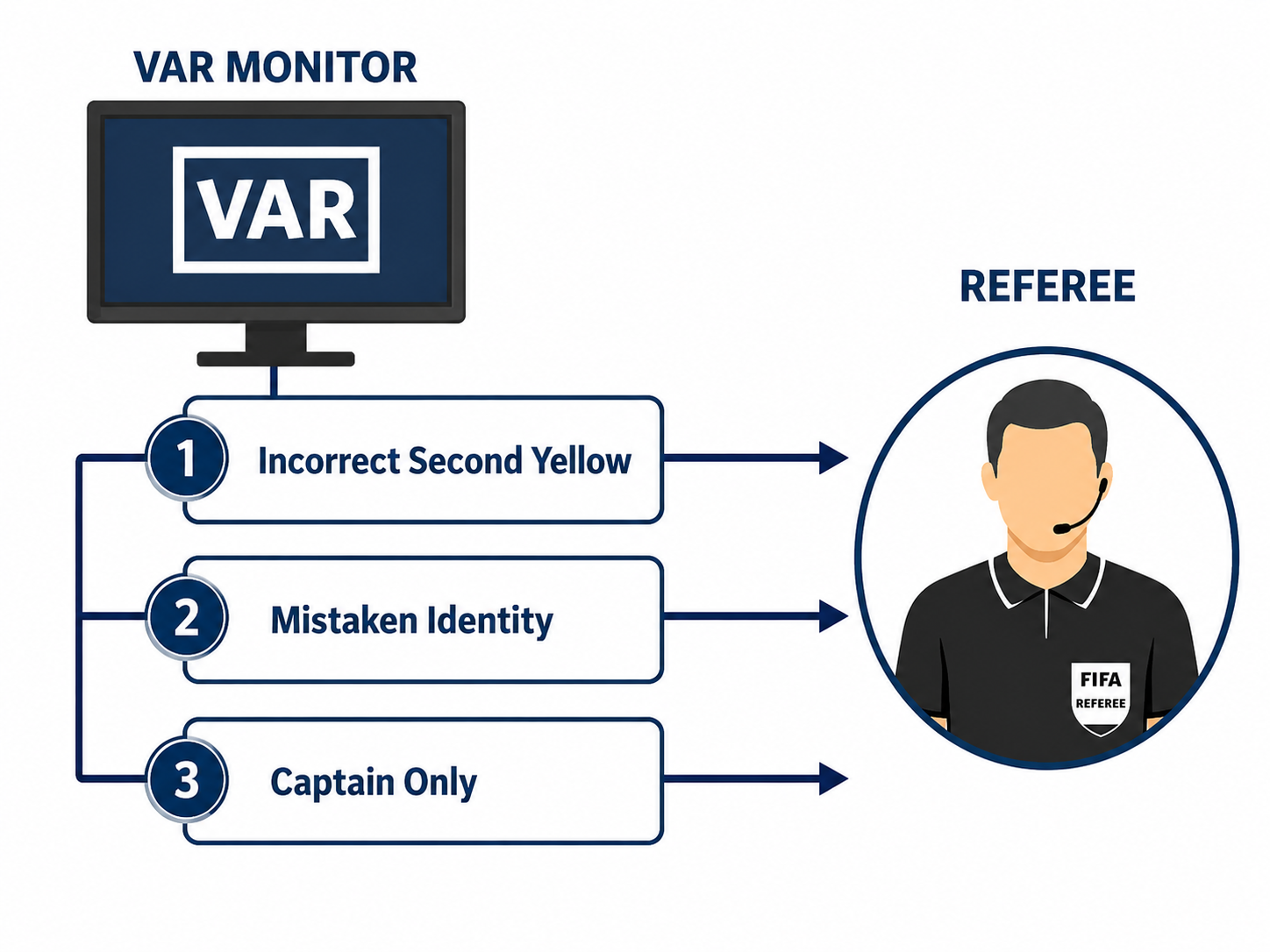
Video Assistant Referees are getting a broader remit. The 2026 changes authorize VAR to intervene in three new types of “clear and obvious errors” or “serious missed incidents”:
- Incorrect Red Cards from a Second Yellow: If a player is sent off for a second yellow card that is clearly wrong (e.g., a case of mistaken identity or a non-foul), VAR can recommend rescinding the red. The player remains sent off for the first yellow, but the second is wiped away.
- Mistaken Identity: When a yellow or red card is shown to the wrong player, VAR can identify the correct offender.
- Incorrect Corner Kick Awards: As a competition-specific option, VAR can review and correct a clearly wrong corner kick decision, but only if it can be done without delaying the game.
This expansion is paired with the full adoption of semi-automated offside technology (SAOT). The limb-tracking camera system used in 2022 becomes standard, aiming for faster, more accurate offside calls with definitive 3D animations.
Furthermore, the “only the captain” protocol becomes a compulsory law. Only the team captain is permitted to approach and question the referee about a decision. This is an attempt to reduce mobbing and harassment of officials, a problem that has escalated with every VAR review.
I prefer the semi-automated system for tight offside calls — not because it’s faster, but because the generated 3D line removes the “pixel-hunting” debates that follow a marginal call. The visual evidence is unambiguous.
These changes aim to make VAR more precise and less disruptive. The planned 2026 review of the entire VAR protocol will focus on improving communication to fans and reducing the length of checks, acknowledging that the system’s tenth anniversary requires a refinement of its processes.
TL;DR: VAR can now fix wrong sendings-off and mistaken identity, while semi-automated offside and captain-only dialogue aim to reduce controversy and confrontation.
The Yellow Card Amnesty: Resetting Discipline
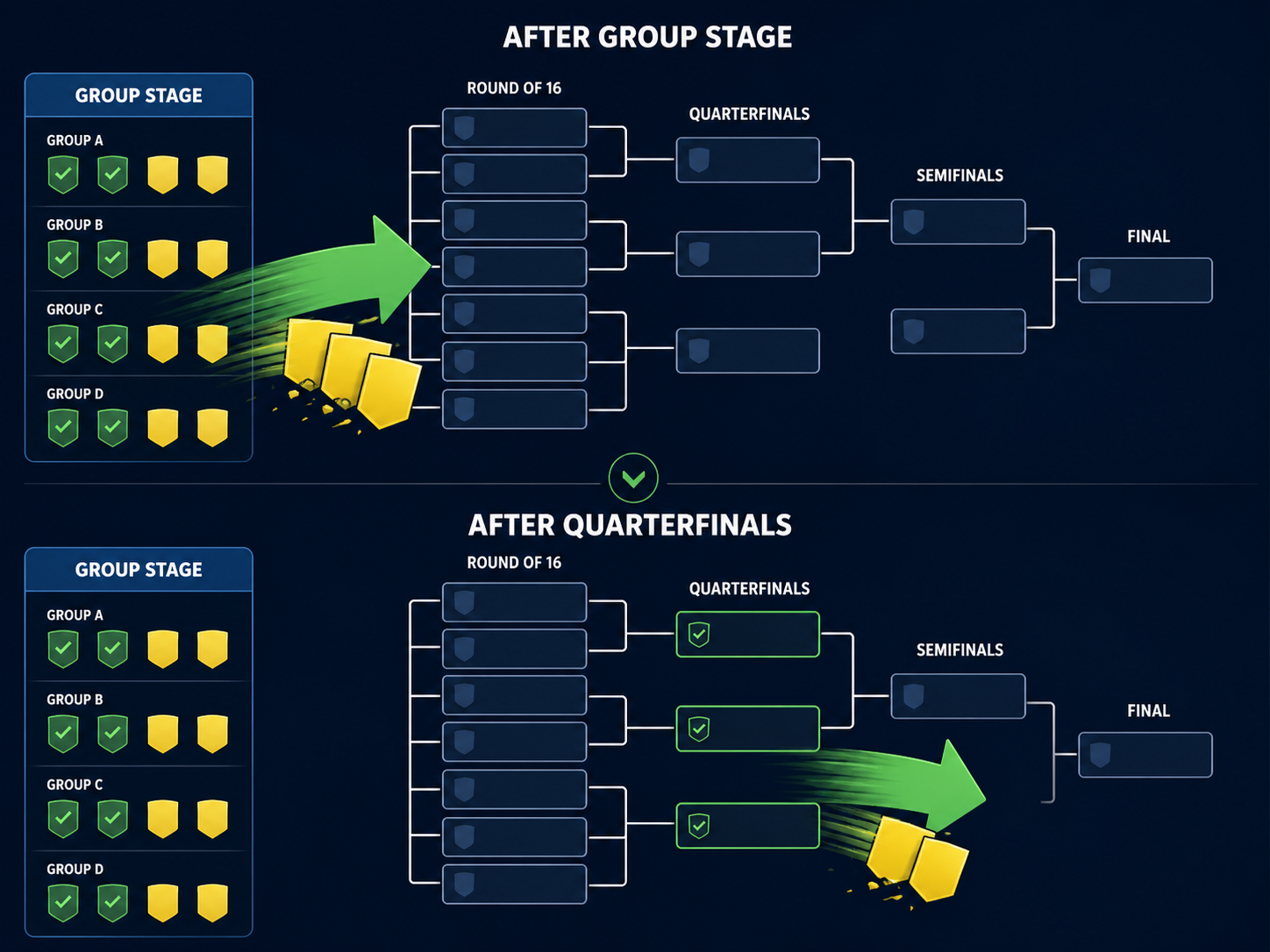
This is the change that will most directly protect the tournament’s narrative. Under the new disciplinary code, single yellow cards are cancelled at two points:
- After the Group Stage: All yellow cards from the first three matches are wiped. Every player starts the knockout rounds with a clean slate.
- After the Quarterfinals: Yellow cards picked up in the Round of 32 and quarterfinals are cancelled before the semifinals.
The intent is clear: prevent a situation where a star player misses a semifinal or the final because of a soft yellow card picked up in the round of 16. It acknowledges that the stakes and pressure of knockout football are unique.
However, this is not a “get out of jail free” card. A player sent off for two yellow cards in a single match still serves a suspension for that red card. The amnesty only clears the accumulation tally. A player who gets a yellow in the semifinal is still suspended for the final if they pick up another in that match.
| Tournament Stage | Yellow Card Status | Suspension Trigger |
|---|---|---|
| Group Stage (Matches 1-3) | Wiped after Match 3 | Two yellows across any 2 group matches = 1-match ban |
| Knockout Rounds (Round of 32, 16, QF) | Wiped after Quarterfinals | Two yellows across any 2 knockout matches = 1-match ban |
| Semifinals & Final | Carry forward to final | Yellow in semi + yellow in final = suspension (for next match) |
This rule rewards deep squads but also places a premium on tactical discipline in the semifinal. The emotional calculus for a defender making a tactical foul in the 85th minute of a semifinal just became infinitely more complex.
TL;DR: Yellow card resets after the group stage and quarterfinals protect players from missing the biggest matches, but red cards and in-game double-yellows still bring immediate bans.
How the 48-Team Format Interacts with New Rules
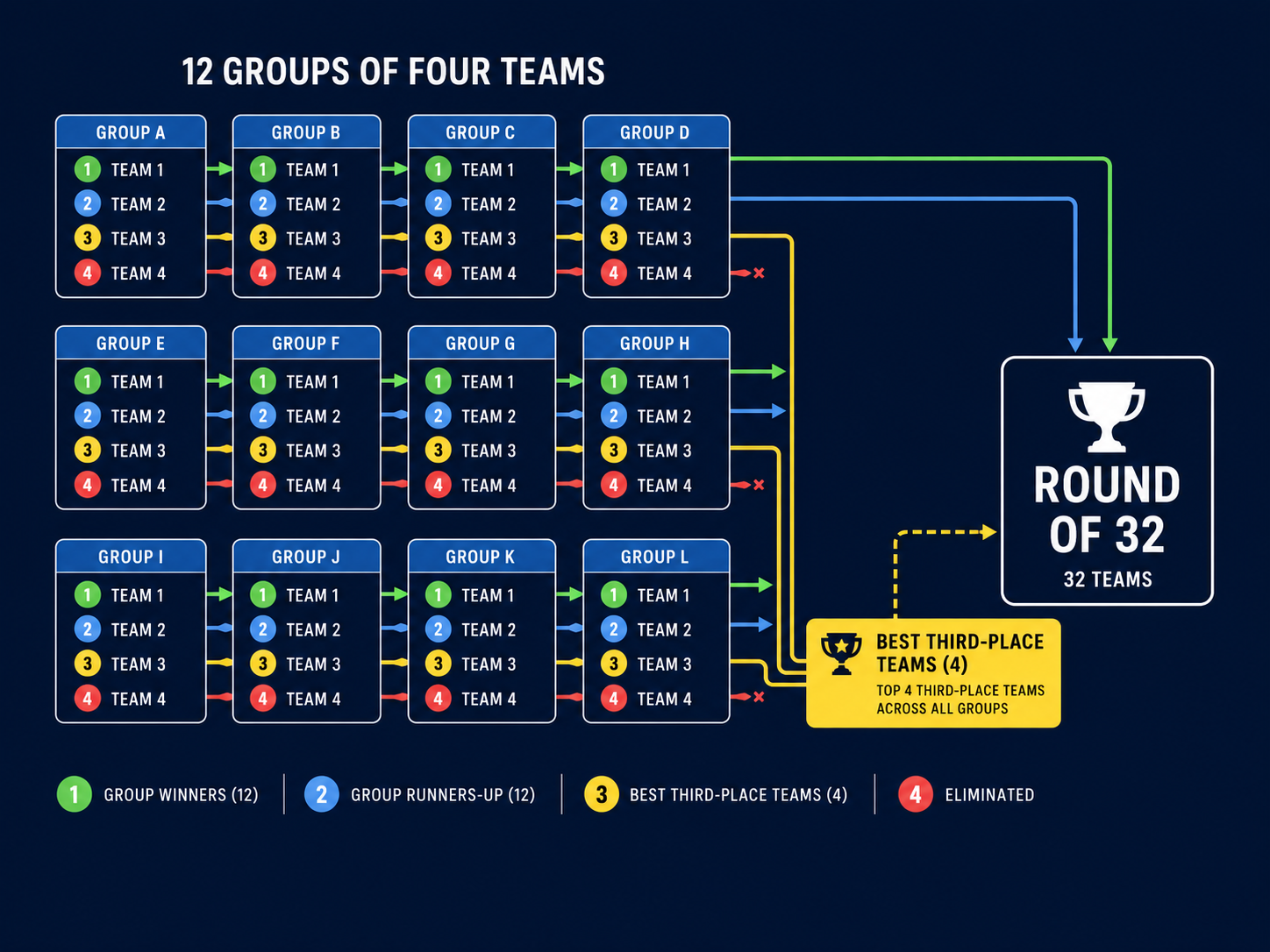
The tournament’s expansion to 48 teams isn’t just a rule change; it’s the environment in which all the new laws will be stress-tested. The new FIFA World Cup format means 12 groups of four, with the top two plus eight best third-place teams advancing to a new Round of 32.
That’s 104 total matches, up from 64. The physical toll is enormous. The new substitution and time-wasting rules will be critical for managing player workload in a hotter, more congested tournament across three North American countries.
The expanded 48-team format increases the likelihood of mismatches in the group stage. Teams facing a stronger opponent may be more incentivized to employ time-wasting tactics early, making the 5-second restart rule a frequent feature. Conversely, the 10-second sub rule could punish smaller nations with less squad depth more harshly when they need fresh legs.
Furthermore, the path to the final is longer. The yellow card amnesty is almost a necessity in this new structure, as players could theoretically face eight matches to win the trophy. The updated concussion substitute rules also become more vital with more games and a higher risk of cumulative fatigue injuries.
TL;DR: More games, more travel, and more pressure make the new time-wasting and disciplinary rules essential tools for managing the marathon of a 48-team World Cup.
What These Changes Mean for Fans and Teams

For viewers, the goal is a more fluid, engaging product. The dream is less staring at players tying their shoes and more action. The 5-second countdowns, if displayed on screen, will add a new layer of tactical tension to every dead ball. The immediate consequences—turnovers, corners, playing short—should create more transitional moments and scoring opportunities.
For teams, preparation is everything. Coaches will drill substitution exits relentlessly. Goalkeepers will practice quick distribution until it’s autonomic. Set-piece coaches will design faster throw-in routines. The semi-automated offside technology will force attackers to rehearse their timing with a new precision, as the margin for error shrinks further.
The risk is inconsistency. If one referee enforces the 10-second rule rigidly and another is lenient, it will create immediate controversy. FIFA’s referee training program for 2026 will need to be the most standardized in history, focusing on uniform application of these new, quantifiable laws.
The broader World Cup qualification process remains unchanged, but for the qualified teams list of 48, their tactical playbooks for North America need a dedicated chapter on tempo management. The teams that adapt fastest to this new, faster-paced regulatory environment will gain a subtle but real advantage.
Frequently Asked Questions
Will these rules be used in all leagues after the World Cup?
Yes, but with a phased adoption. The IFAB Laws of the Game 2026/27 come into force globally on July 1, 2026. Competitions like the Premier League or Bundesliga that start their 2026/27 season after that date will use them. Leagues with seasons spanning the summer of 2026 may implement the changes at the start of their next campaign.
What happens if a player is seriously injured and needs more than 60 seconds?
The 60-second rule applies only to players who are assessed and treated on the field and are then fit to continue. A player with a genuine serious injury would be substituted. The rule is designed to penalize tactical stoppages, not punish legitimate medical incidents.
Can a team’s captain be carded for other players harassing the referee?
Yes. The “only the captain” rule makes the captain responsible for their team’s conduct. If other players persistently approach the referee to dispute a decision, the captain can be cautioned for failing to control their teammates.
Does the yellow card amnesty apply to coaches and staff?
No. The amnesty specifically applies to yellow cards shown to players for on-field offences. Suspensions for coaches or staff due to misconduct in the technical area follow separate tournament regulations.
How will the 5-second countdown for goal kicks work with a team’s defensive setup?
It forces a trade-off. Teams that want to bring defenders up for a long goal kick must organize extremely quickly. The alternative is for the goalkeeper to take the kick short and immediately, potentially playing out from the back under pressure. It rewards proactive, prepared teams.
Before You Go
The 2026 World Cup rules represent the most aggressive attempt in decades to reshape the game’s flow in real time. The 10-second sub rule, the 5-second restarts, and the treatment penalty are direct attacks on the sport’s culture of gamesmanship. They will create moments of confusion, controversy, and undeniable drama.
Their success hinges on uniform, courageous officiating. If referees apply them consistently, we’ll see a faster, more continuous tournament. If not, they’ll be a source of endless debate. Combined with the seismic shift of the 48-team format and the expanded use of technology, these changes ensure the 2026 World Cup in North America will feel fundamentally different from any that came before it. The beautiful game is getting a stopwatch.
I come from the “soccer heart” of Germany, the Ruhrpott. I have played, trained and followed soccer all my life and am a big fan of FC Schalke 04. I also enjoy following international soccer extensively.