Is the 4-4-2 Formation Outdated? The Tactical Truth
The 4-4-2 formation is not obsolete, but its application has fundamentally evolved. The rigid, flat 4-4-2 of the 1990s is rare at the elite level, but its principles of defensive balance and direct partnership persist within modern, fluid systems. Managers now use 4-4-2 shapes for specific phases like high pressing or defensive organization, and variants like the 4-4-2 diamond are experiencing a tactical resurgence.
Most people get this wrong because they look at a team sheet. They see a 4-3-3 or a 4-2-3-1 listed and assume the classic 4-4-2 is dead. They miss what happens when the whistle blows. The game isn’t played on a team sheet; it’s played in moments, in transitions, in pressing traps. That’s where the 4-4-2 is very much alive.
This guide breaks down the data, shows you the modern adaptations top coaches use, and explains exactly when this iconic formation still works. We’ll look at its fatal flaw, its surprising strengths in 2026, and the specific type of player that makes it tick.
Key Takeaways
- The flat 4-4-2’s primary weakness is a two-man midfield overload by systems like the 4-3-3, a problem that catalyzed its decline in elite possession football.
- Modern elite teams like Manchester City and Arsenal frequently use a 4-4-2 defensive and pressing shape while listing a different nominal formation, proving its principles are adaptable.
- The 4-4-2 diamond (4-3-1-2) is a modern variant seeing renewed interest for its ability to control central zones and counter high-pressing teams, though it risks isolation on the flanks.
- Success with any 4-4-2 variant demands specific, disciplined player profiles: box-to-box wide midfielders, a complementary striker duo, and a tactically astute defensive midfielder.
- The formation remains highly effective in tournament and situational football, where its clarity for defending deep and launching direct attacks provides a reliable tactical blueprint.
The Numbers Don’t Lie: Where the 4-4-2 Stands Today
Look at the data from Europe’s top leagues. A 2024 study in BMC Sports Science, Medicine and Rehabilitation analyzed the 2023-2024 season and found the 4-2-3-1 was the most frequently used formation. The 3-4-3 yielded the highest average points per match. The classic 4-4-2? It wasn’t the dominant force. But it was there, more prevalent in La Liga than elsewhere.
The 4-2-3-1 formation was deployed in 28.7% of matches across Europe’s top five leagues in the 2023-2024 season, making it the most common tactical setup, while the 4-4-2 appeared in 18.3% of matches, with notable variance between leagues.
That last point is critical. Formation effectiveness isn’t universal. It depends on league culture, player quality, and managerial philosophy. You can’t say a formation is “dead” because Bayern Munich doesn’t use it every week. You have to ask if Getafe or Crystal Palace can win with it. The data says yes, contextually. This statistical snapshot reinforces that understanding common 11v11 formations requires looking beyond a single season’s trend.
The 4-4-2’s Primary Weakness (and Modern Response)
The flat 4-4-2 has one glaring, tactical Achilles’ heel. With just two central midfielders, it is perpetually vulnerable to being overloaded by a midfield three. As the 4-3-3 and 4-2-3-1 became the templates for possession-based football, the 4-4-2’s two-man midfield was consistently outnumbered. They got passed around.
This isn’t theoretical. Watch any classic match from the 2000s where a 4-4-2 team played a 4-3-3. The two central midfielders are pulled apart, creating space for the opposition’s number 10 or advancing number 8. It’s a math problem. This fundamental vulnerability is the core reason the formation fell from grace at the highest level. You can read a deeper breakdown of this specific 4-4-2 vs 4-3-3 comparison to see the tactical battle in detail.
The modern response wasn’t to abandon the shape entirely. It was to disguise it.
How Elite Teams “Hide” a 4-4-2
Top coaches solved the overload problem by using the 4-4-2 situationally. Pep Guardiola’s Manchester City often attacks in a 4-3-3. But when they lose the ball and press high, they immediately shift. The wingers tuck in alongside the striker to form a front two, and the central midfielders push up to form a bank of four. Suddenly, they’re in a 4-4-2 mid-block, compact and ready to counter-press.
Mikel Arteta’s Arsenal does the same. Their 4-3-3 becomes a 4-4-2 defensive shape, with Martin Odegaard jumping up to press alongside the striker. This hybrid approach gives them the defensive stability of a 4-4-2 without sacrificing their attacking midfield control. It’s a chameleon tactic. This fluidity is a key part of modern 4-3-3 tactics, where shape is a starting point, not a prison.
| Phase of Play | Traditional 4-4-2 | Modern Disguised 4-4-2 |
|---|---|---|
| Defensive Organization | Permanent, rigid two banks of four. | Transitional shape adopted from a 4-3-3 or 4-2-3-1 after losing possession. |
| Midfield Presence | Static two-man partnership, often overrun. | Dynamic; includes a forward-dropping winger or attacking midfielder to create the four. |
| Attacking Transition | Direct to front two; wingers provide crosses. | Can revert to a 4-3-3 to build possession through midfield thirds. |
| Player Roles | Fixed: wingers stay wide, strikers stay central. | Fluid: wingers become inside forwards, strikers may drop deep to link play. |
TL;DR: The old 4-4-2 was a 90-minute straitjacket. The modern version is a tool pulled from the belt for specific jobs, most notably organizing a press or defending in a mid-block.
The 4-4-2 Diamond: A Centralized Resurrection

If the flat 4-4-2 died from a midfield deficiency, its cousin was engineered to fix it. The 4-4-2 diamond, or 4-3-1-2, pushes the wide midfielders into the center, creating a midfield four of a defensive anchor, two shuttlers, and an attacking playmaker at the tip. This addresses the numerical overload head-on.
Common mistake: Deploying a 4-4-2 diamond against a team with elite wingers and attacking full-backs, your own full-backs will be isolated two-versus-one on the flanks within 20 minutes, and crosses will rain into your box.
This system is experiencing a real renaissance. It’s a potent counter to ball-dominant 4-3-3 teams because it clogs the central lanes they love to exploit. The mobile front two and the number 10 create a flexible, interchanging attacking trio that’s hard for flat back-fours to track. It offers control. But the trade-off is stark: you surrender the wings. Your full-backs have the entire flank to themselves, a massive demand on their stamina and defensive skill. This high-risk, high-reward structure is a fascinating evolution in modern 3-5-2 tactics as well, which also seeks midfield control with wing-back coverage.
The Player Profile Problem
You cannot run a modern 4-4-2, flat or diamond, with just any squad. The traditional model required specific types, and the modern one demands even more.
- Wide Midfielders (Flat 4-4-2): These are not luxury wingers. They are marathon runners with a defensive brain. Think of James Milner in his prime, endless engine, tactical discipline, and the ability to deliver a cross after a 70-yard sprint. A player who sees his primary role as defending the flank will fail here.
- Central Midfielders (Diamond): The single pivot at the base is the most important player on the pitch. He must be positionally perfect, an expert reader of danger, and an impeccable passer under pressure. The two shuttlers beside him need boundless energy to cover the half-spaces.
- The Striker Partnership: This is not two target men. It’s a complementary pair: a physical holder and a mobile runner, a false nine and a poacher. Their understanding off the ball dictates the attack’s success.
Finding these profiles is the real challenge. Many teams abandon the formation not because it’s outdated, but because their personnel can’t execute its non-negotiable requirements. This connects directly to the broader challenge of organizing players on the pitch around a specific tactical idea.
When the 4-4-2 is Still the Right Answer
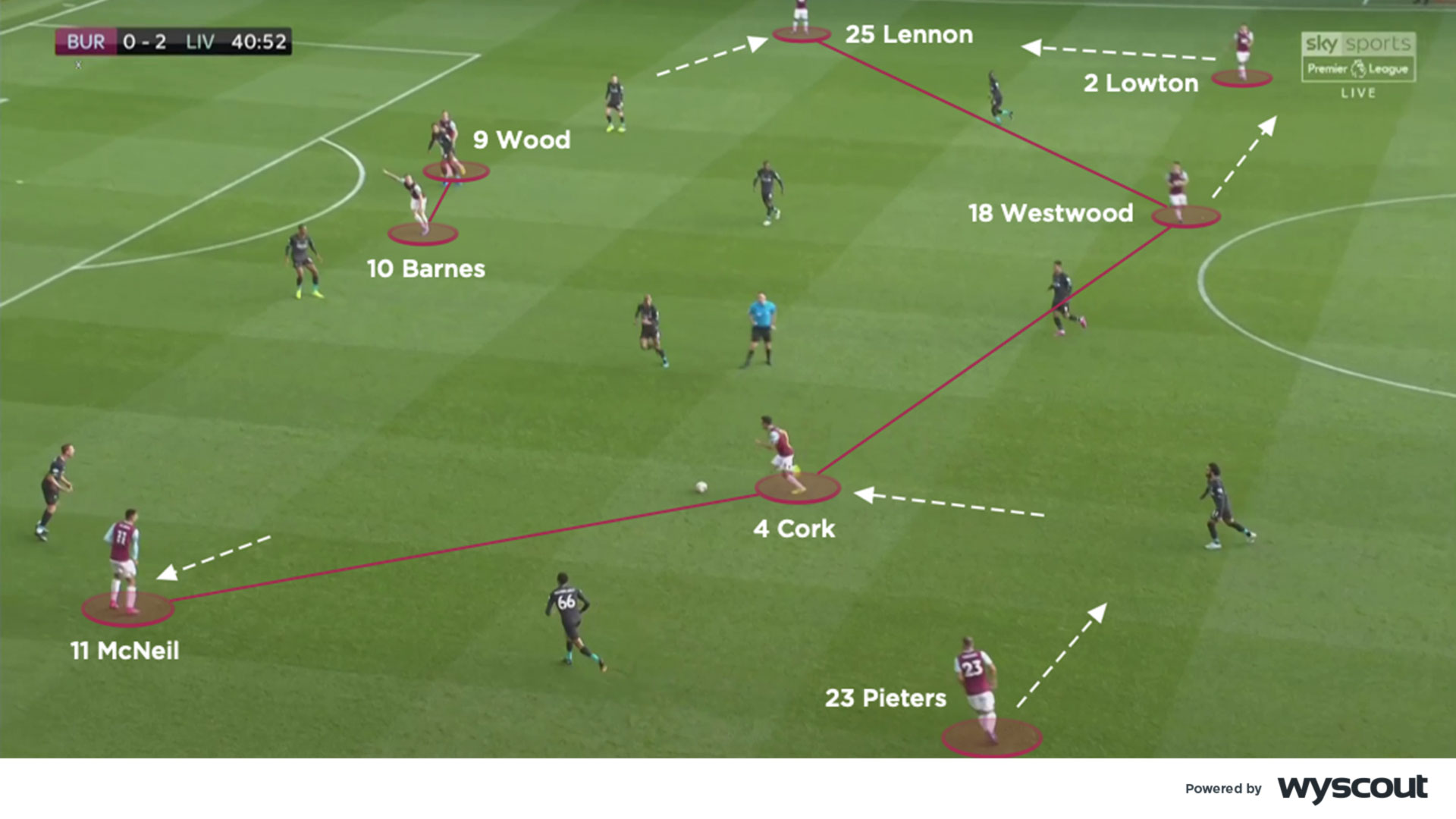
For all the talk of fluidity and hybrid systems, there are moments when the classic, honest 4-4-2 is the perfect solution. Its value shines brightest under pressure.
Tournament Football. In a World Cup or continental championship, clarity is king. For a lesser-ranked team facing a superior opponent, a well-drilled 4-4-2 provides a simple, cohesive structure to defend deep, protect the penalty area, and launch direct attacks. Everyone knows their job. There’s no complex rotation to forget under fatigue. This was part of the 4-4-2’s strategic viability for underdogs for decades.
Managing a Lead. You’re up 1-0 with 20 minutes to go. The instruction is simple: get compact, form two banks of four, and be difficult to break down. Shifting to a 4-4-2 low block is a universally understood defensive protocol. Its symmetry makes it easier to maintain shape when tired.
A Tactical Culture. In some leagues, the 4-4-2 never left. It’s woven into the developmental fabric. Coaches know it, players understand it from youth levels, and it suits a more direct, physical style of play. Declaring it “outdated” ignores this cultural reality. The formation’s defensive solidity remains a powerful asset in these contexts.
I coached a youth team that insisted on playing a 4-3-3 because it was “modern.” We had slow, physically strong players suited to a direct 4-4-2. We kept getting sliced open through the middle. I switched us to a basic 4-4-2, drilled the defensive shape for two weeks, and we didn’t lose for two months. The right tool for the squad matters more than the trend.
The Verdict: Evolved, Not Extinct
So, is the 4-4-2 formation outdated in modern soccer? The answer is a definitive “it depends.” The rigid, flat archetype from the 1990s is a museum piece at the elite level. But the idea, the balanced defensive structure, the partnership up front, the pressing trap, is more alive than ever. It has evolved, splintering into a pressing shape for giants like City and a diamond variant for tactical specialists.
Its future isn’t about a wholesale return. It’s about selective, intelligent application. The formation’s greatest legacy might be its simplicity, which makes it a timeless tool for specific jobs: defending a lead, simplifying a game plan, or building a team’s defensive identity from the ground up. To fully grasp its place, you need to move beyond the basic formation numbering system and understand the dynamic roles within it.
The next time you watch a match, don’t just look at the graphic before kickoff. Watch the first five minutes after a team loses the ball. That’s where you’ll see the ghost of the 4-4-2, and you’ll know it’s far from dead.
Frequently Asked Questions
What is the biggest weakness of the 4-4-2 formation?
Its two-man central midfield is vulnerable to numerical overloads from formations with three central players, like the 4-3-3 or 4-2-3-1. This can lead to a loss of control in the most critical area of the pitch, forcing the team to defend deeper than intended.
Which top managers still use a 4-4-2?
Diego Simeone at Atletico Madrid is the most famous modern proponent, often using a 4-4-2 or 4-4-2 diamond for its defensive rigidity and transitional power. Many other elite managers, including Pep Guardiola and Mikel Arteta, use 4-4-2 shapes defensively or when pressing, despite listing different starting formations.
Is the 4-4-2 good for possession-based soccer?
The traditional flat 4-4-2 is not ideal for sustained possession play, as it often lacks a numerical advantage in midfield to circulate the ball under pressure. However, the 4-4-2 diamond variant can excel in possession through central control, and many possession teams use a 4-4-2 shape out of possession to win the ball back quickly.
What is the difference between a 4-4-2 and a 4-4-2 diamond?
The flat 4-4-2 uses two wide midfielders and two central midfielders. The 4-4-2 diamond removes the wingers, instead using a midfield four arranged in a diamond: one defensive midfielder, two central midfielders (shuttlers), and one attacking midfielder behind two strikers. This sacrifices width for central control.
Can a youth team still use a 4-4-2 formation?
Absolutely. The 4-4-2 is an excellent formation for teaching young players basic positional roles, defensive shape, and the importance of partnership (e.g., two strikers, two central midfielders). Its clarity helps players understand their responsibilities before moving on to more fluid systems.
The Bottom Line
The 4-4-2 isn’t outdated; it’s specialized. Its classic form is a tool for specific contexts, defensive organization, tournament football, and teams with the right player profiles. Its modern spirit lives on in the pressing traps of champions and the centralized control of the diamond variant. The formation’s true lesson is that tactical evolution rarely means extinction. It means adaptation. Understanding this requires moving past nostalgia and seeing the game in phases, not just formations. The next tactical revolution might just be an old idea, wearing a new disguise.

I come from the “soccer heart” of Germany, the Ruhrpott. I have played, trained and followed soccer all my life and am a big fan of FC Schalke 04. I also enjoy following international soccer extensively.