How the Soccer World Cup Qualification Process Works Explained
The soccer World Cup qualification process is a multi-stage tournament system where FIFA’s six continental confederations organize separate competitions. Each confederation is allocated a set number of spots for the final tournament, and national teams compete within their own region to win those direct qualification places.
The soccer World Cup qualification process is a multi-year, confederation-based tournament system where FIFA allocates a set number of spots to each continent, and national teams compete within their region to earn one. For the expanded 48-team 2026 World Cup, FIFA has assigned 45 direct qualification slots across six confederations, with two final spots decided via an intercontinental playoff. The three host nations (Canada, Mexico, United States) qualify automatically.
Most people think FIFA runs one giant global tournament. They don’t. FIFA sets the rules and hands out the tickets, but the continental confederations run the actual races. It’s why a team from Asia never plays a team from South America until the World Cup itself, and why some continents have a brutal gauntlet while others offer a clearer path.
This guide breaks down the six confederations, their unique tournament formats, the critical role of FIFA rankings in seeding, and exactly how the new 48-team format changes the math for everyone trying to reach the biggest stage in sports.
Key Takeaways
- FIFA does not run the qualification tournaments. Six continental confederations (AFC, CAF, CONCACAF, CONMEBOL, OFC, UEFA) organize their own competitions to fill their allocated slots.
- The 2026 World Cup expansion to 48 teams has significantly increased direct qualification spots for Africa (CAF), Asia (AFC), and Oceania (OFC), making it easier for teams from these regions to qualify.
- FIFA rankings are used to seed teams into pots for qualification group draws and determine seeding for the intercontinental playoff, giving higher-ranked teams a distinct advantage.
- The intercontinental playoff is a single-elimination tournament held in March 2026, involving six teams from different confederations competing for the final two World Cup spots.
- Qualification is a marathon, not a sprint, often spanning over two years and involving multiple rounds, especially for lower-ranked nations in larger confederations.
How Does World Cup Qualification Work?
Think of it like a massive, global sports league with six separate divisions. FIFA is the league office. It decides how many teams from each division get to go to the championship tournament – the World Cup. The confederations are the division commissioners. They design and run the regular season – the qualification tournaments – to decide which of their teams earn those tickets.
FIFA mandates that confederation qualification tournaments must include at least one of four formats: a single round-robin league, a two-legged knockout tie, a single-elimination tournament in one host nation, or a single-leg knockout match. This rule ensures a minimum competitive standard across all continents.
The entire process is merit-based. There are no invites based on history or reputation. You earn your spot by winning matches in your confederation’s tournament. The only automatic entries are the host nations. For 2026, that means Canada, Mexico, and the United States are already in, which slightly alters the math for CONCACAF’s other teams.
The timeline is grueling. Qualification for a World Cup typically starts over two years before the tournament and concludes in the final international windows about eight to nine months prior. The last gasp – the intercontinental playoffs – happens around six to seven months before the opening match. This long runway is why you see national teams playing seemingly random friendlies in between; they’re often using FIFA international windows to prepare for crucial qualifiers.
TL;DR: Teams qualify by winning matches in their continental confederation’s tournament, which is designed to fill the number of World Cup spots FIFA has allocated to that region.
The Six Confederations and Their Slots
FIFA’s world is carved into six pieces. Each piece has its own football culture, competitive level, and number of member nations. The number of World Cup slots given to each confederation isn’t arbitrary; it’s a political and footballing calculation based on historical performance, number of members, and, frankly, power. The jump to 48 teams for 2026 was a seismic shift, especially for the smaller confederations.
Here’s how the slots break down for 2026, the first 48-team tournament:
| Confederation (Region) | Acronym | Direct Slots (2026) | Notable Change from 2022 |
|---|---|---|---|
| UEFA (Europe) | UEFA | 16 | +3 slots |
| CAF (Africa) | CAF | 9 | +4 slots |
| AFC (Asia) | AFC | 8 | +4 slots |
| CONMEBOL (South America) | CONMEBOL | 6 | +2 slots |
| CONCACAF (N. America) | CONCACAF | 3 (+ 3 hosts) | +1.5 slots (net) |
| OFC (Oceania) | OFC | 1 | +0.5 slots |
Note: The “Intercontinental Playoff” awards 2 additional spots, contested by teams from multiple confederations.
The big winners are Africa and Asia. CAF going from 5 to 9 slots is a game-changer for African football. It means nations that perennially came up just short – think Egypt, Mali, or South Africa – now have a much more realistic shot. Similarly, AFC’s jump from 4.5 to 8 slots opens the door for rising football nations in Asia beyond the traditional powerhouses of Japan, South Korea, Iran, and Saudi Arabia.
CONMEBOL’s increase feels almost like a formality. With only 10 member nations, 6 direct slots mean the continent’s traditional giants – Brazil, Argentina, Uruguay – are almost always safe, while the middle tier (Chile, Colombia, Peru) has a fiercer but clearer fight. The drama here is who gets left out.
Common mistake: Assuming the host confederation gets extra automatic slots beyond the host nations themselves. For 2026, CONCACAF gets 3 direct slots plus its 3 host nations. The hosts don’t take spots from the confederation’s allocation; they are additive, but FIFA’s formula for calculating the total 48 includes them.
Oceania finally gets a guaranteed ticket. No more playoff heartbreak for New Zealand (usually). That single direct slot is a monumental shift for a confederation where the upcoming World Cup was often just a dream.
Breaking Down Each Confederation’s Tournament
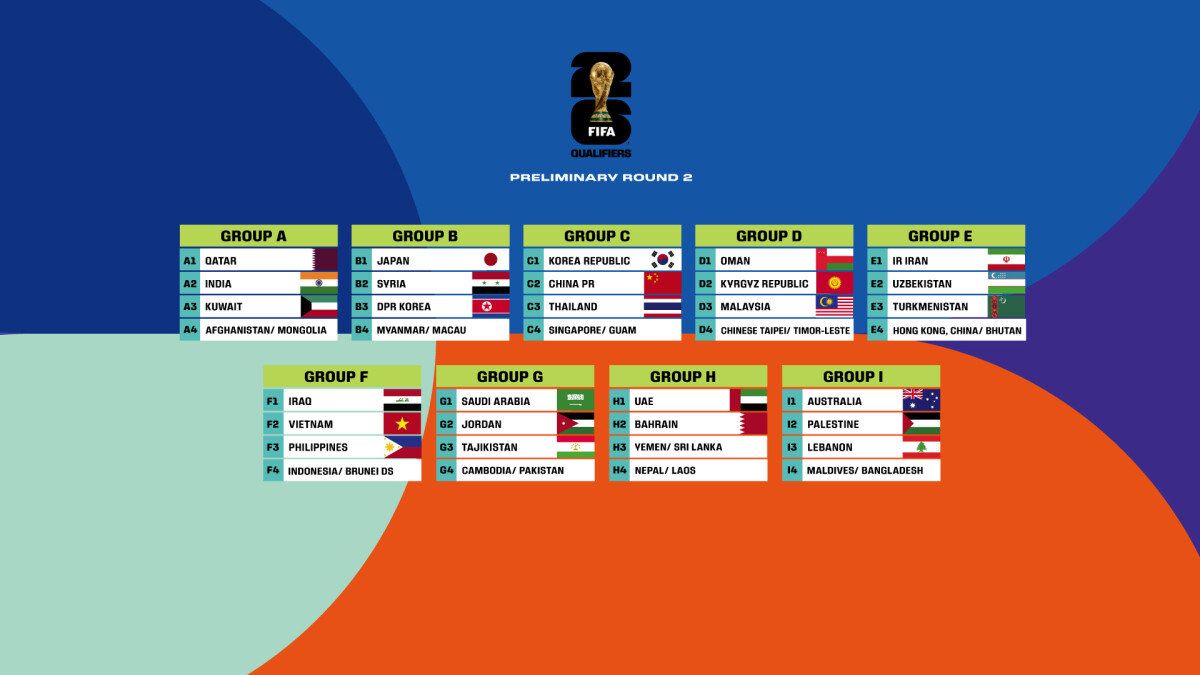
This is where the real variety happens. While FIFA provides the framework, each confederation has full autonomy to design its qualification hell. The formats are as diverse as the continents themselves, ranging from simple round-robins to multi-stage marathons involving over 50 teams.
UEFA (Europe): The Group Stage Gauntlet
UEFA qualification is the most watched and arguably the most predictable in its structure, yet brutally competitive. It uses a straightforward group stage format, but with a clever – and often confusing – playoff twist via the UEFA Nations League.
- Group Stage: The 55 UEFA nations are drawn into 10 groups (mostly 5 or 6 teams each). Teams play each other home and away in a round-robin. The winner of each group qualifies directly for the World Cup.
- Playoff Pathway: The 10 group runners-up, plus the two best-ranked group winners from the most recent UEFA Nations League who did not already qualify via the group stage, enter a playoff. These 12 teams are drawn into three playoff “paths,” each featuring two single-leg semi-finals and a final. The three path winners claim the remaining UEFA spots.
The Nations League wrinkle is critical. It offers a backdoor for teams that had a poor qualifying group stage but performed well in the Nations League. It saved Wales and Austria in recent cycles. This dual-competition pathway makes following European qualification a year-round endeavor, much like the Champions League pathways for clubs.
CONMEBOL (South America): The Brutal Round-Robin
This is the simplest and hardest format. All 10 CONMEBOL nations play each other twice (home and away) in a single league table. It’s 18 matches of pure, unadulterated South American football. The top teams qualify directly; the rest face the playoff or go home.
For 2026, the top 6 teams qualify directly. The 7th-place team enters the intercontinental playoff. The beauty and brutality lie in its simplicity. There are no easy games. A trip to La Paz, Bolivia (3,600 meters above sea level) is as daunting as hosting Brazil in Buenos Aires. The marathon nature tests squad depth, managerial acumen, and mental fortitude like no other qualification system.
AFC (Asia): The Multi-Road Labyrinth
Asian qualification is a sprawling, multi-phase process designed to whittle down a large field. It typically involves four rounds.
1. First Round: The lowest-ranked teams play two-legged ties.
2. Second Round: The winners join higher-ranked teams in groups. Group winners and runners-up advance.
3. Third Round: The remaining best teams are split into two groups. The top two in each group qualify directly.
4. Fourth Round: The third-placed teams from the Third Round groups face off in a two-legged playoff. The winner earns Asia’s slot in the intercontinental playoff.
This system ensures the continent’s elite (Japan, South Korea) face meaningful competitive games while giving emerging nations a structured path. The expansion to 8 direct slots will likely compress these rounds, making the early stages even more cutthroat.
CAF (Africa): The Knockout Crucible
African qualification is famously unforgiving. It often begins with a straight knockout round for lower-ranked teams, who are paired in two-legged ties. Survivors then join the continent’s top seeds in a group stage. The group winners qualify directly. There are no runner-up playoffs within CAF.
The increase to 9 direct slots for 2026 will transform the group stage, likely creating more groups with perhaps the top two teams qualifying. This is a massive deal. It reduces the odds of a single bad result or controversial refereeing decision derailing an entire campaign, which has been the heartbreaking story for many African giants over the years.
CONCACAF (North/Central America & Caribbean): The Hexagonal is Dead
The famous “Hexagonal” – a final round-robin between the top six teams – is gone under the new format. CONCACAF qualification now involves more teams in a longer group stage, culminating in a final league phase for the top nations. With three hosts qualifying automatically, the three direct slots for other CONCACAF teams will be fiercely contested by the likes of Costa Rica, Panama, and Jamaica.
OFC (Oceania): The Tournament Winner Takes All
Oceania’s small number of active nations usually means a single tournament, often hosted in one country, decides the confederation champion. That champion now gets the single direct slot for 2026. Previously, the winner would then face a team from another confederation (usually CONCACAF or AFC) in an intercontinental playoff. For New Zealand, who dominate the region, this removes the final, daunting hurdle.
The Final Hurdle: Intercontinental Playoffs
When the confederation tournaments conclude, two World Cup spots remain. These are decided by the intercontinental playoff, a single-elimination tournament held in a neutral host country (often Qatar in recent cycles) during the March FIFA window before the World Cup.
For 2026, six teams enter: one from AFC, one from CAF, one from CONMEBOL, one from OFC, and two from CONCACAF. They are seeded based on the FIFA World Ranking released after the confederation qualifiers end.
The two highest-ranked teams get byes to the “final” of their playoff path. The four lowest-ranked teams play single-leg semi-finals. The winners of those semi-finals then face the two top-seeded teams in single-leg finals. The two winners of those final matches grab the last tickets to the World Cup and are placed into Pot 4 for the final draw.
I watched Costa Rica beat New Zealand 1-0 in the 2022 intercontinental playoff final. The tension was absolute. One mistake, one moment of magic, and your four-year dream is over. The Kiwis dominated possession but couldn’t break down a resolute Costa Rican defense. That single goal, scored in the third minute, decided which nation would go to Qatar. It’s the most high-stakes single game in international football.
This system is merciless. It often pits teams with radically different styles against each other in a one-off match where anything can happen. It’s the last-chance saloon, and the pressure is immeasurable.
Seeding, Draws, and the Role of FIFA Rankings
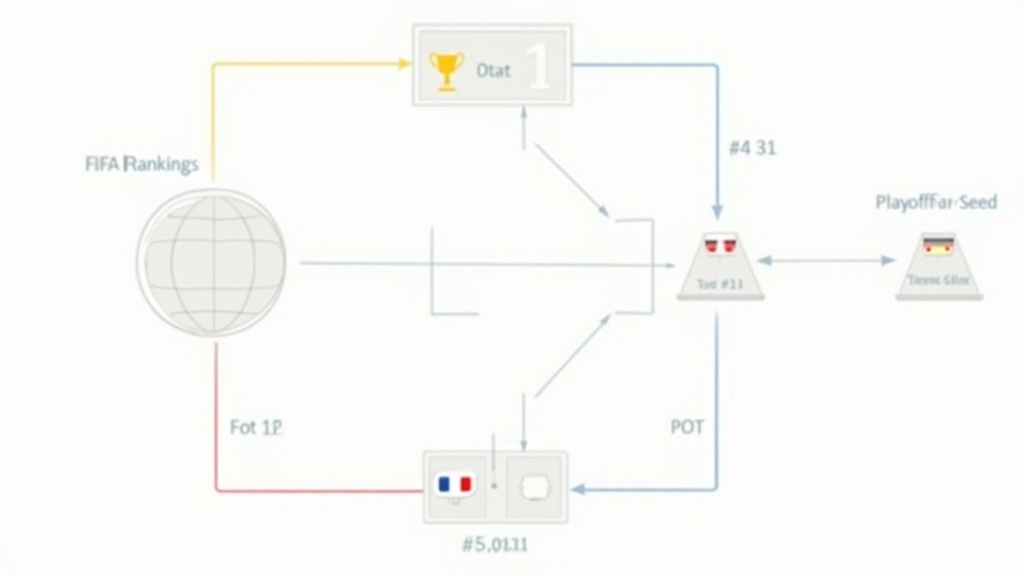
FIFA rankings are the invisible hand guiding the entire qualification process. They’re not just a fan debate topic; they are a functional tool that determines a team’s path.
- Qualification Draw Seeding: For the group stage draws in confederation tournaments (like UEFA’s or AFC’s), teams are placed into pots based on their FIFA ranking at the time of the draw. A higher ranking means being placed in Pot 1, which generally avoids other top teams in the group stage.
- Intercontinental Playoff Seeding: As described, rankings decide who gets a bye and who has to play an extra game in the playoff tournament.
- Final World Cup Draw: Once all 48 teams are known, they are sorted into four pots of twelve teams each for the final World Cup draw, primarily based on FIFA rankings. The only exception is the host nation(s), which are automatically placed into Pot 1. Being in a higher pot means avoiding other top teams in the group stage.
A higher FIFA ranking doesn’t just bring prestige; it delivers a materially easier route to the World Cup. This is why nations often schedule “soft” friendlies against lower-ranked opponents during FIFA international windows – every ranking point matters. It creates a global league structures of sorts, where every official match has consequences beyond the immediate result.
Tie-Breakers and Fine Print
When teams finish level on points in a qualification group, the tie is broken by a specific cascade of criteria. While confederations have slight variations, the standard FIFA order is:
1. Goal difference in all group matches.
2. Goals scored in all group matches.
3. Points in matches between the tied teams.
4. Goal difference in matches between the tied teams.
5. Goals scored in matches between the tied teams.
6. Fair play points (yellow/red cards).
7. Drawing of lots.
Common mistake: Assuming head-to-head record is the first tie-breaker. In most FIFA-organized competitions, overall goal difference across the entire group stage is the primary decider. This encourages attacking play throughout the campaign, not just in direct clashes.
For knockout rounds (like the intercontinental playoff or confederation knockout stages), the away goals rule has been abolished by FIFA. If the aggregate score is level after two legs, the match goes to extra time and then penalties. In single-leg knockout matches, it’s straight to extra time and penalties if tied after 90 minutes.
Frequently Asked Questions
How long does the World Cup qualification process take?
The entire cycle spans about two and a half years. It usually begins shortly after the previous World Cup concludes and finishes with the intercontinental playoffs roughly six to seven months before the next tournament kicks off. The exact schedule varies by confederation.
Do host nations have to qualify?
No. The host nation or nations qualify automatically. For the 2026 World Cup, Canada, Mexico, and the United States have already qualified as co-hosts. Their spots are additional to their confederation’s (CONCACAF) allocated direct slots.
What happens if a host nation qualifies through the normal process?
This is rare but possible. The automatic host spot is guaranteed. If a host nation also finishes in a qualification position, the confederation’s direct slot that would have been allocated to that position is typically given to the next best team. This ensures the total number of teams from that confederation remains as planned.
Can a team switch confederations for qualification?
No. National teams are permanently affiliated with one of the six FIFA confederations based on geographical and political boundaries. They cannot shop for an easier qualification path.
How does the expanded 48-team format change qualification?
It makes it significantly easier for teams from Africa (CAF), Asia (AFC), and Oceania (OFC) to qualify, as those confederations received the largest proportional increases in direct slots. It also increases the number of World Cup teams from 32 to 48, altering the entire World Cup group stage dynamics.
Before You Go
Understanding World Cup qualification is understanding the political and sporting landscape of global football. It’s a multi-layered tournament where a nation’s entire four-year cycle can hinge on a last-minute goal in a match played halfway around the world. The confederation system ensures regional styles are showcased, while the intercontinental playoff provides a final, dramatic crossover. With the expansion to 48 teams, more nations than ever before have a realistic dream, changing the calculus for federations, managers, and players worldwide. The race is already underway.

I come from the “soccer heart” of Germany, the Ruhrpott. I have played, trained and followed soccer all my life and am a big fan of FC Schalke 04. I also enjoy following international soccer extensively.