Soccer World Cup Group Stage Format: 48 Teams & 12 Groups
The 2026 FIFA World Cup group stage format places 48 teams into 12 groups of four. Each team plays three matches. The top two teams from each group (24 teams) and the eight best third-place teams across all groups advance to a new Round of 32 knockout stage. Points are awarded as 3 for a win, 1 for a draw.
Most people think advancing requires finishing first or second. That’s the old rule. Now, a third-place finish with enough points can still get you into the knockouts. It changes how teams approach every group match, especially the final one.
This guide breaks down the new 48-team structure, the precise advancement math, the tie-breaking order that decides close groups, and the logistical reality of a tournament spread across three countries. You’ll see why the format favors consistency over single-game heroics and how it reshapes the entire tournament narrative.
Key Takeaways
- The 2026 World Cup group stage uses 12 groups of four teams, not the initially proposed 16 groups of three.
- Advancement to the knockout stage requires finishing in the top two of your group OR being among the eight best third-place teams across all 12 groups.
- Tie-breakers prioritize head-to-head results between tied teams before considering overall goal difference.
- The “fair play points” tie-breaker (yellow/red card deductions) can eliminate a team before resorting to FIFA ranking or a drawing of lots.
- The group stage schedule from June 11 to June 27, 2026, features 72 matches, with final group games played simultaneously to ensure fairness.
- Teams reaching the final will play eight total matches, adding an extra game compared to previous 32-team tournaments.
How Does the 2026 World Cup Group Stage Work?
The core mechanic is simple. Forty-eight qualified nations are drawn into twelve groups, labeled A through L. Each group contains four teams. Those four teams play each other once in a round-robin format. That yields three matches per team.
The 2026 FIFA World Cup group stage comprises 12 groups (A–L) of four teams each. Teams play three round-robin matches, earning 3 points for a win and 1 point for a draw. The top two teams from each group (24 teams) advance to the knockout stage, along with the eight best third-place teams across all groups, creating a 32-team knockout field. Final group matches are scheduled simultaneously to prevent collusion or unfair advantage.
Win a match, get three points. Draw, get one point. Lose, get zero. After those three games, the teams in each group are ranked from first to fourth based on total points. The ranking decides who moves on.
But moving on isn’t just about your group’s ranking. It’s about your ranking relative to every other group’s third-place team. This is the critical shift.
TL;DR: Finish first or second in your group to guarantee advancement. Finish third and you must hope your point total is among the eight best third-place records across all twelve groups.
The New 48-Team Structure: Why 12 Groups of Four?
FIFA initially floated a format with 16 groups of three teams. It was scrapped. The reason is drama and integrity. With only three teams, one squad could be idle on the final match day, watching its two opponents potentially manipulate a result. A four-team group ensures all four are active on the final day, with the last two matches played at the same exact time. No team gets a tactical breather or a chance to engineer a favorable outcome.
The expansion to 48 teams represents a 50 percent increase from the 32-team format used from 1998 through 2022. This massive jump in the number of World Cup teams aims to include more nations from Africa, Asia, and CONCACAF. The tournament field is simply bigger.
The math is new. Twelve groups of four means 72 group-stage matches. The previous 32-team format with eight groups of four had 48 group-stage matches. That’s 24 extra games before the knockouts even start. For broadcasters and fans, it’s more content. For players, it’s a heavier load from day one.
Advancement Rules: Top Two Plus the Eight Best Third-Place Teams
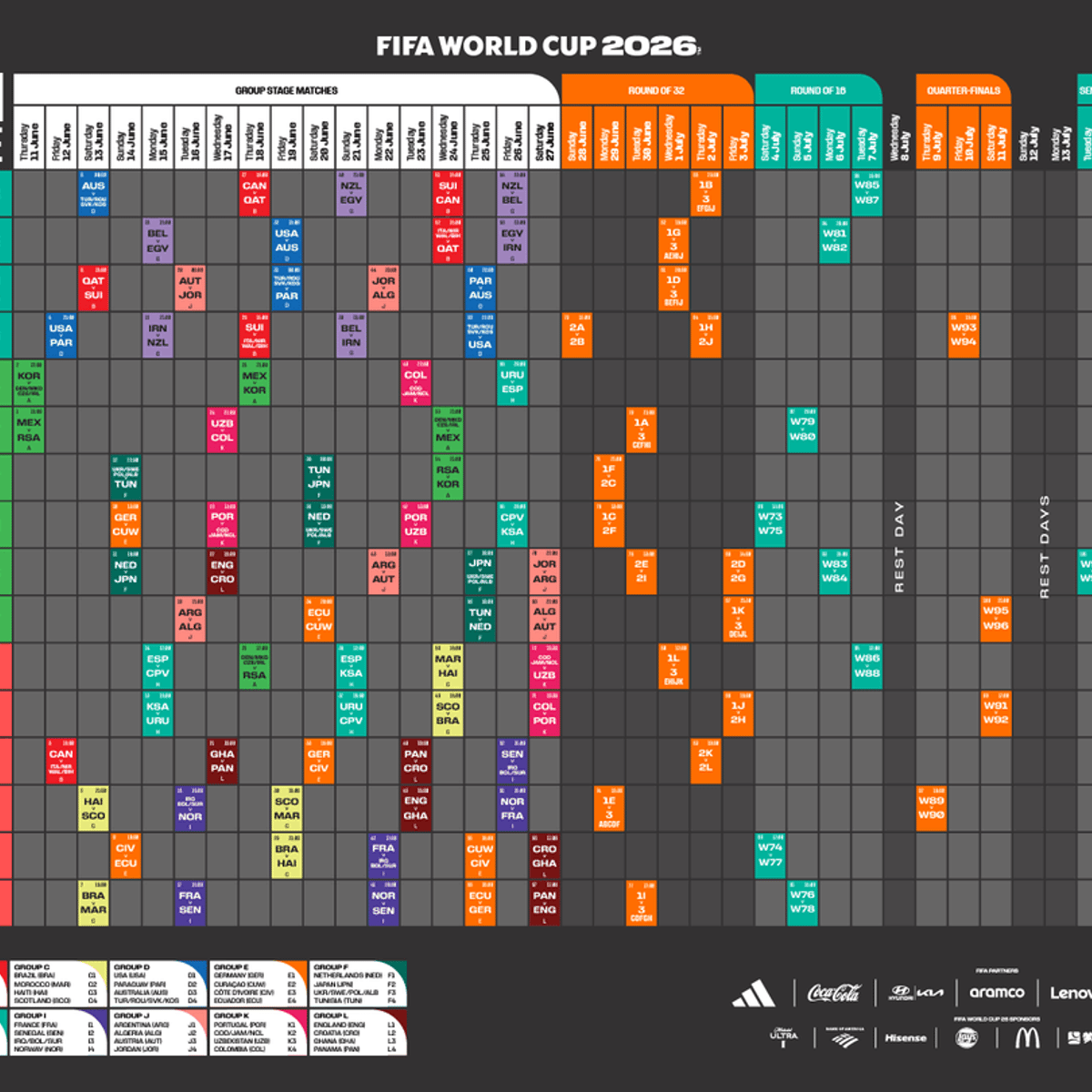
Here’s where strategy changes. In the old 32-team World Cup, third place meant elimination. Now, third place can mean a lifeline. After all group matches conclude, the third-place teams from Groups A through L are lined up and compared.
They are ranked by points, then goal difference, then goals scored, then fair play points. The top eight of these twelve third-place teams advance. They join the 24 group winners and runners-up to form the 32-team knockout field.
Common mistake: Assuming a third-place team with 4 points is safe — if eleven other third-place teams also have 4 or more points, you’re out. The cut is relative, not absolute.
This rule fundamentally alters a team’s approach in the group stage. A single loss doesn’t necessarily spell doom. A team that loses its opener but wins its next two could still finish third with 6 points, which historically would be a strong tally for advancement. The pressure to win every game diminishes slightly, encouraging more tactical, conservative play from middle-tier nations.
The flip side is the knockout path. A third-place qualifier will face a group winner in the Round of 32. That’s a tougher draw than a runner-up, who typically faces another runner-up. The reward for surviving as a third-place team is a harder first knockout match.
| Finishing Position | Advancement Guarantee | Likely Round of 32 Opponent |
|---|---|---|
| Group Winner | Yes | Third-place team or Runner-up |
| Group Runner-up | Yes | Runner-up from another group |
| Third-place (Top 8) | Conditional | Group Winner |
| Fourth-place | No | Eliminated |
Tie-Breakers: The Deciding Order
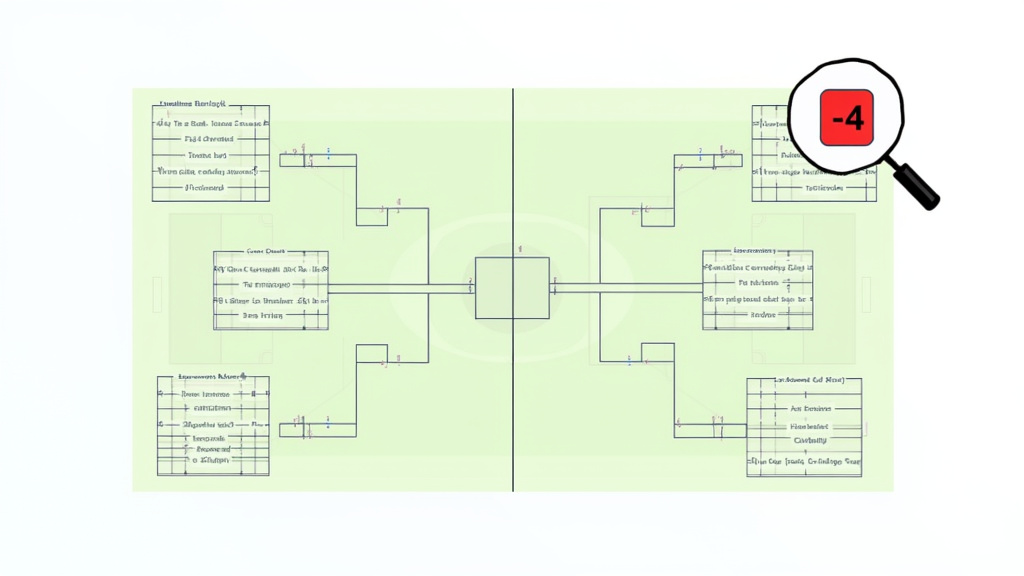
When two or more teams in a group finish with the same number of points, FIFA applies a specific cascade of criteria to separate them. This order matters more than ever, because third-place ranking across groups uses the same logic.
- Points in head-to-head matches between the tied teams.
- Goal difference in head-to-head matches between the tied teams.
- Goals scored in head-to-head matches between the tied teams.
- Overall goal difference in all group matches.
- Overall goals scored in all group matches.
- Fair play points (deductions: -1 for a yellow card, -3 for an indirect red, -4 for a direct red).
- FIFA World Ranking at the time of the tournament draw.
- Drawing of lots.
The head-to-head criteria (steps 1–3) come first. This means a team that beat its direct rival on the field gets priority over a team with a better overall goal difference. It rewards direct confrontation.
The fair play points rule is a wildcard. A team that accumulates several yellow cards, or receives a red card, can be penalized in the standings. This injects discipline into the calculation. In a tight group where points, goal difference, and goals scored are identical, the cleaner team advances.
I watched a youth tournament where two teams were tied on every metric. The tie went to “fair play.” One team had a single yellow card. The other had three. The cleaner team advanced to the final. The coach of the penalized team spent the next season drilling “no reckless tackles” into his players. It changes behavior.
The final resort is a drawing of lots — literally pulling a name from a hat. It’s rare, but it’s in the rules.
TL;DR: Tie-breakers start with results between the tied teams, not overall stats. A single red card can cost you a place if the group is tight on points and goals.
The Schedule and Host Nation Logistics
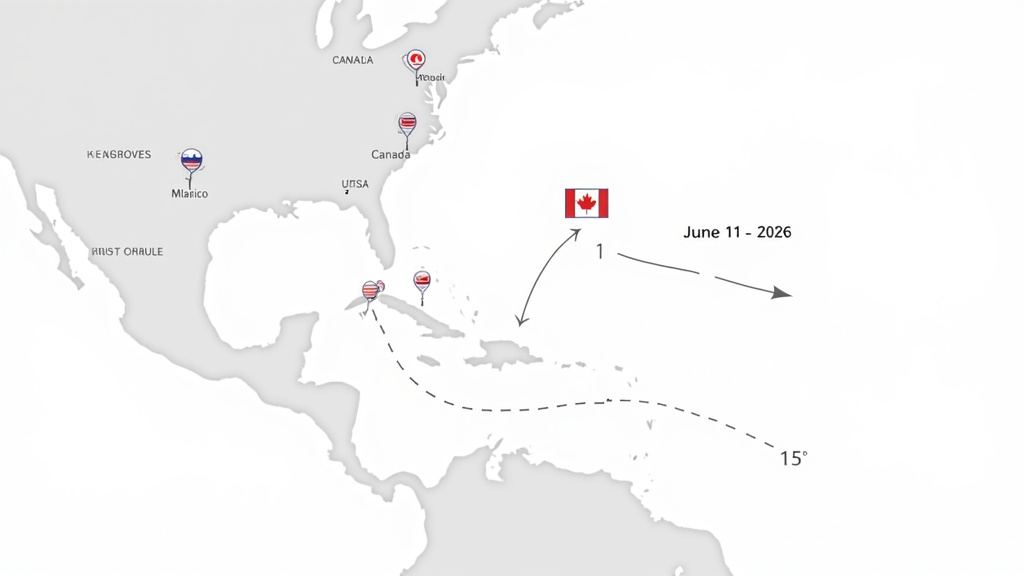
The group stage kicks off on June 11, 2026, in Mexico City. It runs through June 27. Seventy-two matches will be played across 16 venues in the United States, Canada, and Mexico.
This geographic spread is unprecedented. A team based in Vancouver for its group matches could face a Round of 32 game in Miami. The travel distances are continental. Fatigue from travel and climate adaptation becomes a genuine tactical factor. Teams with deeper squad rotations and better travel management will gain an unseen edge.
The final group matches for all twelve groups are scheduled simultaneously. This is a long-standing FIFA policy to prevent any team from knowing a competitor’s result before playing its own final game, which could influence strategy. It ensures absolute fairness.
The condensed schedule means matches are packed. Some venues will host games on consecutive days. For fans, it’s a feast. For organizers, it’s a colossal test of infrastructure.
The New Round of 32 and the Knockout Path
With 32 teams advancing, the knockout stage can’t start with a Round of 16. There are too many teams. So FIFA inserted a new Round of 32. This is the first elimination round.
The Round of 32 matchups are predetermined by a bracket that links group outcomes. Generally, a group winner will face a third-place qualifier from another group. Group runners-up will often face each other. This structure makes winning your group advantageous — you avoid another group winner until the Round of 16.
After the Round of 32, the tournament reverts to the familiar knockout ladder: Round of 16, quarter-finals, semi-finals, and the final in New Jersey on July 19, 2026. A team that goes all the way will play eight matches: three in the group stage, five in the knockouts. That’s one more game than the seven required in the 32-team format.
The additional match increases the physical demand. Squads with injury-prone players or shallow benches will struggle in the later stages. Depth wins tournaments.
Strategic Implications for Teams and the “Group of Death”
The new format softens the concept of a “Group of Death.” In a 32-team World Cup, a group with three strong teams often sent one powerhouse home early. Now, with third-place teams advancing, even a strong team that finishes third in a tough group has a solid chance to survive. The percentage of teams eliminated in the group stage drops from 50 percent (16 of 32) to about 33 percent (16 of 48).
This arguably benefits the traditional giants. A top nation like Germany or Brazil is less likely to suffer a catastrophic early exit. It also gives smaller nations a longer runway. A team from a lesser-known federation might win one game, draw another, lose one, finish third with 4 points, and still advance to the knockout stage for the first time in its history. The exposure is priceless.
The format encourages a points-collection mindset rather than a must-win-every-game mentality. A draw in your second match isn’t a disaster if you’ve already won your first. This could lead to more cautious, tactical games in the group stage, with teams prioritizing point accumulation over spectacular victories.
Common mistake: Celebrating a third-place advancement without planning for the Round of 32 — the opponent is usually a group winner, requiring a tactical shift you haven’t practiced in the group stage.
How This Format Differs from Other Competitions
The FIFA World Cup group stage is unique. Major club competitions like the UEFA Champions League use a similar group-of-four round-robin, but their advancement rules are different. In the Champions League group stage, only the top two advance directly; there is no third-place lifeline. Third place in the Champions League drops you into a secondary competition (Europa League). The World Cup’s third-place route is a direct pass to the main knockout bracket.
Also, the World Cup group stage has no extra time rules or penalty shootouts. Drawn matches end as draws, each team taking one point. Extra time and penalties are reserved for knockout matches. This is a fundamental difference from two-legged ties in club competitions, where aggregate score rules and the now-defunct away goals rule previously decided outcomes.
The World Cup’s tie-breaking cascade is also specific. Unlike many leagues that use overall goal difference as the first tie-breaker, FIFA prioritizes the head-to-head results. This makes the direct duel between tied teams the ultimate decider.
| Competition | Group Format | Advancement | First Tie-Breaker |
|---|---|---|---|
| FIFA World Cup 2026 | 12 groups of 4 | Top 2 + 8 best 3rd-place teams | Head-to-head points |
| UEFA Champions League | 8 groups of 4 | Top 2 only | Head-to-head points |
| UEFA Europa League | 8 groups of 4 | Top 1 only | Head-to-head points |
| Major Domestic League | League table (no groups) | Position based on total points | Goal difference |
Frequently Asked Questions
Do penalty shootouts happen in the group stage?
No. Drawn matches in the group stage end as draws, with each team receiving one point. Penalty shootouts and extra time in knockout matches are only used in the knockout stage to deciding a drawn match.
How are the eight best third-place teams selected?
After all group matches, the twelve third-place teams are ranked using the same tie-breaker criteria as within a group: points, then goal difference, then goals scored, then fair play points. The top eight in that ranking advance.
What happens if two third-place teams have identical records?
The same tie-breaker order applies: head-to-head results (if they played), then overall goal difference, goals scored, fair play points, FIFA ranking, drawing of lots. Since third-place teams are from different groups, a head-to-head comparison is usually impossible, so the tie-breaker jumps to overall goal difference.
Will there still be a “Group of Death”?
Yes, but its lethality is reduced. With three of four teams possibly advancing (the top two plus a potential third-place qualifier), even a very strong group is likely to send two or three teams forward. The term now means “a group where advancement is competitive,” not “a group where a top team dies.”
How does the format affect travel for teams?
Significantly. With 16 host venues across three large countries, teams could face long flights between group matches and knockout games. Fatigue and acclimatization to different climates (e.g., Vancouver vs. Miami) become hidden factors. Well-organized teams with efficient travel plans will benefit.
Is this format permanent for future World Cups?
FIFA has adopted this 48-team, 12-group format for 2026. It is not guaranteed for 2030 or beyond. The governing body often reviews formats after each tournament. If the 2026 experiment proves too cumbersome or unpopular, changes could follow.
Before You Go
The 2026 World Cup group stage is a calculated expansion. Twelve groups of four balance integrity with inclusion. The third-place advancement rule offers a lifeline to smaller nations and a safety net for giants. The tie-breakers prioritize direct duels and fair play.
Remember the travel. The tournament sprawls across three nations. Squad depth and logistics will matter as much as talent. The new Round of 32 adds an extra high-stakes game for everyone.
Finally, watch the fair play points. In a tight group, a single red card could be the difference between advancing and watching the knockout stage from home. Discipline isn’t just moral; it’s mathematical.
Get ready for 72 group-stage matches from June 11 to June 27. It’s the biggest opening act in World Cup history.
I come from the “soccer heart” of Germany, the Ruhrpott. I have played, trained and followed soccer all my life and am a big fan of FC Schalke 04. I also enjoy following international soccer extensively.