Weather at the World Cup: Heat, Storms, and FIFA Protocols
The 2026 World Cup weather threat is defined by three measurable hazards: extreme heat and humidity, afternoon thunderstorms, and poor air quality from wildfires. FIFA’s primary countermeasures are mandatory cooling breaks, scheduling matches for cooler times, and real-time Wet Bulb Globe Temperature (WBGT) monitoring, but leading sports scientists call these plans inadequate for the projected conditions.
Most guides focus on simple temperature. They miss the physics. Humidity turns a 32°C day in Dallas into a physiological trap where the body cannot shed heat. The official metric for this is the WBGT, and about a quarter of all 104 matches are projected to cross the danger threshold. The tournament’s sheer geographical spread across 16 cities introduces other variables, altitude in Mexico, wildfire smoke in the west, and predictable summer storms in the south.
This isn’t a speculation piece. It’s based on the published FIFA schedule, peer-reviewed climate attribution science, and the official player union guidelines. We’ll break down the specific WBGT numbers that trigger delays, the cities with the highest risk, what FIFA is actually doing, and what that means for your trip to see a match.
Key Takeaways
- The Wet Bulb Globe Temperature (WBGT) is the critical metric, not the temperature on your phone. It combines heat, humidity, wind, and solar radiation to measure real physiological stress.
- FIFPRO, the global football players’ union, recommends considering game postponement at a WBGT of 28°C. Scientific models predict about five 2026 matches could hit this level.
- Six host cities. Miami, Houston, Dallas, Monterrey, Kansas City, and Atlanta, have a feasible chance of reaching an extreme WBGT of 32°C during afternoon slots, where the body struggles to cool itself even at rest.
- FIFA’s mandatory cooling breaks and evening kick-offs are a start, but a coalition of sports scientists and doctors has labeled these measures “inadequate,” calling for clearer, stronger protocols.
- Fans must prepare for more than heat: sudden thunderstorms can cause evacuations and long delays, while wildfire smoke could lead to match postponements based on local public health advice.
The 2026 Tournament Canvas: Time, Place, and Climate
The 2026 World Cup runs from June 11 to July 19, peak summer across North America. The final is at MetLife Stadium in New Jersey. This schedule isn’t an accident, it avoids northern winters and southern hemisphere off-seasons, but it locks the event into the continent’s most volatile weather window. The expanded 48-team format means 104 matches, tripling the exposure window for a dangerous weather event compared to recent tournaments.
The geography is the other half of the equation. From Vancouver’s temperate coast to Monterrey’s arid heat and Miami’s subtropical humidity, the environmental baseline shifts dramatically. This variety is a feature of the three-host-nation model, but it forces a one-size-fits-all weather plan to adapt to 16 different microclimates. The travel between these 2026 host cities adds another layer of fatigue for players, messing with circadian rhythms just as they face the highest physical demands.
The tournament’s June-July schedule places it squarely within the North American convective season, where the combination of high surface heating and atmospheric moisture creates daily conditions ripe for rapid thunderstorm development, particularly across the Great Plains and Gulf Coast regions.
TL;DR: The tournament’s summer schedule and continent-wide footprint guarantee encounters with severe seasonal weather, making a unified safety protocol both essential and incredibly difficult to execute.
Heat Stress: The Real Metric You Need to Understand
Forget the forecast high of 35°C. That number is almost meaningless for gauging athlete risk. The Wet Bulb Globe Temperature (WBGT) is what matters. It’s measured with a specialized meter that accounts for four factors: air temperature, humidity, wind speed, and radiant heat from the sun. A high humidity drastically raises the WBGT because it shuts down the body’s primary cooling mechanism, the evaporation of sweat.
FIFA and FIFPRO use WBGT thresholds to guide decisions. These aren’t arbitrary.
| WBGT Threshold | FIFPRO / Medical Guidance | Estimated # of 2026 Matches at Risk |
|---|---|---|
| 26°C | Implement cooling breaks, increased hydration. | ~26 matches (25% of the tournament) |
| 28°C | Consider postponement or delay of kick-off. | ~5 matches |
| 32°C | Extreme heat stress. Health risks escalate significantly even without exertion. | Feasible in 6 host cities during afternoon slots. |
The jump from 28°C to 32°C WBGT is critical. At 32°C, the human body can no longer maintain a safe core temperature through sweating, even in the shade. It’s a physiological limit. This is why the Sports Medicine journal article on 2026 environmental challenges stresses that mitigation must be proactive, not reactive.
Common mistake: Comparing the 2026 heat to Qatar 2022. Qatar was a hot, dry desert. The humid heat forecast for Houston or Miami is physiologically more dangerous because sweat doesn’t evaporate, leading to a faster rise in core body temperature and a higher risk of exertional heat illness within 60 minutes of play.
The risk isn’t evenly distributed. Afternoon matches in certain venues are the primary concern. While some stadiums like Atlanta’s Mercedes-Benz Stadium have domes and air conditioning, many do not. A player’s health history matters too. Those with a previous heat illness episode or underlying cardiovascular conditions are at markedly higher risk. Teams with robust medical staffs will be monitoring this data closely, adjusting pre-cooling routines and hydration plans match by match.
TL;DR: WBGT is the only metric that matters for heat safety. With a quarter of matches likely exceeding the first danger threshold, real-time monitoring and pre-planned interventions are non-negotiable.
Thunderstorms and Air Quality: The Unpredictable Wild Cards
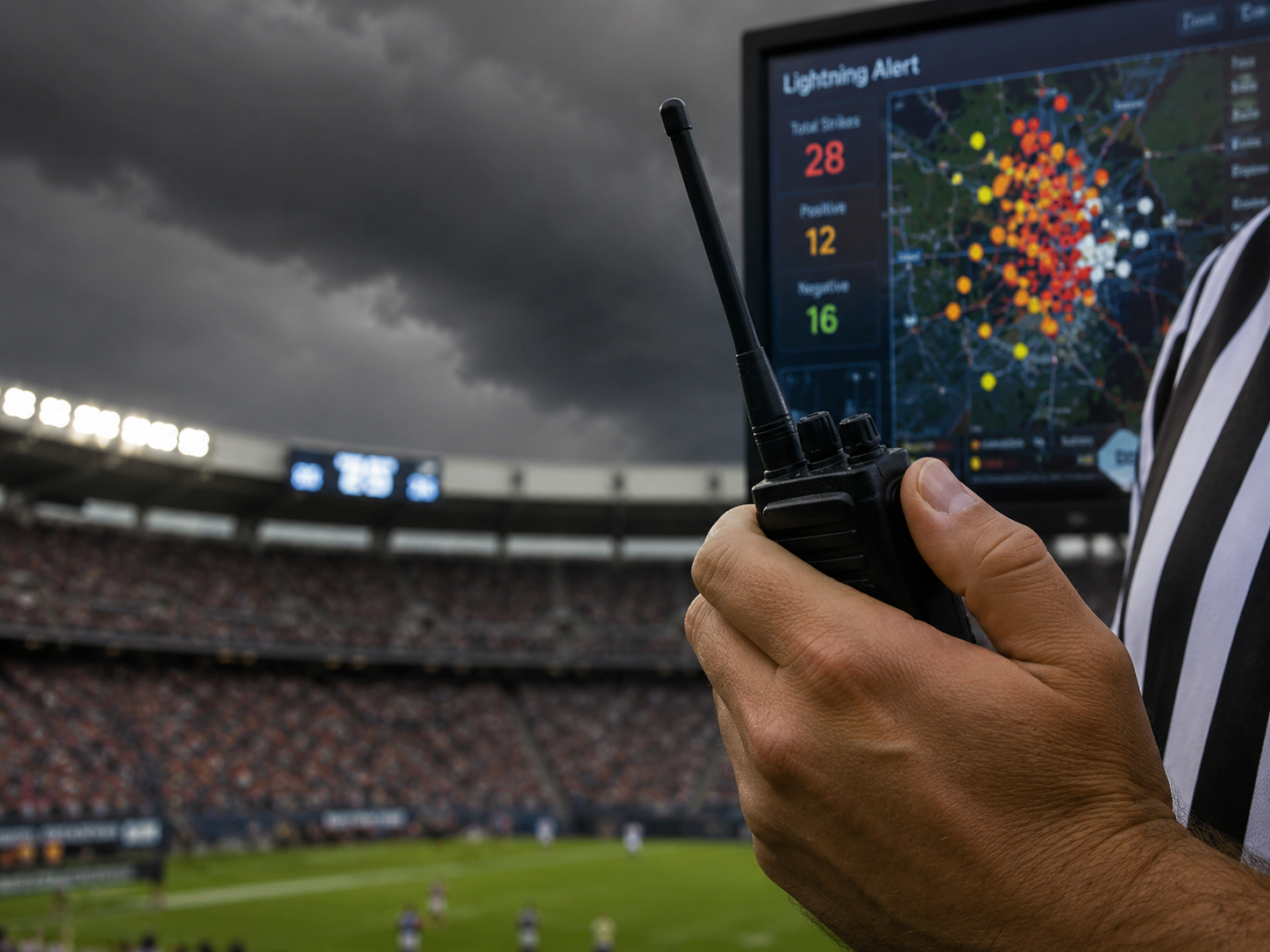
Heat is a predictable danger. Thunderstorms are not. They form quickly in the humid summer air of cities like Miami, Houston, and Atlanta. The official U.S. safety protocol is strict: suspend play if lightning is detected within 10 miles of the stadium. The restart can only happen 30 minutes after the last lightning strike within that radius.
This rule creates logistical chaos. It’s not a five-minute delay. A passing storm cell can halt play for over an hour, forcing 70,000 fans to evacuate seating bowls. Transport networks seize up. For a global broadcast, it shreds the schedule. The uncertainty is the problem, you can’t reliably predict a storm’s path or intensity more than an hour out.
Then there’s smoke. Wildfire smoke, carrying fine particulate matter (PM2.5), presents a different challenge. There is no universal FIFA threshold for air quality cancellation. Decisions would be made in real-time, leaning on local public health authorities. We’ve seen this before. In 2020, an MLS match in Portland was postponed due to hazardous air quality. For 2026, cities like Vancouver, Seattle, and even Denver could face similar scenarios if the western wildfire season is active.
- Thunderstorm Impact: Evacuation delays, transport disruption, potential injury from sudden wind or hail, and broadcast scheduling nightmares.
- Wildfire Smoke Impact: Respiratory irritation for players and fans, reduced visibility, and a high chance of match postponement based on evolving local health warnings.
These events don’t just affect the game on the pitch. They test the entire tournament hosting logistics of a continent-spanning event. A delay in one city can ripple through the tightly orchestrated 2026 tournament structure, affecting team travel, venue turnover, and broadcast windows worldwide.
FIFA’s Playbook: Current Measures and Expert Criticism

Photo: FIFA / Wikimedia Commons / Public domain

FIFA is not blind to the risk. Their announced contingency plan has several concrete layers focused on heat. Every match will have mandatory three-minute cooling breaks in each half, a rule that applies regardless of the initial conditions. They’ve also scheduled the vast majority of matches for late afternoon or evening kick-offs to avoid the peak sun. A dedicated meteorology team will provide real-time WBGT and Heat Index monitoring to match officials.
For fans, the plans include allowing sealed water bottles into venues, expanding free water distribution points, and deploying cooling measures like shaded areas, misting systems, and air-conditioned “cooling buses.” The fixture schedule itself was designed with heat in mind, reportedly assigning higher-risk warm-weather fixtures to covered or air-conditioned stadiums where possible.
A coalition of leading sports scientists, climate experts, and medical doctors published an open letter stating FIFA’s current heat safety plans are “inadequate” and “impossible to justify.” They argue for more aggressive protections, including longer cooling breaks and an automatic, transparent protocol for delaying games that reach a 28°C WBGT.
The criticism hinges on preparation for worst-case scenarios. The scientists’ point is that the current measures might handle a typical hot day but are underpowered for the extreme events climate change is making more likely. The comparison to 2022 in Qatar is instructive. Qatar’s solution was air-conditioned stadiums and a winter tournament. For 2026, the solutions are more procedural than infrastructural, relying on breaks and monitoring. The experts want a harder line, treating the WBGT 28°C threshold not as a suggestion but as a trigger for definitive action.
TL;DR: FIFA has a heat plan centered on cooling breaks and scheduling, but independent experts demand stronger, automatic safeguards tied to strict WBGT limits, arguing the current approach gambles with player health.
Beyond the Pitch: Fan Experience and Preparation
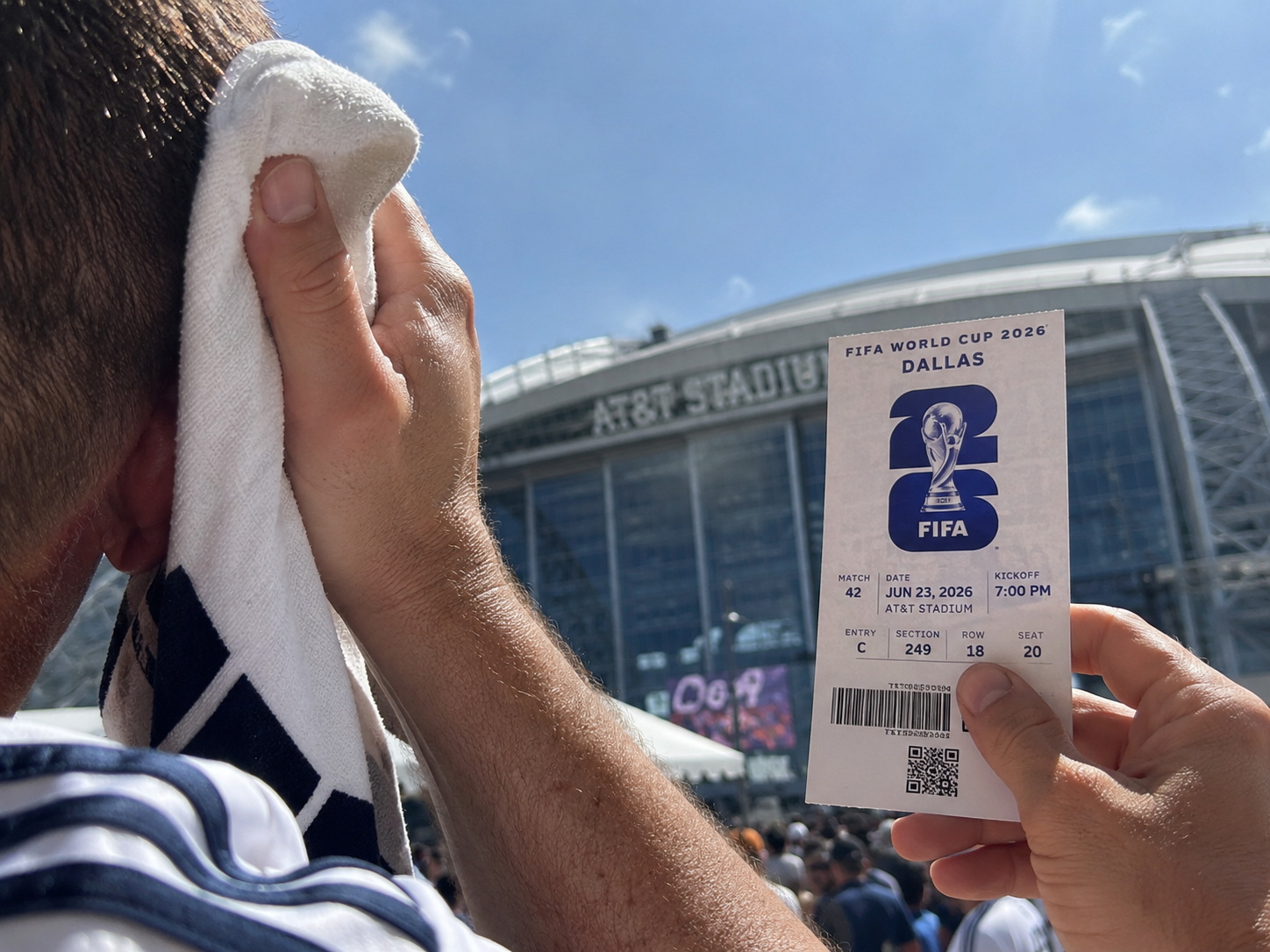
Your experience as a fan will be directly shaped by the weather. It changes simple calculus. That 3:00 p.m. local kick-off in Dallas isn’t just a kick-off time guide entry, it’s a commitment to several hours in potentially dangerous heat. The stadium might feel like an oven during the pre-match build-up, even if the roof is closed. FIFA’s fan cooling measures are a mitigation, not a force field.
Thunderstorms are a bigger disruptor. A delay means you’re shepherded into concourses or, in severe cases, out of the stadium entirely. Your post-match train or bus reservation might be worthless. This kind of disruption has a tangible impact on the host city revenue model, which counts on smooth operations and happy visitors.
So, how do you prepare? Follow the data, not just the hype.
- Monitor WBGT, not temperature. Use a weather app that provides a “feels like” or heat index that incorporates humidity. It’s the closest public proxy.
- Hydrate strategically. Start drinking water the day before the match. At the stadium, use the free water stations. Dehydration sneaks up on you.
- Pack for evacuation. Have a small bag with sunscreen, a cooling towel, a power bank, and a light rain poncho. Know the stadium’s evacuation routes.
- Build delay buffers. Don’t book tight connecting travel on a match day. Assume a thunderstorm could add 90 minutes to your exit plan.
- Check the air. If you’re heading to a western city, subscribe to local air quality alerts. Have a plan for a smoky day that doesn’t involve sitting outside for three hours.
This preparation is part of the new reality of attending massive summer sporting events. The overall tournament economic benefits are calculated assuming everything goes to plan. Weather is the variable that can shred those plans, turning a seamless event into a logistical stress test for visitors and organizers alike.
Frequently Asked Questions
What is the biggest weather threat for the 2026 World Cup?
Extreme humid heat is the most widespread and predictable threat. Scientific models show about a quarter of all matches could be played in conditions (WBGT above 26°C) that require mandatory cooling breaks, with a handful of matches risking conditions so severe (WBGT above 28°C) that postponement should be considered.
Can matches be postponed or cancelled due to heat?
Yes. While FIFA has not published an automatic cancellation threshold, they use the Wet Bulb Globe Temperature (WBGT) to guide decisions. FIFPRO, the global players’ union, officially recommends considering postponement at a WBGT of 28°C. The final decision rests with the match referee in consultation with FIFA’s medical and meteorology teams.
Which host cities have the highest heat risk?
Miami, Houston, Dallas, Monterrey (Mexico), Kansas City, and Atlanta have the highest probability of reaching dangerous WBGT levels, especially for matches scheduled in the early to mid-afternoon. These cities combine high temperatures with significant humidity.
What about thunderstorms and wildfires?
Thunderstorms are a major disruption risk in the southeastern and midwestern U.S. Play will stop for lightning within 10 miles. Wildfire smoke, primarily a concern for western Canadian and U.S. host cities, could lead to postponements based on local air quality health advisories, as there is no fixed FIFA threshold for this hazard.
What is FIFA doing to protect fans from the heat?
Announced measures include allowing sealed water bottles into venues, significantly expanding free water distribution, creating shaded areas and cooling stations with misting systems, and deploying air-conditioned buses near venues as cooling shelters.
How does the 2026 weather risk compare to the 2022 Qatar World Cup?
The risks are different. Qatar’s desert heat was extreme but dry, allowing sweat to evaporate and cool the body. The humid heat forecast for many 2026 host cities is physiologically more dangerous because it prevents evaporative cooling. Furthermore, Qatar’s compact geography and air-conditioned stadiums were engineered solutions; 2026’s continental scale makes uniform protection impossible.
The Bottom Line
The 2026 World Cup will be a tournament defined as much by climate as by football. The science is clear: the risk of dangerous heat has nearly doubled since the USA last hosted in 1994, a change attributed directly to human-driven climate change. FIFA’s current contingency plans are a baseline, not a guarantee of safety. The coming two years will see pressure from player unions and scientists to harden those protocols, especially around the critical 28°C WBGT postponement threshold.
For teams, success will hinge on unseen preparation, sports science staff who master heat acclimation, smart travel scheduling to minimize jet lag, and real-time health monitoring. For fans, the advice is practical. Plan for the weather as seriously as you plan for tickets. Monitor WBGT, hydrate obsessively, and build flexibility into your schedule for thunderstorms. This tournament’s legacy will be its scale and its structural updates, but its story will be written in the summer heat of North America. The teams and fans who respect that reality will fare the best.
I come from the “soccer heart” of Germany, the Ruhrpott. I have played, trained and followed soccer all my life and am a big fan of FC Schalke 04. I also enjoy following international soccer extensively.