The Complete History of England at the FIFA World Cup: Record
England’s FIFA World Cup record is defined by one title (1966), three semi-finals, and a recurring quarter-final exit. They have qualified for 16 of 22 tournaments, failing to reach three. Their history is a blend of ultimate glory, painful penalty-shootout defeats, and the persistent burden of expectation.
England’s World Cup history and record is defined by one iconic victory in 1966, a persistent pattern of quarter-final exits, and three notable failures to even qualify for the tournament. The Three Lions have participated in 16 of 22 post-war finals, reaching the semi-finals three times and the final once. Their journey is a mix of home-soil glory, heartbreaking penalty shootouts, and a reputation for falling just short of the ultimate prize.
Most summaries get the basic facts right but miss the texture. They’ll tell you England won in ’66 and often lose on penalties. They rarely explain why the quarter-final is such a consistent stumbling block, or what exactly went wrong in the campaigns they missed entirely. The story isn’t just about trophies; it’s about near-misses, tactical revolutions, and the weight of expectation.
This guide unpacks every layer. We’ll cover the sole victory, the painful exits, the stars who defined eras, and the tactical shifts that shaped their fate. You’ll get the raw stats and the human stories behind them.
Key Takeaways
- England has won the World Cup once, as host nation in 1966, and is one of only eight nations to lift the trophy.
- The team holds the unfortunate record for the most quarter-final exits (7), a stage they’ve reached more often than any other country.
- England has failed to qualify for the finals three times (1974, 1978, 1994), with the 1994 failure in the USA considered a particular low point.
- Gary Lineker is England’s all-time top World Cup scorer with 10 goals, while Harry Kane (8 goals) is the only Englishman to win the Golden Boot in the 21st century (2018).
- Penalty shootouts have been a defining curse, eliminating England from three major tournaments (1990, 1998, 2006, 2012, 2021), though only the 2006 and 2022 exits were in the World Cup itself.
England’s initial absence from the first three World Cups (1930–1938) stemmed from a dispute with FIFA over amateurism, not footballing quality. The national team withdrew from FIFA in 1928 and did not rejoin until 1946, missing the pre-war tournaments despite being considered one of the world’s best sides.
How Many World Cups Has England Won?
England has won the FIFA World Cup once. The victory came on home soil in 1966, a tournament forever etched in national memory. They defeated West Germany 4-2 after extra time in the final at Wembley Stadium.
That single triumph places them among an elite group of eight champion nations. The context matters. They entered all post-war tournaments from 1950 onwards but took 16 years to claim the title. Since then, despite being perennial contenders, they have not returned to the final. The 1966 win remains a singular peak, a reference point for every subsequent campaign. It created a legacy of expectation that every generation since has struggled to meet.
TL;DR: England are one-time World Cup winners, champions in 1966 as hosts. They haven’t reached the final since.
The 1966 Triumph: A Tactical Revolution on Home Soil
Manager Alf Ramsey didn’t just win a tournament; he changed how England played. He abandoned the traditional wingers that English football revered, deploying a 4-3-3 system that media dubbed the “Wingless Wonders.” It was a pragmatic, possession-based approach built around Bobby Charlton’s passing in midfield and Geoff Hurst’s physical presence up front.
The entire campaign was played at Wembley. England didn’t concede a goal until the semi-final against Portugal, relying on a defense marshaled by captain Bobby Moore. The final itself is folklore: Hurst’s hat-trick, the disputed third goal, and Kenneth Wolstenholme’s commentary. But the foundation was Ramsey’s tactical conviction. He bet against tradition and won. That gamble created a blueprint no England manager has successfully replicated on the world stage since.
Common mistake: Remembering 1966 only for the final and Hurst’s hat-trick, the tactical shift and clean-sheet run through the group stage and quarter-final were the real engine of the victory.
England’s World Cup Record: Participation & Performance

Photo: Hmickey / Wikimedia Commons / CC BY-SA 4.0

England’s relationship with the tournament is one of consistent presence punctuated by glaring absences. They have qualified for 16 of the 22 finals held since they first entered in 1950. The three qualification failures, 1974, 1978, 1994, stand as major blemishes. Each had its own drama: failing to beat Poland at Wembley in 1973, a dismal campaign under Don Revie for 1978, and Graham Taylor’s side finishing behind Norway and the Netherlands for USA ’94.
Once there, their performance arc is unique. No other nation has been eliminated at the quarter-final stage seven times. They’ve reached the semi-finals on two other occasions (1990, 2018), finishing fourth both times. The group stage has tripped them up only three times (1950, 1958, 2014). This paints a picture of a team that reliably navigates the early rounds but finds a glass ceiling in the last eight.
| Tournament Stage | Number of Times Reached | Last Occurrence | Notable Detail |
|---|---|---|---|
| Winners | 1 | 1966 | Host nation |
| Final | 1 | 1966 | – |
| Semi-Finals | 3 | 2018 | Finished 4th in 1990 & 2018 |
| Quarter-Finals | 7 | 2022 | Record for most QF exits |
| Group Stage Exit | 3 | 2014 | Failed to win a game in 2014 |
The table shows a team that is rarely an easy out but struggles to convert quarter-final appearances into semi-final berths. This consistency at a high level, without the ultimate payoff, is the core of England’s modern tournament identity. For a deeper look at how team strategy influences these outcomes, our guide on soccer tactics and strategy breaks down the evolution of systems in high-pressure games.
The Modern Era & The Quarter-Final Curse
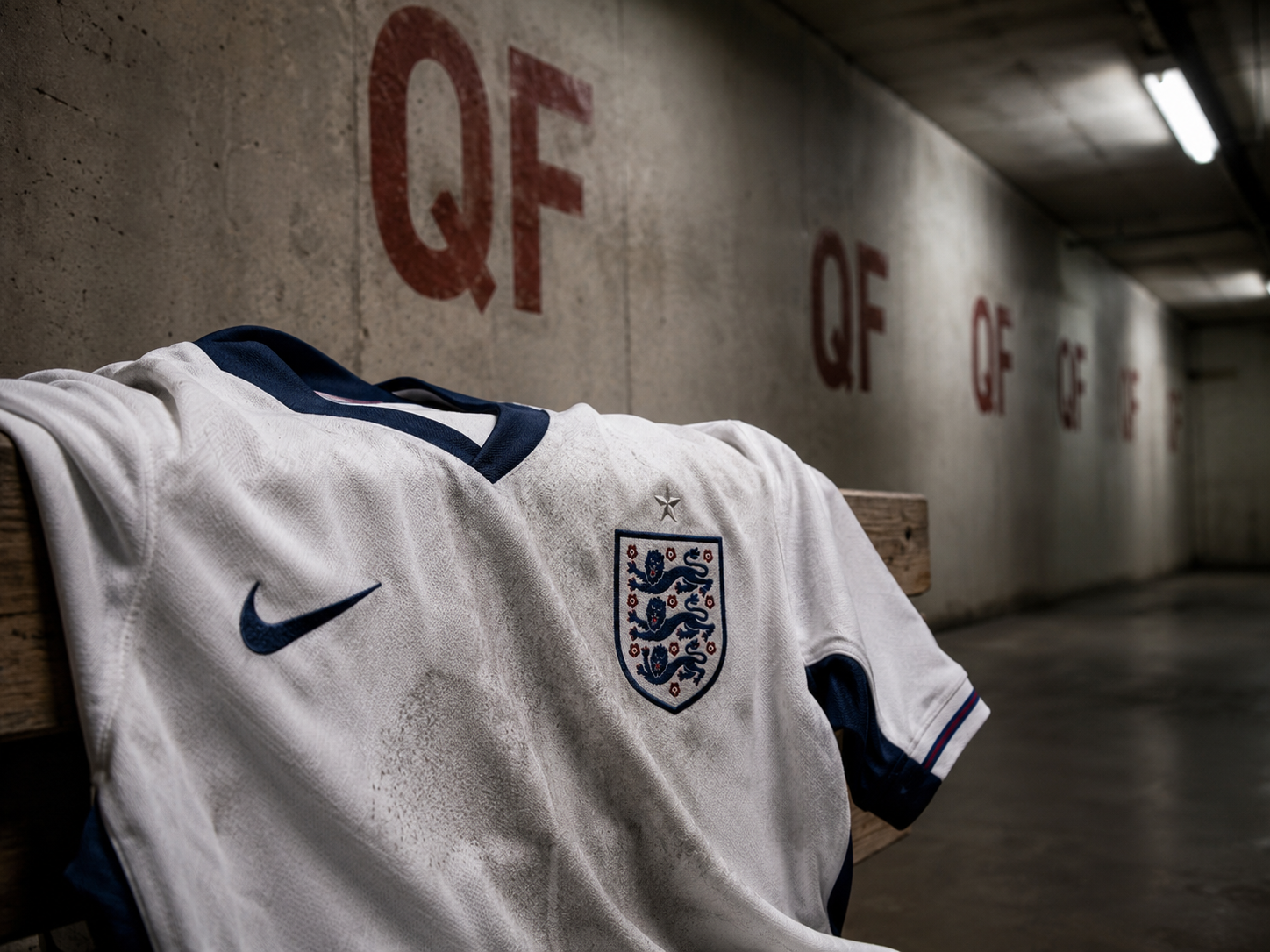
The narrative since 1990 has been defined by near-misses and psychological hurdles. The semi-final run in 1990, ending in a penalty shootout loss to West Germany, rehabilitated English football’s image after the hooliganism of the 1980s. It also began the modern obsession with penalty trauma.
The 2002 and 2006 tournaments under Sven-Göran Eriksson were classic quarter-final exits, competitive losses to eventual champions Brazil and Portugal (again on penalties). The 2010 campaign was a flat 4-1 dismantling by Germany. Each exit had a different flavor, but the stage was always the same. The curse seemed broken in 2018 under Gareth Southgate, with a run to the semi-finals that captured a new generation. Yet even that campaign reinforced the pattern: a semi-final loss, followed by a quarter-final exit in 2022 against France.
I watched England lose to Portugal on penalties in 2006. The cycle felt inevitable. David Beckham went off injured, Wayne Rooney got sent off, and we lost in a shootout. The script was written before the first spot-kick was taken. Southgate’s 2018 run changed the feeling, but the 2022 loss showed the old ghost still lingers.
These repeated failures often came down to a single moment: a missed penalty, a defensive error, or being out-thought by a tactically superior opponent. The team’s formation history in the World Cup often shifted between a cautious 4-4-2 and more fluid systems like the 3-5-2 used in 2018, searching for a formula to get over the line. The common thread is falling one step short of the true elite when it matters most.
England’s World Cup Stats: Goals, Appearances & Awards
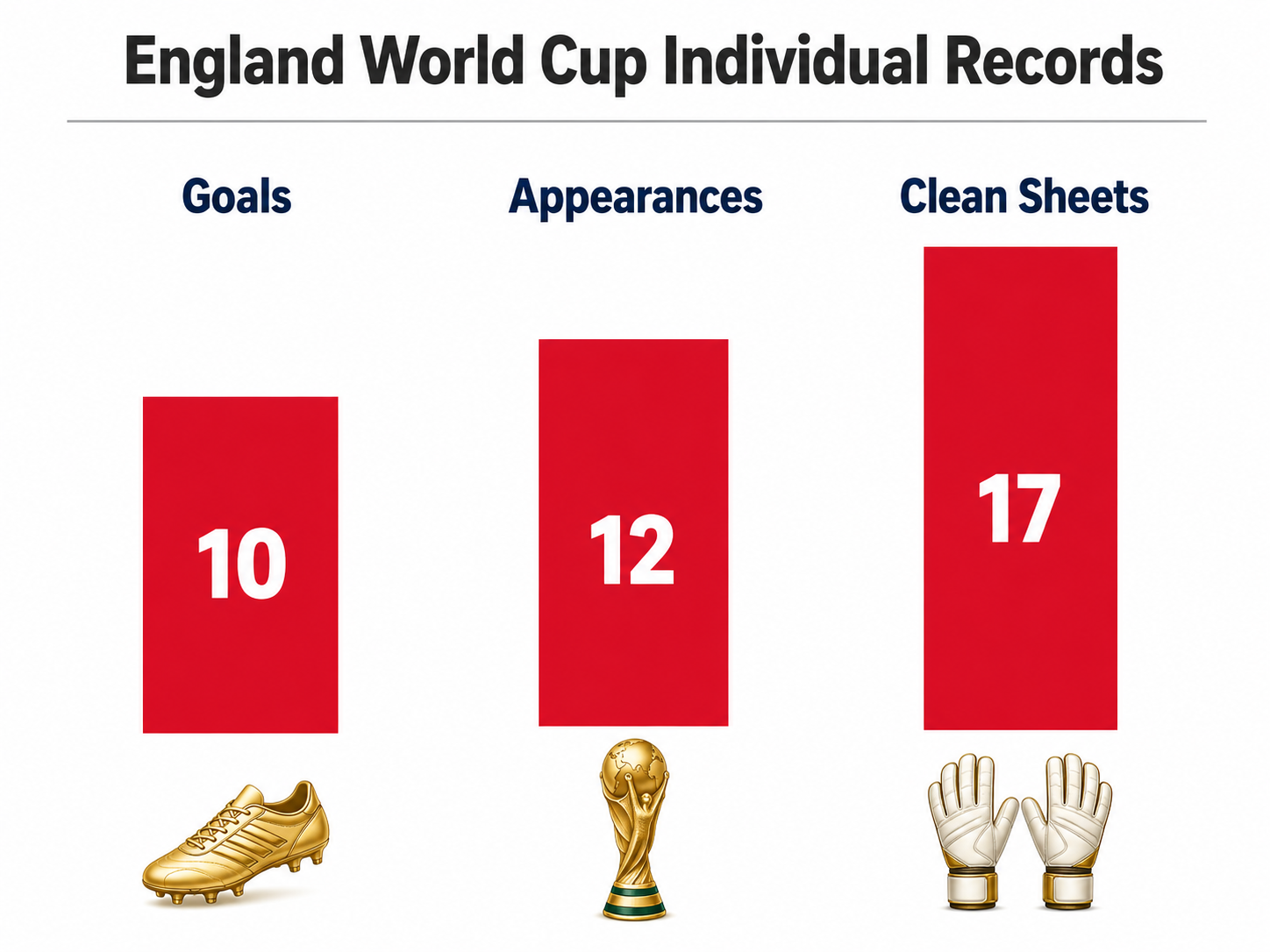
The individual records tell the story of England’s tournament heroes. Gary Lineker’s 10 goals in 12 appearances, winning the Golden Boot in 1986, set a standard for clinical finishing. Harry Kane matched that award in 2018 and sits on 8 goals, likely to challenge the record. In goal, Peter Shilton’s 17 caps and 10 clean sheets represent an era of defensive solidity.
These numbers matter because they highlight the players who delivered when the team advanced. Lineker’s goals propelled the 1990 semi-final run. Kane’s scoring was central to 2018. But the stats also reveal gaps, no English player has won the Golden Ball for best player, for instance. The awards are for goalscorers and reliable goalkeepers, not playmakers who dominate a tournament.
| Player | Record | Detail | Tournaments |
|---|---|---|---|
| Gary Lineker | Top Scorer (10 goals) | Won 1986 Golden Boot | 1986, 1990 |
| Harry Kane | 8 Goals | Won 2018 Golden Boot | 2014, 2018, 2022 |
| Peter Shilton | Most Caps (17) | 10 Clean Sheets | 1982, 1986, 1990 |
| Bobby Charlton | 4 Goals | Key 1966 midfielder | 1962, 1966, 1970 |
The reliance on a single prolific striker is a theme. When that striker is fit and in form, England goes deep. When they’re marked out or injured, the goals dry up. This underscores a historical lack of creative midfield dominance at the highest level. Developing that next generation of finishers is crucial, which is why focused shooting drills for soccer are a cornerstone of elite training.
Why England Missed Early World Cups & Failed to Qualify
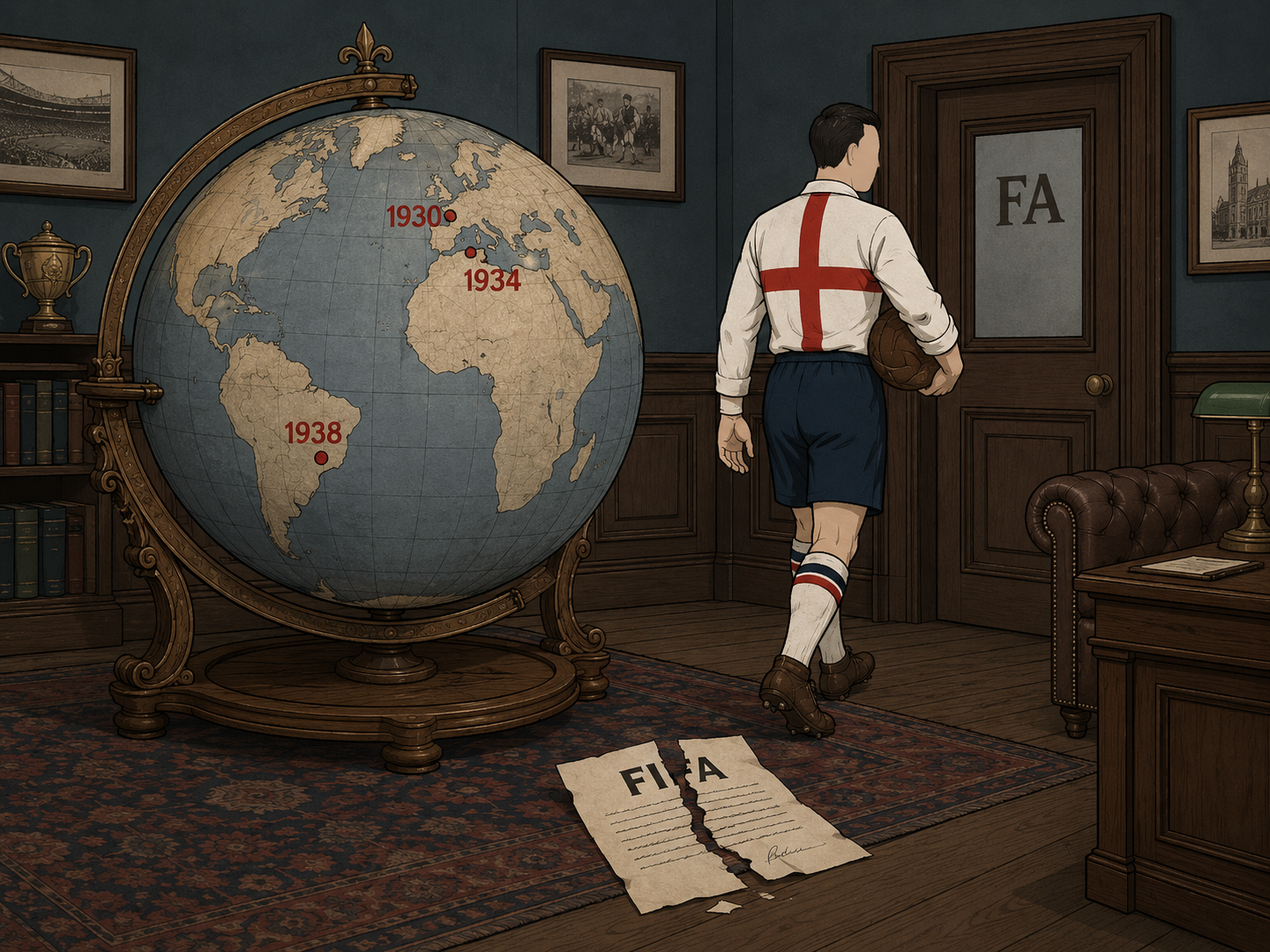
England’s absence from the first three tournaments (1930, 1934, 1938) is a historical oddity. The Football Association had withdrawn from FIFA in 1928 over disputes regarding payments to amateur players. They considered themselves the founders of the game and saw the World Cup as beneath them. This arrogance meant missing the inaugural tournament in Uruguay and the pre-war editions in Italy and France, despite having a team capable of competing.
The qualification failures are more painful modern chapters. The 1974 failure was a shock, sealed by a 1-1 draw at Wembley against Poland where goalkeeper Jan Tomaszewski was heroic. The 1978 campaign was a disorganized mess. The 1994 failure was perhaps the lowest point, with manager Graham Taylor’s tactics heavily criticized as England finished behind Norway and the Netherlands. Each failure had specific causes, poor management, key injuries, or tactical rigidity, but together they form a trilogy of national disappointment that contrasts sharply with the usual expectation of qualification.
The official England World Cup record details every match from these failed campaigns, showing how narrow the margins were. A single goal difference kept them out in 1974.
England’s Biggest Wins, Worst Defeats & Penalty Heartbreak
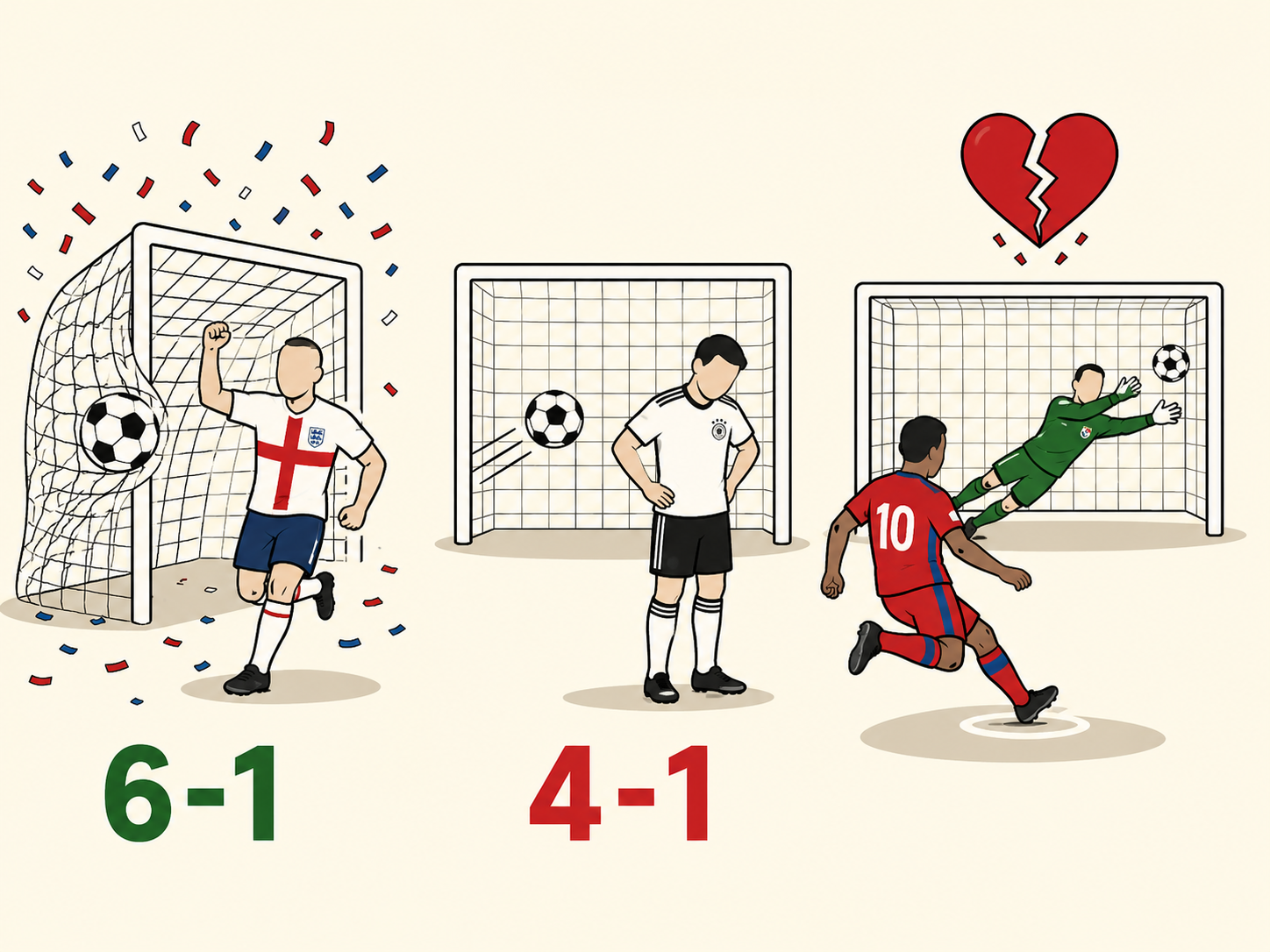
The scorelines trace the emotional extremes. The biggest win, a 6-1 thrashing of Panama in 2018, was a display of attacking fun in a successful campaign. The heaviest defeat, a 4-1 loss to Germany in the 2010 round of 16, was a comprehensive tactical and technical dismantling that felt like a regression.
Then there are the draws that led to penalties. The shootout, more than any heavy defeat, defines England’s modern agony. They have lost three of their five World Cup shootouts (1990, 1998, 2006). The psychological weight of this history is palpable every time a knockout game goes to extra time. It’s a unique kind of pressure that has broken generations of players. Understanding the rules when games stretch beyond 90 minutes is key; our breakdown of overtime rules in soccer explains the format that has so often been England’s undoing.
TL;DR: England’s record includes a 6-1 win (Panama, 2018) and a 4-1 loss (Germany, 2010), but the defining scores are the penalty shootout losses that ended dreams in 1990, 1998, and 2006.
Tactical Evolution: From 1966 to Southgate’s System
England’s tactical journey mirrors football’s global trends. Alf Ramsey’s 4-3-3 “Wingless Wonders” in 1966 was a revolutionary, system-based approach. The 1980s and 90s often saw a rigid 4-4-2, the traditional English formation, which could be effective but predictable against sophisticated opponents.
The 21st century has been a search for flexibility. Sven-Göran Eriksson experimented with a 4-4-2 diamond. Gareth Southgate’s success in 2018 was built on a 3-5-2/5-3-2 system that provided defensive security with wing-backs offering width. By 2022, he had shifted to a 4-2-3-1 to accommodate more attacking talent. This evolution from a rigid national style to a more adaptable, player-specific approach is a necessary modernization, though it hasn’t yet yielded another trophy. Modern managers often weigh systems like the 3-5-2 formation for the balance it provides between defense and attack in tournament football.
Frequently Asked Questions
What is England’s best World Cup performance besides 1966?
England’s next best performances are their two semi-final appearances in 1990 and 2018. On both occasions, they finished in fourth place after losing the semi-final and the third-place playoff match.
Who is England’s all-time top scorer in the World Cup?
Gary Lineker is England’s all-time top scorer in the World Cup with 10 goals, scored across the 1986 and 1990 tournaments. Harry Kane is currently second with 8 goals and is active.
How many times has England failed to qualify for the World Cup?
England has failed to qualify for the FIFA World Cup finals on three occasions: 1974 (West Germany), 1978 (Argentina), and 1994 (United States). They have entered every tournament since 1950.
Why didn’t England play in the first World Cups?
England was not a member of FIFA from 1928 to 1946 due to a dispute over amateurism. This administrative boycott, not a lack of ability, caused them to miss the 1930, 1934, and 1938 tournaments. The full England football team history covers this period in detail.
What is England’s worst World Cup performance?
In terms of results, the 2014 tournament in Brazil was a low point. England finished bottom of their group with just one point and no wins, losing to Italy and Uruguay and drawing with Costa Rica. In terms of impact, the failure to qualify for the 1994 tournament is often viewed as the worst moment.
Has England ever won a World Cup penalty shootout?
Yes, but only once. England won their first-ever World Cup penalty shootout in the 2018 round of 16 against Colombia, breaking a streak of five consecutive shootout losses in major tournaments (including three World Cups).
The Bottom Line
England’s World Cup history is a chronicle of “what if.” It’s defined by one glorious home victory and a relentless series of almosts. The record shows a team that is consistently good, qualifying regularly, often reaching the last eight, but has found it impossible to consistently be great when facing the world’s best.
The 1966 triumph set a standard. The quarter-final exits built a complex. The penalty shootouts became a psychological trap. The current generation, under Gareth Southgate, has lifted the mood and broken some hoodoos, reaching a final and a semi-final in other competitions. But the ultimate goal remains returning to the World Cup final. Until they do, the history will be a story of glorious isolation in 1966, surrounded by decades of honorable, heart-wrenching failure. The foundation is there. The final step is still waiting to be taken.

I come from the “soccer heart” of Germany, the Ruhrpott. I have played, trained and followed soccer all my life and am a big fan of FC Schalke 04. I also enjoy following international soccer extensively.