Lionel Messi’s Full Career and World Cup Story and Journey
This post contains affiliate links. As an Amazon Associate, we earn from qualifying purchases.
Lionel Messi’s career and World Cup story is the tale of a Barcelona prodigy who evolved into Argentina’s ultimate champion, culminating in the 2022 World Cup victory that silenced his final critics and solidified his claim as football’s greatest.
Most narratives get the timeline wrong. They paint his international career as a sudden, late-career explosion of success. The truth is messier. For over a decade, he carried the weight of a nation’s expectation while being labeled a scapegoat for its failures. The 2022 triumph wasn’t a bolt from the blue; it was the final, hard-worn chapter of a 17-year odyssey.
This guide tracks that odyssey. We’ll break down his five World Cups, the club dominance that defined him, the international heartbreak that haunted him, and the legacy-defining victories that rewrote history.
Key Takeaways
- Messi’s international career was marked by early criticism and a painful 2014 World Cup final loss before his late-career triple crown: the 2021 Copa América, 2022 World Cup, and 2024 Copa América.
- His 2022 World Cup performance was historic: he won the Golden Ball, set records for most tournament appearances (26) and most goal contributions (21), and scored in every knockout round.
- The core of Messi’s club career was built at FC Barcelona, where he won 35 trophies, including ten La Liga titles, and became the club’s all-time top scorer before moves to PSG and Inter Miami.
- With eight Ballon d’Or awards, Messi holds the record for the most wins, a key pillar in the argument for him as the Greatest of All Time (GOAT).
- Future participation in the 2026 World Cup remains uncertain, with Messi himself stating “we’ll see” as he balances age with his enduring role for Argentina.
From Rosario to Barcelona: The Foundation of a Legend
Messi’s professional path was decided before he was a teenager. At age 13, facing a growth hormone deficiency, his family moved from Rosario, Argentina, to Barcelona so he could join La Masia, the club’s famed academy. The club agreed to cover his medical treatment. He debuted for the first team at 17 in 2004, replacing Deco in a friendly. Within a year, he was a regular starter.
His early years were defined by a terrifying directness. He received the ball and immediately ran at defenders, his low center of gravity making him almost impossible to dispossess cleanly. Under Pep Guardiola, that raw talent was forged into a tactical weapon. Messi moved from the right wing to a central “false nine” role, unleashing a goal-scoring avalanche. He broke Barcelona’s all-time scoring record held by César Rodríguez in 2012. He did it in 290 fewer games.
Lionel Andrés Messi made his official first-team debut for FC Barcelona on October 16, 2004, in a La Liga derby against RCD Espanyol at the age of 17 years, 3 months, and 22 days. He went on to score 672 goals for the club across 778 appearances, winning 35 trophies including ten La Liga titles and four UEFA Champions Leagues.
The partnership with Xavi and Andrés Iniesta defined an era of total football dominance. The 2009 and 2011 UEFA Champions League finals are masterclasses with Messi at their apex. His first Ballon d’Or win in 2009 announced his arrival at the summit of the individual game. But this unparalleled Lionel Messi’s career at club level created a paradox. The better he became for Barcelona, the heavier the burden grew for Argentina.
The Five World Cups: A Tournament-by-Tournament Breakdown
Messi’s World Cup journey is a five-act play, tracing his evolution from a gifted substitute to a burdened star and finally to a transcendent champion. The numbers tell one story; the emotional arc tells another.
| World Cup | Role & Outcome | Key Contribution | The Feeling |
|---|---|---|---|
| 2006 Germany | Teenage substitute. Argentina eliminated in quarter-finals on penalties. | Scored 1 goal (vs Serbia) in 3 appearances. | Unfulfilled promise. Left on the bench for the decisive shootout. |
| 2010 South Africa | Star player under Maradona. Argentina crushed 4-0 by Germany in quarter-finals. | 0 goals, 1 assist. Heavily marked, system failed around him. | National frustration. The “system” was just giving Messi the ball. |
| 2014 Brazil | Captain and leader. Carried team to final, lost 1-0 to Germany in extra time. | 4 goals, 1 assist. Won Golden Ball as tournament’s best player. | Agonizing heartbreak. The trophy was inches away in the Maracanã. |
| 2018 Russia | Aging captain, exhausted squad. Argentina knocked out 4-3 by France in last 16. | 1 goal, 2 assists in 4 games. A chaotic, disorganized campaign. | Fatigue and decline. The dream seemed over. |
| 2022 Qatar | Undisputed leader and champion. Argentina beat France on penalties in the final. | 7 goals, 3 assists. Won Golden Ball, Silver Boot, and the World Cup trophy. | Ultimate redemption. The prophecy fulfilled. |
TL;DR: Messi’s World Cup story is a 16-year climb from benchwarmer to champion, with the 2014 final loss as the crucial turning point that made the 2022 victory possible.
2006 & 2010: The Apprentice and the False Dawn
In 2006, he was the wonderkid. He came off the bench against Serbia and Montenegro and scored, becoming Argentina’s youngest World Cup scorer. In the quarter-final against Germany, with the game heading to penalties, coach José Pekér kept him on the bench. Argentina lost the shootout. The “what if” haunted his early international narrative.
By 2010, he was the best player in the world. Diego Maradona built the entire team around him, but the tactic was naive. Opponents surrounded him with three markers, and his teammates lacked the structure to exploit the space he created. The 4-0 quarter-final loss to Germany was a brutal lesson: individual genius needs a collective plan. This period cemented his unfair reputation as a global football icon who couldn’t translate his club form to the national team.
2014: The Heartbreak That Forged a Captain
Brazil 2014 was the pivot. Messi was now the captain. He dragged a functional but unspectacular team to the final almost single-handedly, scoring crucial goals against Bosnia, Iran, and Nigeria in the group stage, and providing a magical assist for Ángel Di María against Switzerland. Winning the Golden Ball felt like a consolation prize as he stared at the World Cup trophy passing him by after Mario Götze’s extra-time winner.
That loss changed him. The quiet boy from Rosario became a vocal leader. The pain of 2014 is the essential backdrop to the joy of 2022. You cannot understand the tears in Qatar without remembering the hollow stare in Rio. This visceral experience separates his story from other Argentine soccer legends.
The International Breakthrough: Copa América and the Road to Qatar

Photo: LG전자 / Wikimedia Commons / CC BY 2.0

The eight years between the 2014 final loss and the 2022 World Cup were a rollercoaster of near-misses and mental fortitude. Argentina lost two more Copa América finals (2015, 2016) in excruciating fashion, including a penalty shootout defeat to Chile where Messi infamously missed his spot-kick and briefly retired from international duty.
The turnaround began with the appointment of coach Lionel Scaloni. He built a balanced, hard-working team that played for Messi, not just through him. The 2021 Copa América victory over Brazil at the Maracanã was the catharsis. It was Argentina’s first major trophy in 28 years and Messi’s first with the senior team. You could see the physical weight lift from his shoulders.
Common mistake: Believing Messi’s 2022 World Cup win came out of nowhere — it was the direct result of the confidence, tactical structure, and team spirit forged during the 2021 Copa América triumph. Skipping that context misses the entire story.
That victory created an unshakable belief. They followed it by beating European champions Italy in the 2022 Finalissima. By the time the World Cup in Qatar began, Argentina was no longer a one-man team. They were a cohesive unit with a world-class leader. This foundation allowed them to survive the shock opening loss to Saudi Arabia, a moment that would have broken previous Argentine squads.
The 2022 Triumph: Cementing the Legacy
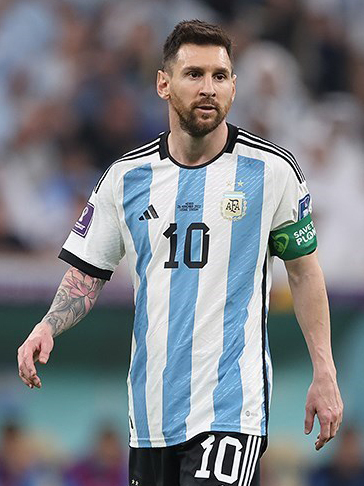
Photo: Hossein Zohrevand / Wikimedia Commons / CC BY 4.0

The 2022 tournament was Messi’s masterpiece. He scored in every single knockout round: a deflected strike against Australia, a clinical finish against the Netherlands, a cool penalty against Croatia, and two goals in the epic final against France. His first knockout goal came in his 1,000th senior career appearance. The symbolism was perfect.
He didn’t just score. He orchestrated. His pass for Nahuel Molina’s goal against the Netherlands was a lesson in vision. His dribble and assist for Julián Álvarez against Croatia was a moment of pure, untouchable genius. By the end, he held or shared these records:
* Most World Cup appearances: 26 matches.
* Most World Cup goal contributions: 21 (13 goals, 8 assists).
* Oldest player to win the Golden Ball (35 years old).
* First player to score in the group stage, round of 16, quarter-final, semi-final, and final in a single tournament.
The final itself was the greatest in history. Messi scored a penalty and a rebound in regular time, then converted his penalty in the shootout. When Gonzalo Montiel scored the winning spot-kick, Messi fell to his knees. The 36-year wait for Argentina was over. His personal 16-year quest was complete. The entire nation of Argentina declared a national holiday. For a deeper look at the dramatic finishes that define tournaments, see our analysis of historic overtime games.
The GOAT Debate: Where Messi Stands in History
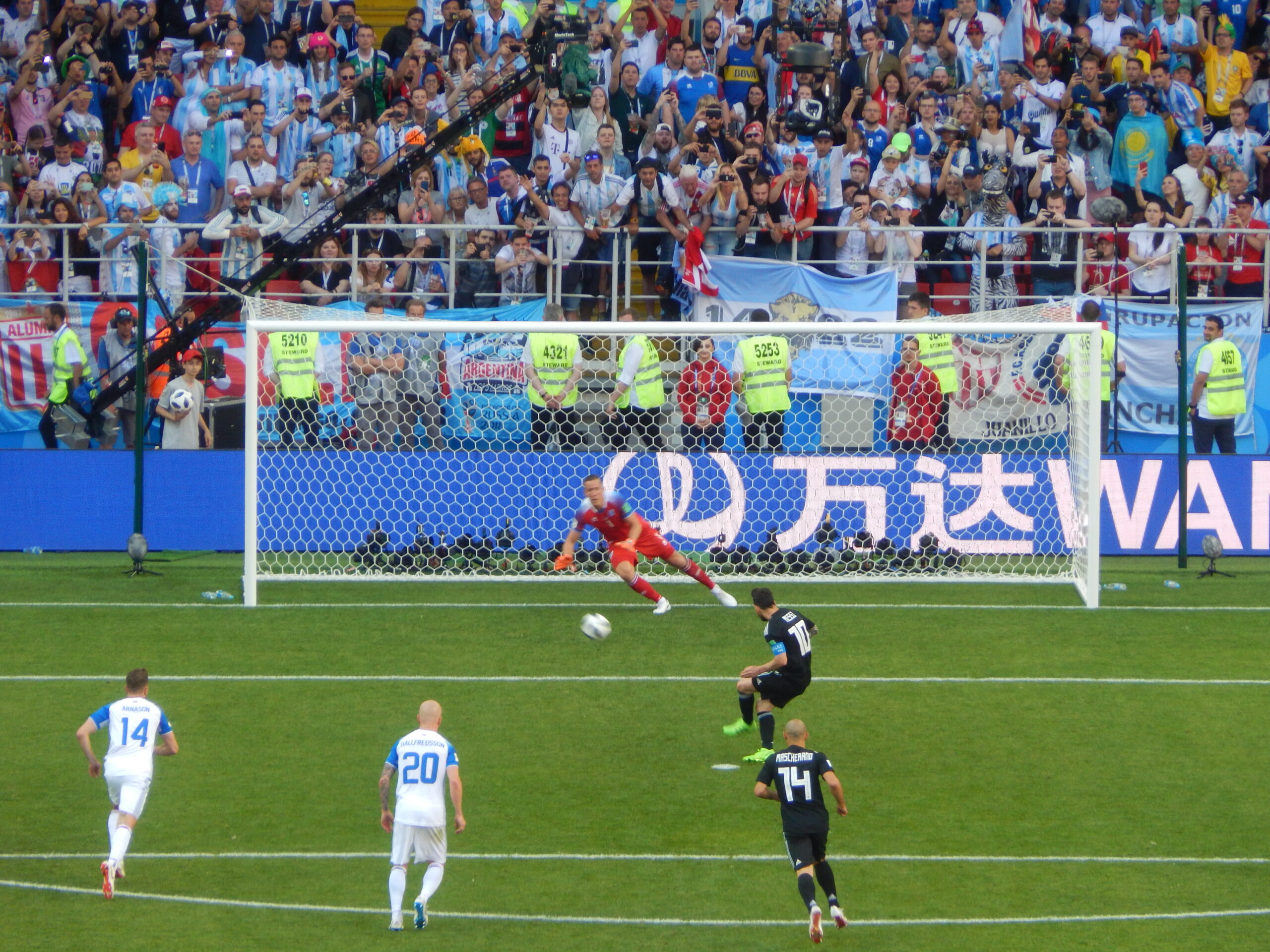
Photo: Voltmetro / Wikimedia Commons / CC BY-SA 4.0

The Greatest of All Time conversation is subjective, but Messi’s 2022 World Cup victory provided the final, most compelling piece of evidence. Before Qatar, the common critique was his lack of a World Cup, especially when compared to Pelé (3 wins) and Diego Maradona (1 win, 1986). That argument is now obsolete.
His case rests on a unique blend of longevity, statistical dominance, and aesthetic brilliance.
1. Trophy Count: He is the most decorated player in professional football history with 46 senior team trophies.
2. Individual Awards: A record eight Ballon d’Or awards.
3. Statistical Dominance: Over 800 career goals and more than 350 assists, showcasing he is arguably the greatest goalscorer and the greatest playmaker, a dual-threat unmatched in the modern era. His place among playmaking legends is secure.
4. Aesthetic Impact: His style of play—a low center of gravity, impossible close control, and preternatural vision—redefined what was possible on a football pitch.
Where does he rank? For many, the debate is closed. ESPN named him the greatest player of the 21st century. The 2022 World Cup was the definitive stamp on a career that had already redefined excellence. His influence extends beyond the pitch, making him one of the most followed players in the world.
What’s Next? MLS, 2026, and the Final Chapter
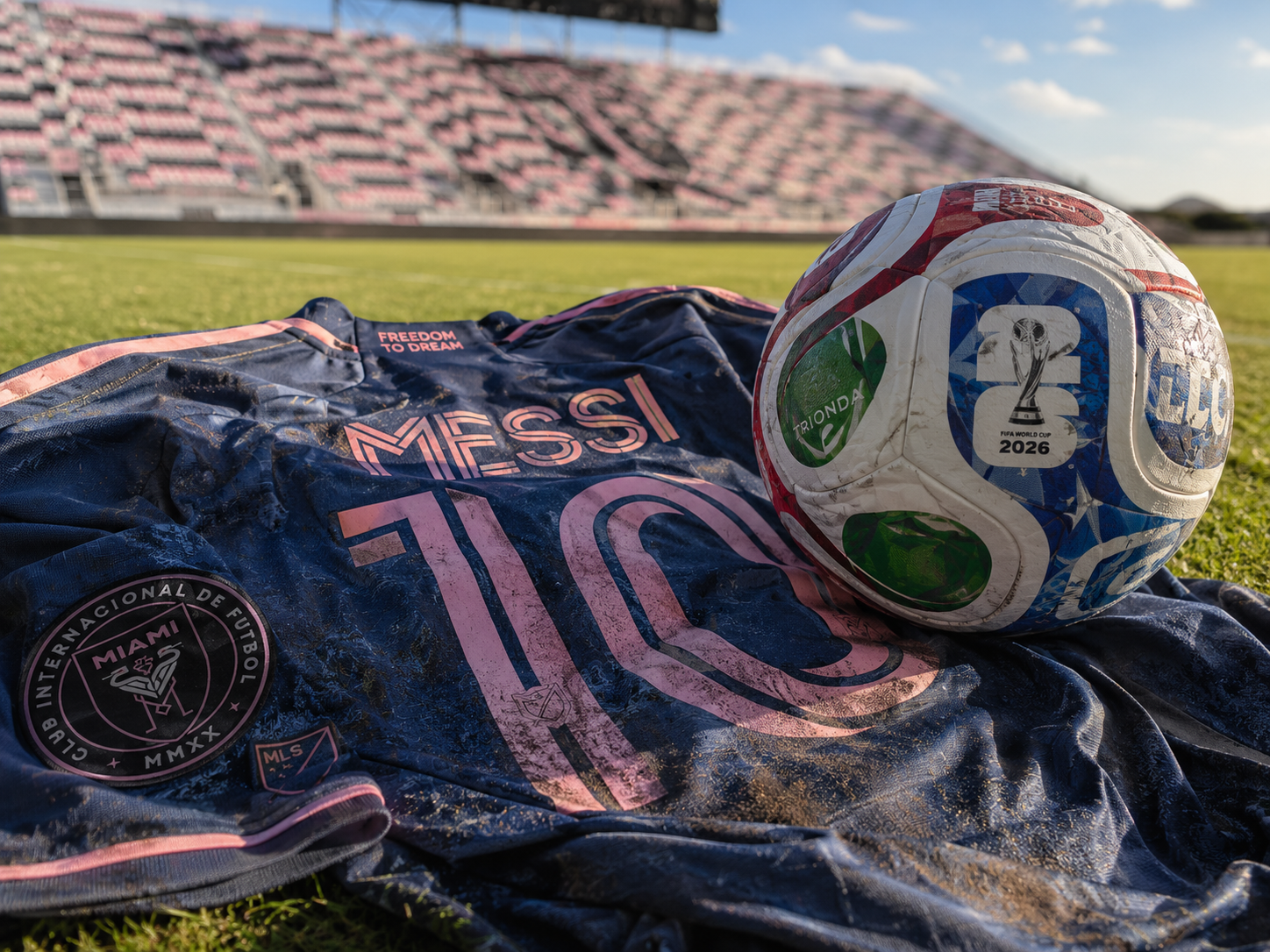
After his Barcelona contract expired in 2021 due to La Liga’s financial regulations, Messi spent two seasons at Paris Saint-Germain, winning Ligue 1 titles. In a landmark move for American soccer, he joined Inter Miami CF in 2023. His impact was immediate, leading the club to its first-ever trophy (the Leagues Cup) and elevating the market values and profile of the entire MLS.
The burning question is the 2026 World Cup. Messi will be 39. He has been included in Argentina’s preliminary squad, but his participation is uncertain. After his final qualifying match in 2023, he was candid, telling the ESPN report on Messi’s World Cup comments, “I don’t know if I’ll be there… I’ll see how I feel.” Coach Scaloni has said Messi has “earned the right” to decide on his own terms.
Whether he plays or not, his legacy is untouchable. He has shifted from the relentless protagonist to a legendary figure shaping the game’s growth in North America. His story, from the boy in Rosario to the king of world football, is complete.
Frequently Asked Questions
How many World Cups has Lionel Messi won?
Lionel Messi has won one FIFA World Cup. He was the champion and captain of Argentina at the 2022 tournament in Qatar. He also reached the final in 2014, where Argentina lost to Germany.
What is Lionel Messi’s World Cup goal tally?
Across five World Cup tournaments (2006, 2010, 2014, 2018, 2022), Messi scored 13 goals. He is Argentina’s all-time top scorer at the World Cup, surpassing Gabriel Batistuta. His best tournament was 2022, where he scored 7 goals.
Did Messi win a World Cup Golden Ball?
Yes, he won the Golden Ball twice, awarded to the tournament’s best player. He first won it in 2014 despite Argentina losing the final. He won it again in 2022, becoming the oldest and first two-time recipient of the award.
How many Ballon d’Or awards does Messi have?
Lionel Messi has won a record eight Ballon d’Or awards (2009, 2010, 2011, 2012, 2015, 2019, 2021, 2023). This is the most of any player in the award’s history.
Will Lionel Messi play in the 2026 World Cup?
As of now, it is uncertain. Messi has said “we’ll see” and will evaluate his physical condition as the tournament approaches. He will be 39 years old during the 2026 World Cup, which will be hosted by the United States, Canada, and Mexico.
The Bottom Line
Lionel Messi’s career is the standard by which modern football is measured. His World Cup story, in particular, is a masterclass in resilience. It wasn’t a straight line to glory but a 17-year saga of pressure, heartbreak, and ultimate vindication. The boy who left Argentina for medical treatment returned as a conquering hero, having delivered the one prize his nation coveted above all others.
The numbers—eight Ballon d’Or trophies, 46 team titles, a record 26 World Cup appearances—are staggering. But the true legacy is in the moments: the dizzying dribbles, the impossible passes, and the image of him finally cradling the World Cup. For the full, detailed chronology, the Wikipedia biography of Lionel Messi remains the definitive source. He didn’t just meet the impossible expectations placed upon him; he surpassed them, rewriting the history of the sport in the process.
I come from the “soccer heart” of Germany, the Ruhrpott. I have played, trained and followed soccer all my life and am a big fan of FC Schalke 04. I also enjoy following international soccer extensively.