The Career and World Cup Story of Spanish Midfielder Pedri
Pedri’s career and World Cup story is defined by a meteoric ascent to stardom with FC Barcelona and the Spanish national team, a brutal physical toll from consecutive tournaments, and an ongoing battle with injuries that has tested his resilience while cementing his status as a generational midfield talent.
Most profiles get lost listing his awards. They miss the physical cost. A teenager playing 73 official matches in a single calendar year isn’t just impressive; it’s a red flag written in muscle tissue. His body sent the invoice later.
This guide traces his path from a rejected Madrid trialist to a Barcelona linchpin, through the highs of Euro 2020 and the frustration of the 2022 World Cup, right up to the bittersweet triumph of Euro 2024. We will look at the numbers, the injuries, and the unshakeable talent that makes his story so compelling.
Key Takeaways
- Pedri’s professional football diet and insane workload, 73 games in 2021, directly contributed to the hamstring and quadriceps injuries that have plagued him since, a classic case of a young body pushed beyond its limits.
- His 2022 FIFA World Cup campaign was solid but unspectacular, starting all four of Spain’s matches as the team struggled for cutting edge before a penalty shootout loss to Morocco; his bigger dream remains unfulfilled.
- Beyond technical grace, Pedri’s effectiveness hinges on an elite soccer-specific fitness engine, regularly covering over 13 kilometers per game, a work rate that matches and often exceeds veteran midfielders.
- The knee ligament injury sustained in the Euro 2024 quarter-final against Germany robbed him of a potential tournament-winning moment, but his earlier performances were crucial to Spain’s eventual victory.
- His career trajectory offers a masterclass in modern soccer tactics, evolving from a pure playmaker into a versatile, high-intensity midfielder capable of fulfilling multiple roles in Barcelona’s and Spain’s systems.
From Canary Islands Rejection to Catalan Prodigy
Pedri’s origin story isn’t a smooth path to glory. It starts with rejection. As a youth player from the Canary Islands, he traveled to Madrid for a trial. The weather turned, the pitch iced over, and a kid used to warmer climes looked out of place. Real Madrid’s verdict was blunt. He returned to UD Las Palmas angry. That anger fueled a monstrous season in the Spanish second division.
Barcelona scouted him, saw the composure, and paid a mere €5 million plus add-ons in 2019. Even then, doubt lingered. When Ronald Koeman arrived as coach in 2020, his initial plan was to loan the slight teenager out. The intervention of senior players, acutely aware of the club’s financial straits and need for fresh talent, helped change his mind. Pedri stayed. He debuted in September 2020 and never looked back.
Pedro González López (Pedri) signed his first professional contract with FC Barcelona in August 2020 after a €5 million transfer from UD Las Palmas. His current contract, renewed in October 2021, includes a €1 billion release clause and runs until June 2026. He made his 50th appearance for the club at 18 years and 164 days, becoming the second-youngest player to reach that milestone.
His integration was seamless. He didn’t play like a debutant. The game slowed down for him. He found pockets of space, received the ball under pressure, and always chose the right pass. By Christmas, he was undroppable. This rapid adaptation from the second division to the Camp Nou is a testament to a footballing IQ that places him among other prodigious young talents. His early club career leap was as dramatic as it was rare.
The Meteoric Rise and Relentless Schedule
The 2020/21 season wasn’t just a breakthrough; it was a physical onslaught. Pedri played 52 games for Barcelona. He then debuted for Spain in March 2021 and was immediately a starter for Luis Enrique’s Euro 2020 squad. He played in every single minute of Spain’s knockout matches, a staggering feat for an 18-year-old. The tournament ended in July.
Instead of a holiday, he went to the Tokyo Olympics. Spain reached the final, requiring extra time. By the time he returned, he had played 73 official matches for club and country in one calendar year. The football world took notice, awarding him the 2021 Golden Boy and Kopa Trophy. His body, however, registered a protest. The following season was marred by muscle injuries. The athlete workout regimen had to be recalibrated. The engine was willing, but the chassis needed maintenance.
This period is crucial for understanding his later injury struggles. It wasn’t bad luck. It was the inevitable consequence of a schedule that would break most seasoned veterans. His professional training plans now include meticulous load management, a direct lesson learned from this brutal year. The quest for trophies with his club, detailed alongside other future soccer legends, often comes with this physical price.
What is Pedri’s Playing Style and Signature Impact?
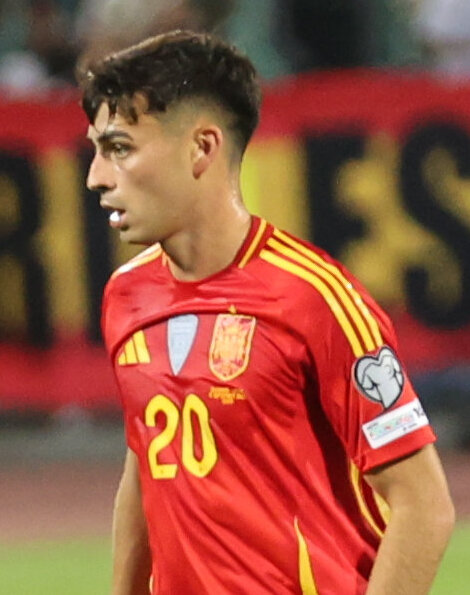
Photo: Biso / Wikimedia Commons / CC BY 4.0
.jpg)
Calling Pedri a creative midfielder is true but incomplete. His game is built on three pillars: preternatural calm, immaculate technique, and an engine that doesn’t quit. He averages over 13 kilometers per match. That’s more than most elite box-to-box players. This allows him to be a constant passing option, a pressing trigger, and a defensive presence.
His signature move is the half-turn. A defender closes him down, Pedri receives the ball on his back foot, uses one touch to spin 180 degrees, and is suddenly driving into open space. It looks simple. It’s incredibly difficult, requiring perfect spatial awareness and touch. This skill makes him a master at progressing the ball through crowded midfield zones, a key principle in any strategic principles of play.
Common mistake: Comparing Pedri solely to classic Spanish tiki-taka passers. His game has that lineage, but his physical output and ability to carry the ball forward add a dynamic, modern layer that players like Xavi or Iniesta did not prioritize to the same degree.
He is not a prolific goalscorer or a traditional number 10. His value is in control and chance creation. He dictates the tempo. When he plays, Barcelona’s possession has more purpose. Spain’s midfield finds better angles. This playmaking vision places him in the conversation with historic creative midfield maestros, though his career assist numbers are still building. His role is the embodiment of sophisticated advanced football tactics.
TL;DR: Pedri is a high-intensity controller, not just a passer. His 13+ km work rate enables his technique, making him a modern hybrid midfielder who dictates play through movement and intelligence.
Pedri’s World Cup Journey: 2022 Campaign and Future Dreams

Photo: Biso / Wikimedia Commons / CC BY 4.0

The 2022 FIFA World Cup in Qatar was a mixed chapter. Pedri started all four of Spain’s matches. He was tidy, efficient, and the hub of most build-up play. Yet, the team’s overall performance was frustrating. They dominated possession but lacked a cutting edge, famously losing 2-1 to Japan in the group stage and then exiting on penalties to a dogged Morocco in the round of 16.
For Pedri, it was a learning experience. He was now the established starter, the player opponents targeted to disrupt Spain’s rhythm. He handled the pressure well, but he couldn’t provide the moment of magic to break down deep defenses. In interviews after the tournament, he was clear-eyed. He spoke of his dream to win the World Cup but admitted, “Winning it isn’t easy.” The ambition is there, unmet.
This World Cup experience solidified his status as a core pillar for the next cycle. His performance, while not tournament-defining, proved he belonged on the biggest stage. The narrative now shifts to 2026. Can a more mature, physically managed Pedri lead Spain to glory? His development will be a central plotline in the stories of the dominant 2026 players.
The Injury Battles and Euro 2024 Heartbreak
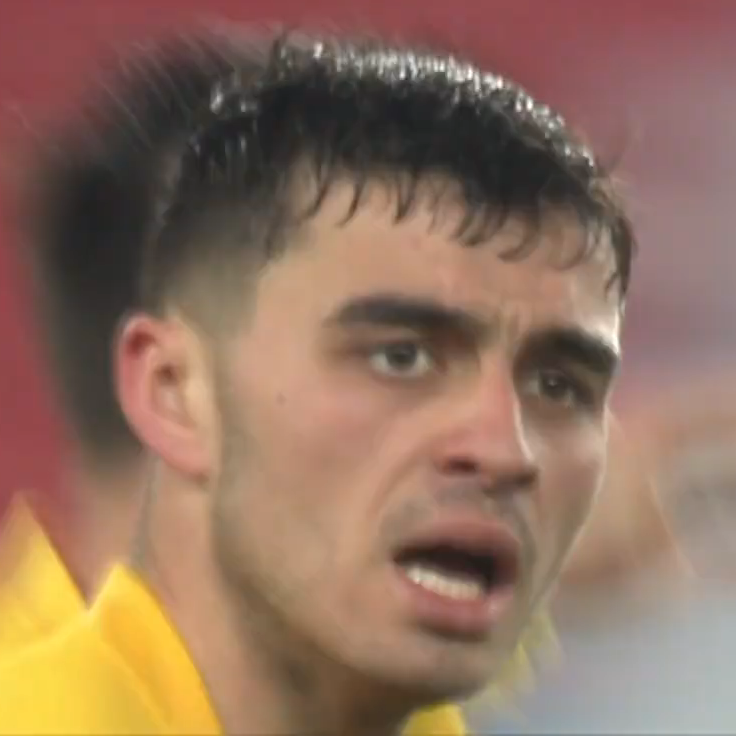
Photo: [1] / Wikimedia Commons / CC BY 3.0

The recurring theme after his breakout year has been muscle injuries. Hamstring and quadriceps issues have sidelined him for months at a time. Each return is met with held breath. The pattern is clear: his style demands explosive changes of direction and relentless running, which strain a body that was pushed too hard, too young.
He fought back to fitness for Euro 2024. He scored his first senior international goals, a brace, in the warm-up match against Northern Ireland. He started Spain’s first three games, providing a clever assist in the opener against Croatia. He was playing well, growing into the tournament. Then, in the quarter-final against Germany, a heavy challenge resulted in an inner ligament stretch in his knee.
I watched that quarter-final from my couch in Gelsenkirchen. When Pedri went down, you didn’t need a medical degree. The way he grabbed his knee, the immediate substitution, it was the same sinking feeling when a key Schalke player picks up a long-term knock. The tournament was over for him.
Spain went on to win the tournament without him. It was the ultimate bittersweet moment: a champion’s medal earned, but the climax witnessed from the sidelines. This injury underscored the fragile balance of his career. His talent is world-class, but his physical durability remains the unanswered question. Managing this will be the key to whether he fulfills his potential and is remembered among the era-defining talents or as a brilliant ‘what if’.
Pedri’s Legacy and Place in the Modern Game

At just 21, projecting a legacy is risky. Yet, his trajectory forces the conversation. He has already won La Liga, the Copa del Rey, the UEFA Nations League, and the European Championship. Individually, he has the Golden Boy, Kopa Trophy, and Euro 2020 Young Player award. The trophy cabinet is filling.
| Aspect | Current Status | Future Challenge |
|---|---|---|
| Technical Mastery | Elite first touch, vision, and passing. Compared to Iniesta in style. | Add more consistent goal threat and decisive final passes in big games. |
| Physical Durability | Major concern. Recurring muscle and knee injuries have caused significant absences. | Partner with medical staff to redesign his soccer physique development plan for long-term sustainability. |
| Big-Moment Impact | Crucial for team control, but yet to define a major knockout game with a goal or assist. | Become the undisputed man for the biggest moments, especially in the latter stages of the Champions League and World Cup. |
| Leadership | Has worn the captain’s armband for Barcelona. Respected for his professional approach. | Grow into a vocal leader who can drag a team through difficult moments, not just guide it in calm ones. |
His style is a bridge between Spanish tradition and modern athletic demands. He isn’t as physically robust as Jude Bellingham, nor as purely creative as Bernardo Silva. He occupies a unique space. To reach the absolute pinnacle occupied by his former teammate and Argentine football icon Lionel Messi, he must conquer his physical frailties. His story remains one of immense talent punctuated by painful interruptions. How he navigates the next five years will determine if he becomes an all-time assist leader or a poignant tale of brilliance hampered by biology.
Frequently Asked Questions
What was Pedri’s role in Spain’s 2022 World Cup campaign?
He was a guaranteed starter in all four matches, operating as the left-sided central midfielder in Spain’s 4-3-3. His job was to control possession, link defense to attack, and recycle the ball. He performed this role reliably, but like the entire team, he struggled to create clear chances against well-organized defensive blocks, particularly in the knockout loss to Morocco.
Why is Pedri injured so often?
The primary cause is the unprecedented workload he endured as a teenager, 73 games in 2021. This likely led to muscular overload and imbalances. His playing style, which requires constant acceleration, deceleration, and twisting, places high stress on his hamstrings and quadriceps. His performance strength training and load management are now meticulously planned to prevent recurrences.
Did Pedri win Euro 2024?
Yes, Pedri is a Euro 2024 champion. However, his tournament ended in the quarter-final against Germany due to a knee ligament injury. He received a winner’s medal as part of the squad, having played a key role in the group stage and round of 16, but he was not on the pitch for the semi-final or final.
What is Pedri’s release clause?
In October 2021, Pedri signed a new contract with FC Barcelona that included a €1 billion (one billion euro) release clause. This is a symbolic figure used by Spanish clubs to deter potential buyers and signal the player’s indispensable status.
How does Pedri’s career start compare to other legends?
His immediate impact at Barcelona and for Spain at 18 is reminiscent of other record-breaking young stars. Like Wayne Rooney or Michael Owen, he carried immense responsibility instantly. However, his path mirrors more technical midfielders, and his early peak invites comparison to the early football beginnings of players like Andrés Iniesta, who also became a regular at a young age but had a different physical profile.
The Bottom Line
Pedri’s career is a story of sublime talent navigating a landscape of extreme physical demand. From a rejected trialist to a Barcelona cornerstone and European champion, his quality is undeniable. The 2022 World Cup was a step, not a summit. The persistent shadow of injuries, culminating in the Euro 2024 heartbreak, is the central conflict of his narrative.
His future hinges on his body’s cooperation. If he can find a sustainable balance, his blend of intelligence, technique, and work rate can make him the defining midfielder of his generation and finally realize his World Cup dream. If not, he risks joining the list of underappreciated talents whose brilliance was glimpsed but not fully sustained. For now, every touch reminds us of what could be.
I come from the “soccer heart” of Germany, the Ruhrpott. I have played, trained and followed soccer all my life and am a big fan of FC Schalke 04. I also enjoy following international soccer extensively.