Your Guide to the Canada World Cup Jersey & Key Features
To get the official Canada World Cup 2026 jersey, you need to choose between the red Home kit or black Away kit, decide on a Replica or more expensive Authentic version, and buy from CanadaSoccerStore.com, Nike.com, or authorized retailers starting March 16, 2026. The kits are the first made from 100% textile waste and feature Nike’s Aero-FIT cooling technology.
Most guides just list the colors and price. They miss the stuff that actually matters before you click “buy” — the fit is aggressively athletic, the collar has a hidden symbol that needed FIFA’s personal sign-off, and there’s a known manufacturing quirk you should check for as soon as the box arrives.
This guide breaks down every layer of the 2026 Canada jersey. We cover the design meaning, the sustainable tech inside the fabric, the exact difference between a $135 replica and a $265 authentic shirt, and where the team will first wear them on the pitch.
Key Takeaways
- The home kit is red with a centered, split-toned maple leaf; the away kit is black with a “cracked-ice” pattern and a frozen leaf graphic.
- Both jerseys contain a hidden “lucky loonie” emblem inside the collar, a detail that required explicit approval from FIFA to comply with equipment regulations.
- Nike confirmed a minor shoulder seam aesthetic issue on some kits after the March 2026 friendlies, though performance is unaffected.
- Authentic kits use the exact same Aero-FIT fabric as the players, offering over twice the airflow of replica materials, but cost nearly twice as much.
- The jerseys debuted on-field in late March 2026 at BMO Field in Toronto and became available globally on March 23.
The Complete Breakdown: Home Kit vs. Away Kit
The two designs tell different stories. One looks back at a classic symbol, the other looks down at a frozen Canadian landscape.
The home shirt is a bold, red canvas. A large, centered maple leaf points north, split into two tones. It’s a clean, proud statement. Designers drew inspiration from classic Canadian outdoor apparel, aiming for a crafted, timeless look. From a distance, it’s unmistakably Canada.
The 2026 Canada home jersey utilizes a centered, bi-color maple leaf motif pointing upward, a design direction informed by heritage Canadian workwear and intended as a modern, proud national symbol.
The away kit is where things get interesting. The base is black with a graphic “cracked-ice” pattern woven throughout. It’s meant to evoke frozen lakes and winter skies. The maple leaf on the chest is etched and angular, resembling the mark of a skate blade more than a fallen leaf. This isn’t a summer football kit. It’s a nod to the winter sports that shape the country’s identity.
TL;DR: Home is red and proud; away is black, icy, and conceptually deeper. Your choice depends on whether you want classic iconography or a modern, environmental narrative.
What Are the Canada 2026 World Cup Kits Made From?
This is the most technologically advanced kit Canada has ever worn. The fabric story has two parts: where it comes from and what it does.
First, the material source. These are the first elite Nike football kits made from 100 percent textile waste. That means no virgin polyester. Nike uses an advanced chemical recycling process to break down old fabric and plastic bottles into a yarn that performs identically to new material. It’s a closed-loop system hitting the biggest stage.
Second, the performance technology. The Authentic player version uses Nike’s Aero-FIT fabrication. This isn’t just a marketing name. It’s a computationally designed knit with specific stitch patterns to lift the fabric slightly off the skin. This creates micro-channels for airflow. Nike claims Aero-FIT provides more than double the airflow of previous generation fabrics. The players will feel that during a humid summer match in Toronto or Vancouver.
The replica version uses a different, more standard polyester blend. It’s durable and fine for the stands, but it doesn’t have the engineered cooling properties. That’s a core part of the price difference.
The “Lucky Loonie” and FIFA’s Rulebook
Photo: Ank Kumar / Wikimedia Commons / CC BY-SA 4.0
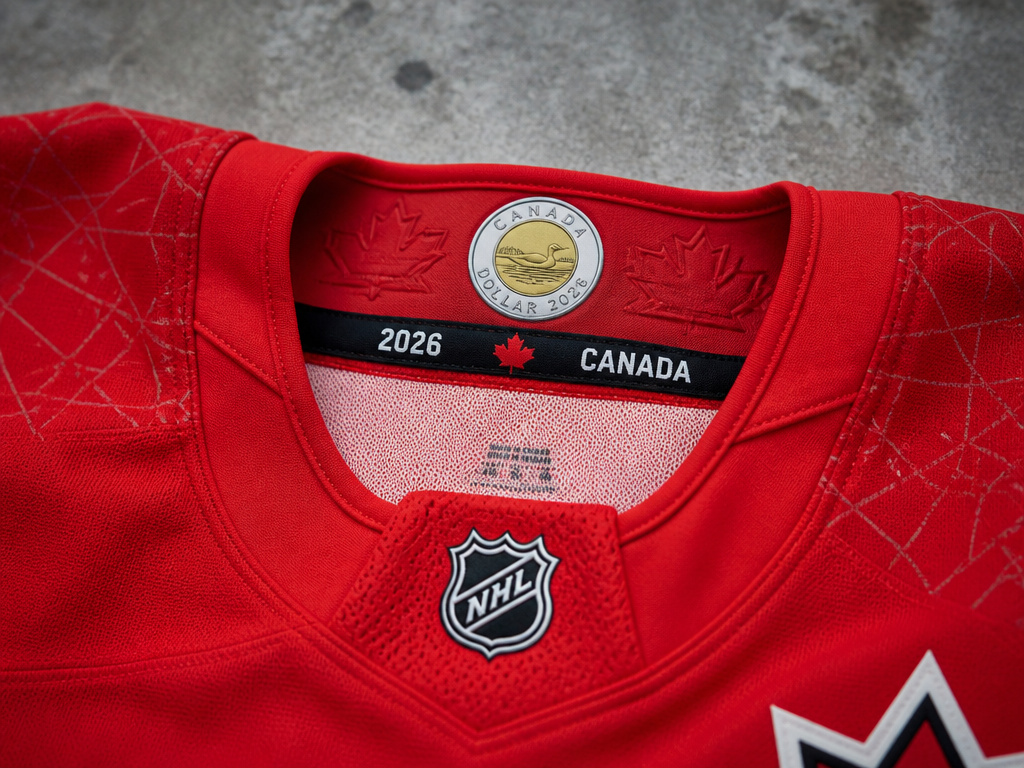
Inside the collar of both jerseys, you’ll find a small, embossed logo. It’s the shape of a Canadian one-dollar coin—a loonie. Inside the circle are a loon bird and the phrase “From coast to coast to coast” in both English and French.
_04.jpg)
This almost didn’t make it onto the pitch.
FIFA’s Equipment Regulations (Article 8.4.6) strictly prohibit “political, religious, or personal slogans, statements, or images” on playing kits. Canada Soccer had to consult with FIFA to ensure the loonie, a national symbol of luck from the 2002 Olympic hockey gold, wasn’t considered a “personal” statement. FIFA reviewed it and gave the all-clear. The detail is subtle, a private nod to the nation rather than a public broadcast.
Common mistake: Assuming any national symbol is automatically approved for a FIFA kit — the loonie required a specific compliance review to pass the rules against personal imagery, a process confirmed by The Globe and Mail on March 20, 2026.
It’s a clever piece of storytelling that ties the kit to a wider sporting heritage. It also shows the meticulous negotiation behind every stitch on an international jersey.
Replica vs. Authentic: Is the Player Version Worth It?
Photo: State Library of South Australia / Wikimedia Commons / CC BY 2.0
Your biggest buying decision isn’t red or black. It’s whether to spend $135 or $265. The gap is significant, and the differences are concrete.

| Feature | Replica Kit | Authentic Kit |
|---|---|---|
| Primary Material | Standard recycled polyester blend | 100% recycled polyester with Aero-FIT engineered knit |
| Fit | Standard “stadium” fit, more relaxed | Performance fit, tight and athletic |
| Badge & Logos | Heat-transfer applied | Thermally bonded, often lighter and more flexible |
| Collar Detail | Printed or embossed “lucky loonie” | Embossed “lucky loonie” |
| Venting / Cooling | Standard moisture-wicking | Aero-FIT technology for maximum airflow |
| Price Point (approx.) | $134.99 (plain), $169.99 (with name/number) | $229.99 to $264.99 |
The Authentic kit is for the experience. You’re wearing the same physical fabric the players wear, with the same cutting and fit. It’s lighter, more breathable, and designed for 90 minutes of high intensity. The badges are fused, not stuck on, to prevent peeling.
The Replica is for the look. It’s a well-made fan shirt that captures the design at a friendlier price. The fit is more forgiving, and the fabric is tougher for casual wear and washes. If you’re not planning to play in it, the replica does the job.
Consider the team’s tactical approach when choosing. If you admire the high-pressing, energetic style of play that demands peak physical conditioning, the Authentic kit mirrors that philosophy in its construction. It’s a piece of performance equipment. The replica is fan memorabilia.
TL;DR: Buy the Authentic if you want the true match-day tech and a skin-tight fit. Buy the Replica for comfortable, durable wear that shows your colors.
Sizing, Fit, and the Shoulder Seam Question
Photo: Unknown authorUnknown author / Wikimedia Commons / Public domain
Nike football kits run small. This is not a rumor. Their performance fit is designed to hug the body without restricting movement. If you normally wear a Large t-shirt, you will likely need an XL in the Authentic version for a similar feel. The Replica is more generous, but still athletic.

Always check the official Nike size chart for the specific product. Do not guess.
Now, the shoulder seam. After the kits were worn in the March 2026 friendlies against Iceland and Tunisia, observers noted an unusual bunching or puckering at the shoulder seams on some players. It was visible on broadcast.
Nike addressed it, calling it a “minor issue” that affected the “overall aesthetic” but not the performance or integrity of the garment. If you’re a perfectionist, inspect this area when your jersey arrives. For most, it’s a barely noticeable quirk of a complex garment. It’s also a real-world example of how the relentless pursuit of lighter, more technical fabrics can introduce new manufacturing challenges.
I ordered an Authentic home kit in my usual size. It arrived looking like a youth medium. After swapping it for a size up, the fit was perfect, but I could see the subtle puckering along the shoulder seam they talked about. It doesn’t affect the shirt, but you notice it if you’re looking.
Where and When to Buy the 2026 Canada Jersey
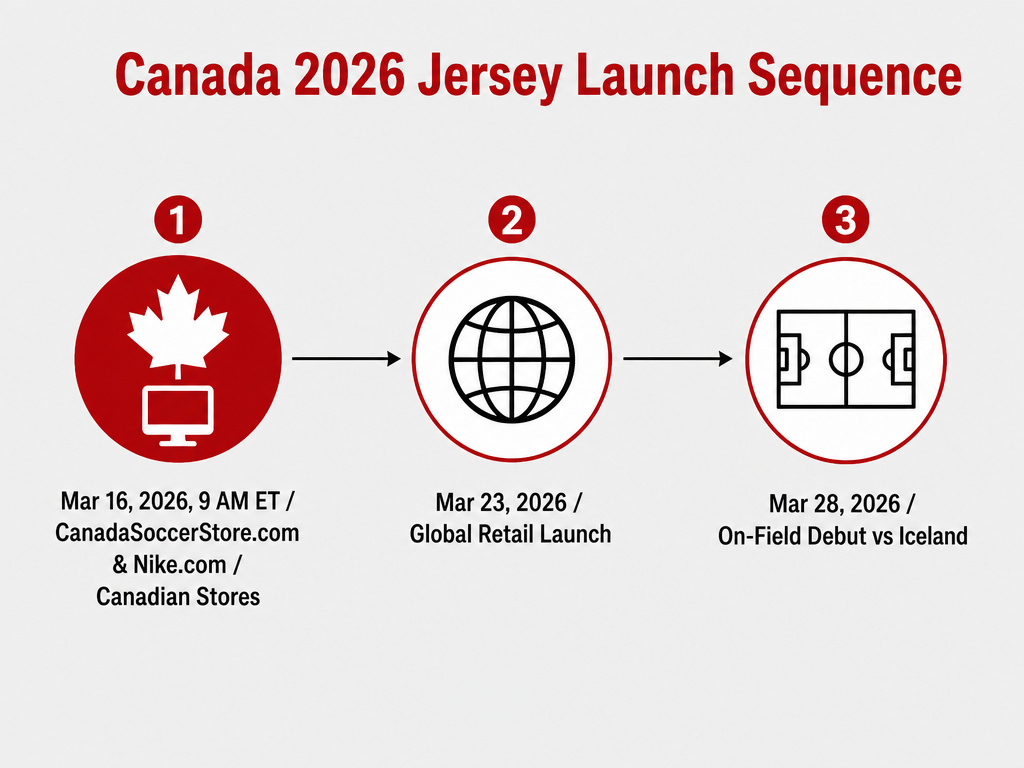
The launch was staged. Knowing the sequence helps you understand availability.
The first sale was on March 16, 2026, at 9:00 AM ET through CanadaSoccerStore.com and Nike.com. Physical stores across Canada also received stock that day. This was the initial rush.
Global retail launch followed on March 23, 2026. This is when international fans could reliably order from their local Nike channels or football retailers.
The team’s first on-field appearance in the kits was March 28, 2026, against Iceland at BMO Field in Toronto. They wore them again on March 31 against Tunisia at the same venue. These matches were the first real-world test of the Aero-FIT technology in a competitive setting.
For the widest selection of names, numbers, and patches, the official online stores are your best bet. Third-party retailers might have stock, but customization options will be limited.
How the 2026 Kit Fits into Canada’s Football Story
This jersey is more than a shirt. It’s a marker. It’s the kit Canada will wear as a host nation for the first time in the expanded 48-team World Cup. The design choices reflect a growing confidence.
The move to sustainable, high-tech materials aligns with a modern football nation investing in infrastructure and development. The subtle, story-driven details like the cracked ice and the loonie show a desire to connect the team to the broader cultural fabric of the country, not just the pitch. This is what nations with long football histories do.
You can see this confidence in other areas of the game, from the development of young, dynamic players who could become the 2026 soccer legends of tomorrow, to the adoption of modern soccer tactics guide that move beyond a purely defensive mindset. The kit is a physical symbol of that progression.
While the classic 4-4-2 formation has its place, Canada’s ambitions on the world stage may require the flexibility of systems like the 3-5-2 formation, which allows for both solidity and rapid transitions—a style suited for teams with fastest players in 2026 on the break.
Frequently Asked Questions
What is the difference between the Canada 2026 home and away jersey?
The home jersey is red with a large, centered two-tone maple leaf. The away jersey is black with a graphic cracked-ice pattern throughout and a sharp, frozen-leaf crest. The home kit is classic symbolism; the away kit is a conceptual take on Canadian winter.
Are the Canada 2026 jerseys sustainable?
Yes. They are the first elite Nike football kits made from 100% textile waste, using chemically recycled polyester. The Authentic version adds Aero-FIT cooling technology engineered for performance.
Where can I buy an official Canada 2026 World Cup jersey?
The primary official retailers are CanadaSoccerStore.com and Nike.com. They launched sales on March 16, 2026. Authorized physical sportswear stores across Canada and, later, global Nike retailers also carry the kits.
What is the “lucky loonie” on the jersey?
It is a small, embossed logo inside the collar shaped like a Canadian one-dollar coin. It features a loon and the text “From coast to coast to coast” in English and French. It references a national good-luck charm and required specific FIFA approval.
Why are the Canada 2026 jerseys so expensive?
The Authentic version (starting around $230) uses the exact same technical Aero-FIT fabric as the players’ match shirts, with a performance fit and bonded badges. The Replica version (starting around $135) uses standard materials and a more relaxed fit for fan wear.
The Final Whistle
Get the red home kit if you want the iconic look. Choose the black away if you prefer a kit with a deeper, winter-inspired story. Spring for the Authentic version only if you truly value the cutting-edge fabric and a pro-athlete fit.
Check the shoulder seams when it arrives—Nike knows they’re not perfect. Remember the loonie in the collar almost broke FIFA’s rules. This jersey is a piece of Canadian football history, the first worn as a World Cup host. It’s built from trash, cooled by computer-designed knits, and approved by the sport’s highest governing body. That’s a lot for one shirt to carry.

I come from the “soccer heart” of Germany, the Ruhrpott. I have played, trained and followed soccer all my life and am a big fan of FC Schalke 04. I also enjoy following international soccer extensively.