Belgium World Cup History & Best Results: From 1930 to
Belgium’s World Cup history spans 14 tournaments, with their best result a third-place finish in 2018 and a previous peak of fourth place in 1986. Their all-time record is 18 wins, 10 draws, and 17 losses, built on a foundation that includes participation in the very first World Cup in 1930.
Most summaries stop at 2018 and call it a Golden Generation story. They skip the decades before it, the specific tactical wins that made 1986 work, and the hard truth about what happens after a peak. The 2022 group-stage exit wasn’t a surprise to anyone who watched the squad age.
This guide walks through every significant tournament, the players who defined each era, the coaching shifts that mattered, and a realistic outlook for their 2026 campaign. We’ll look at the stats, the near misses, and the reasons their ceiling has always been a semi-final.
Key Takeaways
- Belgium’s best World Cup result is third place (2018), not a title. Their previous best was fourth place (1986).
- The 2018 Golden Generation peaked at third place despite topping the FIFA rankings for years, highlighting the gap between ranking and trophy success.
- Romelu Lukaku is the national team’s all-time top scorer (89 goals), but shares the World Cup scoring record (5 goals) with Marc Wilmots.
- Current coach Domenico Tedesco is navigating a generational transition; expectations for 2026 are a quarter-final, not a deep run.
- A common mistake is overlooking Belgium’s 1986 campaign; that team beat the Soviet Union and Spain on penalties before falling to Argentina.
Belgium’s World Cup Journey: A 14-Tournament Timeline
Belgium first stepped onto the World Cup stage in Uruguay for the 1930 tournament. They lost that opener to the United States. The smell of fresh-cut grass and the crack of leather boots on a cold Montevideo morning marked their debut. They would wait forty years for their first win.
The Red Devils’ participation in the inaugural 1930 FIFA World Cup established them as a constant, if not always dominant, presence in tournament history. Their 14 appearances include consistent qualification cycles in the 1970s, 1980s, and the modern era, with a notable gap between 2002 and 2014.
The 1970 win against El Salvador felt like a breakthrough. It wasn’t. The real shift came in the 1980s with a squad that understood how to grind. That 1986 team didn’t play beautiful football. They played effective football. They pressed in midfield, won second balls, and trusted Jean-Marie Pfaff to make two saves he shouldn’t have.
TL;DR: Belgium’s World Cup story is long, starting in 1930, but their only true peaks came 56 and 88 years later, in 1986 and 2018.
The 1986 Campaign: The First Real Peak
Most fans today think Belgium’s history started with Eden Hazard. It didn’t. The 1986 World Cup in Mexico was their first serious run. Coach Guy Thys built a team around defensive organization and midfield control. Jan Ceulemans provided the physicality up front. Enzo Scifo, then 20, provided the guile.
They faced the Soviet Union in the Round of 16. The game went to extra time. Belgium scored early in the added period, then conceded, then scored again. The 4-3 final scoreline felt like a boxing match. Pfaff’s palms were raw from punching away crosses. The quarter-final against Spain was a penalty shootout. Pfaff saved one. That was enough.
Common mistake: Assuming Belgium’s Golden Generation was their first success — the 1986 team finished fourth, beating stronger opponents through structured defense and a youthful midfield talent, a blueprint later abandoned.
The semi-final against Argentina was a lesson. They lost 2-0. Diego Maradona was unplayable. The third-place match against France was another extra-time heartbreak, a 4-2 loss. But two players, Ceulemans and Pfaff, made the All-Star Team. Scifo won Best Young Player. That recognition mattered. It proved a team without superstars could reach the final weekend.
Their tactical approach relied on a compact 4-4-2, with Scifo drifting between midfield lines. This midfield-heavy setup was effective against teams that liked to possess. It’s a contrast to the more open, possession-based 3-5-2 formation favored in 2018. Different eras, different shapes.
The Golden Generation and the 2018 Peak
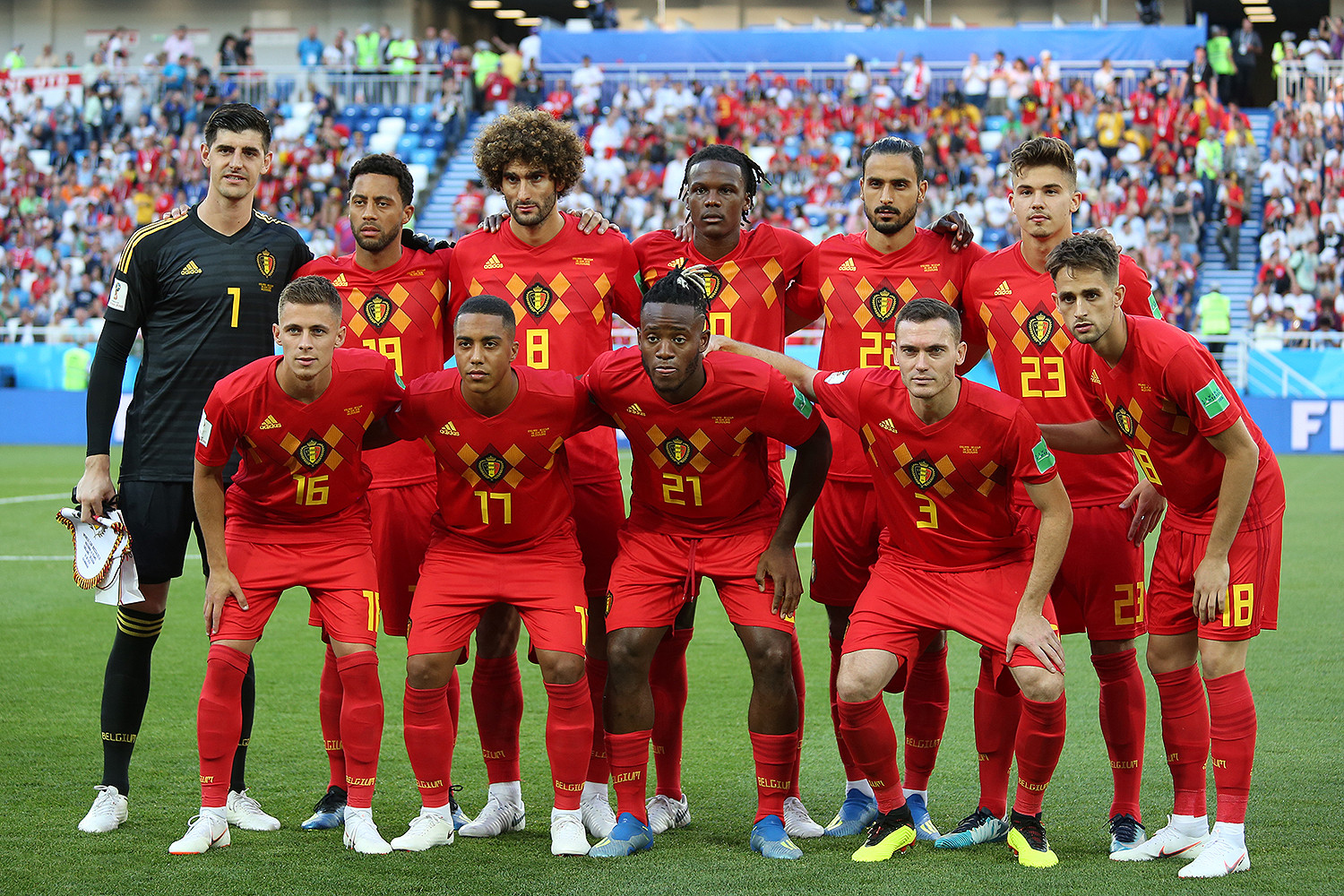
Photo: Кирилл Венедиктов / Wikimedia Commons / CC BY-SA 3.0

The 2018 World Cup in Russia was the culmination of a decade of buildup. Roberto Martinez took a squad of individual stars and made them a team. The group stage was perfect: three wins. The Round of 16 against Japan was a comeback from 2-0 down. The quarter-final against Brazil was a tactical masterclass.
Martinez shifted to a 3-4-3 defensive block that neutralized Brazil’s wing play. The win was a 2-1 nail-biter. The semi-final loss to France was a 1-0 defeat that felt inevitable. France had the defensive discipline Belgium lacked. The third-place win over England was a comfortable 2-0. It was their best finish, but it wasn’t a title.
| 2018 Key Match | Result | Tactical Note |
|---|---|---|
| Group vs Panama | 3-0 Win | Established early dominance |
| Round of 16 vs Japan | 3-2 Win | Comeback via direct substitution impact |
| Quarter-final vs Brazil | 2-1 Win | Defensive shape shift to 3-4-3 |
| Semi-final vs France | 1-0 Loss | Could not break organized defense |
| Third-place vs England | 2-0 Win | Controlled tempo from start |
The Golden Generation had world-class talent. But the collective defensive understanding wasn’t there. You can have the best soccer player diet and the most refined soccer workout plans, and still lose a semi-final because your back line doesn’t track runners. That’s what happened.
Romelu Lukaku scored five goals, tying Marc Wilmots’ record. Lukaku’s power running defined their attack. But the team’s ceiling was clear. They could beat anyone in a one-off game. They couldn’t win four in a knockout run under maximum pressure. That’s the difference between a great team and a champion.
I watched the Brazil game live. The tension in the stadium was a physical weight. When Hazard cut inside and curled that shot, the release was explosive. But the silence after the France loss was deeper. It was the sound of a generation realizing its limit.
TL;DR: The 2018 third-place finish was a tactical success built on individual talent, but the semi-final exposed a defensive fragility that kept them from the ultimate prize.
Belgium’s All-Time World Cup Record
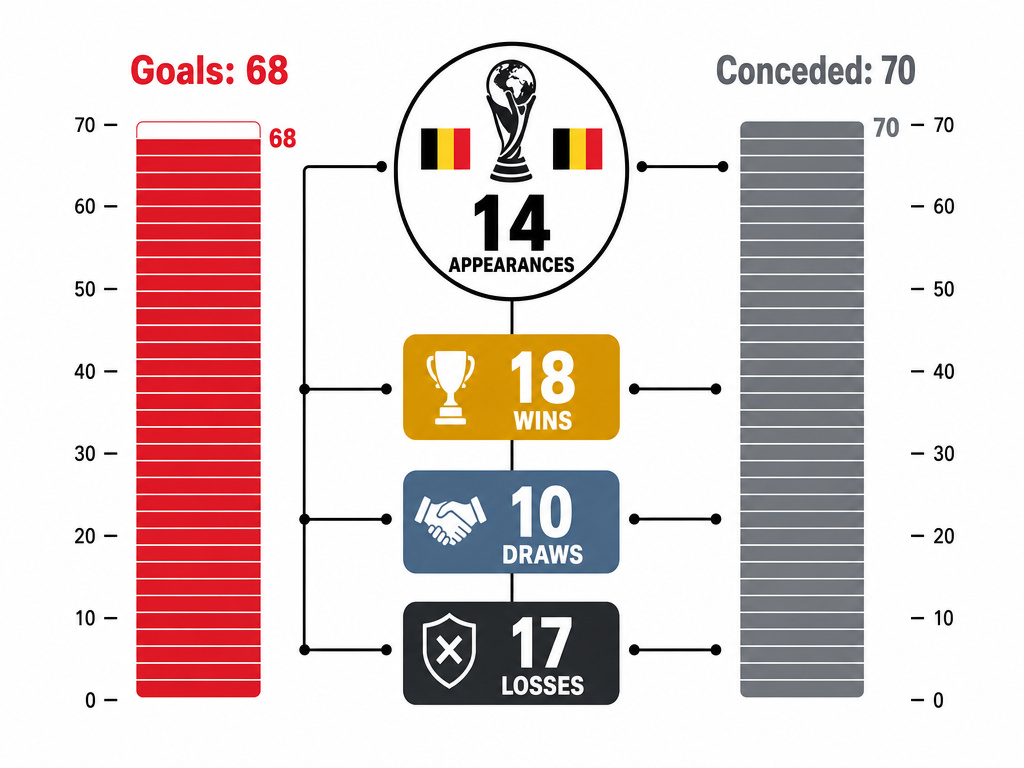
The numbers tell a story of consistent participation with modest success. The Wikipedia page on Belgium’s World Cup history lists the raw data: 14 appearances, 45 matches, 18 wins, 10 draws, 17 losses. They’ve scored 68 goals and conceded 70. That’s a nearly balanced ledger, which fits their profile.
Their most capped player, Jan Vertonghen, participated in three tournaments (2014, 2018, 2022). His 157 caps represent the longevity required in international football. Their all-time top scorer, Romelu Lukaku (89 goals), carries the burden of expectation every tournament. He needs space to run. If the midfield doesn’t create it, he struggles.
| Category | Record Holder | Statistic | Context |
|---|---|---|---|
| Most Appearances | Team | 14 Tournaments | Since 1930 |
| All-Time Top Scorer | Romelu Lukaku | 89 Goals | National team record |
| Most Caps | Jan Vertonghen | 157 Caps | Includes 3 World Cups |
| World Cup Top Scorer | Romelu Lukaku / Marc Wilmots | 5 Goals | Shared record |
| Best Finish | Team | 3rd Place (2018) | Golden Generation peak |
The record is solid, not spectacular. It mirrors their place in football history: a respected competitor, never a dominant force. This consistency is documented in the broader Wikipedia profile of the Belgian national team, which covers their evolution from early entrants to modern contenders.
Comparing their journey to nations with deeper trophy cabinets is instructive. While Belgium’s Golden Generation was celebrated, the careers of Argentina’s famous players like Messi and Maradona ultimately culminated in World Cup victory. That’s the benchmark.
What Happened in 2022 and the Current Transition
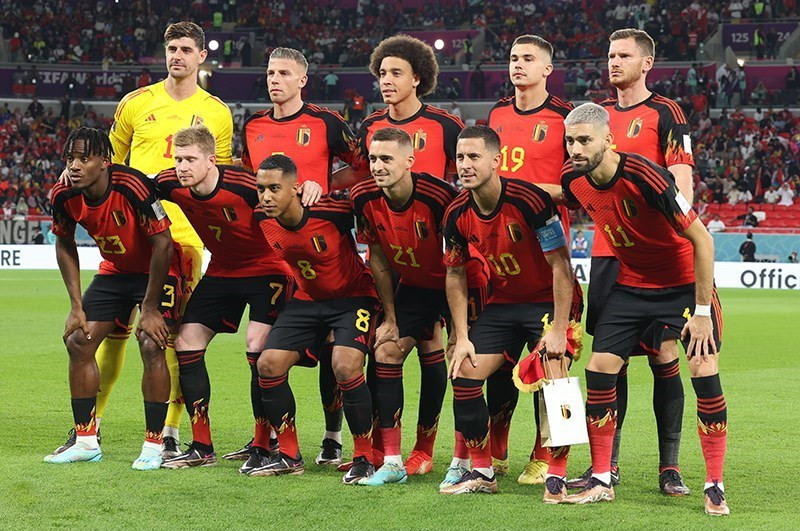
Photo: Hossein Zohrevand / Wikimedia Commons / CC BY 4.0

The 2022 World Cup in Qatar was a collapse. Belgium looked old. The midfield lacked energy. The defense was slow. They drew with Canada, lost to Morocco, and beat Croatia only after already being eliminated. The group-stage exit was a predictable end for a generation past its prime.
Roberto Martinez left after the tournament. Domenico Tedesco took over. His task is a rebuild. The core of Thibaut Courtois, Kevin De Bruyne, and Romelu Lukaku remains, but their supporting cast has changed. Young players like Jérémy Doku and Amadou Onana are now essential. The team’s shape is more fluid, less reliant on individual brilliance.
Tedesco’s approach uses more vertical passing and quicker transitions. This demands higher fitness levels, aligning with modern professional training routines. It also requires defensive cohesion, a weakness in 2018. The 2026 qualification campaign was smooth – unbeaten in Group J. But qualifying in Europe is different than winning knockouts in North America.
Common mistake: Expecting the 2026 squad to replicate the 2018 run — the team is in transition, with a new coach and a mixed squad; a quarter-final exit is the realistic target, and a semi-final would require defensive performances they haven’t shown yet.
The historical context for this transition is visible in the Wikipedia list of Belgium match results. The pattern shows cycles of growth, peak, and decline. The 2022 result fits the decline phase. The 2026 campaign will test whether Tedesco can start a new growth cycle.
Looking Ahead to 2026: Realistic Expectations
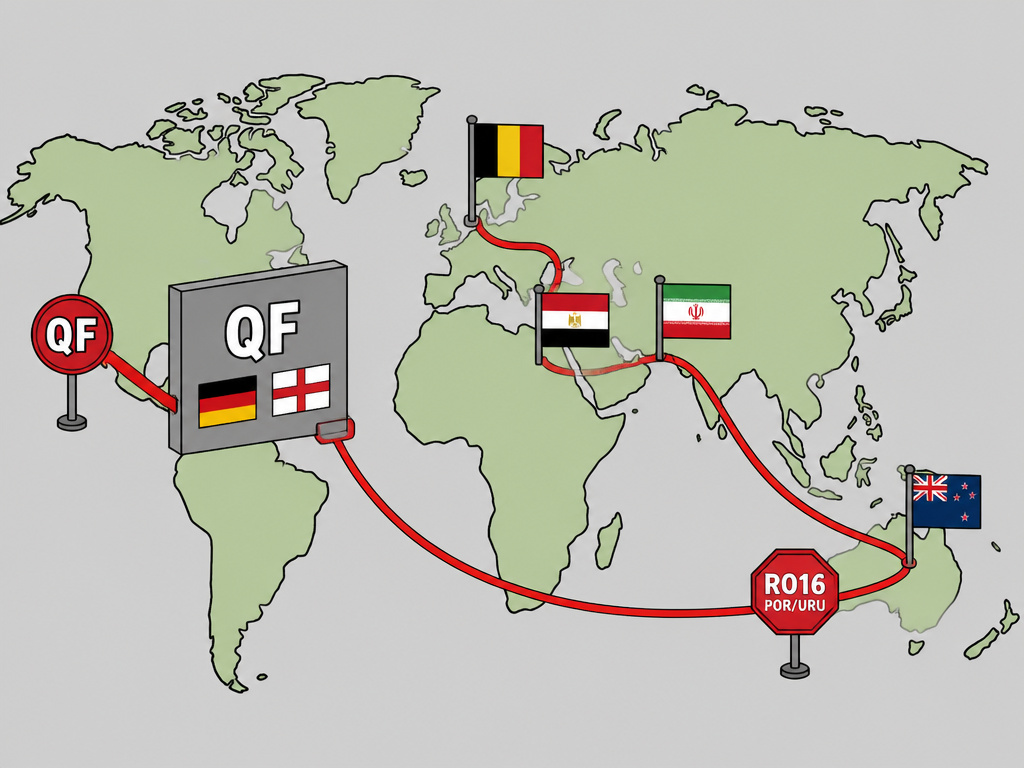
Belgium qualified for the 2026 World Cup comfortably. They topped UEFA Group J without losing. The draw placed them in Group G with Egypt, Iran, and New Zealand. They are favorites to win that group. The path after that gets complicated.
The likely Round of 16 match would be against a team from Group H (like Portugal or Uruguay). That’s a tough first knockout game. If they win, a quarter-final against a top seed like Germany or England awaits. That’s where the expectation should stop. A quarter-final exit is the plausible outcome. A semi-final would be a surprise.
Their strengths are still individual talent. Courtois is a world-class goalkeeper. De Bruyne, if fit, is a world-class midfielder. Lukaku, if supplied, is a world-class scorer. Their weaknesses are defensive organization and squad depth. If Courtois or De Bruyne misses time, the drop-off is significant.
The team’s tactical approach under Tedesco is still evolving. He may employ a modern tactical system that balances attack and defense, or revert to a more balanced team shape for stability. His choice will define their resilience.
Success in 2026 depends on two things: defensive cohesion and key player health. They have the talent to beat any team in a single game. They don’t have the systemic strength to win three knockout games in two weeks. That’s the difference between this squad and the 2018 version. Honest assessment.
TL;DR: For 2026, expect Belgium to win Group G and reach the quarter-finals. A semi-final run would require outperforming their defensive capabilities and relying on flawless individual performances.
How Belgium’s World Cup Story Compares
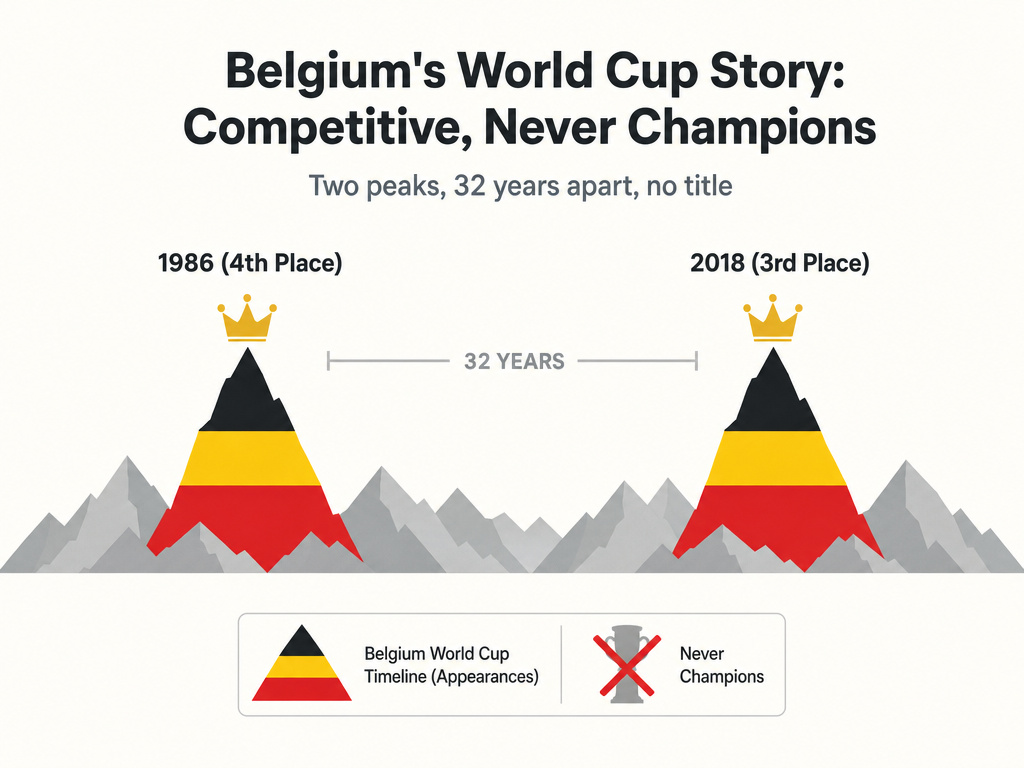
Belgium’s history is unique. They have been present for almost a century, with two notable peaks separated by 32 years. They have never won the trophy. This places them in a category with nations like Portugal (pre-2016) and the Netherlands – always competitive, often close, never champions.
Their “Golden Generation” narrative parallels England’s recent experience. Both teams topped FIFA rankings, both had deep runs (England’s 2018 semi-final, Belgium’s 2018 third-place), both faced criticism for not winning. The difference is England’s squad remained younger and continued evolving; Belgium’s squad aged out collectively.
The individual brilliance of their stars, like De Bruyne, often draws comparisons to the influence of the legendary Messi on Argentina. But Argentina built a system around Messi that could win tournaments. Belgium built a system around talent that could reach the semi-finals. System versus talent.
When evaluating best 11v11 formations for tournament success, Belgium’s 2018 3-4-3 was effective for specific matches. But tournament-winning formations, like Argentina’s adaptable 4-4-2 in 2022, provide balance across all phases. Belgium’s shapes have often been optimized for attack, leaving defense exposed.
Frequently Asked Questions
Has Belgium ever won the FIFA World Cup?
No. Belgium has never won the World Cup. Their best finish is third place, achieved in 2018. Their previous best was fourth place in 1986.
What is Belgium’s all-time World Cup record?
Belgium’s all-time World Cup record, across 14 tournaments, is 18 wins, 10 draws, and 17 losses. They have scored 68 goals and conceded 70.
Who is Belgium’s top scorer in World Cup history?
Romelu Lukaku and Marc Wilmots share the record for most World Cup goals for Belgium, each with 5 goals. Lukaku is the national team’s all-time top scorer with 89 total international goals.
Why did Belgium’s “Golden Generation” not win a World Cup?
The Golden Generation, while talented, lacked the defensive systemic cohesion required to win four consecutive knockout matches. Individual brilliance could beat Brazil in a quarter-final, but collective defensive discipline failed against France in the semi-final.
What are Belgium’s chances for the 2026 World Cup?
Belgium is favored to win Group G. A realistic expectation is a quarter-final exit. A semi-final run would be a surprise, dependent on key players staying healthy and the defense performing above its current level.
The Bottom Line
Belgium’s World Cup history is a long narrative with two high points: 1986 and 2018. They have the records, the stars, and the consistent presence. They do not have the trophy.
The 2018 third-place finish defined a generation. The 2022 group-stage exit ended it. The 2026 campaign under Domenico Tedesco is a transition. Expect a competitive team that can win its group and reach the quarter-finals. Expect no more unless the defense finds a new level.
Their story is about talent meeting system, and the system falling short at the final hurdle. That’s the truth behind the rankings, the highlights, and the near misses. It’s the story of a team that has always been good, never great enough to lift the cup.
I come from the “soccer heart” of Germany, the Ruhrpott. I have played, trained and followed soccer all my life and am a big fan of FC Schalke 04. I also enjoy following international soccer extensively.