Basic Soccer Rules Explained Simply for New Fans (Guide)
Basic soccer rules are governed by 17 universal Laws. The game is played between two teams of 11, aiming to score by getting the whole ball over the opponent’s goal line. A match lasts 90 minutes split into two halves, and only the goalkeeper can legally use their hands within their own penalty area.
Most newcomers get tangled up in offside calls and handball decisions. They watch a replay five times and still argue. The confusion usually comes from missing the tiny, critical moment when the pass is made or misunderstanding what “active play” really means.
This guide strips the complexity. You will learn the non-negotiable rules, the referee’s unshakable authority, and the simple logic behind the sport’s most debated moments.
Key Takeaways
- The offside rule only penalizes a player who is both in an offside position and involved in the play—merely standing there is not enough.
- A handball call depends on whether the arm’s position is “unnatural”; the shoulder is not considered part of the arm for this rule.
- The referee’s decision is final the moment play restarts, even if video replay later shows a mistake.
- Only the team captain should approach the referee for a calm explanation of a major decision—this is a formal part of the modern Laws.
- Stoppage time is added to each half to compensate for delays like injuries, substitutions, and time-wasting; it is not arbitrary.
The Objective and Duration: How a Match Works
Soccer is about outscoring your opponent within a fixed time. The entire ball must cross the entire goal line between the posts and under the crossbar. That is the only way to add to the tally.
A standard match runs for 90 minutes, divided into two 45-minute halves. The clock never stops. A 15-minute halftime break separates the periods. The referee adds stoppage time at the end of each half to make up for pauses in play. This compensates for injuries, substitutions, and other delays. You will hear this called “added time” or “injury time.”
The International Football Association Board (IFAB) Law 7 states the duration of a match as two equal halves of 45 minutes, with the halftime interval not exceeding 15 minutes. The allowance for time lost is at the sole discretion of the referee.
The game starts and restarts after halftime with a kick-off from the center spot. Teams switch ends at halftime. Understanding the basic soccer field markings and dimensions provides the canvas for all these rules.
TL;DR: Score more goals than the other team within 90 minutes of running time, plus whatever stoppage time the referee adds.
Players, Positions, and the No-Hands Rule
Each team fields 11 players, one of whom must be the goalkeeper. A match cannot start or continue if a team has fewer than seven players. The other ten are outfield players, traditionally grouped into defenders, midfielders, and forwards. The specific team formations and player positions are tactical choices, not rules.
The most famous rule is simple: players cannot touch the ball with their hand or arm from the shoulder to the fingertips. The goalkeeper is the exception, but only within their own penalty area. If a keeper handles the ball outside this box, it is a direct free kick foul.
This rule creates the game’s unique flow. Players use their feet, head, chest, and thighs to control and pass. The handball rule’s complexity comes from intent and arm position. A deliberate handball is always a foul. An accidental one is only called if the player’s arm is in an unnatural position, making their body unfairly bigger.
The 17 Laws and the Referee
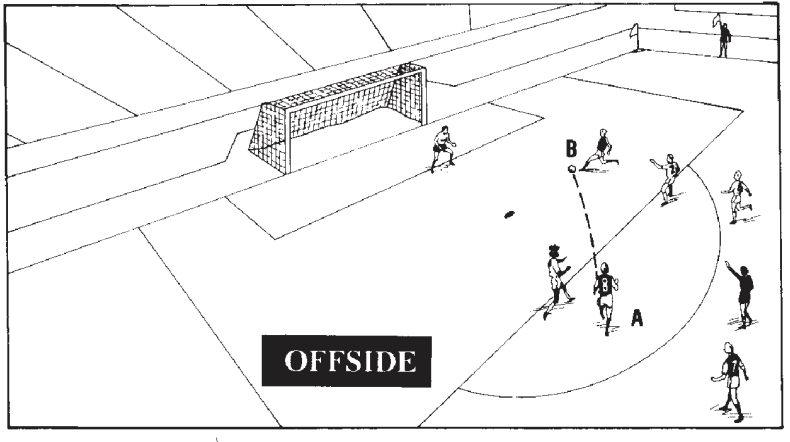
The global rules are called the Laws of the Game. The IFAB writes and updates them. There are 17 Laws, covering everything from the field and ball to fouls and restarts. National federations like the FA or U.S. Soccer publish them.
The referee is the sole enforcer of these Laws on the pitch. Their authority is absolute from the pre-match inspection to the final whistle. They are assisted by two assistant referees (linesmen) on the touchlines and, in many professional games, a fourth official and VAR (Video Assistant Referee).
Common mistake: Arguing with the referee after play has restarted. Once the ball is back in play, the decision cannot be changed, even if it was wrong. Continuing to protest risks a yellow card for dissent.
A major recent emphasis is on respect. Now, only the team captain is supposed to approach the referee for a respectful dialogue about a decision. This cuts down on mobbing and maintains the game’s flow. The referee also ensures safety, checking the field’s condition and the security of the goals.
TL;DR: The referee applies the 17 universal Laws. Their word is final, and only captains should seek clarification to maintain respect and order.
Offside Explained (Without the Headache)
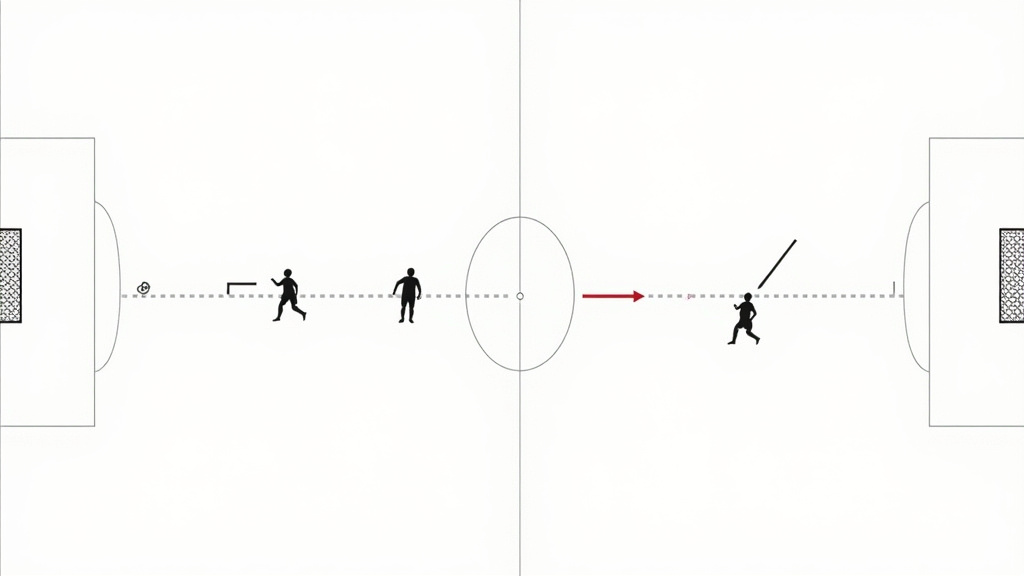
This is the rule everyone thinks they understand until they have to explain it. A player is in an offside position if they are nearer to the opponents’ goal line than both the ball and the second-last opponent (usually the last defender) at the moment a teammate plays the ball.
Crucially, being in an offside position is not a foul. It only becomes an offside offense if the player then becomes involved in active play. This means touching the ball, interfering with an opponent, or gaining an advantage from being in that position.
| Scenario | Offside? | Reason |
|---|---|---|
| Attacker is past the last defender when the pass is made, and runs to collect the ball. | Yes | They were in an offside position when the ball was played and became active. |
| Attacker is past the last defender when the pass is made, but doesn’t move for the ball and doesn’t block the goalkeeper’s view. | No | They are in an offside position but not involved in active play. |
| Attacker is level with the second-last defender when the pass is made. | No | They are not in an offside position (level is onside). |
| Attacker receives the ball directly from a goal kick, corner kick, or throw-in. | No | There is no offside offense from these specific restarts. |
The assistant referee signals offside by raising their flag straight up. The timing of the pass is everything. This is why the offside trap works—defenders step up in unison to leave attackers stranded.
Fouls, Free Kicks, and Disciplinary Cards
A foul is an unfair action against an opponent. The main categories are careless, reckless, or using excessive force. Common examples include tripping, pushing, holding, charging, and dangerous play.
Most fouls result in a free kick. There are two types: direct (you can score directly from it) and indirect (the ball must touch another player before a goal counts). A direct free kick foul committed by the defense inside its own penalty area results in a penalty kick.
I once saw a defender, frustrated after a missed tackle, swipe an attacker’s legs just inside the box. It was a clear, reckless penalty. The referee pointed to the spot without hesitation, and the defender got a yellow card for the cynical foul. That moment decided the match.
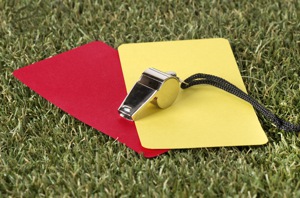
For persistent or serious misconduct, the referee shows cards. A yellow card is a caution for offenses like unsporting behavior, dissent, or delaying the restart. A second yellow in the same game equals a red card, which means immediate ejection. A straight red card is shown for serious foul play, violent conduct, or denying an obvious goal-scoring opportunity.
| Offense | Typical Restart | Potential Card |
|---|---|---|
| Tripping an opponent | Direct Free Kick | Yellow (if reckless) |
| Handball to stop a promising attack | Direct Free Kick | Yellow |
| Foul that denies an obvious goal-scoring opportunity (DOGSO) | Direct Free Kick / Penalty Kick | Red |
| Serious foul play (e.g., two-footed tackle) | Direct Free Kick | Red |
| Dissent by word or action | Indirect Free Kick | Yellow |
These disciplinary actions are part of managing the game’s physical contact and ensuring it remains a fair contest.
Restarting Play: Throw-ins, Kicks, and Corners
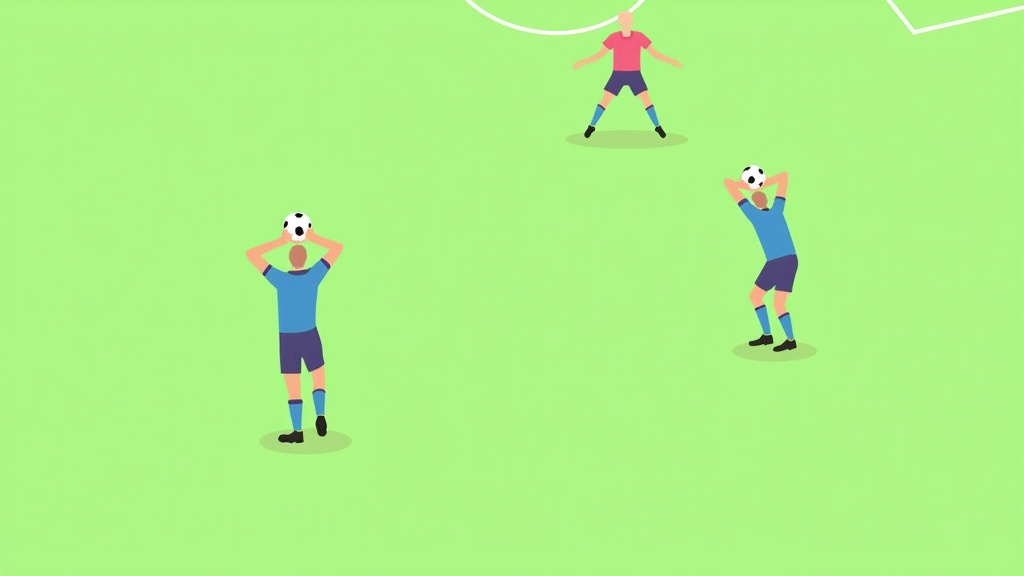
When the ball leaves the field, play restarts in one of five main ways. The correct restart is a fundamental rule.
- Throw-in: When the whole ball crosses the touchline (sideline). It is awarded against the team that last touched it. The throw must be taken with both hands, from behind and over the head, with both feet on or behind the line. A foul throw gives the throw to the other team.
- Goal Kick: When the attacking team sends the ball over the defending team’s goal line (but not into the goal). It is taken from anywhere within the goal area. The ball must leave the penalty area before being touched by another player.
- Corner Kick: When the defending team sends the ball over its own goal line. It is taken from the nearest corner arc. Goals can be scored directly from a corner.
- Free Kick: Awarded after a foul or infringement. The kick is taken from where the offense occurred. The defending team must be 10 yards (9.15 meters) away, a distance often marked by the referee’s spray.
- Penalty Kick: A direct free kick from the penalty mark, 12 yards from the goal, with only the goalkeeper to beat.
Common mistake: Taking a goal kick before all opponents have left the penalty area. If an opponent is still inside the area when the kick is taken, the kick must be retaken. It wastes time and gives your team no advantage.
Frequently Asked Questions
How long is a soccer game?
full match is 90 minutes of playing time, split into two 45-minute halves. The referee adds stoppage time to each half for delays. There is also a 15-minute halftime break. Some competitions use extra time rules (overtime) to decide tied knockout matches.
What is the offside rule in simple terms?
You are offside if you are closer to the opponent’s goal than both the ball and the second-last defender when your teammate passes the ball, and you then get involved in the play. Just standing in an offside spot is not a foul.
Can a goalkeeper score a goal?
Yes. If a goalkeeper kicks or throws the ball from their own area and it goes into the opponent’s goal without anyone else touching it, it counts. It is rare but legal.
What is the difference between a yellow and red card?
yellow card is a formal warning. A red card means the player is sent off and cannot be replaced, leaving their team with 10 players. Two yellow cards in one game equal one red card.
What are the basic positions in soccer?
The main positional groups are goalkeeper, defenders, midfielders, and forwards. Specific roles like center-back, defensive midfielder, and winger fall under these groups. Choosing what position in soccer should I play depends on your skills, fitness, and understanding of basic tactics.
Why do soccer players fake injuries?
Simulation, or diving, is an attempt to deceive the referee into awarding a foul or card. It is considered unsporting behavior and can itself result in a yellow card. It is a controversial part of gamesmanship.
Before You Go
The beauty of soccer’s rules is their universal consistency. A free kick in Berlin follows the same Laws of the Game as one in Buenos Aires. Start by watching for the offside line and listening for the referee’s whistle. Notice how restarts like throw-ins and goal kicks shape the rhythm. Remember, the referee’s primary job is to apply the Laws within the “spirit of the game”—fairness and respect. Now you know enough to watch a match and understand the why behind every whistle.
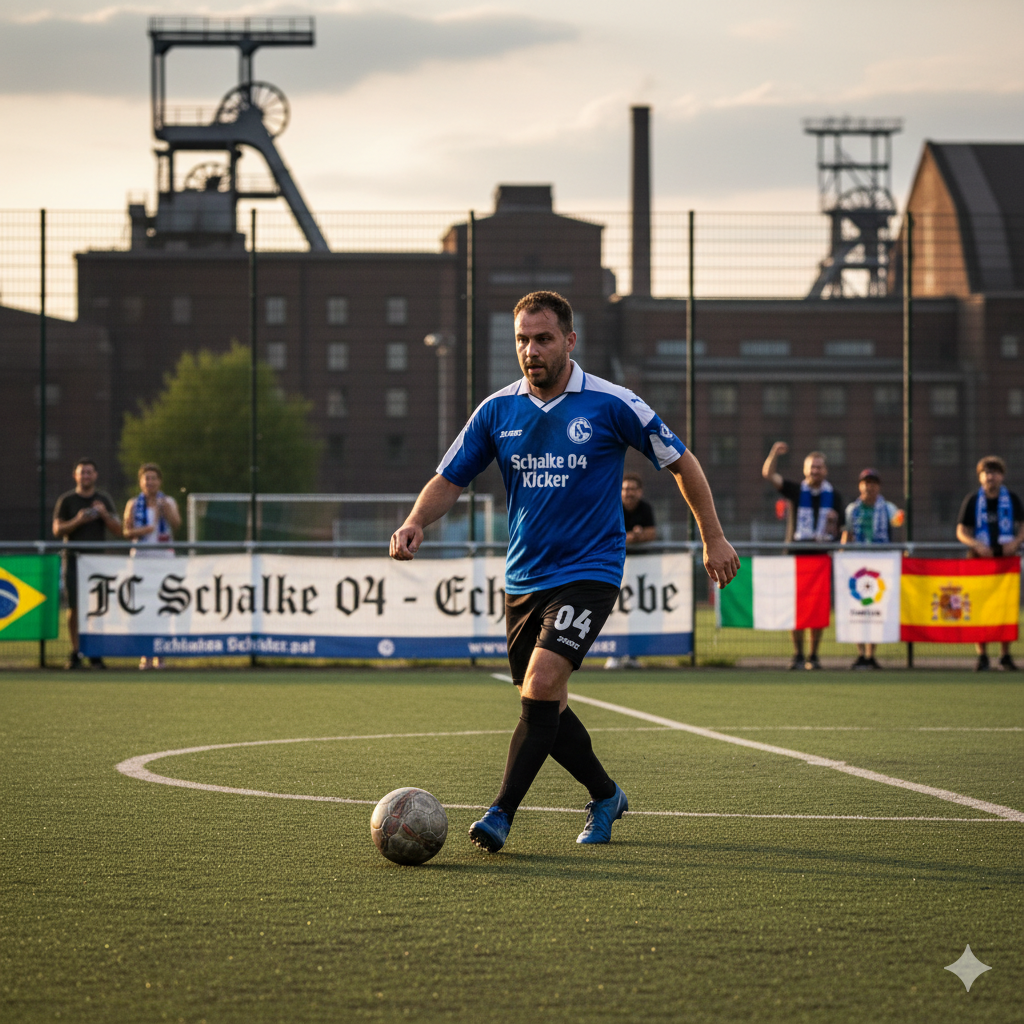
I come from the “soccer heart” of Germany, the Ruhrpott. I have played, trained and followed soccer all my life and am a big fan of FC Schalke 04. I also enjoy following international soccer extensively.