The Boca Juniors and River Plate Rivalry Explained Fully
The Boca Juniors vs River Plate rivalry, known as the Superclásico, is the defining derby of Argentine football and arguably the most intense in the world. It pits the working-class identity of Boca from La Boca against the affluent image of River Plate from Núñez, a clash reflected in playing style, fan culture, and a historical record where Boca holds a slight edge in head-to-head wins.
Most explanations of this feud stop at the simple “rich vs poor” story. That’s a cartoon version. The real tension is subtler, it’s about perceived betrayal, cultural ownership, and two massive fanbases who believe they represent the true soul of Argentine football. Getting it wrong means missing why a draw can feel like a funeral and a win can ignite a city-wide party.
This guide breaks down the rivalry’s origins, the explosive fan culture, the modern financial and sporting battle, and exactly why this match consistently tops global lists.
Key Takeaways
- The class divide is real but oversimplified; the core is River’s geographical move from La Boca, which Boca fans saw as abandoning the neighborhood’s roots.
- Boca Juniors leads the all-time head-to-head record in official matches, but River Plate holds more Argentine Primera División titles (38 to 35).
- Fan violence, orchestrated by “barra brava” groups, has directly altered football history, most notably forcing the 2018 Copa Libertadores final to be played in Madrid.
- The atmosphere is manufactured through coordinated tifo displays, relentless collective chanting, and stadium designs that amplify noise to physically intimidating levels.
- Despite the chaos, it’s a massive commercial engine, with both clubs boasting global brands, multimillion-euro squad values, and a rivalry that defines Argentine sports culture.
The Origins: More Than Just Neighbors
The standard tale paints Boca Juniors as the salt-of-the-earth dockworkers and River Plate as the snobby aristocracy. The truth has more layers. Both clubs were founded by immigrants in the same working-class port district of La Boca in the early 1900s. They were neighbors. The initial friction was purely sporting.
The seismic shift happened in the 1920s. As Boca solidified its identity in La Boca, River Plate moved. First to the slightly more upscale Recoleta, and then, decisively, to the wealthy northern suburb of Núñez in 1938. This wasn’t just a change of address. For the fans left behind in La Boca, it was a betrayal of origin, a choice to court a richer audience. The nickname “Millonarios” (Millionaires) stuck to River, not just for spending on players, but for this perceived social climbing.
The term “clásico” for a major derby was first used in Argentine sports journalism to describe this fixture in the 1920s, before the term was adopted globally for matches like El Clásico in Spain. This fixture literally defined the category.
Boca leaned into its “Xeneize” (Genoese) identity, a badge of honor linking it to the Italian immigrant community that founded it. The rivalry crystallized into a cultural war: authenticity versus aspiration, the port versus the suburb, the stubborn heart versus the ambitious mind. This foundational narrative is detailed in the Wikipedia history of Boca Juniors, which tracks the club’s evolution alongside this growing divide.
TL;DR: The rivalry’s core is River Plate’s physical departure from the shared birthplace of La Boca, which Boca fans framed as a betrayal of working-class roots, creating a lasting cultural schism.
By the Numbers: The Cold, Hard Record
Talking about the Superclásico without stats is like describing a storm without mentioning the wind speed. Fans know these numbers better than their own birthdays. They are the ammunition for decades of arguments.
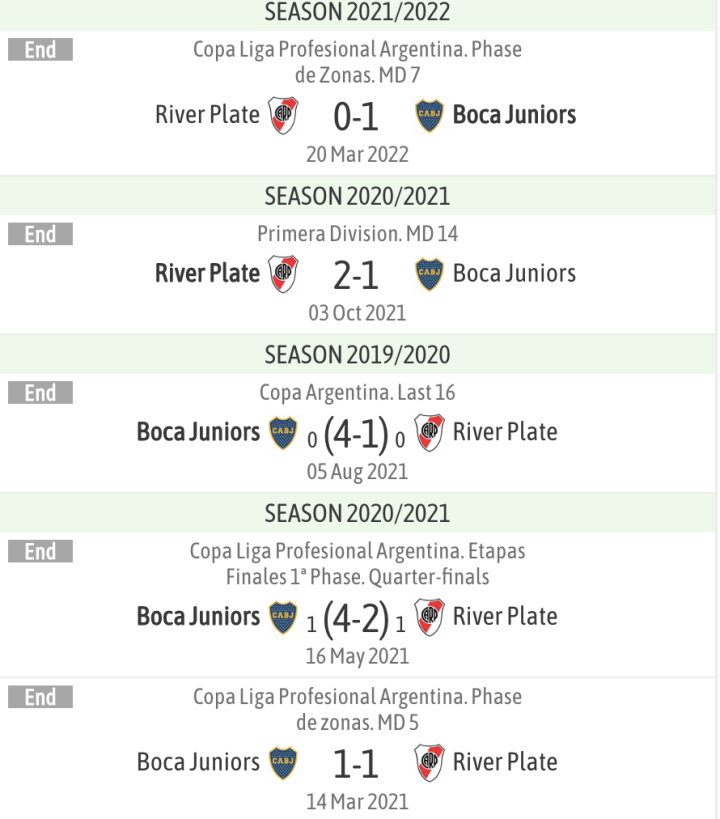
First, the head-to-head. In official competitions, Boca Juniors holds a narrow lead. The count varies slightly by source, but the widely accepted tally from over 260 official meetings gives Boca around 90 wins to River’s high-80s, with a significant number of draws. That slim margin matters immensely. It allows every Boca fan to claim bragging rights, and every River fan to argue the gap is meaningless.
The trophy cabinet tells a different story. River Plate has won 38 Argentine Primera División titles to Boca’s 35. This is River’s strongest retort to the head-to-head stat. However, on the continental stage, Boca turns the tables. They have lifted the Copa Libertadores six times, against River’s four. This international supremacy is a core part of Boca’s “El Único Grande” (The Only Great One) self-image. For a full breakdown of titles and historical context, the CA Boca Juniors Wikipedia entry serves as a key reference.
| Metric | Boca Juniors | River Plate | What It Means |
|---|---|---|---|
| Official Head-to-Head Wins | ~90 | ~88 | Boca’s eternal bragging right, however slim. |
| Argentine Primera Titles | 35 | 38 | River’s domestic dominance and rebuttal. |
| Copa Libertadores Titles | 6 | 4 | Boca’s claim to continental superiority. |
| Global Fanbase Claim | “La mitad más uno” (Half plus one) | Massive, but rarely quantified the same way | Boca’s assertion of being Argentina’s definitive club. |
The financial landscape adds a modern layer. As of recent data, River Plate’s squad often carries a higher market value. But Boca counters with a staggering membership base, over 300,000 members, the largest in South America. They call their support “La mitad más uno”, half the country plus one more. It’s hyperbole, but it speaks to a perceived ownership of the national footballing soul that no spreadsheet can capture.
The Stadiums: La Bombonera vs. El Monumental
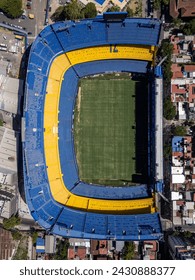
The battle isn’t just on the pitch; it’s built into the concrete and steel of the home grounds. Each stadium embodies its club’s philosophy and directly influences how the Superclásico feels.
La Bombonera (Estadio Alberto J. Armando): Boca’s home is a claustrophobic, vertical cauldron. Its famous “D” shape with three steep stands and one flat one traps noise. When 54,000 fans jump in unison, the stadium physically vibrates, a phenomenon called “La Bombonera no tiembla, late” (The Bombonera doesn’t tremble, it beats). It’s a weapon. Visiting teams, including River, often start matches shell-shocked by the sheer wall of sound and motion mere meters away. The experience is visceral, intimidating, and designed to overwhelm.
El Monumental (Estadio Monumental Antonio Vespucio Liberti): River’s home is grand, spacious, and elegant. With a capacity over 80,000, it’s Argentina’s national stadium. The atmosphere is more expansive, less suffocating. The noise rolls in waves rather than a constant pressurized din. It represents scale and tradition. Winning here for Boca isn’t about surviving an onslaught; it’s about silencing a cathedral.
The choice of venue fundamentally changes the Superclásico’s character. A match at La Bombonera is a back-alley brawl amplified by a megaphone. A match at El Monumental is a gladiatorial contest in a coliseum. This contrast between intimate fury and majestic scale perfectly mirrors the clubs’ dueling identities. These iconic grounds are central to any discussion of the global fan culture surrounding major clubs.
Fan Culture: Chants, Tifos, and the Shadow of Violence
The fans are the engine. The Superclásico’s global reputation rests on the visual and auditory spectacle they create, and the dark extremes they sometimes reach.
On the positive side, the organization is military. Organized ultras groups spend months planning tifo displays, massive banners that cover entire stands with intricate, often provocative, imagery. The collective chanting is non-stop, a 90-minute opera of curated traditional chants and spontaneous eruptions. This is the passionate, creative heart of the soccer derby experience.
Common mistake: Confusing the highly organized, display-oriented ultras with the purely violent hooligans. While overlap exists, the core barra brava groups in Argentina have a structured, often toxic, relationship with the clubs themselves, controlling ticket access and sometimes influencing transfers.
Then there’s the barra brava. These are the hardcore, often violent, fan factions. Their role is dual: they generate the intimidating atmosphere but also orchestrate violence. This isn’t random hooliganism; it’s a structured part of the subculture with economic and political ties. The distinction between these groups and other organized supporter groups worldwide is critical.
The consequences have been historic. In 2018, before the second leg of the Copa Libertadores final between the two, River Plate fans attacked the Boca Juniors team bus with rocks and pepper spray, injuring players. CONMEBOL, the South American governing body, made the unprecedented decision to move the final thousands of miles away to Madrid. It was the ultimate admission that the rivalry’s passion had boiled over into unmanageable danger. This event is a cornerstone of the modern rivalry’s narrative, thoroughly documented on the Wikipedia Superclásico rivalry page.
Modern Era and Global Recognition
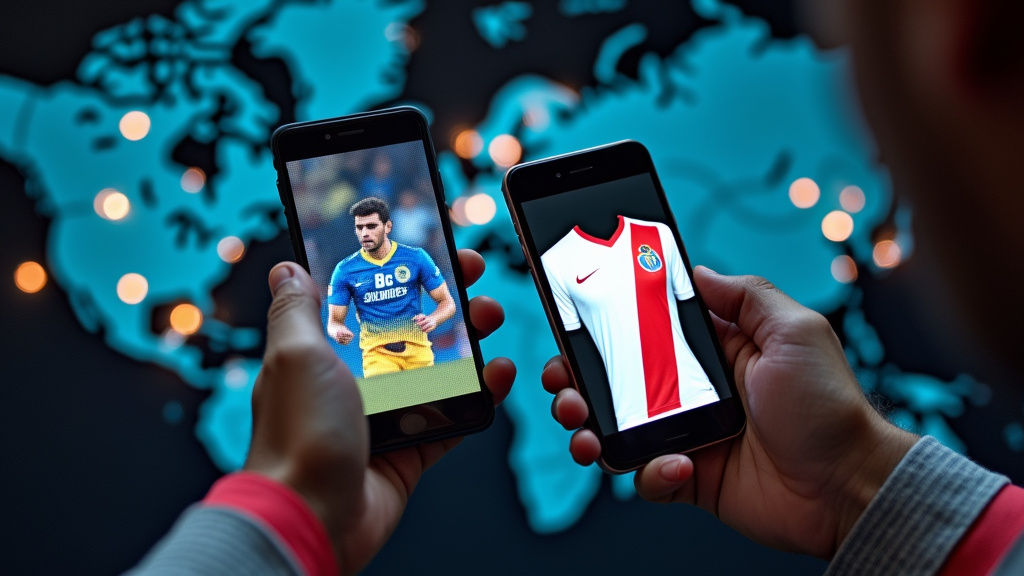
Today, the Superclásico is a global media event. It’s consistently ranked number one on lists of world football’s fiercest rivalries, above El Clásico or the Old Firm. Broadcasts in over 100 countries sell the spectacle of color, noise, and raw emotion.
The clubs have evolved into modern global brands. Boca, with its iconic blue and gold, and River, with its red sash, are instantly recognizable. They compete in the transfer market, with River recently developing a reputation for lucrative player sales. The rivalry is now powered by social media, where insults and memes fly 24/7, and by international preseason tours that export the derby to Miami, Tel Aviv, or Riyadh.
Yet, the essence remains local. The election of Juan Román Riquelme, a Boca idol who famously scored a sublime “taquito” (backheel) goal against River, as Boca’s president in 2023, proves the deep, sentimental connection between identity and leadership. The match remains a referendum on the city’s soul. For 90 minutes, the intricate origin of the term derby is lived at its most extreme.
The following table contrasts how the two clubs leverage their identity in the modern football economy:
| Aspect | Boca Juniors | River Plate |
|---|---|---|
| Brand Identity | Working-class authenticity, “El Único Grande”, global icon. | Aristocratic elegance, “Los Millonarios”, continental powerhouse. |
| Commercial Engine | Massive membership dues, global kit sales (Adidas), touring the “Boca brand”. | High-value player trading, strong local corporate partnerships, stadium revenue. |
| Global Recognition | The blue-and-gold kit is a global symbol of Argentine football passion. | The white kit with red sash is synonymous with tactical quality and tradition. |
| Derby Stakes | A test of their claim to be Argentina’s definitive, most passionate club. | A chance to assert superiority through style and historical trophy count. |
Frequently Asked Questions
What does “Superclásico” mean?
It’s the specific name for the derby between Boca Juniors and River Plate. The term “clásico” for a major local rivalry was first popularized in Argentina to describe this match. “Super” denotes its status as the biggest of them all. You can explore the term’s depth in our article on the famous Superclásico.
Who has won more Superclásico matches?
In official matches, Boca Juniors holds a slight lead. The most commonly cited figures give Boca around 90 wins to River Plate’s high-80s, with over 80 draws. This narrow edge is a perpetual source of pride for Boca supporters.
Why is there so much violence associated with this rivalry?
The intensity is fueled by deep social divisions, total identification with the club, and the organized power of the barra brava groups. These groups have economic incentives and a culture of confrontation that often spills over, as seen in the 2018 bus attack that led to a final being moved to Madrid.
What was the 2018 Copa Libertadores final incident?
It was the first and only time the two teams met in a Copa Libertadores final. After a 2-2 draw in the first leg at La Bombonera, River Plate fans attacked the Boca team bus with projectiles and pepper spray before the second leg at El Monumental, injuring several players. CONMEBOL postponed and then relocated the decisive match to the Santiago Bernabéu in Madrid, where River won 3-1.
Can tourists get tickets to a Superclásico?
Extremely rarely, and it is not advised for the inexperienced. The vast majority of tickets are allocated to season-ticket holders and members of the clubs’ respective barra brava groups. The secondary market is risky, expensive, and can expose buyers to dangerous situations. Watching at a designated, secure “cancha” (sports bar) in Buenos Aires is the recommended and authentic alternative.
The Bottom Line
The Boca Juniors vs River Plate rivalry is not the best because it has the most skilled football, though it often has that. It’s the best because it is the most. The most noise, the most color, the most history, the most pain, and the most joy, compressed into one city block of a pitch. It’s a 90-minute civil war where a misplaced pass feels like treason and a goal feels like liberation.
Understanding it requires moving past the “rich vs poor” cliché. You must see the geographical betrayal, memorize the statistical ammunition, feel the stadiums shake, and recognize the dark organization behind the chaos. It’s a football derby that defines the very category. To know Argentine football is to know this fixture. Everything else is just a game.

I come from the “soccer heart” of Germany, the Ruhrpott. I have played, trained and followed soccer all my life and am a big fan of FC Schalke 04. I also enjoy following international soccer extensively.