Cristiano Ronaldo’s Career and World Cup Story: Full Journey
Cristiano Ronaldo’s career and World Cup story is a 24-year epic defined by relentless evolution, shattered records, and an unwavering pursuit of football’s ultimate prize. It spans from a teenage winger at Sporting CP to a 41-year-old captain leading Portugal at a record sixth World Cup, with his legacy cemented as one of the sport’s two greatest players.
Most summaries just list his clubs and goals. They miss the physical transformation, the tactical reinventions, and the psychological burden of carrying a nation’s hopes for two decades. They also gloss over the real tension in his later years, the move to Saudi Arabia, the questions about his pace, and whether a 41-year-old can still lead a title contender.
This guide connects the dots from his first touch in Madeira to his final World Cup campaign in 2026. We’ll cover the club triumphs, the international milestones, the World Cup heartbreaks, and what comes next.
Key Takeaways
- Ronaldo will become the first player ever selected for six FIFA World Cups in 2026, serving as Portugal’s captain for his final tournament.
- His career is a masterclass in longevity, built on a legendary fitness regimen and multiple positional reinventions, from flashy winger to ruthless central striker.
- Despite winning the Euros and Nations League, the World Cup remains the only major trophy missing from his cabinet, a narrative that defines his late career.
- His move to Al-Nassr in 2023 did not diminish his international output; he scored 25 goals in 30 games for Portugal post-transfer, silencing doubters.
- His influence extends beyond goals, shaping the game strategy and mentality of a generation of Portuguese players like Bruno Fernandes and Rafael Leão.
From Madeira to Megastar: The Club Career Arc
Ronaldo’s club journey is a map of modern football’s elite. It started not with power, but with trickery. At Sporting CP, he was a skinny 17-year-old who dribbled too much. His 2003 move to Manchester United under Sir Alex Ferguson was the first great reinvention. Ferguson curbed the excess step-overs and built a powerhouse. The 2008 season was the peak. Premier League and Champions League winner, and his first Ballon d’Or. That United spell forged his mentality.
The 2009 world-record transfer to Real Madrid shifted the goalposts. His mission was to overtake Barcelona and Lionel Messi. He became a pure scoring machine at the Bernabéu. The numbers are absurd: 450 goals in 438 games, four Champions League titles in five years. He wasn’t just a player; he was the system. His partnership with Karim Benzema and Gareth Bale, the “BBC,” was devastating. He left Madrid as their all-time top scorer, a statue-worthy achievement.
His physical conditioning is the non-negotiable foundation. The reported daily routine of 3,000 abdominal exercises, cryotherapy, and a strict player nutrition plan allowed him to peak in his mid-30s at Juventus, winning two Serie A titles and scoring 101 goals. That’s where most legends fade.
His return to Manchester United in 2021 was emotionally charged but ultimately fractured. The second spell at Juventus had already shown a player adapting to declining explosive pace by becoming a penalty-box predator. The United return highlighted a tactical mismatch. The system no longer bowed to his needs. It ended with a controversial interview and a mutual termination in late 2022.
The move to Al-Nassr was framed as a retirement tour. The reality is more complex. The Saudi Pro League offered a colossal financial package, but it also offered something else: guaranteed playing time and a central role to maintain sharpness for Portugal. Coach Roberto Martínez has consistently stated that Ronaldo’s performance level in training and matches for the national team has remained elite. The data backs it up.
| Club | Years | Key Achievement | Evolution Stage |
|---|---|---|---|
| Sporting CP | 2002–2003 | Professional debut at 17 | Raw, skilful winger |
| Manchester United | 2003–2009 | First Ballon d’Or, UCL win | Physically developed all-rounder |
| Real Madrid | 2009–2018 | 4x UCL, all-time top scorer | Ultimate goal machine |
| Juventus | 2018–2021 | 2x Serie A, 100+ goals | Intelligent penalty-box striker |
| Man United (II) | 2021–2022 | Emotional return | Tactical misfit |
| Al-Nassr | 2023–Present | Maintained Portugal form | Veteran leader, fitness icon |
TL;DR: Ronaldo’s club career is a five-act play of reinvention, moving from tricky winger to complete forward to pure scorer, with his later moves to Juventus and Al-Nassr strategically extending his international relevance.
Becoming Captain Portugal: The International Legacy
His international story began with tears. A teenage Ronaldo cried on the pitch after Portugal lost the Euro 2004 final on home soil to Greece. That moment of heartbreak, not his earlier goal in the tournament, wired his competitive psyche for the next two decades. He wasn’t just playing for Portugal; he was on a mission to deliver them glory.
For years, the narrative was that he couldn’t translate his club form to the national team. That changed with leadership. After the international retirement of the “Golden Generation,” the armband became his. The responsibility transformed him. He evolved from a sometimes-frustrated soloist into the conductor, demanding more from teammates and dragging the side forward. His playmaking ability grew, even as his goal tally skyrocketed.
The pinnacle arrived at Euro 2016. Injured early in the final against France, he became a frenetic sideline manager, shouting instructions and rallying his team. When Éder scored the winner, Ronaldo’s joy was that of a relieved king. He had finally lifted a major trophy for Portugal. It validated his entire international career. He added a UEFA Nations League title in 2019 and another in 2025, proving it was no fluke.
Common mistake: Judging Ronaldo’s late-career international impact solely on league goals. Since joining Al-Nassr, his goals-per-game ratio for Portugal actually improved. He scored 25 in 30 appearances, a rate that matches his peak years. The lower intensity club environment preserved his physical capital for the national team.
His records are monolithic. He is the all-time leading men’s international goalscorer (over 143 goals) and the most-capped male player (over 200 appearances). These aren’t just stats; they are a testament to a career longevity that defies biology. He has outlasted entire cycles of teammates. The kids he once played with, like Nani, are long retired. He’s now captain to their successors.
TL;DR: Ronaldo’s international legacy shifted from unfulfilled talent to iconic leader, defined by dragging Portugal to its first major titles at Euro 2016 and the Nations League, while amassing untouchable scoring and appearance records.
The World Cup Timeline: From 2006 Prodigy to 2026 Captain

Photo: Анна Нэсси / Wikimedia Commons / CC BY-SA 3.0

The World Cup is the glaring blank space on an otherwise complete resume. His relationship with the tournament is a saga of personal milestones overshadowed by collective frustration. Let’s walk through each chapter.
2006: The Prodigy. At 21, he was the youngest Portuguese goalscorer in World Cup history. This tournament is best remembered for the “Battle of Nuremberg” quarter-final against the Netherlands, a match with 16 yellow and 4 red cards. Ronaldo was subbed off early, watching from the sidelines as Portugal advanced. They lost to France in the semi-final. He left with a bronze medal and a rising profile.
2010: The Frustration. By now a global superstar, he carried immense weight. He scored just one goal, a comical long-range strike against North Korea that bobbled past the keeper. Portugal was eliminated by eventual champions Spain in the last 16. The image of him spitting into a camera after a match captured his simmering frustration. The team was solid but lacked a cutting edge, and the blame landed on him.
2014: The Injury. A left knee tendon injury plagued him before the tournament. He was visibly limited in Brazil. He scored a late winner against Ghana, but Portugal crashed out in the group stage after a 4-0 demolition by Germany. It was his lowest World Cup point. His body, for the first time, had betrayed the occasion.
2018: The One-Man Show. This was his masterpiece. In the opening match against Spain, he scored a stunning hat-trick, including a last-minute free-kick to secure a 3-3 draw. At 33, he became the oldest player to score a World Cup hat-trick. He carried Portugal to the round of 16, where they lost to Uruguay. He proved he could single-handedly dominate a World Cup match.
2022: The Record. In Qatar, he became the first male player to score in five different World Cups (a feat later matched by Messi). The goal, a penalty against Ghana, was historic. But his tournament was awkward. He was benched for the knockout stages by coach Fernando Santos as Portugal advanced to the quarter-finals. The era of undisputed automatic status was over.
2026: The Last Dance. Selected for his unprecedented sixth World Cup, he will be 41. Coach Roberto Martínez has confirmed he will be captain. This final chapter is about legacy, not just playing. His role will likely be as a starter in less demanding games and a powerful option off the bench. The dream is obvious: to fill the only hole in his trophy case.
The 2018 hat-trick against Spain wasn’t just skill. It was a psychological declaration. After Diego Costa equalized to make it 2-2, Ronaldo took a weak shot that De Gea fumbled into the net. He didn’t care. He celebrated like he’d scored a 30-yard screamer. That mentality, forcing errors, capitalizing on luck, won the point.
| World Cup | Age | Key Moment | Team Result | Personal Legacy |
|---|---|---|---|---|
| 2006 | 21 | Youngest POR WC scorer | 4th Place | Announced talent |
| 2010 | 25 | Solo goal vs. North Korea | Round of 16 | Frustrated carrier |
| 2014 | 29 | Played through injury | Group Stage | Physical low point |
| 2018 | 33 | Hat-trick vs. Spain | Round of 16 | Peak individual show |
| 2022 | 37 | Scored in 5th WC | Quarter-finals | Historic, but benched |
| 2026 | 41 | Captain for 6th selection | TBD | The final pursuit |
TL;DR: Ronaldo’s World Cup journey is a chronicle of evolving roles, from teenage prospect to frustrated leader to historic record-setter, always marked by brilliant individual moments that couldn’t quite propel Portugal to the final summit.
The Final Chapter: 2026 and Beyond
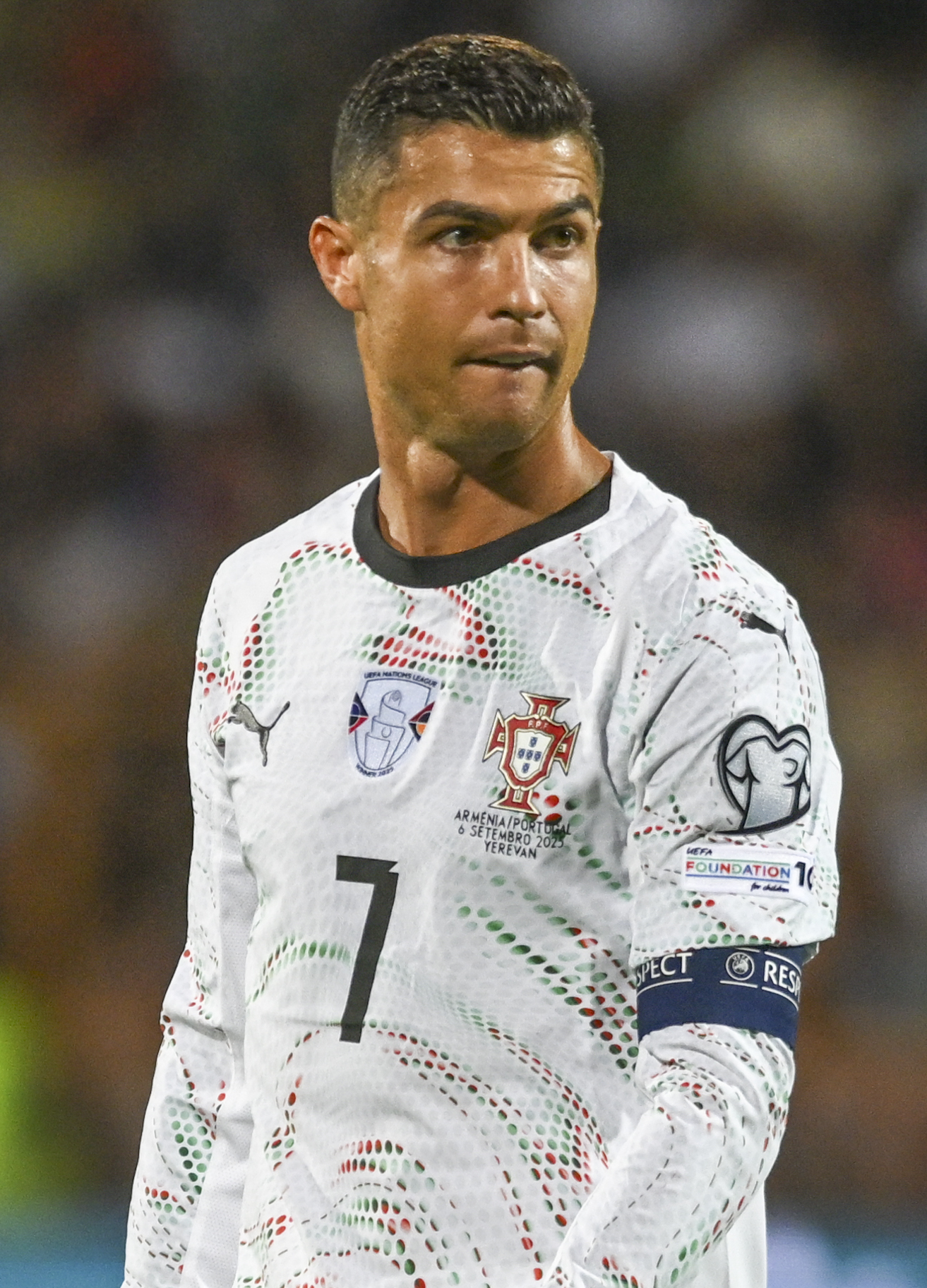
Photo: YantsImages / Wikimedia Commons / CC BY-SA 4.0
.jpg)
The 2026 World Cup in North America is the definitive endpoint he has chosen. In a CNN report on Ronaldo’s final World Cup, he stated it will “definitely” be his last. This isn’t just a farewell tour; it’s a meticulously planned final assault. Coach Martínez is building the tactical plan around maximizing Ronaldo’s remaining explosiveness in short bursts.
His value now is as much in his presence as in his play. In training, he sets the standard. For younger stars like João Neves or António Silva, sharing a pitch with their childhood idol in a World Cup is surreal motivation. He embodies the professional lifespan they all aspire to. He also shoulders the media pressure, deflecting scrutiny from less experienced teammates.
What about after 2026? Retirement from international football is almost certain. His club career at Al-Nassr may continue for a season or two beyond. The man has a brand, business empire, and a reported billionaire status to manage. A move into coaching or ownership is plausible, but don’t expect a quiet retirement. His competitive drive will need a new outlet.
The greatest testament to his athletic training is that this final chapter is even possible. At 41, participating in a World Cup is normally unthinkable. Doing so as a key player for a favorite is unprecedented. It’s the final, most powerful record of all.
TL;DR: The 2026 campaign is a strategic last stand where Ronaldo’s role as a leader and impact substitute is as crucial as his goals, closing a 24-year international career that redefined longevity.
Frequently Asked Questions
How many World Cups has Ronaldo played in?
Cristiano Ronaldo has played in five World Cups (2006, 2010, 2014, 2018, 2022) and has been selected for a historic sixth in 2026. He will be the first player ever to be named to six World Cup squads.
What is Ronaldo’s best World Cup performance?
His 2018 tournament in Russia was his best individual performance. He scored four goals, including a sensational hat-trick against Spain, and carried Portugal to the round of 16. His leadership and clutch scoring were at their peak.
Has Ronaldo ever won a World Cup?
No, Cristiano Ronaldo has never won the FIFA World Cup. His best finish was fourth place in 2006. Winning the World Cup remains the only major trophy missing from his collection, a key narrative driving his final appearance in 2026.
Which clubs has Ronaldo played for?
His club career, in order, is: Sporting CP (Portugal), Manchester United (England), Real Madrid (Spain), Juventus (Italy), Manchester United again, and currently Al-Nassr (Saudi Arabia). You can explore more details of his early career for his formative years.
How many international goals does Ronaldo have?
He has scored over 143 goals for the Portuguese national team, making him the all-time leading men’s international goalscorer. This record is a cornerstone of his legacy beyond his club achievements.
The Bottom Line
Cristiano Ronaldo’s story is one of relentless will. It’s not just about the 800+ goals or the five Ballon d’Or awards. It’s about the conscious decision, year after year, to transform his body and game to stay on top. The World Cup has been his white whale, a stage where he’s shone individually but fallen collectively. The 2026 tournament is his last chance to change that ending.
His career forces us to redefine retirement age for elite athletes. He moved from being the game’s most expensive teenager to its most enduring force. Beyond the stats, his true impact is the template he leaves: a blend of freakish genetics, obsessive professionalism, and an ego that demands victory. Long after his final match, that template will be what coaches point to when they talk about greatness.
I come from the “soccer heart” of Germany, the Ruhrpott. I have played, trained and followed soccer all my life and am a big fan of FC Schalke 04. I also enjoy following international soccer extensively.