Ronaldo’s Soccer Start Age: His Complete Early Career Story
Cristiano Ronaldo started playing soccer with a ball at age three, joined his first organized youth team (Andorinha) around age seven or eight, and made his official professional debut for Sporting CP at age 17 on August 14, 2002.
Most timelines get the first part right but blur the critical middle. They mash together “started playing” with “turned professional,” which misses the real story. That decade between picking up a ball and signing a professional contract is where the path was built, through specific clubs, a life-changing move, and a series of deliberate, high-stakes choices.
This guide traces that exact path. We’ll map his journey from the streets of Madeira to his Sporting CP debut, clarifying the exact ages at each milestone and what those steps actually entailed.
Key Takeaways
- Ronaldo’s football obsession was evident by age six, but his entry into structured play came at age seven or eight with amateur club Andorinha.
- His professional debut is a separate, later event: he first appeared for Sporting CP’s senior team at age 17 in a UEFA Champions League qualifier.
- The move from Madeira to Lisbon at age 12 to join Sporting CP’s academy was the pivotal talent-identification moment, costing the club just £1,500.
- He left formal education at 14 to focus solely on football, a decision that defines the all-in mentality of European academy prospects.
- Understanding this timeline corrects the common conflation of “playing soccer” with “playing professionally,” which spans a crucial decade of development.
The Simple Answer: A Two-Part Timeline
You need to separate two events. First, when he began playing the game. Second, when he began playing it for money.
Ronaldo first kicked a football at age three. He joined his first organized club, Andorinha, around age seven or eight. His official professional debut for Sporting CP’s first team came nearly a decade later, on August 14, 2002, when he was 17 years old.
The gap between those points is the development arc. Getting this wrong is like saying a pilot started flying when they got their commercial license, ignoring the hundreds of training hours. The early years at Andorinha and Nacional built the foundation the Sporting CP scouts saw.
TL;DR: He played at 3, joined a club at ~8, and debuted professionally at 17. The middle years are the story.
Ronaldo’s First Clubs: Andorinha and Nacional
Look at any early photo of Ronaldo in a kit. The shirt is too big, the socks are slumped. That’s the Andorinha era. His father, José Dinis Aveiro, worked as the kit man for this small local side, which is how a young Cristiano got through the door. The club, formally linked to C.D. Nacional, provided the first taste of structured play around 1992-1993.
This wasn’t a prestigious academy. It was a local team where the fundamentals were learned, passing, shooting, listening to a coach. The environment was familiar because of his father, which matters for a shy kid. He spent a year or two there before his talent visibly outgrew the setting.
By age ten, he moved to the parent club, Nacional. This was a bigger pond. The training was more frequent, the competition slightly sharper. It was here, over two years, that his dribbling and goal-scoring began to look like something special. Scouts from the mainland start paying attention to Madeiran clubs for this exact reason, to find the kid who dominates the local scene.
Common mistake: Assuming Ronaldo’s first club was a professional academy. Andorinha and Nacional were amateur youth sides. The jump from local dominance to a professional academy invitation is the first major filter in a footballer’s life.
| Club | Age | Role / Significance | Duration |
|---|---|---|---|
| Andorinha | ~7-8 years old | First organized team; father was kit man. Learned basic teamwork and structure. | 1-2 years |
| Nacional | 10-12 years old | Larger local club. Technical skill became prominent; first real scout attention. | 2 years |
| Sporting CP Academy | 12-16 years old | Professional youth academy. Moved to Lisbon; full-time training and education. | 4 years |
The path from Andorinha to Nacional is the prototype for thousands of kids. It’s the local progression. What happened next is what separates a good local player from a global phenomenon.
The Sporting CP Breakthrough: The Move at Age 12
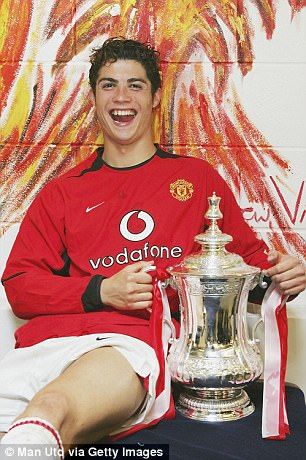
In 1997, Sporting CP held a youth tournament in Madeira. Ronaldo, then 12, played for Nacional. His performance didn’t just win games; it convinced the Sporting scouts to offer a three-day trial at their academy in Lisbon, the Alcochete. He went, he impressed, and they offered him a place. The transfer fee was £1,500.
Now the hard part began. He moved from the island of Madeira to the Portuguese capital, a distance of about 1,000 kilometers. This is the brutal, standard cut of European football. Academies recruit nationally and internationally, plucking children from their homes. Ronaldo was reportedly homesick, cried often, and was teased for his Madeiran accent. His education continued, but the focus had irrevocably shifted.
By 14, he and his family made the decision that cements the academy life: he left school to focus entirely on football. This is the point of no return. The club becomes your school, your coach your teacher, your performance your grades. The system is designed to produce footballers, and it requires total immersion. His rapid progression through multiple Sporting youth teams in a single season proved the gamble was sound.
I’ve seen the academy system in Germany from the outside. At clubs like Schalke, the youth development programs are similarly all-consuming. Kids move into dormitories at 14, their lives scheduled down to the minute. Ronaldo’s experience in Lisbon was the Portuguese version of that same high-pressure, high-reward factory. The ones who survive it are built differently.
From Academy to Professional Debut: The Wait Until 17

Promotion to the first team is the only goal. Ronaldo got there fast. He was training with Sporting CP’s senior squad by age 16. But there’s a gap between training and debuting. Coaches manage a young player’s introduction, waiting for the right moment, often in a lower-stakes match or when injuries force their hand.
For Ronaldo, that moment came on August 14, 2002. Sporting faced Inter Milan in a UEFA Champions League third qualifying round match. Manager László Bölöni sent the 17-year-old on in the 58th minute, replacing fellow academy product Tiago. The early career milestones don’t get much bigger. His Primeira Liga debut followed a month later against Braga.
Why did it happen at 17? Physical readiness is part of it. But also, his talent had become un-ignorable. In pre-season, he’d been terrorizing experienced defenders in training. The club needed his spark. His debut wasn’t a sentimental gesture; it was a tactical injection of pace and directness that the team lacked.
This timeline, first-team training at 16, debut at 17, is actually accelerated. Many academy products wait until 18 or 19. It signals how highly he was rated. It also set the stage for his transfer. His performances against Manchester United for Sporting in a 2003 friendly so impressed Sir Alex Ferguson that United signed him weeks later for £12.24 million.
TL;DR: He trained with the seniors at 16, debuted in the Champions League at 17, and was sold to Manchester United at 18. Each step was a record of his accelerating development.
How Ronaldo’s Start Compares to Other Legends
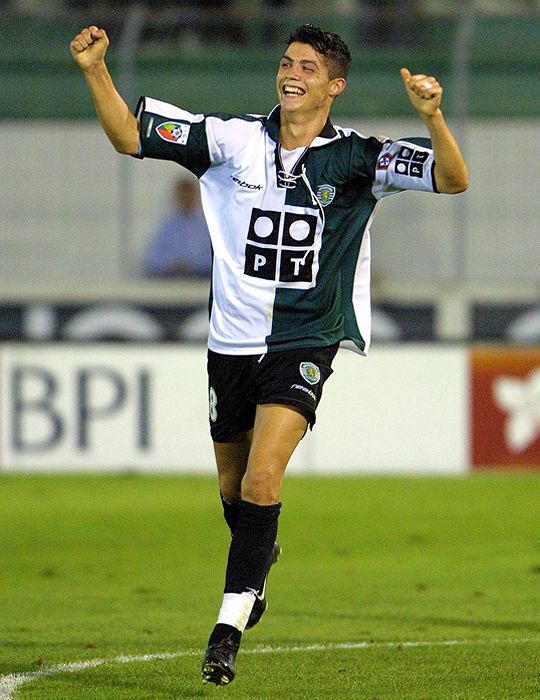
Comparing youth pathways shows how non-standard they are. Lionel Messi, for instance, moved from Argentina to Barcelona’s La Masia at age 13 after his growth hormone deficiency was diagnosed. His professional debut for Barcelona came at 17 in 2004, similar to Ronaldo’s timeline but with the added layer of a medical and transnational relocation crisis for his family.
Other modern soccer legends took different roads. Brazilian stars like Pelé debuted professionally at 15 or 16, often in less regulated domestic leagues. German talents like Thomas Müller came through Bayern Munich’s academy but debuted later, at 19, after loan spells. The throughline isn’t a specific age, but the identification of exceptional talent followed by a rapid, high-stakes promotion.
The table below highlights how the “professional debut” age varies, but the early identification doesn’t.
| Player | First Organized Club (Age) | Professional Debut (Age) | Key Difference |
|---|---|---|---|
| Cristiano Ronaldo | Andorinha (~8) | 17 (Sporting CP) | Moved countries for academy at 12; left school at 14. |
| Lionel Messi | Grandoli (6) | 17 (FC Barcelona) | Moved continents for academy/medical treatment at 13. |
| Pelé | N/A (street football) | 15 (Santos) | No formal youth academy; scouted directly from amateur tournaments. |
| Erling Haaland | Bryne FK (5) | 17 (Bryne FK) | Debuted for his local club before moving to Molde; later multi-club development. |
Ronaldo’s path is the classic European academy model: early local play, identification by a top club, relocation, full immersion, and early debut. Messi’s is an extreme version due to medical and immigration factors. The youngest professional footballers often emerge from South American systems with lower age restrictions, but their career longevity can face different pressures.
The Reality of Youth Soccer Pathways

Ronaldo’s story is the 0.01% outcome. For context, a study of English academies cited in Michael Calvin’s book No Hunger in Paradise states that less than half of one percent of boys who enter an academy at age nine will make a living from the game. The system is a funnel designed to find the absolute best, and it discards the rest, often with little support.
The emotional toll of this is the “side of soccer nobody talks about.” Kids like Ronaldo who move at 12 face intense loneliness and pressure. Those who don’t make it at 18 or 19 are released without a completed education or a clear plan B. The professional soccer career span for those who do make it averages just 8 years, according to FIFPRO data, making the early investment a massive gamble.
This is why understanding Ronaldo’s start isn’t just about dates. It’s about recognizing the infrastructure, the youth soccer academies, the scouts, the family sacrifices, that produces such players. His success required his otherworldly talent, but also the ruthless, systematic environment of Sporting CP that polished it. When considering ideal soccer position or training for a child, this reality check is necessary. The dream is valid, but the odds are mathematical.
Before you start: If you’re a parent or young player inspired by this path, temper inspiration with realism. The academy path requires immense sacrifice with statistically minimal payoff. Focus on love of the game, a strong education as a backup, and holistic development over early specialization. The system that produced Ronaldo breaks far more kids than it builds.
Frequently Asked Questions
Did Ronaldo play for Benfica as a youth?
No. While he grew up a fan of S.L. Benfica, he never played for their academy. His youth career was exclusively with Andorinha, Nacional, and Sporting CP in Portugal. The confusion likely comes from his stated childhood fandom.
What was Ronaldo’s first professional salary?
Exact figures from his first Sporting CP contract aren’t publicly documented, but it would have been a standard youth professional salary for a Portuguese academy graduate in the early 2000s, likely a few thousand euros per month. His life-changing wealth came with his move to Manchester United in 2003.
How did Ronaldo get scouted by Manchester United?
He was scouted in person. Manchester United played a pre-season friendly against Sporting CP in August 2003 to inaugurate Sporting’s new stadium. Ronaldo’s performance was so dominant against United’s defenders that they urged Sir Alex Ferguson to sign him immediately after the game. Ferguson agreed and completed the transfer within days.
Is starting young a guarantee of success in soccer?
Absolutely not. Starting young provides more time to accumulate practice hours, but it’s no guarantee. Success requires a rare combination of innate talent, physical attributes, mental resilience, opportunity, and expert coaching. Millions of children start young; only a handful become professionals, and an even smaller fraction become legends.
What can young players learn from Ronaldo’s early career?
Discipline and sacrifice. Beyond talent, his early move to Lisbon, his decision to focus solely on football, and his relentless work ethic in training set him apart. Young players should emulate his dedication to practice and physical conditioning, best supported by a structured soccer workout plan, while maintaining a balanced life.
The Bottom Line
Cristiano Ronaldo started playing soccer at age three. He joined an organized club at seven or eight. He became a professional at seventeen. The ten years in between were not an accident. They were a deliberate, grueling ascent through the tiers of Portuguese football, from local pitches in Madeira to the polished grounds of Sporting CP’s Alcochete.
His timeline demystifies the myth of overnight success. It was a decade of development, a life-changing move at twelve, and a series of choices that prioritized football above all else. For every kid with a ball dreaming of the same path, remember the structure behind the story: the academies, the scouts, the released players, and the statistical improbability. Ronaldo’s start is a masterclass in talent meeting a system designed to exploit it. The rest was his own relentless will.
I come from the “soccer heart” of Germany, the Ruhrpott. I have played, trained and followed soccer all my life and am a big fan of FC Schalke 04. I also enjoy following international soccer extensively.