Nico Williams World Cup Profile: Stats, Form & Spain Role
Nico Williams is a foundational player for Spain’s 2026 FIFA World Cup campaign. The 23-year-old Athletic Bilbao winger, fresh from a man-of-the-match performance in Spain’s Euro 2024 final victory, brings elite pace, direct dribbling, and proven big-game temperament. His role under manager Luis de la Fuente is as a primary outlet on the left flank, tasked with stretching defenses and creating decisive moments. For a complete profile, you must assess three things: his current club form and fitness after a 2025/26 season with minor injuries, his specific tactical fit within Spain’s system, and his projected impact based on a trajectory that has seen him become an indispensable cog for club and country.
Most profiles stop at the basic stats. They list his four goals for Spain, his Copa del Rey win, and call it a day. They miss the granular details that separate a good player from a tournament-defining one, the specific groin strain that sidelined him in March 2026, the exact way de la Fuente uses him to pin back opposing full-backs, and the statistical reality that his game is evolving beyond just speed.
This guide breaks down the complete Nico Williams profile for the 2026 World Cup. We’ll cover his current physical condition, his exact role for Spain, the key statistics that matter, and what his club future at Athletic Bilbao means for his summer readiness.
Key Takeaways
- Nico Williams’s contract with Athletic Bilbao runs until 2035, providing remarkable stability, but persistent groin injuries in early 2026 are the single biggest variable for his World Cup fitness.
- His tactical value for Spain under Luis de la Fuente isn’t just pace; it’s his ability to isolate and beat defenders one-on-one on the left wing, creating space for midfield runners like Pedri and Gavi.
- Beyond goals and assists, track his progressive carries and successful dribbles, metrics where he ranks among Europe’s best wingers and which directly translate to tournament football.
- His man-of-the-match performance in the Euro 2024 final is the clearest evidence of a clutch mentality, a non-negotiable trait for World Cup success.
- While a transfer rumor to a European giant could emerge, his long-term deal at Bilbao means any move would require a massive fee and likely happen after the 2026 tournament, minimizing disruption.
Nico Williams 2026 World Cup: Current Form & Fitness
You cannot talk about 2026 without starting with the 2025/26 season. The data from FotMob shows Williams with 4 goals and 2 assists in 1,316 La Liga minutes for Athletic Bilbao, holding an average match rating of 6.99. Those numbers are solid, not spectacular. The story is in the minutes played, or rather, the minutes missed.
Nico Williams sustained multiple groin injuries in the first half of 2026, with a return to full training projected for late May. This timeline, sourced from Transfermarkt’s injury history log, gives him a tight but feasible window to regain match sharpness before the World Cup group stage begins in June.
The first injury, a groin problem in late February, kept him out for three weeks. He returned in March, only for a related issue to flare up after two matches. That’s the pattern you watch for. A single strain is bad luck. A recurrence points to a underlying vulnerability or a rushed rehab. Spain’s medical staff will be managing his load from the first day of the pre-tournament camp.
His game has matured. The raw, explosive teenager who debuted at the 2022 World Cup is now a more complete attacker. He still has that blistering acceleration to burn past a full-back. But he’s added a sharper final pass and a more consistent willingness to track back. You see it in Bilbao’s defensive shape, he’s no longer a pure luxury player.
TL;DR: Monitor his groin. His 2025/26 club form was interrupted, but his underlying game intelligence has grown. Peak physical condition for the tournament is the only question.
The Path to 2026: From Euro 2024 Hero to World Cup Leader
Williams’s career arc is a masterclass in steady, pressure-tested progression. His first major tournament was the 2022 FIFA World Cup in Qatar, where he earned four caps off the bench. He was a prospect. By the summer of 2024, he was the protagonist.
The UEFA Euro 2024 final was his official arrival on the world stage. Scoring a goal and winning the man-of-the-match award in a major final does something to a player’s psyche. It instills a belief that can’t be coached. When Spain needed a moment of magic against a packed defense, it was Williams driving at the heart of it, taking responsibility. That experience is invaluable for the younger players in Spain’s squad who will look to him in North America.
His role has evolved in lockstep with his confidence. Under previous manager Luis Enrique, he was a situational weapon. Under Luis de la Fuente, he is a system player. De la Fuente’s Spain uses width aggressively, and Williams is the embodiment of that philosophy on the left. He is instructed to hold width, receive the ball in advanced areas, and commit defenders. This tactical clarity has boosted his output and his importance.
Breaking Down the Nico Williams Skill Set
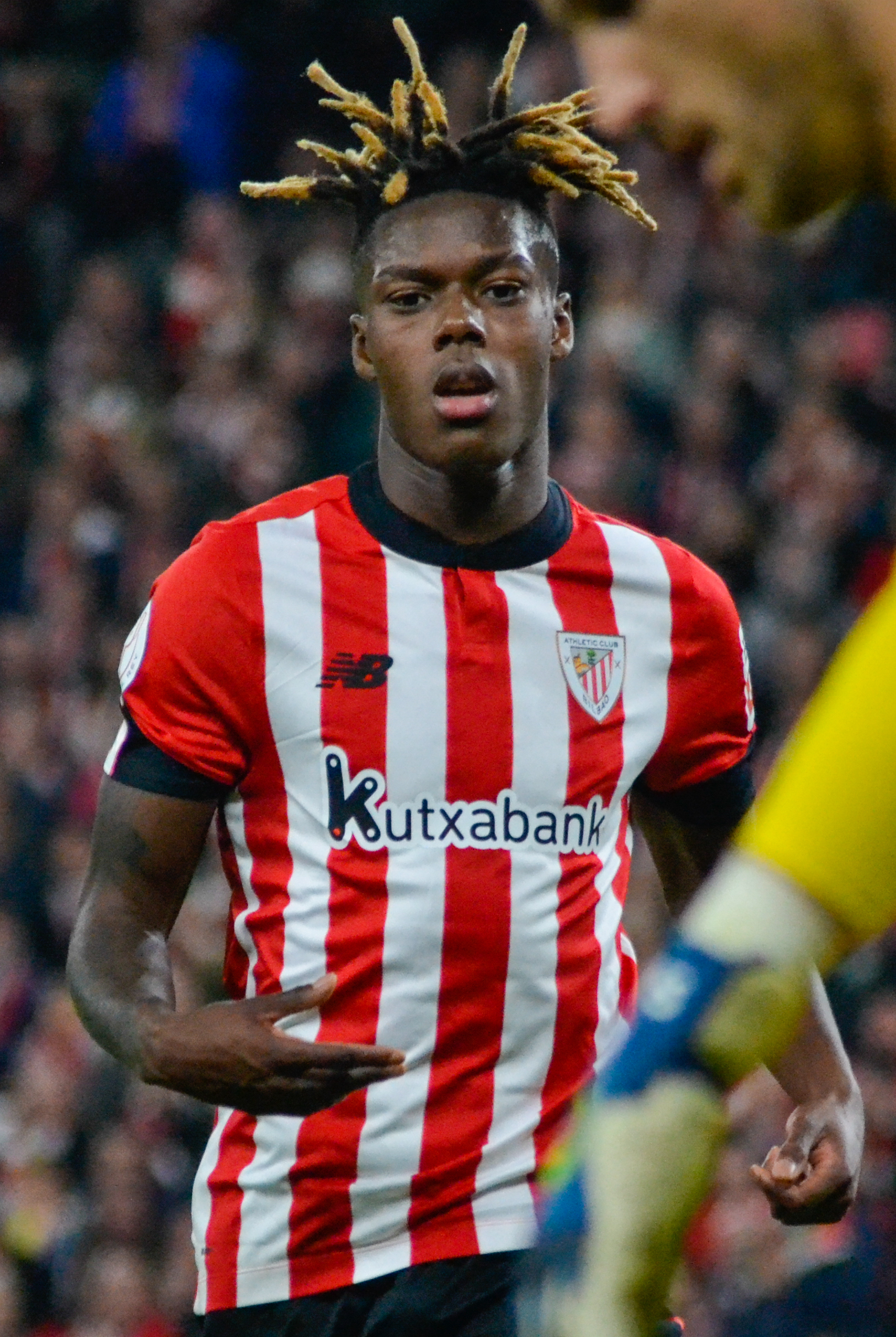
Photo: Maider Goikoetxea / Wikimedia Commons / CC BY-SA 2.0
.jpg)
What does he actually do on the pitch? It’s a blend of physical gifts and refined technique.
- Pace and Power: This is the foundation. His sprint speed is among the very best in world football, a trait that aligns him with other fastest players in 2026. It’s not just straight-line speed; it’s his ability to accelerate from a standing start while shielding the ball.
- Dribbling and 1v1 Mastery: He averages over 4 successful dribbles per 90 minutes in La Liga. He uses a low center of gravity and quick feints to unbalance defenders. This isn’t showboating, it’s a primary method of chance creation for his team.
- Final Third Decision-Making: This is the area of greatest growth. Earlier in his career, the final ball was erratic. Now, he more consistently picks the right option: shoot, cut back, or drive to the byline for a cross. His assist numbers are rising as a result.
- Defensive Work Rate: A non-negotiable for de la Fuente. Williams now consistently drops to form a midfield block when out of possession, a discipline that was sporadic two seasons ago.
The combination makes him a nightmare for tired defenders in the latter stages of a game, a scenario that defines knockout tournament football.
Tactical Fit: How Spain Uses Nico Williams
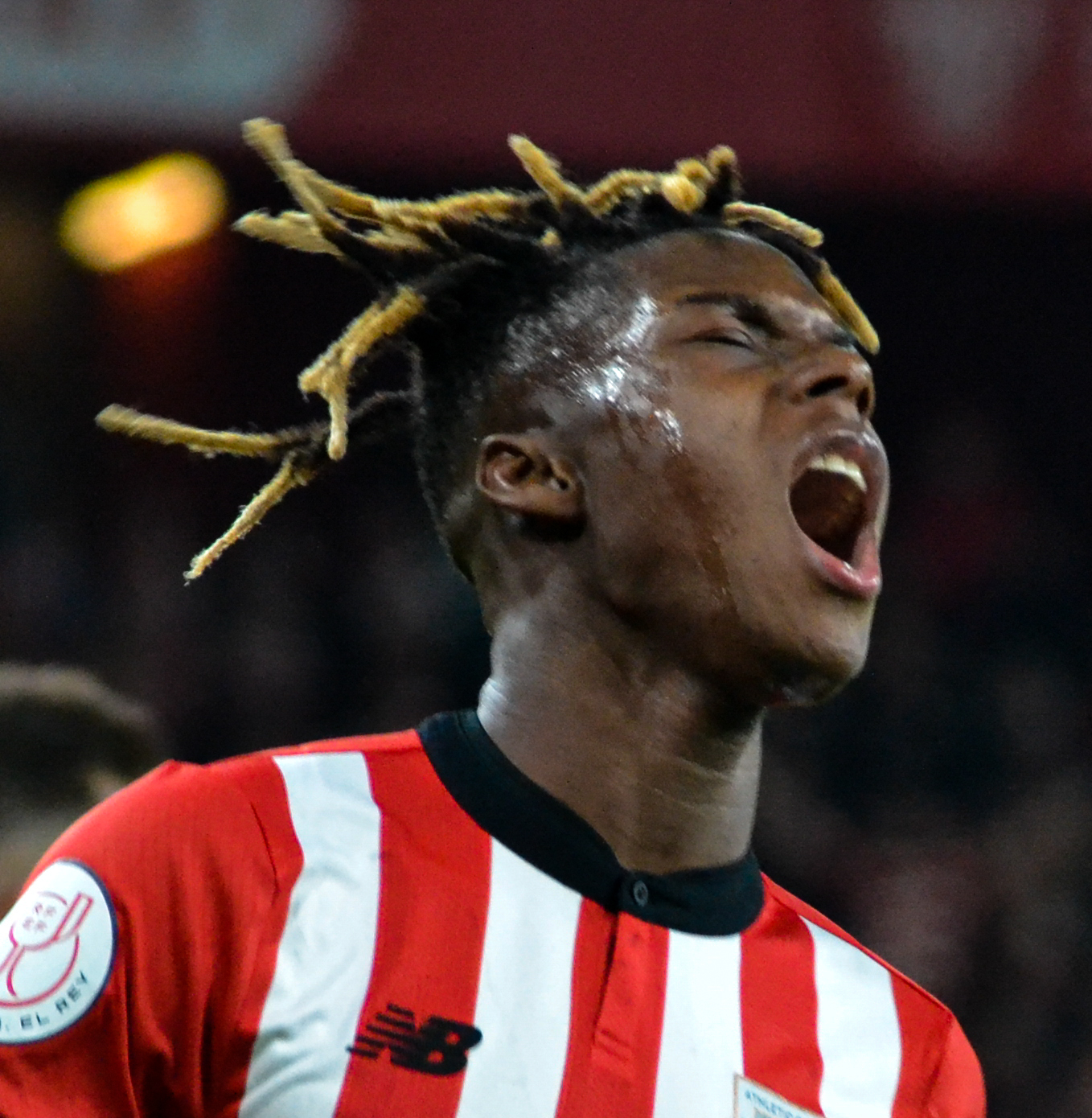
Photo: Maider Goikoetxea / Wikimedia Commons / CC BY-SA 2.0
.jpg)
Luis de la Fuente’s system is built for players like Williams. It’s a flexible 4-3-3 or 4-2-3-1 that prioritizes control through possession but has a direct outlet on the wings. Williams is that outlet.
His starting position is high and wide on the left touchline. This serves two purposes. First, it pins the opposing right-back, creating space for Spain’s interior midfielders, players like Pedri, to operate. Second, it gives him a runway. When the ball is switched to him, he often receives it with space to drive into. His instruction is simple: attack the defender, beat him, and then decide.
This role differs from how he might be used in a more counter-attacking side or a different modern 3-5-2 tactics system. In Spain’s possession-dominant setup, his dribbling is a tool to break down low blocks, not just to exploit space in transition. It requires patience and precision, not just pure speed.
Common mistake: Focusing only on Williams’s goal tally for Spain, his primary function is to destabilize defensive structures and create chances for others. Judging him solely on goals misses 70 percent of his contribution.
The synergy with left-back Alejandro Grimaldo or Marc Cucurella is also crucial. They provide underlapping runs that give Williams an option to combine inside, or they hold position to allow him to isolate his marker. This coordinated movement is a staple of de la Fuente’s advanced tactical principles.
Injury History & The 2026 Fitness Question
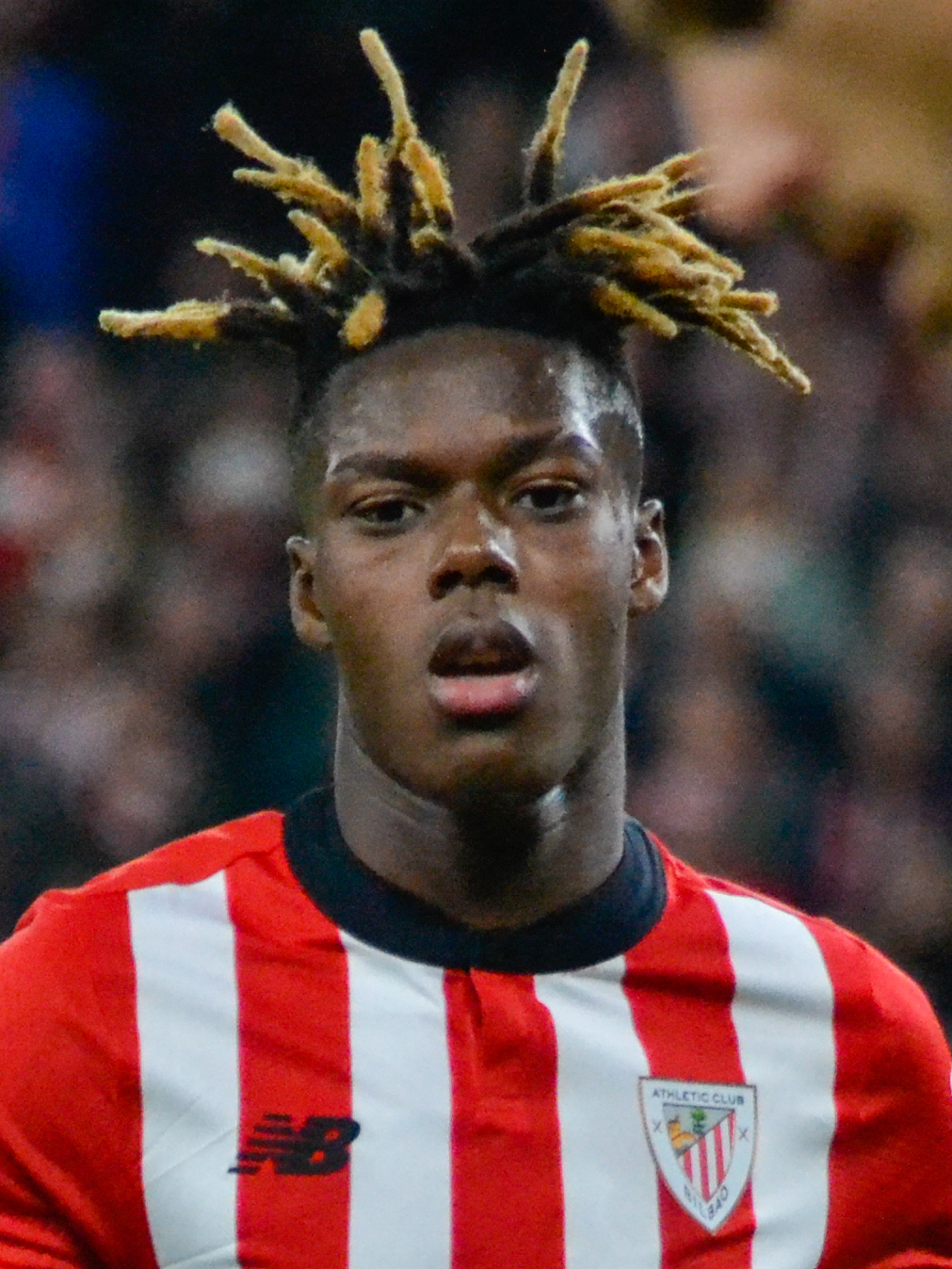
Photo: Maider Goikoetxea / Wikimedia Commons / CC BY-SA 2.0
_(cropped).jpg)
This is the single largest variable in his World Cup profile. The data from Transfermarkt is unambiguous.
| Injury | Period | Matches Missed | World Cup Risk |
|---|---|---|---|
| Groin Problems | Feb-Mar 2026 | 6 | High — Recurrence during tournament is the main concern. |
| Muscle Fatigue | Nov 2025 | 2 | Low — Standard management. |
| Thigh Issues | Apr 2024 | 3 | Medium — Shows a pattern of soft-tissue concerns. |
The February-March 2026 groin issue is the red flag. A muscle injury that recurs within a month suggests either the initial rehab was incomplete or there’s a biomechanical imbalance. For a winger whose game is built on explosive changes of direction, this is a targeted vulnerability.
Spain’s conditioning staff will have a detailed plan. It will involve specific strengthening exercises, likely focusing on hip and core stability, which are part of any elite soccer-specific workout plan. His training load in the pre-tournament camp will be meticulously managed. The goal isn’t to have him at 100 percent for the first group game; it’s to have him at 100 percent for the knockout stages in July.
TL;DR: The groin is a known risk. His tournament preparation will be conservative, aiming to peak at the right time. A full preseason without setbacks is critical.
By the Numbers: Nico Williams’s Statistical Profile
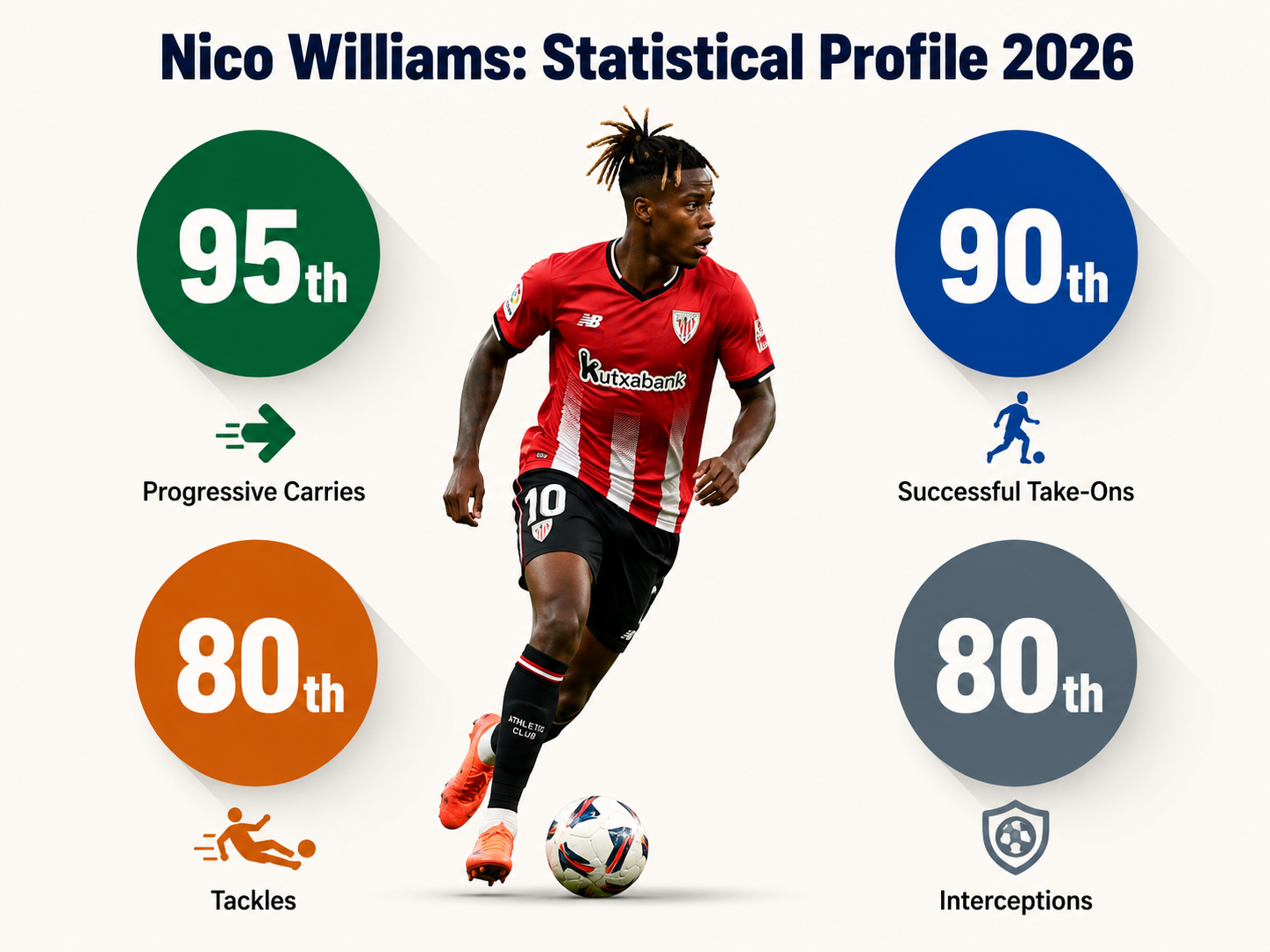
Beyond the basic stats, advanced metrics paint a clearer picture of his influence. According to FBref, among wingers in Europe’s top five leagues over the last year, Williams ranks in the 95th percentile for progressive carries and the 90th percentile for successful take-ons. These numbers confirm the eye test: he is elite at moving the ball upfield and beating defenders.
His defensive numbers have also jumped. He’s in the 80th percentile for tackles and interceptions among attacking midfielders and wingers. This reflects the improved tactical discipline discussed earlier.
Let’s compare his last two major tournament cycles:
- 2022 World Cup: 4 appearances, 0 goals/assists, 1.5 dribbles per game, primarily a substitute.
- Euro 2024: 6 appearances, 2 goals, 1 assist, 3.8 dribbles per game, starter in the final and man of the match.
The progression is vertical. He has gone from a useful option to a central figure. This trajectory suggests his 2026 World Cup output should surpass his Euro 2024 performance, health permitting. His development mirrors that of other young stars who have defined a standout 2026 season for their clubs.
Club Future: Athletic Bilbao & Transfer Rumors
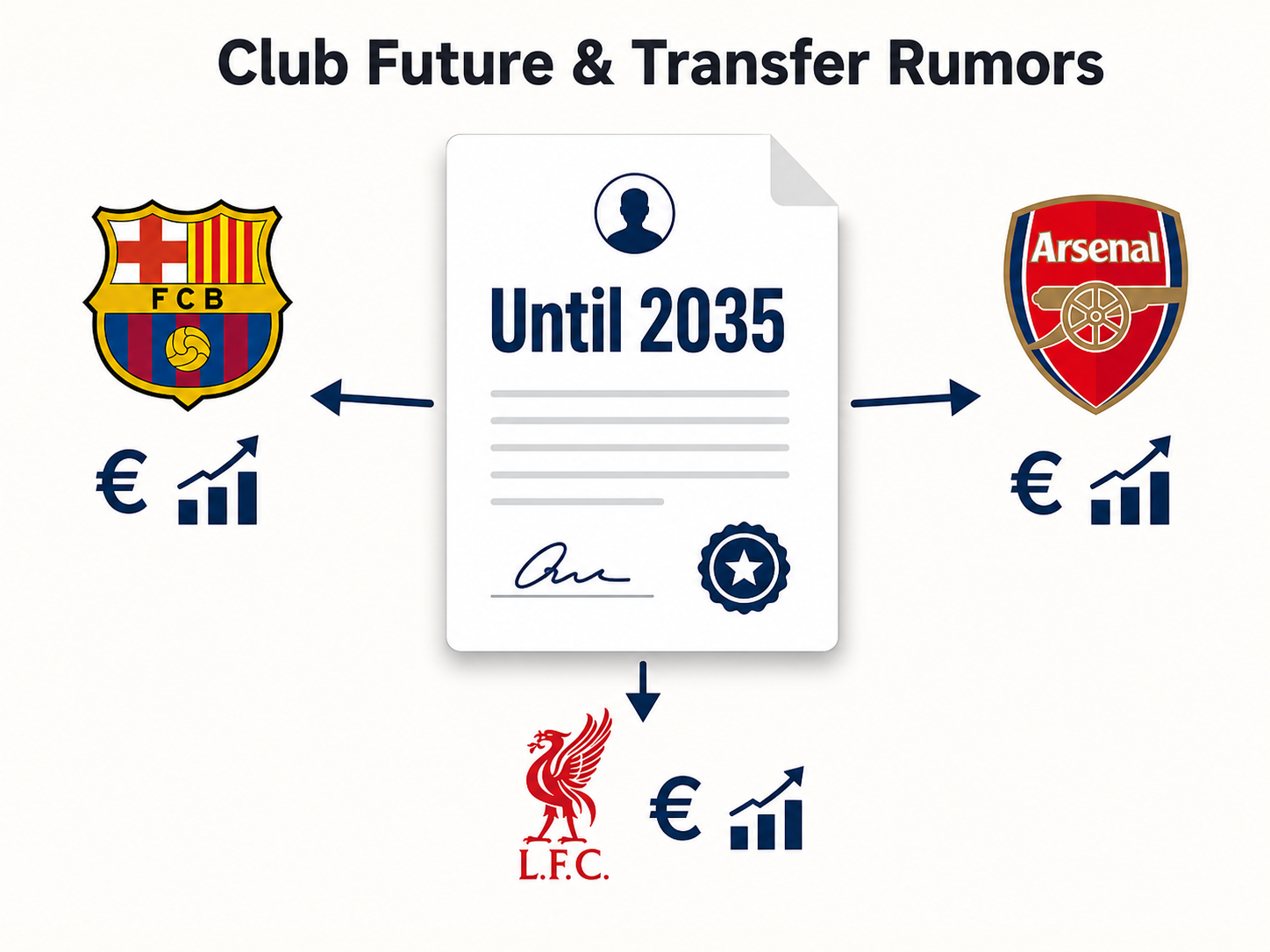
Nico Williams is under contract with Athletic Bilbao until June 30, 2035. That’s a decade from now. This extraordinary contract length, rare for a player of his caliber, provides immense stability. It also means any potential transfer would require a world-record fee for the club.
The constant rumor mill links him with clubs like Barcelona, Arsenal, and Liverpool. While a move to a Champions League contender could theoretically elevate his game, the timing is crucial. A massive transfer in the summer of 2026, immediately before or after the World Cup, would be a monumental distraction. It would involve a new city, new teammates, a new tactical system, and immense pressure.
The smarter bet is that he remains at Bilbao through the 2026 tournament. The familiarity of his club environment, the trust of his manager, and the lack of off-field noise will allow him to focus solely on the World Cup. His career decisions will likely be made in the context of his post-tournament status, much like other famous Argentine footballers who timed their big moves.
Projected Role & Impact for Spain in 2026
Barring injury, Nico Williams will be Spain’s starting left winger at the 2026 FIFA World Cup. His job is clear: provide the team’s primary source of verticality and unpredictability.
In the group stage against potentially defensive opponents, his dribbling will be the key to unlocking compact defenses. In knockout games against elite sides, his pace on the counter-attack will be a lethal weapon. He is the player Spain will look to when their possession-based game needs a spark of individual brilliance.
His partnership with the right winger, whether it’s Lamine Yamal, Ferran Torres, or Yeremi Pino, will be vital. Their movement must work in tandem to stretch the play and create gaps. Furthermore, his understanding with a central striker who can occupy center-backs, allowing him to attack the half-spaces, will be a focal point of Spain’s attacking player tactical handbook.
He is no longer a prospect. He is a leader. The younger talents in the squad will feed off his confidence and his proven big-game pedigree. His impact will be measured not just in goals and assists, but in the fear he puts into opposing defenders and the space he creates for his teammates.
Frequently Asked Questions
How old is Nico Williams?
Nico Williams was born on July 12, 2002. He will be 23 years old during the 2026 FIFA World Cup.
Is Nico Williams injured for the 2026 World Cup?
As of late spring 2026, Williams is recovering from a groin injury sustained earlier in the year. He is expected to be fit for the tournament, but his conditioning and load management will be carefully monitored by Spain’s medical staff.
What is Nico Williams’s best position?
His primary and best position is as a left winger in a 4-3-3 formation. He can also play on the right wing, but he is most effective cutting inside onto his stronger right foot from the left flank.
How many goals does Nico Williams have for Spain?
According to his Wikipedia biography of Nico Williams, he has scored 4 goals for the Spanish national team as of early 2026. His most important goal came in the Euro 2024 final.
Will Nico Williams transfer before the World Cup?
It is highly unlikely. His contract with Athletic Bilbao runs until 2035, making a transfer complex and expensive. Most experts believe any major move will happen after the 2026 World Cup to avoid disrupting his preparation.
The Bottom Line
Nico Williams arrives at the 2026 World Cup as a finished product and a champion. The Euro 2024 victory removed any doubt about his capacity to deliver on the biggest stage. His profile is complete: world-class speed, refined technical ability, improved defensive work, and a clutch mentality.
The only obstacle is his own body. The groin injuries from early 2026 are a legitimate concern, one that Spain’s staff must navigate perfectly. If he is physically right, he is a lock for the tournament’s Best XI conversation. He embodies the modern winger, a direct, decisive force who can single-handedly change a game. For Spain to lift the trophy in 2026, they will need Nico Williams at his explosive, fearless best. All signs point to him being ready.
I come from the “soccer heart” of Germany, the Ruhrpott. I have played, trained and followed soccer all my life and am a big fan of FC Schalke 04. I also enjoy following international soccer extensively.