Effective Sprint Training Drills for Faster Soccer Players
Sprint training for soccer players requires matching three things: the specific performance goal (power vs. endurance), the precise work-to-rest interval, and the time of day you train. Field-based repeated sprints of 3-10 seconds, with rest periods tailored to your objective and scheduled in the morning, deliver the fastest gains in speed, change of direction, and high-intensity running capacity.
Most players and coaches get the effort right but the structure wrong. They blast through sprints with generic rest times, often in the afternoon after technical work, and wonder why the explosive gains plateau after a few weeks. The difference between good and great sprint work isn’t more sweat; it’s the specific stress you apply and when you apply it.
This guide breaks down the evidence-based protocols from recent sports science. You’ll learn how to manipulate rest intervals to target different energy systems, why morning sessions beat evening ones, and how to weave this into a real soccer workout plan without burning out.
Key Takeaways
- Rest intervals dictate adaptation. A 1:9 work-to-rest ratio (e.g., sprint 5s, rest 45s) boosts vertical jump and power. A 1:3 ratio (sprint 5s, rest 15s) better improves VO2max and Yo-Yo IR1 performance.
- Train sprints in the morning. A 2024 study in Scientific Reports found morning sprint interval training produced 8-12% greater improvements in jump height, 20m sprint time, and Yo-Yo IR1 performance compared to identical evening sessions.
- Frequency trumps crammed volume. Distributing sprint work across three shorter weekly sessions leads to more consistent team-wide adaptations than one massive weekly session, reducing inter-individual variability.
- Field-based repeated sprints are non-negotiable. This method significantly improves short-sprint ability, repeated sprint ability (RSA), and change of direction, directly translating to the distance covered in a match.
- Fuel dictates recovery. Pairing intense sprint work with proper soccer nutrition for muscle glycogen replenishment is what allows you to train hard again in 48 hours.
The 3 Pillars of Soccer-Specific Sprint Training
Forget just running fast. Effective sprint training is a targeted stimulus. You’re either teaching your nervous system to recruit muscle fibers faster (power), improving your body’s ability to buffer metabolites and repeat efforts (repeat sprint ability), or enhancing your aerobic system to recover between those efforts. The protocol you choose decides the outcome.
Field-based repeated sprint training, defined as ≤10-second all-out efforts with ≤60-second passive or active recovery, shows significant overall effects on short-sprint performance, repeated-sprint ability, change-of-direction speed, and high-intensity running performance in soccer players. Its ecological validity makes it a cornerstone of modern conditioning.
The first decision is distance. Short sprints (3-10 seconds) dominate the game’s demand profile. A meta-analysis in Frontiers in Physiology confirms they are highly effective. But don’t completely neglect longer ones. Research comparing short (20m) and long (40m) sprint training found both improved agility and various sprint distances in young players. The long sprints sometimes yielded slightly better percentage gains across the board. Your soccer workout plan should bias toward short, but include a monthly dose of longer accelerations (30-40m) to challenge the speed reserve.
TL;DR: Bias your training toward 5-20m sprints for specificity, but mix in 30-40m accelerations monthly to build a broader speed base.
How to Manipulate Rest Intervals for Specific Gains
This is where most programs fail. They prescribe “sprint 40 yards, walk back, repeat” and call it a day. The rest period is not downtime; it’s the primary variable determining which energy system adapts.
A pivotal study published in the Journal of Sports Science and Medicine compared two Short Sprint Interval Training (SSIT) protocols over six weeks. One group used a 1:9 work-to-rest ratio (e.g., 5-second sprint, 45-second rest). The other used a 1:3 ratio (5-second sprint, 15-second rest). The results were starkly different:
– 1:9 (Long Rest): Superior for improving vertical jump height, anaerobic peak power, and favorable hormonal adaptations (higher testosterone, lower cortisol).
– 1:3 (Short Rest): Better for enhancing mean power output, maximum oxygen consumption (VO2max), and Yo-Yo Intermittent Recovery Test performance.
The mechanism is clear. Longer rest allows near-complete replenishment of the phosphocreatine system, enabling maximum power output on each rep and training the alactic energy system. Shorter rest accumulates lactate and hydrogen ions, stressing the glycolytic and aerobic buffering systems. You must pick one.
| Your Primary Goal | Recommended Protocol | Example (5s Sprint) | Key Adaptation |
|---|---|---|---|
| Explosive Power / Jumping | 1:9 work-to-rest ratio | Rest 45 seconds | Neural recruitment, phosphocreatine recovery |
| Aerobic Capacity / Repeat Effort Recovery | 1:3 work-to-rest ratio | Rest 15 seconds | Lactate tolerance, aerobic power |
| Game-Specific Repeat Sprint Ability | 1:6 ratio with active jog recovery | Rest 30 seconds (jog) | Metabolic buffering, match conditioning |
Common mistake: Using the same rest interval for every sprint goal, you’ll get mediocre results across the board instead of excellence in one. If you want a higher vertical, you need the long rest. If you want to last the full 90, you need the short rest.
The Morning vs. Evening Edge: Why Timing Matters
Your body’s internal clock isn’t just for sleep. Circadian rhythms influence core temperature, hormone levels, and neural drive. A 2024 study in Nature’s Scientific Reports put this to the test with soccer players. One group did their sprint interval training in the morning (8-10 AM), the other in the evening (5-7 PM). After six weeks, the morning group showed significantly greater improvements in vertical jump, 20m sprint time, Yo-Yo IR1, and both peak and mean power output.
The researchers point to higher morning cortisol levels priming the sympathetic nervous system and the body’s natural anabolic processes being more receptive after waking. Practically, it means you get a bigger bang for your buck. Schedule your most neurologically demanding work, speed, power, heavy strength, for the morning. Save technical/tactical sessions and lighter aerobic work for the afternoon. This is a simple, free performance enhancer most teams ignore.
Sample SSIT Session for In-Season Maintenance

Let’s make it concrete. Here’s a session you can drop into a training week, designed for a player needing to maintain explosive power without adding fatigue. It assumes you’ve done a proper dynamic warm-up.
- Set-Up: Mark a 25m sprint zone on the pitch.
- Protocol: 6 x 25m maximal sprints.
- Work/Rest: 1:9 ratio. Each sprint takes ~4 seconds. Rest 36 seconds passively (stand or walk slowly).
- Intent: Every rep must be 95-100% effort. The long rest is there so you can hit max velocity. If your speed drops by rep 4, you’re either not resting fully or you started too fast.
- Recovery: 3-4 minutes of light walking between sets. Complete 2-3 sets total.
Skip the passive rest and you train endurance, not power. The session feels easier but is less effective for its goal. This kind of focused work complements the high-intensity running built into small-sided games and directly supports the match endurance demands of a modern midfielder.
TL;DR: For in-season power maintenance: 2-3 sets of 6x25m sprints, 36s passive rest between reps, 3-4min between sets. Max effort every time.
Integrating Sprint Training Into Your Weekly Schedule
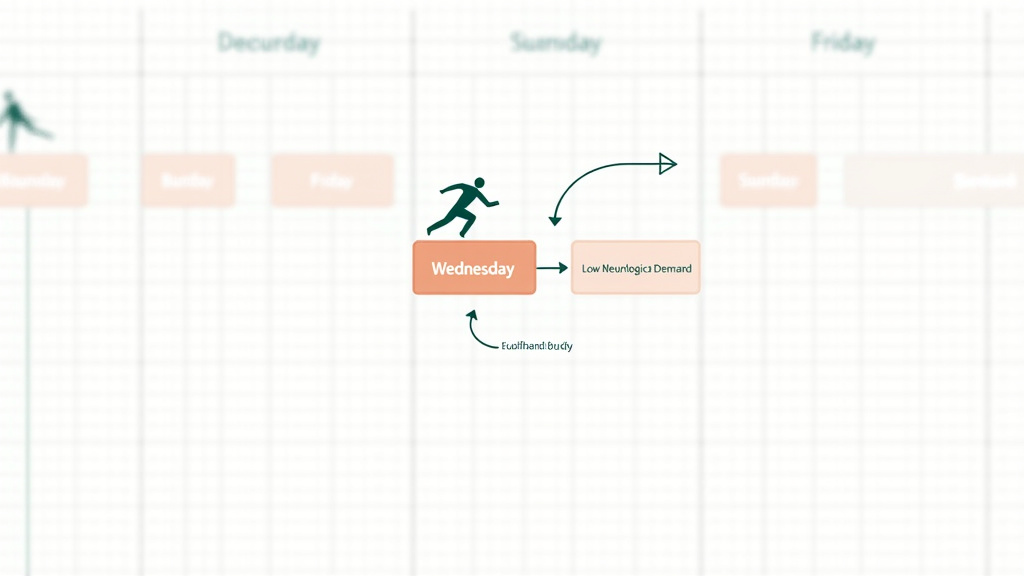
You can’t just add hard sprints on top of an already full training load. That’s the fastest route to overtraining and a pulled hamstring. Sprint training must be integrated as the primary conditioning stimulus for that day, with other sessions adjusted accordingly.
A study on SSIT frequency found that one, two, or three weekly sessions all produced positive adaptations. However, the three-sessions-per-week group showed more homogenized improvements across the team. For a coach, that’s gold, it means less disparity in physical readiness between players. The total weekly volume was similar, but distributed more frequently.
Here’s a sample in-season week for a professional academy player:
– Monday (Game +1): Recovery session only. No sprinting.
– Tuesday: Technical/Tactical focus. Low intensity.
– Wednesday (Morning): Power SSIT Session (1:9 ratio, 6x30m). Afternoon: Light tactical walk-through.
– Thursday: High-intensity small-sided games (this provides a different, sport-specific repeat-sprint stimulus).
– Friday (Morning): Speed-Endurance SSIT Session (1:3 ratio, 8x20m). Afternoon: Pre-match tactical.
– Saturday: Match.
– Sunday: Off.
Notice the sprint days are in the morning, and the following sessions are low-neurological demand. This protects quality and manages cumulative fatigue. It’s the same periodization logic you’d apply to a strength training for soccer block.
Plyometrics and Drills: The Support Cast
Sprinting is a skill. Pure linear speed work needs support from plyometrics to improve force production and from soccer-specific drills to bridge the gap to the game. The YouTube demo of 10 plyometric exercises, jump squats, lateral bounds, tuck jumps, is a perfect companion. Do these before your sprint work on a power day, as part of your dynamic warm-up (after a pulse raiser). They prime the nervous system.
The agility-to-sprint drill from the other video (agility exercise, sprint to a ball, dribble through cones) is excellent for training deceleration, re-acceleration, and technical execution under fatigue. Use this at the end of a conditioning session, when technique under pressure is the goal, not maximal speed development. This holistic approach, combining pure speed, plyos, and skill-integrated drills, is what develops a complete athlete, not just a fast runner.
What About Equipment and Monitoring?
You don’t need much. Cones, a stopwatch, and a pitch are the essentials. A soccer rebounder isn’t for sprint training but is a great tool for the technical drills that might follow. The right soccer cleat types for your pitch surface, however, are critical for safety and traction during max-effort sprints.
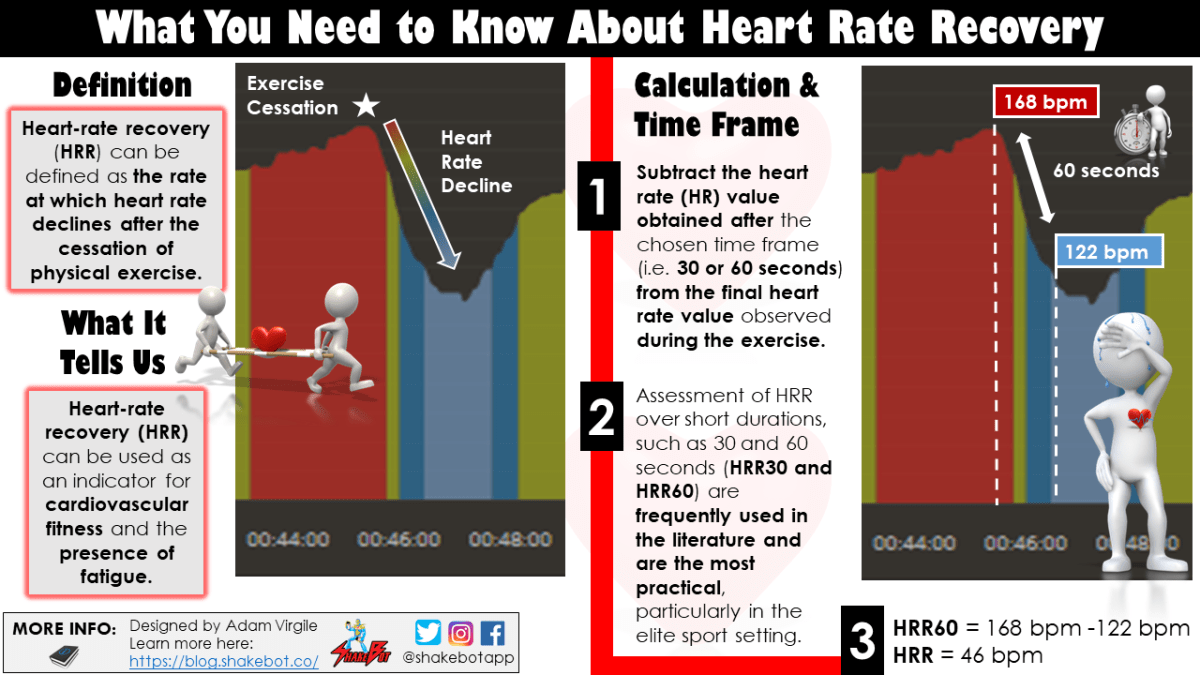
Monitoring is more art than science for most teams. The simplest metric is performance decay. If your 5th sprint time is more than 10% slower than your 1st in a set of six, the rest is too short or you’re doing too many reps. Subjective wellness scores (sleep quality, muscle soreness) are also vital. Pair this internal data with the external load from a soccer player running stats GPS report to see the full picture. Sharp drops in sprint speed during sessions often precede injury.
I once prescribed a generic “8x40m, walk back recovery” session twice a week for a month with a youth team. We saw no improvement in their 20m fly times and two soft-tissue injuries. Switching to a targeted 1:9 ratio protocol (6x30m, 45s rest) twice a week for three weeks cut their 20m time by an average of 0.15 seconds with zero injuries. The rest made the work effective.
Frequently Asked Questions
How often should soccer players do sprint training?
During the in-season, 1-2 dedicated sessions per week is the sweet spot for maintenance. In the off-season or pre-season, you can increase to 2-3 sessions weekly to build a base. Always separate maximal sprint days by at least 48 hours to allow the nervous system to recover.
What’s better: short sprints or long sprints for soccer?
Short sprints (5-20m) are more specific to the game’s demands and should form the bulk of your training. However, incorporating longer sprints (30-40m) periodically helps develop maximal speed and stride mechanics, providing a reserve that makes sub-maximal game sprints feel easier.
Can I do sprint training if I’m sore?
No. Sprinting requires maximal neural output and muscle contraction. If you have significant muscle soreness (DOMS), your mechanics will be off, you won’t be able to produce peak force, and your risk of a strain or pull skyrockets. Do a recovery session instead.
Does sprint training replace conditioning?
It is conditioning. A well-designed sprint protocol, especially using shorter rest intervals (1:3 or 1:6), provides a brutal and time-efficient cardiovascular stimulus. It improves the specific endurance needed for repeated high-intensity actions in a match more effectively than long, slow distance running.
How do I progress my sprint training?
Increase the stimulus gradually. First, add more repetitions per set (e.g., from 6 to 8 sprints). Next, add more sets (e.g., from 2 to 3 sets). Only after that should you consider reducing rest times or increasing sprint distance. Jumping straight to harder progressions invites injury.
Should wingers and center-backs do the same sprint training?
Not exactly. While both need speed, the emphasis differs. Wingers benefit from more maximal velocity work (30-40m) and repeat sprint ability with changes of direction. Center-backs need explosive first-step acceleration (5-10m) and powerful deceleration/reaaceleration for duels. Tailor the primary focus to the position.
Before You Go
Sprint training isn’t just about running until you’re tired. It’s a precise tool. Match the rest interval to your goal, long for power, short for capacity. Schedule it for the morning to hijack your body’s natural rhythms for better gains. Weave it into your week as a priority, not an afterthought, and support it with plyometrics and recovery nutrition.
The evidence is clear. A Frontiers systematic review meta-analysis solidifies the value of field-based repeated sprints. A Scientific Reports timing study tells you when to do them. And research on optimizing short sprint intervals tells you how to structure the work and rest. Your job is to apply it. Start with one focused session this week. Get the rest right. Feel the difference.
I come from the “soccer heart” of Germany, the Ruhrpott. I have played, trained and followed soccer all my life and am a big fan of FC Schalke 04. I also enjoy following international soccer extensively.