Understanding Counter Attacking in Soccer: A Complete Guide
Counter-attacking in soccer is a direct, rapid offensive transition launched immediately after a team wins the ball from a defensive position. The objective is to exploit the opponent’s disorganized shape and the space behind them before they can reset, creating a high-probability scoring chance with minimal passes and maximum speed.
Most explanations get stuck on the “fast break” idea and miss the real craft. They treat it like a simple sprint, ignoring the deliberate defensive setup, the specific player roles, and the psychological warfare that makes it work against superior possession teams. It’s not just running fast; it’s a calculated ambush.
This guide breaks down the mechanics, the mindset, and the training reality of the counter-attack. You’ll learn why it’s statistically more lethal than patient buildup, what specific player attributes matter beyond pure pace, and how to practice it so it works on Saturday.
Key Takeaways
- A successful counter-attack hinges on the first three seconds after winning the ball. Any hesitation allows the defense to recover its shape.
- Over 70% of counter-attack goals in professional soccer come through central channels, not wide areas, emphasizing the need for direct, penetrating passes.
- The “rest attacker” – a designated target man, link player, or winger – is the critical first outlet to launch the transition.
- Counter-attacking teams often defend with a low defensive block, inviting pressure into harmless zones to create the ideal turnover scenario.
- This style is a philosophical choice that values efficiency and explosiveness over sustained possession, making it a potent equalizer against technically superior opponents.
What Makes a Counter-Attack Different?
Forget the highlight-reel runs. The counter-attack starts with a very specific defensive moment. It’s a transition from a structured, often deep defensive block into a vertical blitz. The average effective counter in competitions like the FA Cup lasts about eight seconds. The clock starts the instant your center back intercepts a lazy cross or your defensive midfielder wins a tackle.
A counter-attack is a coordinated attacking transition initiated upon regaining possession, characterized by forward passing, explosive movement into space, and a direct line to goal. It capitalizes on the opponent’s temporary numerical and spatial disadvantage before they can establish a defensive structure.
This is different from a standard fast break after a corner kick clearance. Those are chaotic. A coached counter-attack is a rehearsed pattern. It uses predefined triggers and runner pathways. The most dangerous ones originate in your own defensive third because that’s where the most space exists behind a committed opponent. Teams that master this, like Diego Simeone’s Atlético Madrid or many successful national teams in tournaments, build their entire identity around it. They understand that controlling space is more important than controlling the ball.
TL;DR: A true counter-attack is a rehearsed transition from a deliberate defensive shape, not a random scramble. It exploits the maximum amount of space left by an overcommitted opponent.
The Psychology and Efficiency of the Ambush
Why does it work so well? The data is clear. A 2023 research paper analyzing major European leagues found that counter-attacks consistently produce higher-value scoring chances than deliberate positional attacks. This isn’t luck; it’s physics and psychology.
When a team is attacking, their defensive line pushes up, sometimes by 30 or 40 yards. Their midfielders join the attack. The entire unit is oriented forward, like a weight shifted onto its toes. Winning the ball and immediately playing it behind them forces a 180-degree turn. Sprinting back toward your own goal, disoriented and off-balance, is the most vulnerable state a defender can be in. The psychological blow is massive. A team that dominates possession for 20 minutes only to be sliced open in 8 seconds feels a tangible drop in confidence. The fear of it happening again can make them hesitant, which ironically gives the counter-attacking team even more control.
This efficiency defines the counter-attacking philosophy. It’s a resource-conscious strategy. Why spend energy on 20 passes to work the ball 80 yards when three passes can do the same? It conserves your team’s physical resources for the explosive actions that actually change the scoreline. This mindset is the core of a direct style of play, where the primary objective is to progress the ball toward the opponent’s goal as quickly as possible, not necessarily to keep it.
The 3 Non-Negotiable Principles of a Fast Break
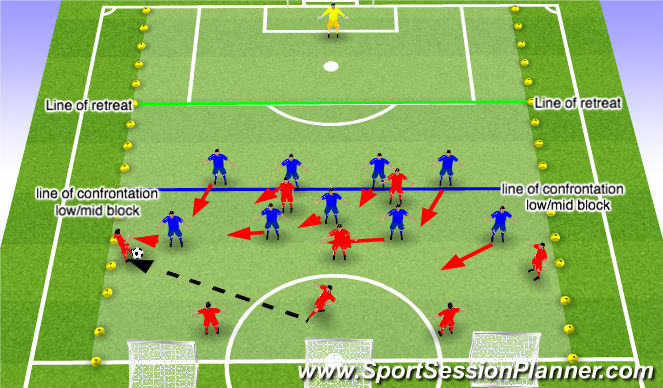
You can drill patterns all week, but if you ignore these three pillars, the counter will fizzle out every time.
1. Speed of Thought and Movement (The 3-Second Rule)
The transition window is brutally short. The first pass must be forward and it must happen now. Not after a controlling touch. Not after a look up. Now. Players off the ball must already be moving. This isn’t just about foot speed; it’s about recognition speed. The best counter-attacking midfielders, like Luka Modrić in his prime, win the ball and are already passing it before the opponent hits the ground. If you take more than three seconds to release the ball, the defense recovers. Every time.
2. Exploiting Space, Not Defenders
Common mistake: Dribbling at the first recovering defender, this allows two more to get goal-side and the chance evaporates. Pass the ball into the space behind them instead.
The ball travels faster than any player. The initial pass after winning possession should be into the vacant channel, not to a teammate’s feet in a crowded area. Let your fast runner chase it. This is why pace on the wings is so prized, but vision from the deep-lying playmaker is the real catalyst. They see the runway before the striker does.
3. Directness and Precision
Every pass must have a purpose: to advance the ball toward the goal. Square passes are poison during a counter. The sequence should be: win ball, forward pass, forward run, shot or final ball. It’s a straight line. The required technical skill is immense, hitting a 40-yard pass onto a sprinting winger’s foot while under pressure is one of the hardest skills in soccer. This directness is the antithesis of tiki-taka and requires a different kind of technical confidence.
| Principle | Action Required | What Happens If You Skip It |
|---|---|---|
| Speed | First forward pass within 3 seconds | Defense organizes, space disappears, attack stalls in midfield. |
| Space | Pass into space behind defensive line | Attackers run into traffic, get isolated, and lose possession. |
| Directness | Vertical passes; minimal touches | Momentum slows, allows opponent to double-team, chance is lost. |
Building the Counter-Attacking Machine: Roles and Formations
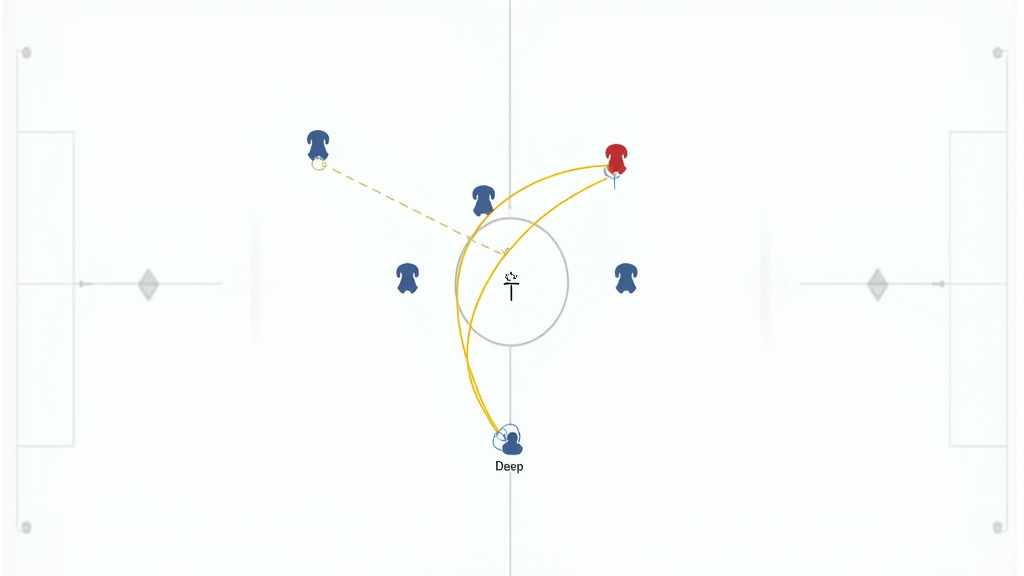
You can’t just tell a team to counter-attack. You need the right parts in the right structure.
The Defensive Foundation: The Low Block
This is where it starts. Teams that excel on the counter typically defend in a compact, deep block, often a 5-3-2 formation or a 4-4-2 with tight lines. This “low block” sucks the opponent into your half, stretching the field and creating the vast spaces behind them that your runners crave. The discipline here is extraordinary. It’s about forcing the opponent to play in front of you, into areas where your interceptors are waiting.
Key Player Roles:
- The Destroyer/Interceptor: Often the defensive midfielder. Their job isn’t just to tackle, but to read the game and pick off passes. The moment they win it, they are the spring.
- The Rest Attacker: This is the designated outlet. It could be a physical target man to hold the ball up, a creative link player to turn and play the killer pass, or a lightning-fast winger already hugging the touchline. They are the trigger for the transition.
- The Overlapping Runner: From full-back or central midfield, this player’s unchecked sprint from deep is often what creates the numerical advantage. They arrive late and at full speed.
I once tried to implement a counter-attacking system with a team that loved possession. We worked on the defensive shape for weeks. The first match, we won the ball in our box, my midfielder turned and played a safe pass back to the center-back. Old habits. It took two months of screaming “FORWARD!” before the instinct changed. Now they see the space first.
TL;DR: Your formation must be defensively solid to force turnovers in advantageous areas, and your players must have clearly defined, rehearsed roles for the instant the ball is won.
Counter-Attacking vs. Other Tactical Philosophies
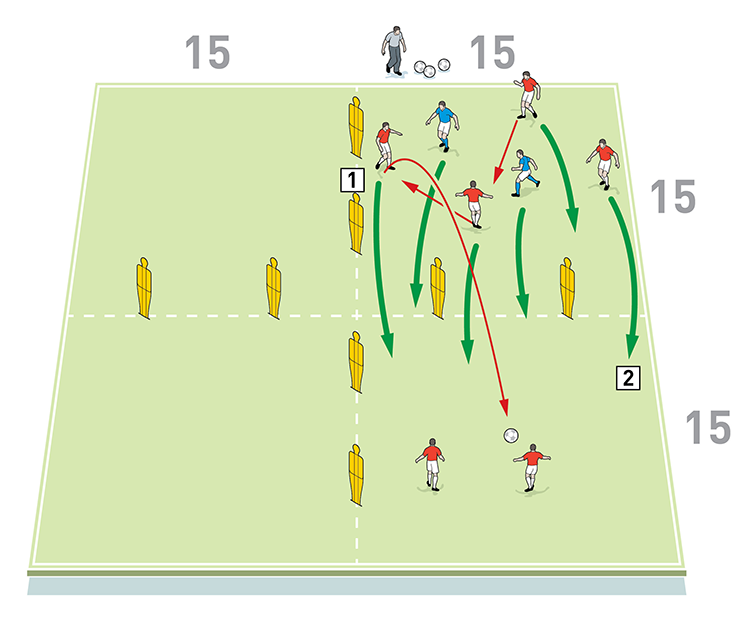
It’s useful to see the counter-attack not in isolation, but as a point on the tactical spectrum.
The most direct contrast is with gegenpressing, or counter-pressing. Gegenpressing is about immediate, aggressive pressing after losing the ball to win it back high up the pitch within 5 seconds. It’s a proactive transition. Counter-attacking is reactive, you win the ball deep, then explode. They are two sides of the transition play coin. One seeks to prevent the opponent’s transition; the other seeks to perfect your own.
Similarly, it stands opposed to pure possession-based soccer tactics. Possession soccer aims to control the game through the ball; counter-attacking aims to control it through space and threat. One demoralizes by starvation, the other by surgical strikes. The modern game often sees hybrids, like a team that uses a high press to win the ball (gegenpressing) but then attacks with direct, counter-attacking principles.
| Tactic | Primary Objective | Typical Starting Position | Energy Profile |
|---|---|---|---|
| Counter-Attack | Exploit space after deep turnover | Defensive third / Low block | Explosive, short bursts |
| Gegenpressing | Win ball back immediately after loss | Attacking third / High press | Sustained, high-intensity |
| Possession Play | Control game through ball retention | Anywhere, but focused on buildup | Constant, moderate intensity |
Training the Counter: From Theory to Grass
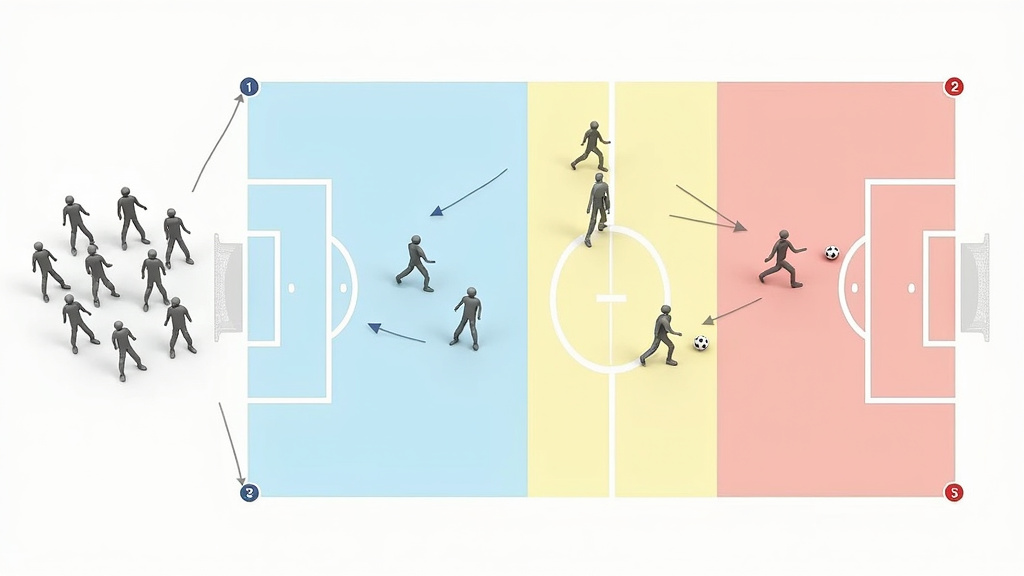
Talking about it is easy. Doing it is hard. Here’s how you build the instinct.
Drill 1: The 3-Zone Trigger Game
- Set up a field with three zones: a defensive zone, a midfield zone, and an attacking zone.
- Play a 6v4 in the defensive zone (attackers overloaded). The defending team of 4 must win the ball.
- Upon winning it, they must find one of two target players stationed in the midfield zone within 3 seconds.
- Those targets then combine with runners from the defending team to attack a 2v1 in the final zone.
- Why it works: It isolates the decision-making pressure of the first pass and conditions the speed of transition.
Drill 2: The Long-Ball Transition
- Coach serves a ball to an attacker playing against a back four.
- The defender wins the ball (or coach calls “Turnover!”).
- Immediately, a midfielder drops to receive from the defender and must hit a first-time, long diagonal pass to a winger who has started sprinting from the halfway line.
- The consequence of a bad pass: The winger has to check their run, the full-back catches up, and the drill resets. It teaches precision under duress.
Common mistake: Practicing counter-attacks with even numbers, real counters often happen when outnumbered. Always train with a disadvantage to simulate the need for perfect decision-making.
The smell of cut grass, the sound of a midfielder shouting “MAN ON!” as they receive that first pass, the burn in your lungs as you make the 70-yard supporting run knowing you might not touch the ball, that’s the reality. It’s a system of sacrifice and trust, perfected through repetition of these uncomfortable, game-speed scenarios.
Frequently Asked Questions
Is counter-attacking just for weaker teams?
No. It’s a strategic choice. Top teams like Real Madrid under Carlo Ancelotti or the French national team use devastating counters as a primary weapon, often against opponents who dominate possession. It’s about efficiency and exploiting specific game moments, not just parking the bus.
What’s the most important position for a counter-attack?
The defensive midfielder is the engine room. They are the most frequent winner of the initial ball and the player who must make the first, decisive forward pass. Their vision and passing range under pressure are more critical than any striker’s pace.
How do you stop a counter-attack?
The primary method is structured pressing triggers and smart risk management. Don’t commit too many players forward, especially your full-backs. If you lose the ball, the nearest 2-3 players must immediately apply pressure to delay the first pass, giving the rest of the team time to recover their shape and retreat.
Can a possession-based team also counter-attack?
Absolutely. This is the hallmark of elite modern teams. They control the game but are always ready to switch into a blinding counter when the opponent overextends. Manchester City under Pep Guardiola, a possession purist, scores a significant number of goals from fast transitions after winning the ball high up the pitch.
What formation is best for counter-attacking?
Formations with a solid defensive base and natural width for outlets are ideal. The 5-3-2 or 3-5-2 provides defensive solidity with wing-backs to provide width on the break. The 4-3-3 can also be effective if the wingers are disciplined defensively and explosive in transition. The best formation fits your players’ attributes.
The Bottom Line
Counter-attacking is the beautiful game’s most potent ambush. It turns defense into attack in a heartbeat, punishing ambition with clinical efficiency. It’s not a passive or “small-team” tactic, it’s an intelligent, energy-efficient, and psychologically devastating way to play football. Mastering it requires more than fast players; it demands a collective brain wired for instant recognition, ruthless precision, and unwavering discipline. Whether you’re a coach designing a game plan or a player wanting to understand your role, remember: the counter-attack isn’t about having the ball. It’s about knowing exactly what to do the second you get it.

I come from the “soccer heart” of Germany, the Ruhrpott. I have played, trained and followed soccer all my life and am a big fan of FC Schalke 04. I also enjoy following international soccer extensively.