What Is Gegenpressing in Soccer? A Complete Tactical Guide
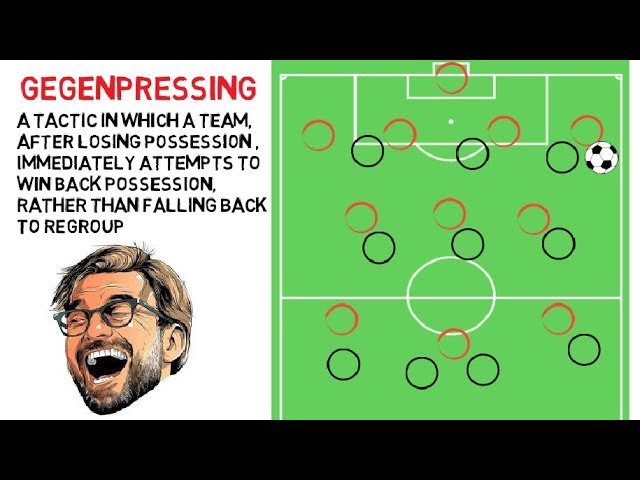
Gegenpressing in soccer is a reactive tactical strategy where a team immediately and aggressively presses the opponent the moment they lose possession. The goal is to win the ball back within 3-5 seconds, capitalizing on the opponent’s temporary disorganization before they can establish a controlled attack.
Most explanations get this wrong by calling it just “high energy” or “aggressive defending.” That misses the point. It’s not about fitness or effort, it’s a precise, orchestrated counter-attack launched the instant you lose the ball.
This guide breaks down the German-origin philosophy that defines modern football. We’ll cover the core principles, the coaches who perfected it, the brutal physical demands, and the specific mistakes that break the system.
Key Takeaways
- Gegenpressing is a reactive transition tactic, not a proactive defensive strategy like a high press. It’s triggered solely by losing the ball.
- Its effectiveness relies on exploiting a 3-5 second window of opponent vulnerability, requiring near-instinctive player reactions to specific triggers.
- A functional system requires a compact team shape and a pre-planned rest defense; without both, the press fails and exposes the team to counters.
- Jürgen Klopp’s “heavy metal” version differs from Pep Guardiola’s possession-based counter-press, showing the tactic’s evolution within different coaching philosophies.
- Implementing it demands specific player profiles, high athleticism, tactical intelligence, and relentless work rate, which directly influences recruitment.
The Core Principles of Gegenpressing
Forget the idea of frantic chasing. Gegenpressing is a controlled explosion. The entire system is built on three non-negotiable pillars: immediate pressure, a compact shape, and intelligent triggers. Miss one, and the structure collapses.
The closest players to the ball must react as if they’ve been scalded. This isn’t about closing down space; it’s about denying the new ball-holder any time to lift their head. A single second of hesitation allows a relieving pass. The objective is to force a mistake, a poor touch, a panicked clearance, while passing lanes are still clogged with players from the previous phase of play.
Gegenpressing capitalizes on the transitional moment immediately after a turnover. The team that just gained possession is most vulnerable, as players are often out of position or facing the wrong direction. Coordinated pressure in this window yields a high percentage of regains in advanced areas.
TL;DR: Win the ball back in under 5 seconds by swarming the new ball-holder before they can think.
The Compact Shape: Your Pressing Net
A dispersed team cannot press. The distance between your forward line and your defensive line must be short, often 25-35 meters from front to back. This compactness is the net that traps the opponent. If your lines are stretched, the press becomes a series of isolated, exhausting sprints that are easy to play through.
| Team Shape | Pressing Effectiveness | Risk If Too Stretched |
|---|---|---|
| Compact (25-35m) | High. Multiple players can engage the ball simultaneously. | Low. Easy to maintain rest defense. |
| Moderate (35-45m) | Moderate. Pressing becomes zonal and reactive. | Medium. Gaps appear between lines for opponents to exploit. |
| Stretched (45m+) | Low. Press is isolated and easily bypassed with one pass. | High. Impossible to recover shape; counter-attacks are guaranteed. |
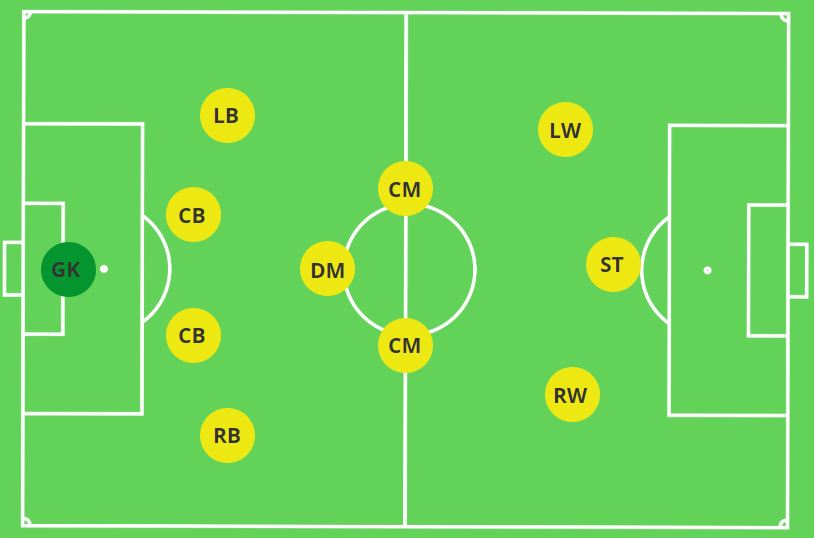
This geometry is why certain formations are better suited than others. The 4-3-3 formation and the 3-5-2 formation naturally facilitate this compression, while a flat 4-4-2 structure requires immense discipline to prevent gaps.
Triggers and the “Rest Defense”
Players cannot press every lost ball. They press specific triggers. Coaches drill these cues until the reaction is automatic:
1. A poor first touch by the opponent.
2. A pass received with the receiver’s back to goal.
3. A square or backward pass in the opponent’s half.
4. The ball going to a player known for weak distribution under pressure.
The moment two players jump to press, the rest of the team must snap into “rest defense.” This is the safety net. Usually, this involves three players forming a defensive triangle behind the press, covering central passing lanes and ready to engage if the ball is played through.
Common mistake: Pressing without a rest defense, the first through-ball splits your team, and you’re facing a 3v2 counter-attack with your fullbacks still up the pitch. It happens within 10 seconds.
I learned this the hard way watching my own team, Schalke, try to implement a press without the structure in the late 2010s. We had the energy but not the intelligence. Opponents would bait a press, play one pass into the enormous space behind our charging midfield, and score. Every time. The scoreboard wasn’t lying.
Gegenpressing vs. High Pressing: The Critical Difference
This is where most casual analysis fails. High pressing and gegenpressing are different tools for different moments. Conflating them is like confusing a siege with an ambush.
High pressing is a proactive, sustained strategy. You set up in the opponent’s half and try to prevent them from building play from the back. It’s a territorial game. You might do this for 70 minutes of a match. Gegenpressing is a reactive, short-duration tactic. It activates only in the few seconds after you lose the ball, anywhere on the pitch. Its goal is to immediately reverse a negative transition.
| Aspect | Gegenpressing (Counter-Press) | High Pressing |
|---|---|---|
| Trigger | Loss of possession by your team. | Opponent’s goal kick or build-up from their defenders. |
| Duration | 3-5 seconds. | Can last for entire phases of possession. |
| Primary Aim | Win ball back instantly to restart attack. | Force turnover or long ball to regain possession higher. |
| Player Mindset | Reactive, instinctive recovery. | Proactive, organized suffocation. |
| Typical Formation | Any, but requires compactness. | Often high-press formations like 4-3-3 or attacking 3-4-3 formation. |
A team can use both. Pep Guardiola’s Manchester City is the masterclass. They high press relentlessly. But the moment they lose the ball, they gegenpress with vicious efficiency to snuff out the counter before falling back into their high press. This layered approach is the pinnacle of modern soccer tactics.
The Coaches Who Defined the Modern Gegenpress
The term is German, but the ideas have roots everywhere. The modern execution, however, wears Bundesliga fingerprints.
Ralf Rangnick is the professor. In the early 2000s, his Hoffenheim and RB Leipzig teams were laboratories for “gegenpressing” as a systematic philosophy. He framed it not just as defending, but as the most efficient way to create chances: win the ball where the opponent is least organized. His influence directly shaped a generation of German coaches, making him a foundational figure in modern coaching tactics.
Jürgen Klopp is the evangelist. At Borussia Dortmund and Liverpool, he turned the philosophy into spectacle, “heavy metal football.” His version is about emotional intensity and vertical speed. The press is the first pass of the attack. He famously said, “No playmaker in the world can be as good as a good counter-pressing situation.” His success made the term global.
Thomas Tuchel and Pep Guardiola are the surgeons. They integrated the gegenpress into a more controlled, possession-dominant framework. For them, the counter-press is a recovery mechanism to maintain territorial dominance. It’s less about chaotic transitions and more about eliminating counter-attacks and immediately recycling possession. This shows the tactic’s flexibility within different coaching tactical philosophies.
The Physical and Mental Demands: Why It’s Not for Every Team
You cannot just decide to gegenpress. Your squad must be built for it. The physical output is staggering.
Players in a top gegenpressing team will cover 11-12 kilometers per game, but that’s not the telling stat. It’s the high-intensity sprints, the repeated 0-to-100 bursts required to trigger the press. A central midfielder might make 25-30 of these sprints per match. This demolishes traditional stamina and requires a specific soccer fitness training focus on anaerobic capacity and repeat-sprint recovery.
The mental load is heavier. Decision-making must be instantaneous. A player hesitates to ask, “Should I press?” and the window is gone. This requires a squad of intelligent players who read the game the same way. It also demands a deep squad; the system burns players out. Klopp’s Liverpool famously faced injury crises when the physical toll accumulated over consecutive seasons.
I prefer the gegenpress not because it’s flashy, but because it turns defense into attack with a single action. Watching a team like Dortmund under Klopp, you felt the goal could come from any moment of lost possession. That constant threat is psychologically crushing for an opponent.
Recruitment becomes hyper-specific. You need athletes with engines, but also technicians who can control the ball instantly after winning it. You can’t have a luxury player who doesn’t defend. This shapes entire transfer policies, making it a holistic coaching tactical philosophy, not just a tactic.
How to Beat a Gegenpressing Team
Every system has a weakness. Beating a gegenpress requires calmness, technique, and pre-planned patterns.
- The First-Touch Escape: The most critical skill. Upon receiving the ball under pressure, your first touch must be away from the press and into space. A sharp, directional touch beats the first man instantly.
- Third-Man Combinations: Play the ball to a teammate who is already moving into the space left by the pressing player. This “third man” run bypasses the press with one-touch football.
- Long Diagonals: If the press is compact in one area, a switched ball to the weak-side fullback or winger can exploit the space. This requires an excellent passer from the back.
- Bait the Press: Deliberately play a slightly under-hit pass into a midfielder, drawing 2-3 pressing players, then have a dropping forward ready to receive the quick flick over the top into the vacated space.
Teams with a defensive 5-3-2 formation can be particularly effective, as the three center-backs and wing-backs provide natural passing outlets to escape the central pressing trap.
Common mistake: Trying to dribble through the heart of a gegenpress. You will lose the ball 19 times out of 20, and now you’re out of position for the counter-counter-attack. Play the simple, pre-rehearsed escape route.
Training the Gegenpress: Drills and Philosophy
You don’t train gegenpressing with fitness laps. You train it with constrained, game-realistic drills that force the desired behaviors.
A foundational drill is the “6-Second Game” in a small-sided area (30x20m). One team tries to keep possession. The moment they lose it, they have 6 seconds to win it back. If they succeed, they get a point. If the other team maintains possession for 6 seconds, they get a point. This engrains the urgency and collective reaction.
Another is the “Triggered Press” drill in a larger zone. A coach serves a deliberately poor pass to an attacker. This is the trigger for the defending team to swarm. The focus is on the angle of approach (cutting passing lanes) and the immediate support from second and third players.
These sessions are grueling. They must be supported by a player nutrition for energy plan that fuels repeat high-intensity efforts and a soccer-specific strength program to prevent soft-tissue injuries. It’s a total commitment.
Frequently Asked Questions
Is gegenpressing just for top teams?
No, but it’s harder for lesser-talented squads. The principles can be applied at any level, but the margin for error is smaller. If your players aren’t fit or tactically aware, a poorly executed press is worse than sitting in a low block.
What’s the best formation for gegenpressing?
There isn’t one “best” formation. The 4-3-3 is most common because it naturally provides a front-three pressing shield and a compact midfield three. However, a 3-5-2 formation with aggressive wing-backs can also be extremely effective, as can a 4-2-3-1. The key is the compact shape, not the numbers.
How do you measure if gegenpressing is working?
Look at specific metrics: “Possessions won within 5 seconds of loss” (PPDA – Passes Per Defensive Action is a proxy for this), “Turnovers in the attacking third,” and “Average time to regain possession after a loss.” A successful gegenpressing team will rank highly in these.
Why do some teams abandon gegenpressing mid-game?
Fatigue. The physical output is unsustainable for 90 minutes at peak intensity. Smart teams will often press aggressively for 60-70 minutes to secure a lead, then drop into a more conservative organized team press or low block to see out the game.
Did gegenpressing originate with Klopp?
No. The concept of pressing immediately after loss is old. Coaches like Arrigo Sacchi and Valeriy Lobanovskyi used similar principles. The German school, led by Rangnick and refined by Klopp, systematized it and gave it the name that stuck in the modern era.
The Bottom Line
Gegenpressing is more than a tactic; it’s a philosophy of aggression and control. It turns the most vulnerable moment, losing the ball, into your greatest weapon. But it’s not a magic switch. It demands a specific squad profile, relentless training, and total buy-in from every player.
The teams that do it well, like Klopp’s Liverpool or Guardiola’s City, make it look simple. That’s the illusion. It’s a complex machine built on simple principles: react instantly, stay compact, and never press alone. Understand those, and you start to see the game not as possession vs. defense, but as a constant battle for the next five seconds.
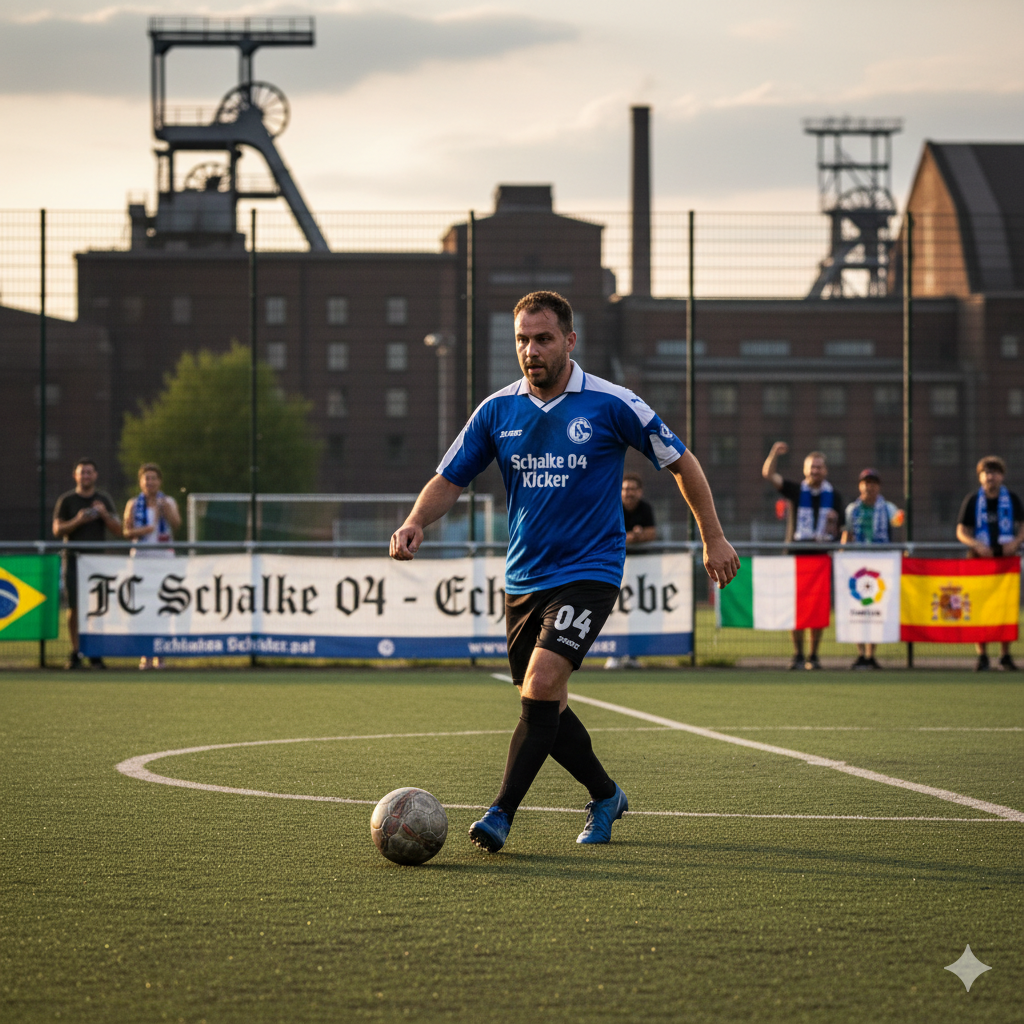
I come from the “soccer heart” of Germany, the Ruhrpott. I have played, trained and followed soccer all my life and am a big fan of FC Schalke 04. I also enjoy following international soccer extensively.