How to Improve Dribbling Speed in Soccer: A 4-Step Plan
To improve dribbling speed in soccer, you must train four things simultaneously: high-frequency footwork, explosive lower-body strength, tight ball mastery, and cognitive processing speed. It’s not just about running fast. It’s about accelerating with the ball glued to your foot while reading the game.
Most players train this wrong. They work on straight-line sprinting or endless cone weaves at a jog. That builds a fast runner or a tidy technician, not a player who can blow past a defender in open space. The gap between your speed without the ball and your speed with it is where matches are won.
This guide breaks down the physical and technical blueprint. You’ll get the exact drills, strength exercises, and weekly structure used by academy coaches to build explosive, game-smart dribblers.
Key Takeaways
- Dribbling speed is a separate skill from sprinting. It requires training acceleration with the ball, not just without it.
- Strength is non-negotiable. Weak glutes and hamstrings can’t produce the power for a sharp change of direction while protecting the ball.
- Your first ten touches in a drill are worthless. The quality of touches number 20 through 40, when you’re fatigued, is what translates to the 85th minute.
- Cognitive drills, where you dribble while processing a command, bridge the gap between practice and game reality. Skip them and you’ll always be a step slow when pressured.
- Progress is measured in reduced touch distance, not just stopwatch time. If you’re faster but the ball is bouncing three feet away, you’re not improving.
The 4 Components of Dribbling Speed
Dribbling speed isn’t one thing. It’s the product of four systems working together. Ignore one, and the others can’t compensate.
Fast dribbling integrates foot speed, touch precision, muscular power, and mental processing. A deficiency in any of these areas creates a predictable, slow player who is easily dispossessed under pressure.
The first is neuromuscular foot speed. This is your ability to fire your calf and foot muscles rapidly for many small touches. It’s the foundation. Without it, your only option is to push the ball far ahead and chase it, a tactic that works once against a slow defender.
Second is ball mastery and touch quality. This dictates how close the ball stays to your foot at high velocity. Mastery isn’t about fancy tricks. It’s about using the outside of your foot, the instep, and the sole with equal comfort to keep the ball in your protective sphere.
Third is strength and explosive power. Your glutes, hamstrings, and core stabilize your torso and generate the force for a sudden burst. A weak player cannot accelerate sharply after a feint. They stutter. Their touch becomes heavy because their body is fighting for balance.
Fourth is cognitive processing speed. This is your ability to scan, decide, and execute a dribble move under visual and physical pressure. It’s the difference between knowing a scissors move and actually performing it because you saw the defender’s weight shift to their left foot.
TL;DR: Train your feet, your touch, your muscles, and your brain together. Isolating just one or two creates a player with a glaring weakness.
Drills That Build Game Speed (Not Just Practice Speed)
The following drills force adaptation. They are not meant to be pretty. They are meant to be performed at maximum intentional effort, with quality decaying as fatigue sets in. That’s the point.
1. Fast Tap Sprint Dribble
Set two cones 10 yards apart. Start at one. The goal is to reach the other cone in under 5 seconds while taking the absolute maximum number of touches with the outside of your right foot. Turn around and return using your left foot. That’s one rep.
Common mistake: Leaning back while tapping, this engages your quads instead of your glutes, killing acceleration and making your touches pop upward. You’ll lose the ball on a bumpy pitch immediately.
The magic happens after six reps. Your foot will feel slow. Your brain will scream to take bigger touches. Fight it. The drill teaches your nervous system to maintain a rapid cadence even when tired, which is exactly when you need to dribble out of pressure in your own defensive third.
2. Zig-Zag Cone Dribbling with a Call-Out
Set five cones in a zig-zag pattern, each about 2 yards apart. Dribble through them at speed. Now, add a partner or a phone app that randomly calls out a color (like “red” or “blue”) as you start. You must shout the color back before you reach the next cone.
This integrates the cognitive layer. The zig-zag works on your change of direction and close control dribbling. The call-out forces your eyes up and your brain to process external information without breaking your dribbling rhythm. Most players’ touch distance doubles the first time they try this. By the tenth session, it should barely increase.
3. 1v1 Change of Direction Drill
You need a partner for this. Stand facing a defender about 10 yards away, with a cone 5 yards to your left and another 5 yards to your right. On your first touch, you must attack either the left or right cone, beat the defender with a single move, and accelerate to the cone. The defender is passive at first, then becomes active.
| Drill Phase | Focus | Success Metric |
|---|---|---|
| Passive Defender | Practice the move & burst | Clean execution, no stutter steps |
| Active Defender (50% effort) | Timing of the move | Beating defender before they set their feet |
| Active Defender (100% effort) | Game realism | Using the defender’s momentum against them |
This drill directly trains the sudden changes of direction that define players like Messi. It’s not about the move itself, a simple body feint or outside hook works. It’s about selling the fake with your shoulders and exploding the moment the defender buys it. If you don’t explode, a good defender will recover.
The Strength Exercises You’re Probably Skipping

You can have quick feet and good touch, but without power, you’re a stationary target. The following exercises target the muscle groups that matter most for dribbling speed.
Glute Bridges (and single-leg variations): Your glutes are your primary accelerator. Weak glutes mean a slow first step and an inability to shield the ball while moving. Do three sets of 15, holding the top position for 2 seconds. Add a weight plate on your hips as you advance.
Single-Leg Romanian Deadlifts: This builds hamstring and glute strength while challenging the stability of your standing leg, exactly what you need when reaching for a ball slightly ahead of you. Use a light kettlebell or dumbbell.
Lateral Band Walks: Place a resistance band around your thighs. Stay in a half-squat and take 10 steps to the right, then 10 to the left. This strengthens the gluteus medius, which prevents your knee from caving in during a sharp cut. A collapsing knee is a common cause of non-contact ACL injuries in dribblers.
Plyometric Box Jumps: Develop explosive power from a standstill. Focus on a soft, quiet landing, absorbing the impact through your legs and core. This translates directly to jumping into a sprint from a dribble pause.
I neglected single-leg strength work for years, focusing on heavy squats. My straight-line speed improved, but my dribbling in tight spaces felt sluggish. After tearing a hamstring, my physio pointed out the imbalance. Adding single-leg RDLs and lateral band walks not only got me back on the pitch but made my first step off the dribble noticeably sharper within eight weeks.
These are not bodybuilding exercises. Perform them with control, aiming for muscle engagement and stability over maximum weight. Two sessions per week, on days before lighter technical training, is the sweet spot.
How to Integrate Cognitive Training
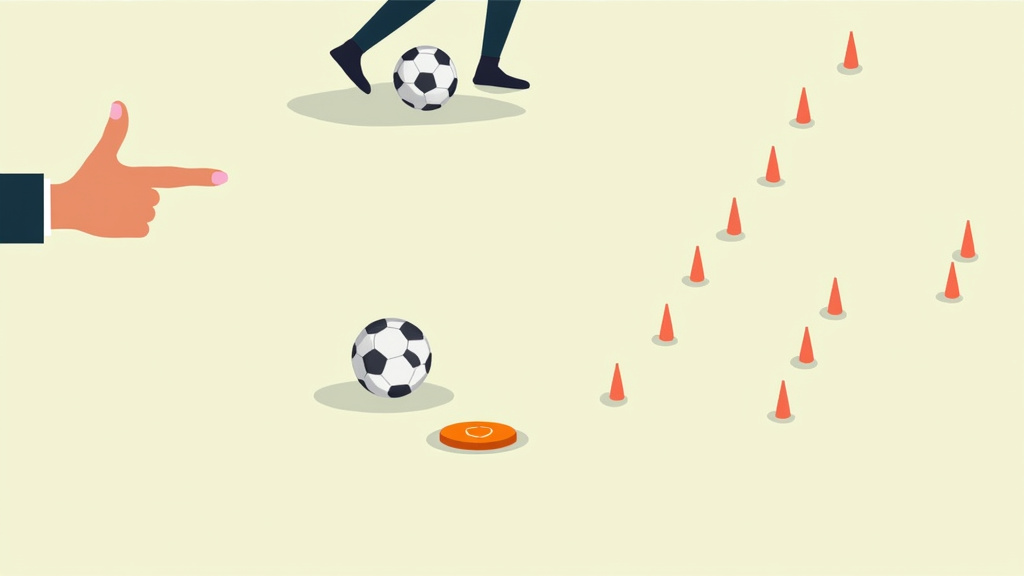
Your body can move fast. Your feet can be quick. But if your brain is slow, you’ll dribble into pressure every time. Cognitive training bridges the gap between drill execution and game intelligence.
Start simple. During any basic dribbling drill, like weaving through cones, add a visual task. Place colored discs at the end of the course. Before you start, a partner holds up 1, 2, or 3 fingers. You must identify the number and then dribble to the corresponding colored disc.
The next level incorporates reactive passing. Use a rebound board or a wall. Dribble towards it, pass the ball against it, and as it returns, a partner calls “left” or “right.” You must take your first touch in that direction and accelerate. This trains first-touch decision-making under a time constraint, mirroring receiving the ball with a defender closing in.
Finally, watch film differently. Don’t just watch the game. Watch one player, specifically when they receive the ball in space. Pause the video the moment they get the ball. Ask yourself: What is their body orientation? Where is the nearest defender? What space is available? Then, play the clip and see what they do. This mental rehearsal builds your own dribbling decision-making database.
Your Weekly Dribbling Speed Blueprint
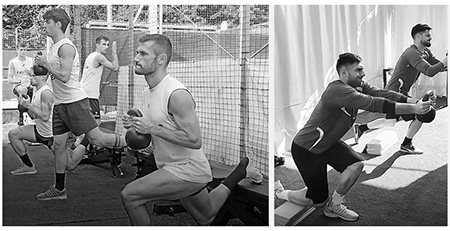
This six-week program balances all components. It assumes you have team training or matches on weekends. Adjust volume based on your age and recovery capacity.
Monday (Strength & Power):
- Dynamic warm-up (10 mins)
- Strength Circuit: Glute Bridges (3×15), Single-Leg RDLs (3×10 per leg), Lateral Band Walks (3×20 steps)
- Plyometrics: Box Jumps (4×5)
- Light jogging & stretching
Tuesday (High-Intensity Dribbling):
- Ball mastery (10 mins – high-frequency taps, sole rolls)
- Fast Tap Sprint Dribbles: 8 reps total (4 each foot)
- Zig-Zag Cone Dribbling with Call-Out: 6 reps
- Sourced-Number Focus: A study in the Journal of Sports Sciences found that high-intensity dribbling drills, performed for at least 8 minutes per session, significantly improved dribbling speed test results in adolescent players after 6 weeks. This session hits that threshold.
Wednesday (Active Recovery):
- Low-intensity cycling or swimming (20-30 mins)
- Foam rolling focused on quads, hamstrings, and calves
Thursday (Cognitive & Skill Integration):
- Ball mastery with visual cues (e.g., dribble to a cone of a named color)
- 1v1 Change of Direction Drill: 10 repetitions per side
- Reactive passing drill with rebound board: 5 minutes
- Small-sided game (3v3 or 4v4) with a “must dribble past one player” rule
Friday (Pre-Game Light Activation):
- Very light ball work, focusing on touch feel
- Dynamic stretching
- Mental visualization of game scenarios
Saturday/Sunday (Game Day or Rest):
This structure systematically overloads the soccer speed training systems specific to dribbling while allowing for adaptation and recovery.
The Gear and Mindset That Actually Help
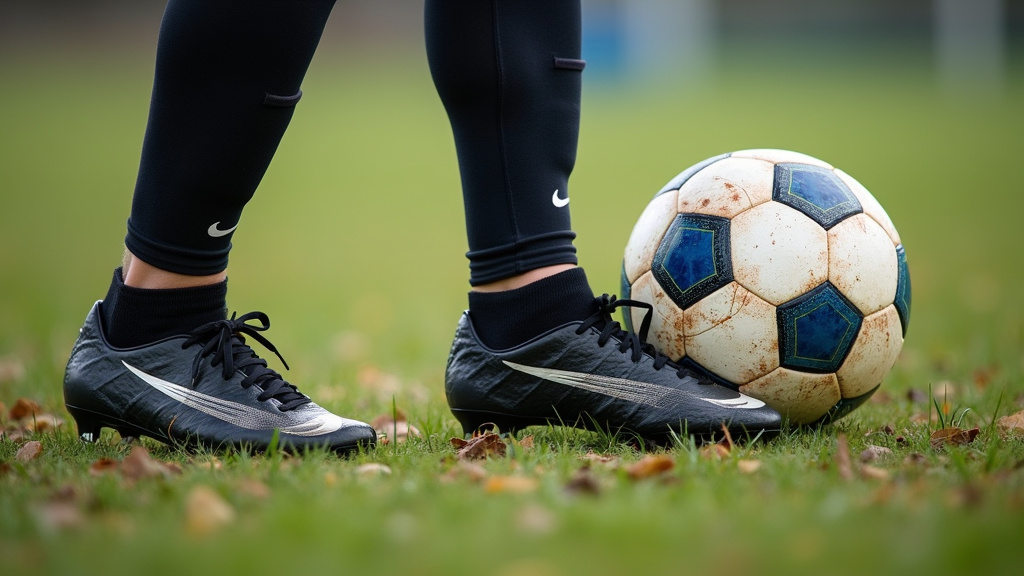
A proper ball matters. A cheap, plastic ball that over-inflates and bounces unpredictably teaches you to react to bad bounces, not to control a true sphere. Use a FIFA Quality Pro or equivalent match ball for at least half your training.
Footwear is critical. Train in the same cleat pattern (e.g., FG, AG, MG) you play in. Switching between flat indoor shoes and long studs changes your ankle stability and touch perception.
For a brutal but effective test of your overall ball mastery, find a slightly sloping, bumpy patch of grass. Try to keep the ball within two feet while dribbling up, down, and across the slope. The uneven surface is the best teacher of micro-adjustments.
Finally, play video games like the old FIFA Street. Seriously. While not a physical workout, it reinforces the creativity and audacity to attempt dribbles in tight spaces. It keeps the playful, inventive part of dribbling alive when repetitive drills grind you down.
Frequently Asked Questions
How long does it take to see real improvement in dribbling speed?
You’ll feel neuromuscular improvements in foot speed within 2-3 weeks. Tangible, noticeable improvements in game situations, where you consistently beat players with speed, typically take 6-8 weeks of dedicated, focused training on all four components. Strength gains take the longest to manifest on the pitch.
I’m already a fast sprinter. Why am I slow with the ball?
Your sprinting mechanics are different. Without the ball, you use a long stride, powerful arm drive, and a forward lean. With the ball, you shorten your stride to keep the ball close, which uses different muscles (more calves, glute medius). You also lean slightly less to maintain balance for cuts. You need to retrain your brain and body for this specific movement pattern through acceleration drills done with the ball at your feet.
What’s the single biggest technical mistake slowing players down?
Using the inside of the foot to push the ball forward when trying to accelerate. The inside of the foot is for control and passing in tight spaces. For speed, you must use the outside of your foot or the instep (laces). This allows a more natural running motion and keeps the ball in a better position for your next touch. It’s a core part of the speed dribbling technique.
Can young players (U12) do this kind of training?
Yes, but with adjustments. Focus on the technical and cognitive drills. Use bodyweight for strength exercises (no external weight). Keep sessions shorter (20-30 minutes) and game-focused. The goal at that age is building a love for the ball and developing coordination, not max strength. The fundamental dribbling techniques are the same, but the intensity is scaled.
How do I prevent injuries from all this cutting and acceleration?
thorough dynamic warm-up is non-negotiable. It must include leg swings, lateral lunges, and skips that activate your glutes and hamstrings. The strength exercises listed (especially single-leg work and lateral band walks) are your primary injury prevention. Finally, listen to your body. Sharp pain is a stop sign. Dull muscle soreness is normal; joint pain is not.
The Bottom Line
Improving dribbling speed is a commitment to training your weakest link. For most, it’s the strength or the cognitive component. The drills are simple. The effort is not. Consistency with the right intent, pushing into discomfort, maintaining touch quality under fatigue, adding a thinking layer to every drill, is what separates the player who looks fast in practice from the one who is unstoppable in the game.
Start with the Fast Tap Sprint and the zig-zag drill with a call-out. Add two strength sessions. In six weeks, that gap between your running speed and your dribbling speed will shrink. Then it’s up to you to use it.

I come from the “soccer heart” of Germany, the Ruhrpott. I have played, trained and followed soccer all my life and am a big fan of FC Schalke 04. I also enjoy following international soccer extensively.