Why Soccer Games Are 90 Minutes Long: The Complete History
A standard soccer match lasts 90 minutes because of an 1866 compromise between London and Sheffield football clubs, which was later formalized by the Football Association in 1897. The length balanced physical endurance with a complete contest, creating a tradition that has survived over 150 years.
Most people assume the 90-minute clock is a perfect, scientific calculation for human performance. It isn’t. It’s a historical accident born from two groups of Englishmen arguing over how long was long enough.
This guide breaks down the real story, the political compromise, the practical reasons it stuck, and the modern fight to keep the game honest within those 90 minutes.
Key Takeaways
- The 90-minute match originated from a single game in 1866 at London’s Battersea Park, where London FA clubs and Sheffield FA clubs settled on 45-minute halves.
- It wasn’t an official FA law until 1897; before that, teams could and did agree on different durations.
- The length works because it pushes players to their aerobic limit while leaving room for tactical shifts, creating the game’s classic narrative arc.
- Despite the clock reading 90, the ball is often in play for only 50-55 minutes due to stoppages, a gap FIFA is actively trying to close.
- Recent proposals to switch to a 60-minute stop-clock have failed, largely because the running clock is too deeply woven into the sport’s global identity.
The 1866 Compromise That Set the Clock
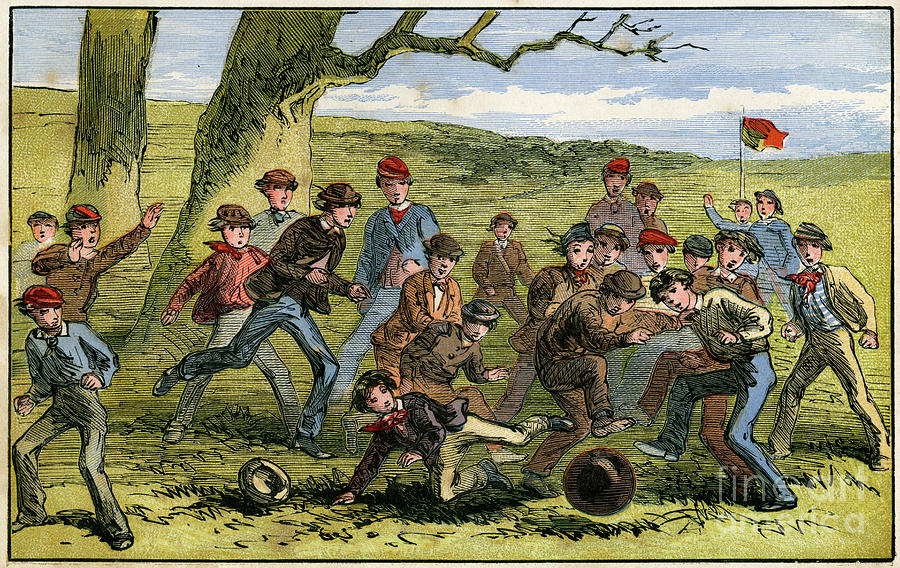
Before 1866, football was a mess of local rules. Match length was whatever the two captains agreed on that afternoon. Sheffield clubs, playing their own code, liked a two-hour marathon. London clubs, following the newer Football Association rules, preferred something shorter and sharper.
The first recorded 90-minute game happened at Battersea Park. The London FA team and the Sheffield FA team needed a common ground. They settled on splitting the difference: 45 minutes each way.
The 90-minute duration was a practical political agreement, not a physiological calculation. London’s FA clubs wanted shorter, faster matches; Sheffield’s association favored longer, more endurance-based contests. The 45-minute half was the compromise that allowed the game to be played under a unified set of rules for the first time.
That Battersea Park match is the genesis. The Sheffield association liked the format enough to adopt it for their own games shortly after. Momentum built, and by 1877, the 90-minute game was in the FA’s rulebook as a strong recommendation. It became a mandatory law twenty years later, in 1897.
The half-time break itself has murkier origins. Some historians think it allowed each team to play one half under their own preferred rule set. The 15-minute interval wasn’t formally capped until 2006, but it had been the standard for decades prior.
TL;DR: A London vs Sheffield match in 1866 created the 90-minute standard as a political compromise, which the FA later made official in 1897.
Why 90 Minutes Works (And Why It Hasn’t Changed)
Ninety minutes hits a sweet spot. It’s long enough to test a player’s fitness to its absolute limit, but short enough that the game doesn’t descend into a slog. The rhythm is built into the length.
The first half establishes tactics. The second half breaks them. The final 20 minutes are where fitness and will decide it.
| Aspect | Impact of 90-Minute Format | Risk if Shortened/Lengthened |
|---|---|---|
| Player Fitness | Demands peak aerobic endurance and glycogen management. | Shorter reduces athletic demand; longer increases injury risk and reduces quality. |
| Tactical Narrative | Allows for halftime adjustments and momentum shifts. | A shorter game favors a fast start; a longer one could make comebacks too frequent. |
| Spectator Engagement | Fits a natural attention span and commercial broadcast slot. | Too short feels unsatisfying; too long loses casual viewers. |
| Global Consistency | Provides a universal standard for competition and training. | Changing it disrupts every league, tournament, and record book simultaneously. |
Player physiology is the unsung reason. A top midfielder covers 10-12 kilometers in a match, with intense sprints every 90 seconds. The 90-minute mark sits right at the edge of glycogen depletion. Coaches build entire periodization models around peaking for this exact duration.
The tradition is now a fortress. Altering the full match duration would mean rewriting every competition rulebook from the Champions League to a Sunday pub league. The inertia is monumental.
The Modern Reality: It’s Not Actually 90 Minutes
Here’s the dirty secret fans in the stadium and on TV don’t always see. That clock almost never reflects 90 minutes of action.
The ball is in play for, on average, 55 to 60 minutes in a well-officiated top-flight game. In slower, more tactical leagues, it can dip below 50. A 2022 study of Premier League matches found the average ball-in-play time was 58 minutes and 7 seconds.
Where does the time go? Substitutions. Goal celebrations. Injuries. VAR checks. Throw-ins and goal kicks where the player takes a leisurely walk. It all adds up.
Common mistake: Assuming a 90-minute broadcast equals 90 minutes of soccer. In reality, a third of the clock is consumed by stoppages, which is why the referee adds time at the half and full time.
This gap between “wall-clock time” and “action time” is unique to soccer. Basketball and American football stop the clock constantly. Soccer’s running clock is a legacy of its 19th-century origins, when a simple stopwatch was the only tool available.
FIFA’s stated goal is to get the average ball-in-play time up to 60 minutes. Recent World Cups saw referees adding large chunks of stoppage time, 8, 10, even 13 minutes, to account for every second lost. It’s a direct assault on time-wasting.
TL;DR: A 90-minute match typically features only 55-60 minutes of actual play. FIFA is pushing referees to add more time to recover these lost minutes and reach a 60-minute ball-in-play target.
How Referees Manage the Clock (It’s Not a Science)
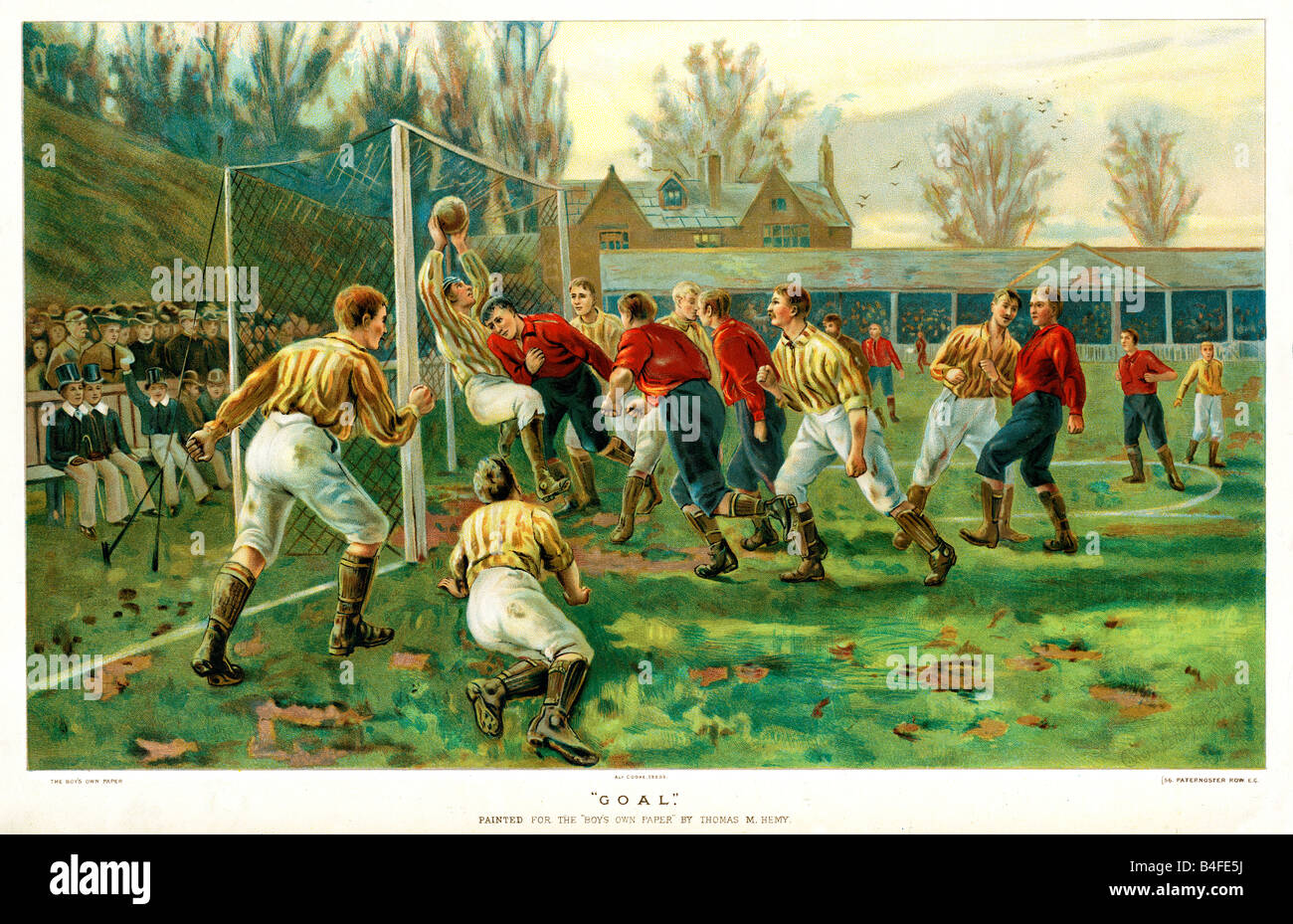
The referee is the sole timekeeper. There’s no official clock operator in the booth. This single fact creates more controversy than any offside call.
The referee starts his watch at kick-off and lets it run. He stops it only for significant delays: a serious injury, a substitution, a VAR review, or deliberate time-wasting. At the end of each 45-minute half, he estimates how much time was lost and adds it on. This is the referee’s stoppage assessment.
The guidelines are vague. A goal typically adds 30 seconds. A substitution adds 30 seconds per player. An injury stoppage might be a minute or more. It’s subjective, and it always has been.
The pressure is immense. A manager screaming for more time from the touchline. Players surrounding the official. The fourth official holding up an electronic board with a number that often feels arbitrary. This human element is both a flaw and a feature of the game.
Recent efforts have tried to make it more transparent. The 2022 FIFA World Cup introduced a system where the video assistant referee team tracked major stoppages and relayed a suggested minimum added time to the on-field referee. It led to the longest average added minutes in World Cup history.
| Stoppage Event | Typical Time Added | Official Guidance (IFAB) |
|---|---|---|
| Substitution | +30 seconds per player | Recommended, not mandatory |
| Goal Celebration | +30 seconds | At referee’s discretion |
| Injury Treatment | + time of stoppage | Referee stops watch for serious injury |
| VAR Review | + full duration of check | Time from whistle to restart |
| Time-Wasting | + discretionary time | Used as a deterrent |
The system is imperfect, but moving to a basketball-style stop-clock would fundamentally change the game’s rhythm. It would also make matches much longer in real time, disrupting TV schedules and player recovery.
Could Soccer Ever Change the 90-Minute Rule?
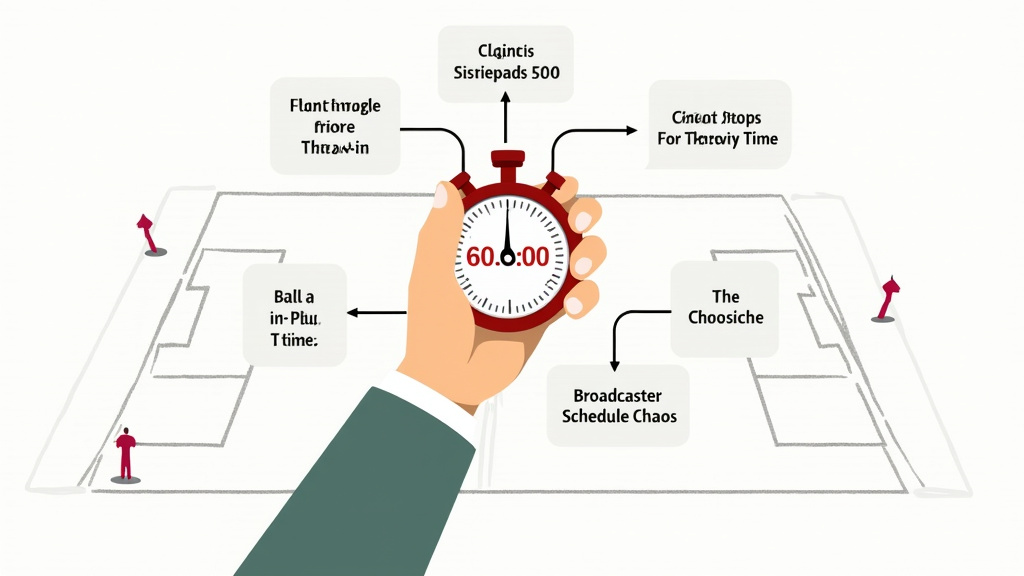
It almost did. In 2017, the International Football Association Board (IFAB), the body that guards the Laws of the Game, formally proposed testing a 60-minute match with a stop-clock. The ball-in-play time would be exactly 60 minutes. The clock would stop for throw-ins, goal kicks, and injuries.
The proposal died in committee. The reason wasn’t sentiment, it was logistics.
A 60-minute stop-clock match could easily last 90 minutes of real-time anyway. Broadcasters would have no idea when to schedule ads. Stadium operations and security plans rely on predictable timelines. The global soccer economy, from betting markets to fantasy leagues, is built on the 90-minute framework.
I remember watching a lower-league test match for a 60-minute stop-clock system. The rhythm was jarring. Every minor foul felt like a commercial break. The players never found a flow. The experiment was abandoned after one season because, frankly, it felt like a different sport.
The tradition is simply too heavy. Every record, every statistic, every “minute 90+” dramatic winner is anchored to this timeframe. Changing it would feel like rewriting history.
The focus has shifted instead to maximizing action within the existing 90. Stricter injury time calculation, faster restarts, and punishing time-wasting with yellow cards are the tools now. The 90-minute vessel is here to stay. The fight is about what we put inside it.
Frequently Asked Questions
Why is a soccer game 90 minutes and not 60?
The 90-minute length came from a 19th-century compromise, not modern sports science. It stuck because it created a balanced test of skill, stamina, and tactics that felt complete. A 60-minute game was proposed to combat time-wasting, but the tradition and global structure of the sport proved too entrenched to change.
Who decided a soccer match should be 90 minutes long?
The decision was made during a match in 1866 between representative teams from the London Football Association and the Sheffield Football Association. They agreed on two 45-minute halves to bridge their differing preferences. The Football Association later codified this as law in 1897.
Has a soccer game always been 90 minutes?
No. Before the 1866 compromise, match lengths were arbitrary and agreed upon by the competing teams. The Sheffield rules, for example, originally allowed for matches lasting up to two hours. The 90-minute standard only became universal after the FA made it official in the late 19th century.
Why is there added time if the game is 90 minutes?
The 90 minutes is regulation time. Added time (or stoppage time) compensates for pauses in play where the ball is not active, injuries, substitutions, VAR checks, and time-wasting. The referee estimates this lost time and adds it to the end of each half to ensure a fair total playing time.
What happens if a game is tied after 90 minutes?
In most knockout tournament matches, a tie after 90 minutes of regulation time leads to extra time periods, two 15-minute halves. If the score remains tied after extra time, the match proceeds to a penalty shootout. In many league formats, a draw after 90 minutes simply stands as the final result.
The Bottom Line
The 90-minute soccer match is a relic of a Victorian-era argument that became the backbone of the world’s game. It works not because it’s perfect, but because it’s proven. It pushes athletes to their limit, creates a natural story, and fits the rhythm of a global spectacle.
The real battle today isn’t about changing the clock’s length. It’s about honoring its intent. When referees add seven minutes for time-wasting, or when FIFA pushes for 60 minutes of actual ball-in-play, they’re fighting for the same thing those London and Sheffield players wanted in 1866: a fair, complete contest.
The clock reads 90. The game within it, however, is always being reclaimed minute by minute.

I come from the “soccer heart” of Germany, the Ruhrpott. I have played, trained and followed soccer all my life and am a big fan of FC Schalke 04. I also enjoy following international soccer extensively.