World Cup Best Goalkeepers: Top 7 Golden Glove Favorites
The best goalkeepers for the 2026 World Cup are the undisputed No. 1s for the tournament favorites: Brazil’s Alisson Becker, England’s Jordan Pickford, and France’s Mike Maignan. The defending champion, Argentina’s Emiliano Martínez, and veterans like Germany’s Manuel Neuer and Belgium’s Thibaut Courtois are also top contenders. The winner will likely come from a team that reaches the semifinals.
Most lists just rank names. They miss the single factor that decides the Golden Glove: your team’s defense. A brilliant keeper on an average team gets eliminated in the group stage. His heroics are forgotten. The award always goes to a goalkeeper who played seven games.
This guide breaks down the seven top contenders for 2026. We will look at their styles, their teams’ chances, and the specific tournament moments that will define their legacy. We will also name a few dark horses who could steal the show if their teams pull an upset.
Key Takeaways
- The Golden Glove is a team award disguised as an individual one. Your nation must reach at least the quarterfinals for you to have a realistic shot.
- New managerial appointments are a massive variable. Carlo Ancelotti’s calm at Brazil elevates Alisson. Thomas Tuchel’s defensive structure at England shelters Pickford.
- Modern goalkeeping demands more than shot-stopping. Distribution, sweeping, and penalty-area command are now mandatory. This hurts pure shot-stoppers in the voting.
- Penalty shootout heroics are a shortcut to the award. Emiliano Martínez proved it in 2022. One clutch save in a quarterfinal shootout can override five clean sheets.
- Do not sleep on the hosts. The USA’s Matt Turner or Canada’s Dayne St. Clair will face immense scrutiny and opportunity, which can forge a tournament legend.
The Modern Goalkeeping Profile: More Than a Shot-Stopper
The archetype has shifted. Twenty years ago, a keeper who caught crosses and made reflex saves was world-class. Today, that is the baseline. The elite now control the space 25 yards from their goal and act as an eleventh outfield player.
A modern elite goalkeeper must excel in three distinct phases: shot-stopping (reflex saves, one-on-ones), build-up (accurate long and short distribution under pressure), and sweeping (reading through-balls and acting as a libero). Missing one phase limits a team’s tactical ceiling.
Your footwork matters as much as your hands. A misplaced pass from the back under a high press is a goal conceded. This evolution directly impacts who thrives at a World Cup. A team that wants to possess the ball, like Spain or Germany, cannot use a keeper who boots it long every time. This is why Unai Simón starts for Spain despite not being the world’s best pure shot-stopper. His comfort with the ball at his feet enables their entire system.
This also changes a goalkeeper’s physical preparation. Traditional goalkeeper workout plans focused on explosive power and agility. Now, they incorporate cardio for sweeping and technical drills for passing under duress. The role is more athletic and cerebral than ever.
TL;DR: The 2026 Golden Glove winner will be a complete modern goalkeeper, not just a great shot-stopper. Their ability with their feet will be as scrutinized as their hands.
How the Golden Glove is Really Won
Forget the “busiest keeper” myth. The goalkeeper who faces 15 shots a game because his defense is leaky rarely wins. The award favors the keeper who is perfectly protected for 85 minutes and then makes one impossible, season-defining save in the 86th.
The pattern is undeniable. Look at the last three winners: Thibaut Courtois (2018, Belgium semifinalist), Emiliano Martínez (2022, Argentina champion), and Gianluigi Donnarumma (Euro 2020, Italy champion). Each played for a finalist. Their clean sheet totals were bolstered by strong defensive units in front of them. Martínez’s defining moment was not a routine save; it was his penalty save in the 120th minute against the Netherlands and his antics in the final shootout.
The voting panel, media representatives, watches the latter stages most intently. A quarterfinal clean sheet against a titan like France carries more weight than three group-stage shutouts. This is why team projection is the first filter. You can map a keeper’s chances directly to his team’s expected path.
| Team Projection | Goalkeeper’s Viable Outcome | Realistic Award Chance |
|---|---|---|
| Champion/Finalist | Golden Glove Favorite | High |
| Semifinalist | Strong Contender | Medium |
| Quarterfinalist | Outside Chance | Low |
| Round of 16 Exit | No Chance | None |
This table is brutal but honest. A magical keeper for a nation like Morocco, which overachieved in 2022, can win hearts but not the Golden Glove. Yassine Bounou was phenomenal in Qatar. His team’s historic run to the semifinals made him a candidate, but the award still went to the champion’s keeper. The system is biased toward the last team standing.
The 7 Top Goalkeepers for the 2026 World Cup
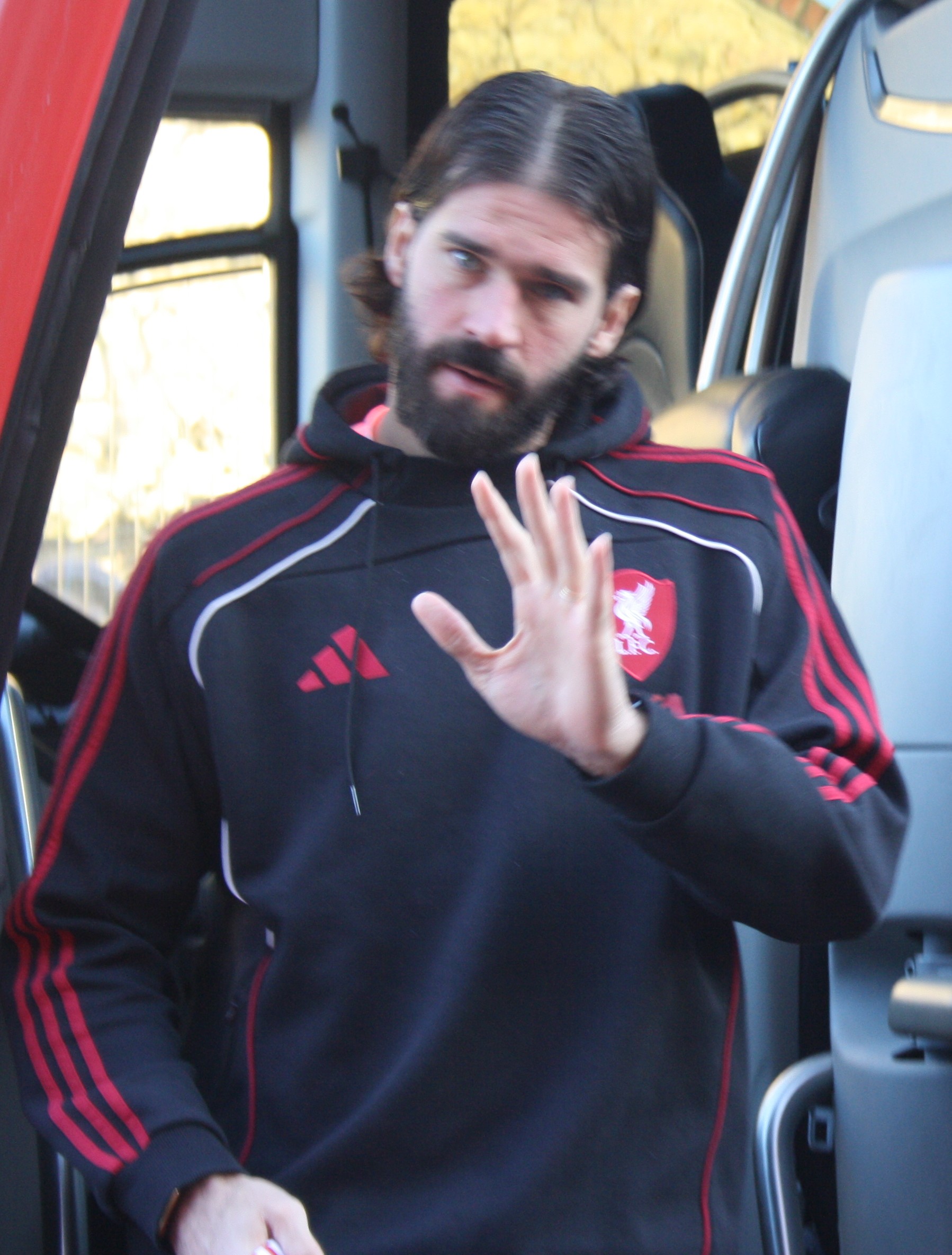
Photo: Timmy96 / Wikimedia Commons / CC0
This is not just a ranking of talent. It is a prediction of convergence: where world-class ability meets a team capable of a deep run. Form today matters, but we are projecting form in two years, accounting for age, team evolution, and managerial changes.
.jpg)
1. Alisson Becker (Brazil)
Alisson is the most complete package. His shot-stopping is elite, his distribution is a weapon, and his calm is contagious. He rarely makes the spectacular save because his positioning eliminates the need. For Liverpool, he consistently posts high save percentages while initiating attacks.
The Carlo Ancelotti factor is huge. Ancelotti’s man-management and tactical stability will give Brazil a composed spine they have lacked in recent tournaments. Alisson will be the beneficiary, playing behind a more organized defense. Brazil are tournament favorites for a reason, and their keeper is a cornerstone of that status. His main competition for individual praise comes from his own dazzling attackers, but a crucial save in a tight semifinal will shift the narrative.
2. Jordan Pickford (England)
Pickford’s transformation is underrated. The erratic, loud keeper of 2018 has matured into a consistent, commanding No. 1. His reflexes are still top-tier, but his decision-making has smoothed out. For England, he is a leader.
Thomas Tuchel’s appointment as England manager is the best thing that could happen to Pickford. Tuchel builds teams from the back, with meticulous defensive structure. Pickford will be protected, asked to make fewer chaotic saves, and trusted to distribute quickly to launch attacks. England’s expected deep run, possibly to the final, puts Pickford in the award’s spotlight. His challenge will be staying focused during long periods of inactivity, a common test for keepers on dominant teams.
3. Mike Maignan (France)
Maignan is the heir. He took over from Hugo Lloris for club and country and immediately raised the standard. His vocal organization of AC Milan’s and France’s defense is exceptional. He is a proactive sweeper and a phenomenal shot-stopper.
France’s defensive solidity, with a world-class pairing like William Saliba and Dayot Upamecano, means Maignan will face few clear chances. The ones he does face will be critical. His ability in big games is proven; he was a key part of Milan’s Serie A title and France’s run to the Euro 2024 final. He lacks the global marketing shine of some others, but his performances do the talking. A strong French campaign makes him a lock for the shortlist.
4. Emiliano Martínez (Argentina)
The defending champion cannot be ignored. Martínez’s superpower is not his shot-stopping, which is very good, but his psychological dominance. He lives for the moment that breaks opponents, especially in penalty shootouts. That is a tournament-winning trait.
Argentina will still be a force, but repeating as champion is historically difficult. Their defense may be more vulnerable than in 2022. Martínez will likely be busier. This could either showcase his talents more or expose him if the team declines. His award chances hinge entirely on Argentina’s ability to reach the final four again. If they do, his aura and knack for drama make him a terrifying contender.
5. Thibaut Courtois (Belgium)
When fit, Courtois is arguably the best pure shot-stopper alive. His size, reach, and calm in big games are unparalleled. His performance in the 2022 Champions League final was a masterclass. The problem is his team. Belgium’s “golden generation” has aged out. Their defense is a shadow of its former self.
Courtois will be busy. He might make the save of the tournament. But if Belgium struggles to get out of a tough group or loses in the round of 16, his heroics will be a footnote. He needs Kevin De Bruyne and Romelu Lukaku to have one last hurrah to carry the team deep enough for his goalkeeping to matter in the award conversation.
6. Manuel Neuer (Germany)
Writing off Manuel Neuer is a rookie mistake. The 2014 champion has been named Germany’s first-choice for his fifth World Cup by Julian Nagelsmann, who specifically cited his “aura” and ability to produce special moments. At 38 in 2026, his physical range will be diminished, but his brain, positioning, and leadership will not.
Germany as hosts (in part) will be under immense pressure. Neuer’s experience in these moments is invaluable. He may not play every group game, but he will start the knockouts. His sweeping style is the blueprint for the modern keeper. A semifinal run for Germany, propelled by a few iconic Neuer moments, would make for a storybook ending and a legitimate award bid.
Common mistake: Assuming a goalkeeper’s club form directly translates to the World Cup, the pressures, the teammates, and the tactical systems are completely different. A keeper struggling at a chaotic club can thrive in a structured national team setup, and vice-versa.
7. Unai Simón (Spain)
Simón is the system keeper. He is there because he perfectly executes Luis de la Fuente’s or whoever the manager’s instructions. He is reliable with his feet, a competent shot-stopper, and a Euro 2024 winner. He will not win the award with spectacular saves, but with consistent, error-free football that allows Spain’s technicians to control games.
Spain’s possession-heavy style means he faces few shots. To win the Golden Glove, he would need Spain to reach the final while keeping a string of clean sheets, and for more flamboyant keepers on other contenders to make costly errors. It is a narrow path, but the team’s potential makes him a contender by association.
The Dark Horses and Host Nation Watch
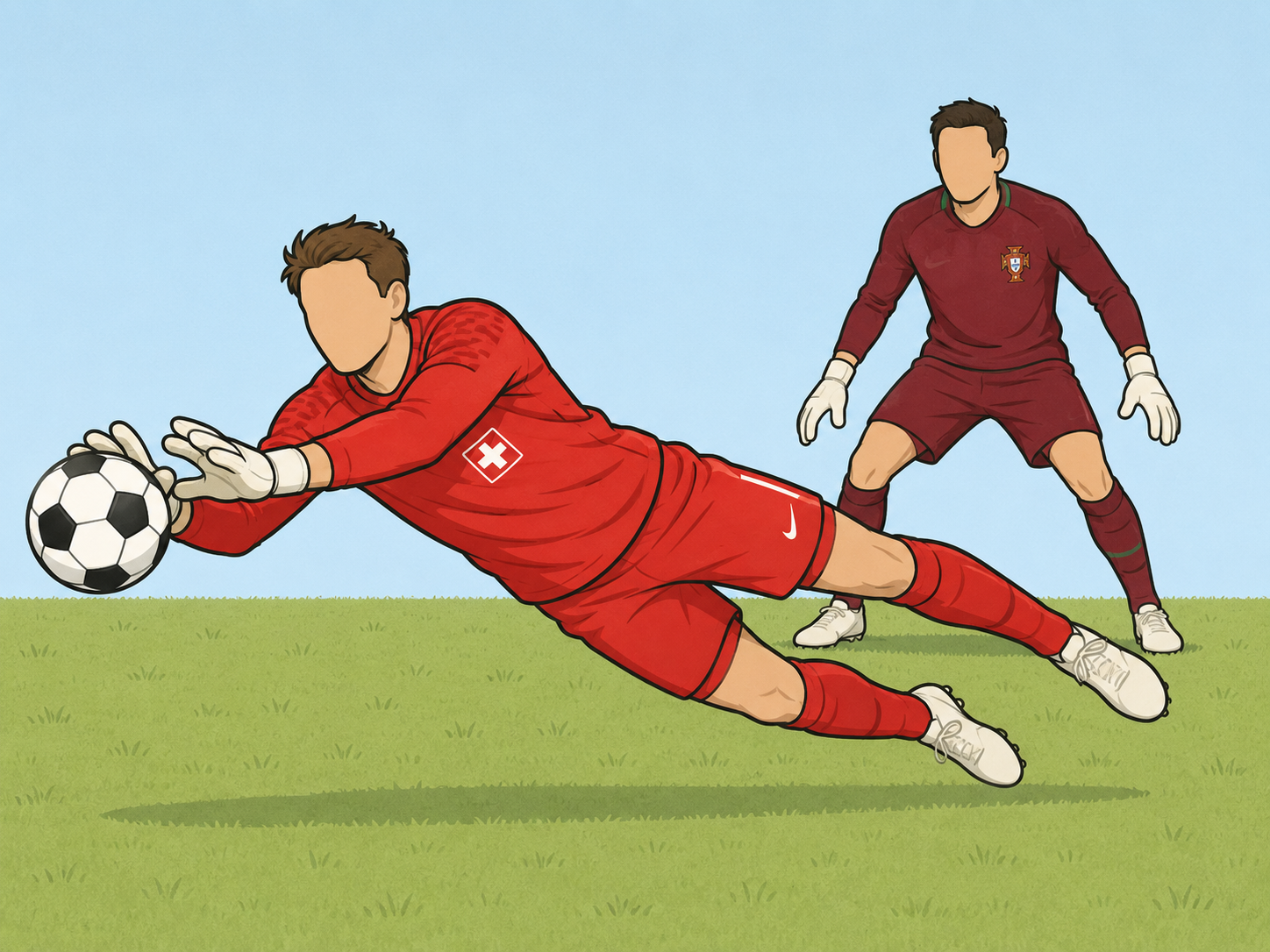
Beyond the favorites, a few keepers could crash the conversation if their teams outperform expectations. Their team structure setups and defensive discipline will be the key.
- Gregor Kobel (Switzerland): He is a top-five goalkeeper in the world on talent alone. Agile, brave, and excellent in one-on-ones. Switzerland are always organized and tough to beat. If they pull off another quarterfinal or semifinal run, Kobel will be the reason. He is the most likely dark horse to win the award.
- Diogo Costa (Portugal): Immensely talented and calm for his age. Portugal has the squad to win it all. If they click under a new manager and Costa has a standout tournament, he could leapfrog several established names.
- Host Nation Keepers (USA, Mexico, Canada): The spotlight will be intense. The USA’s Matt Turner is a proven shot-stopper in concacaf. Canada’s Dayne St. Clair is an excellent distributor. Mexico’s situation is messy with injuries. None are favorites, but a Cinderella run to the quarterfinals by a host, fueled by goalkeeping heroics, is the stuff of legend. It would require a perfectly executed defensive formation guide, likely a low-block 5-3-2, to maximize their chances.
How Team Tactics Shape a Keeper’s Destiny
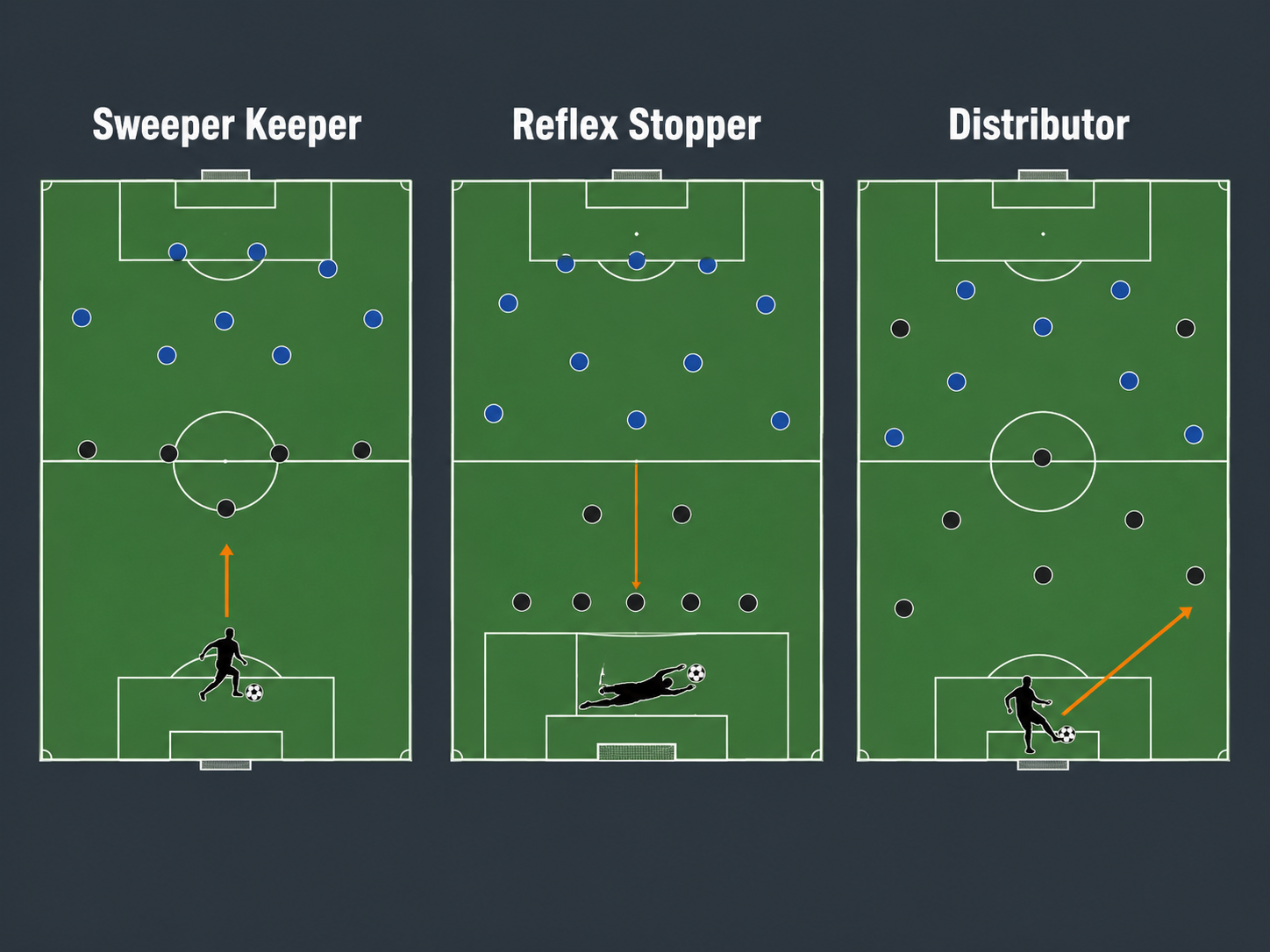
A goalkeeper does not play in a vacuum. The modern soccer tactics employed by his manager dictate his workload and how his skills are showcased.
A team playing a high defensive line, like Germany under Nagelsmann, needs a sweeper like Neuer. A team sitting deep and countering, which some underdogs will do, needs a world-class reflex shot-stopper like Kobel. A team that dominates possession, like Spain, needs a distributor like Simón.
This is why managerial appointments are critical. A new coach can implement a system that either maximizes a keeper’s strengths or exposes his weaknesses. For example, a move to a more aggressive 3-5-2 formation demands that the goalkeeper be comfortable leaving his line to cover space behind the wing-backs. Not every keeper can do that.
The best keepers for 2026 are those whose innate skills align with their national team’s entrenched tactical identity. Alisson fits Brazil’s balanced approach. Pickford fits England’s pragmatic yet assertive style under Tuchel. The mismatch happens when a talented keeper plays for a team with a conflicting style, it rarely ends well.
Frequently Asked Questions
Who is the favorite to win the Golden Glove in 2026?
Alisson Becker is the current favorite. He combines elite ability with the best team projection. Brazil are expected to go deep, and Alisson’s role as a modern sweeper-keeper fits the contemporary award criteria perfectly.
Can a goalkeeper win the Golden Glove if his team doesn’t win the World Cup?
Yes, but his team must at least reach the final. Only one goalkeeper has won the Golden Glove for a team that didn’t win the tournament: Michel Preud’homme for Belgium (fourth place) in 1994, the award’s inaugural year. Since then, it has always gone to a keeper from the champion or runner-up.
How important are penalty saves to winning the award?
They are a decisive tiebreaker. If two keepers have similar stats and team runs, the one with a iconic penalty save in a knockout shootout will win. Emiliano Martínez cemented his 2022 award with his shootout performance against the Netherlands and his mind games in the final.
Is Manuel Neuer too old to be a contender in 2026?
For the award, possibly. For being a crucial player for Germany, absolutely not. His experience and aura are irreplaceable. He might not be the best keeper over seven games, but he is still capable of producing the three or four game-changing moments that define a tournament.
Who is the best young goalkeeper to watch?
Portugal’s Diogo Costa. At 24, he is already the starter for a top European club and his national team. His composure, distribution, and shot-stopping are all elite. The 2026 World Cup could be his global breakout party.
The Bottom Line
Identifying the world cup 2026 best goalkeepers is a forecast of team success as much as individual genius. Look at the projected semifinalists. Brazil, England, France, Argentina, and their No. 1s rise to the top of the list. Alisson, Pickford, Maignan, and Martínez have the talent and the platform.
The wild cards are the veterans with aura, like Neuer and Courtois, who can defy projections with sheer will, and the dark horses like Kobel, who need their teams to overachieve. Watch the group stage draws and the early tournament form of these teams. The narrative for the Golden Glove is written in the knockout rounds, where one save can immortalize a keeper and one mistake can erase a career’s worth of clean sheets. Choose your contenders by looking at the team sheet first, then the man between the posts.

I come from the “soccer heart” of Germany, the Ruhrpott. I have played, trained and followed soccer all my life and am a big fan of FC Schalke 04. I also enjoy following international soccer extensively.