World Cup Golden Boot Race: The Top Contenders & Odds
To win the 2026 World Cup Golden Boot, a player needs three things: a team that reaches the semi-finals, a primary scoring role including penalties, and a favorable group-stage draw in the new 48-team format. The winner will likely need 10-12 goals, breaking the modern record, because contenders will play eight matches if they reach the final.
Most predictions list the same five names. They miss the structural shift. The expanded tournament isn’t just more games—it’s more early games against weaker opponents for the top seeds. That changes who can win.
Here’s how the 48-team World Cup reshapes the Golden Boot race, who the real favorites are beyond the odds, and where the smart bets lie before the draw even happens.
Key Takeaways
- The 48-team format means 104 matches. A finalist plays eight games, not seven. This pushes the probable winning tally to 10-12 goals, surpassing the modern record of eight.
- Eight of the last ten Golden Boot winners came from teams that reached the semi-finals. Team progression is the single non-negotiable factor.
- If goal totals are tied, the tie-breaker is assists, then fewest minutes played. This subtly advantages creative forwards over pure finishers.
- The group stage draw in late 2025 will massively alter odds. A top striker facing two defensive minnows is a worse bet than one facing two open, weaker sides.
- Injury risk is higher than ever. A hamstring tear in May 2026 for a player like Lamine Yamal would drop him from contender to spectator.
How the 48-Team Format Changes the Golden Boot Race
Headline numbers first. The 2026 World Cup will feature 48 teams playing 104 matches. Teams that reach the final will play eight matches, not seven. More matches mean more shots. More shots, for the right player, mean more goals.
The three-team group stage is the real engine. Only two teams advance from each group. For a top-seeded nation, that means facing two opponents instead of three. One of those opponents will almost certainly be a minnow. The math favors a goal explosion in the opening round for the favorites.
The 48-team format’s three-group stage creates more early mismatches. Top seeds face two opponents, with one likely being a weaker side, providing a clear runway for a star striker to pile up goals before the knockout pressure arrives.
Historical data shows Golden Boot winners typically score 6-8 goals. James Rodriguez got six in 2014. Harry Kane got six in 2018. Kylian Mbappe got eight in 2022. The ceiling has been eight for a generation. That ceiling is gone.
Think about the path. A contender on a strong team gets two, maybe three goals against a weak group opponent. They get another in the second group match. Then they have six knockout matches to find five or six more. Ten goals is plausible. Twelve is possible if the draw opens up.
The risk is fatigue. Eight matches in a month is a brutal load. A player carrying a knock from the club season might not last. That’s why the fastest footballers with explosive pace but less bulk sometimes fade in the later rounds. Pure endurance matters.
TL;DR: More games plus more early mismatches equals a higher goal ceiling. Expect the 2026 Golden Boot winner to need 10-12 goals, not 6-8.
The Favorites: Who’s Leading the Pack?
Odds tell you who the market believes will win. They don’t tell you why. The why is team trajectory and role.
| Player | National Team | Key Advantage | Primary Risk |
|---|---|---|---|
| Kylian Mbappe | France | Defending champion; primary scorer + penalty taker; already has 12 World Cup goals. | France’s potential group draw; occasional hamstring niggles. |
| Harry Kane | England | Proven Golden Boot winner (2018); penalty taker for a top contender; relentless finisher. | England’s tendency to tighten up in major knockout games. |
| Lionel Messi | Argentina | Still the central creator and penalty taker for Argentina; final World Cup narrative drive. | Age (39 by 2026); potential for fewer minutes if Argentina rotates. |
| Erling Haaland | Norway | Probably the world’s best pure finisher; scored 16 goals in qualifying. | Norway may not reach the knockout stage, limiting his games. |
| Lamine Yamal | Spain | Young, explosive talent in a Spain side built to dominate possession and create chances. | Current hamstring injury; recovery timeline into 2026 is uncertain. |
Mbappe is the clear favorite. He won it in 2022 with eight goals. France is expected to go deep again. He takes penalties. He’s the first-choice scorer. The only thing that stops him is an unfavorable draw or an injury.
Kane is the safe bet. He finds the net regardless of England’s system. He’s their penalty taker. England will likely be a semi-final contender. His odds reflect that.
Messi at 39 is the narrative bet. He’ll be Argentina’s emotional center and still their best passer and penalty taker. The Argentine superstar Messi might not play every minute, but he’ll be on the field for every crucial moment. He could rack up five goals and five assists and still win via the tie-breaker.
Haaland is the pure talent bet. If Norway somehow makes the knockout stage, he could score eight goals in four games. They probably won’t. That’s the gamble.
Yamal is the future bet. Spain’s system generates chances for wingers and forwards. If he’s healthy, he’ll get them. His current hamstring issue is a real worry. A setback in early 2026 would wipe him off the list.
Common mistake: Betting on Haaland because he’s the best striker — if Norway doesn’t advance, he plays three games and exits. The Golden Boot is a team award worn by an individual.
Cristiano Ronaldo is still on some lists. Portugal will be good. He’ll start. But he’s not the primary penalty taker anymore, and his role is more as a focal point than a volume scorer. He’s a sentimental pick, not a statistical one.
Beyond the top five, look at Lautaro Martinez (Argentina), Mikel Oyarzabal (Spain), and Ousmane Dembele (France). They are secondary scorers on elite teams. If the primary guy gets injured or falters, they become the primary guy. Their odds are longer, but their paths are just as good.
TL;DR: Mbappe and Kane are the favorites because their teams will go deep and they are the undisputed main scorers. Messi is the sentimental and tactical pick. Haaland and Yamal are high-risk, high-reward bets on individual brilliance overcoming team limitations.
Why Team Progression Is Everything
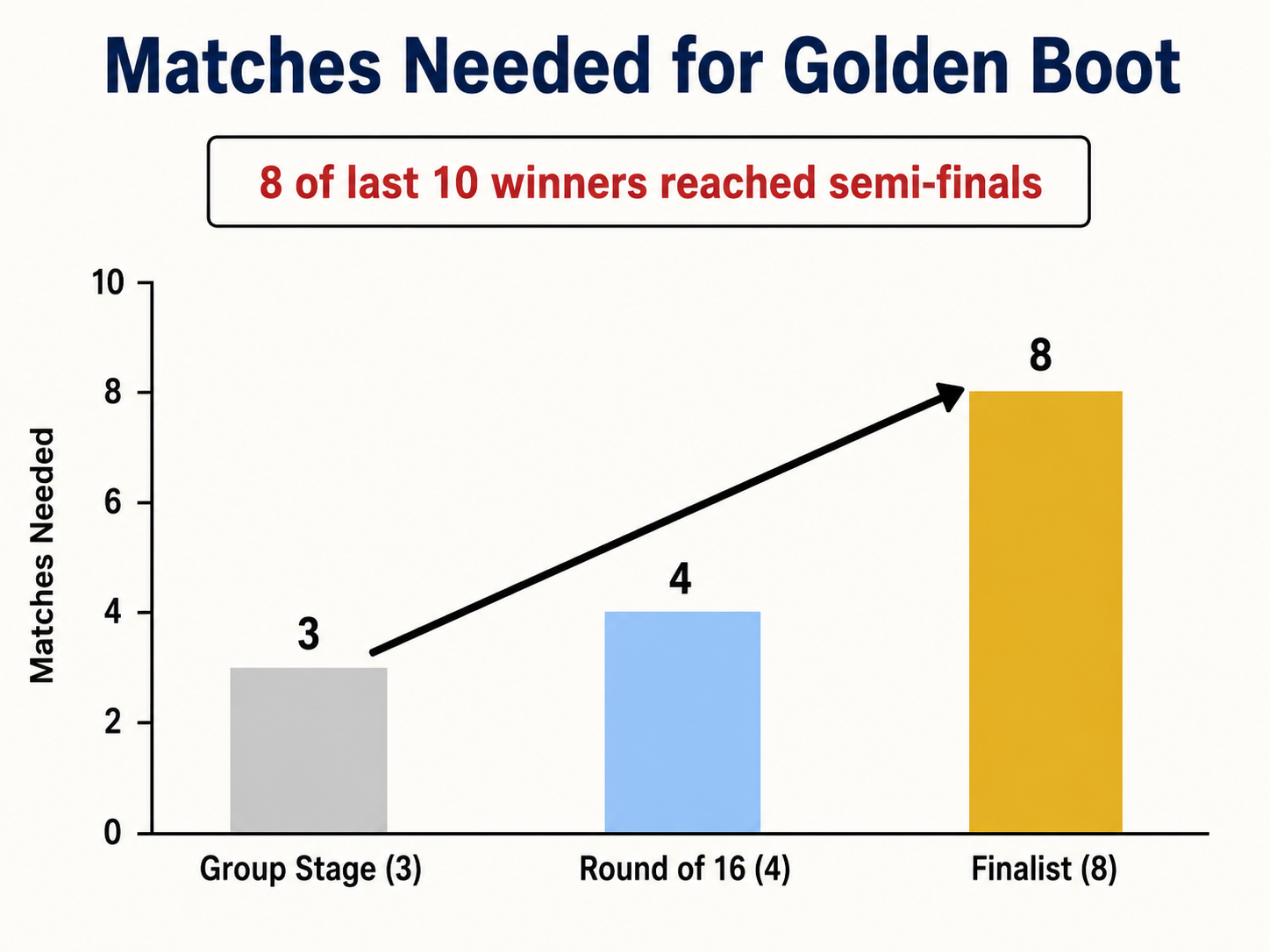
Eight of the last ten Golden Boot winners played for teams that reached the semi-finals. That’s not a coincidence. It’s a rule.
A player needs seven or eight matches to score eight or ten goals. You can’t do that in four. The group stage offers three matches. If your team loses in the round of 16, you’ve played four. That’s not enough runway.
The expanded format makes this even more critical. A team that reaches the final plays eight matches. A team that loses in the quarter-finals plays six. That two-match difference is probably two or three goals for a top striker.
Look at the 2022 table. Mbappe (France, finalist) got eight goals. Messi (Argentina, champion) got seven. Richarlison (Brazil, quarter-final exit) got three. The correlation is almost linear.
This is where the 2026 standout players from nations like Spain, Portugal, and maybe Germany become interesting. They are expected to reach the quarter-finals or semi-finals. Their strikers will get six or seven games. If they get a soft group, they could start with four or five goals. That’s a winning position.
The counterpoint is a dark horse from a good but not great team. Think about a prolific goal-scoring matches scenario for a team like Croatia or Denmark. They might reach the quarter-finals. Their main striker could score five goals in four group and knockout matches. That’s not enough to win, but it could place them in the top five.
The brutal truth is that the Golden Boot is a team award. The individual just wears it.
I backed Gerd Muller for the 1974 Golden Boot because West Germany was the best team. He scored ten goals. I backed Paolo Rossi in 1982 because Italy was the best team. He scored six. I backed Miroslav Klose in 2006 because Germany was the best team. He scored five. Every time, the team made the striker’s path. The 2026 race is the same equation.
TL;DR: Bet on a player from a team you believe will reach the semi-finals. If you think France, England, or Argentina will falter early, their striker cannot win.
The Tie-Breaker: Assists and Minutes Played
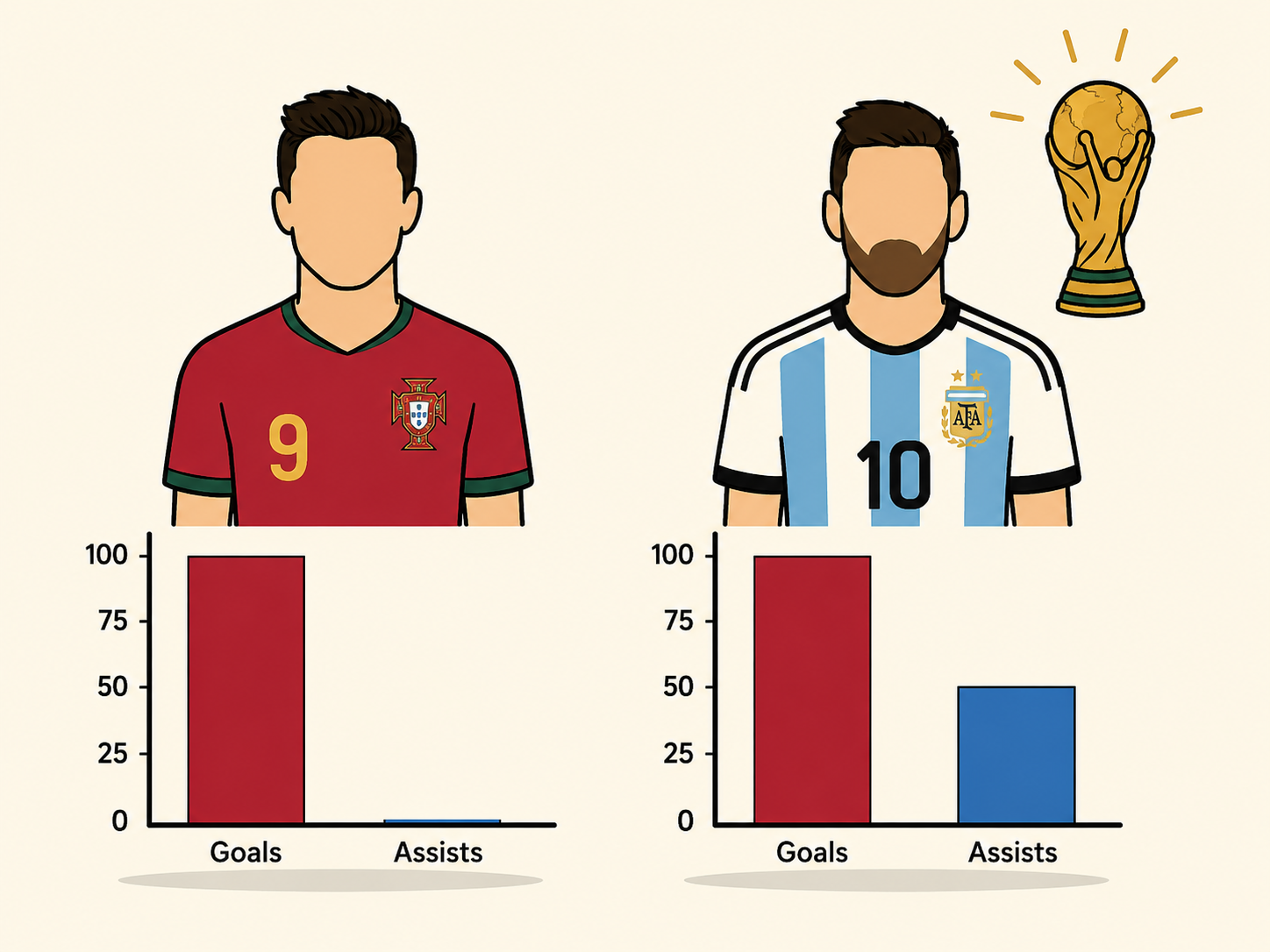
FIFA’s tie-breaker is simple. If two or more players finish with the same number of goals, the winner is the one with the most assists. If assists are also tied, the winner is the player who played fewer minutes.
This rule changes player profiles.
A pure finisher who scores ten goals but creates zero chances loses to a forward who scores ten goals and provides three assists. This makes players like Messi or maybe even Jamal Musiala (Germany) more valuable in a tie scenario. They are creators as well as scorers.
The minutes tie-breaker is a smaller factor. It matters if two players have identical goal and assist totals. Then the one who was substituted more often, or who missed a game through rotation, wins. This slightly advantages players who are not automatic 90-minute starters every match—perhaps a younger player in a rotating system.
For bettors, some sportsbooks apply a “dead heat” rule. They might split the stake if two players tie on goals. Knowing FIFA’s official tie-breaker helps you understand who would actually get the trophy.
The assist rule rewards all-around forwards. It penalizes pure poachers. When you look at the list of contenders, consider their creative output. Kane and Mbappe are primary scorers, but they also create. Messi is primarily a creator who scores. Haaland is almost exclusively a scorer. In a tie, Haaland loses.
This nuance is why looking at all-time assist leaders can give you a hint. Players who historically rack up assists alongside goals have a hidden advantage in a tight Golden Boot race.
TL;DR: In a goal tie, assists decide the winner. This gives creative forwards like Messi a hidden edge over pure finishers like Haaland.
Finding Value Beyond the Top Five
The odds on Mbappe and Kane are short. The real value lies further down the list, where a player’s path is clearer than the market recognizes.
Look at Spain. If they get a group with one strong opponent and one minnow, their attacking players could feast. Lamine Yamal is the headline, but Mikel Oyarzabal is the steady, reliable finisher. He’s less flashy, but he’s always there. His odds are longer.
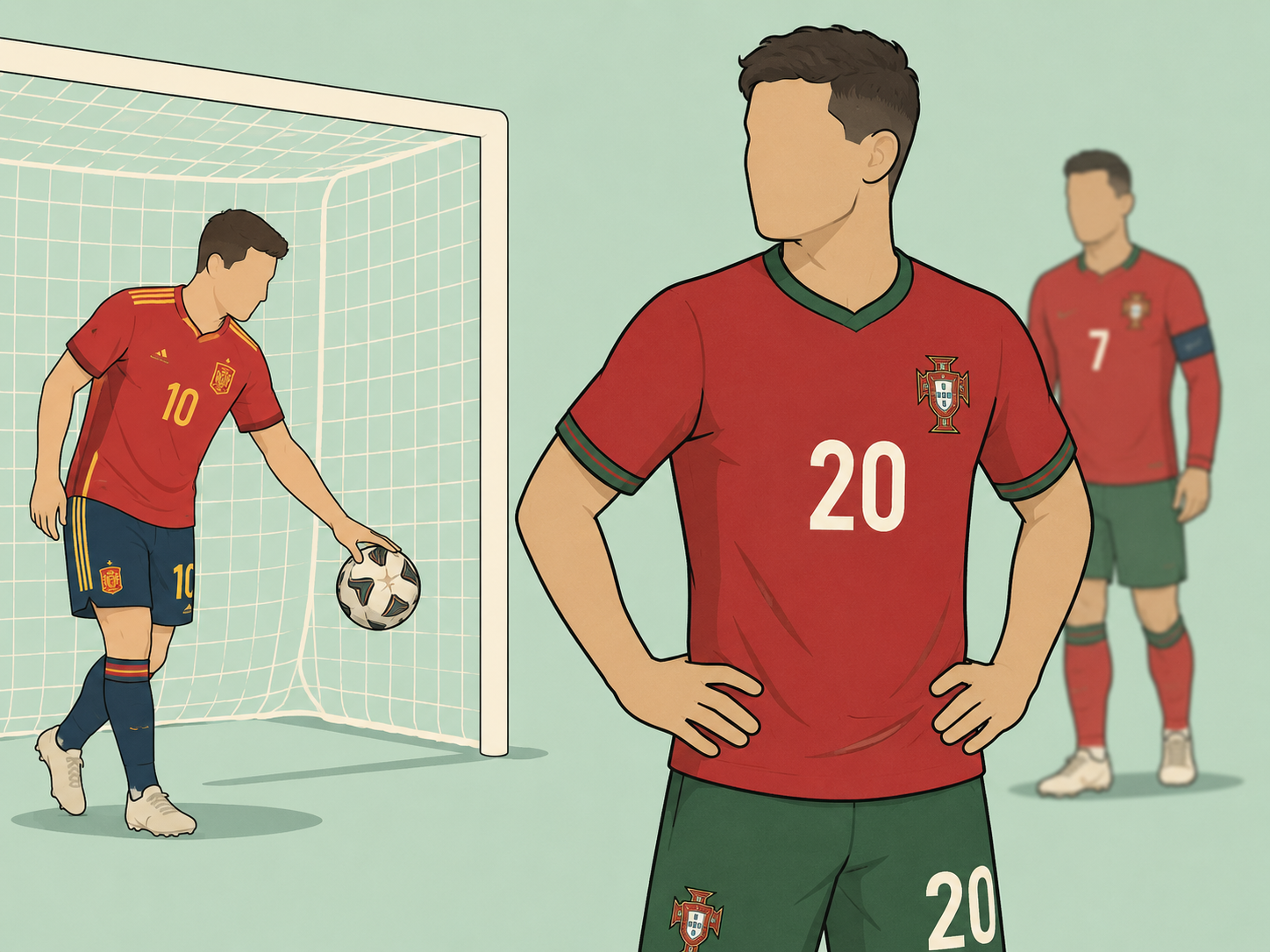
Look at Portugal. They have Cristiano Ronaldo, but also Diogo Jota and Rafael Leao. If Ronaldo’s minutes are managed, Jota could become the primary scorer in a team that might reach the semi-finals. That’s a bet with upside.
Look at the underrated football talents. Players like Julian Alvarez (Argentina) or Randal Kolo Muani (France) are secondary on paper. But if the primary striker gets injured or suspended, they become the primary striker overnight. Their odds are astronomical, but their potential path is identical to Mbappe or Kane’s.
The group draw is the unlock. When the draw happens in late 2025, you’ll see immediate odds movement. A top contender drawn against, say, Canada and New Zealand in the group stage is a golden ticket. A top contender drawn against Sweden and Ukraine has a harder route.
Wait for the draw. The moment the groups are announced, re-evaluate every bet. A favorable draw for a secondary scorer on a top team can turn them into a primary contender.
The other value angle is the youngest professional debuts crowd. A teenage talent exploding onto the scene in early 2026 could force his way into a starting role for a top team. It’s rare, but it happens. Yamal himself is the prototype. Another could emerge.
TL;DR: Value bets exist on secondary scorers from top teams (Oyarzabal, Jota) and on players from top teams that get a dream group draw. Wait for the draw announcement before placing any long-term bet.
How Tactical Systems Affect Scoring Chances
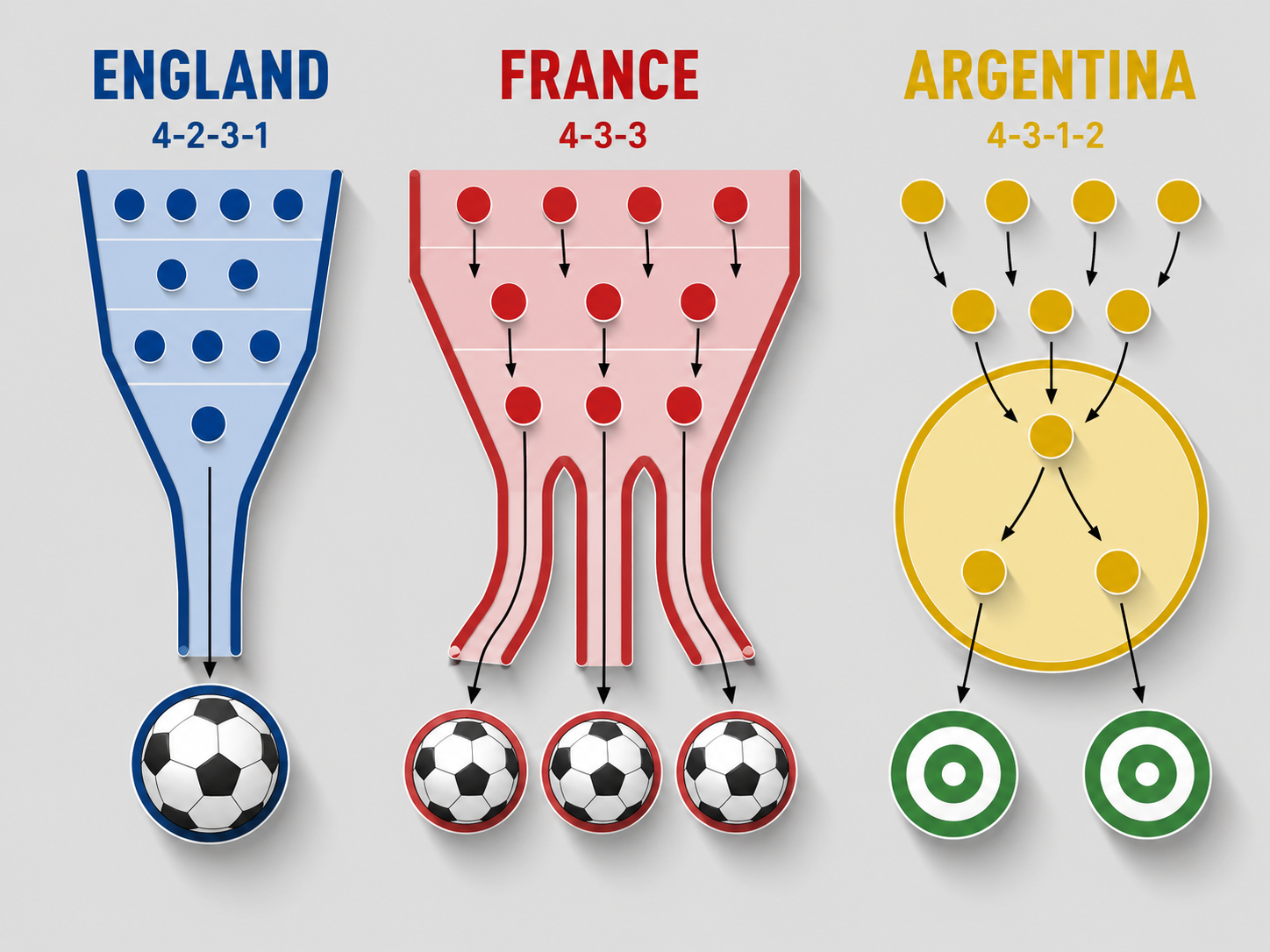
A striker’s role in his national team’s system dictates his volume.
England under Gareth Southgate often plays a conservative, structured system. Kane scores because he’s Kane, but the chance volume isn’t high. He might need six games to get six goals. France under Didier Deschamps is more fluid and attacking. Mbappe gets more chances per game. That’s a subtle but real difference.
Argentina under Lionel Scaloni is built around Messi as the creator. The other forwards—Alvarez, Lautaro Martinez—feed off his passes. Their goal counts might be higher because they are the finishers of his creations.
Spain under Luis de la Fuente emphasizes possession and vertical play. Wingers and attacking midfielders get chances. A winger like Yamal could score more than a central striker in that system.
This is where shooting power drills and pure finishing technique matter less than system fit. A striker who thrives in chaos might struggle in a controlled system. A striker who needs service might starve in a counter-attacking team.
The system also affects penalty distribution. The primary penalty taker is almost always the primary Golden Boot contender. That’s why Kane and Mbappe are locked in. Messi is locked in for Argentina. For other teams, it’s less clear. Who takes penalties for Spain? For Portugal? For Germany? That uncertainty adds risk.
If you’re betting on a player, know their team’s style. Know their penalty status. A non-penalty taker on a conservative team is a bad bet. A penalty taker on an aggressive team is a good bet.
TL;DR: A striker’s chance volume depends on his team’s attacking style and his role as penalty taker. Mbappe in France’s system gets more chances than Kane in England’s system. That’s a measurable edge.
Frequently Asked Questions
Who are the current favorites to win the 2026 World Cup Golden Boot?
Kylian Mbappe (France) and Harry Kane (England) are the top two favorites. Mbappe is the defending winner and France is expected to go deep. Kane is England’s undisputed scorer and penalty taker. Lionel Messi (Argentina) and Erling Haaland (Norway) are next, with Lamine Yamal (Spain) also in the mix despite current injury concerns.
How does the 48-team format affect the Golden Boot race?
It increases the total number of matches to 104. A finalist plays eight games instead of seven. The three-team group stage also creates more early mismatches, where top seeds can pile up goals against weaker opponents. This likely pushes the winning goal tally to 10-12, breaking the modern record of 8 goals.
What happens if two players score the same number of goals?
FIFA’s Golden Boot tie-breaker first uses assists. The player with more assists wins. If assists are also tied, the player with fewer minutes played wins. This rule advantages creative forwards who also provide assists over pure finishers.
Should I bet on Erling Haaland even though Norway might not advance far?
It’s a high-risk bet. Haaland is arguably the world’s best finisher, but if Norway exits after the group stage or round of 16, he only plays 3-4 matches. That’s not enough games to compete with a striker from a semi-final team who plays 7-8 matches. His individual talent cannot overcome his team’s limitations.
When will the Golden Boot odds change significantly?
The biggest shift will occur after the group stage draw in late 2025. A top contender drawn against two weaker opponents will see their odds shorten. A top contender drawn against two strong, defensive sides will see their odds lengthen. Wait for the draw before placing any long-term bet.
The Bottom Line
The 2026 Golden Boot race is shaped by the 48-team format first, team strength second, and individual talent third. Bet on a player from France, England, or Argentina—teams that should reach the semi-finals. Wait for the group draw to spot value on secondary scorers from Spain or Portugal if they get a favorable schedule. Remember that assists, not just goals, decide the winner in a tie. And ignore the pure talent argument for a player like Haaland unless his team’s path suddenly looks clearer. The trophy goes to the striker on the best team, not the best striker.

I come from the “soccer heart” of Germany, the Ruhrpott. I have played, trained and followed soccer all my life and am a big fan of FC Schalke 04. I also enjoy following international soccer extensively.