World Cup Group B Scenarios: Who Advances & How
To qualify from World Cup 2026 Group B, the top two teams advance automatically. The third-placed team can also qualify if it finishes among the eight best third-placed teams across all 12 groups. The path depends on points, goal difference, and the results in other groups.
Most fans still think in the old format. They watch the third matchday assuming only two spots matter. That mindset will cost you the plot in 2026. The entire calculus for coaches, players, and even ticket sales shifts when finishing third with a positive goal difference might be a ticket to the knockouts.
This guide breaks down the exact scenarios for Canada, Switzerland, Qatar, and Bosnia and Herzegovina. We’ll cover the point math, the pre-drawn knockout bracket, and the tactical decisions this new system forces.
Key Takeaways
- Four points is the magic number for a third-placed team. It virtually guarantees advancement to the Round of 32.
- Goal difference is your lifeline. Every goal in a loss matters more than ever. A 2-1 defeat is strategically better than a 1-0 loss.
- The knockout bracket is already set. FIFA’s 495 pre-defined scenarios mean there’s no draw after the groups. Your opponent is determined by a fixed formula.
- Head-to-head results don’t matter for third-place ranking across different groups. Only points, goal difference, and goals scored count.
- Canada vs. Switzerland on June 24 is the group decider. The winner likely tops the group and gets a softer Round of 32 draw.
The 2026 Format: Why Group B is a Three-Team Race
The expansion to 48 teams changes everything. Thirty-two teams now progress. In a four-team group, that means you can finish third and still survive. This isn’t a consolation prize. It’s a fundamental strategic shift.
For Group B, it transforms a likely two-horse race between Switzerland and Canada into a genuine scrap for three viable positions. Qatar and Bosnia and Herzegovina are not just playing for pride. A single win against each other, coupled with a narrow loss to a favorite, puts them firmly in the third-place mix. Coaches must now plan for goal differential from the first whistle. Parking the bus in a 1-0 loss is a worse outcome than losing 3-2. That changes soccer tactics at a fundamental level.
The 2026 FIFA World Cup group stage advances 32 of 48 teams: the top two from each of the 12 groups, plus the eight best third-placed finishers. Ranking for third-place teams is based on total points, overall goal difference, goals scored, fair play points, and finally FIFA ranking.
How Many Points Are Enough to Get Out of Group B?
Forget the old “four points is safe” rule. The new math is more forgiving but has sharper edges.
- 4 Points (1 Win, 1 Draw): This is the golden ticket. Historical data from similar formats, like the 24-team European Championship, shows four points almost never fails to qualify. A team reaching this mark from Group B can start planning for the Round of 32.
- 3 Points (1 Win, 2 Losses): This is the battleground. You are likely through, but you are at the mercy of goal difference. In a 12-group system, roughly half of all third-placed teams will have three points. The ones with a zero or positive goal difference advance. The ones at -2 or worse go home.
- 2 Points (2 Draws): This is the danger zone. It might be enough if your draws are scoreless and other groups see heavy defeats. But it’s a nervous wait. You need multiple other third-placed teams to finish with 1 or 0 points.
- 1 Point or 0 Points: Start booking flights home. It won’t be enough.
TL;DR: Target four points to sleep easy. With three points, your goal difference must be your best player.
The Group B Tiebreakers: What Happens If Teams Are Level
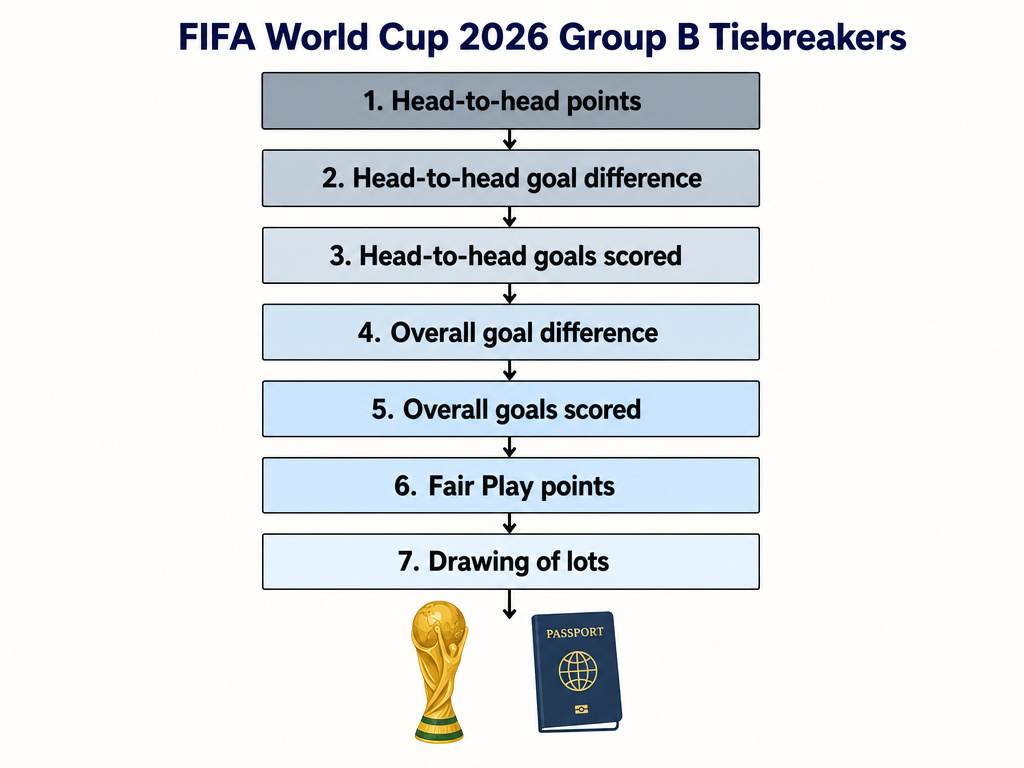
When two or more teams finish with the same points, FIFA follows a strict cascade to separate them. This decides who wins the group and who gets the automatic second place.
The tiebreakers, in order, are:
1. Head-to-head points between the tied teams.
2. Head-to-head goal difference between the tied teams.
3. Head-to-head goals scored between the tied teams.
4. Overall goal difference in all group matches.
5. Overall goals scored in all group matches.
6. Fair Play points (yellow/red cards).
7. Drawing of lots.
Common mistake: Assuming overall goal difference breaks a tie first. It doesn’t. The head-to-head record is the absolute decider. If Canada and Switzerland draw, and both beat Qatar and Bosnia, their final ranking could come down to fair play points.
This order makes the final group match between Switzerland and Canada on June 24 a potential tiebreaker festival. A draw could leave them level on points. If their results against Qatar and Bosnia are identical, they’d be tied on every head-to-head metric. It would then go to overall goal difference. That makes running up the score against the weaker teams a genuine priority, not just a footnote.
The Third-Place Lottery: Ranking Across All 12 Groups
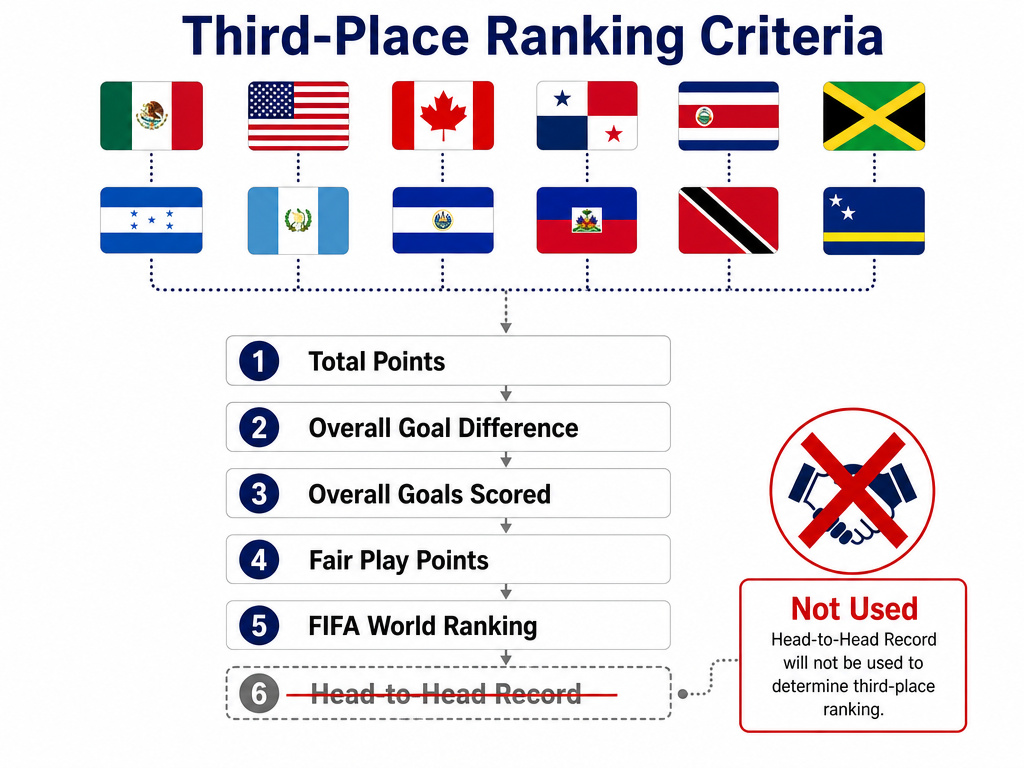
This is where fans get lost. If Canada finishes third, they aren’t just compared to the third-placed team in Group A. They’re stacked against the third-placed teams from all 12 groups.
The ranking criteria for these cross-group comparisons are different:
1. Total points
2. Overall goal difference (across all group matches)
3. Overall goals scored (across all group matches)
4. Fair Play points
5. FIFA World Ranking (pre-tournament)
Notice what’s missing? Head-to-head record is not used. Canada’s win over Switzerland would mean nothing if Bosnia finishes third in another group with a better goal difference. This is why a defensive, low-scoring 5-3-2 formation might get you a 0-0 draw, but it kills your third-place qualification chances. You need to score.
| Third-Place Scenario | Probability of Advancing | Critical Factor |
|---|---|---|
| 4 Points | >95% | Almost guaranteed. |
| 3 Points, +2 GD | High | Likely tops the third-place table. |
| 3 Points, 0 GD | Moderate | Needs other groups to have weak thirds. |
| 3 Points, -2 GD | Low | Requires favorable results elsewhere. |
| 2 Points | Very Low | Needs chaos in multiple other groups. |
The 495 Scenarios & The Automatic Bracket
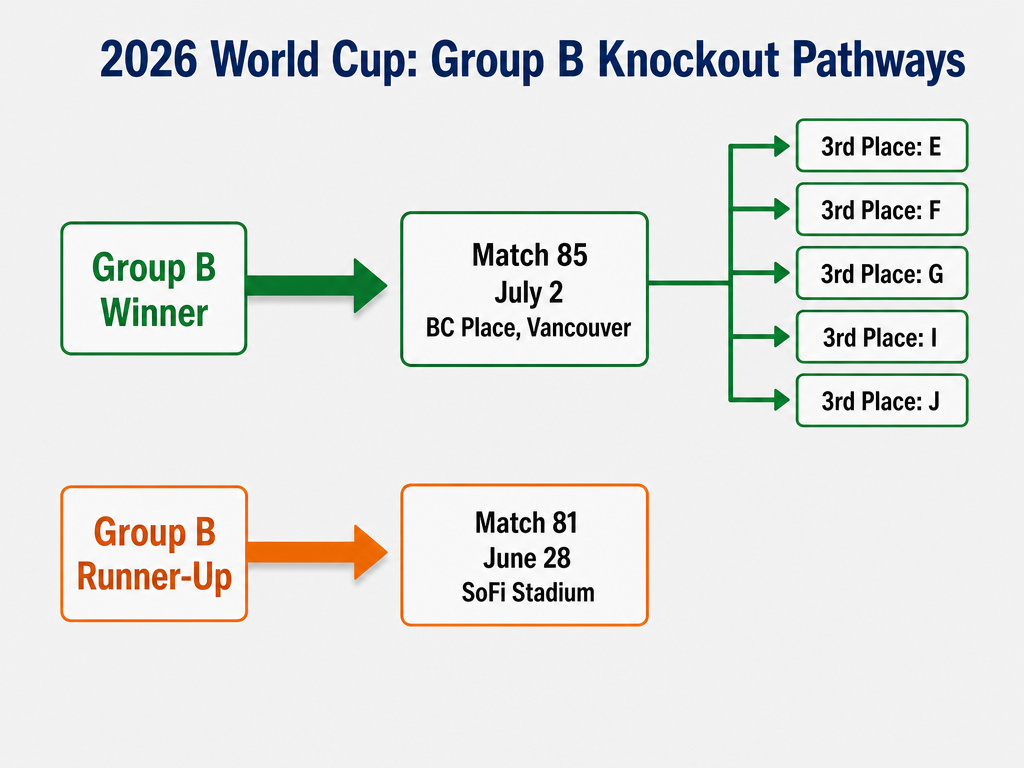
There is no suspenseful draw after the group stage. FIFA has pre-calculated 495 possible scenarios to slot the 32 qualified teams into the Round of 32 bracket. The moment the final whistles blow, the matchups are locked.
This eliminates collusion and allows for precise logistics planning. For Group B, the pathways are fixed:
- Group B Winner: Plays in Match 85 on July 2 at BC Place, Vancouver. Their opponent will be a third-placed team from one of these groups: E, F, G, I, or J. This is the softer path.
- Group B Runner-Up: Plays in Match 81 on June 28 at SoFi Stadium, Los Angeles. Their opponent will be the runner-up from Group A. This is a tougher immediate draw.
- Group B Third-Place (if qualified): Will likely face the winner of Group D (July 1, Levi’s Stadium) or Group E (July 2, Gillette Stadium). It’s the hardest path, but you’re in the dance.
The specific identity of the opponent depends on which combination of third-placed teams from across the tournament qualifies. The bracket is a giant, fixed flowchart. Your team’s strategic adjustments in the group stage directly map to a known stadium and a known caliber of opponent.
Tactical Implications for Each Group B Team
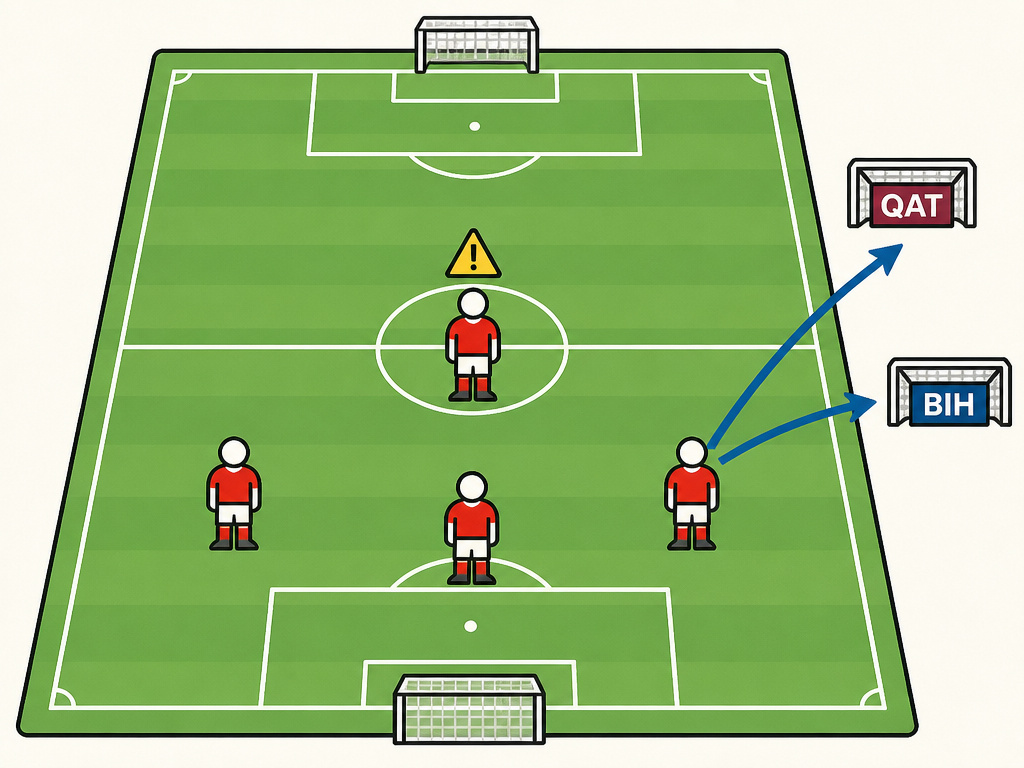
The new format dictates strategy. Coaches can’t afford to think only about winning the group.
Switzerland: Their experience and structure make them favorites. They should aim to top the group to avoid the Group A runner-up. Their pragmatic defensive solidity is an asset, but they must be willing to attack against Qatar and Bosnia to build goal difference.
Canada: The co-host pressure is immense. A draw against Switzerland might be a great result, but only if they demolish the lower seeds. Their athletic, high-pressing style could generate the goal difference needed for any scenario. They must avoid the knockout stage drama of a tense third-place wait.
Qatar: The 2022 hosts are the wildcard. Their goal is clear: beat Bosnia and hope for a result against one of the top two. They will likely deploy a compact, counter-attacking system. Every goal they score or concede will be magnified in the third-place math.
Bosnia and Herzegovina: The playoff winners are the ultimate underdogs. Their path mirrors Qatar’s. A single win might be enough with a decent goal difference. They’ll rely on individual quality from players like Dzeko and a disciplined compact midfield. For them, understanding player positions and roles in a defensive setup is non-negotiable.
I watched Germany navigate the 24-team Euro format. The coaching staff had live tables calculating not just our group, but the goal difference in simultaneous matches three time zones away. The moment you realize a 2-1 loss is better than a 1-0 win for your overall chances, the game changes. You start managing the tournament, not just the match.
Frequently Asked Questions
What are the tiebreakers for third-place teams across groups?
Head-to-head is not used. Teams are ranked by total points, then overall goal difference, then overall goals scored, then fair play points, and finally by their pre-tournament FIFA ranking.
Can Group B teams play each other again in the Round of 32?
No. FIFA’s pre-defined bracket rules prevent rematches in the Round of 32. If you meet a group opponent again, it would be in the quarter-finals or later.
How does goal difference work in the third-place ranking?
It’s simple addition: goals scored minus goals conceded across all three group matches. This is the single most important factor for any third-placed team with three points. It makes every attacking player position crucial until the final whistle.
What happens if there’s a tie for the eighth best third-place team?
If two or more third-placed teams are tied on points, goal difference, and goals scored, the tie is broken by fair play points (fewer disciplinary points). If still tied, the team with the higher pre-tournament FIFA ranking advances.
The Bottom Line
Forget everything you knew about World Cup group stages. In 2026, Group B isn’t a knockout round for three teams—it’s a seeding round for the real tournament. The battle for first is about securing an easier path. The fight for third is a brutal numbers game where a single goal can be worth millions.
Switzerland and Canada are playing to avoid Los Angeles and the Group A runner-up. Qatar and Bosnia are playing for a historic chance to extend their stay. Every coach’s whiteboard will have two columns: points and goal difference. From the first kick on June 12, that’s the only math that matters.

I come from the “soccer heart” of Germany, the Ruhrpott. I have played, trained and followed soccer all my life and am a big fan of FC Schalke 04. I also enjoy following international soccer extensively.