World Cup Prize Money Breakdown: The $871M Purse Explained
The 2026 FIFA World Cup prize money breakdown awards a record $871 million total pool, with the champion earning $50 million. Every qualified team is guaranteed a minimum of $12.5 million before a ball is kicked, comprising $10 million for qualification and $2.5 million for preparation costs. Performance-based payouts then stack on top, starting at $9 million for a group stage exit.
Most articles just list the numbers. They miss the real story, how FIFA’s late 15% bump to the purse and its expanded cost coverage are direct responses to the logistical nightmare of a 48-team tournament across three countries. This isn’t just a bigger prize fund. It’s a financial shock absorber for federations staring down cross-continent travel and wildly different tax rates.
Let’s break down where every dollar goes, why the numbers changed in April 2026, and what a team actually pockets after FIFA’s subsidies.
Key Takeaways
- The total prize pool for the 2026 World Cup is $871 million, nearly double the $440 million from Qatar 2022.
- The champion earns $50 million, with every qualified team guaranteed at least $12.5 million before performance bonuses.
- FIFA covers costs for a 50-person delegation per team, but the increased prize money helps federations pay for everyone else.
- A team eliminated in the group stage still walks away with $21.5 million total ($12.5M guaranteed + $9M performance).
- The prize pool was increased by 15% in April 2026 to help offset the high operational costs for teams in North America.
The $871 Million Purse: Where It Comes From
FIFA expects to generate a record $11 billion from the 2026 World Cup. That figure includes broadcast rights, sponsorship deals, and ticket sales from 104 matches across 16 North American cities. The $871 million prize pool represents a slice of that revenue, earmarked specifically for the 48 participating nations.
This isn’t just generosity. It’s a calculated move. The expanded 48-team tournament means more matches, more travel, and more complex logistics. FIFA raised the pool by 15% at its April 2026 council meeting in Vancouver precisely to act as a buffer. Federations from smaller nations were vocal about the crushing expense of moving a full squad, staff, and equipment between the USA, Canada, and Mexico.
Common mistake: Comparing only the champion’s prize ($50M in 2026 vs $42M in 2022), the real shift is the floor, not the ceiling. The guaranteed $12.5 million per team is a 39% jump from the $9 million base in Qatar, and it’s what keeps smaller federations solvent.
The money flows in three distinct layers: preparation funds, qualification money, and then the performance ladder. Most coverage lumps the first two together as “guaranteed money,” but they serve different purposes. Preparation money hits federation accounts early to fund camps and friendlies. Qualification money is the participation fee. They land at different times, for different reasons.
The Complete 2026 World Cup Prize Money Breakdown (Round-by-Round)
Forget the old 32-team brackets. The new 2026 World Cup format with 12 groups of four creates a Round of 32. That adds an entire extra payout tier. Here’s what each finish pays, on top of the $12.5 million every team already has in the bank.
| Finishing Position | Performance Prize | Total Payout (Incl. $12.5M Guaranteed) |
|---|---|---|
| Champion | $50 million | $62.5 million |
| Runner-up | $33 million | $45.5 million |
| Third Place | $29 million | $41.5 million |
| Fourth Place | $27 million | $39.5 million |
| Quarter-finalists (5th–8th) | $19 million each | $31.5 million each |
| Round of 16 (9th–16th) | $15 million each | $27.5 million each |
| Round of 32 (17th–32nd) | $11 million each | $23.5 million each |
| Group Stage Exit (33rd–48th) | $9 million each | $21.5 million each |
The jump from the Round of 32 ($11M) to the Round of 16 ($15M) is a bigger motivator than it looks. That $4 million difference is often the line between a federation breaking even on the tournament and returning home with a surplus to reinvest in youth development.
FIFA’s official 2026 World Cup financial prize breakdown confirms the $871 million total and the $50 million winner’s share, noting the increase was approved to address team cost concerns.
A team that wins its group but loses its first knockout match in the new Round of 32 still earns $23.5 million total. That’s more than the $9 million base prize for just showing up in 2022. The expanded format spreads the wealth deeper.
TL;DR: The performance prize ladder starts at $9M for a group stage exit and climbs to $50M for the champion, all stacked on top of a $12.5M guaranteed base.
What Does the “Guaranteed $12.5 Million” Actually Cover?
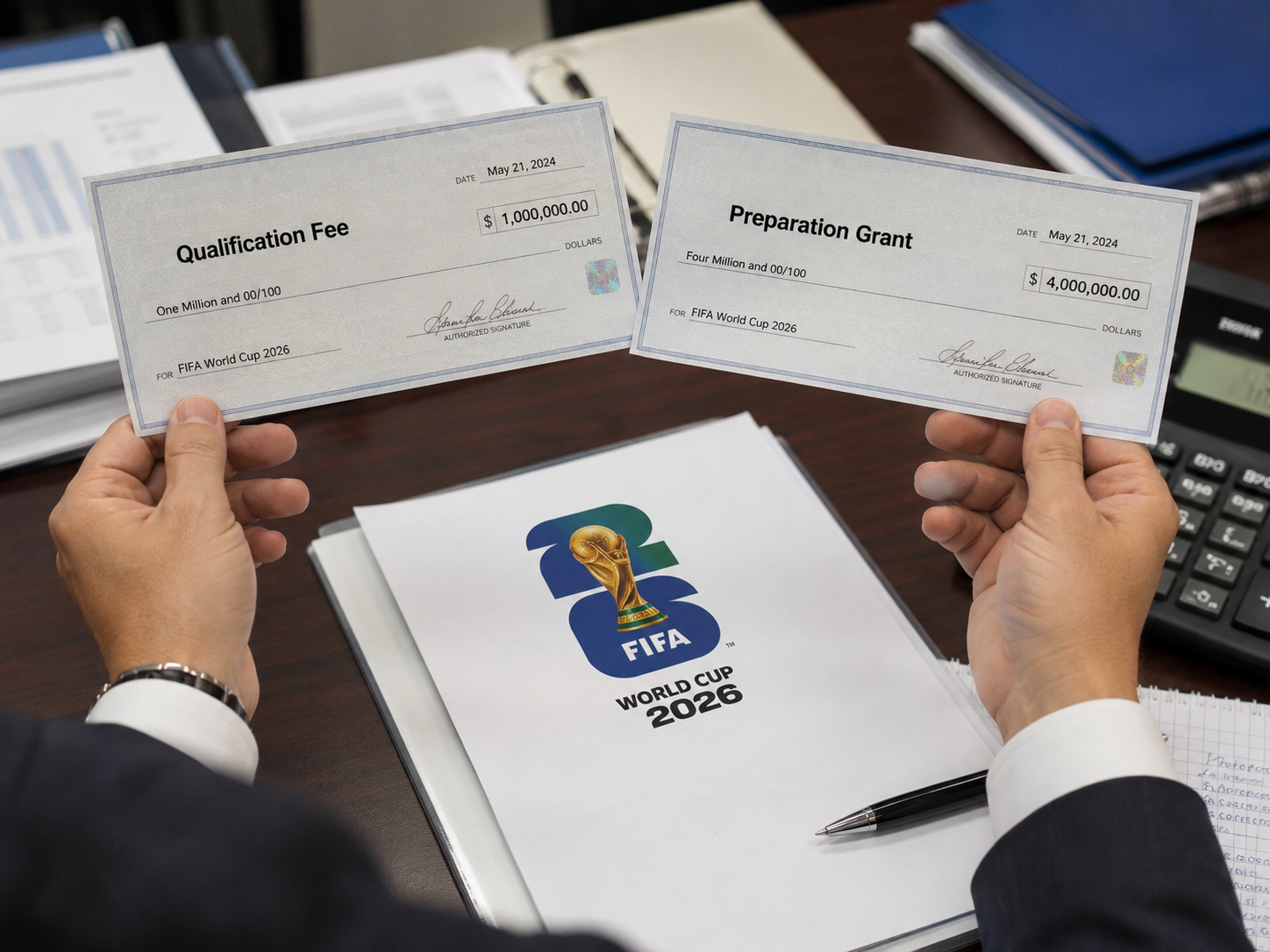
This is where most summaries get fuzzy. The $12.5 million isn’t a signing bonus. It’s two separate payments with two separate purposes.
The $10 million “qualification money” is FIFA’s flat fee for reaching the tournament. It’s paid after qualification is secured. The $2.5 million “preparation money” is released earlier, intended to cover pre-tournament training camps, friendly matches, and logistics planning. For a federation from a smaller confederation, that $2.5 million might be the difference between holding a proper training camp in Europe or scrambling for local facilities.
FIFA also commits over $16 million for delegation costs and increased team ticket allocations. They cover business-class flights for a 50-person delegation per team, training site rentals, and hotel accommodations for that core group. The catch? Most national teams travel with 60 to 70 people. The prize money increase is supposed to help federations bridge that gap, paying for the extra coaches, physios, and staffers FIFA’s package doesn’t include.
I’ve talked to federation accountants from smaller nations. That $2.5 million preparation fund gets spent six months out on flights and hotels they can’t refund. If they don’t qualify, they’re on the hook. It’s a high-stakes advance.
The financial reality for many debutant nations is that the guaranteed money gets absorbed by costs before a player touches a ball. The real windfall comes from progressing. Winning a single knockout match can mean an extra $4 million. That’s life-changing money for a federation’s budget.
How 2026 Prize Money Compares to Previous World Cups
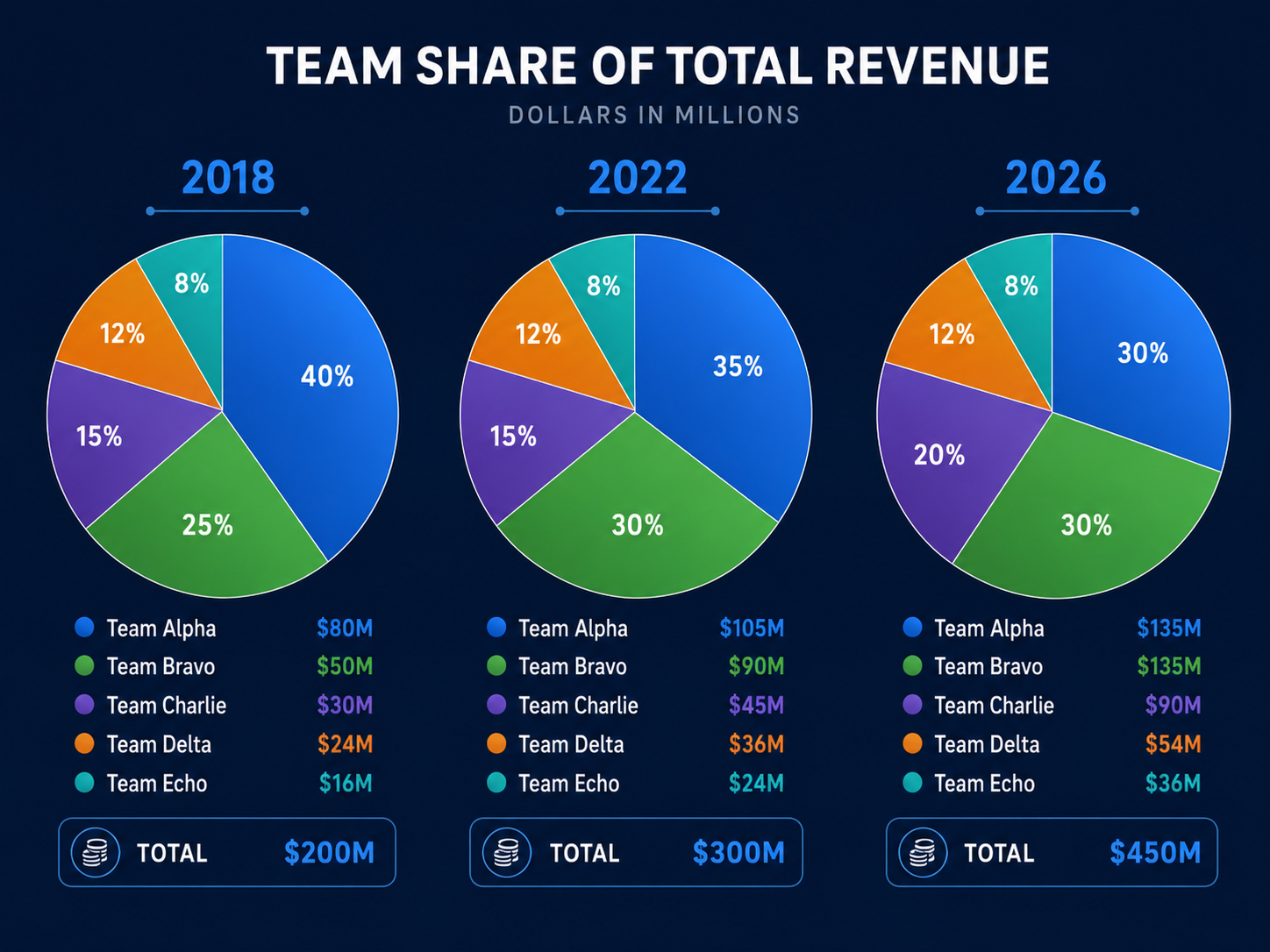
The numbers look staggering in isolation. Context is everything. The total pool has nearly doubled from Qatar 2022’s $440 million, but the number of teams sharing it has increased by 50%. The per-team slice of the total pie is actually more nuanced.
Let’s put it in a table.
| World Cup | Teams | Total Prize Pool | Champion’s Prize | Group Stage Exit Prize |
|---|---|---|---|---|
| 2018 Russia | 32 | $400 million | $38 million | $8 million |
| 2022 Qatar | 32 | $440 million | $42 million | $9 million |
| 2026 USA/Canada/Mexico | 48 | $871 million | $50 million | $21.5 million total |
The champion’s prize increased 19% from 2022 to 2026. The payout for a team that goes home after three matches, however, jumped 139% in the same period when you count the total $21.5 million. That’s the seismic shift. FIFA is using the expanded format to subsidize participation, especially for nations that might only play three games.
The differences from 2022 aren’t just on the pitch. They’re in the bank accounts of every federation that qualifies. The tournament economic impact on host nations is massive, but the financial impact on participating nations is now a core part of FIFA’s planning.
TL;DR: While the champion’s prize rose 19%, the minimum total payout for a group stage team skyrocketed 139% since 2022, reflecting FIFA’s push to make the expanded tournament viable for all.
Who Benefits Most from the New Prize Structure?
The biggest winners aren’t the usual tournament favorites like France or Brazil. Those federations already have commercial deals that dwarf FIFA’s payouts. The real beneficiaries are the smaller qualified teams from confederations with less TV money.
Think about a nation qualifying for the first time. The $12.5 million guarantee covers the crippling upfront costs of traveling to North America. The $9 million group stage bonus, even if they lose all three matches, becomes pure profit for football development back home. For some federations, that $21.5 million total is more than their annual operating budget.
Common mistake: Assuming the prize money goes straight to player bonuses. In most federations, a negotiated percentage (often 30-50%) is set aside for player and staff bonuses. The rest funds youth academies, facility upgrades, and coaching licenses. That $21.5 million for a group stage exit can fund a national training center.
The structure also creates a fierce incentive to get out of the group. The jump from $9 million to $11 million for reaching the Round of 32 is meaningful. That $2 million extra could pay for a full year of a youth national team’s program. The difference between 17th and 33rd place is literally an academy.
What the Prize Money Doesn’t Cover (The Hidden Costs)
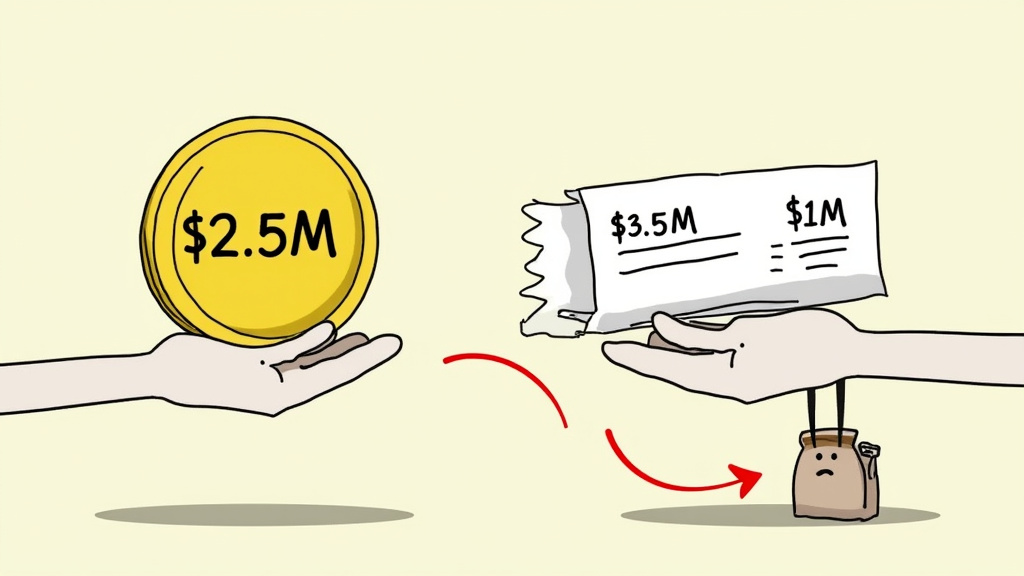
FIFA’s package is comprehensive, but it’s not a blank check. The $2.5 million preparation money is a grant, not a reimbursement. If a federation spends $3.5 million on a pre-tournament camp, they eat the $1 million overage. The business-class flights only cover 50 people. Any additional staff, a second goalkeeping coach, a team psychologist, a media officer, flies economy on the federation’s dime.
Then there’s the tax trap. Prize money paid by FIFA is typically tax-free for the recipients. But national tax authorities in the USA, Canada, and Mexico may treat player bonuses paid by their federation as taxable income. A player could see a third of their tournament bonus withheld at source. Federations have to budget for that.
Insurance is another black hole. Insuring a squad’s prize money against injury or tournament cancellation can cost millions. That comes out of the preparation fund. By the time a team lands at their first host city, a significant chunk of their FIFA money is already spent.
TL;DR: FIFA’s funds cover a 50-person delegation’s core costs. Everything else, extra staff, insurance overruns, tax liabilities on player bonuses, comes out of the prize money before a federation sees a surplus.
Frequently Asked Questions
How much does the 2026 World Cup winner get?
The champion federation receives $50 million in performance prize money. Added to the guaranteed $12.5 million every team gets, the total payout for winning the tournament is $62.5 million.
What is the minimum payout for a team in the 2026 World Cup?
The absolute minimum any team will earn is $21.5 million. This comprises the $12.5 million guaranteed payment ($10M qualification + $2.5M preparation) plus the $9 million performance prize for being eliminated in the group stage.
How does the 2026 prize money compare to 2022?
The total prize pool has increased 98% from $440 million in 2022 to $871 million in 2026. The champion’s share is up from $42 million to $50 million. The minimum total payout for a team is up 139% from $9 million in 2022 to $21.5 million in 2026.
Do players get the prize money directly?
No. The prize money is paid to the national football federation. Each federation then distributes a pre-negotiated percentage to players and staff as bonuses. The remaining funds are used for football development within the country.
Why did FIFA increase the prize money by 15% in April 2026?
FIFA increased the total pool from an initial $727 million to $871 million at its April 2026 council meeting to address concerns from member associations about the high operational costs of participating in a 48-team tournament spread across three countries with varying tax laws and travel logistics.
How is the prize money paid out?
Payments are made in stages. The $2.5 million preparation fee is paid early. The $10 million qualification fee is paid after qualification is confirmed. Performance prize money is paid after the tournament concludes, based on final standings.
The Bottom Line
The 2026 World Cup prize money isn’t just bigger numbers on a page. It’s a strategic tool. FIFA is using a record $871 million purse to make its own expanded tournament structure workable for every federation, especially the smaller ones. The 15% last-minute increase proves they’re listening to the cost concerns.
For fans, it means more competitive games from teams that can afford to prepare properly. For federations, it’s a financial safety net that turns tournament participation from a budget strain into a potential windfall. And for the team that lifts the World Cup trophy in July 2026, the $50 million prize is just the public headline. The real value is in the $12.5 million floor that got them there.

I come from the “soccer heart” of Germany, the Ruhrpott. I have played, trained and followed soccer all my life and am a big fan of FC Schalke 04. I also enjoy following international soccer extensively.