FIFA World Cup Trophy : Facts, Design, and What Winners Get
The FIFA World Cup Trophy awarded at the 2026 final will be the same iconic 18-karat gold prize introduced in 1974. It stands 36.8 cm tall, weighs 6.175 kg, and is permanently housed in Zürich. The winning team lifts the original on the pitch but receives only a gold-plated bronze replica to keep.
Most people think the captain hoists the solid gold trophy and takes it back to his country forever. That hasn’t been true for over fifty years. The real story involves a hollow design, a museum vault, and a replica that’s not what it seems.
This guide covers everything about the trophy for the 2026 World Cup in North America. We’ll break down its design, its staggering value, the strict rules around who can touch it, and what the champions actually get to take home.
Key Takeaways
- The original FIFA World Cup Trophy is never permanently awarded. It lives at the FIFA World Football Museum in Zürich, and winners receive a gold-plated bronze replica.
- The trophy is hollow 18-karat gold. A solid version would weigh over 70 kg, making it impossible to lift in celebration.
- Only World Cup winners and heads of state are allowed to touch the authentic trophy with bare hands. Everyone else, including FIFA officials, must wear white gloves.
- The base is engraved with the names of winning nations and is projected to be full by around 2038, prompting future design questions.
- Its estimated gold value is around $550,000, but its symbolic value as football’s ultimate prize is immeasurable.
What is the FIFA World Cup Trophy?
The current trophy is the one every player dreams of lifting. Italian sculptor Silvio Gazzaniga won the design competition in 1971, and his creation has been the champion’s prize since the 1974 tournament in West Germany. It completely replaced the Jules Rimet Trophy, which Brazil kept permanently after their third title in 1970.
The FIFA World Cup Trophy stands 36.8 centimeters (14.5 inches) tall and weighs 6.175 kilograms (13.61 pounds). It is crafted from 18-karat gold with a base containing two bands of malachite, a semi-precious stone. The trophy is hollow; a solid gold version would weigh between 70 and 80 kilograms.
The design shows two human figures holding up the Earth. Gazzaniga said it represented the athletic effort of reaching for glory while also symbolizing the global embrace of the sport. The spiral, dynamic form is meant to capture the energy of the game itself. You can see the full history and specifications in the Wikipedia entry on the FIFA World Cup Trophy.
It’s not just a cup. It’s a sculpture of tension and triumph.
TL;DR: The trophy used today was designed by Silvio Gazzaniga for the 1974 World Cup. It’s made of hollow 18-karat gold, stands 36.8 cm tall, and depicts two figures holding the Earth.
The Trophy’s Design and Symbolism
Look past the shine. Every curve has a meaning. The two human figures are athletes, but they’re also meant to represent every person on the planet connected by the game. They hold up the Earth, but it’s a representation of a football.
The rough, striated lines on the bodies symbolize the struggle and effort required to win. The smooth, triumphant arc of the globe they support is the reward. The two bands of green malachite on the base aren’t just decorative. Malachite has been used for thousands of years in art and ornamentation, linking this modern prize to the timeless history of human achievement.
This focus on universal human effort was a deliberate shift from the Jules Rimet Trophy, which featured a winged goddess of victory (Nike). That trophy celebrated a specific victor. Gazzaniga’s design celebrates the collective act of competition itself. It’s a trophy for the world, not just for a nation. This philosophy is echoed in other unifying tournament symbols, like the collaborative spirit behind the 2026 World Cup mascots, Maple, Zayu, and Clutch.
Common mistake: Assuming the trophy is solid gold — it’s hollow. If it were solid, it would weigh as much as a professional rugby player and be utterly impractical for a celebration. Chemist Martyn Poliakoff confirmed this, noting a solid trophy would be a “waste of gold.”
What is the Trophy Actually Worth?
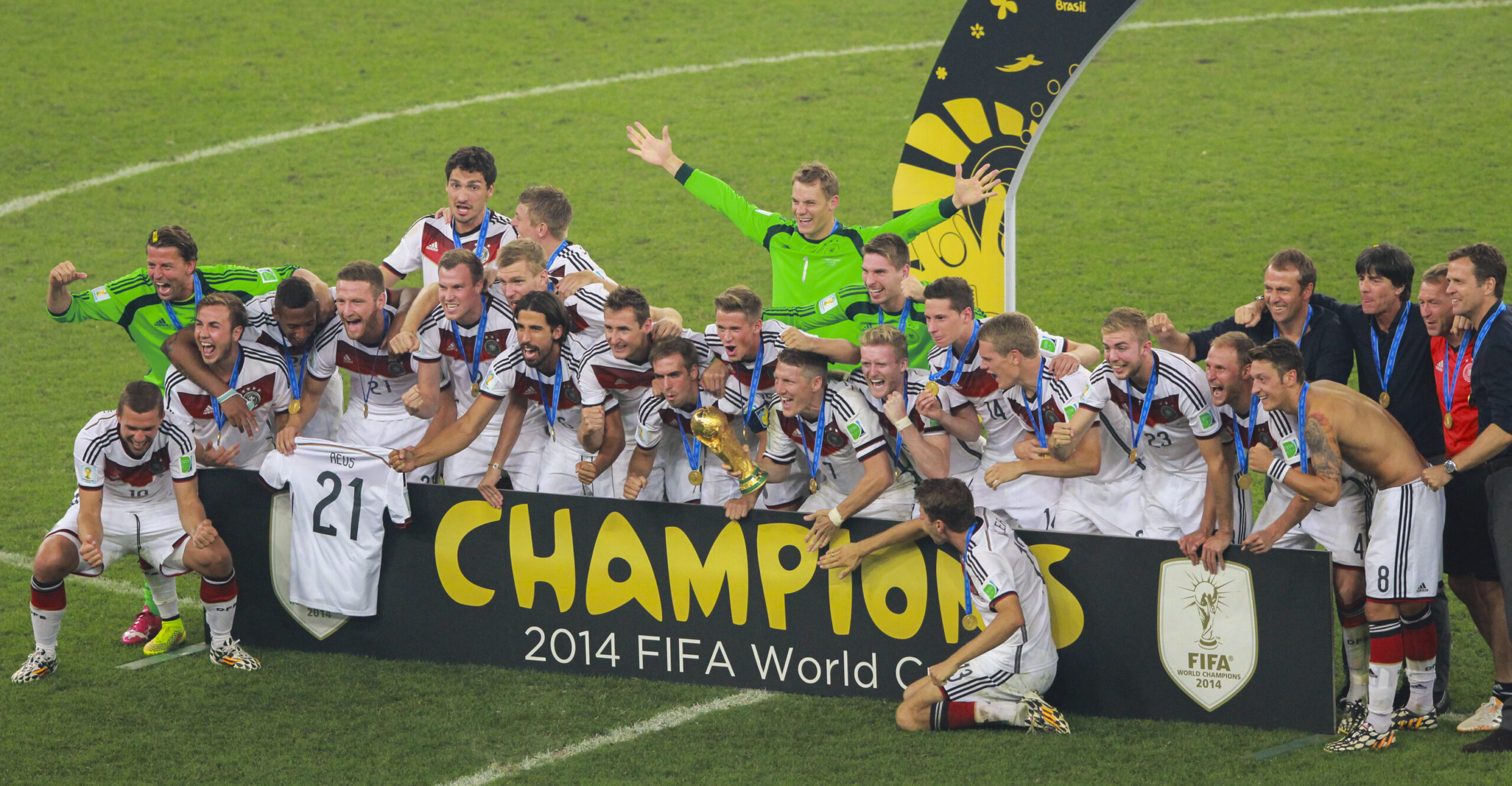
Photo: Danilo Borges/Portal da Copa copa2014.gov.br Licença Creative Commons Atribuição 3.0 Brasil / Wikimedia Commons / CC BY 3.0

You can look at this two ways: the melt value and the symbolic value. The melt value is straightforward. With approximately 5 kilograms of its 6.175 kg weight being pure gold, the intrinsic metal value floats with the market. As of 2026, that’s roughly $550,000.
The production cost back in 1974 was about $242,700. Adjusted for inflation, that’s over $1.5 million today.
But the real value is incalculable. It’s the most recognized sports trophy on the planet. Winning it elevates players to immortality and defines national sporting history for a generation. That value isn’t in the gold. It’s in the names engraved on the base and the stories they tell. The financial reward for winning is separate, detailed in the tournament’s massive 2026 prize pool.
| Value Type | Estimate (2026) | Notes |
|---|---|---|
| Gold Content Value | ~$550,000 | Based on ~5 kg of pure gold at market rates. |
| Historic Production Cost | ~$242,700 | 1974 cost, equivalent to ~$1.5+ million today. |
| Symbolic / Cultural Value | Priceless | Defines legacies; most coveted prize in sports. |
| Winner’s Replica Value | ~$15,000 – $30,000 | Gold-plated bronze; sentimental value far exceeds material cost. |
The winner’s replica they get to keep is gold-plated bronze. Its material value is a fraction of the original’s, perhaps $15,000 to $30,000. But try telling that to a player who just won the World Cup.
Do Winners Keep the Original FIFA World Cup Trophy?
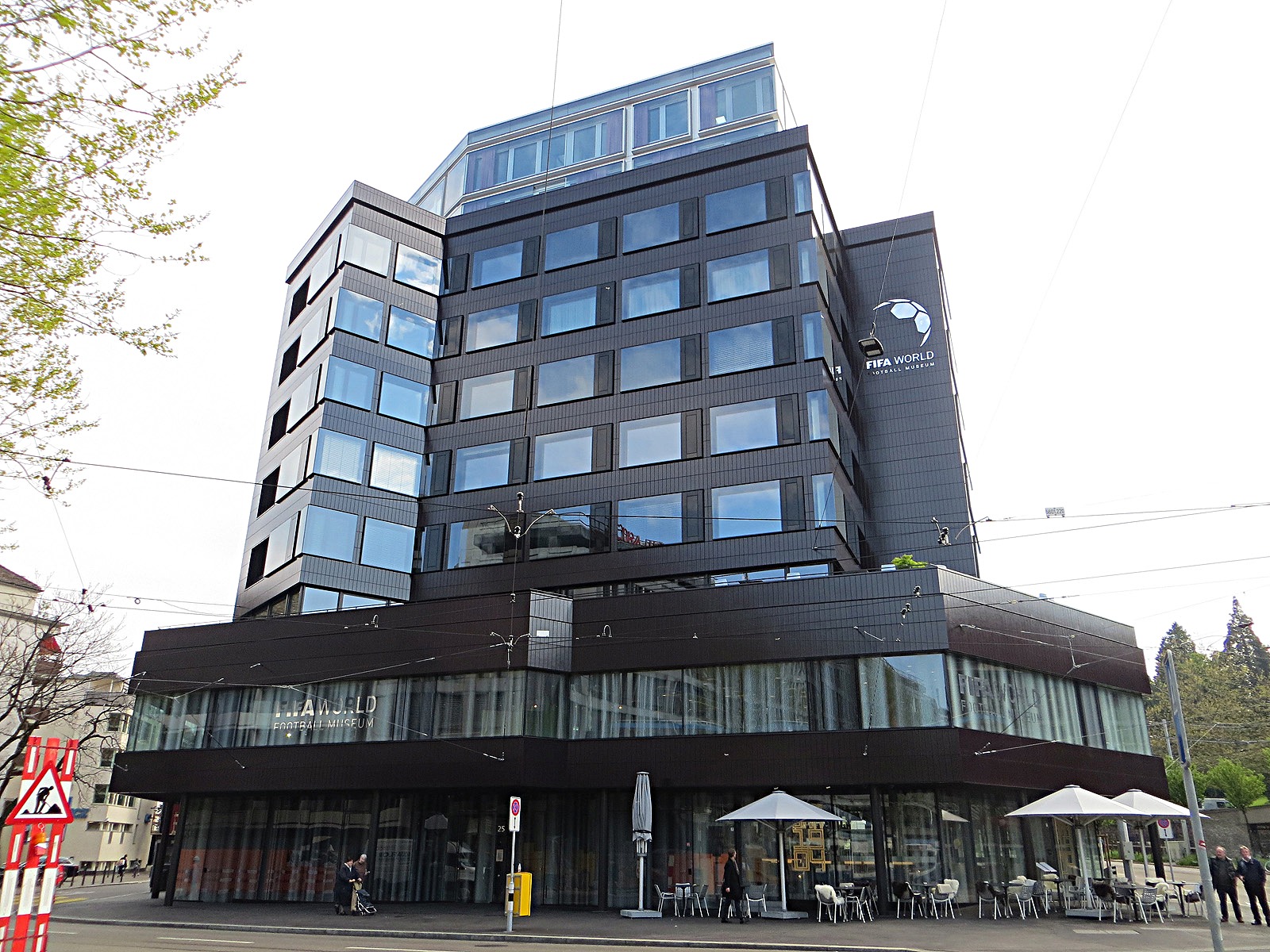
Photo: Mister No / Wikimedia Commons / CC BY 3.0

No. This is the most persistent myth in football.
The original, gold trophy you see lifted on the pitch is immediately returned to FIFA. It goes straight back to its permanent home in a high-security vault at the FIFA World Football Museum in Zürich, Switzerland. The winning federation receives a custom-made, gold-plated bronze replica. This replica is officially called the “FIFA World Cup Winner’s Trophy” or often just the “World Cup replica.”
The distinction is critical. Germany’s 2014 replica was slightly damaged during the team’s celebrations. If that had been the irreplaceable original, it would have been a historic disaster. This policy of custodianship, rather than ownership, began in 1974 to prevent the trophy from ever being lost or stolen again after the chaotic history of the Jules Rimet Trophy.
I’ve seen the replica up close. The plating is flawless, the weight is nearly identical, and under stadium lights you cannot tell the difference. But every player on that podium knows. They’re holding a symbol. The real trophy is already on its way back to the vault.
TL;DR: Winners never keep the solid gold original. They receive a gold-plated bronze replica. The original returns to the FIFA World Football Museum in Zürich within days.
The Trophy’s Journey and Security

Photo: Ank Kumar / Wikimedia Commons / CC BY-SA 4.0
_04.jpg)
The original trophy leaves Zürich only for three reasons: the worldwide Trophy Tour in the years leading up to the tournament, the Final Draw ceremony, and for the opening match and final of the World Cup itself. Each movement is a logistical operation fit for a head of state.
Security is obsessive for a reason. The Jules Rimet Trophy was stolen twice: once in England in 1966 (and later found by a dog named Pickles), and permanently in Brazil in 1983, where it was melted down by thieves. FIFA will not risk that again.
When it travels, it’s in a custom, impact-resistant case, accompanied by a security detail that does not leave its side. During public appearances on the Trophy Tour, it’s displayed inside a bulletproof glass cube. The officials who place it on the pedestal and remove it wear white cotton gloves. This level of control mirrors the precision applied to other tournament assets, from the official 2026 branding to the design of the tournament jerseys.
The tour itself is a global marketing phenomenon, visiting over 50 countries. It’s the only chance for most fans to see the real thing. They queue for hours for a three-second glimpse through the glass.
Who is Allowed to Touch the World Cup Trophy?
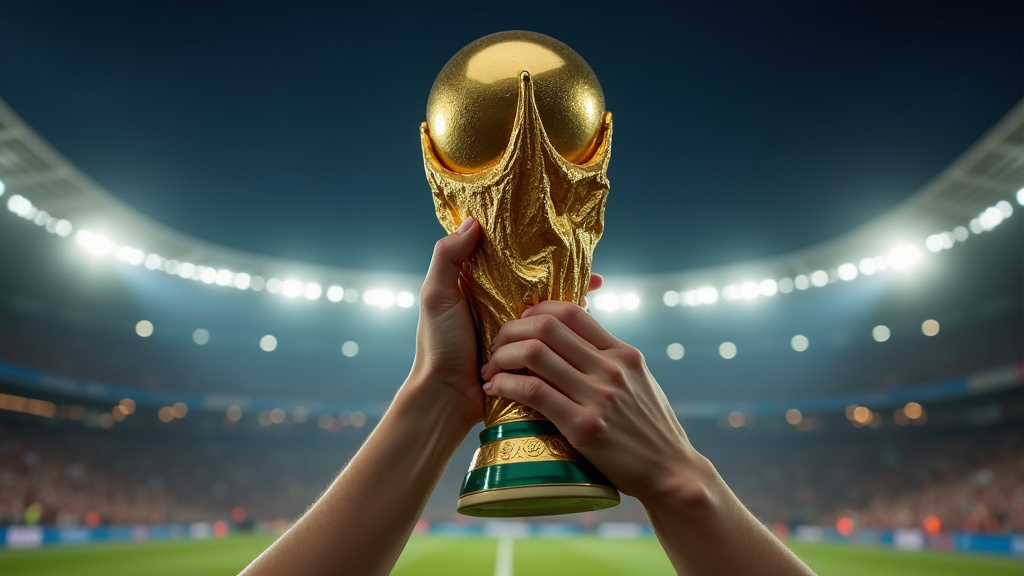
The rule is absolute and famously strict. The only people granted the privilege of touching the authentic FIFA World Cup Trophy with their bare hands are:
* The players and coaching staff of the team that wins the World Cup.
* Sitting heads of state.
That’s it. Former winners cannot touch it when visiting the museum. FIFA presidents and dignitaries cannot touch it during ceremonies. Even the museum curators handling it for maintenance wear gloves. This rule turns the trophy lift into a sacred moment. For 90 minutes after the final whistle, the rules are suspended for the champions.
Common mistake: Letting a celebrity or former player pose with the trophy bare-handed during a Trophy Tour stop — it doesn’t happen. The security team intervenes before a hand gets within a foot of the glass. The only exception is a verified, sitting head of state, and even that is tightly coordinated.
This exclusivity adds to the trophy’s mythos. It’s not a prop. It’s a relic. The intensity of this moment is what every player works for, a feeling as iconic as wearing their nation’s historic shirts in a final.
The Engraving and Its Future
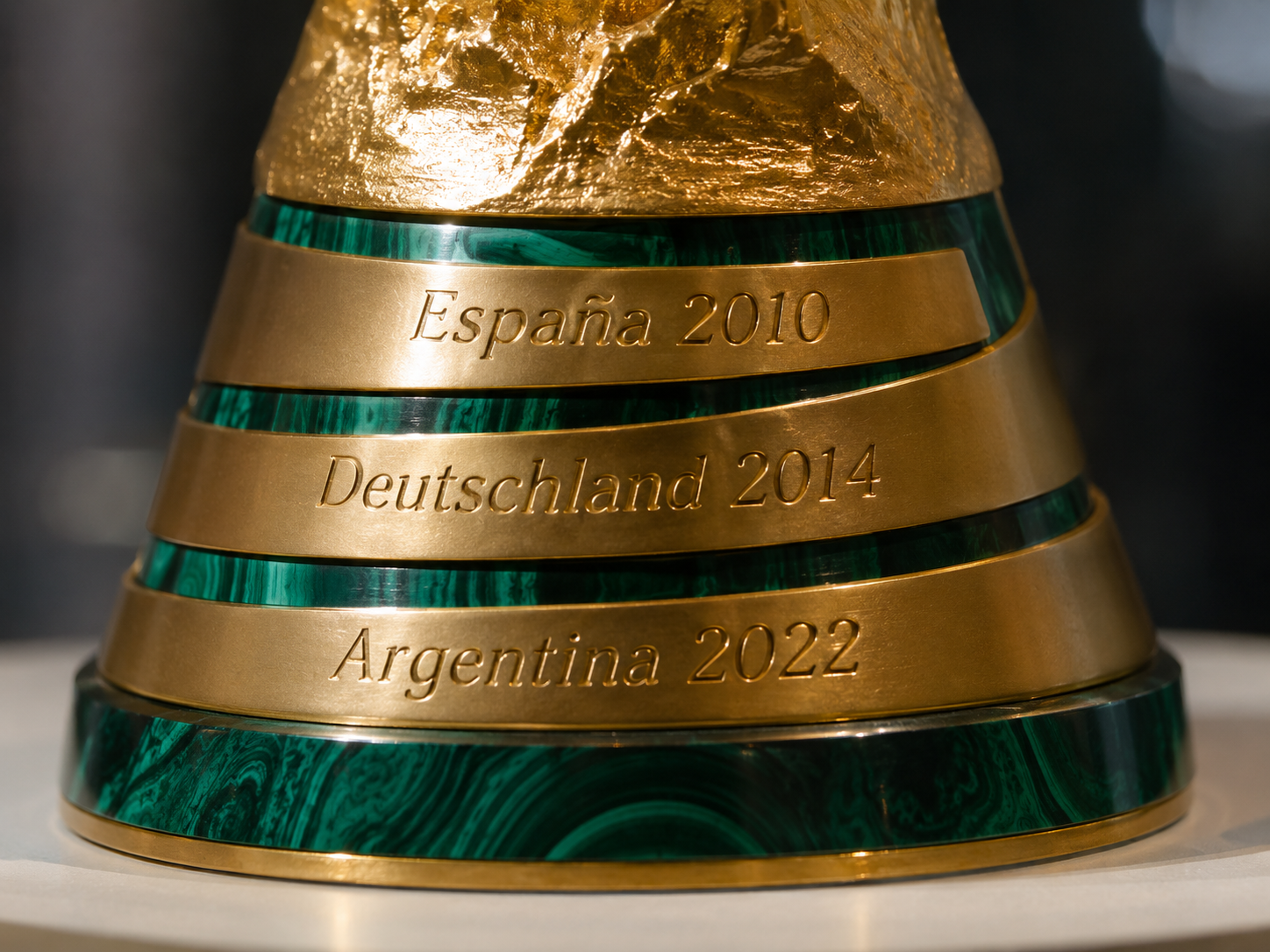
After each tournament, the name of the winning nation is engraved on the base of the original trophy. The engravings are in a spiral format, written in the language of the winning country (e.g., “España 2010,” “Deutschland 2014,” “Argentina 2022”).
There is limited space. The current design has panels that can fit the names of winners up until the 2038 tournament. FIFA has not publicly announced what will happen when the base is full. The options are essentially to create a new base, design a new trophy altogether, or retire the current trophy and start a new legacy piece.
This is a problem for future FIFA presidents. For now, the 2026 champion will see their country’s name added below “Argentina 2022,” inching the trophy closer to its next chapter. The process is as meticulous as the creation of the tournament ball designs for each World Cup.
The Jules Rimet Trophy: The Predecessor
You can’t understand the current trophy without knowing about the one it replaced. The Jules Rimet Trophy was the original prize, first awarded in 1930. It was a gold-plated sterling silver depiction of the Greek goddess Nike, standing on a lapis lazuli base.
Its story is wilder than any fiction.
1. It was hidden in a shoe box under the bed of an Italian FIFA vice-president during World War II to avoid Nazi confiscation.
2. It was stolen in London in 1966 before the tournament, causing a national crisis, and was found a week later wrapped in newspaper by a dog named Pickles.
3. After Brazil won it for the third time in 1970, earning permanent custody per the original rules, it was stolen again from the Brazilian Football Confederation headquarters in 1983. It was almost certainly melted down. Only the base was ever recovered.
This history of theft is the direct reason the current trophy never leaves FIFA’s permanent custody. The original is too precious to risk. The evolution of tournament icons, from trophies to mascot characters, is a fascinating thread in World Cup history.
The 2026 World Cup Context
The 2026 FIFA World Cup, hosted by the United States, Canada, and Mexico, will be the first with 48 teams. The trophy lifted in the final at MetLife Stadium in New Jersey will be the same Gazzaniga design.
Nothing changes about the trophy itself. The same security protocols, the same replica policy, the same engraving process will apply. The trophy is a constant in an ever-expanding tournament. Its design has outlasted changes in ball technology, seen in the evolution of the ball, and shifts in mascot designs.
One new twist for fans: LEGO will release an official buildable model of the trophy in March 2026. It’s the closest most will ever get to “owning” one.
Frequently Asked Questions
What happens to the World Cup trophy after 2026?
After the 2026 final, the winning team’s name will be engraved on the base of the original trophy. The original will then return to the FIFA World Football Museum in Zürich. The winning team keeps their gold-plated bronze replica.
How much gold is in the World Cup trophy?
The trophy is made of 18-karat gold and weighs 6.175 kg (13.61 lbs). Approximately 5 kg (11 lbs) of that is pure gold, giving it a melt value of around $550,000 as of 2026.
Can you buy a replica of the FIFA World Cup Trophy?
Official, full-scale replicas are not sold to the public. The replicas given to winners are produced exclusively for them. Fans can purchase smaller, licensed souvenir versions or the upcoming LEGO set, but not an exact copy.
Has the World Cup trophy ever been stolen?
The current FIFA World Cup Trophy has never been stolen. Its predecessor, the Jules Rimet Trophy, was stolen twice: once in England in 1966 (and recovered) and again in Brazil in 1983, where it was likely melted down and lost forever.
Where is the real World Cup trophy kept?
The authentic, solid-gold FIFA World Cup Trophy is permanently housed at the FIFA World Football Museum in Zürich, Switzerland. It is displayed there when not on a sanctioned tour or at the World Cup final.
What is the World Cup trophy made of?
It is made of 18-karat solid gold and is hollow. The base features two bands of the green semi-precious stone malachite. The winner’s replica is bronze, gold-plated.
The Bottom Line
The FIFA World Cup Trophy is more than a gold statue. It’s a protected artifact, a symbolic masterpiece, and the ultimate goal in sport. For the 2026 champions, the moment of lifting it will be real, but the trophy they parade is a brilliant facsimile. The real one waits in a Swiss vault, a silent witness to history, already being prepared for the next team that earns the right to touch it.
I come from the “soccer heart” of Germany, the Ruhrpott. I have played, trained and followed soccer all my life and am a big fan of FC Schalke 04. I also enjoy following international soccer extensively.