The Top 5 Fattest Soccer Players Ever in Football History
The top 5 fattest soccer players all time are William “Fatty” Foulke, Adebayo Akinfenwa, Wayne Shaw, Jeroen Verhoeven, and Ronaldo Nazário. Each player’s weight, whether from fat or muscle, shaped their careers in distinct ways, from Foulke’s intimidating goalkeeping to Akinfenwa’s leveraging of strength.
Most lists just throw numbers at you. They don’t explain why a 335-pound goalkeeper could dominate in 1905 or why a 224-pound striker today can be a cult hero while a 227-pound goalkeeper gets mocked. The difference isn’t just pounds. It’s fat versus muscle, era versus era, and skill versus stereotype.
This guide digs into the five heaviest players who left a mark. We’ll look at their weights, their teams, and the real stories behind the nicknames. You’ll see how the sport’s view of body size has changed, and why some of these players succeeded precisely because of their weight.
Key Takeaways
- William “Fatty” Foulke, at around 335 lbs, was the heaviest professional footballer ever, using his sheer mass as a psychological tool for Sheffield United and Chelsea.
- Adebayo Akinfenwa’s weight is muscle, not fat; his strength became his trademark and a unique asset in lower-league English football.
- Ronaldo Nazário’s late-career weight gain, linked to injuries and hypothyroidism, did not stop him from scoring 35 goals in 69 games for AC Milan.
- Goalkeeper weight has a different functional impact than striker weight; mass can be an advantage in the box but a liability in midfield.
- Modern fitness standards make extreme weight far less common in top-tier leagues, pushing most heavier players into specific roles or lower divisions.
The Top 5 Fattest Soccer Players All Time
The list isn’t just about a number on a scale. It’s about how that number played out on the pitch. A 150-kilogram man in 1905 had a different job than a 100-kilogram man in 2020. The first player here set the benchmark everyone else is measured against.
William “Fatty” Foulke reportedly weighed 152 kilograms (335 lbs) at his peak in the early 1900s. His mass made him an immovable object in the goalmouth for Sheffield United and Chelsea, leveraging sheer physical presence as a defensive strategy.
William “Fatty” Foulke (Sheffield United, Chelsea)
Foulke wasn’t just heavy. He was a tactical choice. Goalkeepers in that era didn’t need to sprint. They needed to command their box. At 335 pounds, he filled it. Opposing forwards literally bounced off him.
He played for Sheffield United from 1894 to 1905, then for Chelsea until 1907. Stories say he once picked up an opposing forward who complained about a decision and held him over his head. That’s the psychological edge his weight gave him. It wasn’t about agility. It was about being an obstacle.
The game has changed. A modern goalkeeper at that weight would struggle with the demands of sweeping and distribution. But in Foulke’s time, his physique was an asset, not a scandal. His legacy is the extreme endpoint of a physicality-first approach that faded as tactics evolved.
TL;DR: Foulke’s 335-pound frame was a deliberate, era-specific advantage for a goalkeeper, using mass to intimidate and dominate his penalty area physically and psychologically.
Adebayo Akinfenwa (AFC Wimbledon, Wycombe Wanderers)
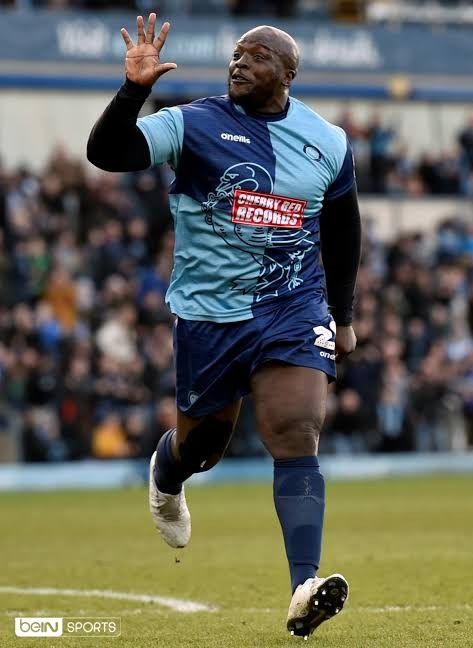
Akinfenwa is the modern counterpoint. His weight, officially listed at over 100 kg (224 lbs), is muscle. FIFA consistently rated him as the strongest player in the game. He built a career on that.
He played for clubs like AFC Wimbledon, Wycombe Wanderers, and Gillingham, mostly in England’s lower leagues. His nickname, “The Beast,” wasn’t about laziness. It was about power. He used his body to shield the ball, hold up play, and bully defenders in the air. His physical attributes in football were his primary weapon, not a side effect.
Common mistake: Assuming Akinfenwa’s weight is a handicap, his muscle mass is the core of his playing style, allowing him to win physical duels that lighter strikers cannot, and he maintained a professional career for over 15 years on that basis.
He never reached the Premier League. The top tier’s pace and technical demands didn’t suit his style. But in the Championship and League One, he was a legend. Fans loved him precisely because he defied the lean, agile striker mold. His success shows that weight, when it’s functional muscle, can be a career-defining trait rather than a limit.
Wayne Shaw (Sutton United)
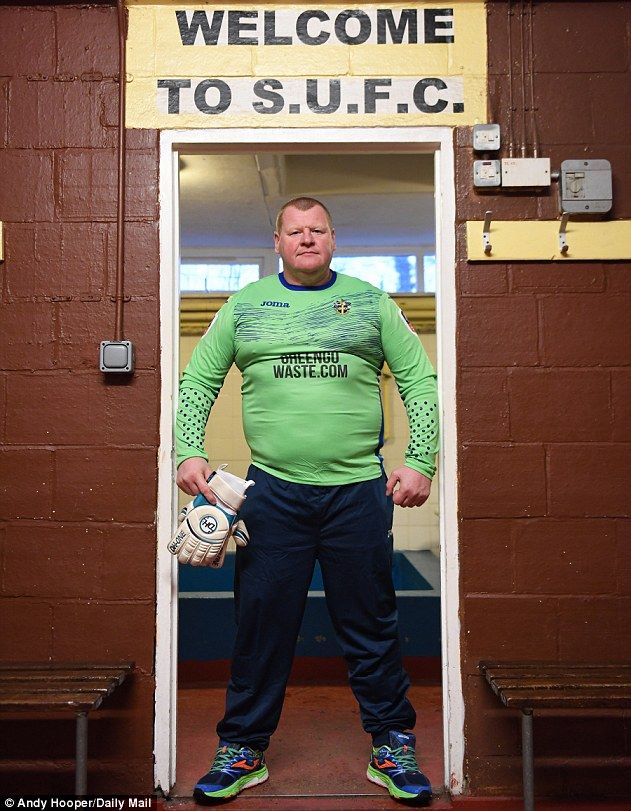
“The Roly Poly Goalie” played for Sutton United in the English fifth division. He weighed around 150 kg. His weight was fat, not muscle, and it became a public spectacle.
Shaw’s moment of fame came during Sutton’s 2017 FA Cup run. He was photographed eating a pie on the bench during a match against Arsenal. The image went viral. It cemented his persona as the antithesis of modern athleticism.
His career was brief and mostly at the semi-professional level. The fact that a player of his size could function even in the fifth tier speaks to the different physical demands at that level. Goalkeepers there face fewer high-speed attacks and can rely more on positioning. Shaw’s weight was a novelty, but it also highlighted how the sport’s fitness ladder has multiple steps.
TL;DR: Shaw’s 150-kg frame was a novelty in the modern semi-pro game, showcasing how lower-division football tolerates physiques that top-tier leagues would not.
Jeroen Verhoeven (Ajax Amsterdam)
Verhoeven, nicknamed “Pizza” by Ajax fans, was a 103-kg (227-lb) goalkeeper who played for the Dutch giants. His weight was a point of friction in a club known for technical perfection.
He served as a backup at Ajax from 2009 to 2013. The nickname wasn’t affectionate. It was a critique of his physique in an environment that prized lean, agile players. Despite his size, he was technically competent, he won a Dutch championship with Ajax in 2011. But his weight made him a target for fan and media ridicule, illustrating the sharp divide between acceptable body types in a top academy versus a lower-league club.
His story is about perception. A goalkeeper of similar size at a club like Wycombe might be accepted. At Ajax, he was an outlier. This pressure exists across the sport, where player aesthetics and public image often influence careers beyond pure performance.
Ronaldo Nazário (AC Milan)
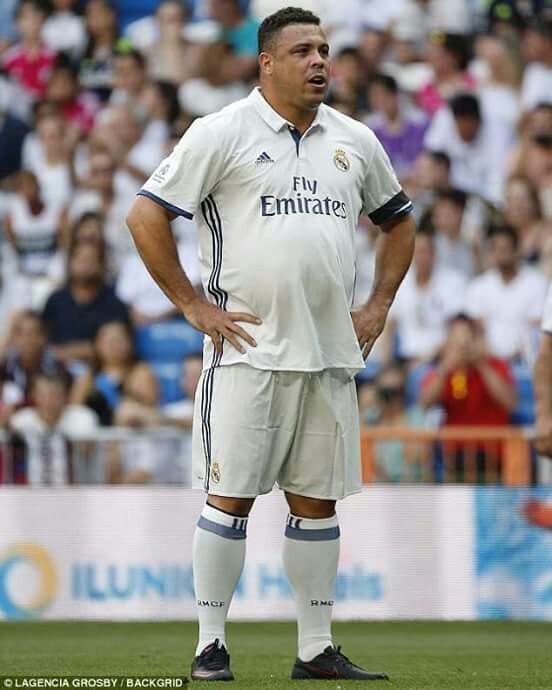
Ronaldo’s inclusion is the most complex. One of the greatest strikers ever, his weight ballooned later in his career due to a combination of knee injuries and a diagnosed hypothyroidism. By 2007 at AC Milan, he was nicknamed “the Fat Footballer.”
What matters is the output. He scored 35 goals in 69 games for Milan. That’s a rate most strikers would envy. His weight slowed his legendary explosiveness, but his technical skill, finishing, dribbling in tight spaces, remained world-class. He compensated.
This shows that supreme talent can override physical decline. The sport’s history is full of players who adapted. Ronaldo’s case is a masterclass in adaptation. His later career also underscores how injuries and medical conditions, not lifestyle, can drive weight change even for elite athletes with strict professional fitness regimens.
Muscle vs. Fat: Why the Distinction Matters
Calling everyone “fat” misses the point. Akinfenwa’s muscle mass is a performance enhancer. Foulke’s fat mass was a psychological barrier. Shaw’s fat was a novelty. The type of weight dictates what a player can and cannot do on the pitch.
| Weight Type | Primary Impact | Career Example | Positional Fit |
|---|---|---|---|
| Functional Muscle | Increased strength, holding power, physical dominance in duels. | Adebayo Akinfenwa | Striker (hold-up play), Center-back (defensive strength) |
| Non-functional Fat | Reduced agility, stamina, acceleration; increased psychological presence or novelty. | William “Fatty” Foulke | Goalkeeper (era-specific), Lower-division roles |
| Medical/Condition-driven | Reduced explosiveness, but skill can compensate; often linked to injury or hormone issues. | Ronaldo Nazário | Any position, if technical skill remains high |
Muscle weight supports a soccer workout plan designed for power. Fat weight often contradicts it. A player like Christopher Samba, who also weighed over 100 kg, used his muscle mass as a center-back to win aerial battles. Romelu Lukaku’s 94 kg is muscle, it’s why he can outmuscle defenders. Their careers are built on that.
Fat weight, in the modern game, is a career limiter. It affects match fitness levels directly. A midfielder like Jan Mølby in the 1980s could dominate with passing range alone, but his weight kept him from being a box-to-box player. Today, that trade-off is less tolerated.
How Weight Shaped Playing Styles and Careers
Weight isn’t just a number. It’s a constraint that defines a player’s role. A heavy striker can be a target man. A heavy goalkeeper can be a penalty-area commander. A heavy midfielder has to be a specialist.
For strikers like Akinfenwa, weight is a tool. He couldn’t rely on pace and acceleration like other forwards. His game was about receiving the ball, shielding it with his body, and bringing teammates into play. That’s a specific, valuable role in lower-league football where tactical complexity is lower.
For goalkeepers, weight is a mixed bag. Mass helps with presence and maybe on close-range shots. But it hurts mobility for sweeping and quick distribution. Foulke succeeded because his era didn’t demand those skills. Shaw existed in a niche where those demands were reduced. Verhoeven struggled at a club where they were paramount.
For midfielders, weight is a liability unless skill compensates. Jan Mølby’s passing and vision were so good that Liverpool could use him as a deep playmaker, not a runner. He didn’t need to cover ground. But that’s a rare exception. Most heavy midfielders fade because modern systems demand mobility.
The financial landscape also changes. A player whose weight limits their marketability may see lower professional earnings. Akinfenwa’s brand was built on his uniqueness, which actually increased his value in certain markets. Ronaldo’s brand survived his weight gain because his legacy was secure. For others, the stigma can affect player market value directly.
The Evolution of Fitness Standards in Football
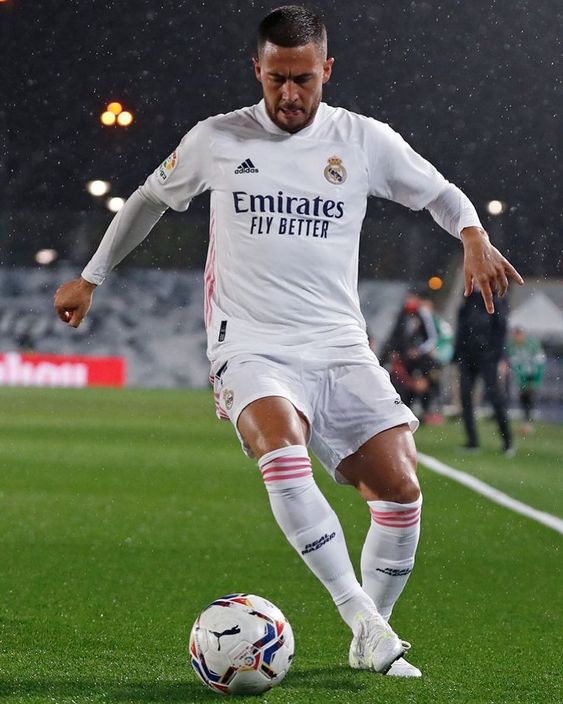
Foulke’s 335 pounds were acceptable in 1905. Today, they’d be unthinkable in the Premier League. The sport’s ideal body has shifted from brute strength to lean, athletic endurance.
Early football valued physical dominance. Goalkeepers were often the largest players on the team. By the 1980s, with the rise of total football and pressing, leaner, more mobile physiques became the norm. Players like Mølby were outliers. The 1990s and 2000s brought even higher demands for player stamina and speed.
Modern scouting and youth development prioritize athletes who fit the new mold. A kid with Akinfenwa’s build might be steered towards rugby or American football today. Football academies look for the prototype: lean, fast, technically gifted. This shift explains why most exceptionally heavy players now reside in lower leagues or specific roles.
Nutrition science has also changed. Early players ate what was available. Today, a soccer player diet is meticulously managed. Weight gain outside of muscle-building phases is seen as a performance failure. Ronaldo’s hypothyroidism was a medical exception, but for most, weight is a controlled variable.
I watched a Bundesliga training session in 2018. The difference between the first-team squad and the academy hopefuls was stark. Every pro was lean, defined. The academy kids mirrored that. A player with a physique like Shaw or Foulke wouldn’t even pass the initial physical assessment. The system filters them out before they get a contract.
This evolution isn’t just about aesthetics. It’s about performance metrics. The game is faster. The distance run per game has increased. Heavy players, unless their weight is functional muscle, cannot meet those demands. The list of “fattest” players is, therefore, a history of the sport’s changing physical ideals.
Frequently Asked Questions
Was William Foulke really the heaviest player ever?
Yes. Historical records and contemporary reports consistently cite Foulke’s weight at around 152 kg (335 lbs). No other top-tier professional footballer has reached that mass. His size was a noted part of his identity and playing style.
Is Adebayo Akinfenwa actually fat?
No. Akinfenwa’s weight is primarily muscle mass. His physique is the result of dedicated strength training. He leveraged this as a professional advantage, earning the nickname “The Beast” for his power, not for being overweight.
Why did Ronaldo gain so much weight later in his career?
Multiple factors: a series of devastating knee injuries reduced his mobility and altered his training, and he was diagnosed with hypothyroidism, a condition that affects metabolism and can cause weight gain. It was not simply a lifestyle choice.
Can a very heavy player succeed in modern top-flight football?
It depends on the composition. A player with Akinfenwa’s muscular build could fill a specific target-man role, but his opportunities would be limited in leagues that prioritize pace and technical fluidity. A player with Foulke’s fat mass would not meet the minimum fitness standards for a modern professional contract.
Do heavier players get paid less?
Not directly. Salary is tied to performance, marketability, and role. Akinfenwa’s unique brand likely increased his value in certain contexts. However, a player whose weight limits their versatility or market appeal may see a lower average MLS salary or overall earning potential compared to a more prototypical athlete.
Before You Go
The five heaviest players tell a story about football itself. Foulke shows us where the game started, a physical battle. Akinfenwa shows how muscle can become a brand. Ronaldo shows that genius can adapt. Shaw and Verhoeven show the limits of the modern system.
Weight in soccer isn’t a simple scandal. It’s a variable that interacts with era, position, skill, and public perception. Understanding that interaction is more interesting than just ranking pounds. The next time you see a player who stands out for his size, ask what that weight actually does on the pitch. The answer might redefine what you think about athletic equipment and the bodies that use it.

I come from the “soccer heart” of Germany, the Ruhrpott. I have played, trained and followed soccer all my life and am a big fan of FC Schalke 04. I also enjoy following international soccer extensively.