How Does Serie A Season Work? The –26 Format Explained
The Serie A season works on a 20-team double round-robin format, where each club plays 38 matches from August to May. The bottom three teams are relegated to Serie B, while the top clubs qualify for European competitions like the Champions League. The 2025–26 season runs from August 23, 2025, to May 24, 2026, with a new asymmetrical calendar and no traditional winter break.
Most guides list the basic rules but miss why they matter. They’ll tell you it’s 20 teams and 38 games without explaining how the fixture list is now engineered to avoid predictability, or why a tie for 17th place triggers a single playoff match that feels nothing like a regular game. They treat the calendar as a given, not a strategic product.
This breakdown covers the structure, the stakes, and the specific quirks of the current campaign. You’ll see how the points add up, where the drama comes from, and what makes an Italian league season distinct from the English or Spanish equivalents.
Key Takeaways
- The 20-team double round-robin is the foundation, 38 matches decide everything from the champion to the relegated clubs.
- Three points for a win has been the standard since 1994–95; head-to-head records are the first tie-breaker after points.
- The bottom three teams go down to Serie B automatically; the top three from Serie B come up, with no playoff for the final spot.
- European qualification is a sliding scale: Champions League spots for the top four, with Europa League and Conference League places following.
- The 2025–26 season uses an asymmetrical calendar, the order of second-leg fixtures is shuffled, and there is no winter break, with matches scheduled through late December and early January.
The Basic League Structure: 20 Teams, 38 Matches
Serie A operates on the classic European league model. Twenty clubs compete in a double round-robin tournament. Each team faces every other team twice, once at their home stadium and once away. Do the math: 19 opponents × 2 matches = 38 games total. This format has been the backbone of the Italian Serie A league structure since the 1929–30 season.
The league table ranks teams by total points. A win gets you three points, a draw one point, and a loss zero. This three-points-for-a-win rule replaced the old two-point system in the 1994–95 season. It was a global shift to encourage attacking play, though in Italy’s tactical landscape, the incentive sometimes just makes defending a one-goal lead more intense.
The 20-team, 38-match round-robin format of Serie A, organized by Lega Serie A, produces 380 total fixtures per season. This structure guarantees each club a home and away match against every other competitor, forming the basis for all promotion, relegation, and European qualification outcomes.
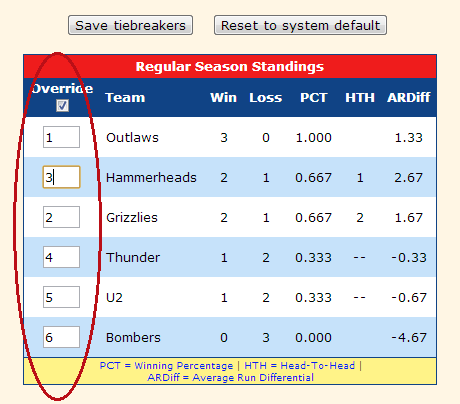
When two or more teams finish level on points, the league doesn’t immediately default to overall goal difference. The first tie-breaker is the head-to-head record between the tied clubs. Only if that is equal does it go to head-to-head goal difference, then overall goal difference, and so on. This rule makes every direct clash between rivals a potential decider for the final table.
TL;DR: Twenty teams play each other twice. Thirty-eight games. Three points for a win. Head-to-head results break ties before goal difference.
Promotion, Relegation, and the Fight for Survival
The stakes at the bottom are brutally simple. The three clubs that finish in 18th, 19th, and 20th place at the end of the 38 matches are relegated to Serie B. They are replaced the following season by the three teams that finish in the top three places in Serie B. There is no playoff for that third promotion spot, it’s automatic.
This system creates a distinct relegation battle often involving five or six clubs from about 15th place down. The financial shock of dropping a division is severe, with broadcast revenue falling dramatically. Understanding the consequences of relegation is key to feeling the pressure in those final matchdays.
| League Position | Outcome | Immediate Consequence |
|---|---|---|
| 1st – 4th | UEFA Champions League Qualification | Enters the group stage or qualifying rounds of Europe’s top club competition. |
| 5th – 6th (often) | UEFA Europa League Qualification | Entry into the second-tier European tournament. |
| 7th (often) | UEFA Europa Conference League Qualification | Entry into UEFA’s third competition. |
| 18th, 19th, 20th | Relegation to Serie B | Drops to the second division for the next season. |
Common mistake: Assuming goal difference decides a relegation tie. If two teams are tied for 17th place, they face a one-off playoff on neutral ground to decide who stays up. This rule applies only for the championship and the 17th-place survival spot.
The system is a pure promotion and relegation model, contrasting with closed American leagues. It’s the same principle that governs global league structures in most of the footballing world. The fear of the drop is what makes matches between mid-table teams in April unexpectedly ferocious.
TL;DR: The bottom three go down. The top three from Serie B come up. A tie for 17th place means a single, high-stakes playoff match.
The Path to European Football
Finishing high up the table is about more than glory; it’s about money and prestige on the continental stage. For the 2025–26 season, Italy has four spots in the expanded UEFA Champions League group stage. This means the teams finishing 1st through 4th in Serie A will go straight into the main draw of the UEFA Champions League.
The next European slots are for the UEFA Europa League (5th and 6th place, typically) and the UEFA Europa Conference League (often 7th). However, these places can be shifted by the Coppa Italia winner. If the cup winner finishes in a European qualification spot, their Europa League place passes to the next highest-ranked league team.
This creates a mini-league within the league. The scramble for fourth is often more desperate than the title race. Missing out on the Champions League can mean a €50 million hole in a club’s budget. The fight for sixth or seventh is a battle for continental relevance and a crucial revenue stream for clubs outside the absolute elite.
The system is similar to, but distinct from, the Premier League promotion and European qualification model, where the financial rewards are even greater but the competition is similarly cutthroat.
The 2025–26 Season: Dates and Key Changes
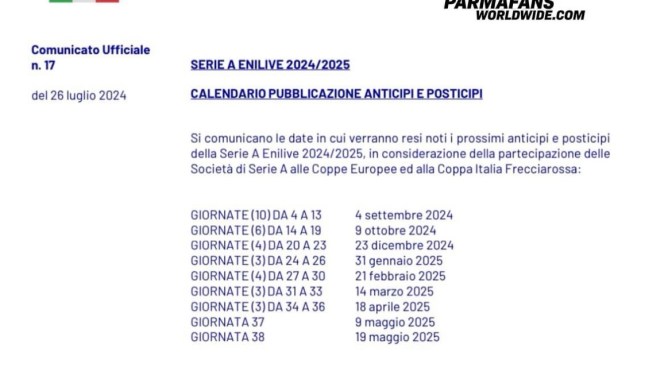
The current season follows the standard format but with specific scheduling innovations. The campaign kicks off on August 23, 2025, and concludes on May 24, 2026. You can track all the specifics on the Wikipedia page for 2025–26 Serie A.
The biggest change is the asymmetrical calendar. In the past, the second half of the season (the ritorno) simply mirrored the fixture order of the first half (the andata). Now, the order is shuffled. A minimum of eight matchdays must separate the home and away fixtures between the same opponents. This breaks the predictability and can impact a team’s run-in.
Another major shift: there is no winter break. The league has scheduled matches for December 21, December 28, January 3, and a midweek round on January 6. This “festive period” schedule is a conscious move to mimic the English Premier League’s model, aiming to keep engagement high during the holidays.
- Midweek Rounds: Scheduled for October 29, 2025 (Matchday 9) and January 6, 2026 (Matchday 19).
- International Breaks: Pauses are set for September 7, October 12, November 16, 2025, and March 29, 2026.
- Derby Management: Major derbies like the Derby della Madonnina (Inter vs. Milan) are spread out and not scheduled for the opening day or midweek slots.
- European Coordination: Teams in the Champions League will not face teams in the Europa or Conference Leagues on specific matchdays that fall between UEFA rounds, to balance workload.
This detailed fixture engineering shows how the Serie A competition format is a product, designed for maximum drama and broadcast appeal.
Serie A’s Unique Identity: Tactics and Tradition
To understand how the season feels, you need to grasp the league’s style. It’s famously tactical and defensively oriented. As a former player turned observer, the pace is different. It’s a thinking fan’s league. Teams are often more concerned with defensive structure than relentless attacking, the stereotype exists for a reason.
This tactical rigor affects everything. A newly promoted team facing Juventus in Turin isn’t usually playing for a win. They’re playing for a 0-0 draw. This makes the league table often tighter in the middle and can lead to more draws than in the frenetic English professional soccer leagues.
The intensity of local rivalries defines the emotional calendar. The Derby della Madonnina (Milan vs. Inter), the Derby della Capitale (Roma vs. Lazio), and the Derby d’Italia (Juventus vs. Inter) are season-defining events. The league’s scheduling now carefully alternates the home advantage for these fixtures year-to-year, unless stadium works interfere.
I’ve watched seasons where a team like Atalanta breaks the mold with attacking football, and it’s exhilarating precisely because it’s the exception. Most weeks, the chess match is in the midfield. You appreciate a perfectly executed offside trap as much as a 30-yard screamer.
This identity separates it from the high-press, end-to-end nature of the Premier League or the technical possession focus of the La Liga format. It’s why a striker succeeding in Italy carries a particular prestige, they’ve solved a different puzzle.
Tie-Breakers, Playoffs, and the Fine Print
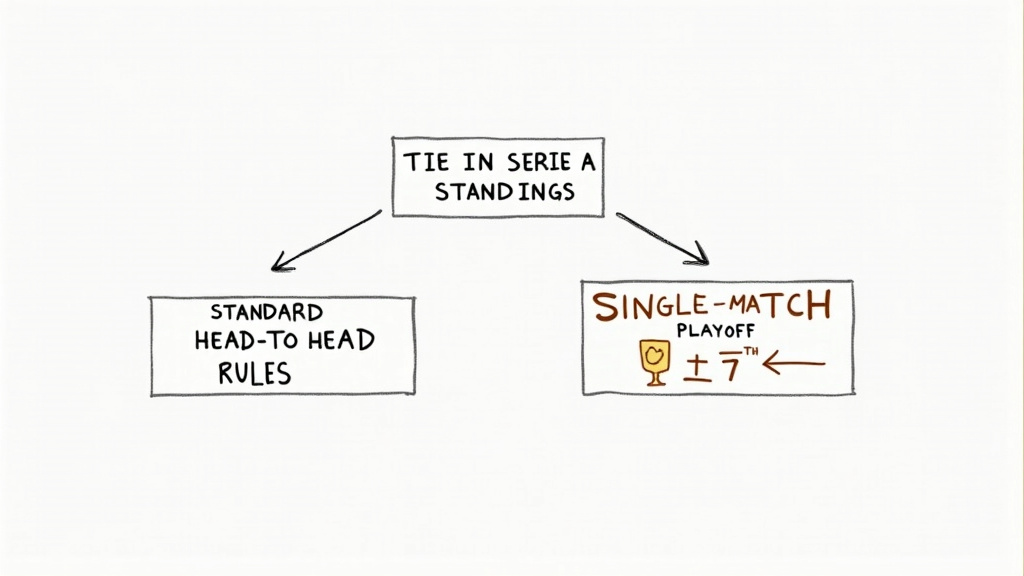
The standard tie-breaking sequence is clear: points, then head-to-head points, then head-to-head goal difference. But the special case is the playoff. If teams are tied for first place or for 17th place (the last safe spot), they don’t rely on these criteria. They contest a single-match playoff at a neutral venue.
This rule injects pure, sudden-death drama. Imagine two giants playing one game for the Scudetto, or two desperate clubs in a survival showdown. It’s rare, but the possibility hangs over the final day. For all other ties, like for a Europa League spot, the standard head-to-head rules apply.
The league’s financial muscle is also a key entity. Domestic and international TV rights bring in over €1.1 billion annually. DAZN holds the rights to seven matches per round, with Sky Sport co-broadcasting the other three. This revenue distribution is a constant source of debate, especially for smaller clubs fighting the financial impact of demotion.
| Comparison | Serie A | Premier League | La Liga |
|---|---|---|---|
| Teams | 20 | 20 | 20 |
| Total Matches | 38 per team | 38 per team | 38 per team |
| Relegation Spots | 3 automatic | 3 automatic | 3 automatic |
| Top European Qualification | 4 to Champions League | 4 to Champions League | 4 to Champions League |
| Typical Style | Tactical, defensive emphasis | High pace, physical | Technical, possession-based |
Understanding these nuances, from the playoff rule to the broadcast deals, completes the picture. It’s not just 38 games; it’s a system with specific pressure points and financial arteries. This complexity is shared, in different forms, by other major leagues like the French top flight and the Bundesliga.
Frequently Asked Questions
How many teams get relegated from Serie A each season?
Three teams are relegated. The clubs finishing in 18th, 19th, and 20th place at the end of the 38-match season drop directly into Serie B. They are replaced by the top three teams from Serie B.
What is the Serie A format for European qualification?
The top four teams qualify for the UEFA Champions League group stage. The fifth and often sixth-placed teams qualify for the UEFA Europa League. The seventh-placed team typically enters the UEFA Europa Conference League, though this can change if the Coppa Italia winner finishes in a European spot.
Does Serie A have a winter break?
For the 2025–26 season, there is no traditional winter break. Matches are scheduled for December 21, December 28, January 3, and a midweek round on January 6. This is a shift from past seasons and aligns more with the English football calendar.
What happens if two teams are tied on points in Serie A?
If teams are tied on points, the first tie-breaker is their head-to-head record in the two matches they played against each other. If they are still tied, head-to-head goal difference is used, followed by overall goal difference. The only exception is for a tie for 1st place or 17th place, which triggers a one-off playoff match.
The Bottom Line
The Serie A season is a marathon of 38 rounds where tactical discipline is rewarded. Three points for a win, three teams going down, and four clubs reaching the Champions League are the pillars. The new asymmetrical calendar and packed festive schedule for 2025–26 show a league adapting for the modern broadcast era. To follow it is to appreciate a competition where a well-drilled defense can be as celebrated as a prolific striker, and where every table position, from first to seventeenth, carries its own unique weight.
I come from the “soccer heart” of Germany, the Ruhrpott. I have played, trained and followed soccer all my life and am a big fan of FC Schalke 04. I also enjoy following international soccer extensively.