World Cup Mascots Through History: From Willie to La’eeb
World Cup mascots are official, playful characters designed to embody the host nation’s spirit and serve as a marketing centerpiece for each tournament. The tradition started in 1966 with England’s Willie the lion and has evolved through distinct eras: human ambassadors, abstract symbols, CGI creations, and animal icons, culminating in 2026’s first tri-nation mascot trio.
Most people think mascots are just cute toys for kids. They miss the deeper story. These characters are political statements, cultural artifacts, and sometimes, massive commercial failures that FIFA would rather forget.
This guide walks through every official mascot, the thinking behind their weirdest designs, and what their legacy tells us about the beautiful game’s changing face.
Key Takeaways
- The first official mascot, Willie in 1966, was so successful it created the modern template of mascots as merchandising goldmines and cartoon stars.
- Design eras are clear: 1970s human boys, 1980s abstract produce (orange, pepper), 1990s-2000s animals/tech, 2010s-present national animal icons plus one abstract garment (La’eeb).
- Names carry weight. “Zakumi” combines South Africa’s country code “ZA” with “kumi” (ten); “Zabivaka” literally means “the one who scores” in Russian.
- Not all were hits. Italy’s faceless stick-figure Ciao (1990) and the poorly-selling Goleo VI (2006) are often ranked among the weakest in fan polls.
- 2026 breaks new ground with three mascots. Maple (Canada), Zayu (Mexico), Clutch (USA), each representing a host nation and a specific football position.
What Makes a World Cup Mascot?
A mascot is more than a logo with eyes. It’s the tournament’s friendly face, designed for global appeal, especially with children. Its core job is marketing, selling plush toys, starring in cartoons, and appearing on every piece of licensed merchandise from lunchboxes to video games.
A FIFA World Cup mascot is an officially sanctioned character, typically an anthropomorphic representation of a host nation’s cultural symbol, fauna, or spirit, created to promote the tournament, engage young fans, and generate merchandising revenue.
But the best ones layer in national identity. They whisper a story about the host. England used a lion, the symbol on its passport. South Africa’s Zakumi the leopard had green hair to blend in with the pitch. Russia’s Zabivaka the wolf embodied a “scorer’s” tenacity.
TL;DR: A mascot is a marketing tool with a national soul, built to sell and to symbolize.
The Pioneer: Willie and the 1970s Human Era
Willie changed everything. Designed by children’s book illustrator Reg Hoye for England 1966, this lion in a Union Jack jersey proved a mascot could be a commercial superstar. He had a hit song, his own cartoon, and merchandise that flew off shelves. He established the playbook.
The 1970s responded with a run of human boy mascots, each a nod to local culture.
– Juanito (Mexico 1970): A boy in a sombrero and green kit, representing the common Mexican fan. His debut coincided with the first World Cup broadcast in color.
– Tip and Tap (West Germany 1974): Two boys with German flags on their shirts. Their names came from a children’s ball game. Their design promoted unity between East and West Germany, a political message in plush form.
– Gauchito (Argentina 1978): A young Argentine cowboy with a whip and neckerchief, symbolizing the national gaucho figure.
These were safe, literal choices. They were also forgettable. By the end of the decade, FIFA and host nations were ready to get weird.
The Experimental Eighties and Nineties
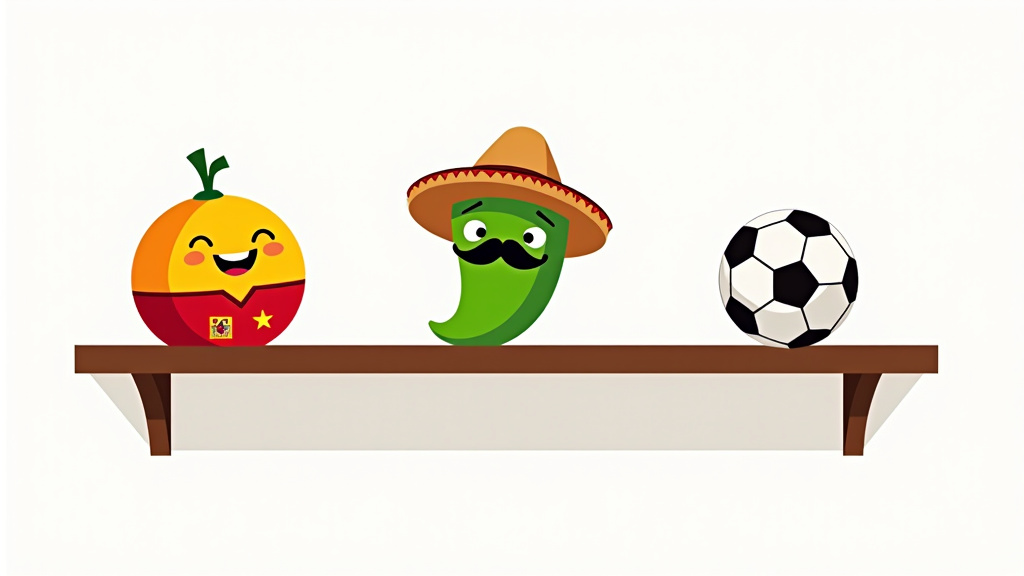
This was the creative peak. Designers moved away from literal human representations and into abstract, often food-based, territory.
Naranjito (Spain 1982) was the breakthrough. A smiling orange in a Spain kit, its name simply meant “little orange.” Initially mocked, it became a merchandising juggernaut and got its own TV show. It proved a mascot didn’t need to be human or even an animal to connect.
Mexico 1986 followed with Pique, a jalapeño pepper with a mustache and sombrero. The trend was clear: use a nationally iconic product and anthropomorphize it.
Then came Ciao (Italy 1990), the most daring design in history. A stick-figure tricolor with a soccer ball for a head and no face. It was panned by traditionalists but celebrated by designers for its minimalist, modern art aesthetic. It has aged remarkably well.
The 1990s also saw the first fan vote and computer-generated characters.
– Striker (USA 1994): A dog chosen by public vote, designed by Warner Bros. It was a safe, corporate choice that felt more like a cartoon network star than a football icon.
– Footix (France 1998): A return to form with a Gallic rooster, a bold national symbol. His popularity was immediate and lasting.
| Mascot | Tournament | Design Concept | Legacy |
|---|---|---|---|
| Naranjito | Spain 1982 | Anthropomorphic orange | Merchandising king, TV star |
| Ciao | Italy 1990 | Abstract stick figure | Cult design favorite, polarizing |
| Footix | France 1998 | Stylized Gallic rooster | Universally loved, national symbol |
The 2002 co-hosted tournament in South Korea and Japan introduced the first CGI mascots: Ato, Kaz, and Nik (The Spheriks). They were futuristic, played a fictional sport called “Atmoball,” and felt completely disconnected from football. They were a technological swing that largely missed.
Common mistake: Judging Ciao as a failure because it wasn’t cuddly, it was a deliberate piece of Italian modernist design that challenged what a mascot could be. Its value is in that risk, not toy sales.
The Modern Animal Ambassadors (2006-Present)
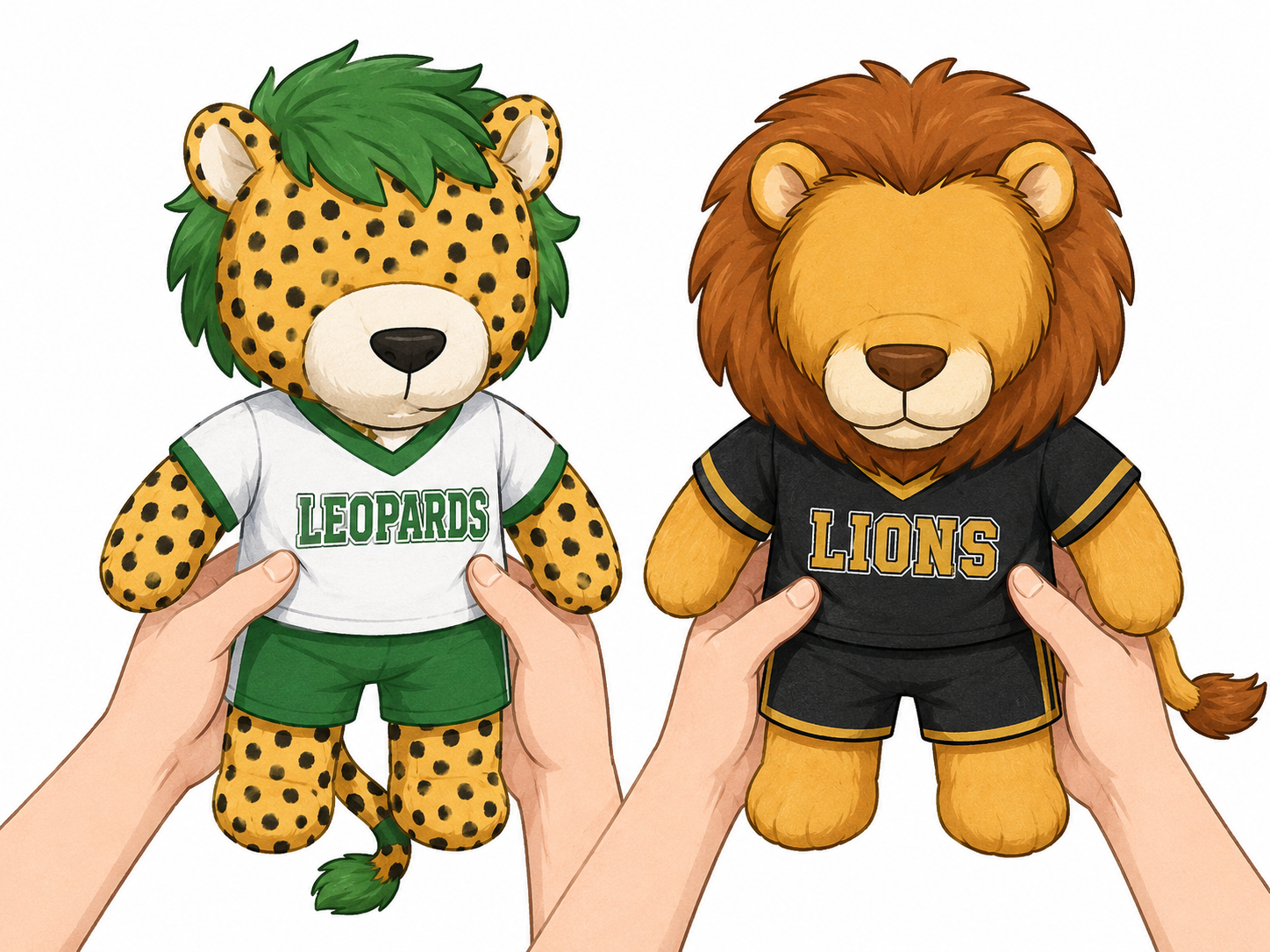
The 21st century settled on a formula: pick a nationally significant animal, give it a meaningful name, and wrap it in an eco-friendly or aspirational story. This era gave us some of the most cohesive mascot designs.
- Goleo VI & Pille (Germany 2006): A lion and a talking football. Despite a charming design, Goleo was a commercial flop. Toy sales were disastrous, partly because the lion isn’t Germany’s primary national symbol.
- Zakumi (South Africa 2010): A green-haired leopard. “Za” for South Africa, “kumi” meaning ten. He was vibrant, energetic, and perfectly captured the tournament’s “Ke Nako” (It’s Time) celebration spirit.
- Fuleco (Brazil 2014): A three-banded armadillo, an endangered species. The name blended futebol (football) and ecologia (ecology). A great concept, though critics noted FIFA didn’t direct enough merchandise revenue to actual conservation.
- Zabivaka (Russia 2018): A confident, scarf-wearing wolf whose name means “the one who scores.” He was selected by a public vote and embodied a street-football cleverness.
Then came La’eeb (Qatar 2022), a radical departure. Not an animal, but a flowing white ghutra (headscarf) with eyes. “La’eeb” means “super-skilled player.” It was ghostly, abstract, and meme-friendly. It divided opinion but succeeded as a distinctive, culturally-rooted symbol.
I loved Zakumi’s energy when he was revealed, but the plush toy I bought felt cheaply made. The seams started coming apart after a few weeks. It was a metaphor, great idea, shaky execution. Now I just collect the pins.
TL;DR: The modern era uses animals as national avatars, with names and backstories that try to add depth beyond just selling plush toys.
Breaking the Mold: The 2026 Mascot Trio
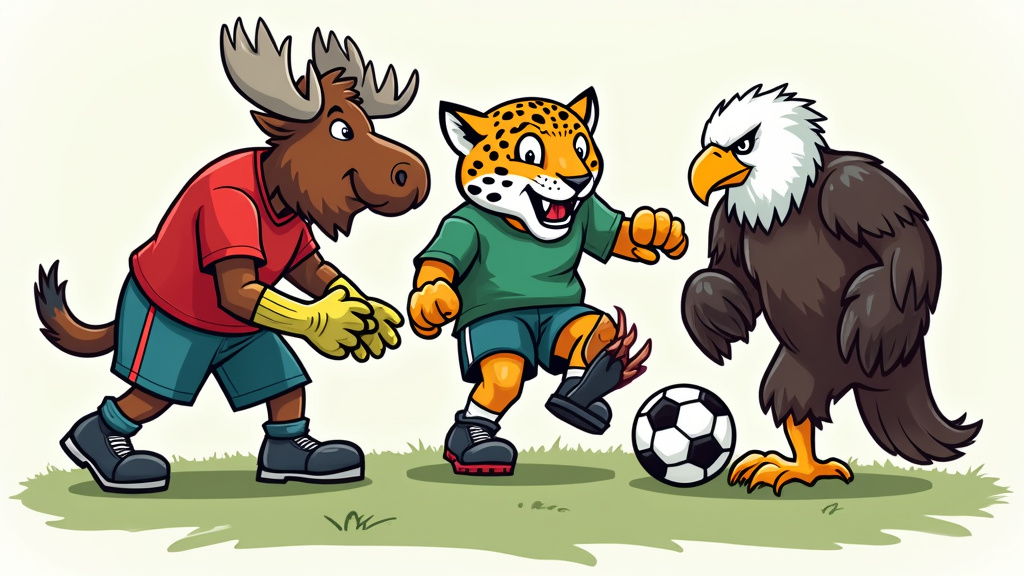
For the first tri-nation World Cup across Canada, Mexico, and the United States, FIFA introduced not one, but three mascots. This acknowledges the unprecedented hosting format and offers a mascot for each national fanbase.
- Maple: A Canadian moose designed as a goalkeeper. Represents creativity, resilience, and strength. The moose is an iconic Canadian forest animal.
- Zayu: A Mexican jaguar designed as a forward. Represents agility, cultural pride, and speed. The jaguar holds deep cultural significance in ancient Mesoamerican civilizations.
- Clutch: An American bald eagle designed as a midfielder. Represents leadership, courage, and unity. The bald eagle is the national bird of the United States.
This trio continues the “national animal” trend but adds a tactical layer by assigning them football positions. It’s a clever way to spark storytelling and engagement for the unprecedented joint-host 2026 tournament mascots. Their success will depend on how well their individual and collective narratives are woven into the 2026 tournament branding.
The Women’s World Cup Mascots: A Parallel History
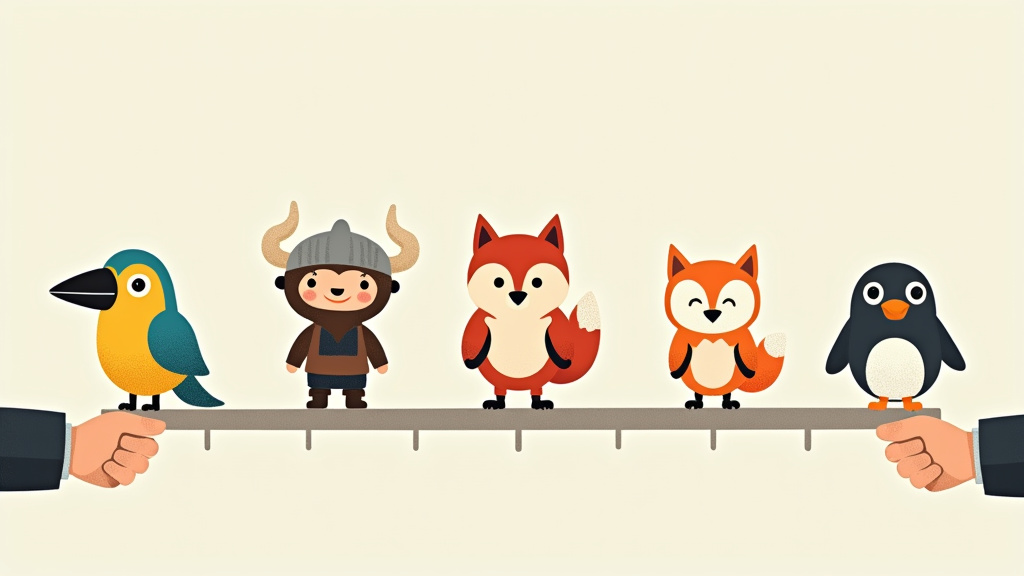
The FIFA Women’s World Cup has its own mascot lineage, often overlooked. It began with Ling Ling, a colorful bird for China 1991. The trends mirror the men’s game: animals (Nutmeg the fox in 1999, Shuéme the owl in 2015), human figures (Fiffi the Viking girl in 1995), and culturally specific icons (Hua Mulan in 2007).
The 2023 edition in Australia and New Zealand featured Tazuni, a young penguin whose name combined the Tasman Sea and “unity.” The design was friendly and focused on inclusivity, reflecting the tournament’s growing profile. Analyzing these mascots offers a fascinating parallel study in how football’s global events market themselves to different audiences.
Why Do Some Mascots Flop?
Commercial failure is the biggest risk. Goleo VI’s toys gathered dust. Other mascots fail conceptually by being too generic (Striker the dog) or too alien (The Spheriks). The disconnect often comes from a design committee choosing something that looks good in a boardroom presentation but has no soul, no authentic link to the host nation legacy.
Public reception is brutal and immediate. In the social media age, a mascot reveal is a global roasting session if the design misses the mark. The best mascots, like Footix or Zakumi, bypass this by having a clear, authentic, and likeable core idea.
TL;DR: Mascots fail when they prioritize committee thinking over authentic cultural connection, resulting in characters that don’t resonate and don’t sell.
Frequently Asked Questions
What was the first ever World Cup mascot?
The first official FIFA World Cup mascot was Willie, the lion, for the 1966 tournament in England. While earlier tournaments had unofficial symbols, Willie set the standard for mascot as a marketed character.
What is the most popular World Cup mascot?
France’s Footix (1998) and Spain’s Naranjito (1982) are consistently ranked among the most popular. Footix is a beloved national symbol, while Naranjito was a merchandising phenomenon that transcended the sport.
Why was the 2022 mascot just a piece of cloth?
Qatar’s La’eeb was based on the keffiyeh, a traditional headscarf. Its abstract, flowing design was meant to represent a ghostly, skilled player and emphasize movement and culture over a literal animal or person. It was a bold, if divisive, choice.
How are mascots chosen today?
The process typically involves the local organizing committee and FIFA. It often includes design competitions, public consultations, or votes. For example, Russia’s Zabivaka was chosen by a national online vote.
Do mascots appear at the matches?
Yes. People in full mascot costumes appear at stadiums, fan zones, and promotional events to interact with fans, take photos, and create a festive atmosphere. They are a constant physical presence throughout the tournament.
The Bottom Line
World Cup mascots are a mirror. They reflect the host’s culture, the era’s design trends, and FIFA’s marketing ambitions. From Willie’s commercial blueprint to La’eeb’s abstract risk, each character tells a story beyond the pitch.
The evolution from literal boys to abstract concepts and back to animal ambassadors shows a constant search for the right blend of symbolism and marketability. The upcoming 2026 mascot trio of Maple, Zayu, and Clutch writes the next chapter, adapting the concept for a shared hosting duty.
To dive deeper into how fans rate them all, check out our ranked list of mascots. Their legacy, for better or worse, is forever stitched into the fabric of the tournament’s iconic tournament moments.

I come from the “soccer heart” of Germany, the Ruhrpott. I have played, trained and followed soccer all my life and am a big fan of FC Schalke 04. I also enjoy following international soccer extensively.