World Cup Economic Impact: $80B Boom and 3 Hard Truths
The World Cup 2026 economic impact on North America is projected to generate over $80 billion in global economic output, with a direct contribution of roughly $40.9 billion to global GDP. The United States expects a $17.2 billion GDP boost, Canada forecasts a CAD $2 billion addition, and over 200,000 full-time equivalent jobs will be created across the continent, primarily in hospitality and tourism during the summer of 2026.
Most analyses stop at those headline numbers. They treat the tournament like a magic money machine that sprinkles cash evenly across three nations and sixteen cities. The real story is about concentration, displacement, and a very short economic fuse. The benefits cluster in specific zip codes for a few weeks, often at the expense of other businesses, and vanish almost as quickly as the final whistle.
This guide breaks down the official projections from FIFA and host nations, then layers on the critical analysis from economists who study mega-events. You will see where the money actually flows, which cities get a real boost, and why the long-term economic impact for giants like the United States is likely marginal.
Key Takeaways
- The United States captures the lion’s share of the raw economic impact ($17.2B GDP, 184,679 jobs) due to its role as the primary gateway for international visitors and host of the most matches, including the final.
- Canada generates the most jobs per match (1,850 per game) and sees a higher GDP return per dollar spent (CAD $1.09 for every $1), but faces significant cost uncertainties and event displacement in cities like Vancouver and Toronto.
- The displacement effect is critical: up to 40% of visitors are new tourists, meaning the majority are likely displacing other summer travel or local spending, especially in major tourism hubs.
- Economic gains are heavily concentrated in leisure and hospitality for a 5–6 week period. Very little new permanent infrastructure is being built, which limits long-term growth catalysts.
- Smaller host markets like Kansas City will feel a larger relative economic surge compared to established destinations like New York or Miami, which already operate at high summer capacity.
How Much Money Will the World Cup 2026 Generate?
Forget percentages of national GDP. The scale of this tournament is best understood in absolute figures that would be eye-watering for any other event. The expanded 48-team format means 104 matches, not 64. That is 40 more games requiring stadiums, security, hotels, and flights. The math changes completely.
Hosting 104 matches across 16 cities in three nations, the 2026 FIFA World Cup is projected to drive over $80 billion in global economic output. The direct contribution to global GDP is estimated at $40.9 billion, fueled by $11.1 billion in direct tournament expenditure and over $4.3 billion in tourism spending concentrated in hospitality sectors.
The United States is the engine. With 11 host cities and direct air links to 40 of the 48 competing nations, it will be the primary entry point. The U.S. projections alone include a $30.5 billion gross output and a $17.2 billion GDP contribution. That is not just stadium revenue. It is a chain reaction: a German fan books a flight on Lufthansa, rents a car from Hertz, stays at a Marriott, eats at local restaurants, and buys a jersey from a Nike store. Each transaction ripples through the economy.
Canada and Mexico play different roles. Canada’s estimated CAD $3.8 billion in economic output is smaller in scale but more efficient per dollar invested. For every Canadian dollar spent, CAD $1.09 is added to GDP. Mexico is the wildcard. While specific GDP projections are less public than for its northern neighbors, travel intent data shows it seeing the most consistent growth in international interest. The historic Mexican stadiums like Estadio Azteca carry a prestige that attracts pilgrims of the sport.
TL;DR: The tournament is a $80+ billion global event, but the net North American GDP addition is about half that, with the U.S. capturing the bulk due to its infrastructure and gateway status.
The Economic Scoreboard: USA, Canada, and Mexico
The impact is not a three-way split. It is a layered distribution based on match allocation, existing tourism infrastructure, and local spending patterns. This table breaks down the key projections that define each host nation’s economic game plan.
| Host Nation | Projected GDP Impact | Projected Job Creation (FTE) | Key Tourism Driver | Major Fiscal Caveat |
|---|---|---|---|---|
| United States | $17.2 billion | 184,679 jobs | Primary int’l gateway; 60% of visitors are new tourists | Minimal new infrastructure; gains are short-term sectoral |
| Canada | CAD $2.0 billion (~$1.5B USD) | 24,100 jobs | Highest jobs-per-match ratio (1,850/game) | High & uncertain security/op costs; displaces peak-season events |
| Mexico | Data less defined; focus on tourism growth | Not publicly quantified | Strong growth in travel intent; historic venue appeal | Reliance on existing tourism circuits; limited new investment |
The U.S. numbers dominate. The forecast of $6.4 billion from international visitors spending an average of $416 per day is a direct function of volume. The U.S. host venues , mostly NFL-ready stadiums, require little new capital expenditure. That keeps costs down but also means there is no lasting infrastructure boom to anchor long-term growth. The jobs created are overwhelmingly in sectors like food service, retail, and temporary event security—positions that largely disappear in August 2026.
Canada’s story is about efficiency and risk. Hosting just 13 matches across two cities, it punches above its weight in job creation. However, the costs are real and escalating. Vancouver’s budget ballooned to between CAD $532-$624 million, with the federal government kicking in $145 million for security. Toronto has a $380 million budget. A report from Canada’s National Observer notes these events will displace other conferences and tourism during peak season, making the net economic boost tricky to calculate.
Mexico’s economic narrative is still being written. While it lacks the granular projections of its partners, its role is strategic. It offers a distinct cultural experience and leverages legendary venues. The three-country hosting model was designed to share burdens and spotlight regional strengths, but it also diffuses the financial accounting.
Common mistake: Comparing the GDP impact figures for the U.S. and Canada directly without adjusting for scale and cost — Canada’s per-match and per-dollar impact is significantly higher, but its total budget exposure relative to its economy is also more acute.
Where the Jobs and Spending Will Actually Go
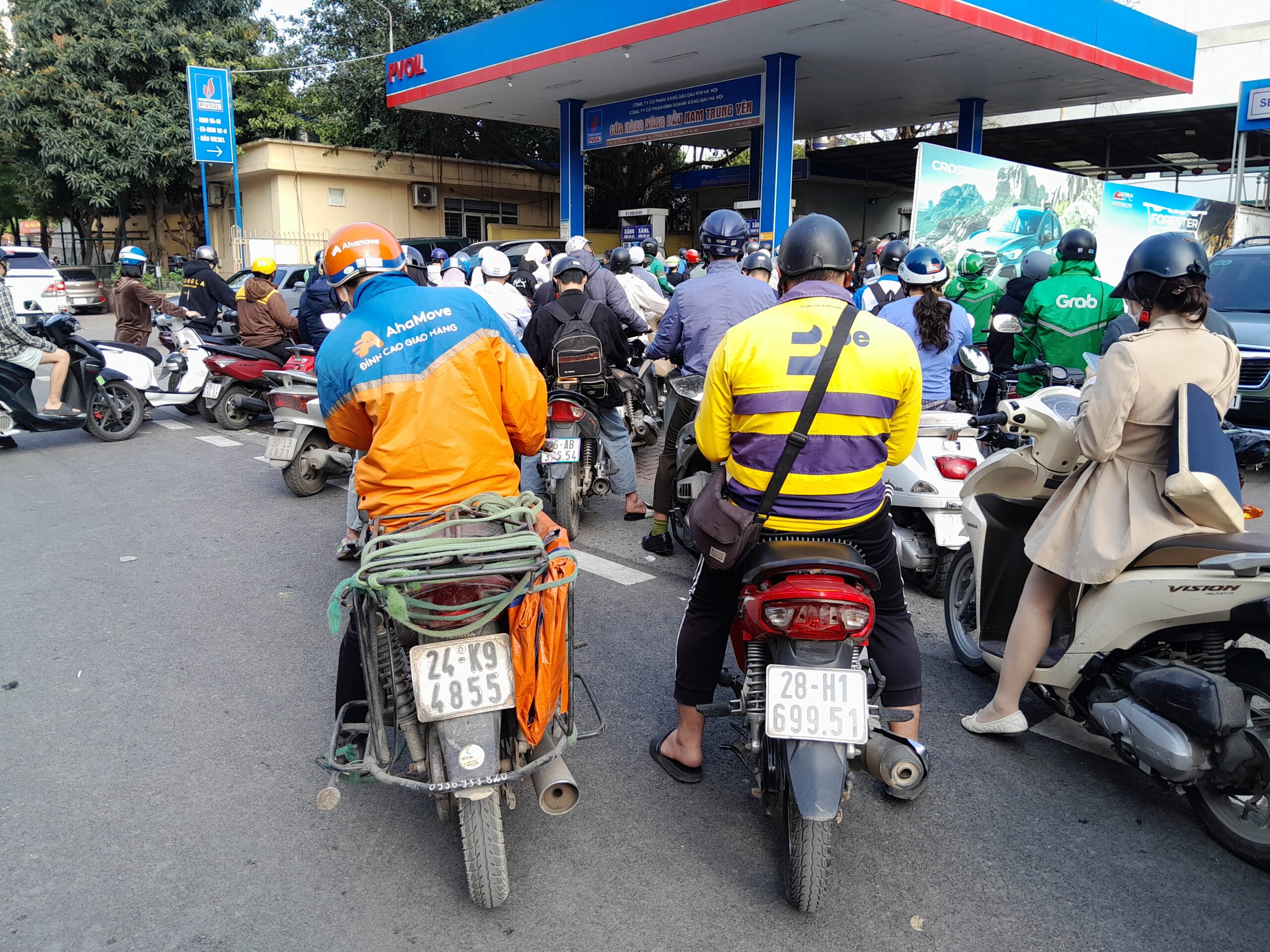
Photo: Baophucminh53G / Wikimedia Commons / CC BY-SA 4.0

Not every hotel clerk or bartender in North America gets a raise. The employment surge follows the match schedule and the tourism arteries. It is hyper-local and temporary.
Hospitality absorbs the shock. Over 80% of the forecast $4.3 billion in tourist spending will land in hotels, bars, restaurants, and transportation. This is not speculative. Hotel rates in host cities are already climbing, with some markets expecting a 90% premium for the tournament period. That price spike is a direct transfer of wealth from visitors to hotel owners and booking platforms.
The job creation map is uneven. According to the World Cup host legacy of past tournaments, temporary work spikes in security, retail, and food service are standard. The U.S. expects nearly 185,000 FTE jobs, but “full-time equivalent” is a statistical construct. Many will be part-time or short-term contracts lasting the tournament’s 39-day window. The real test for host cities is whether they can convert some of these temporary roles into permanent positions in a revitalized tourism sector. History suggests that is rare.
Smaller markets win bigger. For a city like Kansas City, hosting a handful of matches represents a massive influx of global attention and spending it would never otherwise see. The relative boost is enormous. For New York or Los Angeles, a few sold-out weekends at MetLife or SoFi Stadium are a blip in their annual economic activity. This disparity is a core finding in the Euronews travel demand analysis , which notes that established tourism hubs will see less net new activity.
The 5-Week Economic Window:
- Pre-tournament (2-4 weeks out): Final prep work, last-minute hiring in security and venue operations. Spending on local logistics and supplies.
- Tournament Core (June 11 – July 19): Peak employment and spending. Hospitality at 95%+ capacity, surge pricing in effect, transportation systems stressed.
- Immediate Post-tournament (2 weeks after): Sharp drop-off in tourist numbers. Temporary contracts end. Local businesses experience a hangover effect as disposable income was front-loaded into the event.
The jobs are real, but their shelf life is shorter than the grass on the pitches.
The Uneven Map of Economic Benefits
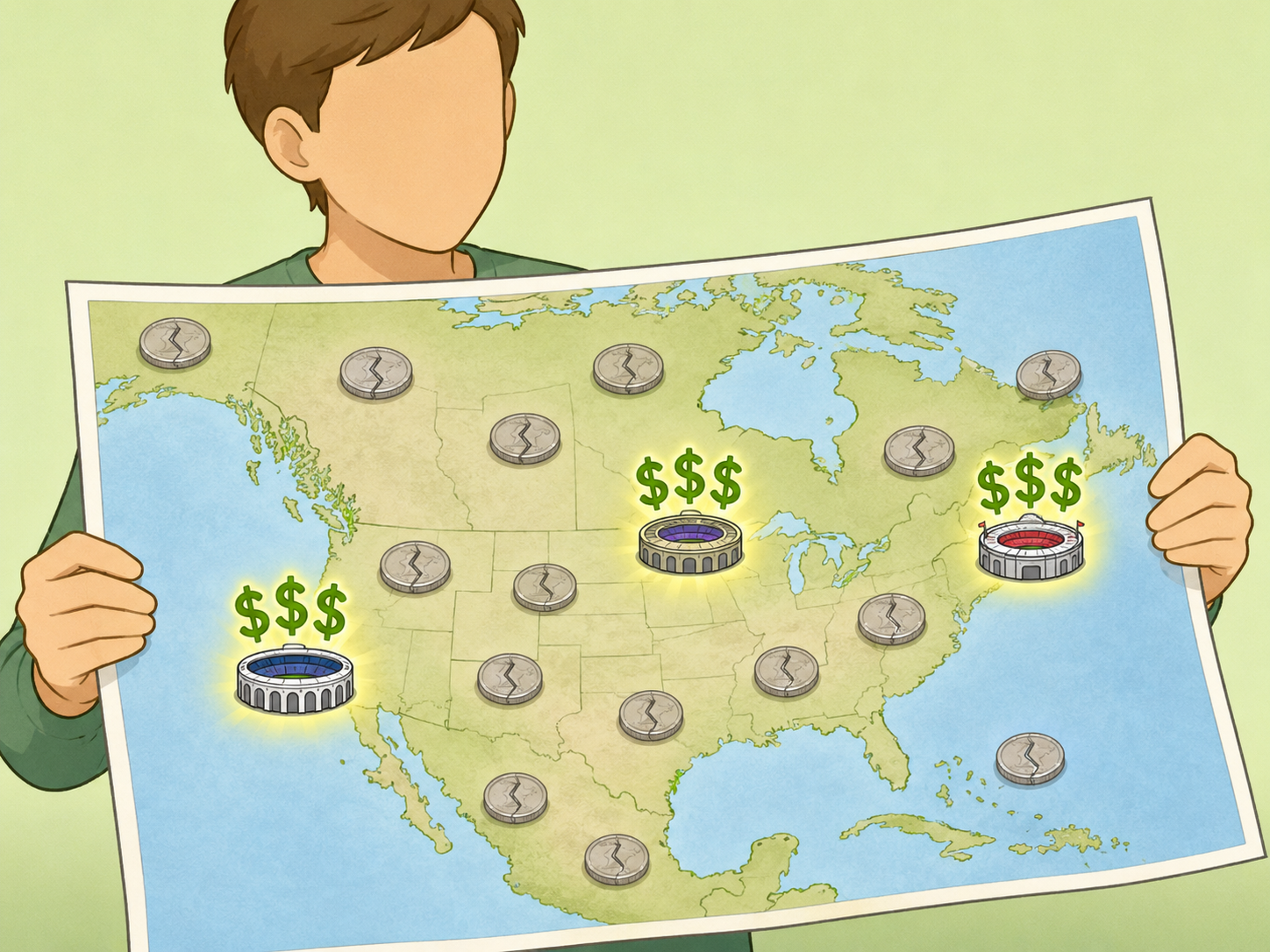
The promise of a rising tide lifting all boats is a myth for mega-events. The tide pools in specific areas, and some boats get swamped. Understanding this requires moving past continent-wide totals.
I used to believe the hype about stadiums regenerating whole neighborhoods. Then I saw the economics after a major continental championship. The new bars and cafes within a mile of the stadium did well for three months. The hardware store three miles away saw no change. The flower shop downtown actually lost business because regular weekend traffic avoided the area. The net effect for the city was positive on paper, but the distribution was brutally narrow.
This is the crowding-out effect. Locals may avoid their own city centers due to congestion and prices. A family in New Jersey might cancel their annual beach vacation in Cape May to spend money on tickets and hotels near MetLife Stadium. The region’s economy sees a reshuffling of dollars, not necessarily new ones. This effect is most pronounced in dense, expensive host regions.
Infrastructure spending is minimal. Unlike past World Cups in South Africa, Brazil, or Qatar, North America is not building cities from scratch. We are using existing Major League Soccer stadiums and NFL colosseums. This prudent approach avoids white elephants but also forfeits the long-term economic catalyst of massive construction projects. The investment is in operational costs—security, technology, fan festivals—which have little lasting asset value.
The structural differences from 2022 are instructive. Qatar built seven new stadiums and an entire metro system. The 2026 edition will build almost nothing new. The economic impact is therefore almost purely consumptive: money spent on services and experiences that end when the fans fly home.
| Type of Host City | Expected Relative Boost | Primary Reason | Long-Term Legacy |
|---|---|---|---|
| Major Tourism Hub (e.g., Miami, LA) | Low to Moderate | High existing summer capacity; displacement effect high | Minimal; already on global map |
| Secondary Sports Market (e.g., Kansas City, Atlanta) | High | Rare global spotlight; attracts new visitor demographic | Potential for sustained tourism bump if leveraged |
| Cross-Border Destination (e.g., Vancouver, Monterrey) | Moderate | Captures visiting fans doing multi-country trips | Strengthens regional tourism partnerships |
The road to the World Cup involves years of preparation for nations. For cities, the real work begins after the draw. The smart ones are planning not just for June 2026, but for how to channel the spotlight into lasting promotional capital. The less prepared will just count the cash and wonder where it went in August.
What the Critics and Economists Are Saying

The official projections are not lies. They are just one type of math. Independent economists run a different equation, one that factors in opportunity cost and the sheer size of the North American economy.
The displacement adjustment is the biggest point of contention. Studies cited by analysts like Oxford Economics suggest that a large portion of the tourism activity during the World Cup would have happened anyway in those cities during that summer period. A concert, a convention, or a family vacation gets displaced. The net new spending is only from the fraction of visitors who would not have come otherwise—estimated at about 40% of international attendees. This drastically reduces the net economic gain.
For the U.S., the impact is a rounding error. A report from CPRAM highlighted this starkly. A $17 billion GDP boost sounds immense, but it is spread across an economy with a GDP of over $27 trillion. That is about 0.06%. Over a few weeks. The report’s conclusion, as covered by MarketScreener, is that the impact is “marginal and short-lived.” The upcoming 2026 FIFA World Cup is a spectacle, not a stimulus package.
Common mistake: Assuming that gross tourist spending is all new money for a region. In major hubs during peak season, a significant share is cannibalized from other local businesses or displaced leisure spending, shrinking the net benefit.
The psychological “feel-good” factor is real but economically intangible. While a deep run by the U.S. or Mexican team could lift national mood, economists find little evidence this translates into measurable, sustained increases in consumer confidence or investment. The afterglow fasts faster than the stadium lights cool down.
This critical view is not cynicism; it is rigor. It is why cities like Quebec walked away from hosting, fearing costs would dwarf benefits. It is a necessary counterweight to the promotional excitement surrounding the 48-team tournament. The event will be fantastic. The economic transformation will not.
The Long-Term Legacy: Beyond the 2026 Balance Sheet
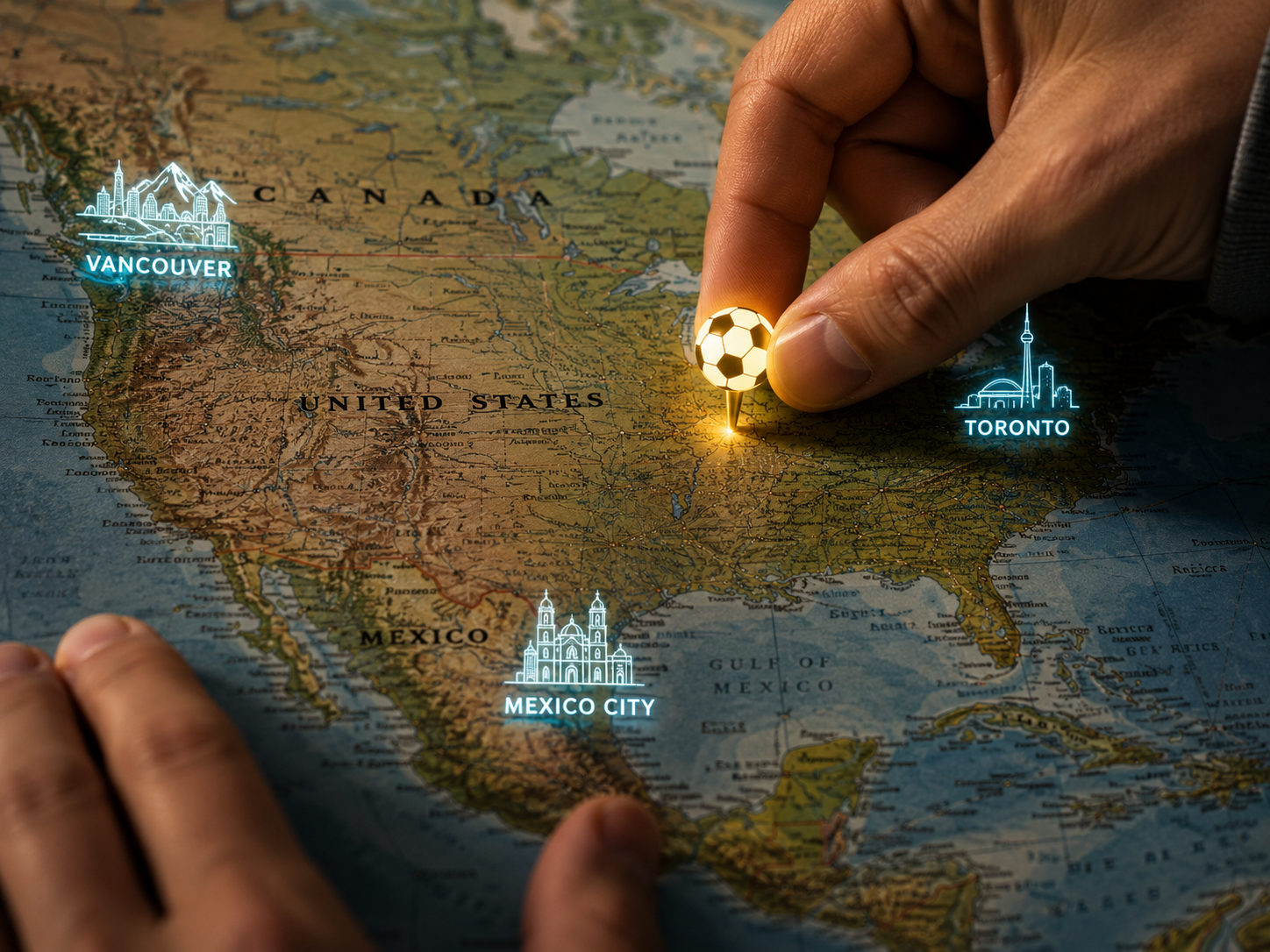
The deepest economic impact might not be in a quarterly GDP report. It is in the intangible capital accrued over a summer of global exposure.
Soft power and tourism branding are the real prizes. For Canada, showcasing Vancouver and Toronto as vibrant, summer-ready destinations to a global audience of billions is marketing money cannot buy. For Mexico, reinforcing its position as the spiritual home of North American soccer has long-term value for football tourism. The United States, Canada, and Mexico collectively present a unified, accessible face to the world, potentially smoothing the path for future tourism and business investment.
The infrastructure legacy is about upgrades, not construction. While no new stadiums are being built, existing ones receive renovations. Training facilities are improved for local clubs. Public transit systems may see temporary enhancements. The FIFA World Cup structure demands certain technological standards for venues, driving investment in Wi-Fi, video boards, and security systems that remain after the fans leave.
The challenge is sustaining the momentum. The tournament group stages create a month-long narrative. Can a city like Philadelphia or Seattle convert a fan’s great experience into a return vacation five years later? That requires a coordinated, post-event strategy most host cities historically fail to execute. The economic impact study ends when the last flight departs. The real work is just beginning.
Frequently Asked Questions
Will the World Cup 2026 cause a recession when it ends?
No. The economic activity is a short-term surge, not a fundamental pillar of the North American economy. The post-tournament slowdown will be felt sharply in specific hospitality sectors in host cities, but it will not move national economic indicators. It is a temporary bubble, not a structural component.
Which host country will benefit the most economically?
In absolute dollar terms, the United States will benefit the most due to its number of matches and role as the main entry point. In terms of efficiency and impact relative to its economy’s size, Canada shows a stronger return per dollar spent and per match hosted.
How much will ticket prices and hotels cost?
Prices will be at a premium. Hotel rates in some host cities are projected to increase by 90% during the event. Ticket prices for the final will likely reach several thousand dollars for decent seats, with average match tickets significantly above standard league prices. Planning and booking extremely early is the only way to mitigate this.
Does building no new stadiums hurt the economic impact?
It reduces the long-term infrastructure legacy but also avoids the massive debt and white-elephant stadiums that have plagued other hosts. The economic impact becomes almost purely operational and tourism-based, which is less risky but also offers fewer lasting physical assets.
Will the World Cup create permanent jobs?
Very few. The vast majority of the 200,000+ projected jobs are temporary or seasonal positions in hospitality, retail, and event security tied directly to the tournament window. Some permanent roles may be created in tourism marketing or venue management if demand persists, but this is not the norm.
The Bottom Line
The World Cup 2026 will paint North America in the colors of a global festival. The economic impact will be real, measurable, and concentrated in a thrilling, chaotic summer. The United States will post the biggest numbers, Canada will score on efficiency, and Mexico will bank on cultural allure.
But the stadiums already exist. The tourists are largely coming during peak season. The jobs are temporary. The real economic story is not about a big number on a FIFA press release. It is about a short, sharp shock of spending that rewards some businesses, inconveniences others, and leaves behind a marketing opportunity that three nations must be shrewd enough to seize. The legacy will be written not in concrete, but in perception. Manage those expectations, and the tournament becomes not just a sporting success, but an economic lesson in modern hosting.

I come from the “soccer heart” of Germany, the Ruhrpott. I have played, trained and followed soccer all my life and am a big fan of FC Schalke 04. I also enjoy following international soccer extensively.