World Cup Referees: The Massive Team and Key Tech for
World Cup referees are selected through a three-year, performance-based process to manage 104 matches across three nations. The 2026 tournament will feature a record 170 officials and new technology like body cameras and advanced semi-automated offside systems to ensure accuracy and fairness.
The 2026 FIFA World Cup will be officiated by a record 170 match officials—52 referees, 88 assistant referees, and 30 video match officials—selected from 50 countries over three years based on a strict “quality first” assessment of their performance in top competitions. This expanded team, which includes six women, is necessary to manage the tournament’s 104 matches across three host nations and will utilize new technology like referee body cameras and advanced semi-automated offside systems.
Most fans only see the referee on the pitch. They miss the three-year selection grind, the ten-day Miami boot camp, and the 30-person VAR hub in Dallas that makes every call possible. The scale of this operation isn’t just bigger; it changes how every decision gets made.
This guide breaks down the massive officiating team for the 2026 World Cup, from the famous names you’ll recognize to the unseen tech and logistics that will define the tournament.
Key Takeaways
- The 2026 officiating crew of 170 is the largest ever, a direct response to the expanded 48-team, 104-match format requiring more rotation and specialized support.
- Selection wasn’t a popularity contest. FIFA’s “quality first” principle meant a three-year review of performances in tournaments like the Champions League and Copa America.
- While only two women are central referees, six total female officials are appointed, matching the number from Qatar 2022 and solidifying a path at the men’s tournament.
- All officials will undergo intensive preparation in Miami, but the 30 Video Match Officials will operate separately from a dedicated hub in Dallas.
- New technology, including referee body cameras and an upgraded semi-automated offside system, will be as influential as the referees themselves.
The Unprecedented Scale Demands It
You don’t staff a 48-team, 104-match tournament spread across three countries and 16 cities with the same crew that handled 64 games in one nation. The math doesn’t work. Fatigue sets in. Consistency evaporates. FIFA’s answer is a 170-person officiating team, up from 139 in Qatar. That’s 52 referees, 88 assistants, and 30 dedicated Video Match Officials.
The expansion isn’t about filling quotas. It’s logistics. A referee can’t fly from Vancouver to Mexico City to Miami and back within a week and still have the sharpness for a knockout match. The larger pool allows for proper rest, reduces travel strain, and builds in redundancy. It also enables specialization. With 30 VARs stationed in Dallas, they can develop a deep, tournament-wide consistency in interpreting handballs and offsides that a smaller, rotating group couldn’t achieve.
The 2026 FIFA World Cup will utilize 52 center referees, 88 assistant referees, and 30 video match officials operating from a central hub, representing a 22% increase in total officials from the 2022 tournament to manage 63% more matches.
This scale directly impacts the new competition rules and the expanded team structure. More teams and a new group stage mean more simultaneous matches. You need officials who can handle the pressure of a must-win group game in Seattle at the same time others are managing a similar scenario in Guadalajara. The system is designed for parallel processing.
TL;DR: The 170-official team is a logistical necessity for 104 games across North America, not just a number.
Who Are the Key Referees for World Cup 2026?
The list reads like a who’s who of global officiating. Polish referee Szymon Marciniak, who handled the 2022 final, returns. From England, Michael Oliver and Anthony Taylor bring Premier League intensity. France’s François Letexier, fresh from the Euro 2024 final, is there. So is Romania’s Istvan Kovács, appointed for the 2025 Champions League final, and Brazil’s Raphael Claus, who officiated the 2024 Copa América final.
These aren’t just big names. They represent the pinnacle of a three-year evaluation. FIFA’s Chief Refereeing Officer, Pierluigi Collina, stated the selected officials are “the very best in the world.” He’s not giving a pep talk. The selection process, led by Collina and FIFA Director of Refereeing Massimo Busacca, weighed every Champions League knockout tie, every tense continental final. Performance under that glare is the only currency.
The inclusion of six female officials continues a path opened in Qatar. American referee Tori Penso, who also took charge of the 2023 Women’s World Cup final, and Mexico’s Katia Itzel García are the two central referees. U.S. assistants Brooke Mayo and Kathryn Nesbitt are also appointed. Their presence normalizes women officiating the highest level of the men’s game. It’s progress, but it’s also merit. They passed the same brutal assessment.
You’ll notice certain leagues are overrepresented. The Premier League has seven officials. Major League Soccer has eleven. This isn’t bias. It’s a reflection of where the fastest, most physically demanding, and most scrutinized football is played weekly. An official who survives the Premier League’s pace and media pressure is battle-tested for a World Cup.
Common mistake: Assuming a referee’s World Cup appointment is a reward for long service. It’s not. It’s the endpoint of a relentless, data-driven review of their last 100 big-game decisions under pressure.
TL;DR: The 2026 list is a meritocracy of officials proven in Europe’s top leagues and international finals, with women like Tori Penso breaking through on pure performance.
How FIFA Chose the 2026 Officiating Team
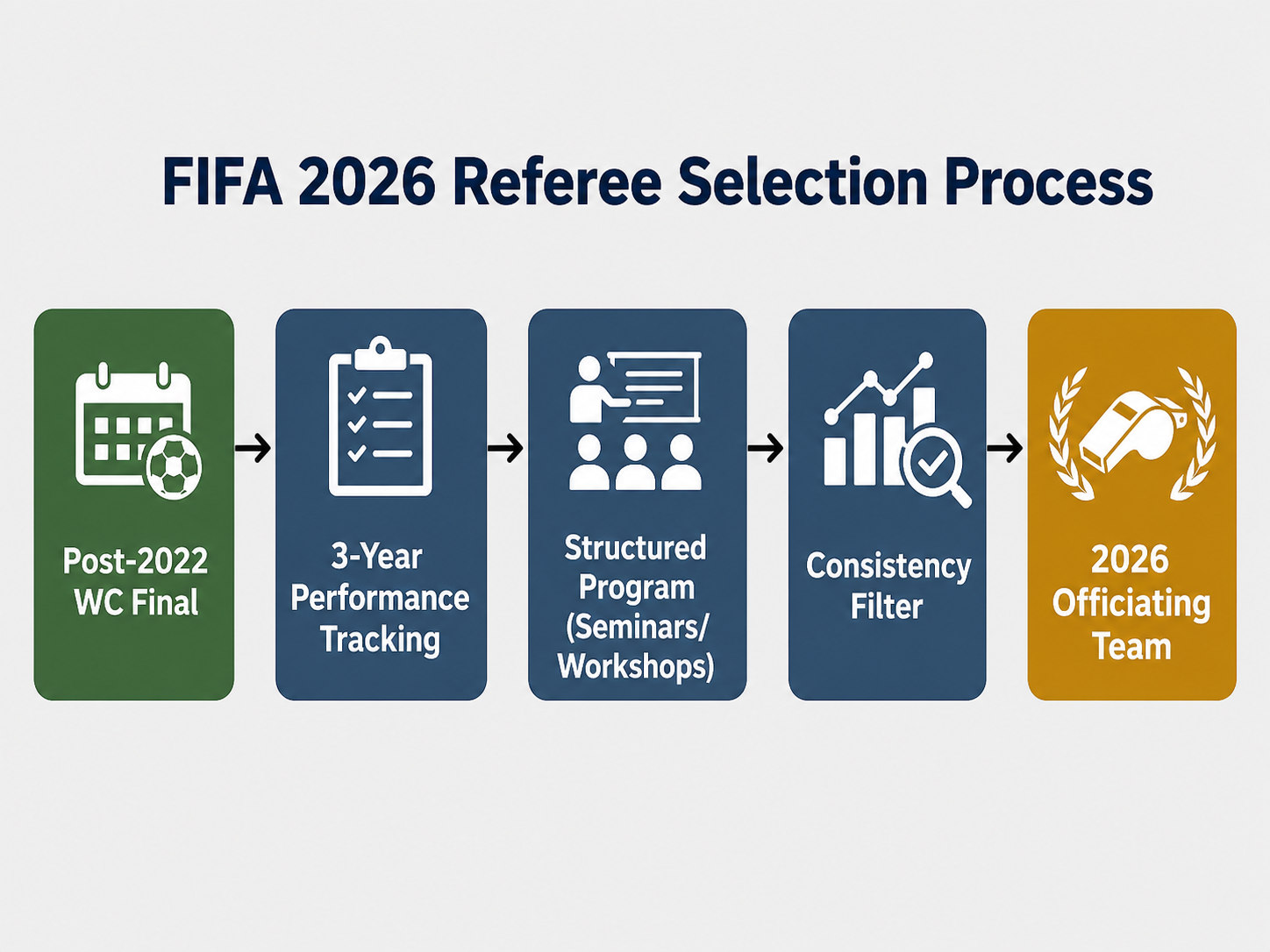
Forget a committee vote. FIFA’s selection was a forensic audit. The “quality first” principle, repeated by Collina and Busacca, meant tracking every official’s performance in FIFA tournaments, internationals, and domestic competitions for over three years. Consistency was the filter. A referee might have a great Champions League semi-final but a shaky group stage. The ones who made the list delivered high-level performances back-to-back-to-back.
The process started right after the 2022 World Cup final. Massimo Busacca outlined a “structured program” of seminars, workshops, and continuous monitoring. This wasn’t just watching games. It involved physical testing, psychological profiling, and decision-making under simulated pressure. They looked for referees who communicated clearly with players, managed conflict without escalating it, and maintained concentration for 100+ minutes.
The geographical spread—officials from 50 member associations across all six confederations—serves a purpose. It’s not tokenism. A referee from Angola understands the rhythms and emotions of African football. An official from New Zealand reads the Oceania style. This diversity, when combined with intensive pre-tournament training, builds a shared framework for what constitutes a foul, a yellow card, a penalty. The goal is that a foul in the 18th minute in Vancouver feels the same as a foul in the 18th minute in Monterrey.
| Selection Criteria | What It Means | Why It Matters for 2026 |
|---|---|---|
| Tournament Performance | Consistency in FIFA events (U-20 World Cup, Club WC) and continental finals (UEFA, CONMEBOL). | Ensures officials are accustomed to the unique pressure of tournament knockout football. |
| Domestic League Form | Weekly performance in top leagues like Premier League, Bundesliga, Serie A. | Proves an official can handle the speed and physicality of modern elite football week-in, week-out. |
| Physical & Psychological Tests | Rigorous fitness benchmarks and stress-management evaluations. | The 2026 schedule is a marathon; officials must recover as quickly as the players. |
| VAR Protocol Proficiency | Demonstrated ability to work seamlessly with Video Assistant Referee systems. | With 30 dedicated VARs, on-field referees must integrate with the technology instinctively. |
TL;DR: Selection was a three-year, data-heavy process focused on consistent high-pressure performance, not reputation.
The VAR and Tech Hub in Dallas
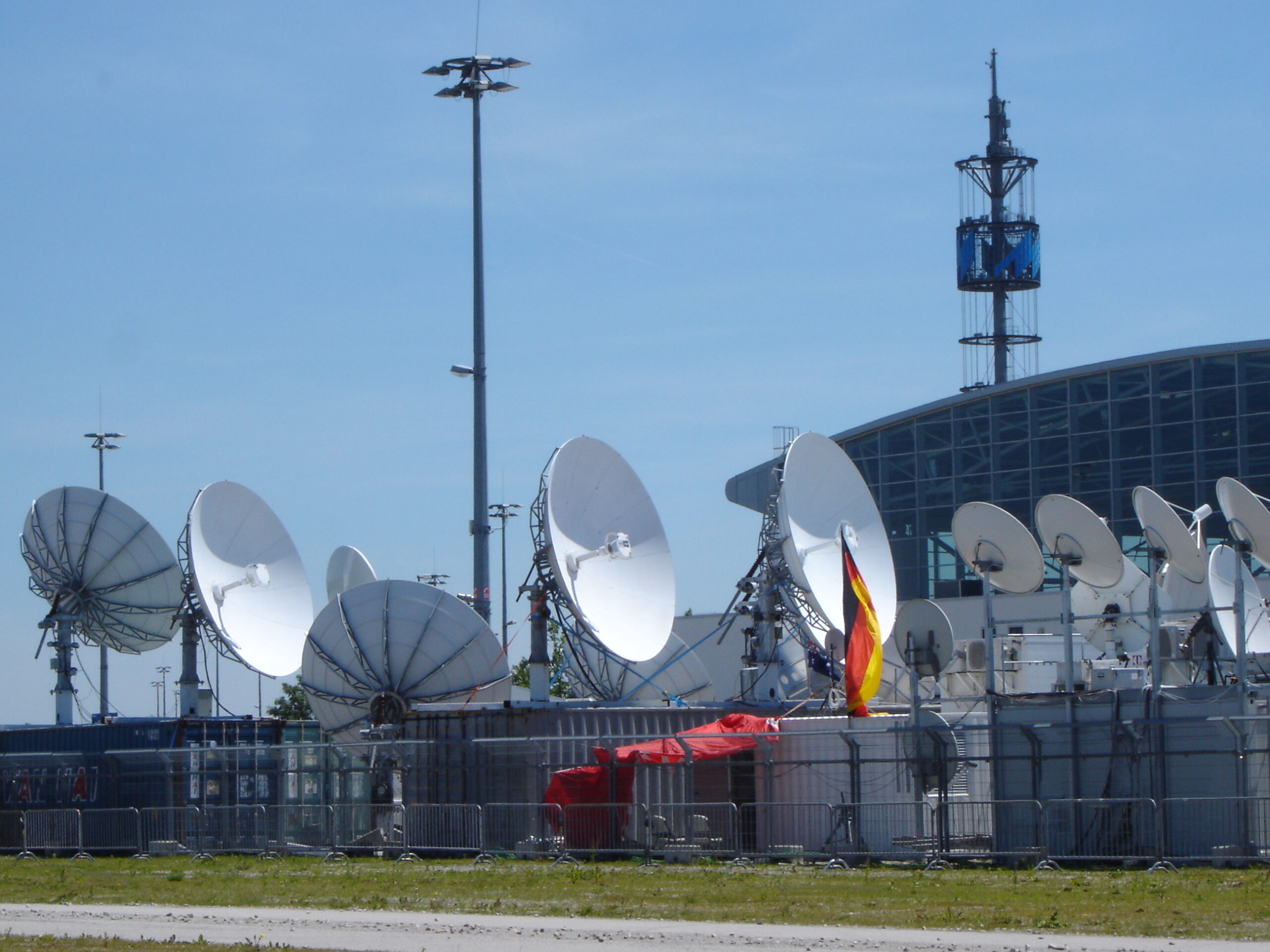
Photo: Andre Starkloff / Wikimedia Commons / CC BY-SA 3.0
While the referees train in Miami, the real technological nerve center for the 2026 World Cup will be in Dallas. The International Broadcast Centre (IBC) there will house the 30 Video Match Officials. This centralized hub is a game-changer. Instead of VAR teams traveling to stadiums and working in temporary trailers, they’ll operate from a permanent, optimized facility with multiple screens, dedicated communication lines, and no jet lag.

This setup allows for unprecedented consistency. The same VAR team can review incidents from a match in Vancouver on Monday and a match in Mexico City on Thursday, applying the same interpretation framework. They’ll use an advanced version of the semi-automated offside technology (SAOT) that debuted in Qatar. The system will be faster and more precise, with improved limb-tracking algorithms to make those millimeter offside calls definitive.
I was skeptical about the VAR hub model until I saw the alternative. At Euro 2024, VAR teams worked on-site. The communication delays, the pressure from nearby crowd noise, the sheer fatigue from travel—it all added variables. Centralizing the operation in Dallas removes those variables. It turns interpretation into a process.
The other big tech story is referee body cameras. FIFA trialed them at the Club World Cup. For 2026, they’ll be used to give broadcasters and, potentially, viewers a first-person perspective of key moments. This isn’t for making calls; it’s for transparency and storytelling. Imagine hearing the referee’s calm instructions to players during a tense penalty situation. It could build understanding or fuel controversy. Probably both.
These technological officiating aids, from the semi-automated offside technology to the refined 2026 World Cup VAR protocols, are as much a part of the officiating crew as the person with the whistle. They represent a shift from a single authority on the field to a distributed, technology-supported system.
TL;DR: 30 VARs working from a central hub in Dallas will ensure consistency, powered by faster offside tech and new referee body cameras for broadcast.
Logistical Challenges: Three Countries, One Standard
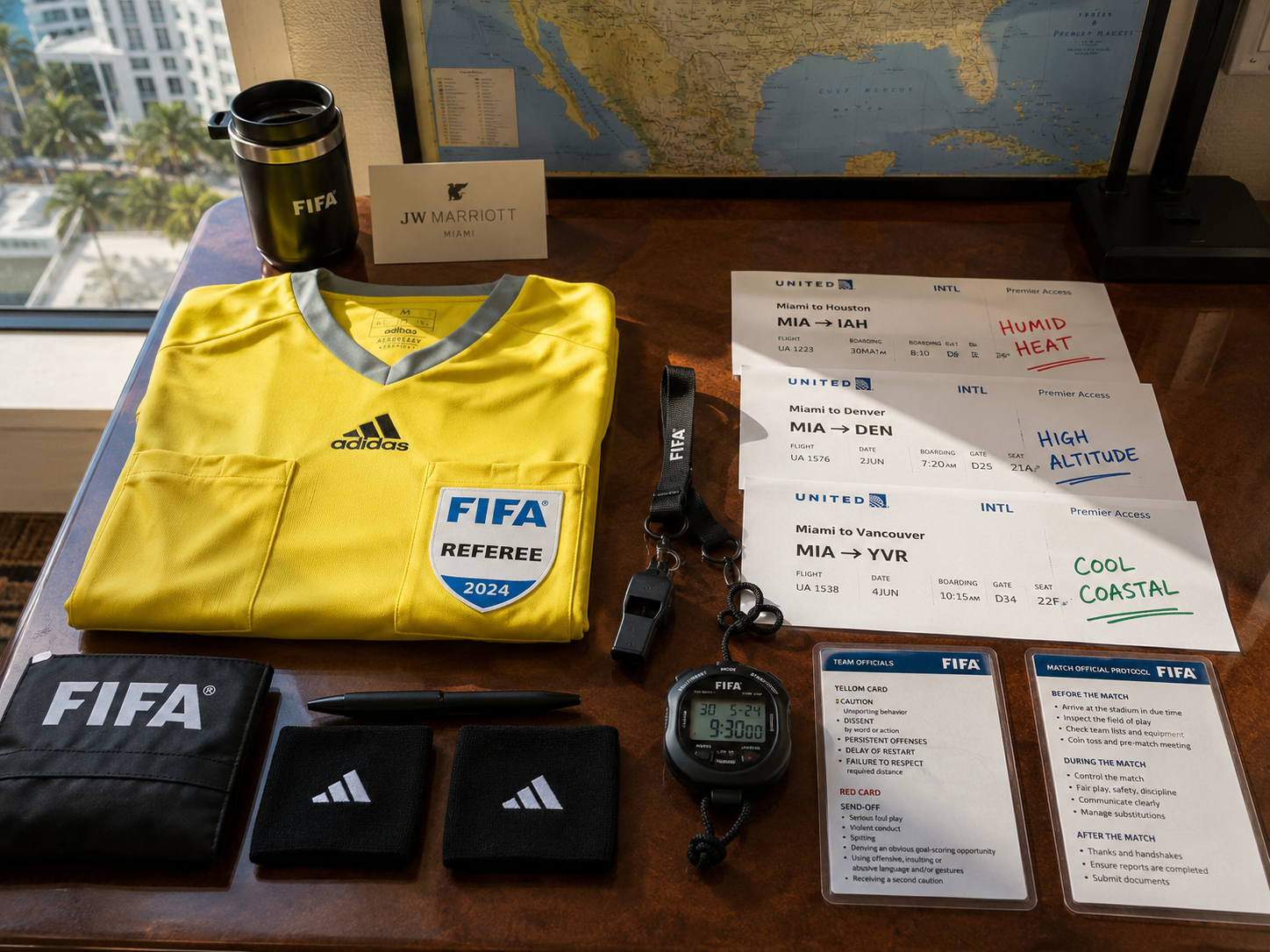
Managing uniformity across 16 cities in three nations is the tournament’s hidden referee test. A hydration break in the humid Houston heat is a different physical challenge than one in the dry Denver altitude. The travel logistics for officials mirror the players’—crossing time zones, adapting to climates, and dealing with the sheer geographical spread of the North American host cities.
FIFA’s solution is a military-style operation. Officials will be based in Miami for the duration. From there, they’ll deploy to match locations, often returning to base between assignments. This “hub and spoke” model is designed to minimize continuous travel and maximize recovery time. The official match schedule is built with this in mind, trying to avoid sending an official from the East Coast to the West Coast for back-to-back games.
The preparation seminar in Miami, starting May 31, is where this standardization happens. It’s not just about fitness drills. It’s where officials from Angola, England, and Japan align on what constitutes a “clear and obvious error” for VAR, or how to manage a player safety protocol during a head injury assessment. They’ll train with local players, run through dozens of video scenarios, and build the shared muscle memory needed for the tournament.
Common mistake: Underestimating the impact of climate on officiating. An official used to cool European evenings will have their concentration and decision-making speed tested in a 3 p.m. kickoff under the Texas sun. The Miami camp includes specific heat-acclimatization training for this reason.
This logistical framework supports the entire 48-team tournament format. Without it, the consistency of application that Collina and Busacca demand would be impossible. The event security measures and crowd management procedures are part of the same operational plan, ensuring the officials can focus solely on the match.
TL;DR: A Miami base camp and intensive pre-tournament training are essential to create one consistent standard across three countries’ worth of stadiums and climates.
What This Means for the Tournament
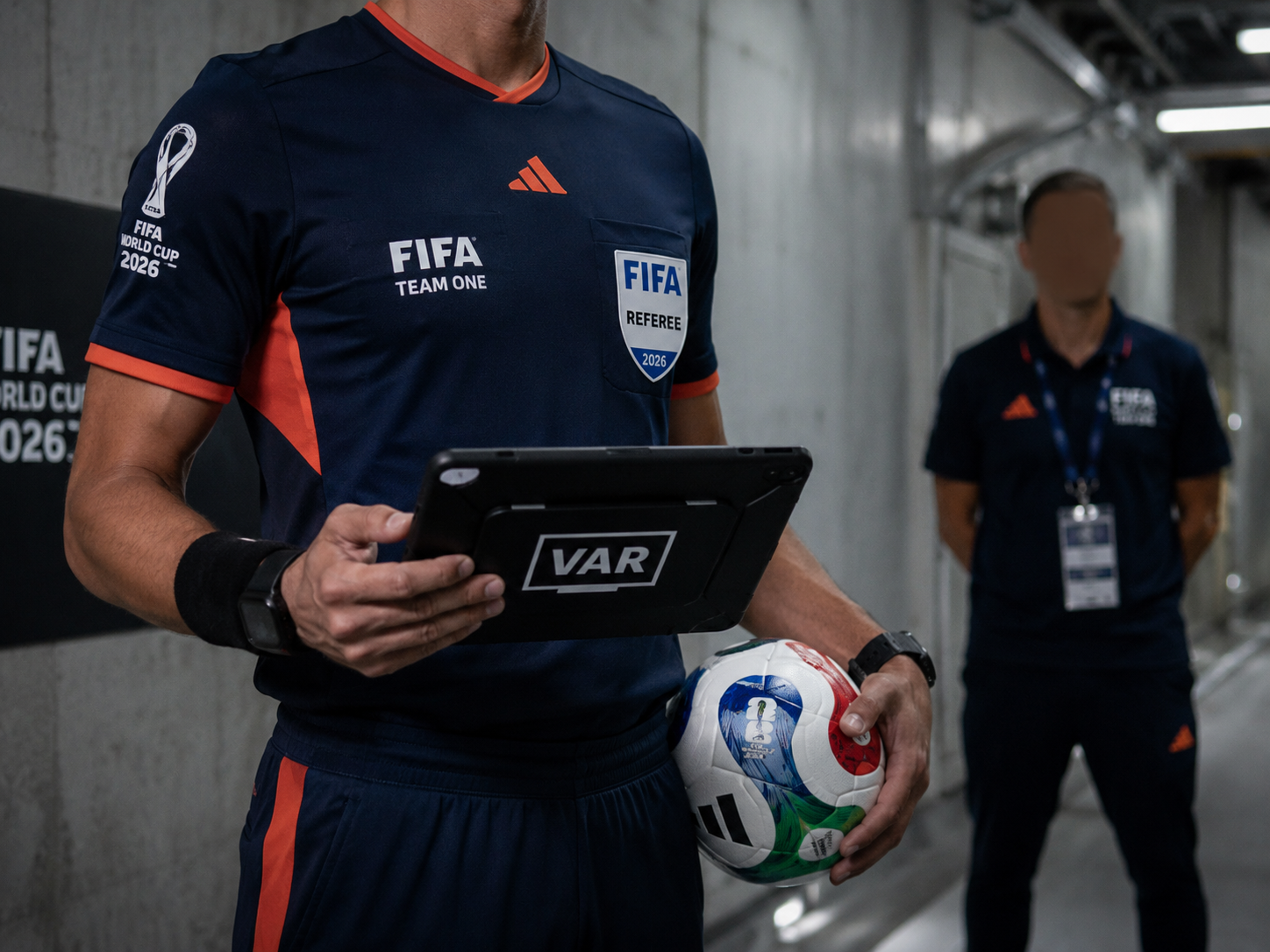
The sheer size of the officiating team and its support system will change the feel of the games. With more officials, there’s more room for specialization and fresher legs in the later stages. A referee who isn’t exhausted from three group-stage games in seven days is less likely to miss a crucial incident in the round of 16.
The centralized VAR operation in Dallas should, in theory, reduce the kind of interpretative inconsistencies that plagued earlier tournaments. When the same team reviews all the handballs, they should start calling them the same way by the second week. That’s the plan. But it also centralizes criticism. Every controversial offside call traced back to the same room in Dallas will draw intense scrutiny.
The presence of body cameras is a wild card. Will they increase respect for referees by showing their real-time decision process? Or will they provide more fodder for pundits to dissect every muttered word? FIFA is betting on the former, but football’s media ecosystem thrives on the latter.
One thing is certain. The scale of the 2026 World Cup demanded a revolution in officiating logistics. The result is a system that looks less like a group of individuals and more like a seamless, technology-driven operation. The referee on your screen is just the most visible part of a 170-person machine.
Frequently Asked Questions
How many referees are at the 2026 World Cup?
There are 52 central referees appointed for the 2026 World Cup, part of a total officiating team of 170 that includes 88 assistant referees and 30 video match officials.
Which Premier League referees are going to the 2026 World Cup?
Michael Oliver and Anthony Taylor are the two Premier League referees selected for the 2026 tournament, as confirmed by a BBC Sport referee announcement. They are joined by several English assistant referees and video officials.
Are there female referees at the 2026 World Cup?
Yes. Six female officials have been selected, matching the number from 2022. American Tori Penso and Mexican Katia Itzel García are the two central referees, with assistants Brooke Mayo and Kathryn Nesbitt (both USA) also appointed.
What new technology will referees use in 2026?
Referees will wear body cameras for the first time at a World Cup to provide broadcast footage. The VAR team will use an advanced version of semi-automated offside technology (SAOT) from a central hub in Dallas to make faster, more consistent offside decisions.
Why are there so many officials for the 2026 World Cup?
The expansion to 48 teams and 104 matches across three countries requires a larger pool to allow for proper rest, reduce travel fatigue, and maintain decision-making consistency. The 170 officials represent a 22% increase from the 2022 tournament.
The Bottom Line
The 2026 World Cup refereeing team isn’t just bigger; it’s a fundamentally different operation. The selection was a three-year grind, the preparation is a military-style boot camp, and the technology is centralized in a Dallas hub. This system exists for one reason: to impose a single, consistent standard on a tournament stretched across a continent. The success of the expanded format hinges on it. When a referee raises their whistle for the first match, they’ll be the tip of a vast, meticulously built iceberg.

I come from the “soccer heart” of Germany, the Ruhrpott. I have played, trained and followed soccer all my life and am a big fan of FC Schalke 04. I also enjoy following international soccer extensively.