France World Cup History and Record: The Complete Story
France’s World Cup history and record is built on 16 tournament appearances, two titles (1998, 2018), two runner-up finishes (2006, 2022), and a collection of individual records that still stand today. Their journey from scoring the first-ever World Cup goal in 1930 to becoming a modern powerhouse defines one of football’s most compelling national stories.
Most summaries stop at the two stars on the crest. They list the wins, maybe the finals lost, and call it a day. That misses the texture, the decades of near-misses, the revolutionary teams, and the specific players who didn’t just win games but changed how the tournament is remembered. France’s story isn’t a straight line up; it’s a series of explosive generations separated by quiet spells, and the records from each era are still benchmarks.
This guide walks through every significant chapter. We’ll cover the raw results, the iconic teams, the legendary players, and the current records held by the likes of Mbappé, Giroud, and Deschamps. You’ll understand not just what France achieved, but how they did it and why their place among football’s elite is so secure.
Key Takeaways
- France’s two World Cup victories came 20 years apart (1998 and 2018), but their four final appearances since 1998 show a consistency few nations match.
- Just Fontaine’s record of 13 goals in the 1958 tournament remains unbroken after over 60 years, a testament to one of the most explosive individual campaigns in history.
- Didier Deschamps stands as one of only three people to win the World Cup as both captain and head coach, achieving the feat with France in 1998 and 2018.
- The 2022 tournament saw a flurry of records: Olivier Giroud became France’s all-time top scorer, Hugo Lloris earned the most caps, and Kylian Mbappé scored a hat-trick in a final, something not seen since 1966.
- France’s “golden generations” appear in roughly 20-year cycles (1950s, 1980s, late 1990s/2000s, 2010s/2020s), each leaving a distinct tactical and cultural mark on the team’s identity.
France’s World Cup Results at a Glance
The numbers tell a story of a team that took time to find its footing before becoming a perennial contender. France didn’t reach a semi-final until their seventh tournament appearance in 1958. Since then, they’ve become a fixture in the latter stages.
France’s participation record of 16 World Cups places them among the most frequent competitors. Their conversion rate in the modern era is notable: from 1998 onward, they have reached four finals in seven tournaments, winning two. This era of sustained success contrasts with their earlier history, where group-stage exits were more common before the knockout format expanded.
Here is the high-level performance data, which shows the shift from occasional participant to consistent powerhouse.
| Period | Tournaments | Best Finish | Key Notes |
|---|---|---|---|
| 1930–1954 | 3 | Group Stage (1930, 1934, 1954) | Scored first-ever World Cup goal (1930). Post-WWII rebuild. |
| 1958–1986 | 5 | 3rd Place (1958, 1986) | Fontaine’s 13-goal record (1958). Platini’s iconic 1980s side. |
| 1998–2006 | 3 | Champions (1998), Runners-up (2006) | Zidane era. First title on home soil. Golden generation. |
| 2010–2022 | II5 | Champions (2018), Runners-up (2022) | Deschamps as coach. Mbappé’s emergence. Second golden generation. |
The table reveals the turning point: 1998. Everything before that was building. Everything after is about maintaining a standard. The third-place finishes in 1958 and 1986 weren’t disappointments at the time, they were breakthroughs that announced France as a serious football nation.
TL;DR: France’s results split into pre-1998 (building, sporadic success) and post-1998 (consistent contention, with four finals in seven tournaments).
The Tournament-by-Tournament Journey
To understand the record, you need to walk through the tournaments. The official Wikipedia overview of France at the World Cup is the source for this chronological data. Each entry represents a step in their evolution.
1930 – The Pioneer. France was there at the start. Lucien Laurent’s goal in a 4-1 win over Mexico is literally the first in World Cup history. They exited after the group stage, but their place in the origin story is permanent.
1934 & 1954 – Early Exits. A single-elimination loss in 1934 and another group-stage exit in 1954 bookended the war years. Football was rebuilding globally.
1958 – The First Breakthrough. This is where the modern narrative begins. France, led by the miraculous Just Fontaine, stormed to third place. Fontaine’s 13 goals in six games is a record that feels untouchable. They lost to the eventual champions, Brazil and Pelé, in the semi-final. That team announced France’s attacking potential to the world.
1982 & 1986 – The Platini Era. After a 24-year absence, France returned with a sublime team built around Michel Platini. In 1982, they lost a classic semi-final to West Germany on penalties. In 1986, they secured third place again. This team played with a technical artistry that became France’s footballing signature. Their soccer tactics were studied for their midfield control.
1998 – The Ultimate Triumph. On home soil. Zinedine Zidane’s two headers in the final against Brazil. A 3-0 victory that united a nation. This wasn’t just a win; it was a cultural event. It validated decades of development and created a new benchmark for French football. The core of this team, including captain Didier Deschamps, would define the next decade.
2006 – The Agony of Near-Repeat. Zidane’s genius nearly carried them to a second title. His early penalty in the final against Italy was answered by Marco Materazzi’s header. Then, the headbutt, the red card, and the lost penalty shootout. A brutal end for a legendary player, cementing the match as one of the most dramatic finals ever, full of knockout stage drama.
2018 – Redemption and a New Generation. Under Deschamps the coach, a more pragmatic, powerful France emerged. They beat Argentina 4-3 in a thrilling round of 16 match, then Croatia 4-2 in the final. Kylian Mbappé, then 19, announced himself as a global superstar. This title proved France’s talent pipeline was the best in the world.
2022 – The Epic Duel and Another Final. A rematch of the 2018 round of 16 game became the final. France versus Argentina, Mbappé versus Lionel Messi. Mbappé’s hat-trick forced extra time and then penalties, but Argentina prevailed. Losing in a final is a disappointment, but reaching two consecutive finals is a monumental achievement that underscores their elite status.
The Players Who Built the Legacy
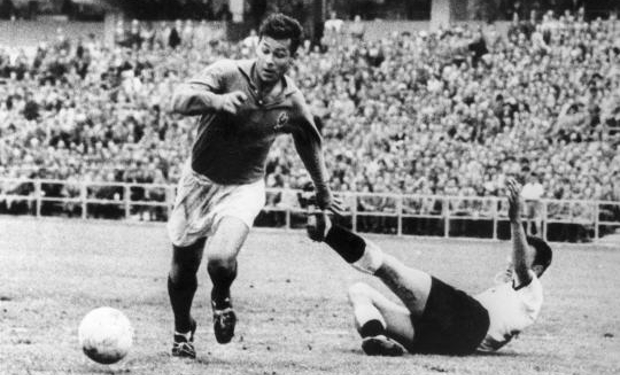
Photo: Unknown authorUnknown author / Wikimedia Commons / Public domain
Records are held by people. France’s history is written by a specific type of player: the explosive goalscorer, the visionary midfielder, the commanding leader. Their legends span eras.

Common mistake: Focusing only on Zidane and Mbappé. France’s depth of historic talent runs from Fontaine in the 50s to Griezmann today. Missing the connective tissue between generations flattens the story.
The icons break down into clear archetypes:
The Record-Shattering Scorer: Just Fontaine (1958). His 13 goals stand alone. No one has come close in a single tournament since. He did it in just six games. It’s a record of pure, relentless finishing that may never be broken.
The Maestro: Michel Platini (1980s). Before Zidane, there was Platini. The elegant heartbeat of the 1982 and 1986 teams. He didn’t win the trophy, but he elevated France’s football identity to one of sophistication and technical mastery.
The Conductor: Zinedine Zidane (1998-2006). The man for the biggest moments. Two headers in the 1998 final. A panenka penalty in the 2006 semi-final. His career is a highlight reel of World Cup artistry and drama. He is the face of France’s first golden era of success.
The Dual-Winner: Didier Deschamps. The history of the France national football team features many captains, but only one who lifted the trophy as both player and coach. Deschamps is the bridge between the 1998 triumph and the 2018 rebirth. His pragmatic coaching philosophy maximized a gifted squad.
The Modern Phenom: Kylian Mbappé (2018-). A World Cup winner at 19, a hat-trick scorer in a final at 23. He is on pace to shatter every French scoring record. His combination of blistering speed and cold-blooded finishing makes him the current engine of the team.
The Quiet Record-Breaker: Olivier Giroud (2014-2022). Without scoring in 2018, he was crucial as a hold-up forward. In 2022, he broke Thierry Henry’s all-time national team scoring record. He exemplifies the selfless, effective role player that championship teams need.
This mix of flashy stars and consistent producers is why France always has a threat. They develop explosive athletes and tactical brains in equal measure.
France’s Current World Cup Records and Stats
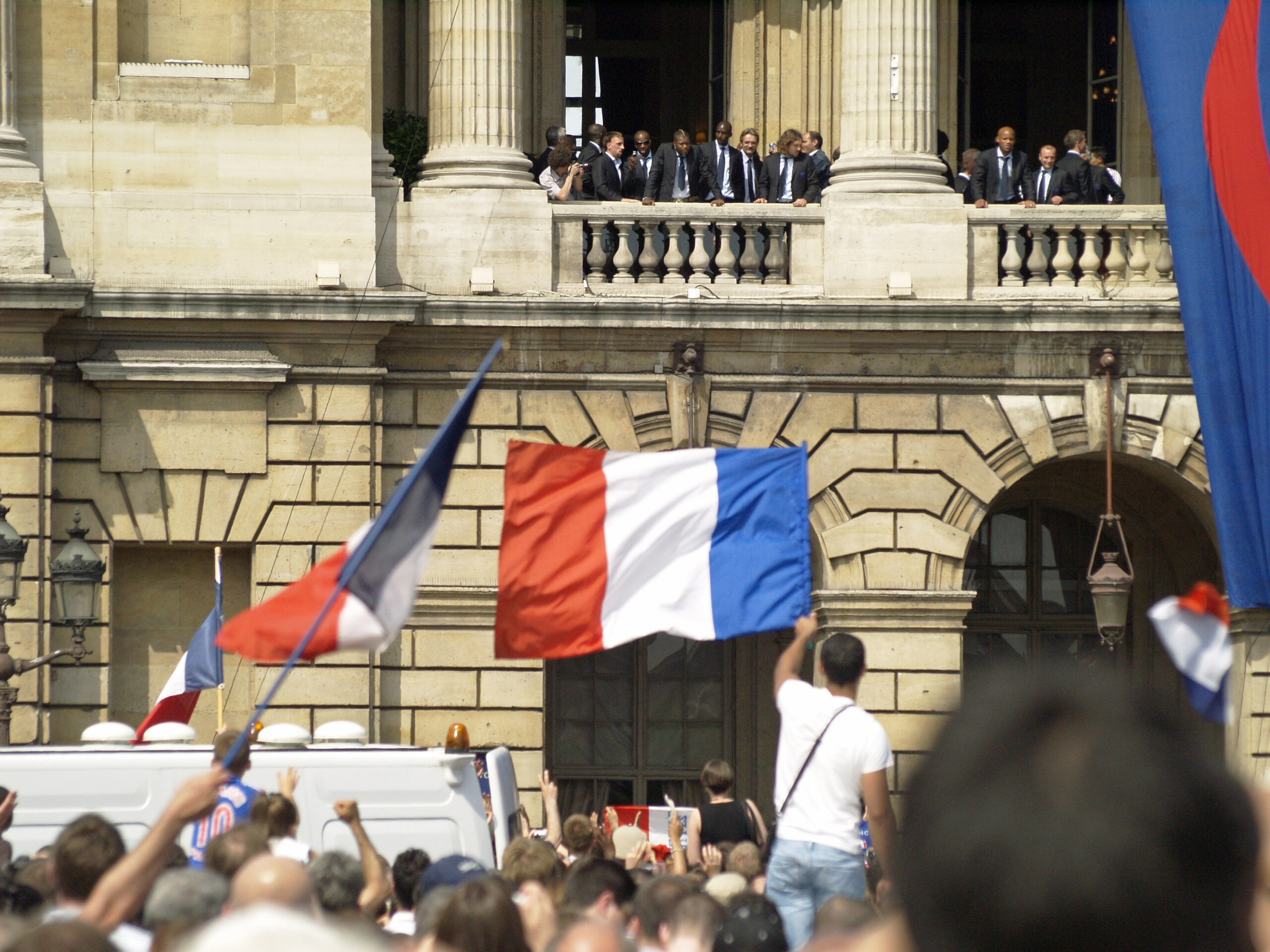
Photo: Kotivalo / Wikimedia Commons / CC BY-SA 3.0
The legacy is alive. The current squad holds or is chasing several all-time World Cup records, a sign that their history is still being written.

Team Records:
- Most Finals in the 21st Century: 4 (1998, 2006, 2018, 2022). No other nation has more than 3.
- Consecutive Final Appearances: France is one of only four nations to reach the final in two consecutive tournaments (2018, 2022).
- Biggest Win: 7-3 against Paraguay in the 1958 quarter-finals (a historic high-scoring game for its time).
Individual Player Records (Active or Recent):
- Most Goals in a Final (Modern Era): Kylian Mbappé’s 3 goals (2022) – a hat-trick.
- Most Caps for France (Men’s): Hugo Lloris (145 caps, retired from NT after 2022).
- All-Time Top Scorer for France: Olivier Giroud (57 goals, record set in 2022).
- Most World Cup Goals Before Age 24: Kylian Mbappé (12 goals).
- Player and Coach Winner: Didier Deschamps (1998 as captain, 2018 as coach).
I thought Fontaine’s record was the only one that mattered for decades. Then Mbappé came along. Watching him in 2022, it hit me: he’s not chasing Fontaine’s tournament record yet, but he’s on a path to own the career World Cup scoring record. That’s the difference. France produces players who define entire statistical categories.
These aren’t just footnotes. They are proof of a system that works. Lloris’s cap record speaks to longevity and stability in goal. Giroud’s scoring record, achieved as a sometimes-underrated forward, speaks to consistent selection and role fulfillment. Mbappé’s records speak to a generational talent being deployed perfectly on the biggest stage.
The Rivalries That Shaped Their Path
You don’t reach four finals without epic battles. France’s record is punctuated by defining clashes with other football giants.
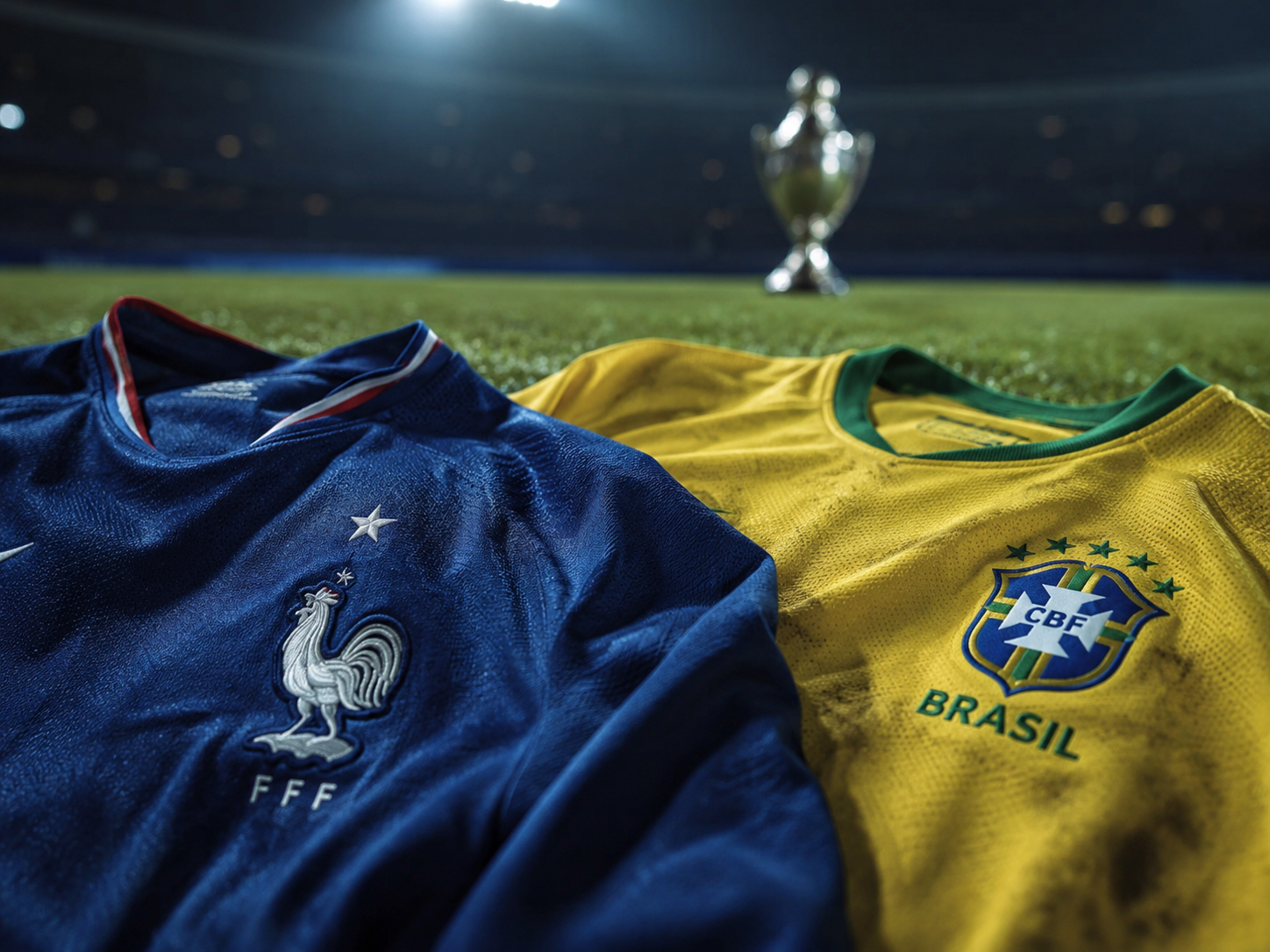
France vs. Brazil (The 1998 Final). This was more than a match. It was a passing of the torch, the establishment of a new world order. Zidane’s France dethroned Ronaldo’s Brazil, the favorites, in Paris. It’s the rivalry that gave France their first star.
France vs. Italy (The 2006 Final). A clash of European titans, decided by the thinnest of margins and one moment of madness. This rivalry is etched in pain for France, a reminder of how close they came to a repeat.
France vs. Argentina (The Modern Classic). This has become the defining rivalry of the current era. The 4-3 thriller in 2018, then the epic 2022 final. It’s Mbappé vs. Argentine superstar Messi, a clash of styles and generations. These matches are memorable overtime matches that have already entered World Cup lore.
France vs. Croatia (The 2018 Final). While not a historic rivalry, this final represented the culmination of Deschamps’ pragmatic plan against a talented, overachieving Croatian side. It was a victory of power and efficiency.
These rivalries show France’s level. They aren’t beating minnows in finals; they are slaying giants or battling other elites. Their record is built on victories and heartbreaking losses against the best teams of each era, including those featuring Argentine football legends.
What’s Next for Les Bleus?
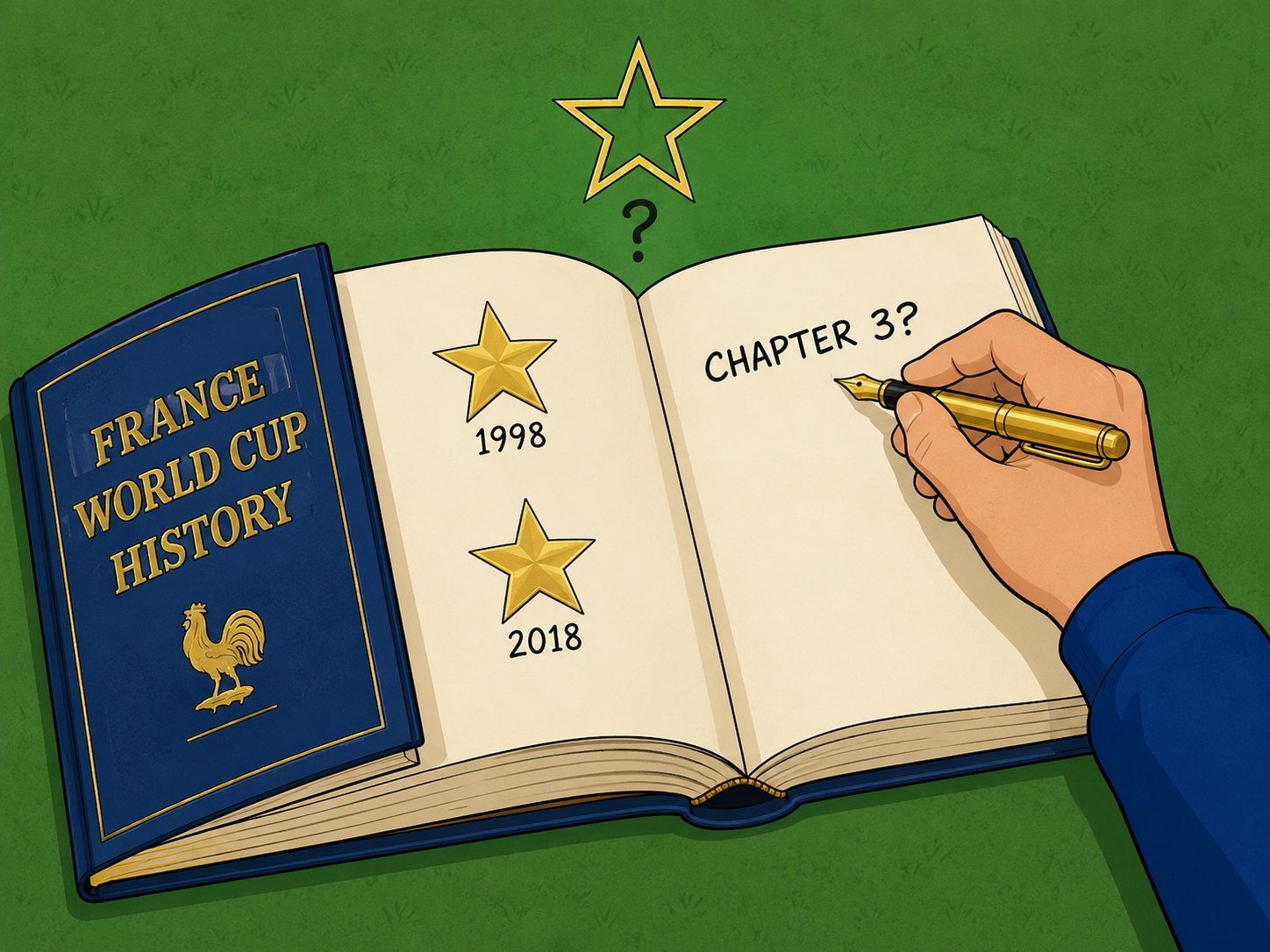
The history book is open. France’s record is already among the best, but the current cycle suggests more chapters are coming.
The core that reached the 2022 final. Mbappé, Griezmann, Hernández, remains in its prime. The talent pipeline, producing teenage prodigies like Warren Zaïre-Emery, continues to flow. The tactical framework under Deschamps (and eventually a successor) is proven.
The next targets are clear:
* Win a Third Title: To join the exclusive club of three-time winners (Brazil, Germany, Italy).
* Break the “Back-to-Back” Curse: No nation has successfully defended the World Cup title since Brazil in 1962. France will attempt it in 2026.
* See Mbappé Chase Records: He will likely become France’s all-time World Cup scorer, aiming for Miroslav Klose’s overall record of 16 career World Cup goals.
Their formation strategies may evolve, but the foundation of athletic power and individual brilliance is set. The history and record they’ve built since 1998 is not a peak; it’s a plateau they intend to stay on for years to come.
Frequently Asked Questions
What is France’s overall World Cup win-loss record?
According to compiled statistics, France has played over 70 World Cup matches. Their historical win rate sits around 50%, but that figure is heavily boosted by their modern success. Since 1998, their win rate in tournament matches is significantly higher, reflecting their status as a perennial contender.
Who is France’s all-time top scorer in the World Cup?
Just Fontaine is France’s top scorer in a single tournament with 13 goals (1958). For career World Cup goals, the leader is Kylian Mbappé with 12 goals (as of 2022). He is actively chasing the overall record held by Miroslav Klose (16 goals).
Has France ever failed to qualify for the World Cup?
Yes. France missed the tournament several times in the early and mid-20th century. Their most notable and shocking failure was for the 1994 World Cup in the USA, where they lost their final qualifier at home to Bulgaria. This failure directly led to the rebuild that culminated in the 1998 victory.
What was so special about the 1998 French team?
It was a perfect storm of talent, timing, and national spirit. A golden generation of players (Zidane, Deschamps, Thuram, Henry) hit their peak. The tournament was hosted in France, creating immense pressure and unifying support. Their victory, against the favored Brazil, transcended sport and became a moment of national pride and identity.
How did Didier Deschamps change France’s approach as coach?
As a player, Deschamps was a defensive midfielder, a water-carrier. As a coach, he built teams in that image: pragmatic, organized, and physically dominant. The 2018 winning team was less about the free-flowing artistry of 1998 and more about defensive solidity and ruthless counter-attacks. He prioritized results over style, a shift that delivered a second title.
Before You Go
France’s World Cup history isn’t a simple tally of two wins. It’s a 90-year narrative of pioneering moments, agonizing near-misses, revolutionary teams, and individual brilliance that set seemingly unbreakable records. From Laurent’s first goal in 1930 to Mbappé’s hat-trick in 2022, their story is integral to the tournament’s fabric.
The record shows a nation that learned how to win and then learned how to stay at the top. With a third title and more records in their sights, the most impressive part of France’s history may be that it feels far from finished.
I come from the “soccer heart” of Germany, the Ruhrpott. I have played, trained and followed soccer all my life and am a big fan of FC Schalke 04. I also enjoy following international soccer extensively.