Different Types of Goalkeeper Glove Palms Explained ()
The different types of goalkeeper glove palms are categorized by latex softness into three main tiers: match/contact latex for maximum grip and low durability, grip/reactive latex for balanced performance, and durability latex for extended training use. Your playing level, surface, and frequency decide which tier you need.
Most keepers pick a palm based on brand hype or pro endorsements. They end up with a €150 pair of Reusch Fusion gloves for Tuesday training on gravelly artificial turf. The magic foam is shredded in three sessions, the grip is gone, and they blame the gloves. The palm wasn’t wrong. The use case was.
This guide maps the real trade-offs. We’ll break down the latex grades, decode brand-specific foam names, and show you how the glove cut changes everything. You’ll learn why a €60 training glove often saves a €150 match glove, and which palm actually works in a downpour.
Key Takeaways
- Follow the three-tier system: Match latex (5–10 uses), Grip latex (20–30 sessions), Durability latex (50+ sessions). Never use match latex for daily training.
- Surface dictates durability: Artificial turf, especially dry 3G, abrades soft latex 3x faster than natural grass. Use reinforced palms like Reusch Re:Grip or harder training foam on turf.
- The cut changes the palm’s feel: A negative cut makes any palm feel tackier and more precise. A roll finger cut adds surface area, crucial for wet-weather grip.
- Adopt a two-pair system: One premium match glove, one durable training glove. This is non-negotiable for club-level keepers and above.
- Wet-condition palms are specialized: Foams like Reusch Aqua Grip or Uhlsport Supersoft have a porous, almost sticky texture that channels water away. They feel mediocre when dry.
The Palm is the Engine
Forget the colors and the strap system. The palm is the single component that determines whether you catch the ball or parry it into your own net. Its job is a brutal contradiction: be soft enough to stick to a wet, muddy ball, yet tough enough to survive abrasive ground contact. All performance flows from the latex compound’s formulation.
Latex softness is graded on a spectrum. Softer latex has a higher natural tackiness, creating a stronger chemical bond with the ball’s surface. This gives you that pro-level, suction-cup catch. The trade-off is physical fragility. That same soft, porous structure tears easily on impact with gritty surfaces.
Goalkeeper glove palms are laminated foam constructions where a top layer of natural or synthetic latex is bonded to a foam backing. The backing provides cushioning and energy absorption, while the latex surface provides the grip. Thickness typically ranges from 3mm for a sensitive “contact” feel to 5mm or more for enhanced cushioning in training gloves.
TL;DR: Softer latex grips better but dies faster. Harder latex lasts longer but feels less sticky. Your choice is a sliding scale between these two poles.
The Three-Tier Latex System: Match, Grip, and Durability
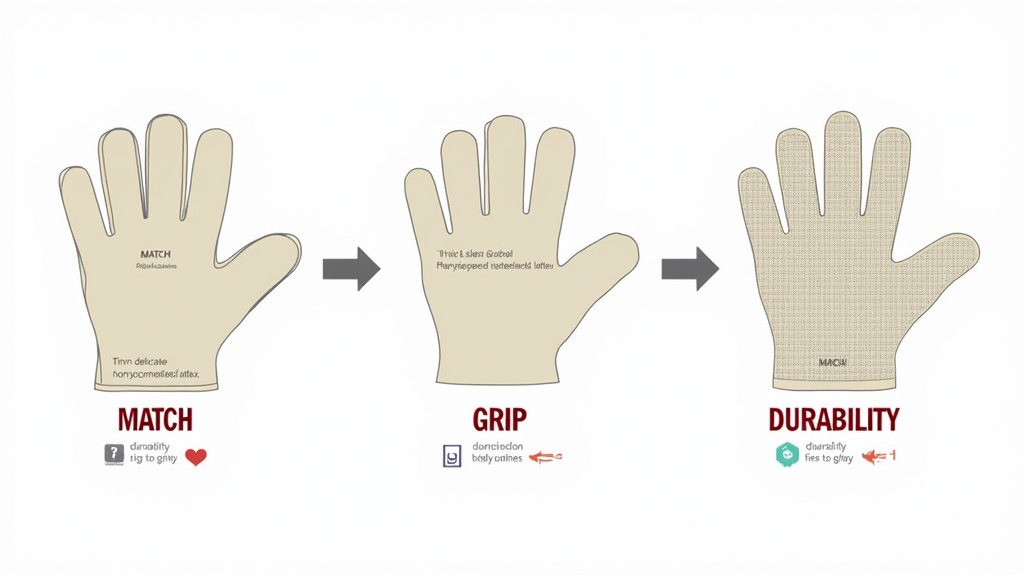
Brands invent fancy names—Fusion, Supergrip+, DEMOSKIN. It’s noise. Every palm fits into one of three functional tiers. This system, used by retailers and pros, cuts through the marketing.
| Tier | Common Brand Names | Grip | Durability | Best For | Worst For |
|---|---|---|---|---|---|
| Match / Contact | Reusch Fusion, RG Contact Grip, Uhlsport Supergrip+ | Exceptional, “suction” feel | Very Low (5–10 uses) | Match day only, dry natural grass | Training, artificial turf, wet mud |
| Grip / Reactive | Reusch Infinity Grip, Uhlsport Absolutgrip, Adidas URG 3.0 | Very Good, reliable tack | Moderate (20–30 sessions) | Serious training + matches, all surfaces | Beginners, keepers on a tight budget |
| Durability / Training | Reusch Solid, Generic “Grip” latex, Storelli Exo-Shield | Good, functional grip | High (50+ sessions) | Daily training, beginners, artificial turf | High-level matches where grip is critical |
The jump from Grip to Match latex is about nuance, not a revolution. A Match latex might give you 10% more stick on a perfect surface. But it will disintegrate 300% faster on the wrong one. Most amateur keepers over-index on that 10% and ignore the 300% penalty.
Reusch’s own categorization makes this clear:
- Pro: Fusion, Gold X, Aqua Grip (Match tier)
- Advanced: Infinity Grip, Gold Grip (Grip tier)
- Intermediate: Reusch Grip (upper Grip / lower Durability tier)
- Recreational: Solid (Durability tier)
Common mistake: Using a Match-tier palm like Reusch Fusion for weekday training on artificial turf — the surface abrasion will shred the foam’s top layer within two sessions, leaving a smooth, slick surface that won’t grip even in dry conditions.
I learned this the hard way during a preseason in Gelsenkirchen. Our team kit included the then-new Reusch Attrakt Freego Gold X gloves. The grip was supernatural. I used them for every session on our all-weather pitch. After eight days, the palms were so worn the club made me pay for a replacement pair out of my own pocket. The lesson was cheaper than the gloves.
Decoding Brand-Specific Palm Technologies
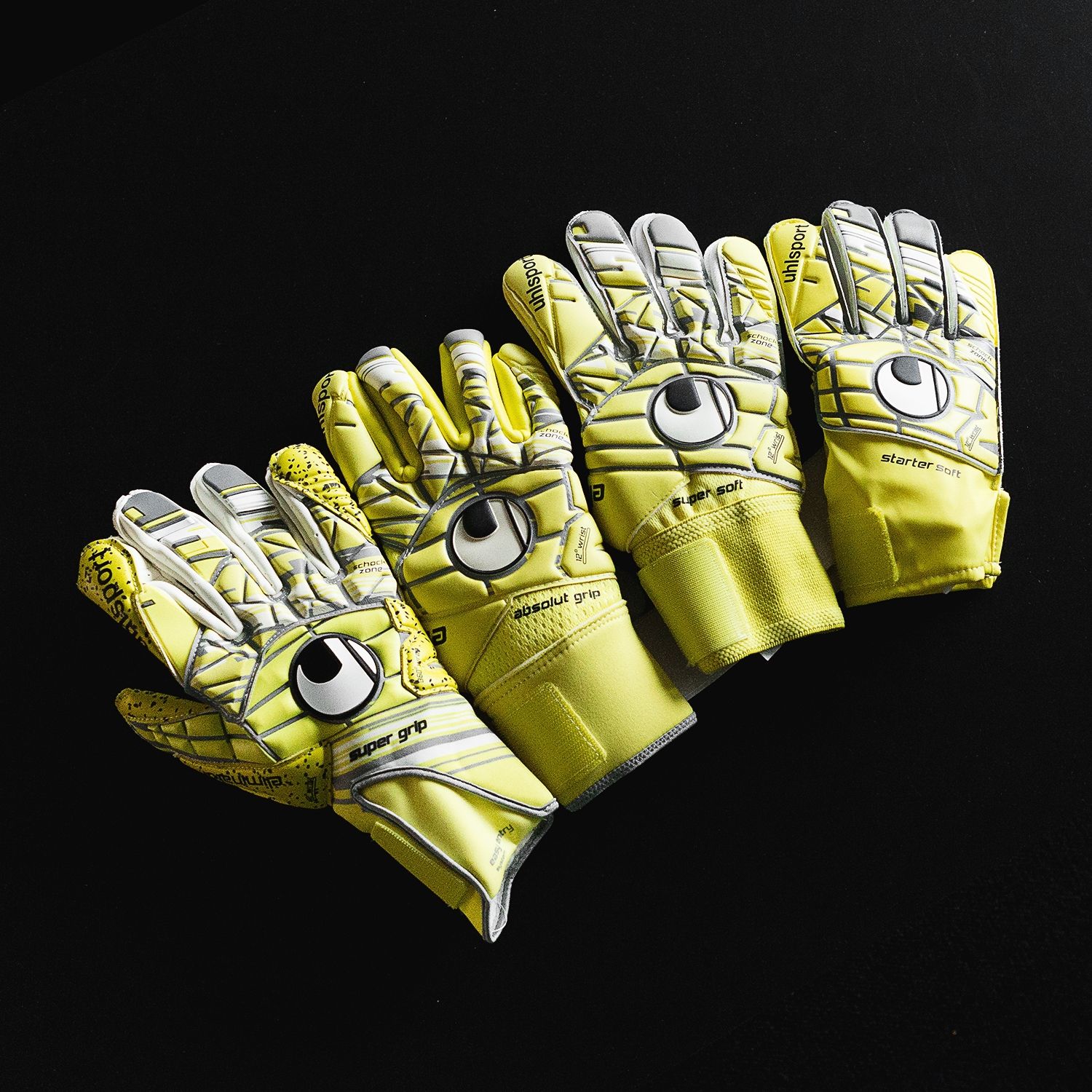
Once you know the tier, the brand-specific names tell you about special features. These are the additives and constructions that solve specific problems.
All-Weather Performers:
- Reusch Grip Fusion: This is their flagship. It’s a 4mm foam designed for high grip in dry and wet conditions. It has a balanced durability for a pro foam. Think of it as a “Match+” tier.
- Reusch Speedbump: Features raised pimples (“speedbumps”) across the palm. The theory is that these pimples increase surface area and channel water. In practice, they excel in wet conditions but can feel less consistent on a perfectly dry ball.
Wet-Weather Specialists:
- Reusch Aqua Grip: The name says it. The latex has a more porous, open structure to channel water away from the contact point. It feels almost spongy when dry but comes alive in rain.
- Uhlsport Supersoft / Supergrip+: Uhlsport’s answer. A supremely soft compound that stays tacky when damp. The “+” versions often have a reinforced top layer for slightly better durability.
Durability-Boosted Designs:
- Reusch Re:Grip: A clever two-layer construction. A top layer of world-class latex is fused to a more durable “Infinity” latex base. As the top layer wears, the still-grippy underlayer is exposed. It extends the glove’s effective life by 30-40%.
- Storelli Exo-Shield: Incorporates a thin, flexible armor layer under the latex to protect against punctures and tears from hard ground or debris, common in outdoor sports conditions.
The brand hierarchy is largely irrelevant at the same tier. A Reusch Fusion (Match), Uhlsport Supergrip+ (Match), and RG Contact Grip (Match) will perform within a margin of error of each other. Your hand shape and preferred cut matter more.
How Glove Cuts Change the Palm’s Contact
The cut—how the panels of the glove are stitched together—is not just about fit. It changes how much of that expensive latex actually touches the ball. A poor cut choice can waste a great palm.
- Negative Cut: The panels are stitched inside the glove, creating a tight, second-skin fit. This pulls the latex taut across your hand, maximizing contact area and giving a true, sensitive feel. It makes any palm feel more responsive. Downside? It’s tight. If you have wide hands, it can restrict blood flow. This cut is why pros seem to have glue on their hands.
- Roll Finger Cut: The latex is wrapped over the fingers and stitched on the backhand. This creates a seamless, wrap-around latex surface on each finger, offering the maximum possible contact area. It’s exceptionally good in wet conditions, as water has no seam to seep into. The fit is snug but less constricting than a negative cut.
- Flat Cut: The traditional method. Panels are stitched on the outside, creating a roomier, more comfortable glove. It’s forgiving for wider hands and beginners. The trade-off is that the external stitching reduces the palm’s smooth contact area. It’s the most durable cut but the least performance-oriented.
- Hybrid Cut: As Jordan Pickford explained, this mixes cuts on different fingers (e.g., roll finger on the index and pinky for catching, flat on the middle fingers for comfort). It’s a custom-fit solution for specific feel preferences.
I prefer a tight roll finger cut for wet matches and a negative cut for dry ones. The roll finger gives me that extra millimeter of wrap on a slippery ball, while the negative gives me the precision for punching and parrying. I haven’t worn a flat cut glove since my early teens.
Your choice here directly impacts your glove sizing guide. A negative cut often requires a size up from your flat cut size. Getting this wrong feels like wearing a tourniquet.
Matching the Palm to Your Surface and Conditions
The ground you play on is a silent partner in your glove choice. It determines lifespan more than any other factor.
Natural Grass: The kindest surface. Damp soil and grass have some give. You can use softer Match latex here with reasonable longevity. Wet grass demands a wet-weather specialist foam.
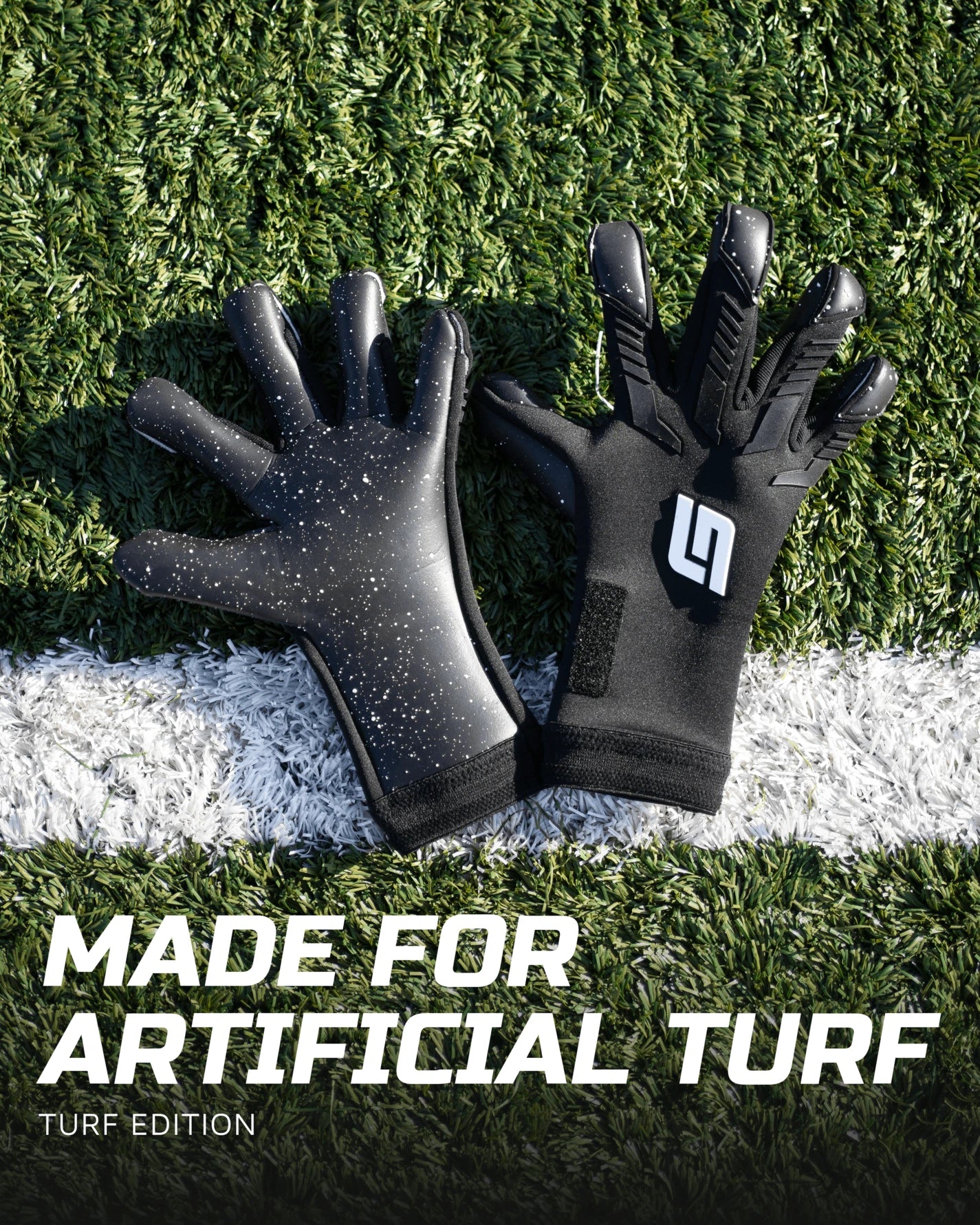
Artificial Turf (3G/4G): The palm killer. The rubber crumb and sand infill, combined with the plastic blades, act like sandpaper. On dry turf, soft latex will literally fray before your eyes.
* Solution 1: Use a dedicated turf palm with a harder, more abrasion-resistant compound.
* Solution 2: Use a durability-tier training glove for all turf sessions. Save the good gloves for grass matches.
* Solution 3: Look for palms with built-in abrasion zones or technologies like Reusch Re:Grip.
Common mistake: Assuming a glove that grips well on dry turf will work in the wet. Wet turf holds mud and grit in suspension, creating a pasty abrasive slurry. A soft palm will gum up and lose all grip, while a wet-weather foam might survive but still wear rapidly. It’s the worst of both worlds.
This is where your two-pair system becomes non-negotiable. Your turf gloves are a consumable item, like worn-down studs. Budget for them accordingly.
The Two-Pair System and Glove Care
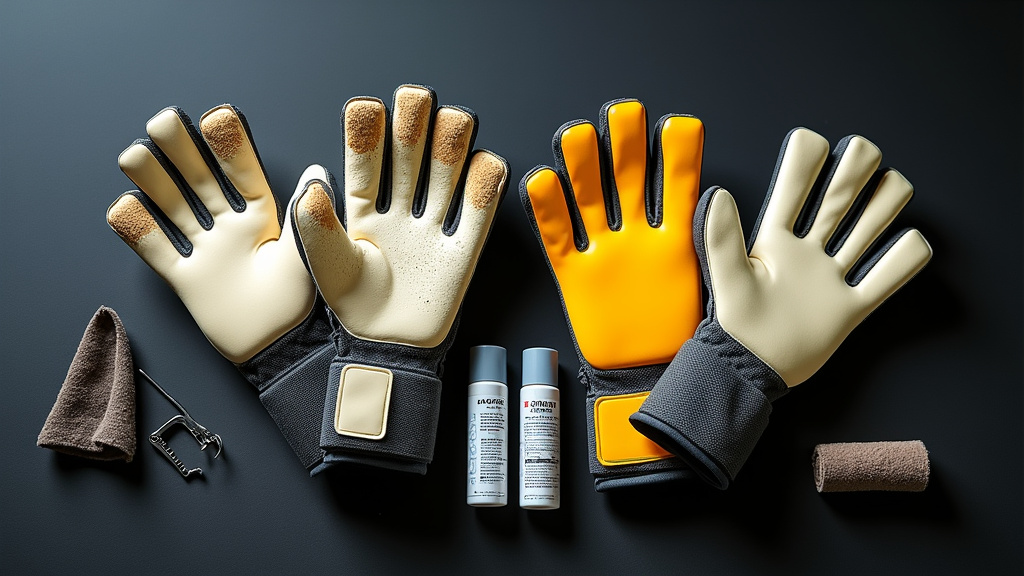
The single biggest upgrade any keeper can make is owning two dedicated pairs of gloves. This isn’t about luxury; it’s about economics and performance.
Pair 1: The Match Glove.
- Palm: Match or high-end Grip tier (Reusch Fusion, Uhlsport Supergrip+).
- Use: Games and maybe one light pre-match training.
- Care: Meticulous. Rinse with cool water after use, never hot. Air dry away from direct heat. Use specific glove wash, never detergent.
Pair 2: The Training Glove.
- Palm: Durable Grip or Durability tier (Reusch Infinity Grip, Solid).
- Use: All other training sessions, especially on turf.
- Care: Still clean them to prevent grit from embedding, but less stress over perfect preserving glove grip.
This system extends the life of your expensive match gloves by 400% or more. It also means you always have a dry, grippy pair ready for game day. Your training gloves absorb the punishment, preserving the glove construction of your primary pair.
Proper glove washing techniques are critical for Match-tier latex. Detergent strips the natural tackifiers. Wringing twists and cracks the foam. Heat bakes it brittle. The right post-wash glove care routine is what separates a palm that lasts six matches from one that lasts two.
Frequently Asked Questions
What is the stickiest goalkeeper glove palm?
The stickiest palms are Match/Contact latex compounds like Reusch Fusion Foam, Uhlsport Supergrip+, or RG Contact Grip. Their extreme softness creates a near-suction grip on clean, dry balls. This stickiness comes at the direct cost of durability, making them unsuitable for training.
Are more expensive goalkeeper gloves always better?
Only for their intended use. A €150 glove with Reusch Fusion palm is objectively better for match-day grip than a €50 glove. But for daily training on artificial turf, the €50 glove’s more durable palm will last longer and be the smarter, better purchase. Expensive gloves use premium, fragile materials.
How does glove cut affect the palm’s performance?
The cut dictates how much latex contacts the ball. A Negative Cut stretches the latex taut for maximum, sensitive contact. A Roll Finger Cut wraps latex around the fingers for more surface area, ideal for wet conditions. A Flat Cut is roomier but has external stitching that reduces the palm’s smooth contact zone, dulling the feel.
Can you make glove palms grippier?
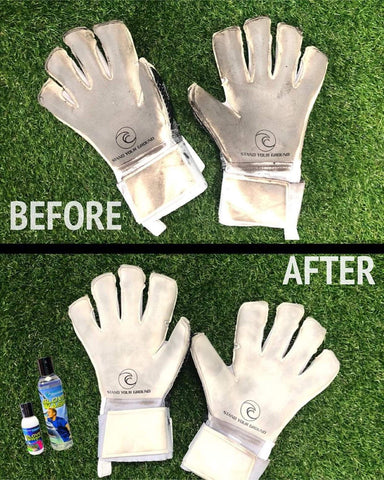
You can restore lost grip by cleaning them properly with lukewarm water and specialized glove wash to remove dirt and mud that clogs the latex pores. You cannot make a worn-out, smooth palm grippy again. Products like glove glu provide a temporary, sticky layer but can damage the latex and are often banned in competitive play.
How long should goalkeeper gloves last?
It depends entirely on the palm tier and surface. Match gloves: 5-10 full matches on grass. Grip gloves: 20-30 training sessions. Durability gloves: 50+ sessions. Playing on artificial turf can cut these lifespans in half or more. Regular cleaning and drying gear properly is the best way to hit the upper end of these ranges.
The Bottom Line
Stop looking for one perfect glove. It doesn’t exist. The solution is two specialized tools: a fragile, hyper-grippy scalpel for matches, and a durable, reliable workhorse for training. Match the palm’s latex tier to its job—soft for catching, hard for surviving. Let the glove cut fine-tune the feel, and let the playing surface have the final say on durability.
Your palms are your connection to the game. Choose them with the same logic you’d apply to any other equipment wear indicators. Listen to the feedback. A palm that’s lost its bite is telling you it’s done its job. Time to rotate the pair and protect your investment with a solid gear care routine. That’s how you keep your hands ready.

I come from the “soccer heart” of Germany, the Ruhrpott. I have played, trained and followed soccer all my life and am a big fan of FC Schalke 04. I also enjoy following international soccer extensively.