Hockey Players vs Soccer Players: Key Differences Compared
Comparing hockey players vs soccer players comes down to five core contrasts: the type of speed (explosive skating vs. aerobic sprinting), the rules of contact (full-body checking vs. limited tackles), career longevity (shorter physical peaks vs. longer technical primes), training focus (power and rotation vs. endurance and agility), and the spatial intelligence demanded by each game’s flow.
Most discussions get stuck on surface stats, goals, assists, salaries. That misses the point. The real divide is in the physical grammar of each sport, the way a body is built and broken down over a career.
This guide breaks down the five irreversible differences. We’ll use data from NHL EDGE tracking, era-adjusted career stats, and the physiological demands that separate a power forward from a playmaking midfielder.
Key Takeaways
- Hockey players hit higher top speeds (over 24 mph) but soccer players cover more total ground per match, requiring different energy systems.
- Legal, full-body checking defines hockey’s physicality, while soccer contact is restricted, leading to a culture of tactical fouls and simulation.
- The average NHL career lasts about 5.5 years; elite soccer players regularly compete into their mid-30s, reflecting different wear patterns.
- Hockey training prioritizes explosive lower-body power and core rotation for shooting; soccer conditioning targets maximal aerobic capacity and change-of-direction agility.
- Hockey intelligence is about processing constant flow and rapid line changes; soccer IQ revolves around controlling space and orchestrating possession in structured phases.
What’s the Real Difference in Game Speed?
Raw numbers lie. Connor McDavid’s NHL EDGE tracked top speed of 24.61 mph looks faster than Kylian Mbappé’s soccer sprint speed of around 23 mph. But speed works differently on ice versus grass.
Hockey speed is about explosive, repeatable bursts. Players like Cale Makar and Quinn Hughes skate over 4.5 miles per game, but in shifts lasting 45 seconds. The game is played in high-intensity intervals. Soccer speed is woven into 90 minutes of near-constant aerobic activity. A winger might cover 7 miles, mixing walks, jogs, and a few decisive sprints. The energy system is the difference.
NHL EDGE data shows elite defensemen like Makar and Hughes average skating distances in the 95th+ percentile, with power-play specific mileage also leading the league. This quantifies the sport’s unique stop-start, high-output demand.
TL;DR: Hockey speed is anaerobic and explosive; soccer speed is aerobic and sustained. Comparing a 24-mph skate to a 23-mph run ignores the engine underneath.
The Contact Conundrum: Checking vs. Tackling
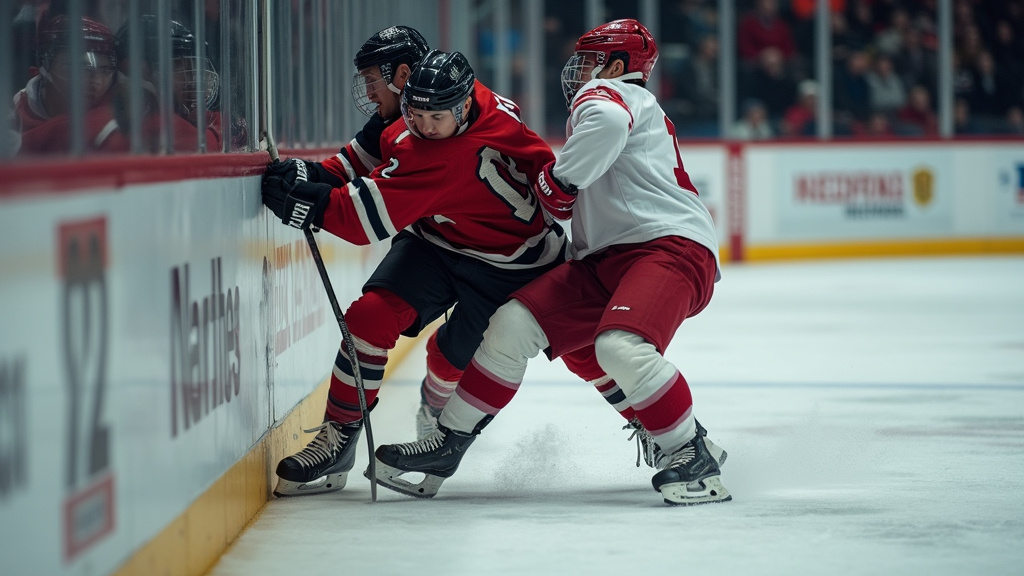
This is the most visually obvious split. Hockey is built on legal, full-body checking. Soccer penalizes most similar contact as a foul. This single rule changes everything about an athlete’s physique and risk profile.
A hockey player must absorb and deliver hits along the boards. It demands a lower center of gravity, robust shoulder construction, and the core strength to stay upright through impact. Think of Sidney Crosby battling in the corners. Soccer contact is more about leverage, timing, and often, avoidance. A well-timed slide tackle wins the ball; a mistimed one concedes a free kick or earns a card. The physical demands of soccer are immense, but they stem from endurance and agility, not deliberate collision.
The soccer response to limited contact is simulation in soccer and tactical fouls. It’s gamesmanship born from a rulebook that heavily punishes physical infringement. You don’t see “diving” in hockey. You see fights.
| Contact Type | Hockey | Soccer |
|---|---|---|
| Legal Full-Body Contact | Yes (checking) | No |
| Primary Physical Goal | Separate player from puck | Win the ball cleanly |
| Common Consequence | Change of possession, possible penalty | Free kick / penalty kick, yellow/red card |
| Athletic Adaptation | Dense muscle mass, balance for impact | Lean muscle, agility to avoid/receive contact |
| “Gamesmanship” Manifestation | Fighting, post-whistle scrums | Diving, tactical fouls, time-wasting |
TL;DR: Hockey players are built for collisions; soccer players are built to navigate them. The rulebook dictates the body type.
Career Clocks and Athletic Longevity
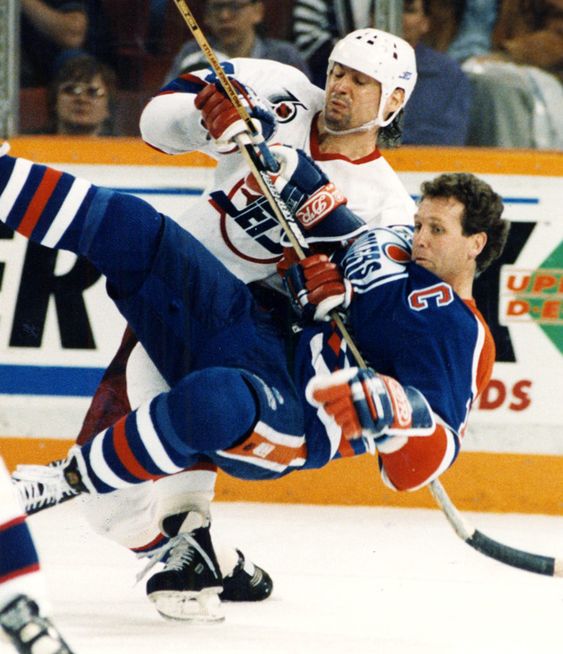
Look at the ages. Sidney Crosby, at 36, is a revered veteran. Cristiano Ronaldo played at Al-Nassr at 41. Lionel Messi stars for Inter Miami at 38. The retirement age for soccer players stretches far beyond hockey’s typical sunset.
The average NHL career lasts roughly 5.5 years. Even superstars often decline sharply in their early-to-mid 30s. The grind of 82 games plus playoffs, combined with the physical punishment of checking, wears joints down. Soccer’s wear is more metabolic and muscular, recoverable with modern soccer player nutrition and conditioning. A footballer’s technical skills (passing, vision) can compensate for lost pace, extending their prime. A hockey player who loses a half-step of skating speed is often finished at the elite level.
Common mistake: Assuming a 35-year-old soccer star and a 35-year-old hockey star are in equivalent physical condition. The hockey player has likely endured 15+ years of systemic joint impact from skating and checking; the soccer player’s body is taxed, but not in the same cumulative, traumatic way.
This longevity gap influences career strategy. Hockey teams often rush prospects (like Connor Bedard) because the physical window is short. Soccer clubs can afford longer development arcs, knowing a player’s technical peak may still be a decade away.
Training Regimens: Power vs. Engine
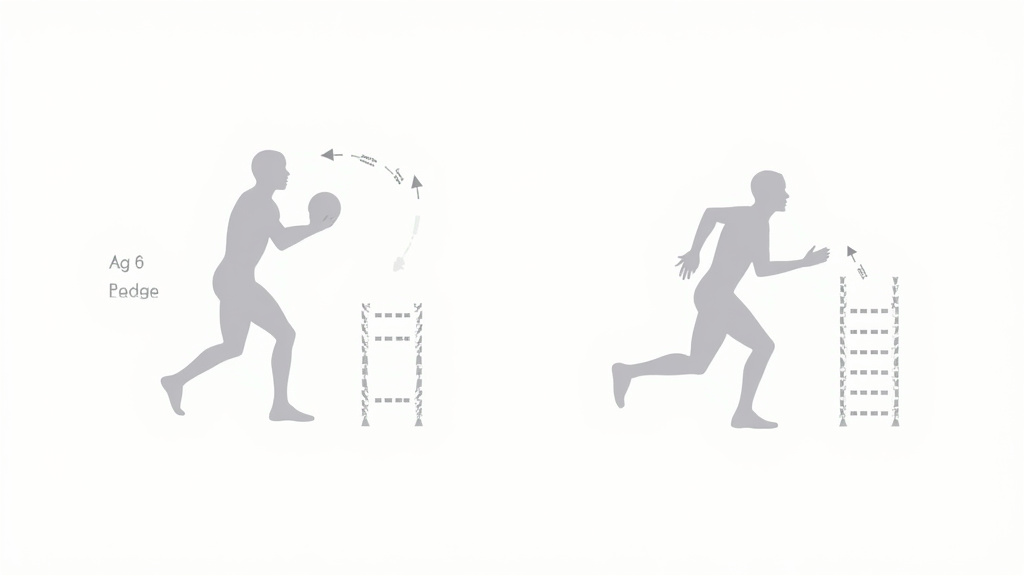
Watch a soccer player workout plan. You’ll see agility ladders, plyometric boxes, and endless running tailored for the sport’s specific strength training. Now picture a hockey gym: heavy squats, Olympic lifts, and medicine ball twists for shot power.
The training objective is different.
1. Hockey: Generate rotational force. Every shot, from a wrist shot to a slapshot, is a full-body kinetic chain originating in the legs and firing through a torqued core. Training builds explosive power for skating starts and the core strength to wind and release a 90+ mph shot.
2. Soccer: Sustain repetitive motion and change direction. Training maximizes VO2 Max for 90-minute endurance and develops the elastic strength in tendons and muscles for cutting, jumping, and kicking. It’s about repeatability.
You can see it in their physiques. Hockey players, especially defensemen and power forwards, have thicker legs and torsos. Soccer players are leaner, with musculature designed for efficiency over mass. This isn’t about who’s fitter; it’s about fitness for a specific task.
Intelligence on Ice vs. Intelligence on Grass
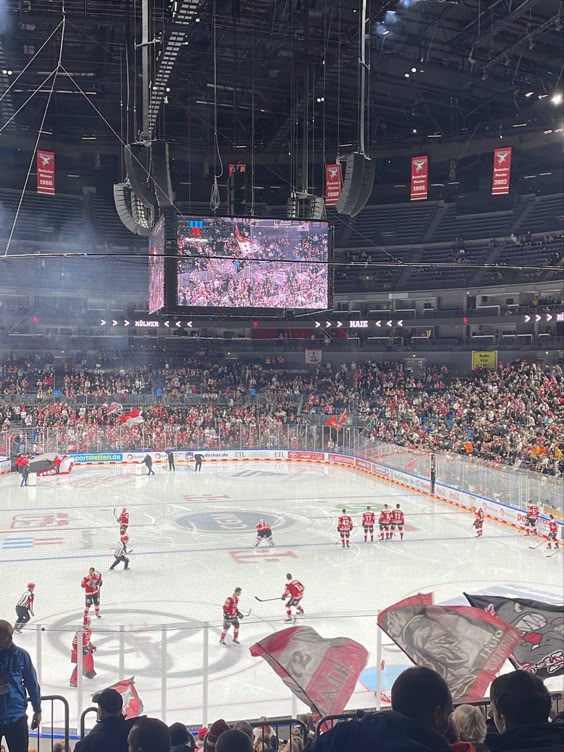
We call it “hockey IQ” or “football brain.” The cognitive demands are similarly high but functionally distinct. It’s the difference between reading a chaotic river and orchestrating a chess match.
Hockey intelligence is processing constant, high-speed flow with rapid line changes. There are no set possessions. A defenseman like Cale Makar must read a forecheck, jump into a shooting lane, and instantly transition to offense, all within three seconds. Decisions are instinctive, patterned, and reactive.
Soccer intelligence is more strategic and spatial. It’s about controlling territory, manipulating defensive lines, and managing game tempo. A midfielder dictates play by choosing when to circulate possession or thread a penetrating pass. The game unfolds in more structured phases: build-up, chance creation, defensive consolidation. Choosing your ideal football position depends heavily on this type of cognitive strength.
Both require incredible anticipation. But one operates in a blur of perpetual motion, the other in a more deliberate, though no less intense, tactical framework.
A Tale of Two GOAT Debates
The “Greatest of All Time” conversations in each sport highlight their core values. Hockey’s eternal debate. Wayne Gretzky vs. Mario Lemieux vs. now Connor McDavid, revolves around offensive dominance and point production. Gretzky’s 2,857 points are the untouchable record. The RG Institute’s instant insights hockey player comparison between Gretzky and Ovechkin underscores how era-adjusted stats contextualize pure goal scoring versus all-around playmaking.
Soccer’s Messi vs. Ronaldo debate splits along similar lines: artistic playmaking versus ruthless goal-scoring efficiency. But it’s also deeply tied to team glory (Champions League titles) and international success (the World Cup). McDavid’s lack of a Stanley Cup is a mark against him in a way that, for years, Messi’s lack of a World Cup was. The team achievement weight is heavier in soccer’s legacy calculus.
These debates are proxies. They ask what each sport truly prizes: Is it the purest scorer (Ovechkin, Ronaldo), the transcendent playmaker (Gretzky, Messi), or the complete winner (Crosby)?
Physical Prototypes and Exceptions
Every sport has its outliers that prove the rule. Hockey’s ideal is powerful and compact. Yet you have lanky playmakers like Connor Bedard. Soccer’s ideal is lean and agile. Then you have strikers like Erling Haaland, a 6’4″ force of nature, or historical figures among the top 5 heaviest players.
These exceptions succeed because they exploit a specific niche within the sport’s physics. Haaland uses his frame for aerial dominance and power, compensating for any agility trade-off. Bedard’s slight build is offset by elite hockey IQ and a release quicker than larger defenders can handle. The tallest soccer players often become dominant goalkeepers or target forwards, using their reach as a primary weapon.
The prototypes exist for a reason. They are the evolutionary answer to the sport’s central question. The exceptions are the brilliant mutations that find another way to win.
Frequently Asked Questions
Can a hockey player become a soccer player, or vice versa?
Almost never at an elite level. The muscle memory, energy systems, and specialized skills are too deeply ingrained by adolescence. The crossover from field hockey to ice hockey is more plausible than from either to soccer, due to some kinematic similarities in shooting/striking.
Which sport is more physically demanding?
They demand different things. Hockey is more anaerobically demanding, with higher injury rates from collision. Soccer is more aerobically demanding, with greater total running load and soft-tissue injury risk. It’s a choice between acute trauma and chronic fatigue.
Why do soccer players have longer careers than hockey players?
The primary reason is the absence of systematic, full-body collision. Soccer’s wear is on the muscles and cardio system, which can be managed with advanced performance foods for athletes and recovery. Hockey’s wear is on the joints (hips, knees, shoulders) from skating mechanics and hits, leading to degenerative issues that are harder to mitigate.
Who is faster, Connor McDavid or Kylian Mbappé?
In a pure, 100-meter sprint on a track, Mbappé likely wins. In a 30-meter acceleration with pads and a stick on ice, McDavid is untouchable. The sports measure different kinds of speed. McDavid’s 24.61 mph is about explosive power from a standing start on a frictionless surface. Mbappé’s speed is about sustained acceleration with the ball at his feet.
Does soccer require more strategy than hockey?
Not more, but different. Hockey strategy is more about match-ups, line changes, and in-the-moment adjustments due to its fluidity. Soccer strategy is more premeditated, with set formations, possession phases, and deliberate tactical fouling. Both require brilliant coaches and intelligent players.
The Bottom Line
Forget the jerseys and the playing surfaces. The gap between hockey players and soccer players is physiological and philosophical. It’s in the way their bodies are constructed for collision or endurance, the way their careers are shortened by joints or extended by technique, and the way their minds are wired for chaos or control.
You admire a hockey player for his explosive power and resilience. You admire a soccer player for his engine and artistry. Comparing them directly is like comparing a sprinter to a marathon runner, both are elite athletes, but they are answers to completely different questions. Appreciate each for what it demands. That’s where the real understanding begins.

I come from the “soccer heart” of Germany, the Ruhrpott. I have played, trained and followed soccer all my life and am a big fan of FC Schalke 04. I also enjoy following international soccer extensively.