Artificial Grass vs Turf Soccer Cleats: Core Differences
The difference between artificial grass and turf soccer cleats comes down to the soleplate and stud design needed for two distinct synthetic surfaces. Artificial grass cleats (AG) use numerous short, conical studs to penetrate a deeper system of plastic blades and rubber infill. Turf cleats (TF) use a dense pattern of short rubber nubs to grip a shallow, carpet-like surface often laid over concrete.
Most players get this wrong because they see a green synthetic field and grab any “artificial surface” shoe. The labels “AG” and “TF” are often used interchangeably by retailers, adding to the confusion.
This guide cuts through the marketing. You’ll learn how to physically identify each surface, why the wrong cleat causes injuries, and exactly which boot models work where. We’ll cover the mechanics, not just the names.
Key Takeaways
- Surface Depth is Key: Turf is a thin carpet over hardpack or concrete. Artificial grass is a deeper system with plastic blades and rubber/sand infill.
- Stud Pressure Causes Injury: Using firm ground (FG) cleats on turf drives long studs into concrete, creating high pressure points that lead to metatarsal stress and knee pain.
- AG Cleats Have More Studs: A proper artificial grass cleat has 30+ short, conical studs to distribute pressure across the infill. A turf shoe has 50+ tiny rubber nubs.
- The Labels Lie: Many boots marketed as “AG” are actually TF designs. Check the stud count and shape, not the label.
- Rotational Release Matters: On artificial grass, your foot must be able to rotate freely upon planting to avoid ACL stress. Conical studs allow this; bladed FG studs do not.
The Soleplate is the Difference
Look at the bottom of the boot. The soleplate tells you everything.
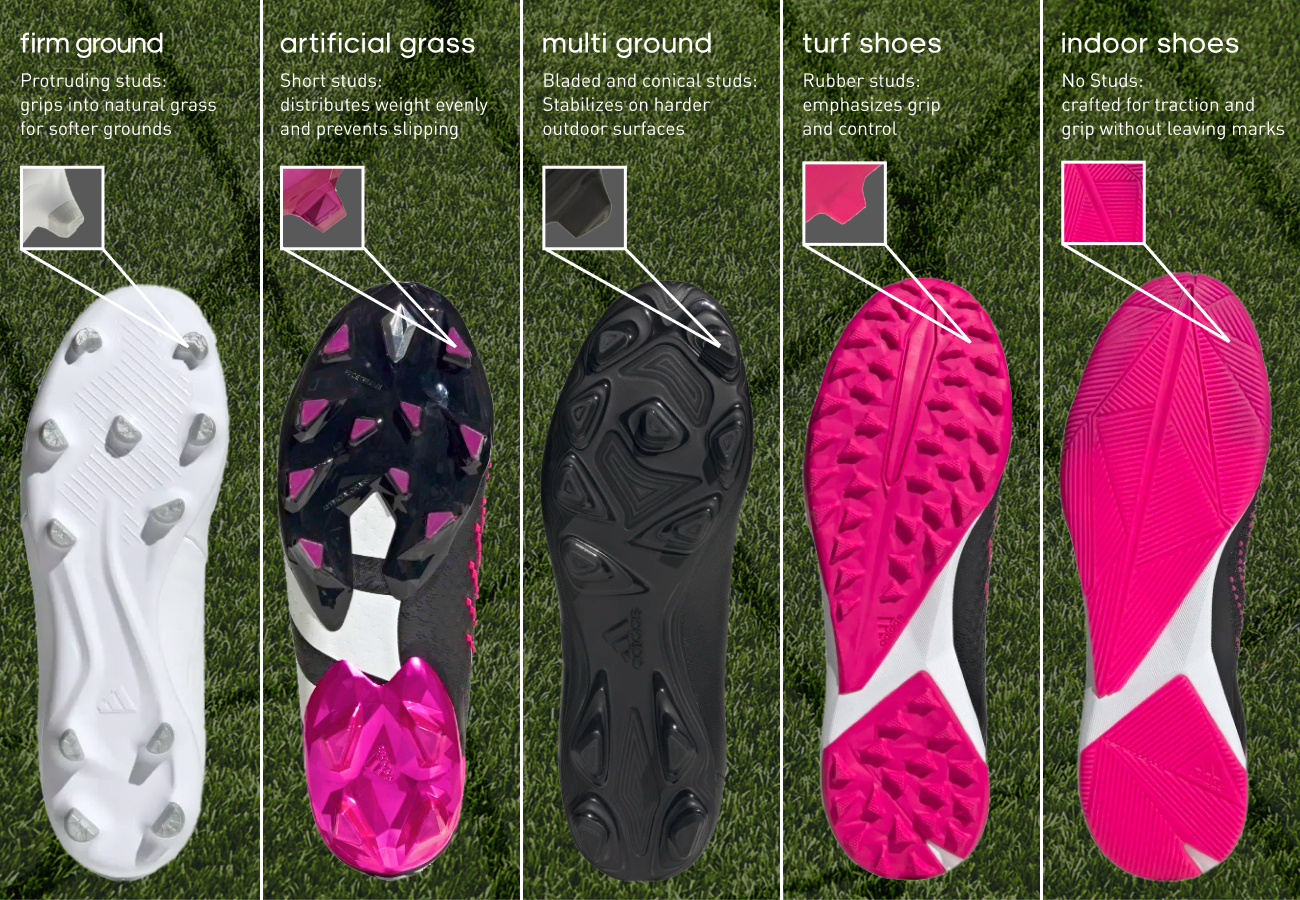
Artificial grass cleats employ a high count of short, conical or rounded studs, typically between 20 and 35 millimeters in length. The design prioritizes pressure distribution across the infill layer and allows for rotational release to reduce knee and ankle stress. Turf shoes replace studs entirely with a dense matrix of rubber nubs or dimples, providing grip on a surface with no penetration depth.
A turf surface gives nowhere for a stud to go. It’s like playing on a rough doormat laid over a parking lot. I learned this the hard way during a preseason futsal session on a converted tennis court. We wore our regular FG cleats. After twenty minutes, a sharp, localized pain shot through the ball of my foot with every step. That was stud pressure—the force of a single stud hitting unyielding concrete, transferred straight into my metatarsal. I switched to proper turf trainers the next day and the pain vanished.
TF cleats use a sea of rubber nubs—often 70 or more on a soleplate. They create friction, not penetration. The nubs are short, usually under 5mm tall, to keep your foot close to the ground and stable.
AG cleats need to interact with a 30-50mm deep system. They use many short studs, but they are still studs. Their conical shape lets them sink into the infill, grip, and then release cleanly when you change direction. This rotational release is non-negotiable for safety on artificial grass.
How the Surfaces Are Built (And Why It Matters)
You can’t pick the right cleat if you don’t know what you’re standing on. The construction dictates the required footwear mechanics.
Classic Turf (TF Surfaces)
This is the old-school synthetic surface. Think of a rough, short-pile carpet, often a green sandpaper. It’s installed directly over asphalt, compacted stone, or concrete. There is no infill. The pile height is very short, often between 10mm and 15mm. When you fall, you get friction burns—the “turf burn.” Its entire purpose is durability for high-use areas like school yards or multi-sport courts, not performance or player comfort.
Modern Artificial Grass (AG Surfaces)
This is a layered system designed to mimic real grass. The plastic blades (usually polyethylene) are longer—20mm to 65mm. Between these blades is an infill layer of silica sand and crumb rubber (recycled tires) that weighs the turf down, provides cushioning, and keeps the blades upright. Under that is a shock pad for further impact absorption, and then a porous backing for drainage. A quality artificial grass field has give. You can feel it underfoot.
| Surface Component | Classic Turf (TF) | Modern Artificial Grass (AG) |
|---|---|---|
| Pile Height | 10–15 mm (short) | 20–65 mm (long) |
| Infill | None | Sand & crumb rubber layer |
| Base Layer | Asphalt or concrete | Shock pad, porous backing |
| Primary Feel | Hard, abrasive | Softer, more yielding |
| Player Impact | High joint stress | More natural force absorption |
The government-backed Sport Victoria artificial turf guide details these construction standards for performance and safety. Ignoring them means choosing cleats blind.
AG vs TF: A Labeling Mess
Here is where players get tripped up. The boot industry’s naming is inconsistent. You must become a soleplate detective.
Many brands sell a shoe with a rubber nub outsole and call it an “AG” cleat. This is technically wrong and potentially dangerous if used on a true, deep-pile artificial grass field. That shoe is a turf (TF) cleat. A true AG cleat will always have distinct, short studs. The number is the giveaway.
Common mistake: Buying “AG” cleats based on the label alone — the shoe may have a TF nub soleplate, which offers zero penetration on real artificial grass, causing slips and unstable footing during cuts.
I fell for this with a major brand’s “AG-Pro” model. The box and website said artificial grass. The soleplate was a rubber nub pattern. On a wet, long-pile AG field, I had the traction of a street shoe. Every sharp cut became a slide. I returned them the next week.
To navigate this, use this decision matrix. It overrides all marketing.
| Your Field Looks Like… | Surface Type | Correct Cleat Type | Stud/Nub Count | Why It Works |
|---|---|---|---|---|
| Short, gritty carpet over hard ground | Turf (TF) | Turf Shoes | 50–100+ rubber nubs | Nubs create surface friction without stud pressure on the hard base. |
| Long plastic blades with black rubber bits | Artificial Grass (AG) | AG Cleats | 30–50 short conical studs | Studs penetrate infill for grip; conical shape allows safe rotational release. |
| Worn, short blades with visible hard base | Poor AG / Hybrid | Turf Shoes | 50–100+ rubber nubs | Acts like turf; AG studs won’t penetrate, leading to unstable ankle roll. |
This is why understanding the full spectrum of types of soccer cleats is critical. It’s not just FG vs SG.
The Injury Report: What Happens When You Get It Wrong

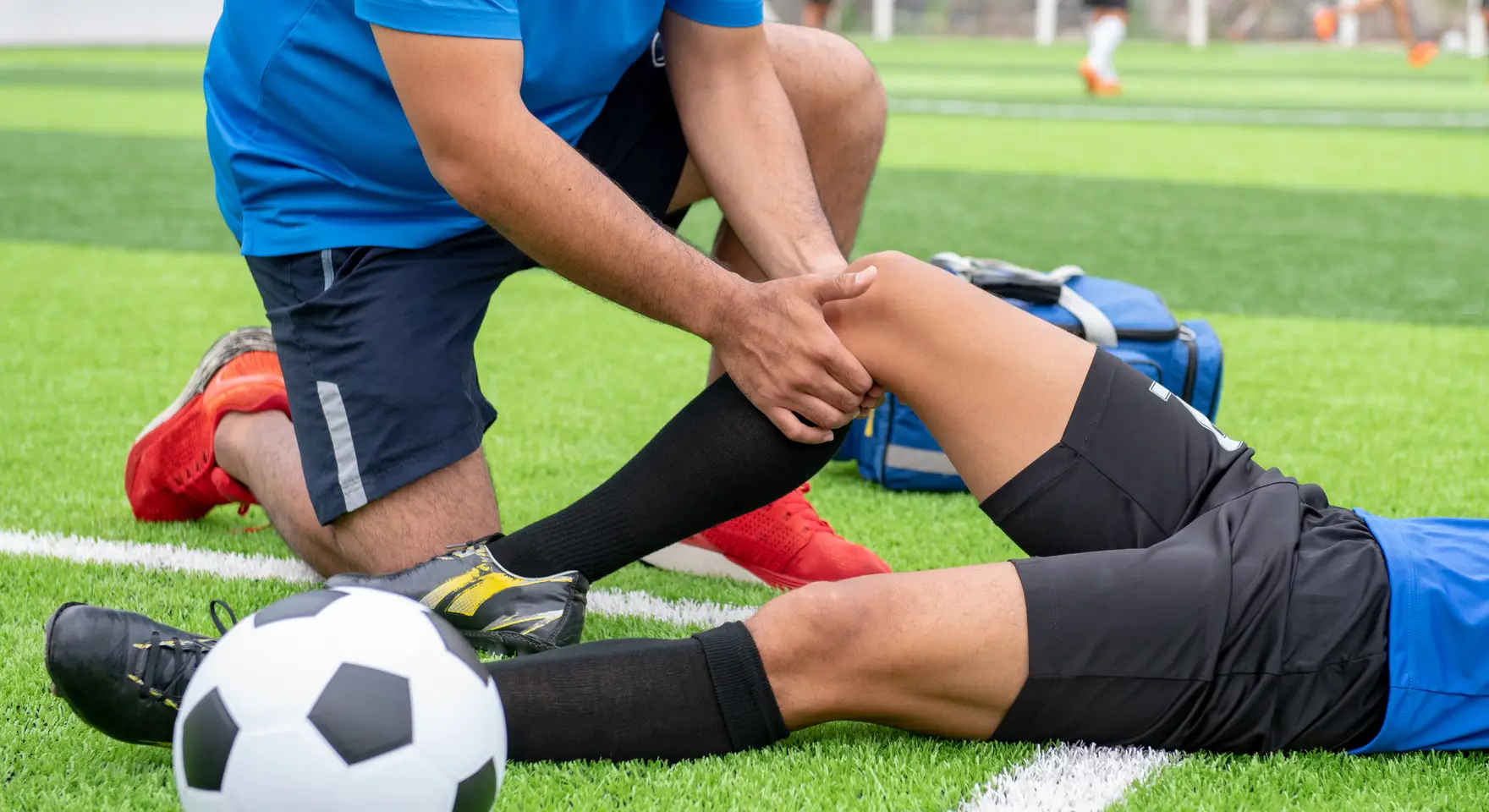
Choosing the wrong cleat isn’t about minor discomfort. It’s a direct path to specific, documented injuries. The mechanics are predictable.
Using FG Cleats on Turf
This is the most dangerous mismatch. The long, often bladed studs of a firm ground cleat hit the solid base beneath the thin turf. All the force of your sprint or jump concentrates on the small tip of a few studs.
- Metatarsal Stress Fractures: The localized pressure on the ball of the foot can cause hairline cracks in the metatarsal bones. The pain starts as a dull ache and sharpens with use.
- Knee Pain (Patellofemoral Stress): The lack of give prevents natural foot rotation, transferring torque up the kinetic chain to the knee. You’ll feel it around the kneecap after play.
- Ankle Sprains: The studs can catch on the hard surface during rotation, locking the foot and forcing the ankle to twist.
Using FG Cleats on Artificial Grass
While slightly less harsh than turf, it’s still bad. The longer FG studs sink too deep into the infill and get caught. The surface is “clingy.”
- ACL Stress: The bladed studs of FG boots are designed for clean release from soft, natural soil. On synthetic fibers, they grip and don’t let go. When your body rotates and your foot stays planted, the ACL takes the load. This is a known risk factor cited in sports medicine literature.
- Premature Boot Damage: The abrasive infill and backing will shred the studs and upper of a leather FG boot in a handful of sessions. It’s expensive.
The right AG soccer cleats are engineered to mitigate these risks. Their stud pattern is the primary safety feature.
How to Choose: A Field Guide
Forget the labels at the store. Use this physical checklist the next time you walk onto a synthetic field.
- The Knee Test. Get on one knee and press your thumb into the surface. Does it stop at a hard layer almost immediately? That’s turf. Does your thumb sink into a granular, softer layer? That’s artificial grass with infill.
- The Visual Inspection. Part the plastic blades with your hands. Do you see a layer of small black rubber pellets (like coarse pepper) and sand? That’s infill. No infill means it’s likely a turf surface.
- The Age & Quality Guess. Old, faded, short-bladed fields installed before 2010 are often turf systems. Newer, lush-looking fields with longer blades are almost always modern artificial grass. Community pitches and school yards are common turf sites. Dedicated soccer facilities invest in AG.
If you’re still unsure after these tests, default to a turf shoe. It’s safer to have less traction on an AG field than to have dangerous stud pressure on a turf field. You can find excellent options in our roundup of the best cleats for turf.
TL;DR: Kneel down and feel the base. Hard and shallow means turf shoes with nubs. Soft and deep means AG cleats with short conical studs. When in doubt, choose the turf shoe.
Beyond the Surface: Cleat Features That Matter
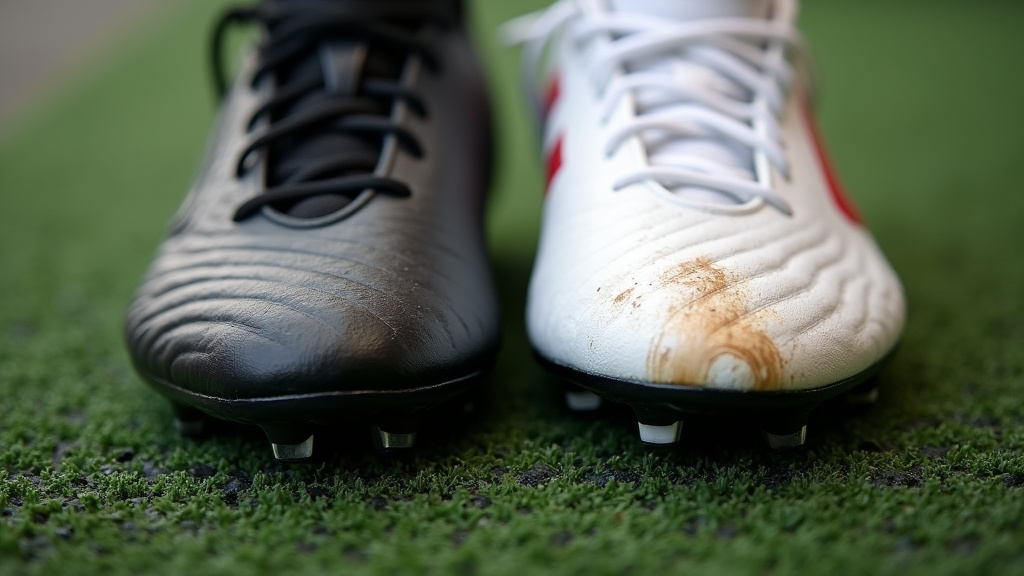
Once you’ve identified the surface and cleat type (AG or TF), other features fine-tune performance. The upper material and fit are part of the equation.
A good artificial grass cleat isn’t just about the studs. The upper needs to withstand the abrasive infill. A thin, natural leather like kangaroo may offer sublime touch but will get chewed up faster on AG than on natural grass. A reinforced synthetic or a treated leather often provides better durability for synthetic surfaces.
Similarly, the debate between conical vs bladed studs is settled for AG: conical wins. The rounded shape provides the necessary multi-directional release. Bladed studs are for firm, natural ground where you want maximum grip in a forward push.
Your choice also interacts with other gear. The demands of a turf surface might pair better with a certain type of sock or shin guard setup for abrasion protection. It’s a system. Understanding the complete picture, including indoor vs outdoor cleats for other environments, makes you a smarter player.
Frequently Asked Questions
Can I use turf shoes on artificial grass?
You can, but with a major trade-off. On a true, deep-pile artificial grass field, turf shoes will not penetrate the infill. You’ll rely solely on surface friction, which decreases significantly when the field is wet or the blades are worn. You’ll lose acceleration and cutting traction compared to proper AG cleats. It’s a safe choice if you’re unsure of the surface, but not an optimal one.
What are “MG” or “Multi-Ground” cleats?
Multi-Ground cleats are a hybrid design, typically featuring a mix of conical studs of varying lengths. They are a jack-of-all-trades, master-of-none compromise. They perform acceptably on firm natural ground and shorter-pile artificial grass. They are not ideal for true turf (too much stud) or high-performance AG (not enough studs). They are a decent option for players who frequently switch between decent natural grass and average AG fields.
Why do my feet hurt after playing on turf with AG cleats?
If your AG cleats have studs that are too long or too few, they will bottom out on the hard base under the turf. This creates the same stud pressure problem as using FG cleats. The pain is usually in the forefoot. You are wearing the wrong cleat type. Switch to a dedicated turf shoe with a rubber nub soleplate.
How long do AG and TF cleats last?
Durability varies by brand and model, but expect turf shoes to last longer. The rubber nub soleplate wears evenly and slowly. AG cleats, with their plastic studs, experience more shear force and wear down the stud tips, especially on sand-based infill. A quality pair of AG cleats should last a full season of regular play, while turf shoes can often last two.
Are there position-specific AG or TF cleats?
The primary distinction is surface-driven, not position-driven. However, within the AG category, you might find variations. A midfielder might prefer a slightly lighter AG cleat with a focus on touch, while a defender might choose one with a slightly more aggressive stud pattern for explosive lateral moves. The core soleplate design, however, remains defined by the surface. Your first choice is always the correct surface cleat; your second choice is the model that fits your position within that category.
The Bottom Line
Stop looking at the color of the field and start feeling its construction. The difference between artificial grass and turf cleats is a direct response to the depth and hardness of the synthetic surface under your feet. Turf demands a friction-based nub soleplate to protect your joints from a hard base. Artificial grass requires a penetrating, multi-stud conical design that grips infill and releases safely.
Your next move is simple. Before you buy, know your most common pitch. If it’s the classic hard carpet, invest in a dedicated football turf shoe. If it’s a modern, infilled system, get a true AG cleat and ignore the misleading labels. Your performance, and your knees, will thank you for the specificity.
I come from the “soccer heart” of Germany, the Ruhrpott. I have played, trained and followed soccer all my life and am a big fan of FC Schalke 04. I also enjoy following international soccer extensively.