What Are AG Cleats Used For? Your Guide to Artificial Turf
AG soccer cleats are used for one primary purpose: playing safely and effectively on modern artificial grass pitches (3G/4G). Their design, a high density of short, often conical studs, distributes pressure evenly and allows for smooth rotational release to prevent knee and ankle injuries, a critical risk when using the wrong cleats on synthetic surfaces.
Most players get this wrong by treating all cleats as interchangeable. They see a field with green blades and think their firm-ground (FG) boots will work. That mistake changes how your foot connects to the ground in a dangerous way.
This guide breaks down exactly what AG cleats do, why their design is non-negotiable for turf, and how to use them correctly across different conditions.
Key Takeaways
- AG cleats prevent “stud lock,” the leading cause of non-contact knee injuries on artificial turf, by using many short studs that release smoothly during pivots.
- The soleplate has 15 to 24+ short, conical, or hollow studs for even weight distribution, eliminating painful pressure points on hard synthetic surfaces.
- Never use FG cleats on artificial turf. The longer studs dig in and catch, increasing ACL injury risk by up to 2.5 times according to biomechanical studies.
- While optimized for turf, AG cleats work well on hard, dry natural grass but will fail on soft or muddy ground where they can’t penetrate.
- Turf (TF) shoes with rubber nubs are for thin, carpet-like surfaces or indoors; AG cleats are for the longer-pile, rubber-infilled pitches common today.
The Core Design: What Makes an AG Cleat Different?
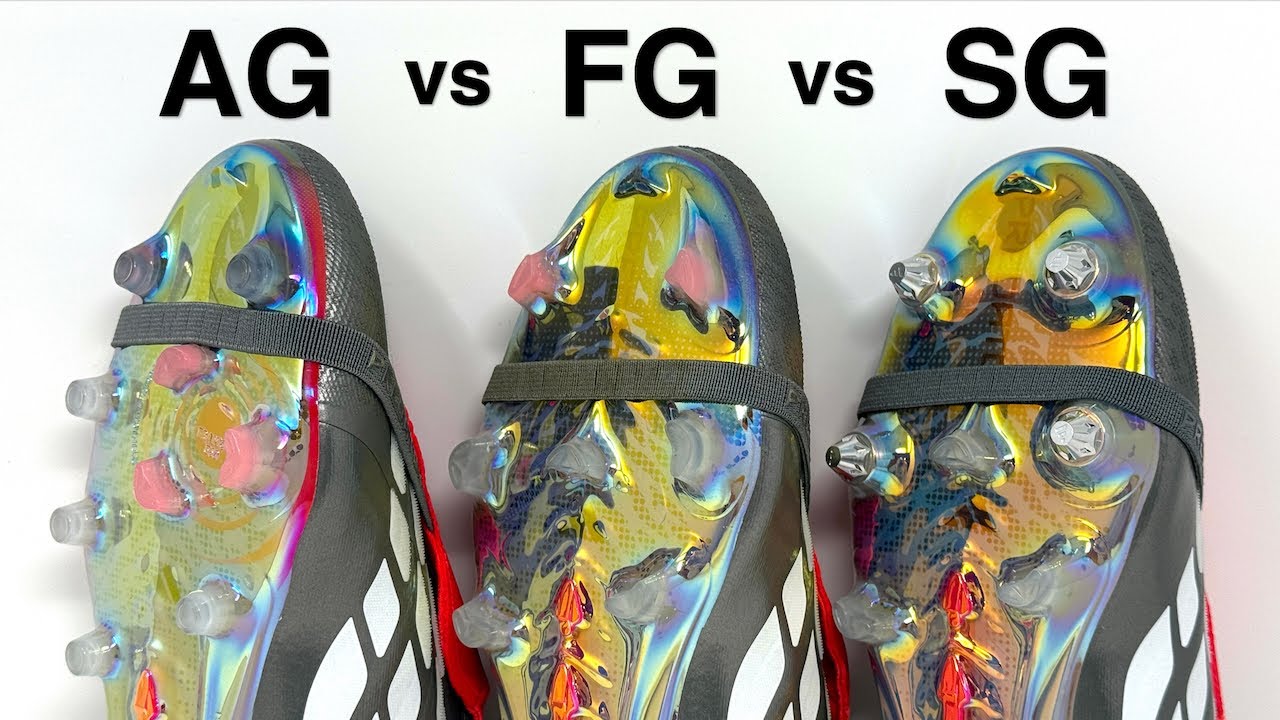
Look at the bottom of an AG cleat. You won’t see six or eight long, aggressive blades or cones. Instead, you’ll find a crowded city of small studs. Count them. You’ll typically get between 15 and 24, sometimes more.
These studs are short, often between 4mm and 8mm long. Their shape is usually conical or rounded, and many are hollow to save weight and add a bit of cushion. The key is their even distribution. They cover the entire forefoot and heel plate, leaving no large gaps.
An AG (Artificial Ground) cleat soleplate features a high-density array of short, low-profile studs, typically conical or rounded in shape. This configuration is engineered for synthetic turf with rubber infill, prioritizing multi-directional rotational release and even pressure distribution over deep penetration. The studs are numerous (often 15+) and uniformly spaced to eliminate concentrated pressure points under the metatarsals.
This architecture solves two problems unique to artificial grass. First, the surface is unyielding. A long stud from an FG boot hits the rubber and plastic base layer and stops dead. Your body’s momentum keeps going. That sudden stop is what ligaments tear trying to manage.
Second, artificial turf is abrasive and gets hot. A standard cleat glue softens around 60°C. On a sunny day, black rubber pellets can push surface temperatures past 70°C. AG cleat manufacturers use higher-temperature adhesives and often reinforce the toe area with abrasion-resistant coatings.
The feel is different. You don’t get the same “bite” or planting sensation as on natural grass. You get a firm, connected, and consistent platform. It’s predictable. That predictability is what lets you cut and turn at full speed without a second thought.
TL;DR: AG cleats use many short, evenly-spaced studs to create a stable platform on hard turf, preventing the studs from digging in too deep and catching.
AG vs. FG: The Critical Safety Difference
This is the single most important point in this article. Using the wrong cleat here doesn’t just hurt performance. It breaks bodies.
Firm Ground (FG) cleats are designed for natural grass and soil. Their studs, usually 10 to 13 longer blades or cones, are shaped to penetrate the ground. On natural grass, they sink in, grip, and you push off. On artificial turf, they cannot penetrate the solid plastic base. They hit it and stop.
When your foot is planted and you try to rotate, to change direction, shield the ball, or recover from a tackle, that planted foot needs to release. On grass, the studs pull out of the soil. On turf with FG studs, they don’t pull out. They lock.
Your knee and ankle become the release mechanism. The torque that should have rotated the cleat in the ground instead twists your joint. The anterior cruciate ligament (ACL) and medial collateral ligament (MCL) are the most common casualties. The research is clear: the injury risk is significantly higher.
I learned this the hard way watching a talented young player in our local club. He wore his new, expensive FG boots on the town’s 3G pitch. A simple cut-back, a loud pop, and a season ended with an ACL tear. His boot was pristine. His knee was not. The club now mandates AG cleats for all turf training.
Common mistake: Using FG cleats on artificial turf, the studs lock into the synthetic base, transferring rotational force directly to the knee. An ACL or high ankle sprain can happen on the first sharp turn.
The AG cleat’s many short studs are the solution. They don’t penetrate enough to lock. Instead, they allow a controlled, gradual release as you pivot. The force is dissipated across dozens of small points, not concentrated on six long blades. It’s the difference between yanking a single nail out of a board and sliding a sheet of sandpaper off one.
| Feature | AG Cleat | FG Cleat |
|---|---|---|
| Primary Surface | Artificial Turf (3G/4G) | Natural Grass (Firm/Dry) |
| Stud Count | High (15-24+) | Low (10-13) |
| Stud Length | Short (4-8mm) | Long (10-15mm) |
| Key Design Goal | Rotational Release & Pressure Distribution | Penetration & Grip |
| Risk on Artificial Turf | Low (Correct Tool) | High (Major Injury Risk) |
When Should You Wear (and Not Wear) AG Cleats?

Your cleat choice is a direct response to the ground under your feet. It’s not about brand loyalty or what looks cool. It’s a tool-match problem.
Wear AG Cleats Here:
- Modern Artificial Turf (3G/4G): This is their home. Any outdoor synthetic pitch with long plastic blades and black rubber pellet infill demands AG cleats. The performance is optimized, and the safety benefit is absolute.
- Hard, Dry Natural Grass: In late summer, when the ground is like concrete, AG cleats are a fantastic option. The short studs won’t dig in, but they provide excellent traction on a hard surface. Many pros use AG soles on sun-baked pitches for this reason.
- Mixed Weekly Surfaces: If you train on turf during the week and play league matches on firm grass, one pair of AG cleats can competently handle both. It’s the most versatile single-pair solution for most amateur players.
Avoid AG Cleats Here:
- Soft or Wet Natural Grass/Mud: This is where they fail. The short studs cannot penetrate the soft ground to find stability. You will slip, slide, and lose all power in your pushes and cuts. It’s frustrating and dangerous.
- Old, Thin “Carpet” Turf or Indoors: For very short, hard artificial surfaces (often called 2G) or indoor halls, you need turf (TF) shoes. TF shoes have hundreds of small rubber nubs that provide grip without the stud length that would be uncomfortable on a hard base.
The versatility question is common. Can AG cleats be your only pair? For a city player who only sees artificial pitches and the occasional hard ground, yes. For someone dealing with varied, wet climates and natural grass, you’ll need a second option. Your choice in types of soccer cleats should be dictated by your most common pitch condition.
AG vs. Turf Shoes: Clearing the Confusion
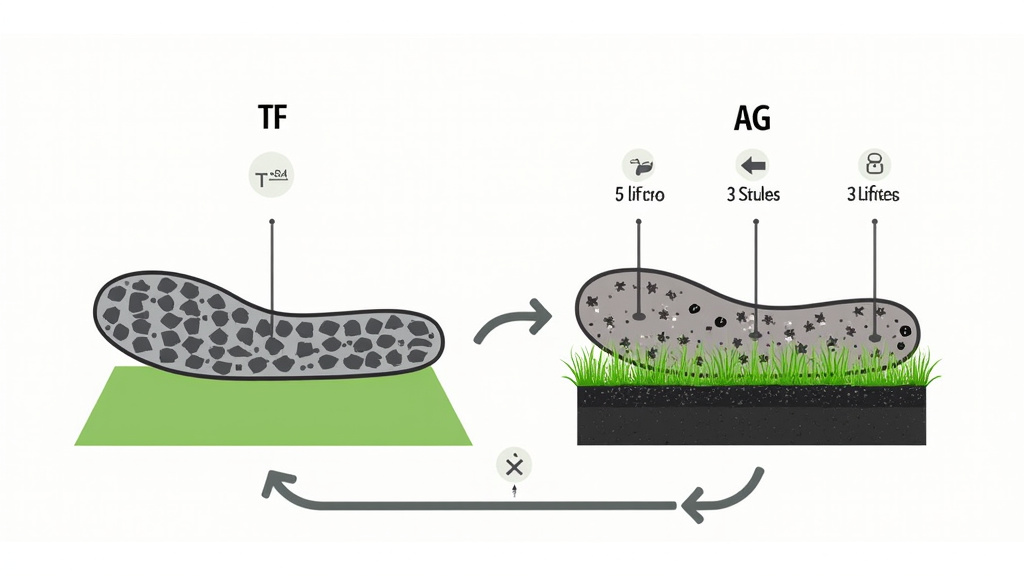
Many people use “turf shoes” and “AG cleats” interchangeably. They shouldn’t. While both are for artificial surfaces, they are designed for different generations of that surface.
Turf (TF) shoes are the older solution. They were designed for the first-generation artificial pitches: short, abrasive, carpet-like surfaces with little to no cushioning. The outsole is a rubber matrix with dozens of small, molded nubs (like a trail running shoe). These nubs provide grip on the short fibers and the rubber midsole provides the cushion the pitch lacks.
AG cleats are the modern evolution. They are for third and fourth-generation (3G/4G) turf, which has longer plastic grass fibers and loose rubber infill to mimic soil. This surface has depth and give. An AG cleat uses actual studs, short, but still studs, to interact with that depth. The AG soleplate design is about traction and release within the infill layer, not just grip on top of a carpet.
You can wear TF shoes on a 3G pitch. You’ll be safe. But you’ll lack the connected, secure feel and traction of an AG stud. Conversely, wearing AG cleats on a hard, old-style turf pitch will be uncomfortable, the short studs will press directly into the hard base with no infill to absorb them.
Think of it this way: TF shoes are for on top of the surface. AG cleats are for in the surface.
Beyond the Studs: AG Cleat Materials and Durability
The soleplate is the star, but the upper and construction have to survive a hostile environment. Artificial turf is essentially millions of tiny plastic knives rubbing against your shoe at high speed. It also acts like sandpaper.
Manufacturers adapt. You’ll see reinforced toe caps and medial (inside) foot areas on AG models. These are often coated with a thin, abrasion-resistant film or use a tighter, tougher weave in the synthetic material. Leather, while beautiful for touch, can be less durable on turf unless it’s a specifically treated kangaroo leather.
The glue is a hidden spec. Standard cleat glue begins to fail at temperatures common on hot turf. AG-specific models use thermosetting adhesives with higher heat resistance. If you’ve ever had the sole of a cleat start to peel after a summer on turf, you’ve experienced the wrong glue.
My go-to for years was a synthetic AG model from a major brand. The touch was good, but the real win was longevity. Two seasons of weekly turf play before the studs showed meaningful wear. A leather FG pair I mistakenly used for a few turf sessions had the toe scuffed down to the foam in a month.
This durability focus extends to the AG cleat materials debate. For pure turf durability, a high-quality synthetic often outlasts leather. The trade-off is in feel and moldability, which is why understanding your cleats for foot shape is still crucial.
How to Choose Your First Pair of AG Cleats
Don’t just buy the AG version of your favorite FG cleat. Consider the specifics of the tool.
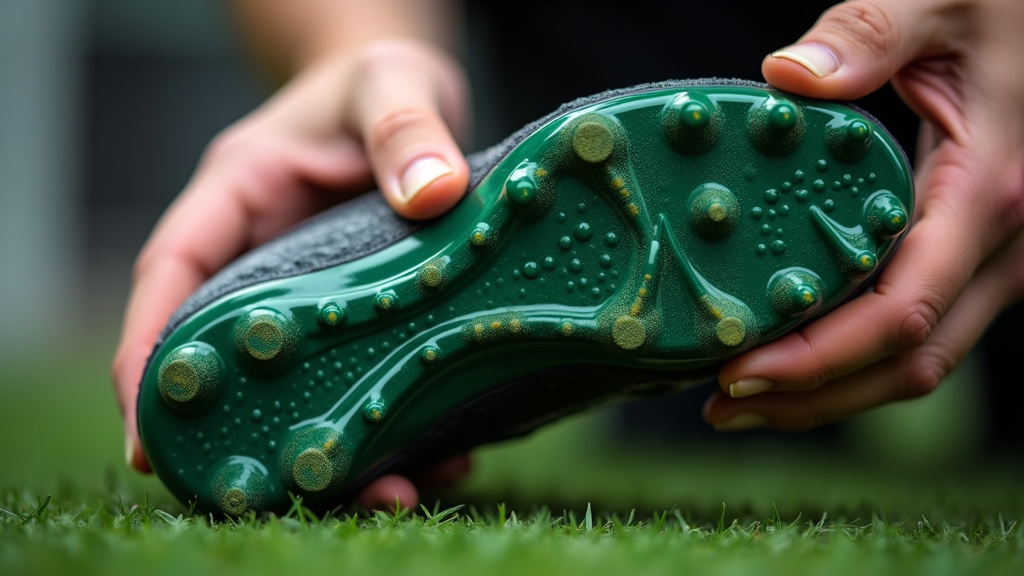
- Count the Studs. Pick up the cleat and look at the sole. You want a genuinely dense pattern. If it looks sparse, it’s probably a hybrid or an FG-AG sole, which may not offer the same rotational release. A true AG pattern feels crowded.
- Check the Stud Shape. Conical or rounded studs are the norm for AG. They promote that smooth release. Some brands mix in minor blade elements, but the dominant shape should be conical. The debate between conical vs bladed studs is less critical here than in FG cleats, conical is the AG standard for safety.
- Feel the Upper. Is it a thin, speed-oriented synthetic or a more padded, control-oriented material? Match this to your position and preference, but lean towards materials that feel robust in high-wear areas.
- Fit for the Surface. Your AG cleats can fit slightly snugger than your FG pair. On firm turf, your foot will splay less than on soft ground. A lockdown fit enhances the connected feel.
- Know the Brands. All major brands have dedicated AG lines. Nike’s AG-Pro and AG-Elite stud patterns are benchmarks. Adidas uses a “Firm Ground / Artificial Ground” (FG/AG) hybrid on some models, which is versatile but not as specialized as a pure AG pattern like on their Predator or Copa lines. Puma’s AG plates are also highly regarded for their stud geometry.
Once you have them, maintaining them is key to getting your money’s worth. Regular cleaning soccer cleats after turf play is essential. Brush out the rubber pellets stuck in the studs. Wipe down the upper with a damp cloth. Never dry them on a radiator, the heat can degrade the specialized glue. Air-dry at room temperature.
Watch for the cleat wear signs specific to AG: when the short studs wear down to nubs, losing their edges, they lose effectiveness. When the reinforced toe area wears through, the structural integrity is gone. That’s your signal for replacing soccer cleats.
Frequently Asked Questions
Can I use AG cleats on natural grass?
Yes, but only on firm, dry natural grass. They work very well on hard ground. On soft, wet, or muddy grass, the short studs cannot penetrate and you will slip. For those conditions, you need FG soccer cleats or soft-ground (SG) cleats.
Are AG cleats the same as turf shoes?
No. Turf (TF) shoes have a rubber outsole with many small nubs for short, carpet-like artificial surfaces or indoor play. AG cleats have actual short studs and are for modern, long-pile artificial turf with rubber infill (3G/4G). The cleats for artificial surfaces guide explains this in detail.
Why are AG cleats more expensive?
The cost often reflects specialized materials: higher-density soleplates, abrasion-resistant uppers, and heat-resistant glues required to withstand the harsh artificial turf environment. You’re paying for engineered durability and safety technology.
How long do AG cleats last?
With proper care, a quality pair should last at least one to two full seasons of regular play on artificial turf. Durability depends on the brand, materials, and how well you maintain them. The abrasive surface will always wear them faster than natural grass.
Do professional players use AG cleats?
Absolutely. Any professional playing or training on a modern artificial pitch will use AG cleats. They are standard issue for clubs with synthetic training grounds. Player safety and performance are paramount, and the right soccer cleat stud patterns are non-negotiable.
The Bottom Line
AG soccer cleats exist for a concrete reason: modern artificial turf is a different biomechanical environment than natural grass. Ignoring that difference is the fastest way to the treatment table. The dense, short stud pattern isn’t a marketing gimmick, it’s an engineered solution to prevent stud lock and distribute pressure.
If your primary pitch is synthetic, AG cleats are not an accessory; they are essential equipment. They are the definitive tool for the job, offering safety, performance, and surprising versatility on firm natural ground. Keep a second pair for wet grass, understand the difference between AG and turf shoes, and maintain them well. Your knees, and your game, will thank you for it.
I come from the “soccer heart” of Germany, the Ruhrpott. I have played, trained and followed soccer all my life and am a big fan of FC Schalke 04. I also enjoy following international soccer extensively.