The Bruno Fernandes Career and World Cup Journey Explained
Bruno Fernandes’ career and World Cup story is defined by an unusual path through Italy, a record-breaking rise in Portugal, transformative leadership at Manchester United, and a growing influence for Portugal on football’s biggest stage, culminating in a public vow to win the 2026 tournament for Cristiano Ronaldo.
Most profiles get the timeline wrong. They skip the three years in Serie B, the loan to a relegation-threatened Udinese, the quiet move to Sampdoria. That grind is the foundation. The headlines are about his goals and his mouth, but the real story is in the passes nobody sees and the runs he makes at minute 85 when the game is already won.
This guide tracks that entire journey. We’ll start with his formative years in Italy, break down his explosive success at Sporting CP, analyze his evolution into Manchester United’s captain and heartbeat, and detail his World Cup performances from Russia 2018 to the ambition for North America 2026.
Key Takeaways
- Fernandes’ “unusual” early career in Italy’s Serie B and Serie A instilled a tactical discipline and physical resilience that separates him from peers who came through elite academies.
- His record-breaking 33-goal season for Sporting CP in 2018-19 remains a European benchmark for midfield output, directly leading to his high-profile move to Manchester United.
- At United, his role has evolved under different managers, with current boss Michael Carrick utilizing him as a pure number 10 in a 4-2-3-1 to maximize his chance creation, a key tactical shift.
- His World Cup impact grew dramatically from 2018 (66 minutes total) to 2022 (2 goals, 3 assists, joint-top assister), marking his arrival as a decisive force for Portugal.
- Fernandes has explicitly stated his driving ambition is to win the 2026 FIFA World Cup as a tribute to Cristiano Ronaldo, framing Portugal’s campaign with profound emotional stakes.
The Unusual Path: From Italy to Manchester United
Headline writers love the “overnight sensation” narrative. Bruno Fernandes’ comprehensive Fernandes career timeline tells a different story. Born in 1994, he left Portugal as a teenager for Novara in Italian Serie B. This wasn’t a glamorous loan to AC Milan. It was third-tier football, physical, tactical, and far from home. He learned to protect the ball under pressure, to make decisions in tight spaces. That foundation is why he doesn’t panic when a Premier League midfielder closes him down.
After Novara came Udinese, then Sampdoria. Five years in Italy. He wasn’t a star. He was a prospect figuring it out. That period is the hidden layer in his game, the defensive positioning, the understanding of when to hold and when to release. Most Portuguese talents of his generation were in the Benfica or Sporting systems. His detour through Italy gave him a different education.
Bruno Fernandes’ professional career began in 2012 with Serie B club Novara Calcio, following a youth stint at Boavista. After 23 appearances, he transferred to Udinese in Italy’s top flight, making 86 Serie A appearances over three seasons before a final Italian campaign with Sampdoria in 2016-17, totaling 35 league games.
The return to Portugal with Sporting CP in 2017 changed everything. Freed from the tactical constraints of relegation battles, his attacking instincts exploded. He won back-to-back Taças da Liga and the Taça de Portugal. But the staggering number was 33. In the 2018-19 season, he scored 33 goals across all competitions from midfield. That made him the highest-scoring midfielder in Europe that season, a record that still turns heads.
TL;DR: Fernandes’ five-year apprenticeship in Italy built the tactical and physical base for his explosive, record-breaking success at Sporting CP, which directly triggered his move to Manchester United.
Becoming “Bruno”: The Manchester United Evolution
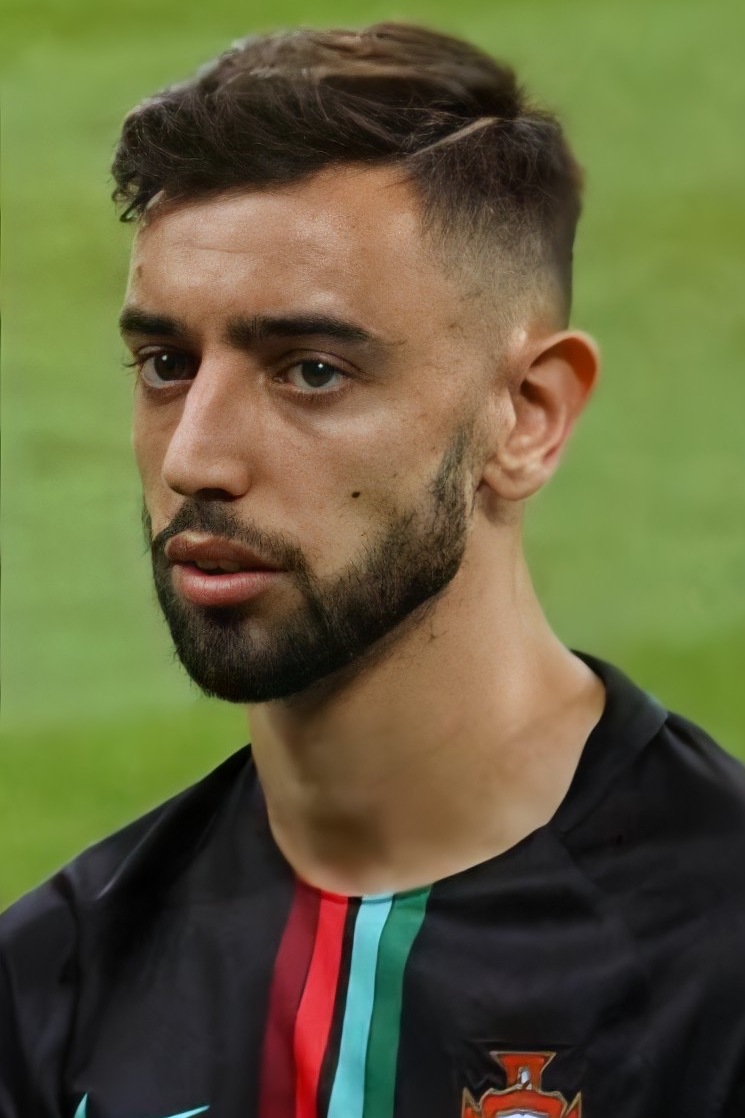
Photo: Alexander Veprev / Wikimedia Commons / CC BY-SA 4.0

Manchester United signed him in January 2020. The impact was immediate and quantifiable. He has hit double figures for both goals and assists in every full season since. He is closing in on 100 goals for the club. The numbers are one thing. The influence is another.
He is now the club captain. He has won the Sir Matt Busby Player of the Year award four times. In 2024, he was named the Football Writers’ Association Footballer of the Year. This BBC Sport feature on Bruno Fernandes details how his role has been refined by manager Michael Carrick, who uses him exclusively as a number 10 in a 4-2-3-1. This tactical shift maximizes his chance creation and minimizes defensive duties that can dilute his impact.
| Manager | Fernandes’ Common Role | Key Outcome |
|---|---|---|
| Ole Gunnar Solskjær | Floating 8 / Advanced 10 | High goalscoring, but inconsistent pressing structure |
| Ralf Rangnick | In a disjointed double-pivot | Output dropped; system mismatch |
| Michael Carrick | Dedicated number 10 in 4-2-3-1 | Peak creativity, clear tactical focus |
His contract runs through 2025 with an option for 2026. A reported release clause of around €65 million exists for clubs outside England. United see him as the cornerstone of their project. His leadership isn’t just vocal. It’s in the relentless running, the demand for the ball when the team is struggling. He sets the standard every day, a trait that defines the soccer legends of 2026 who lead by example.
Common mistake: Judging Fernandes solely on goals, his chance creation, progressive passing, and set-piece delivery are the engine of United’s attack. Ignoring those assists misses over half his contribution.
The Portugal Chapter: World Cup Journey and National Duty

Photo: Антон Зайцев / Wikimedia Commons / CC BY-SA 3.0

Fernandes made his senior debut for Portugal in 2017. He has been a fixture since, winning the UEFA Nations League in 2019 and again in 2025. But the World Cup stage is the ultimate measure.
His 2018 tournament in Russia was a footnote. He played 66 minutes in the group-stage draw against Spain. Portugal was eliminated in the round of 16 by Uruguay. He was a squad player, watching from the periphery as icons like Cristiano Ronaldo shouldered the burden.
2022 in Qatar was his arrival. He was central. He scored both goals in the playoff win against North Macedonia that secured qualification. In the tournament, he provided two assists against Ghana, scored a brace against Uruguay to seal knockout qualification, and assisted in the 6-1 rout of Switzerland. Portugal fell in the quarter-finals to Morocco, but Fernandes finished as the joint-top assister with three. The growth was unmistakable.
TL;DR: Fernandes transformed from a World Cup spectator in 2018 to Portugal’s creative hub in 2022, directly contributing to five goals (2 goals, 3 assists) and establishing himself as a pillar of the national team.
The 2026 Mission: A Promise to Ronaldo
This is where narrative meets ambition. Cristiano Ronaldo, now 41, is expected to feature in his final major tournament at the 2026 World Cup. Fernandes has been unequivocal. In interviews, he has vowed to win the tournament as a tribute to his legendary teammate. “It would be something amazing,” he told Fox Sports, framing it as a collective mission for the entire squad.
Portugal has already qualified. Fernandes scored a hat-trick in a 9-1 demolition of Armenia during the qualifying campaign. Under manager Roberto Martinez, Portugal possesses one of the most talented squads in the world. The blend of youth and experience, with Fernandes as the creative conduit, makes them a legitimate contender. This drive for team glory over individual honors is a hallmark of the sport’s true greats, a trait shared by other famous Argentine players like Lionel Messi in his later years.
His energy and late-game execution are non-negotiable for this mission. While other players rely on pure pace and acceleration, Fernandes wins with tactical intelligence and relentless movement, qualities that often define the underappreciated football talents who drive their teams to titles.
Leadership, Legacy, and What Comes Next
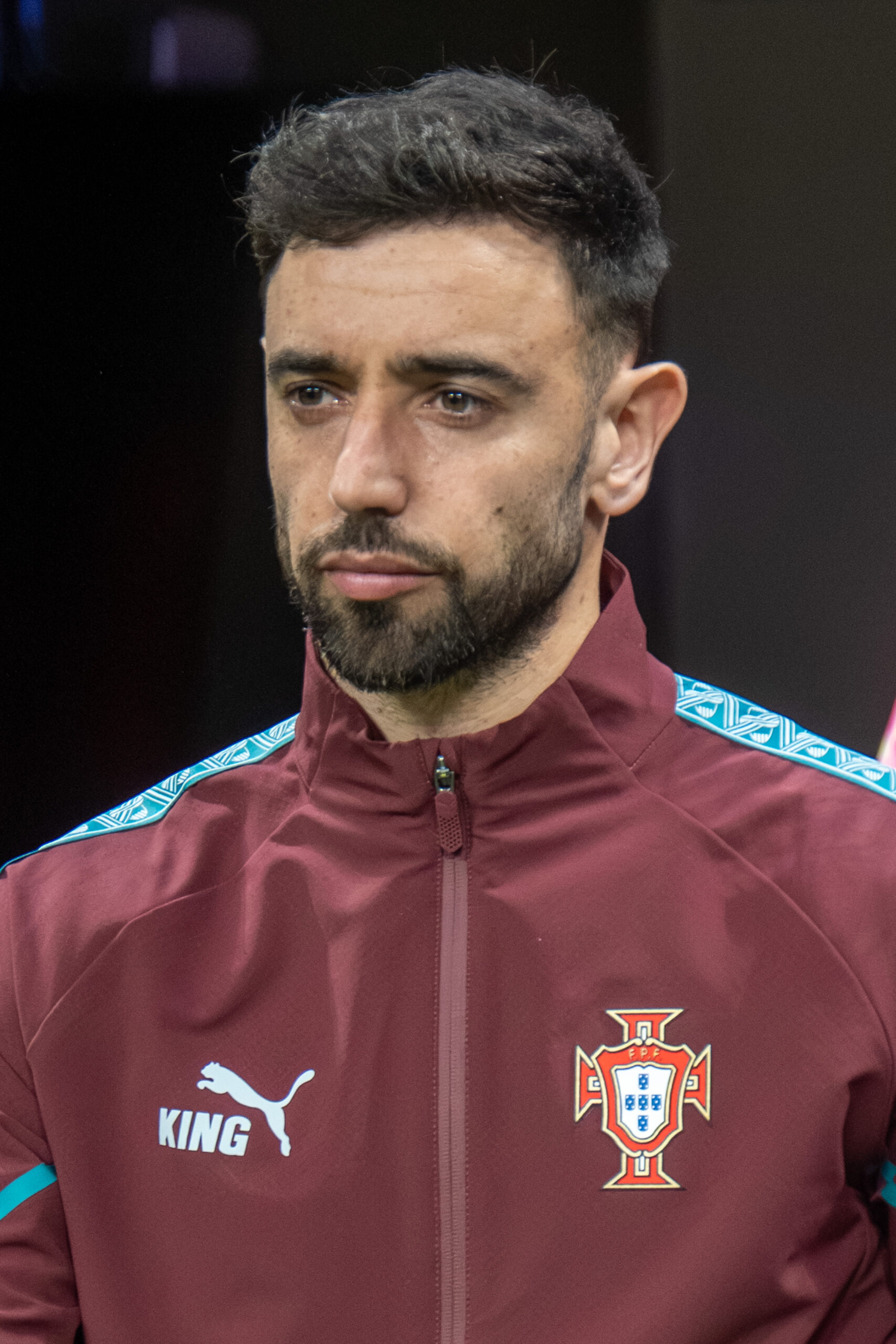
Photo: Bryan Berlin / Wikimedia Commons / CC BY-SA 4.0
.jpg)
What does leadership look like? For Fernandes, it’s the pass at 3-0 up. It’s the sprint to press a goalkeeper in the 89th minute. It’s standing in the tunnel before a derby. These are the unmeasured actions that define a captain’s influence, more telling than any post-match interview. He sets a physical and mental standard that drags the entire squad upward, a crucial element in any successful soccer workout plans.
His legacy is still being written. At the club level, he needs team trophies to match his individual accolades. The FA Cup or a Premier League title with United would cement his status. With Portugal, the 2026 World Cup is the stated goal. Winning it would immortalize him alongside the nation’s greatest.
The path ahead involves maintaining his extraordinary output as he enters his thirties. It requires smart tactical adjustments from his managers to preserve his influence. And it hinges on converting Portugal’s golden generation into champions. His story, from Serie B to World Cup ambition, is a testament to resilience. It’s a reminder that not all superstars are born in academies. Some are forged in the grind.
Frequently Asked Questions
What is Bruno Fernandes’ best position?
His most effective role is as a dedicated attacking midfielder or number 10, as used by Michael Carrick at Manchester United. This gives him freedom to roam between lines, receive the ball in space, and dictate play with through passes and late runs into the box, maximizing his goal and assist output.
How many World Cups has Bruno Fernandes played in?
Bruno Fernandes has played in two FIFA World Cups: Russia 2018 and Qatar 2022. He is expected to be a key player for Portugal in their 2026 campaign in North America, which would be his third tournament.
What records does Bruno Fernandes hold?
His most notable record is scoring 33 goals in a single season (2018-19) for Sporting CP, making him the highest-scoring midfielder in Europe that campaign. At Manchester United, he is the fastest player to reach 50 Premier League goal involvements for the club and is a four-time winner of the Sir Matt Busby Player of the Year award.
What is Bruno Fernandes’ relationship with Cristiano Ronaldo?
They share a strong mutual respect and a close bond within the Portuguese national team. Fernandes has frequently spoken of Ronaldo as an inspiration and has explicitly stated his desire to win the 2026 World Cup as a tribute to Ronaldo’s career, highlighting a supportive and goal-aligned partnership.
How many assists does Bruno Fernandes have for Portugal?
As of late 2025, Bruno Fernandes has provided over 30 assists for the Portuguese national team across all competitions. His creative output places him among the top assist providers for his country, contributing significantly to their success in the UEFA Nations League and World Cup qualification.
Before You Go
Bruno Fernandes’ career rejects the template. It’s a story of delayed stardom, built on years of unglamorous work in Italy that most top prospects never experience. That foundation allowed him to become a record-breaker in Portugal and a transformative leader at Manchester United. His World Cup journey mirrors his club rise, from peripheral figure to central protagonist, with his sights now set on the ultimate prize in 2026. His public commitment to winning for Ronaldo adds a layer of profound motivation to Portugal’s campaign. Watch his movement off the ball, not just the shots. That’s where you’ll see the intelligence forged in Novara and Udinese, the engine that drives everything else.
I come from the “soccer heart” of Germany, the Ruhrpott. I have played, trained and followed soccer all my life and am a big fan of FC Schalke 04. I also enjoy following international soccer extensively.