Estadio BBVA World Cup Schedule & Matches Revealed
The 2026 World Cup schedule for Estadio BBVA (renamed Estadio Monterrey for the tournament) includes four matches: three group stage games and one Round of 32 knockout fixture. The matches are scheduled for June 14, 20, 24, and 29, 2026, featuring teams from Groups A and F, with kick-offs at 7:00 PM or 10:00 PM Central Standard Time.
Most fans get tripped up on the name. You search for Estadio BBVA tickets, but FIFA lists the venue as Estadio Monterrey. It’s the same steel-and-glass bowl in Guadalupe, just wearing an official tournament name. The second mistake is assuming the published schedule is set in stone. FIFA still has to confirm the final version after the last playoff spots are filled in March 2025. A match time could shift by an hour.
This guide walks through every match, local kick-off times, and what to expect from the teams playing in northern Mexico. We’ll also cover how to get there, where to stay, and why one of these games is a piece of World Cup history.
Key Takeaways
- Estadio BBVA is Estadio Monterrey for the 2026 World Cup. It’s in Guadalupe, Nuevo León, with a tournament capacity of 50,113.
- The venue hosts four matches: three in the group stage (June 14, 20, 24) and one Round of 32 knockout game (June 29).
- The Tunisia vs. Japan match on June 20, 2026, is the 1,000th match in FIFA World Cup history.
- Kick-off times are in Central Standard Time (CST): 7:00 PM or 10:00 PM local. Convert accordingly.
- The final match schedule is provisional until March 2025, after the last playoffs decide the final six qualified teams.
A Stadium Built for the Big Stage
Look past the naming confusion. The stadium locals call Estadio BBVA, home to CF Monterrey, will be Estadio Monterrey for the World Cup. This isn’t a marketing gimmick. FIFA requires host venues to drop commercial naming for the tournament. The 53,500-seat arena in Guadalupe gets trimmed to a 50,113 capacity for the event, conforming to FIFA’s seating and safety specs.
The metallic shell, inspired by the region’s steel industry, wraps a steep bowl of stands. Gill-like openings in the facade ventilate the concourses and glow after dark, earning the arena its “Steel Giant” nickname.
The design isn’t just for show. Those gills and the steep rake are a direct response to the local climate. Monterrey sits in a valley, and summer heat is intense. The stadium’s architecture pulls in cooler air from the base and vents the hot, humid air rising from the crowd out through the top. On a match day in June, that airflow is the difference between a sweltering bowl and a bearable one. It’s a detail you only appreciate once you’re sitting in the stands at 7:00 PM, feeling a breeze instead of a wall of heat.
The Complete Match Schedule at Estadio Monterrey
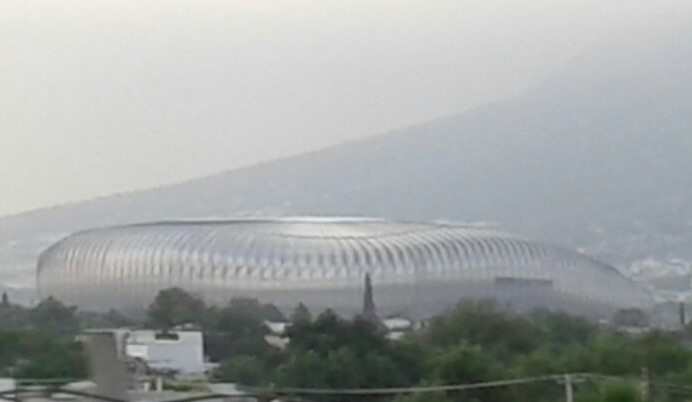
Photo: J4im31000 / Wikimedia Commons / CC0
The fixture list is tight. Four games in sixteen days means the pitch crew has their work cut out for them. The group stage games are spread out to allow for recovery, but the transition from the last group match to the knockout round is a quick one.

Here is the full, confirmed schedule as published by FIFA.
| Match & Stage | Date | Local Time (CST) | ET | Teams |
|---|---|---|---|---|
| Group F | Sun, Jun 14, 2026 | 8:00 PM | 10:00 PM | Sweden vs Tunisia |
| Group F | Sat, Jun 20, 2026 | 10:00 PM | 12:00 AM (Jun 21) | Tunisia vs Japan |
| Group A | Wed, Jun 24, 2026 | 7:00 PM | 9:00 PM | South Africa vs South Korea |
| Round of 32 | Mon, Jun 29, 2026 | 7:00 PM | 9:00 PM | Winner Group F vs Runner-up Group C |
TL;DR: Mark June 14, 20, 24, and 29 on your calendar. The evening kick-offs are 7:00 PM or 10:00 PM CST, and the June 20 match is the historic 1,000th World Cup game.
Sweden vs. Tunisia (June 14, 8:00 PM CST)
This is the tournament opener for Estadio Monterrey. Sweden brings a physical, direct style that contrasts sharply with Tunisia’s more technical, possession-based approach. The heat and altitude, the stadium is at about 540 meters, will test both squads’ conditioning from the first whistle. This is where a team’s tournament strategy gets its first real examination.
Common mistake: Assuming all group stage matches are day games, the Monterrey summer heat pushes most kick-offs into the evening, so the June 14 opener is an 8:00 PM start.
For fans, it means planning for a late finish. The match will end around 10:00 PM local time, and then you’re navigating out of Guadalupe. Public transport will be packed. Have a backup plan, whether it’s a pre-booked taxi or knowing the walking route back to a nearby Metro station.
Tunisia vs. Japan (June 20, 10:00 PM CST)
This isn’t just another group match. FIFA has designated this fixture as the 1,000th match in World Cup history. That’s a piece of trivia that becomes a tangible part of the atmosphere. Expect a special presentation, maybe a ceremony. The weight of that milestone adds a layer of pressure.
Japan’s high-pressing, energetic match tactics will clash with Tunisia’s structured defensive block. The late 10:00 PM start is brutal for players’ circadian rhythms, but it’s prime time for television audiences in Europe. This scheduling quirk is a reminder that the World Cup is a global TV product first. The fans in the stadium adapt.
South Africa vs. South Korea (June 24, 7:00 PM CST)
This is the only Group A match scheduled for the venue. It’s a fascinating stylistic clash. South Korea’s game is built on relentless running and quick transitions, a system that demands peak player fitness. South Africa will rely on physicality and set-piece strength. The earlier 7:00 PM start time is a gift for match-going fans, you’ll be out by 9:00 PM, maybe in time for a proper dinner in the city.
This match could be decisive for both teams’ knockout hopes. The intensity will be playoff-level from the first minute.
Winner Group F vs. Runner-up Group C (June 29, 7:00 PM CST)
This is where the tournament gets real. The group stage is over, and it’s win or go home. The specific matchup won’t be known until the final group games conclude, but the possibilities are mouth-watering.
- If Sweden wins Group F, they could face a giant like Brazil or Morocco (from Group C).
- If Japan or Tunisia tops Group F, the opponent might be a European heavyweight like the Netherlands.
The Round of 32 is a brutal introduction to knockout football. There’s no margin for error, and the physical demands of a tournament catch up with teams here. The team that manages its squad depth best in the preceding weeks will have a decisive edge.
Navigating the Fan Experience in Guadalupe
Photo: J4im31000 / Wikimedia Commons / CC0
Getting to the stadium is half the battle. Estadio Monterrey is in Guadalupe, a separate municipality northeast of central Monterrey. Don’t book a hotel in the city center and assume it’s a short walk. It’s not.
The most reliable route is the Metrorrey light rail. Line 1 has a stop at the stadium (Estación Estadio). It moves a huge volume of people efficiently. Driving is a gamble, traffic congests for hours before and after matches, and parking near the venue is extremely limited and expensive.
I made the mistake of driving to a Liga MX clásico at the BBVA once. I spent 90 minutes in post-match gridlock, crawling less than a kilometer. The next time, I took the Metro from San Bernabé station. I was back in my hotel room 40 minutes after the final whistle. The lesson was expensive but simple.
Your accommodation decision directly impacts your match day. Aim for somewhere near a Metrorrey Line 1 station: San Bernabé, Unidad Modelo, or even downtown Monterrey if you don’t mind a longer ride. The areas immediately around the stadium are industrial and not ideal for staying.
Why the Schedule Could Still Change
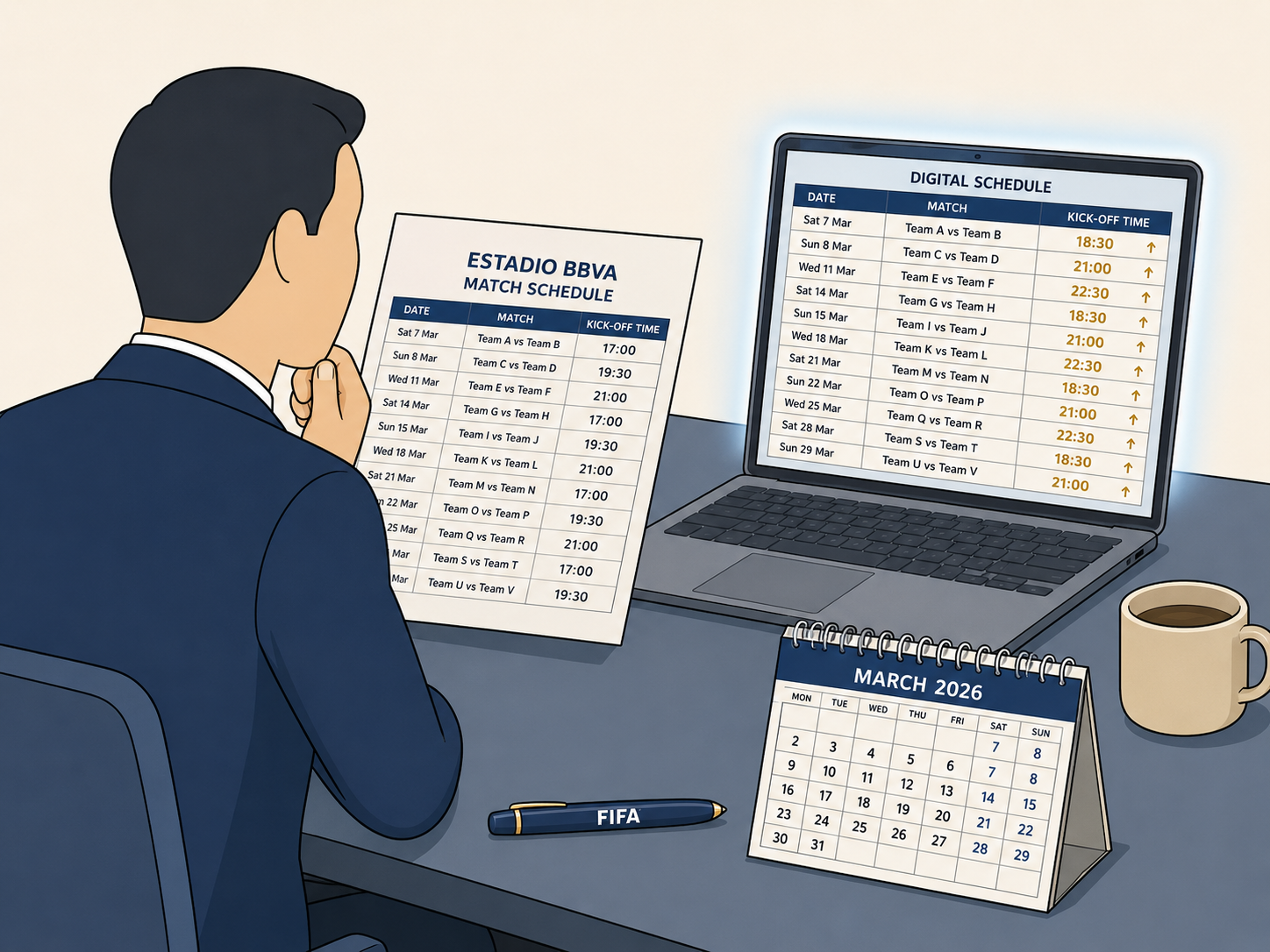
The schedule you see today is the one FIFA released in 2024. It’s detailed, but it’s not final. The official wording from FIFA is clear: the “final version of the match schedule will be confirmed in March, once the FIFA and European play-offs have taken place and the remaining six tournament berths have been decided.”
What does that mean for you?
* Kick-off times could shift. A match slated for 7:00 PM might move to 5:00 PM or 9:00 PM for broadcast reasons.
* The match order on a given day could be rearranged. This is less likely for stadium-specific schedules but possible.
* The assigned stadium for a match could, in theory, change. This is extremely rare after publication but not impossible if venue readiness becomes an issue.
The takeaway is to book flights and hotels with flexible cancellation policies. Assume the dates are fixed, but treat the kick-off times as a best-guess until spring 2025.
Potential Knockout Drama and Team Analysis
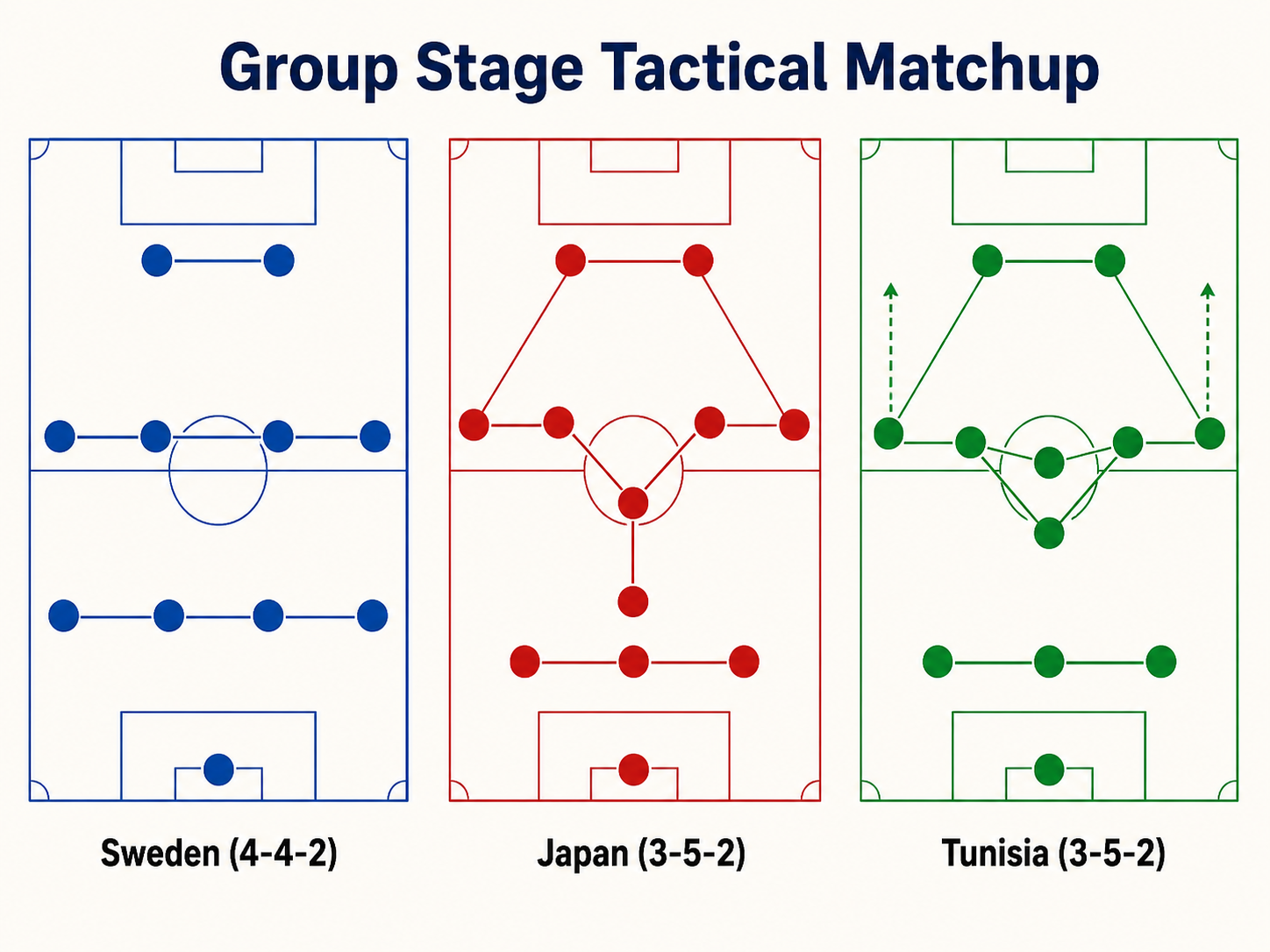
Let’s talk about the teams destined for Estadio Monterrey. The group stage draws Sweden, Tunisia, and Japan into a fascinating 3-5-2 formation vs. 4-4-2 formation tactical chess match. Sweden often uses a pragmatic 4-4-2, relying on physicality. Japan and Tunisia favor more fluid, midfield-dominant systems that could exploit that.
| Team | Likely Formation | Key Threat | Vulnerability |
|---|---|---|---|
| Sweden | 4-4-2 (Balanced) | Aerial prowess, set-pieces | Lack of creative midfield pace |
| Tunisia | 4-3-3 (Possession) | Technical midfield control | Can be exposed on the counter |
| Japan | 4-2-3-1 (High Press) | Relentless energy, team cohesion | Susceptible to physical battles |
| South Korea | 4-4-2 (Diamond) | Son Heung-min’s individual brilliance | Defensive consistency |
| South Africa | 5-3-2 (Defensive) | Physical strength, set-pieces | Lack of attacking creativity |
The Round of 32 matchup is the real prize. The winner of Group F, could be Sweden, Japan, or a dark horse Tunisia, will face the runner-up from Group C. That group contains football royalty: Brazil, Morocco, the yet-to-be-determined CONCACAF 5 playoff winner, and the Asian 4 playoff winner.
Imagine Sweden, with its rigid defensive structure, trying to contain a Neymar-less but still terrifying Brazil. Or picture Japan’s high press running into Morocco’s disciplined, counter-attacking shell. It’s a match built for drama, and the Steel Giant will be shaking.
TL;DR: The group games offer tactical variety, but the Round of 32 match is the main event, potentially featuring a global heavyweight and guaranteeing elimination football.
Travel and Ticket Essentials
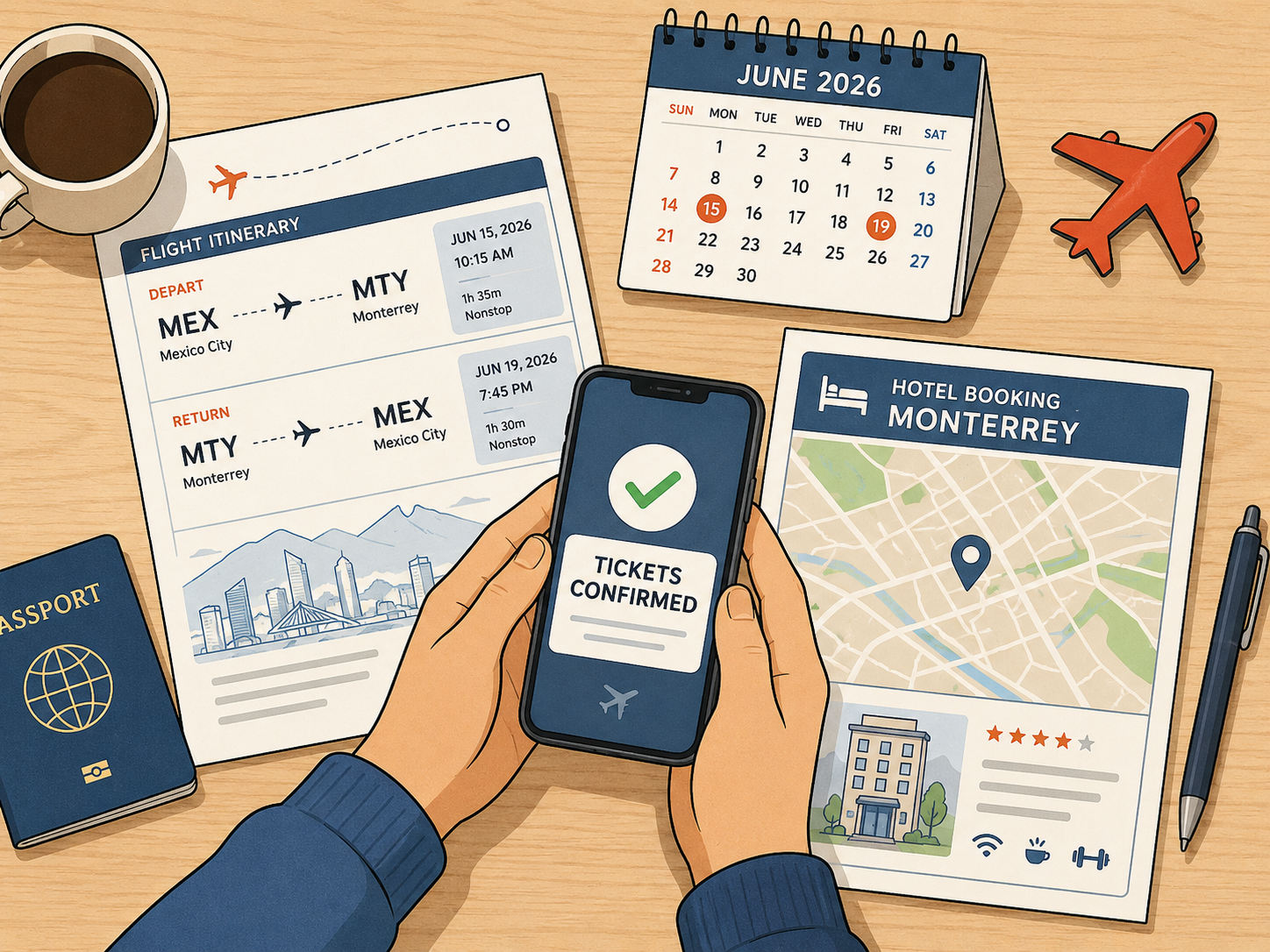
You need a plan beyond the match schedule. The 2026 World Cup is a logistical beast spread across three countries.
First, tickets. FIFA’s primary sales phase will happen through a lottery on their website. If you miss that, the secondary market will be your only option, and prices will be steep. For a match like the potential Sweden vs. Brazil Round of 32 clash, expect to pay a premium.
Before you start: Book flights and hotels the moment your team qualifies or you secure tickets. Monterrey is a major business hub, and its limited hotel inventory will sell out fast. Summer is also rainy season, pack for sudden, heavy afternoon downpours.
Second, consider the travel within North America. If you’re following a team, they might play in Vancouver one week and Monterrey the next. The distances are continental. Internal flights in Mexico around tournament time will be packed and pricey.
A final piece of advice: embrace the local culture. Monterrey is famous for its cabrito (roast goat) and machaca (dried meat). The Barrio Antiguo district is the place for pre-match atmosphere. The passion for football here is profound, but it’s matched by a genuine warmth to visiting fans. Learn a few Spanish phrases. It goes a long way.
Frequently Asked Questions
Is Estadio BBVA the same as Estadio Monterrey?
Yes. For the 2026 FIFA World Cup, the commercial name “Estadio BBVA” is dropped. The venue will be officially called and listed as “Estadio Monterrey” in all tournament materials and schedules.
How many World Cup 2026 matches will be at Estadio BBVA?
Estadio Monterrey will host four matches in total: three during the group stage and one Round of 32 knockout match.
What is special about the Tunisia vs. Japan match on June 20?
FIFA has confirmed that the Tunisia vs. Japan group stage match at Estadio Monterrey will be the 1,000th match in the history of the FIFA World Cup, dating back to the first tournament in 1930.
Can I buy tickets for Estadio BBVA World Cup matches yet?
No. As of now, the ticket sales process for the 2026 World Cup has not begun. FIFA will announce sales phases, likely starting with a lottery, on their official website. All ticket sales will be for “Estadio Monterrey,” not Estadio BBVA.
Is the 2026 World Cup schedule final?
Not quite. FIFA has published a detailed schedule, but the final version will be confirmed in March 2025 after the last six qualifiers are determined through playoffs. While major changes are unlikely, kick-off times could still be adjusted for global television broadcast schedules.
The Bottom Line
Estadio BBVA. Estadio Monterrey for the tournament, offers a compact, intense World Cup experience: four matches in sixteen days, culminating in a high-stakes Round of 32 clash. The historic 1,000th World Cup match adds a unique layer to the Tunisia vs. Japan fixture. Remember the name change, respect the provisional nature of the schedule until March 2025, and plan your travel around the Metrorrey system, not your car. Monterrey is a fantastic host city with a deep football culture, ready to put on a show. Your planning starts with those four dates on the calendar. Everything else follows from there.
I come from the “soccer heart” of Germany, the Ruhrpott. I have played, trained and followed soccer all my life and am a big fan of FC Schalke 04. I also enjoy following international soccer extensively.