How to Take a Free Kick in Soccer: The 7-Step Pro Method
To take a free kick in soccer, you must first know the type awarded, place the ball stationary at the foul spot, and ensure opponents are 9.15 meters away. Your execution hinges on a three-part sequence: body alignment, precise ball contact, and a committed follow-through toward your target.
Most players rush the setup. They see a chance for glory and forget the rules that turn a potential goal into a wasted opportunity or, worse, a free kick for the other side. The difference between a match-winner and a turnover isn’t just skill, it’s a checklist you run through in five seconds.
This guide breaks down the official laws, the mental game, and the physical mechanics. You’ll learn the seven non-negotiable steps, the two main shot techniques, and how to practice with the pressure of a real wall.
Key Takeaways
- The referee’s arm signal is critical. A raised arm means an indirect free kick; a goal cannot score unless the ball touches another player first.
- Opponents must retreat 9.15 meters (10 yards). If they don’t, the kick is retaken and a player can be cautioned for delaying the restart.
- Your plant foot placement dictates everything. Place it 6-8 inches beside the ball, pointed at your intended target, to control power and direction.
- For a bending shot, strike the lower outside of the ball with the inside of your foot. For a driven shot, use your instep and hit the center.
- Practice one specific technique and target relentlessly before adding variables like a moving wall or goalkeeper. Consistency beats variety at the start.
The Rulebook First: Direct, Indirect, and the 10-Yard Law
You cannot execute what you do not understand. The International Football Association Board’s Law 13 governs all free kick rules. The first split is between a direct and an indirect free kick. A direct free kick means you can shoot directly at goal. This is awarded for most contact fouls like tripping, pushing, or handball.
An indirect free kick is signaled by the referee raising one arm vertically above their head. This arm must remain raised until the ball touches another player or goes out of play. If a goal is scored directly from an unintentional indirect free kick, the goal is disallowed and the kick is retaken.
An indirect free kick requires the ball to touch another player before a goal counts. The referee signals this clearly. Common offenses include playing in a dangerous manner, impeding an opponent without contact, or a goalkeeper holding the ball for more than six seconds. Mistaking an indirect for a direct kick is a rookie error that erases your hard work.
The second universal rule is distance. Opposing players must be at least 9.15 meters (10 yards) from the ball until it is in play. This is the official distance for the defensive wall. The referee will often step off this distance, especially for kicks near the penalty area. If an opponent fails to retreat and intercepts a quick free kick, play continues. If they deliberately block or delay the kick, it’s a yellow card.
TL;DR: Know the referee’s signal. Direct kick = shoot. Indirect kick = must touch a teammate first. Everyone else stays 10 yards back.
The 7-Step Free Kick Execution Process
This is the core sequence, from whistle to follow-through. Skip a step, and the chain breaks.
- Identify the Type and Spot. Look at the referee. Raised arm? Indirect. No signal? Direct. Place the ball exactly where the foul occurred. The ball must be stationary. Moving it even a foot closer to goal is illegal and will force a retake.
- Scan and Decide. This takes two seconds. Look at the wall’s alignment, the goalkeeper’s starting position, and your teammates’ movements. Decide: shot or pass? This decision locks in your technique.
- Align Your Body. Place your non-kicking foot beside the ball, about 6-8 inches away. Point this foot where you want the ball to go. Your shoulders should be square to this target. This foot placement is the anchor for your entire kicking biomechanics.
- Choose Your Strike. For a curving shot around a wall, you’ll use the inside of your foot. For a powerful drive or a knuckleball, you’ll use the instep (laces). Your choice here determines the next step.
- Make Contact. This is the millisecond that matters. For curve, strike the lower outside quadrant of the ball. For a driven shot, punch through the center with your instep. Your ankle must be locked firm.
- Follow Through. Your kicking leg must continue its path toward the target. A truncated follow-through kills power and accuracy. Your plant foot will pivot naturally on its toe.
- Reset. The law states you cannot touch the ball again until another player has. Be ready to move into space for a rebound or track back if the kick is cleared.
Common mistake: Rushing the run-up before the plant foot is set, your momentum goes forward, but the ball sails high over the crossbar because your body was leaning back.
| Step | Critical Action | Consequence If Wrong |
|---|---|---|
| 1. Identify | See referee’s signal | Score a goal that doesn’t count |
| 2. Scan | Read wall & keeper | Choose a shot that’s easily blocked |
| 3. Align | Plant foot pointed at target | Ball spins wide regardless of strike |
| 4. Choose | Inside foot vs. instep | Wrong technique for the gap |
| 5. Contact | Locked ankle, precise quadrant | Weak shot or no curve |
| 6. Follow | Swing through toward target | Loss of power, erratic trajectory |
| 7. Reset | Move after the kick | Give away a second-touch foul |
Shot Technique: Curving vs. Knuckling
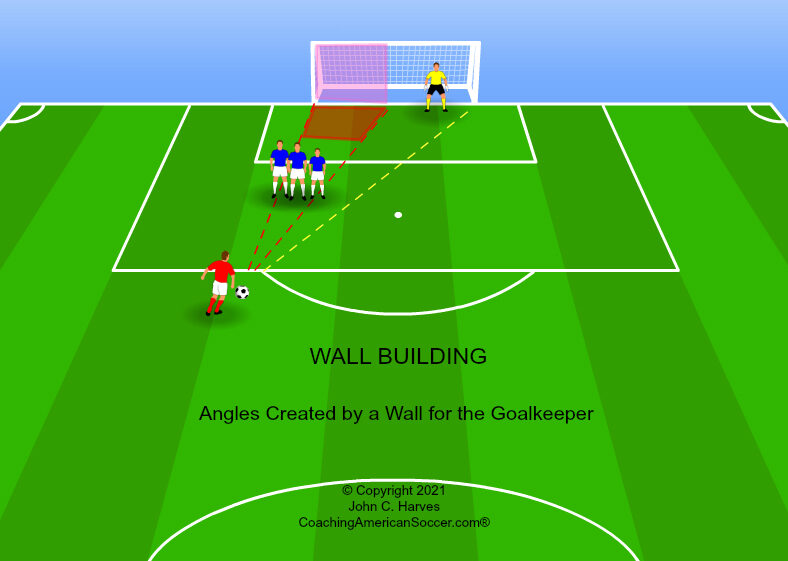
You have two primary weapons from a dead ball. Most amateurs only practice one.
The Curved Shot (Bending a Free Kick)
This is the classic technique to bend the ball around or over a wall. The physics are simple: you apply side spin. Use the inside of your foot, the area from the base of your big toe to your ankle. Approach the ball at a slight angle. Your plant foot points left of the target if you’re right-footed (for a right-curving shot). Strike the lower outside half of the ball. Don’t just kick it; wrap your foot around it.
The follow-through is across your body. This imparts the spin that makes the ball swerve in flight. It’s less about raw power and more about precise ball contact points. Mastering this curving technique is what separates a hopeful shot from a deliberate finish into the side netting.
The Knuckleball: A Power Alternative
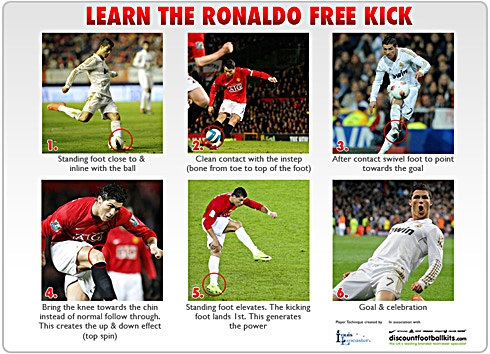
When you need sheer pace and unpredictable dip, the knuckleball is the choice. It uses the instep drive. The key is to strike the ball dead center with a stiff, straight ankle, minimizing spin. The ball flies with little rotation, causing it to wobble and dip violently in the air, a nightmare for goalkeepers.
The technique demands perfect ball contact. Hit it slightly high, and it balloons over. Hit it with toe, and it hooks. It’s a low-percentage, high-reward strike that requires hundreds of repetitive drills to own. Most pros only attempt it within 25 meters of goal.
I spent a whole preseason trying to master the knuckleball like Cristiano Ronaldo. My first fifty attempts either flew into the stands or rolled pathetically along the ground. The breakthrough came when I stopped trying to kill the ball and focused on a clean, center-punch contact with my laces. The first one that dipped late and ripped the net felt like a lottery win.
Reading the Wall and the Goalkeeper
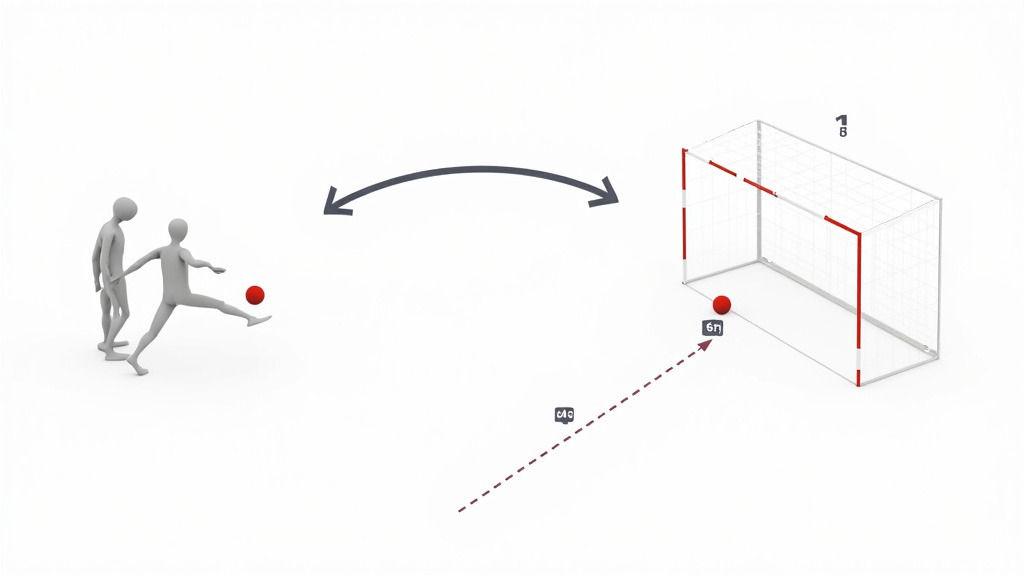
The defensive wall is a puzzle to solve, not just an obstacle. Its purpose is to block the most direct path to one side of the goal, allowing the goalkeeper to cover the other. Your job is to find the gap they leave.
First, count the players. A wall of two is vulnerable over the top. A wall of four or five leaves the far post open if you can curve it enough. Look for the “jumper”, the player on the end of the wall who might duck or jump, creating a hole at ground level. Some teams now use a “jumping” and a “standing” player in the wall to block both high and low shots.
Second, watch the goalkeeper’s positioning. Are they leaning toward the side the wall is protecting? If so, the near post might be open for a quick, low shot before they react. Are they standing too far off their line? A chipped shot (a “Panenka”) becomes an option, but it’s a high-risk move that requires ice-cold nerves.
Your decision is a split-second calculation: can I curve it around the wall? Can I dip it over? Or should I play a short pass to a teammate in a better position? The best free-kick takers, like Beckham, decided this before they even placed the ball.
Training for Consistency, Not Just Highlights
Effective practice is boringly specific. You don’t just “take free kicks.” You drill one scenario until it’s automatic.
Start without pressure. Place a ball 20 meters from a full-size goal with no wall. Practice your striking fundamentals, plant foot, contact, follow-through, aiming for the same corner fifty times in a row. Track your success rate. Only when you can hit that spot 7 out of 10 times do you add a single mannequin.
Next, introduce a wall. Use training dummies or teammates to form a basic wall formation. Practice the same kick, now aiming to bend it around the dummy’s outside shoulder. The variable is fixed. Don’t change the distance, the kick type, or the target. This builds the muscle memory for a real game.
Finally, add a live goalkeeper. This introduces the psychological element. Now you’re not just hitting a target; you’re trying to beat a thinking opponent. This final stage replicates the pressure. A good training session might be: 20 repetitions of a right-footed curler to the top-left corner from 22 meters, with a three-man wall.
Common mistake: Practicing five different kicks from five different spots in one session, you become mildly okay at everything and master of nothing. Pick one. Repeat it.
The Mental Game and Set-Piece Strategy
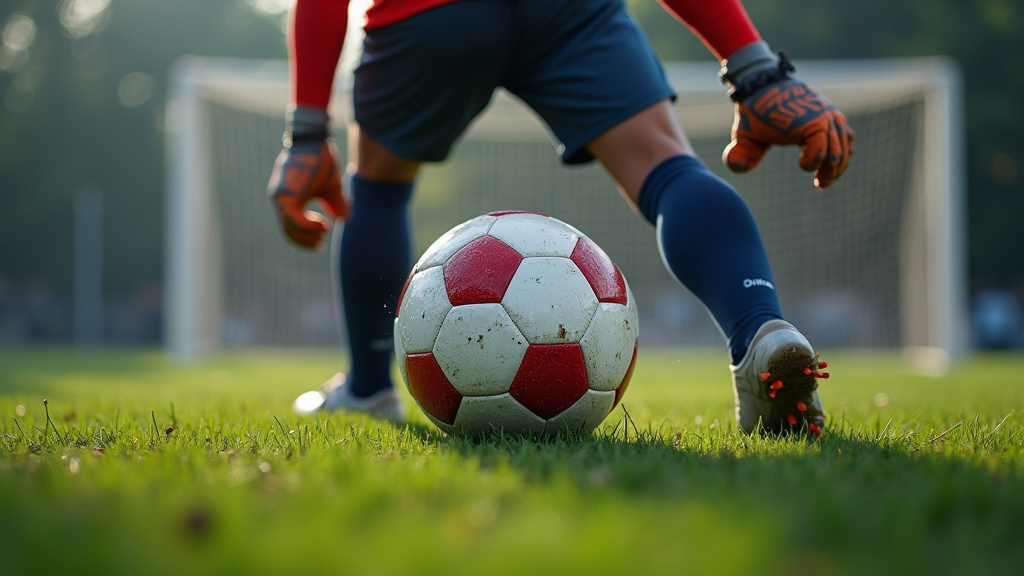
The walk from the foul spot to the ball is the longest five seconds in soccer. The crowd is loud. Your teammates are expecting magic. The goalkeeper is trying to stare you down. Your mental routine is as important as your physical one.
Develop a trigger. It could be a deep breath, a specific way you place the ball, or a single visual cue like picking a spot on the net. This ritual blocks out the noise and initiates your focused process. The greats aren’t immune to pressure; they have a system to manage it.
Beyond the shot, free kicks are a key set-piece execution opportunity. Teams rehearse complex routines: decoy runners who drag defenders away, a player who dummies over the ball, or a lay-off pass to a teammate with a better angle for a shot. These are rehearsed plays designed to break down an organized defense from a standing start. Knowing when to go for goal and when to execute the team play is a sign of high game intelligence.
Frequently Asked Questions
What’s the difference between a direct and indirect free kick?
direct free kick allows a goal to be scored directly from the kick. It’s given for most physical fouls. An indirect free kick** requires the ball to touch another player before a goal counts. The referee signals this by raising an arm. It’s awarded for technical offenses like dangerous play or offside.
How far away does the wall have to be?
The minimum distance for any opponent, including the wall, is 9.15 meters (10 yards) from the ball. The referee will enforce this, often by pacing it out. If an opponent stands closer and blocks a quick kick, they may be cautioned.
Can you fake taking a free kick?
Yes, feinting to kick the ball is allowed. However, once you begin your run-up, you must kick the ball. Excessive feinting designed to confuse opponents is considered unsporting behavior and can result in a yellow card.
What happens if the kicker touches the ball twice?
If the player taking the free kick touches the ball again before it has touched another player, an indirect free kick is awarded to the opposing team from the spot of the second touch. This is a common error on quick “pass-and-move” free-kick routines.
Does VAR check free-kick decisions?
The Video Assistant Referee can review the foul that led to the free kick, especially if it’s inside the penalty area and could be a potential penalty. VAR does not typically intervene on the placement of the ball or the wall distance for the free kick itself, unless there’s a clear and obvious error in the restart location.
Before You Go
Taking a match-winning free kick blends cold knowledge of the laws with hot execution of technique. Remember the signal, enforce your ten yards, and plant that foot with purpose. Practice one shot until your body can do it without thought. In the game, your mind decides in a heartbeat, shot or pass, curve or drive. That decision, backed by disciplined repetition, turns a restart into a weapon. Now go find a ball and a wall. The first fifty might feel awkward. The fifty-first starts to bend.
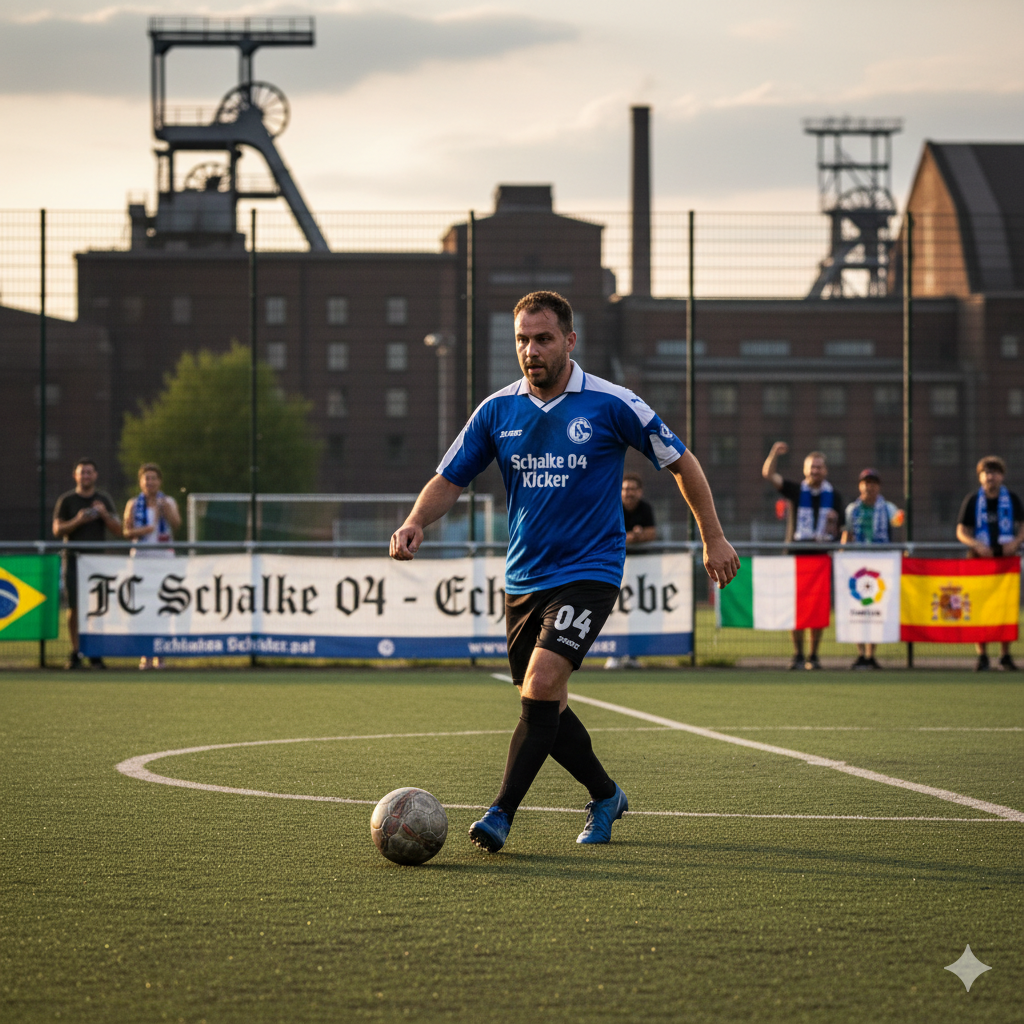
I come from the “soccer heart” of Germany, the Ruhrpott. I have played, trained and followed soccer all my life and am a big fan of FC Schalke 04. I also enjoy following international soccer extensively.