Defining the Knuckleball: Soccer’s Most Unpredictable Shot
A knuckleball in soccer is a shot struck with minimal to zero spin, causing an erratic, unpredictable flight path that dips, swerves, or shakes laterally. It is executed by hitting the ball’s center with the instep and abruptly stopping the foot’s follow-through. The technique relies on fluid dynamics and seam turbulence, not raw power, to deceive goalkeepers.
Most players see the highlight-reel goals and think the secret is brutal force. They wind up and blast the leather off the ball. The ball rockets forward in a predictable arc. The keeper catches it easily. The real challenge isn’t generating power. It’s removing spin entirely. That requires a counterintuitive mechanical move your body instinctively fights against.
This guide breaks down the chaotic physics, the precise biomechanics that feel wrong, and the years of practice separating a hopeful attempt from a true, bending-the-laws-of-physics knuckleball.
Key Takeaways
- The knuckleball’s defining trait is zero spin, not maximum speed. Power without the correct technique just produces a fast, readable shot.
- Success requires a “stopped” follow-through. Your foot must decelerate at the moment of impact, a move that strains the hamstring and feels completely unnatural.
- The erratic flight is a fluid dynamics problem. Without stabilizing spin, air turbulence around the ball’s seams creates sudden pressure shifts that knock it off course.
- It is most effective in a specific velocity window. Research indicates the chaotic effect diminishes at very high speeds, making a well-placed 65 mph shot more dangerous than a wild 80 mph blast.
- Ball design changes everything. The switch from 32-panel balls to thermally bonded designs after the 2006 World Cup altered how the knuckleball behaves, making modern versions slightly more predictable.
What Does a Knuckleball Look Like in a Match?
You see it most on direct free kicks from about 25-30 yards out. The player takes a short run-up. The strike sounds flat, a dense thud rather than a sharp crack. For the first ten yards, the ball seems to travel in a straight line. Then the madness starts. It might suddenly dip as if hitting an invisible wall. It could jerk sideways twice in a second. The goalkeeper, already committed to a dive, watches it wobble over his fingertips or shank wide at the last moment.
The ball impact dynamics of a knuckling shot show an average angle of attack of just 3.3 degrees, compared to 19.3 degrees for a straight drive and 32.6 degrees for a curve shot. This near-vertical impact is the primary mechanical reason spin is minimized.
While free kicks are the classic stage, a knuckleball can also emerge in open play. A driven half-volley or a first-time shot from a cleared cross can sometimes connect with that perfect, spin-killing sweet spot. These are accidental knuckleballs, moments of chaos rather than design. The planned ones, the set-piece specialists, spend hundreds of isolated hours chasing that specific feeling of impact.
The Science of Chaos: How Does a Knuckleball Actually Work?
Forget magic. The explanation is pure physics. A standard shot has backspin or sidespin. That rotation creates a Magnus effect, stabilizing the ball’s flight and creating a predictable curve. A knuckleball has no spin. Without that gyroscopic stability, the ball is at the mercy of the air it flies through.
As the ball moves, air flows over its surface. The seams on the ball disrupt this smooth flow, creating tiny vortices of turbulence. On a spinning ball, these disruptions happen symmetrically around the axis of rotation, canceling each other out. On a non-spinning ball, the seams catch the air asymmetrically. One side might experience more drag than the other for a fraction of a second. This imbalance creates a lateral force, shoving the ball off its path. Then the seams align differently, the force shifts, and the ball jerks back.
This back-and-forth is the “knuckling” motion. A scientific analysis using an instrumented ball found this effect is most pronounced at specific sub-maximal speeds. Too slow, and the forces are too weak. Too fast, and the ball’s momentum overpowers the turbulent kicks. There’s a goldilocks zone where the aerodynamics are perfectly unstable.
TL;DR: No spin means no stability. The ball’s seams act like tiny rudders catching turbulent air, generating random sideways forces that cause the erratic, dipping flight.
How to Hit a Knuckleball (The Brutal Truth)
The theory is simple. The practice is a marathon of frustration. You are fighting every muscle-memory habit built from years of learning proper shooting with power. Good technique for a driven shot involves a full follow-through across the body. For a knuckleball, that follow-through is the enemy.
Here is the sequence, knowing full well your first fifty attempts will either roll along the ground or spin wildly.
1. Set-Up and Approach
Place the ball on a firm spot. No leaning ball. Take 3-5 purposeful strides back, not a full sprinting run-up. Your approach should be slightly angled, not straight on. Your eyes stay locked on the very center of the ball.
2. The Plant Foot
This is your anchor. Your non-kicking foot plants firmly alongside the ball, about a foot away. Your toes point directly at your target. If your plant foot is pointing off-target, your hips will open or close, and you will inevitably brush across the ball, imparting spin. This step is non-negotiable.
3. The Strike and the “Stop”
This is the moment. You drive your kicking leg forward, ankle locked rigid. You strike the ball with the hard, flat bone of your instep, right on the centerline. Not above it (you’ll sky it), not below it (you’ll top it into the ground).
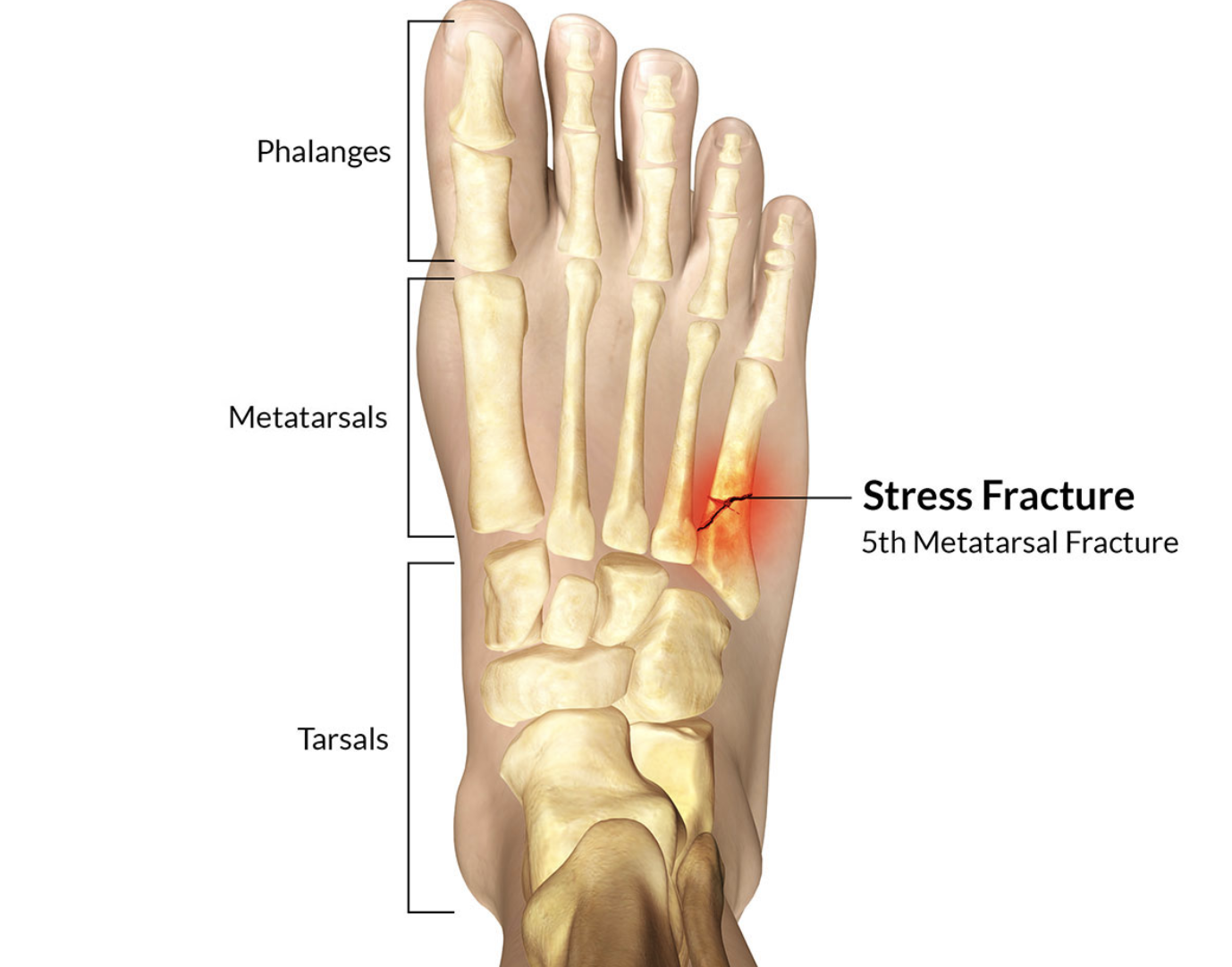
Now, the critical part. The instant your foot makes contact, you must actively stop its forward momentum. You don’t follow through toward the target. You engage your hamstring to pull your lower leg back almost as quickly as it extended. The energy transfer feels like a shock up your leg. Your body wants to continue the motion. You must override it.
Common mistake: Following through like a normal shot — this brushes the ball’s surface and imparts spin. The shot might still be powerful, but it will fly true. The knuckleball effect is gone before the ball leaves your foot.
4. The Absorbed Recoil
Because you’ve stopped your foot, the kinetic energy has to go somewhere. It travels up your leg, often causing your plant foot to hop forward or your torso to rock back. Let this happen. This recoil is the proof you’ve made a direct, non-rotating impact. If you stay perfectly balanced, you probably swept across the ball.
TL;DR: Plant beside the ball, strike the center with a locked instep, and use your hamstring to stop your foot dead on impact. The unnatural recoil is your sign of success.
Knuckleball vs. Other Shooting Techniques
A knuckleball isn’t just another tool. It’s a different category of strike with a unique purpose. Comparing it to other techniques clarifies when to use it—and when not to.
| Shot Type | Primary Technique | Ball Flight | Best Used For | Key Physical Cue |
|---|---|---|---|---|
| Knuckleball | Instep strike with stopped follow-through | Erratic, dipping, unpredictable | Long-range free kicks, surprising keepers from distance | Feeling of shock/recoil up the leg; flat thud sound |
| Driven Power Shot | Full instep kick with follow-through across body | Low, rising, straight | Finishing inside the box, beating keepers with pace | Full body rotation; sharp crack sound |
| Curved/Bending Shot | Contact with inside or outside foot kick | Arcing, predictable swerve | Bending a free kick around a wall, crossing | Brushing action across the ball; visible body lean |
| Chip/Lob | Foot under the ball, scooping motion | High, looping trajectory | Lifting over an advancing keeper | Decelerated strike; leaning back |
The knuckleball sacrifices accuracy and consistency for unpredictability. You would never choose it for a penalty kick technique where placement is paramount. Its home is the 30-yard set-piece, where the keeper has time to set himself and read a normal shot. The chaos is the weapon.
The Masters: Who Perfected the Knuckleball?
A few players have turned this physics anomaly into a signature threat. They didn’t just hit the ball hard. They mastered the feeling of the “stop.”
- Cristiano Ronaldo: His free kick against Portsmouth in 2008 is the modern textbook example. The ball traveled 25 yards with almost no rotation, then violently dipped under the crossbar. He practiced this specific strike relentlessly, creating a generation of imitators.
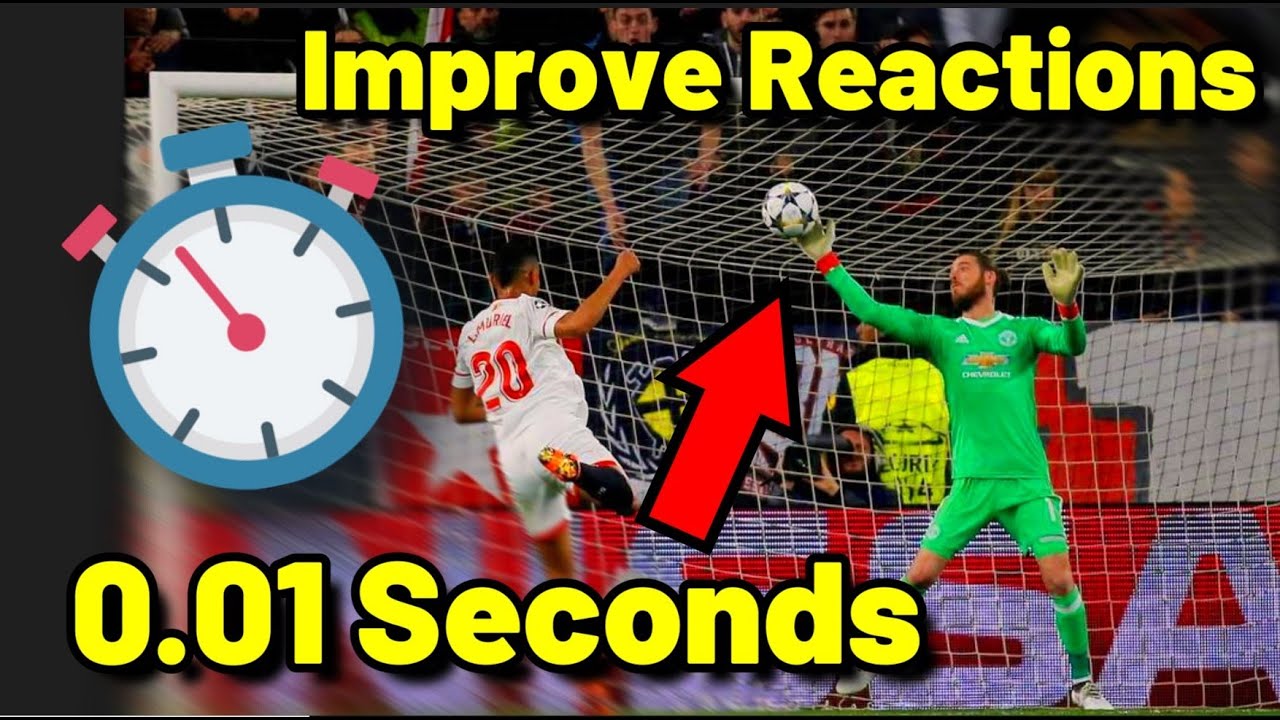
- Juninho Pernambucano: The Lyon midfielder was a set-piece savant. While known for his dipping free kicks, many were essentially knuckleballs. He understood that from extreme range, a dead ball that moved late was unsaveable.
- Gareth Bale: His free kick for Tottenham against Lyon in the Europa League showcased a brutal, rising knuckleball that swerved late. His technique involved a very straight run-up and an exaggerated rigid-legged follow-through.
- Roberto Carlos: Known for his banana-bending curlers, Carlos also had a knuckleball in his arsenal—a driven, low shot that would skid and jerk on the wet turf, making it a nightmare for keepers to handle.
These players shared a common trait: obsessive, repetitive practice of a single, low-percentage skill. They integrated the awkward “stop” into their muscle memory until it became repeatable under pressure.
Why You Don’t See More Knuckleballs
For all its spectacle, the knuckleball is a rare sight in professional football. The reasons are practical and physical.
First, the margin for error is microscopic. Strike a millimeter too high, too low, or with a slightly turned ankle, and you impart spin. The shot becomes a standard drive, often flying into the stands. The required precision conflicts with the high-pressure, split-second environment of a match.
Second, the biomechanical demand is unique. The swing motion analysis shows a knuckleball shot requires greater external rotation torque in the hip joint compared to a standard drive. This places unusual stress on the muscles and connective tissues. Doing it repeatedly in training invites strains.
Finally, modern ball design has tempered the effect. The old 32-panel balls, with their pronounced seams, were perfect for creating turbulence. The newer, thermally bonded balls with smoother surfaces (like the Adidas Tango 12 or the Nike Ordem) produce a less pronounced, slightly more predictable knuckle. The pure chaos of Ronaldo’s 2008 strike is harder to replicate with today’s equipment.
I spent a whole preseason trying to add a knuckleball to my free kick technique. My leg was black and blue from striking hundreds of balls. I got maybe one in twenty to wobble. In a friendly match, I finally had a chance from 28 yards. I thought of the technique, the plant foot, the stop. I kicked it clean. The ball flew straight as an arrow into the top corner—a great goal, but a complete failure as a knuckleball. The keeper saw it the whole way. I realized I’d mastered a powerful drive, not the chaos I wanted.
Training Drills to Build the Feeling
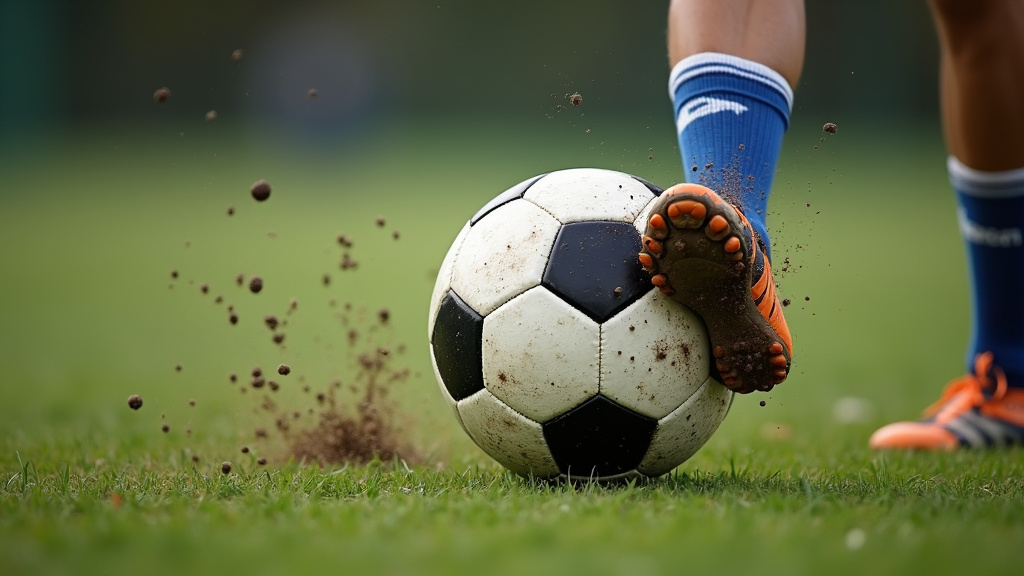
You won’t learn this by taking full free kicks. You break it down. Start with the ball stationary and just a step away. Your only goal is to make it not spin.
- The Wall Drill: Stand 5 yards from a wall. Practice striking the ball into it with your instep, focusing solely on the “stop.” Listen to the sound. A spinless impact has a dull, deep thud. A spinning impact has a sharper, brushing sound. Retrieve the ball and repeat for 10 minutes. Your hamstrings will burn.
- The No-Follow-Through Challenge: Place a cone one foot in front of the ball. Your objective is to strike the ball with enough power to roll it 20 yards, but your foot must not touch or pass the cone after impact. This physically enforces the stopped motion.
- Observation Reps: After you strike, don’t watch where the ball goes. Watch the ball itself. Does it rotate in the air? If you see the logo tumbling, you failed. The flight path is irrelevant at this stage. Zero spin is the only metric.
Incorporate these drills into your regular shooting training. They are less about scoring and more about reprogramming a fundamental ball striking instinct.
Frequently Asked Questions
Is a knuckleball just a powerful shot?
No. Power is a secondary factor. The defining characteristic is the complete lack of spin. A very powerful shot with spin will fly straight or curve predictably. A medium-power shot with zero spin will knuckle. The ball impact dynamics research paper confirms the angle of attack, not force, is the key variable.
Can you knuckleball a moving ball?
Yes, but it’s exponentially harder. The most reliable knuckleballs come from a dead ball, like a free kick, where you can perfectly control your plant foot and point of contact. A knuckleball volley or half-volley is usually a happy accident of perfect geometry.
Why is it called a knuckleball?
The term is borrowed from baseball, where a pitcher throws a ball with minimal spin using his knuckles to grip the seams. The resulting pitch has a similar erratic, “dancing” motion. The aerodynamic principle is identical.
What’s the best distance for a knuckleball free kick?
Between 22 and 32 yards (20-30 meters). Closer than that, the ball doesn’t have enough flight time for the chaotic effects to manifest before it reaches the keeper. Further out, the shot loses too much pace, making the movement less threatening and easier to react to.
Should I learn the knuckleball as a beginner?
Absolutely not. Focus on mastering the fundamental striking techniques for accuracy and power first—the standard instep drive, the inside-foot pass, the curving the ball. The knuckleball is a specialist skill for players who already have consistent, clean striking mechanics. Learning the “stop” before you have the “go” will ruin your basic technique.
The Bottom Line
The knuckleball is soccer’s concession to beautiful chaos. It is not the most reliable shot, nor the most technically sound. It is a high-risk, high-reward trick born from understanding a specific quirk of physics and having the discipline to execute a move that feels fundamentally wrong. For every one that dips under the bar, a hundred sail harmlessly over. But the threat of it, the mere possibility that the next free kick might defy physics, is enough to plant doubt in a goalkeeper’s mind. That doubt, more than the wobble itself, is the knuckleball’s real power.

I come from the “soccer heart” of Germany, the Ruhrpott. I have played, trained and followed soccer all my life and am a big fan of FC Schalke 04. I also enjoy following international soccer extensively.