How to Take a Penalty Kick Properly: The 6-Step Pro Method
To take a penalty kick properly, place the ball on the penalty spot yourself, decide your target before your run-up, and execute with a controlled, consistent technique, power with the instep or placement with the inside foot. The ball must be kicked forward from the 12-yard mark, and you cannot touch it again until another player does.
Most players fail from hesitation. They walk up, let the keeper get in their head, and at the last second they change their target. The shot goes wide or soft, straight into the keeper’s gloves. It’s a mental collapse, not a technical one.
This guide breaks down the pro method into six concrete steps. We’ll cover the exact technique for power and placement, the non-negotiable mental routine, the official rules that can force a retake, and how to train for the unique pressure of a shoot-out.
Key Takeaways
- Your pre-shot routine is non-negotiable. Place the ball yourself, take three breaths, and visualize the shot going in, this controls anxiety.
- Decide where you are shooting before you start your run-up. Changing your mind mid-run guarantees a miss or weak shot.
- For power, strike the center of the ball with your instep (laces) and follow through. For placement, use the inside of your foot and focus on accuracy.
- The goalkeeper must have at least one foot on the goal line when you strike the ball. If they jump early and you miss, you get a retake.
- In a penalty shoot-out, volunteer to go first or fifth. The first kicker sets the tone; the fifth kicker often takes the decisive shot.
The 6-Step Pro Method for Taking a Penalty Kick
Forget complicated theories. A reliable penalty is a short, repeatable sequence. Break it into these six steps and practice them until they’re automatic.
Step 1: Establish Your Pre-Shot Routine.
Walk to the ball, pick it up, and place it on the penalty spot yourself. Make sure the valve is facing away from you, it’s a tiny mental marker of control. Take three deliberate breaths. On the last exhale, visualize the ball hitting the net in your chosen corner. This ritual takes 10 seconds and signals to everyone, especially the goalkeeper, that you are in command. Skip this, and you let the stadium noise and the keeper’s antics into your head.
Step 2: Decide and Commit to Your Target.
Before you even step back for your run-up, you must know exactly where you are putting the ball. Pick a side: top left, bottom right, or straight down the middle if you read the keeper’s early movement. The decision is final. The moment you start doubting and try to adjust mid-kick, your hips open, your plant foot slips, and you sky it over the bar. Every time.
Step 3: Execute a Controlled Run-Up.
Use a short run-up of 4 to 6 steps. A long, sprinting approach gives you more time to hesitate and makes consistent ball-striking harder. Your eyes stay locked on the ball, not the goalkeeper. Your approach should be at a slight angle, not straight on, to allow your hip to open naturally for the strike.
Step 4: Strike with the Correct Technique.
This is where you execute your decision from Step 2. For a powerful shot, use your instep. Plant your non-kicking foot beside the ball, lock your ankle, and strike through the center of the ball. Your follow-through should point toward your target. For a placed shot, use the inside of your foot. Accuracy is king here; generate power from a short backswing and clean contact.
Step 5: Follow Through and Finish.
Your body’s momentum should carry you forward after the strike. Let your kicking foot follow through naturally. A common mistake is to stab at the ball and pull back, which kills power and sends the ball offline. Your plant foot must stay grounded until after contact, lifting it early ruins your balance and the shot’s direction.
Step 6: Handle the Immediate Aftermath.
The kick isn’t over when the ball leaves your foot. If the keeper saves it, be the first to react to the rebound. If you score, get the ball out of the net and back to the center circle quickly. Celebrating for 30 seconds when your team is losing is poor game management. This situational awareness is what separates a smart player from just a shooter.
The penalty spot is exactly 12 yards (11 meters) from the goal line. The ball must be stationary on the mark, and all players except the kicker and goalkeeper must remain outside the penalty area and at least 10 yards from the ball until it is kicked. The kicker must kick the ball forward and cannot play it a second time until another player has touched it.
Power vs. Placement: Choosing Your Weapon
You have two primary weapons. Your choice should depend on your skill, the goalkeeper’s tendencies, and the match situation. Most amateurs try to blend them and achieve neither.
The Instep Drive (Power).
This is the classic, powerful penalty. You strike the ball with the hard bone on the top of your foot, the laces. The goal is to hit the ball so hard and high into a corner that even if the keeper guesses correctly, they can’t reach it. The technique demands perfect timing. You must hit the center of the ball with a straight leg and a full follow-through. Miss-hit it slightly low, and you balloon it over the bar. This is the high-risk, high-reward option. It’s the foundation for more advanced techniques like the knuckleball, where you strike the ball with no spin for an unpredictable, dipping flight.
The Inside-Foot Placement (Accuracy).
This is the technician’s choice. You use the large, flat surface on the inside of your foot to pass the ball precisely into the corner. Power is secondary; you’re relying on the keeper not being able to cover the entire goal from the center. The key is a calm, composed approach and a smooth swing. Your plant foot points directly at your target, and you make contact with the center of the ball. It’s far more reliable under pressure because the technique is simpler. For a deep dive on the mechanics, our guide on proper kicking technique breaks down the biomechanics of both surfaces.
| Shot Type | Best For | Technical Risk | Goalkeeper’s Challenge |
|---|---|---|---|
| Instep Drive | Confident strikers, high-pressure moments where power overwhelms. | High. Requires perfect central contact to avoid skying the ball. | Reaction time. A well-struck shot to the corner is unsaveable. |
| Inside-Foot Placement | Nervous takers, situations where a goal is mandatory (e.g., to tie). | Low. The larger contact surface forgives minor errors. | Anticipation. If they guess the corner early, they can reach it. |
| Panenka (Chip) | Extreme confidence, goalkeepers who dive early. | Very High. Under-hit it, and it’s an easy catch; over-hit it, and it’s over the bar. | Patience. The keeper must stay on their line until the last moment. |
TL;DR: Use the instep for power when you need to beat a great keeper’s reflexes. Use the inside foot for accuracy when you absolutely must hit the target. Never mix the two techniques mid-shot.
Mental Fortitude: The Unseen 90%
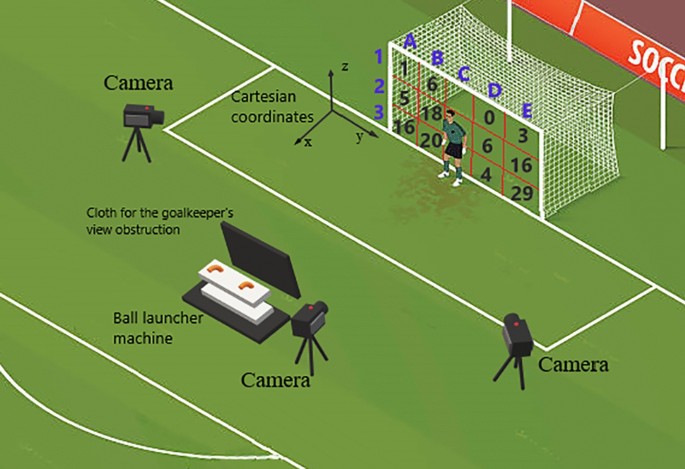
The walk from the center circle to the penalty spot is the longest 40 yards in football. Your technique can be perfect on the training ground, but without mental control, it disintegrates. This is where games are won.
First, own the process. You place the ball. You decide when to start. The referee and the goalkeeper are waiting on you. This simple act of control is a psychological weapon. I learned this the hard way watching a cup final shoot-out. Our best striker, a powerhouse in open play, let the opposing captain place the ball for him as a “mind game.” He rushed, changed his target, and blazed it over. We lost. Now, I teach every player: touch that ball first.
Second, use trigger words. A short, positive phrase you repeat in your mind during your routine. “Low left.” “Strong and true.” It blocks out the crowd and the keeper’s movement. It anchors your decision.
Third, practice under simulated pressure. Don’t just take 20 penalties in an empty park. Set stakes. Last player to miss does 20 push-ups. Take five in a row where you have to score all five to “win the cup.” This wires your brain to handle the real pressure, not just the technique. For structured practice, integrating specific shooting drills that mimic penalty pressure is essential.
Common mistake: Staring down the goalkeeper during your run-up, your eyes drift from the ball, your body leans, and you slice the shot wide because your plant foot wasn’t aligned.
The Rules That Can Force a Retake

You can execute a perfect penalty and still see the referee order a retake. Knowing the laws protects your goal. The official penalty kick rules are specific, but these are the infringements you’ll actually see.
Goalkeeper Offenses.
The keeper must have at least part of one foot touching the goal line when you kick the ball. They can’t stand in front of it. They also can’t touch the goalposts or crossbar to shake them. If they do either and you miss, the kick is retaken. If they do it and you score, the goal stands. This is why some keepers try to “shimmy” or dance, they’re trying to bait you into watching them instead of the ball. Understanding goalkeeper movement rules is crucial for knowing when to appeal.
Kicker and Teammate Offenses.
You cannot feint (stop completely) in your run-up once you’ve completed it. A stutter-step is legal as long as it’s part of a continuous motion. A full stop is not. You also cannot kick the ball backward. If you do, it’s an indirect free kick to the other team. After you kick, you cannot touch the ball again until another player has. If you do and gain an advantage, it’s a free kick against you.
Encroachment.
This is the most common retake trigger. Your teammates must stay outside the penalty area and 10 yards from the ball until it’s kicked. If they enter too early and you score, the goal is disallowed and the kick is retaken. If you miss, it’s an indirect free kick to the defending team. The same applies to defenders who encroach. Referees are instructed to watch this closely, especially in shoot-outs.
I once saw a Champions League qualifier decided by this. The taker scored, but his teammate was a full yard inside the arc, desperate for a rebound. The referee saw it, disallowed the goal, and ordered a retake. The pressure multiplied. The second attempt was saved. That’s the margin.
Penalty Shoot-Outs: A Different Game

A shoot-out is a psychological duel with a different rulebook. The sequence and psychology matter as much as the kick itself.
The Order of Kickers.
Your first and fifth takers are the most important. Your first taker must be ice-cool, someone who will score 99 times out of 100 to set a positive tone. Your fifth taker is often your best player, the one you want taking the potentially winning kick. Never put your most nervous player fifth. The middle order (2, 3, 4) should be reliable technicians.
The Goalkeeper’s Role.
As a kicker, you should ignore your own keeper during the shoot-out. Focus only on your process. As a goalkeeper, your job is to delay, to make the taker wait, to stand tall for as long as possible. The saved penalty consequences are immediate, there is no rebound in a standard shoot-out. The ball is dead once saved.
The “No-Look” Technique.
Some elite takers, like Jorginho, use a hop-step and look away from the keeper until the last moment. This isn’t showboating. It’s a method to completely eliminate the goalkeeper from their decision-making process, forcing them to rely solely on their pre-selected spot and technique. It’s a high-level mental model, not for beginners.
TL;DR: In a shoot-out, volunteer for a spot. Control what you can control: your routine, your decision, your technique. Let the outcome take care of itself.
Training Your Penalty: Drills That Matter

Practice doesn’t make perfect. Perfect practice makes perfect. Hitting 50 penalties a day to the same spot with no pressure builds muscle memory, but not match readiness.
The Fatigue Drill.
Take your penalties at the end of a training session, after a hard fitness circuit or a small-sided game. Your legs will be heavy, your heart racing. This simulates the physical state of taking a penalty in extra time. Can you still execute your technique when exhausted?
The Call-Out Drill.
Have a teammate or coach stand behind the goal. As you start your run-up, they shout a color (“Red!” or “Blue!”) corresponding to a pre-agreed corner. You must adjust and shoot to that corner. This trains mental flexibility and the ability to commit to a late decision under pressure, useful if you see the keeper lean early.
The “Sudden Death” Series.
Set up a best-of-five competition with a teammate. If it goes to 2-2, the next kick is sudden death. Create real, immediate consequences for missing. This is the closest you can get to shoot-out pressure on the training ground. Incorporating drills that build shooting with power will ensure your technique holds up when the stakes are highest.
Common mistake: Only practicing penalties to your “favorite” corner, goalkeepers study film. If you always go left, they will know. Practice scoring to all four corners with equal comfort.
Frequently Asked Questions
Can you fake or stutter-step during a penalty run-up?
Yes, you can stutter or hesitate as part of a continuous run-up. However, you cannot come to a complete stop once you have completed your run-up. A full stop is considered feinting and is punishable by a yellow card, and the kick is retaken if a goal is scored.
What happens if the ball hits the post and comes back to the penalty taker?
If the ball rebounds off the goalpost or crossbar directly back to the kicker, they cannot touch it. The ball must touch another player (goalkeeper or defender) first. If the kicker touches it, an indirect free kick is awarded to the defending team.
Is the “Panenka” chip a good idea?
The Panenka is a high-risk, high-reward tactic. It’s effective against goalkeepers who dive early. However, if the keeper stays on their line or reads it, it results in an embarrassing easy catch. Only attempt it if you are supremely confident and have practiced it extensively. It’s a statement, not a percentage play.
How do you choose which side to shoot?
Study the goalkeeper beforehand if possible. Some keepers have a habitual dive direction. During the game, watch their penalty saves. If you have no data, pick your strongest side, the corner you are most accurate with in training, and commit to it. Don’t try to out-think yourself.
What’s the best way to practice penalties alone?
Use targets. Place cones, water bottles, or bags in the corners of the goal. Start by taking 10 shots aiming for each target, focusing on technique over power. Then, mix them up randomly. Record yourself to check your run-up consistency and follow-through. The core mechanics are similar to an instep kick technique, so mastering that fundamental is key.
Does weather affect penalty taking?
Absolutely. A wet, slick ball travels faster and can be harder to control for a placed shot. On a windy day, a powerful, driven shot is smarter than a high, looping chip. Always take a few practice kicks with the match ball to feel its weight and movement under the day’s conditions.
Before You Go
Taking a penalty properly is a three-part equation: technique, mentality, and law. Nail the technique with a consistent run-up and a clean strike, power with the instep, placement with the inside foot. Win the mental battle with an unshakeable pre-shot routine and a committed decision. Respect the laws, knowing that goalkeeper encroachment or your own hesitation can undo a perfect kick.
Train under fatigue, practice to all corners, and simulate high-pressure scenarios. When your moment comes, whether in the 90th minute or a shoot-out, you’ll have done the work. The walk from the circle will feel shorter. The noise will fade. It’s just you, the ball, and a spot 12 yards away. Execute your process. The net will ripple.
I come from the “soccer heart” of Germany, the Ruhrpott. I have played, trained and followed soccer all my life and am a big fan of FC Schalke 04. I also enjoy following international soccer extensively.