Instep Kick in Soccer Explained | The Laces Drive Technique
An instep kick in soccer is a powerful striking technique where you hit the ball with the top of your foot, specifically the area covered by your laces, while your ankle is locked downward. It’s the primary technique for shooting for power, taking goal kicks, and making long, driven passes.
Most beginners think power comes from swinging harder. They lean back, wind up their leg like a baseball pitcher, and stab at the ball. The shot sails over the bar or the pass wobbles off-target. Power isn’t about brute force. It’s about turning your leg into a stiff lever and hitting the ball cleanly.
This guide breaks down the mechanics of the laces drive, why it’s superior to toe-kicking, and how to train it effectively at any age.
Key Takeaways
- The instep kick uses the large, flat bone structure of the foot’s top for maximum power and control, unlike the small, unstable toe.
- Your plant foot placement, specifically how far it is from the ball, is the single biggest factor controlling the ball’s height and trajectory.
- Locking your ankle downward turns your foot into a rigid extension of your shin, creating a faster, more efficient lever for transferring force.
- A full follow-through isn’t just for show; it ensures you’ve committed your full body weight and momentum into the strike.
- Training for the instep kick should prioritize inter-segmental coordination (how your thigh and shin work together) over pure leg strength, especially for younger players.
What is an Instep Kick in Soccer?
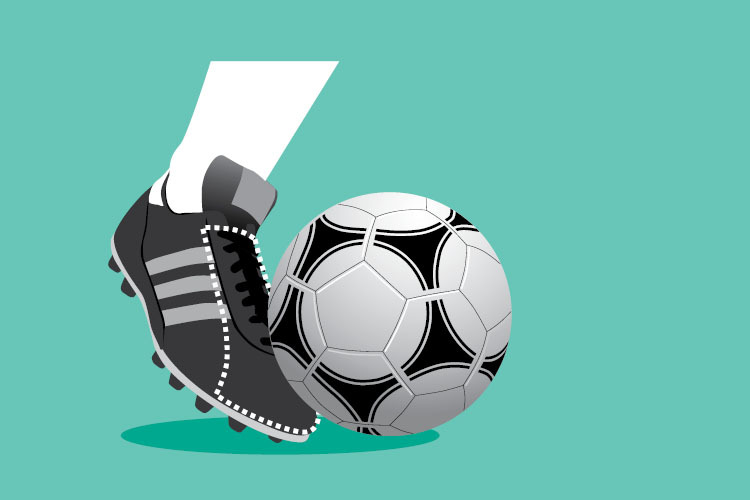
The instep kick, often called a laces drive, is the fundamental technique for generating power and distance in soccer. You strike the ball with the top of your foot, where the shoelaces are. This area provides a large, flat, and hard surface, the ideal striking platform.
Striking the ball with the instep, or dorsal part of the foot, between the toes and the ankle, allows for greater ball speed and accuracy compared to using the toe. This technique leverages the foot’s rigid bony structure to transfer kinetic energy efficiently from the leg to the ball.
The goal is to make your foot act like a golf club or a tennis racket. A loose wrist ruins a tennis shot. A loose ankle ruins a soccer strike. You lock the ankle down, point the toes toward the ground, and create one solid lever from your hip to your foot.
TL;DR: Hit the ball with the top of your foot, ankle locked down, for maximum power and a clean strike.
Why the Instep Kick Beats Toe-Kicking Every Time
New players naturally want to kick with their toe. It feels direct. It’s a mistake that costs you power, accuracy, and your big toe’s health.
The toe has a small surface area and is supported by weaker muscles. When you “toe-poke” the ball, the point of contact is tiny and unstable. The ball spins unpredictably, and the force is dissipated. You might get lucky, but you won’t get consistent.
The instep offers a larger, flatter surface. The bones underneath, the metatarsals, are strong and aligned to handle impact. This gives you control over the ball’s direction and a much more efficient transfer of energy from your leg.
I coached a youth team where a talented 10-year-old kept shanking his shots wide. He was using his toe. We taped a bright ‘X’ on his laces and did a simple drill: pass the ball against a wall, only using the tape. Within two sessions, his passes were hitting their mark. His shot became a weapon. The difference wasn’t strength. It was surface area.
Common mistake: Defaulting to a toe-kick for power, the ball often spins sideways, loses speed, and risks a painful “turf toe” injury from jamming the joint.
The physics are simple. A larger, firmer striking surface means more predictable ball behavior and less energy lost on impact. This is why the proper kicking technique for power always starts with the instep.
The Anatomy of a Powerful Strike: Breaking Down the Mechanics
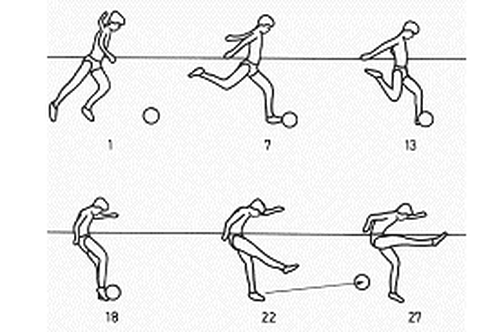
A good instep kick isn’t one motion. It’s a chain of events where each link has to be strong. Break one, and the whole strike falls apart.
The Run-Up and Plant Foot
Your approach sets the stage. Take a short, angled run-up. Three to five steps is enough. Sprinting from 20 yards away wastes energy and throws off your balance.
Your plant foot is the steering wheel. Place it beside the ball, about a shoe’s width away, with your toes pointing exactly where you want the ball to go. This foot stays firmly planted throughout the kick. It provides the stable base your kicking leg needs to swing freely.
Where you plant it decides if the ball rockets or balloons.
– Plant foot behind the ball: Your body leans back. Your kicking foot contacts the lower half of the ball, sending it skyward. Useful for chips, disastrous for drives.
– Plant foot beside the ball: Your torso stays over the ball. Your foot strikes through the center, keeping it low and driven.
Ankle Lock and Foot Position
This is the non-negotiable. As you swing your leg forward, point your toes down like you’re trying to touch the ground with them. Lock that ankle joint. Your foot should form a straight, rigid line with your shin.
Think of your leg as a golf club. The ankle is the hosel. If it’s loose, the club head wobbles and the shot sprays. A locked ankle makes your foot the solid club face.
The Swing and Contact Point
Your thigh initiates the swing, pulling forward from the hip. Then your lower leg snaps through like a whip. The power comes from this sequential motion, hip, then thigh, then shin.
I learned this the hard way trying to blast free kicks like Roberto Carlos. I’d tense my whole leg and just muscle it. The ball went hard, but never with the dip and swerve I wanted. My coach filmed me. My thigh and shin were moving as one stiff unit. There was no whip, no snap. The fix was isolating the knee hinge in practice, kicking a ball that was resting against a wall, focusing only on the lower leg movement.
Strike the ball with the highest part of your instep you can comfortably reach, just below the laces. Aim for the dead center of the ball. Hitting it slightly above center helps keep it down. Hitting below center sends it up.
The Non-Negotiable Follow-Through
Your leg must continue moving toward the target after impact. Don’t stab and stop. A complete follow-through means you’ve committed your full body weight and momentum into the ball. Your kicking foot should finish high, with your body leaning forward over the plant foot.
A short, stabbing follow-through is a telltale sign of a weak strike. You’re decelerating at the point of contact. The ball might move, but it won’t have that intimidating, rising pace.
What Most Coaches Get Wrong (And What to Say Instead)
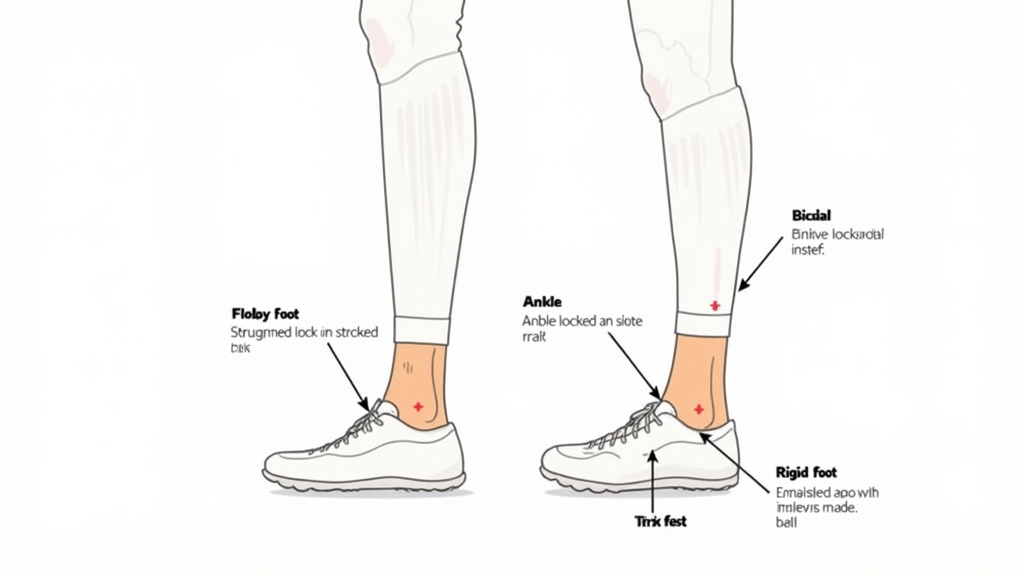
Well-meaning advice can confuse players. Vague phrases create mental pictures that lead to technical errors.
“Keep your toe down” is the classic. A player hears that and jams their toes into the ground, straining the ankle. What you mean is “lock your ankle.” Demonstrate the difference. Show a floppy foot versus a rigid, pointed foot.
“Don’t lean back” is another. A player focuses so hard on staying upright that they forget their plant foot. If their plant foot is behind the ball, they will lean back. It’s physics. Instead, coach the cause: “Place your plant foot beside the ball.” The lean-back problem often fixes itself.
The biomechanics of kicking show that experienced players have better control over these distal joints. They don’t think “toe down.” They think “solid foot.” Your coaching language should build that same intuitive model.
Instep Kick vs. Inside & Outside of the Foot

The instep is your power tool. The inside of the foot is for precision passes and finishes. The outside of the foot is for swerve and surprise.
| Kicking Surface | Best For | Trade-Off |
|---|---|---|
| Instep (Laces) | Power shots, long drives, goal kicks, clearances | Harder to achieve pinpoint accuracy over short distances |
| Inside of Foot | Short/medium passes, finishing in tight spaces, curling shots | Lacks the raw power for long-distance play |
| Outside of Foot | Bending passes, quick releases, surprising the keeper | Unforgiving technique; mis-hits are common |
A complete player needs all three. You use the instep to strike a free kick over a wall, the inside foot to slot a penalty, and the outside foot to bend a pass around a defender. The different foot surfaces are tools for different jobs.
Training the Instep Kick: Coordination Over Pure Strength
You can have the leg muscles of a sprinter, but if your thigh and shin don’t coordinate, your kick will be weak. Research backs this up. A PMC study on inter-segmental coordination found that skilled kickers have a more efficient timing relationship between their thigh and shin segments.
This means for young players, drills that improve coordination will improve kicking power faster than just lifting weights. Here’s a simple progression:
- Wall Passes: Stand 5 yards from a wall. Pass the ball firmly against it using your laces. Focus on the sound, a solid, clean ‘thud’ means good contact. A slappy or tinny sound means you’re hitting with your toe or the wrong part of your foot.
- The ‘X’ Mark: Put a small piece of tape on the central laces of your shoe. Now, every time you strike a ball, you must see that tape make contact. This builds spatial awareness.
- One-Step Power: Place a ball 2 feet in front of your plant foot. Without a run-up, take one step and drive through it. This isolates the leg-swing mechanics without the complexity of a run-up.
- Moving Target: Have a partner roll a ball slowly toward you. Time your approach and strike it first-time. This adds the element of judging a moving ball, which is where most match situations happen.
Strength still matters. The quadriceps are the primary muscle group driving the kick. But according to a study on coordination and strength training effects, coordination training led to greater improvements in kicking accuracy and inter-segmental coordination than strength training alone for less-experienced athletes.
TL;DR: Start with wall-pass drills for clean contact, then add movement. Good coordination between your thigh and shin creates more power than bulky muscles alone.
Adapting the Instep Kick for Game Situations
The basic mechanics are constant, but your application changes based on the game’s demands.
Shooting for Power
Here, you want a low, driven shot. The key is striking through the ball’s center and following through low. Your plant foot is firmly beside the ball. Your body stays over it. This technique is the foundation of all effective shooting drills for power.
Long Passing and Clearances
For a driven long pass, you often need more loft. You achieve this by placing your plant foot slightly behind the ball and making contact with the bottom half. The follow-through is more upward. It’s a subtle shift from the low drive of a shot.
Taking Free Kicks and Goal Kicks
For a direct free kick where you need to get the ball up and over a wall but still down quickly, the instep is essential. You combine the laces drive with a run-up from an angle. The ball placement for free kicks is critical, often leaning the ball slightly back toward you. This is different from the curving a free kick technique used for bending shots.
Goal kicks are pure instep drives. The focus is on distance and height. You take a longer run-up, plant your foot well behind the ball, and strike through its lower half with a full, upward follow-through.
Fixing Common Instep Kick Problems
You’ll know when your technique is off. The ball tells you.
| Symptom | Likely Cause | Fix |
|---|---|---|
| Ball balloons over the bar | Plant foot is behind the ball; leaning back; striking under the ball. | Place plant foot beside the ball. Keep your chest over it. Aim for the center. |
| Shot lacks power, feels weak | Ankle is not locked; stabbing motion with no follow-through; hitting with toes. | Exaggerate the toe-down lock. Practice full follow-throughs into a net. Use the ‘X’ tape drill. |
| Ball spins wildly sideways | Foot is turned inward or outward at contact; not striking through the centerline. | Check plant foot direction—toes must point at target. Strike through the middle of the ball. |
| Pain in the top of the foot | Striking with the bony foot arch, not the padded laces area; poor quality ball. | Move contact point higher toward the laces. Use a properly inflated match ball for training. |
Common mistake: Practicing only with a stationary ball, in a game, the ball is almost always moving. This changes your timing and plant foot placement dramatically. Integrate moving-ball drills early.
If you’re struggling with shooting accuracy, go back to the wall. Distance hides flaws. Up close, you get immediate feedback on your foot position and contact quality.
The Bottom Line
The instep kick is soccer’s engine. It’s how you score from distance, switch the play, and clear your lines. Forget about toe-kicking. It’s a dead end.
Lock your ankle. Point your plant foot. Follow through. Drill those three things against a wall until the clean ‘thud’ of a perfect strike is the only sound you know. Power isn’t about how hard you swing. It’s about how efficiently you channel your body’s movement into a single, solid point on the ball. That point is your laces.
Frequently Asked Questions
What part of the foot is the instep?
The instep is the top of your foot, running from the base of your toes back toward your ankle. It’s the broad, bony area covered by your shoelaces when you wear cleats. This large, flat surface is what makes the instep kick so powerful and controlled.
How do you kick a soccer ball with power?
Power comes from technique, not muscle. Use the instep kick: lock your ankle, place your plant foot beside the ball, and strike through the center with a full follow-through. A PMC study on instep kick technique confirms that efficient coordination between the thigh and shin segments is a bigger factor in ball speed than pure leg strength.
What is the difference between an instep drive and a knuckleball?
Both use the instep, but the contact point and follow-through differ. An instep drive uses a full, sweeping follow-through for a straight, powerful shot. A knuckleball technique uses a stabbing motion, striking the ball’s valve area with minimal spin to create an unpredictable, wobbling flight path.
Should you use the instep for a penalty kick?
For power and placement, yes. The instep allows you to generate pace and keep the ball low, making it harder for the keeper to react. Many professionals use it for penalty kick technique when aiming for the corners. For panenka or chip penalties, the inside foot is better.
Can you curve a ball with an instep kick?
Yes, but it’s an advanced technique. To curve the ball, you strike it off-center with the inside part of your instep and wrap your foot around it. This is different from a standard bending technique which typically uses the inside or outside of the foot for more pronounced swerve.

I come from the “soccer heart” of Germany, the Ruhrpott. I have played, trained and followed soccer all my life and am a big fan of FC Schalke 04. I also enjoy following international soccer extensively.