Is Heading a Soccer Ball Dangerous? The Brain Health Truth
Yes, heading a soccer ball is dangerous. The primary risk comes from repetitive subconcussive impacts, not just concussions. These repeated headers cause microstructural damage to the brain’s white matter, impair cognitive function, and significantly increase the long-term risk of neurodegenerative conditions like Chronic Traumatic Encephalopathy (CTE).
Most players and coaches focus on the dramatic, knockout blow. They miss the real problem. The danger accumulates silently with every routine header in training, every cleared corner kick, every attacking flick-on. You don’t feel a headache. You don’t see stars. But inside, the brain is taking notes.
This guide breaks down the hard science, the immediate performance costs you can measure, and the policy changes that are reshaping youth football globally. We’ll look at what a proper technique can and cannot prevent, and why the conversation has moved far beyond just “getting your head over the ball.”
Key Takeaways
- Heading transmits a pressure wave energy pulse directly to the frontal brain, a mechanism comparable to some military blast exposures, regardless of modern ball design.
- A single session of heading can impair cognitive test scores and disrupt brain-muscle communication for more than 24 hours, affecting on-field decision-making and coordination.
- Long-term, high exposure (studies cite a median of over 2,000 headers) is linked to measurable white matter damage and declining working memory, independent of concussion history.
- Approximately 30% of concussions in young American soccer players are directly caused by heading the ball.
- Mitigation requires a layered approach: enforced youth heading bans, rubber training balls, dedicated neck strengthening, and flawless technique execution.
The Science of Subconcussive Hits
For decades, the football world worried about concussions. The visible injury. The player who doesn’t get up. We now know that’s only the tip of the iceberg. The submerged danger is the repetitive subconcussive impact, the header that feels normal.
A 2024 Springer Nature longitudinal cohort study tracked amateur players for two years. It found those with high heading exposure (median 2,073 headers) showed distinct microstructural changes in the brain’s white matter, specifically in the right middle fronto-orbital region. These changes correlated with measurable declines in working memory performance.
The brain’s white matter is its communication network. Think of it as the fibre optic cables connecting different processing centres. Subconcussive hits don’t sever the cables. They fray the insulation. Signals slow down. Messages get crossed. This damage is cumulative and often symptomless until significant cognitive deficits appear later in life.
Common mistake: Believing a proper technique eliminates all risk, technique manages force distribution to the neck and body, but it does not stop the initial pressure wave from transferring energy directly into the skull and brain tissue upon ball contact.
What Does “Dangerous” Actually Mean?
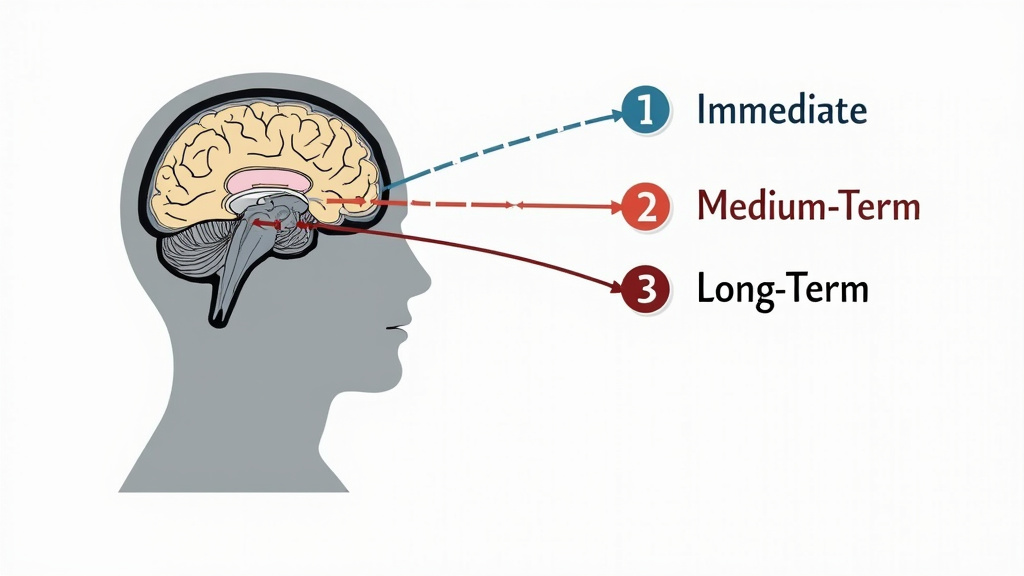
The danger manifests in three clear tiers: immediate functional impairment, medium-term structural change, and long-term neurodegenerative disease risk. These aren’t theoretical. They are documented in peer-reviewed journals.
The immediate effects are perhaps the most startling for players. Research documented in an NIH PubMed Central article shows that a single, controlled heading session immediately alters brain function. Players performed worse on rapid number-naming cognitive tests like the King-Devick, with slower times and more errors. Their brains also showed hyperconnectivity between the cortex and muscles, a likely compensatory mechanism that indicates the system is under stress.
These acute changes can last over 24 hours. That means a player doing heading drills on Tuesday could still be experiencing subtly slower reaction times and decision-making during Wednesday’s match.
| Risk Tier | What Happens | Evidence Timeline |
|---|---|---|
| Immediate | Slower cognitive processing, disrupted brain-muscle communication, altered pupillary light reflex. | Measurable within minutes, can persist >24 hrs. |
| Medium-Term | Microstructural white matter changes, decreased working memory, anxiety, depression. | Observable after a season or ~2,000 headers. |
| Long-Term | Increased incidence of CTE, early-onset dementia, other neurodegenerative diseases. | Diagnosed decades after playing career ends. |
The medium-term structural changes are where the white matter changes from heading become a clear pattern. It’s not about one bad header. It’s about the total volume. The brain has a repair capacity, but consistent bombardment overwhelms it. The cumulative load matters more than any single event.
TL;DR: Danger isn’t just future dementia. It’s slower thinking tomorrow, measurable brain changes this season, and a multiplied risk of severe neurological disease decades from now.
The New Discovery: Pressure Wave Energy
The old theory focused on whiplash, the brain rattling inside the skull from sudden head acceleration. New research from Loughborough University press release has identified a second, potentially more significant injury mechanism. It happens in the first three milliseconds of impact.
When the ball strikes the forehead, it generates a high-pressure wave that travels directly through the skull and into the frontal lobe tissue. This is distinct from the overall head movement. This pressure wave energy transfer varies dramatically, up to 55 times, depending on the ball’s construction, inflation, and whether it’s wet or dry.
The magnitude of this newly measured pressure wave is comparable to those recorded in some military blast and bullet impact studies. This finding fundamentally changes how we must view the soccer ball construction and official ball pressure as direct safety variables.
Crucially, this mechanism is not exclusive to heavy, water-logged leather balls of the past. Modern polyurethane match balls can still generate high-energy transfer. This means the problem hasn’t been engineered away. It’s been overlooked. Scientists now believe footballs could be specifically designed to mitigate this pressure wave, a revelation that could lead to the next major advancement in ball material layers and safety.
How Policies Are Changing the Game
The scientific evidence has forced football associations worldwide to act. The approach is no longer “train harder,” but “train smarter and less.”
The United States Soccer Federation led the way in 2016, banning heading for all players under the age of 10 and limiting heading practice for ages 11-13. The English FA followed with a phased ban on heading in training for under-11s and strict limits on “high-force” headers in training for older youth and professional teams. The Scottish FA took the extraordinary step of banning heading in training the day before and the day after a professional match.
| Football Association | Key Youth Heading Policy | Rationale |
|---|---|---|
| U.S. Soccer | Ban for U-10; limited training for U-11 to U-13. | Reduce early exposure during critical brain development. |
| The FA (England) | No heading in training for U-11; limited “high-force” headers for older groups. | Minimize repetitive subconcussive load across all levels. |
| Japan FA | Heading restricted for U-15; recommends “soft rubber balls” for practice. | Combine age limits with equipment modification. |
| Scottish FA (Pro) | No heading in training day before/after a match. | Increase recovery time between head impact exposures. |
The Japan Football Association’s 2021 guidelines are particularly insightful because they combine an age restriction with a ball recommendation. Pushing for the use of “soft balls (rubber balls)” in training acknowledges that modifying the equipment is a viable parallel strategy to modifying behavior. Understanding the ball quality differences between a hard match ball and a softer training variant is now a component of responsible coaching.
These policies are a direct admission from the sport’s governing bodies that the physical demands of heading carry an unacceptable neurological risk for developing brains. They are the first step, not the last.
Can Proper Technique Make it Safe?
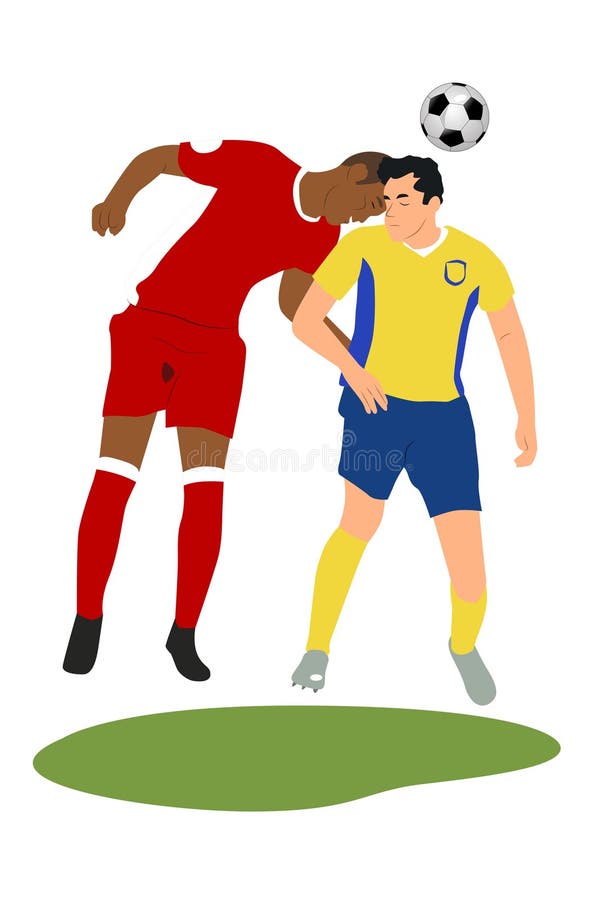
This is the hardest question. Good proper heading technique is non-negotiable for risk reduction. It is also insufficient to make the action “safe.” Technique is damage control, not a forcefield.
Proper technique means:
1. Eyes Open, Mouth Closed: Watch the ball onto the forehead. Clenching the jaw protects against whiplash and prevents a concussion from teeth clashing.
2. Neck Muscles Engaged: A strong, rigid neck transforms your head and torso into a single unit. This minimizes whiplash acceleration and allows the larger core muscles to absorb force.
3. Contact on the Forehead: The forehead is the hardest part of the skull. Striking the temple or top of the head is dangerous and ineffective.
4. Use Your Legs and Core: Power comes from a forward thrust of the torso, driven from the legs. Don’t just snap your neck.
I’ve seen a talented youth player, age 14, sidelined for a month with persistent headaches. His technique was poor, he was turning his head and making contact near the temple. But his coach had only ever praised his “bravery” in the air. We spent his recovery time retraining his neck muscle engagement and heading body positioning from scratch. The headaches stopped when he returned. The technique fixed the acute problem. It didn’t erase the subconcussive load from every correct header he’d ever make.
Common mistake: Relying solely on technique without limiting total exposure, proper form reduces whiplash but does not eliminate the pressure wave or the cumulative microtrauma to white matter. Volume is the enemy.
TL;DR: Flawless technique is the minimum entry requirement for heading. It manages the forces you can control. It does nothing to stop the inherent risk of the pressure wave or the cumulative effect of repetition. You must also control the dosage.
Practical Steps for Players, Parents, and Coaches

Knowing the risk is pointless without a change in behavior. Here is the actionable protocol, moving from most to least effective.
- Advocate for and Enforce Policy. Support and demand the implementation of age-appropriate heading restrictions in your club or league. The single most effective intervention is simply doing less of it, especially before age 14.
- Modify Training Equipment. For technical heading practice, use a lighter rubber or foam ball. Research in Frontiers in Neurology shows rubber balls cause significantly less disturbance to the pupillary light reflex, a direct indicator of brainstem impact, compared
Frequently Asked Questions
What exactly is a “subconcussive impact” from heading?
subconcussive impact is a blow to the head that does not cause immediate, recognizable concussion symptoms like dizziness or confusion. In soccer, this occurs with nearly every header. While it feels normal, the force still transmits a damaging pressure wave through brain tissue, causing microscopic structural damage that accumulates silently over time with repeated exposure.
Can using newer, lighter soccer balls eliminate the danger?
No, modern ball design does not eliminate the fundamental risk. While lighter balls may reduce some impact force, the primary injury mechanism is the sudden acceleration and deceleration of the brain inside the skull, driven by pressure wave energy. This harmful biomechanical process occurs regardless of the ball’s weight or material.
Are adult players at the same risk level as youth players?
While the risks are present for all ages, youth players are considered more vulnerable due to their developing brains and weaker neck muscles. Their brains are biologically more susceptible to injury, and their necks provide less stabilization to absorb force, which is why many governing bodies have instituted age-based heading restrictions that adults do not follow.
If I don’t head the ball often, am I safe from long-term effects?
Reducing frequency is a key risk mitigation strategy, but “safe” is a relative term. The scientific link to neurodegenerative disease is strongly associated with high cumulative exposure over a career. However, because the damage is subconcussive and cumulative, there is no scientifically established “safe” threshold or number of headers that guarantees no long-term consequences.

I come from the “soccer heart” of Germany, the Ruhrpott. I have played, trained and followed soccer all my life and am a big fan of FC Schalke 04. I also enjoy following international soccer extensively.