Understanding Passive vs Active Offside Rules in Soccer Today
Passive vs active offside in soccer hinges on a single moment: the attacker’s position when the ball is played. A player in a passive offside position is not penalized. The offense only occurs if that player then becomes “involved in active play” by interfering with the ball, interfering with an opponent, or gaining an advantage from a rebound or save. The rule is defined by the IFAB Laws of the Game.
Most fans scream “offside!” when an attacker is simply standing ahead of the last defender. That’s the universal mistake. The flag only flies when that positioning leads to one of three specific actions.
This guide breaks down the exact triggers that turn a passive position into an active offense. We’ll cover how defenders exploit this with the offside trap, how VAR and new semi-automated technology are reshaping calls, and the tactical wrinkles that change everything.
Key Takeaways
- Position isn’t offense. A player can be in an offside position for minutes without being penalized.
- The three triggers are: interfering with play (touching the ball), interfering with an opponent (blocking, challenging), or gaining an advantage (playing a rebound). Missing one means no flag.
- VAR and Semi-Automated Offside Technology (SAOT) now draw the line at the “bottom of the armpit,” not the whole body, using up to 30 high-speed cameras and player sensors.
- The offside trap is a defensive gamble. A coordinated step forward by the back line can catch attackers in a passive position, turning it active if they touch the next pass.
- Exceptions always apply. No offside from goal kicks, throw-ins, or corner kicks.
What Actions Make Offside “Active”? (The Three Triggers)
The basic offside rule sets the stage. You’re in an offside position if, when a teammate plays the ball, you’re closer to the opponent’s goal line than both the ball and the second-last defender. That’s passive. Standing there is legal.
The law only bites when you move from passive to active. The IFAB Laws of Game list three triggers.
Interfering with play means touching or receiving a ball passed by a teammate. Interfering with an opponent includes blocking their line of vision, challenging them for the ball, or making an obvious action that impacts their ability to play it. Gaining an advantage is playing a ball that rebounded off the post, crossbar, an opponent, or was deliberately saved.
Trigger 1: Interfering with play. This is the simplest. You touch the ball. A striker lurking in an offside position doesn’t get flagged until they receive that through pass and take a shot. If the pass goes to another teammate who is onside, the lurking striker stays passive. No offense.
Trigger 2: Interfering with an opponent. This is subtler and causes the most debate. It’s not just standing in front of a goalkeeper. It’s doing something that clearly affects their play. Blocking their run to the ball. Screening their view so they miss a deflection. Making a move toward the ball that forces them to change their path. The key is impact. If the opponent can still play the ball normally, it’s likely still passive.
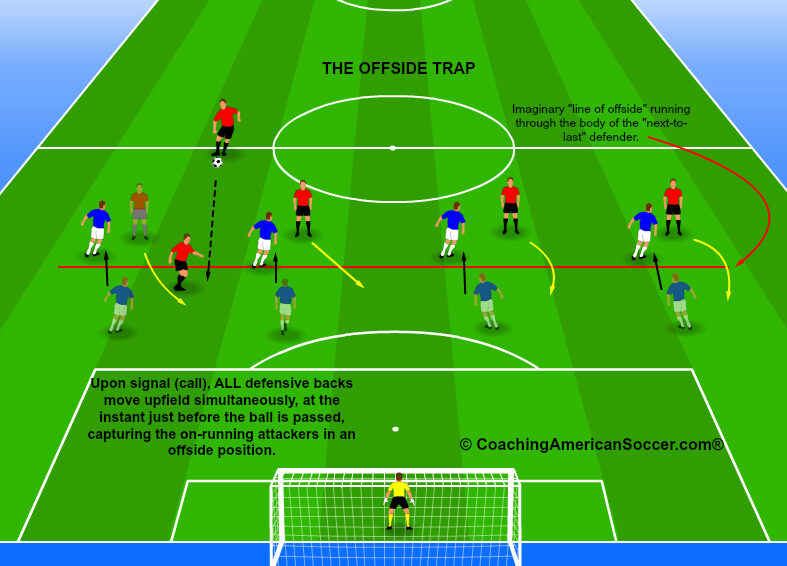
Trigger 3: Gaining an advantage. This catches attackers who are initially passive but get a second chance. Imagine a shot deflects off the goalkeeper to an attacker who was in an offside position when the original shot was taken. Playing that rebound is an active offense. The advantage came from being in that offside spot when the play started.
TL;DR: The flag flies only after one of three actions: touch the ball, block an opponent’s play, or use a rebound. Standing still in an offside position is always legal.
How VAR and SAOT Changed Everything
Before video review, officials had to make these snap judgments in real time. The visual offside guide was a referee’s eye, often from 30 yards away. Now, the offside rule application guidelines are enforced by technology.
The Video Assistant Referee (VAR) system, introduced globally around 2018, was the first step. For offside, VAR officials freeze the frame at the exact moment the ball is played. They then draw a virtual line to check positions.
The real revolution is Semi-Automated Offside Technology (SAOT). FIFA first deployed it at the 2022 World Cup in Qatar.
SAOT uses up to 30 high-speed cameras around the pitch, tracking the ball and every player. Each player has 29 data points tracked, creating a 3D model. The system identifies the “kick point” automatically, draws the offside line, and generates an animation for the VAR team. The line is now drawn at the “bottom of the armpit” for attackers and defenders, as specified in the updated IFAB laws.
This technology has spread fast. The UEFA Champions League adopted it. The English Premier League began a rollout in April 2025 for the 2024/25 season, planning full use for 2025/26. The Bundesliga, where I watch every Schalke match, is evaluating it. The FA Cup started using SAOT in February 2025.
| Technology | Key Capability | Adoption Timeline | Impact on Call Speed |
|---|---|---|---|
| VAR (Video Assistant Referee) | Manual frame freeze & line draw by officials | Global rollout ~2018 | Decisions often took 2-3 minutes, leading to extended stoppage time |
| SAOT (Semi-Automated Offside) | Automated kick-point detection, 3D animation generation | FIFA World Cup 2022, UEFA Champions League 2023, EPL 2025 | FIFA reports average decision time under 30 seconds |
The speed matters. Long VAR checks disrupted match flow and inflated injury time calculation. SAOT cuts that delay. The animation is also shown in stadiums and broadcasts, making the call transparent. Fans no longer wait minutes wondering what the officials are looking at.
Common mistake: Thinking SAOT makes every offside call automatic. The technology provides the data, but the VAR official still must judge whether the player’s position led to “active involvement.” SAOT shows the line, not the offense.
TL;DR: SAOT uses cameras and sensors to draw the offside line in under 30 seconds. It shows the position, but the human official still judges if the player became active.
The Defender’s Perspective: The Offside Trap
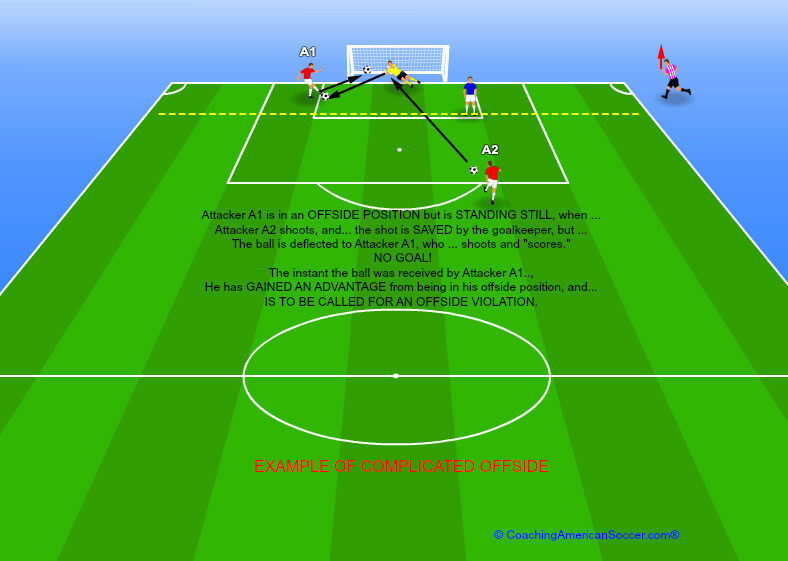
Attackers worry about being active. Defenders try to force them into it. The classic tool is the offside trap.
It’s a coordinated defensive move. Just before an opponent plays a through pass, the entire back line steps forward together. This moves the “second-last defender” line ahead, potentially placing attacking players in an offside position relative to the new line. If the pass is then played and an attacker receives it, they’ve moved from passive to active (interfering with play) and get flagged.
It’s high-risk. Timing is everything. If one defender moves late, they become the second-last defender, and the attackers might be onside. A successful trap requires discipline and communication, usually led by the central defender.
I’ve seen this backfire at the Veltins-Arena. Schalke, under a coach who loved a high line, would sometimes trap perfectly. Other times, a winger would hesitate, the line would break, and a simple pass would slice through for a goal. The risk is real.
| Trap Outcome | Defender Action | Attacker Reaction | Result |
|---|---|---|---|
| Successful Trap | Coordinated step forward at pass moment | Attacker receives pass in now-offside position | Indirect free kick to defenders |
| Failed Trap (Broken Line) | One defender holds or moves late | Attacker receives pass relative to that defender | Attacker is onside, play continues |
| Failed Trap (Poor Timing) | Line moves too early or too late | Attacker adjusts run, receives pass onside | Goal scoring opportunity |
I won’t recommend the offside trap for a youth team or a squad with slow defenders. The visual feedback is a goal against you. Found that out coaching a local side in Gelsenkirchen—we got caught three times in one half and switched to a deeper block.
The trap isn’t just about catching attackers. It’s about compressing space. A successful trap moves the effective play area 10 yards up the pitch, giving your midfield more room to press. But it demands that your high defensive line is an iron curtain, not a picket fence.
TL;DR: The offside trap is a coordinated step forward to force attackers into an offside position. It compresses space but fails if one defender breaks the line.
Exceptions and Gray Areas: When Offside Doesn’t Apply
The scenarios not offside are fixed in the laws. There are three explicit exceptions where a player can never be offside, regardless of position.
- Goal Kick. When the ball is kicked from the goal area, the offside rule is suspended until another player touches it.
- Throw-In. Same principle. From a throw-in, offside doesn’t apply.
- Corner Kick. Attacking players can crowd the goalkeeper on a corner without offside risk.
These are clear. The gray areas live in the “interfering with an opponent” trigger.
What exactly is “clearly obstructing the line of vision”? If an attacker stands three yards in front of a keeper during a free kick, is that obstruction? It depends on the keeper’s movement. If the keeper tries to step around to see the ball and the attacker shifts to block, that’s active. If the keeper stays still and can still see the flight, it might remain passive.
Another gray zone: “making an obvious action.” An attacker in an offside position jumps for a header but misses the ball. Does that “obvious action” impact the defender behind them? If the defender also jumps to contest, then yes. If the defender was never going to reach it, maybe no. These are judgment calls, even with SAOT.
The official offside rule definition includes a note about defenders deliberately playing the ball. If a defender makes a deliberate save or clearance that then goes to an offside-position attacker, that’s “gaining an advantage” and is offside. If the ball merely deflects off a defender unintentionally, it’s not a deliberate play, and offside might not apply. This distinction causes endless VAR reviews.
Common mistake: Assuming a deflection is always a “deliberate play.” Defenders often get the ball kicked into them. The VAR must decide if it was a controlled action or just a bounce. Wrong calls here change matches.
TL;DR: No offside from goal kicks, throw-ins, or corners. The hardest calls judge “interference” and whether a defender’s touch was deliberate.
The Evolution of the Rule and Its Future
The origin of match length isn’t tied to offside, but the rule’s history shapes today’s game. The offside law existed in some form since the 19th century, originally requiring three defenders between attacker and goal. It evolved to two defenders (the last and second-last) to encourage more attacking play.
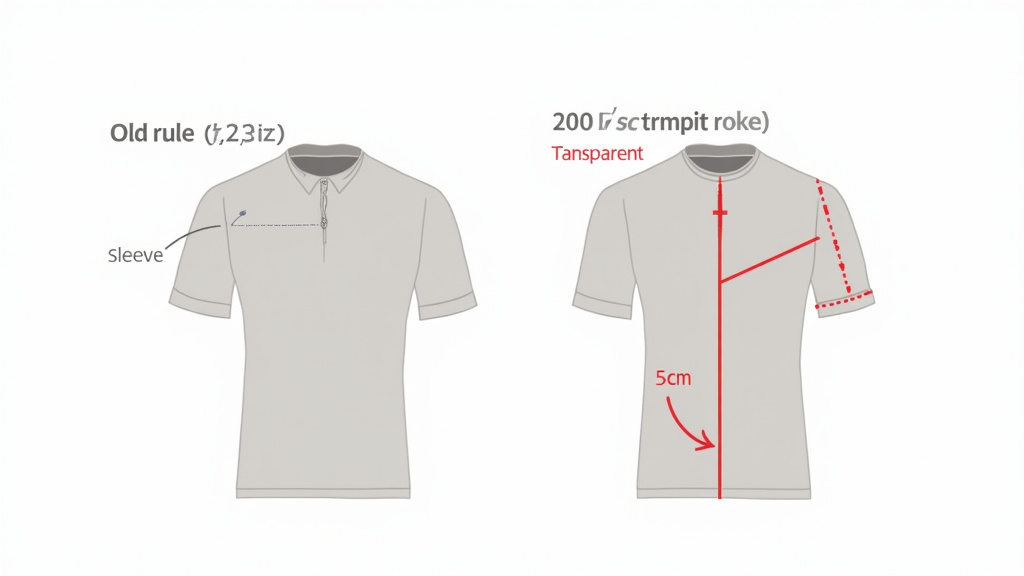
The biggest recent shift was the 2021 IFAB clarification on “upper boundary of the arm.” They specified that for offside, the relevant body part ends at the bottom of the armpit. This took sleeves and shoulder shape out of the equation. SAOT now uses this precise metric.
Why? Before, lines were drawn from vague points like the “shoulder.” A player leaning forward could have their sleeve edge ahead of a defender’s torso, leading to marginal calls. The armpit rule uses a bony, measurable point on the skeleton tracked by cameras.
Future changes will likely focus on speed and consistency. With SAOT, we might see a “tolerance margin” introduced—a buffer of, say, 5 centimeters where if the positions are within that margin, the benefit goes to the attacker. This would reduce the frustration over millimeter calls that cancel goals.
Another discussion point is the “active involvement” definition. Could it be tightened? Some argue that merely standing in a position that influences a defender’s decision should be enough. The current law requires a concrete action. That probably won’t change soon, because it keeps the game flowing.
The 90-minute history of soccer includes constant law tweaks. Offside is central to that. Each change aims to balance attack and defense, fairness and flow. Technology now lets us see the balance in real time.
TL;DR: The rule evolved from three defenders to two, with the latest change defining the armpit as the line point. Future debates will cover tolerance margins and the definition of interference.
Frequently Asked Questions
What is the simplest example of passive offside?
striker is standing beyond the last defender when his teammate passes the ball. The pass goes to another attacker who is onside. The striker never touches the ball and doesn’t block anyone. He stays in that position for five seconds. That’s passive offside—no offense, no flag.
Can a goalkeeper be involved in an offside call?
Yes. If an attacker interferes with the goalkeeper’s movement or vision, that’s “interfering with an opponent.” Also, if the goalkeeper deliberately saves a shot and the ball goes to an attacker in an offside position, that attacker gains an advantage and is offside.
Why do we sometimes see a flag raised late, after the play develops?
The assistant referee is judging whether the player in the offside position becomes active. They wait to see if the player touches the ball or impacts the play. If the player doesn’t, they keep the flag down. If the player finally receives a second pass, the flag goes up then.
Does Semi-Automated Offside Technology (SAOT) make the call instantly?
No. SAOT generates the data and animation almost instantly (within seconds). The VAR official then reviews that animation and must still judge active involvement. The final decision is communicated to the on-field referee, who then signals the call. The whole process averages under 30 seconds.
What’s the biggest risk for a team using the offside trap?
broken line. If one defender doesn’t step forward in coordination, they become the second-last defender. Attackers will be onside relative to that player. A simple pass then exploits the gap, often leading to a clear chance. It requires perfect unison.
Are there any plans to change the “active involvement” triggers?
Not currently. The IFAB periodically reviews the laws, but the three triggers (interfering with play, interfering with opponent, gaining advantage) are considered fundamental to keeping the game dynamic. Major changes would require extensive testing and debate.
The Bottom Line
Passive offside is a position. Active offside is an action. The difference decides matches.
Memorize the three triggers: touch the ball, block an opponent, use a rebound. Everything else is just a player standing in a spot. Defenders use the trap to force that transition from passive to active, a gamble that rewards perfect timing.
Technology now draws the line at the armpit in seconds, making the position crystal clear. But the final judgment—was the player active?—still rests with a human official watching for impact, not just location.
That’s the core of the rule. It’s not about where you are. It’s about what you do next.

I come from the “soccer heart” of Germany, the Ruhrpott. I have played, trained and followed soccer all my life and am a big fan of FC Schalke 04. I also enjoy following international soccer extensively.