Soccer’s Inverted Winger Role Explained: What It Is & Why
An inverted winger in soccer is a wide attacking player who operates on the flank opposite their stronger foot, a left-footer on the right wing or a right-footer on the left. Their primary action is to receive the ball out wide and then cut diagonally inside towards the center of the pitch, aiming to shoot, combine with teammates, or create chances with their dominant foot, rather than staying wide to deliver crosses.
Most people see a player like Mohamed Salah score and think the move is simple: get the ball, cut left, shoot. They miss the orchestration behind it. The overlapping full-back, the central midfielder holding position, the striker pulling defenders away, all of it must click before that cut inside even becomes an option. Get one piece wrong, and the winger just runs into a wall of defenders.
This guide breaks down the inverted winger from the ground up. We will look at why this role exploded in modern football, the specific attributes that make it work, the formations that enable it, and how opposing coaches desperately try to shut it down. You will also see how it has fundamentally changed what we expect from wide players.
Key Takeaways
- An inverted winger’s effectiveness hinges on the overlapping run of a supporting full-back. Without that wide outlet, the move collapses.
- The role demands dual-threat capability: the winger must be a credible goal threat cutting inside AND a willing passer to exploit the space they create.
- Defensive responsibility is non-negotiable. Elite inverted wingers like Bukayo Saka are the first line of a team’s press, cutting off central passing lanes the moment possession is lost.
- This tactical shift has decimated the number of traditional wingers. In a recent Premier League round, only three natural wide players started on their stronger side, compared to ten the previous season.
- Success requires specific soccer formations like the 4-3-3 or 4-2-3-1 that provide central stability and allow full-backs to bomb forward.
The Inverted Winger’s Core Action: Cutting Inside
Forget the fancy name for a second. The job is defined by one movement: a diagonal run from the flank into the heart of the penalty area. A right-footed player on the left wing doesn’t try to beat his man to the byline. He receives the ball, often facing his own goal, and his first touch is angled infield. He wants to get the ball onto his stronger foot as quickly as possible.
This creates a immediate dilemma for the defending full-back. Follow him inside, and you abandon your wide defensive position, leaving a massive channel for an overlapping runner. Stay wide, and you give the winger a clear sight of goal with his best foot. Most full-backs hesitate for that half-second. That’s all an elite winger needs.
The inverted winger’s movement is a direct response to the increasing congestion in central midfield. By starting wide and moving inward diagonally, they attack the space between the opposition’s defensive and midfield lines, a zone that is notoriously difficult to cover.
TL;DR: The move isn’t about dribbling past a man on the outside; it’s about attacking the space between the full-back and center-back with your strongest foot, forcing a defensive mistake.
Why This Tactic Took Over Modern Football
This isn’t a new trick. Dutch legend Arjen Robben built a career on cutting in from the right onto his left foot, everyone knew it was coming, and few could stop it. But its systemic adoption across top leagues is a 21st-century phenomenon. It coincided with the rise of possession-based, positionally fluid systems pioneered by coaches like Pep Guardiola.
The traditional winger’s job, hug the touchline, whip in crosses, became statistically inefficient. Conversion rates from crosses are notoriously low. Coaches wanted their most dangerous attackers in positions where they could directly influence the scoreboard: taking shots. Putting your best shooter on his preferred foot, angling towards goal, simply creates more high-value chances.
The data shows the shift is absolute. Analysis from the BBC found the number of traditional wide starters in the Premier League has plummeted by about 60% in just one season. The game has moved inside. This evolution is a key part of any modern soccer tactics guide, emphasizing controlled penetration over hopeful crossing.
Key Attributes of a Modern Inverted Winger
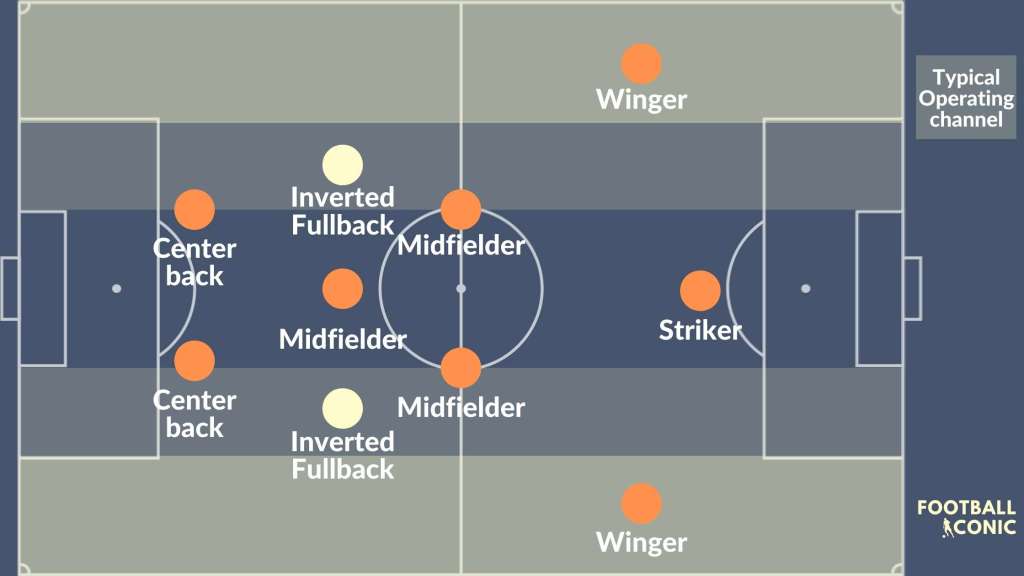
Not every quick player can do this job. It requires a specific and demanding skill set.
- Ambidexterity (or the illusion of it). While they favor one foot, they cannot be completely one-footed. A defender who knows you will only cut inside becomes easy to predict. The threat of occasionally going outside to cross keeps them honest.
- Low center of gravity and close control. The space they operate in is tight, often with two defenders converging. They need to shield the ball, ride challenges, and change direction in a phone booth. Think Lionel Messi, the archetype, gliding through traffic.
- Decision-making speed. This is the separator. The winger receives the ball and has milliseconds to scan: Is the full-back tight? Is the center-back stepping up? Is my midfielder making a supporting run? Shoot, pass, or drive? Indecision kills the attack.
- Tactical discipline without the ball. They are not luxury players. Their starting position when the team loses possession is crucial for initiating a counter-press or blocking central passing lanes.
The physical tools get you on the pitch. The mental processing gets you into the highlights. This combination of skills is why the ideal soccer position for many creative attackers is now on the “wrong” wing.
The System Around the Soloist: Required Team Setup
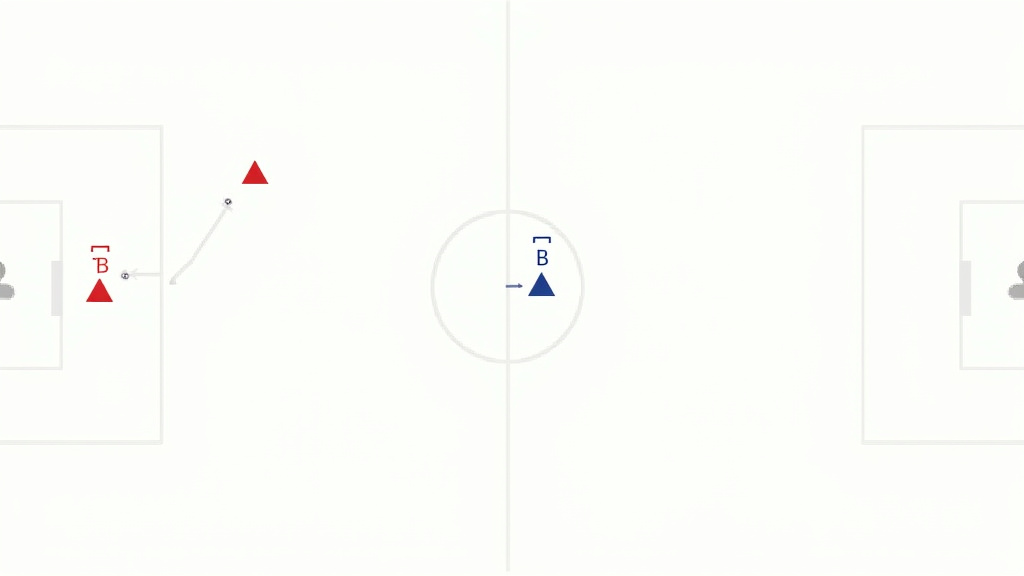
An inverted winger is a cog in a machine. Deploy one without the correct supporting structure, and you might as well play with ten men. Here are the non-negotiable system requirements:
- The Overlapping Full-Back: This is the most critical piece. When the winger cuts inside, they vacate the wide channel. A full-back must aggressively overlap into that space. This provides width, stretches the defense horizontally, and gives the winger a passing option. No overlap means the defense can comfortably collapse inward.
- A Stable Central Midfield: The central midfielders, especially in a 4-3-3 formation, must hold their positions to provide passing options and defensive cover. If they drift wide, the center becomes empty and the winger’s cut inside leads to a dead end.
- A Flexible Striker: The central striker often needs to drift into the channels or drop deep to pull center-backs out of position, creating the space for the winger to attack. A static target man doesn’t synergize with this style.
- Formation Foundation: The system must allow it. The 4-2-3-1 formation is perfect, with the “3” behind the striker featuring two inverted wingers and a central attacking midfielder. The 4-3-3 is the other classic home, with the front three interchanging positions. Trying to force an inverted winger into a rigid 4-4-2 vs 4-3-3 comparison highlights the mismatch; the 4-4-2 typically requires traditional wide midfielders to provide chalk-on-boots width.
| System Component | Role | What Happens If It’s Missing |
|---|---|---|
| Overlapping Full-Back | Provides width after winger cuts in | Defense doubles the winger; attack becomes narrow and predictable |
| Holding Midfielder | Covers space behind advanced winger | Team is exposed to counter-attacks down the winger’s vacant flank |
| Mobile Striker | Drags defenders to create space | Center-backs hold their line, leaving no gap for the winger to exploit |
| Formation (e.g., 4-3-3) | Structures player positions and roles | Players end up in conflicting spaces, breaking the team’s shape |
Common mistake: Coaching a player to always cut inside, the best, like Bukayo Saka, mix in drives to the byline. Defenders who guess wrong end up on the floor. A one-trick winger is a solved problem by halftime.
Famous Examples and Their Signature Moves
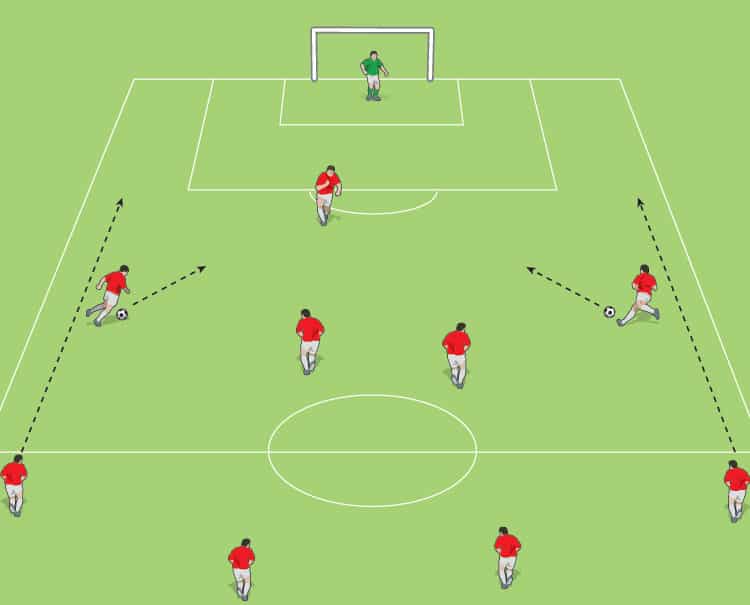
The theory is fine, but the players make it real. Each master of the role has a patented method.
Mohamed Salah (Left-footed, Right Wing): The premier example. Salah’s move is about explosive acceleration from a standing start. He often receives to feet with his back to goal, uses a sharp touch inside, and unleashes a shot before the defender can set his feet. His goal tally is the ultimate justification for the system.
Arjen Robben (Left-footed, Right Wing): The pioneer. Robben’s was less about intricate passing and more about sheer, unstoppable repetition. He would start wide, dribble at pace, and cut left exactly as he entered the final third. Everyone knew it was coming. Stopping it was a different matter.
Lionel Messi (Left-footed, Right Wing / False Nine): Messi revolutionized the role by blending it with the false nine position. Starting on the right, he would cut inside not just to shoot, but to act as the team’s chief playmaker, threading passes through impossibly tight spaces. He defined the dual-threat standard.
Bukayo Saka (Left-footed, Right Wing): The modern blueprint. Saka combines the direct goal threat with elite chance creation and relentless defensive work. He is the complete package, demonstrating why the role is now central to England’s and Arsenal’s attacking play.
How Teams Try to Stop Them (Counter-Tactics)
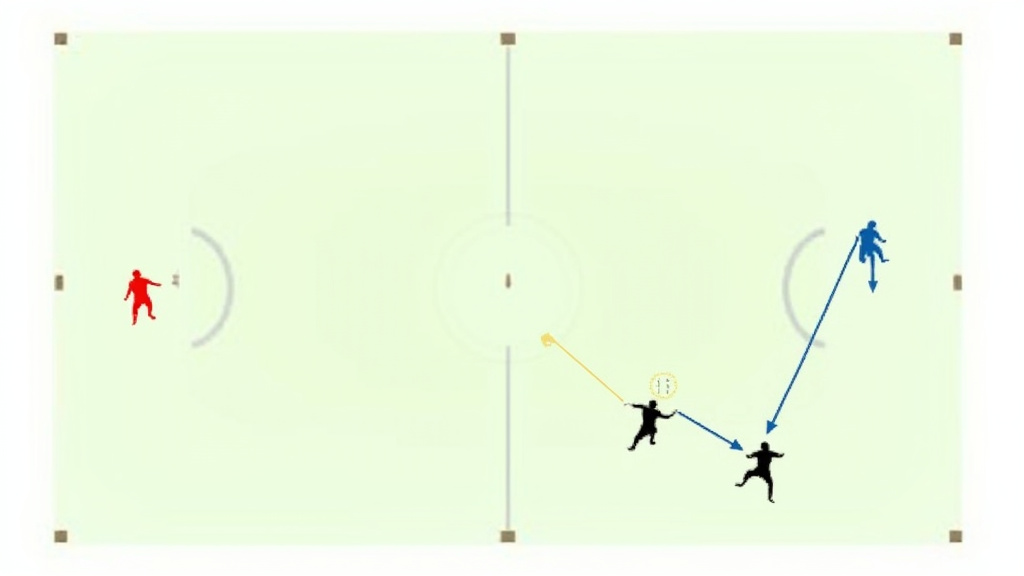
As the inverted winger rose, so did the defensive manuals on how to stop them. Coaches aren’t passive. Here are the most common counter-strategies.
First, the defensive full-back is instructed to show the winger onto their weaker foot. This means positioning your body to force them toward the touchline, even if it means giving them a step of space in that direction. It’s a risk, but a smaller one than letting them cut inside onto a cannon of a left foot.
Second, the nearest central midfielder has a specific duty: to jump out and engage the winger the moment they receive the ball and turn infield. This “jump” must be coordinated with the full-back. If the midfielder is late, the winger is already in flight. If the full-back doesn’t cover the space behind the jumping midfielder, a simple pass exploits the gap.
Third, some teams use a back-three system. The presence of three central defenders means one can step into midfield to confront the winger without leaving a catastrophic hole in the defense. This structural solidity is a major reason some teams switch to a back three when facing dominant inverted wingers.
I watched my own club, Schalke, get torn apart by this for years in the Bundesliga. We’d play a standard 4-4-2, our wide midfielder would tuck in, and their full-back would have the entire flank to himself. By the time we adjusted, we were two goals down. It’s a lesson in how a single tactical innovation can expose an entire philosophy.
The Future: Is the Traditional Winger Extinct?
The numbers suggest a stark decline, but not extinction. Ryan Giggs, one of the greatest traditional wingers, has lamented that football feels “strangled” by the constant cutting inside, missing the raw excitement of a player beating a man on the outside.
There is a cyclical nature to tactics. As inverted wingers dominate, defenses adapt to congest the central zones they love. This, in turn, could reopen value on the wings for players who can deliver pinpoint crosses to a target striker. The difference between winger types will always exist, but the premium today is on the player who can do both, the hybrid.
The real impact is on youth development. Academies now prioritize developing players who are comfortable on both wings, who can shoot as well as cross, and who understand pressing triggers. The specialist “crosser” is a fading archetype. The future belongs to the complete attacker, and the inverted winger is the current template for that completeness.
Frequently Asked Questions
What’s the difference between an inverted winger and an inside forward?
The terms are often used interchangeably, but a purist might argue an inside forward is more purely a goal scorer, while an inverted winger has greater creative responsibilities. The modern role demands both, blurring the distinction.
Can a right-footed player be an inverted winger on the right wing?
Technically, no. That would be a traditional winger. The “inverted” specifically refers to playing on the flank opposite your dominant foot. A right-footer on the right is expected to provide width and cross.
Why do wingers cut inside?
They cut inside to get the ball onto their stronger foot for higher-value actions like shooting or playing through-balls into the box. It also allows them to combine with central players and create numerical overloads in the most dangerous area of the pitch. Our article on why wingers cut inside breaks down the tactical advantages in detail.
Which formations use inverted wingers?
The 4-3-3 and the 4-2-3-1 are the two most common formations built to utilize inverted wingers. Both provide the central midfield stability and full-back support the role requires. Understanding formation organization is key to seeing how the pieces fit.
Who is the best inverted winger currently?
Mohamed Salah’s consistent output for Liverpool makes him the benchmark. In terms of all-around influence and future potential, Bukayo Saka at Arsenal is defining the next generation of the role.
The Bottom Line
The inverted winger is not a passing fad. It is a logical evolution in a sport that increasingly values control, central penetration, and multi-functional players. It has reshaped team shapes, changed defensive priorities, and altered the career path for attacking prospects.
Understanding this role is understanding modern football. It explains why full-backs are now premium assets, why certain formations dominate, and why the highlight reels are full of players cutting in from the flanks to bend one into the far corner. The next tactical innovation is already brewing in some coach’s notebook, but for now, the game belongs to the player who starts wide and dreams of the center.
I come from the “soccer heart” of Germany, the Ruhrpott. I have played, trained and followed soccer all my life and am a big fan of FC Schalke 04. I also enjoy following international soccer extensively.