What Makes a Good Box-to-Box Midfielder? Core Attributes
A good box-to-box midfielder is defined by a blend of seven specific traits: elite physical output, defensive ball-winning grit, technical security under pressure, attacking threat with timing, tactical intelligence for phase recognition, mental resilience, and functional strength. It’s the player who covers 12 kilometers, wins the ball in your half, carries it forty yards, and arrives in the box to finish.
Most discussions about this role start with running. They end with it, too. That’s the mistake. Calling someone a box-to-box midfielder because they run a lot is like calling a car fast because it has four wheels. It’s a prerequisite, not the definition. The real differentiator is what the player does at the end of each sprint – the tackle, the pass, the interception, the shot.
This guide breaks down the seven non-negotiable traits that separate an engine from a tactically intelligent footballer. We’ll look at modern examples, the formations that demand this profile, and the specific drills that build the complete player, not just a marathon runner.
Key Takeaways
- Stamina is the ticket to the role, but tactical intelligence is what gets you played. A player who runs 13km out of position is a liability.
- The modern prototype, like Jude Bellingham, blends the defensive grit of a number 6 with the attacking timing of a number 8 or even a 10.
- Defensive actions – tackles, interceptions, blocks – must happen in both halves. A box-to-box midfielder who only defends near their own box is just a defensive midfielder.
- Attacking contribution is measured in goals and final-third entries, not just passes completed. Late runs into the box are the signature move.
- Training must focus on decision-making in transition. Endless laps build fitness, but rondos with sudden phase changes build footballers.
The 7 Non-Negotiable Traits of a Modern Box-to-Box Player
Forget the old idea of a head-down runner. The contemporary box-to-box midfielder role is a hybrid, a player assessed in seven distinct categories. Miss one, and the profile collapses.
1. The Physical Engine: 12km and the Repeat Sprint
The base layer is non-negotiable. We’re talking 11.5km to 13km of total distance per 90 minutes. But the key metric is high-intensity distance – those explosive 10-20 meter sprints to press, track back, or overlap. The best can repeat these sprints with minimal recovery drop-off from minute 1 to minute 90. Your engine has to idle high.
A top-tier box-to-box midfielder will average between 11.5 and 13 kilometers of total distance covered per match, with a significant portion of that output coming from high-intensity sprints and directional changes. This physical capacity enables the all-phase activity that defines the role.
2. Defensive Proficiency: The Ball-Winner’s Grit
This isn’t about standing in a block. A box-to-box midfielder is a proactive ball-winner. They read the play to intercept passes before they reach the striker. They engage in tackles – not just clean ones, but the gritty, 50/50 challenges in midfield that break up opposition rhythm. They act as the first wave of pressure when the team loses the ball. If they aren’t winning possession in the middle third, they’re not fulfilling the defensive half of the job.
3. Technical Security: First Touch in a Hurricane
You can’t transition the ball if you can’t receive it. Under the pressure of a counter-press, the first touch must be into space, away from the opponent’s foot. The passing needs to be crisp and progressive – not sideways safety. The ability to carry the ball through traffic, to dribble past one pressing midfielder and break the line, is gold. Think of Federico Valverde driving through the center with the ball glued to his foot.
4. Attacking Threat: The Late Run and the Finish
This is what separates a carrier from a threat. The great box-to-box midfielders have a striker’s instinct for timing their arrival into the penalty area. They start their run from deep, often untracked, and meet crosses or cutbacks. They need the composure to finish. Jude Bellingham’s goal-scoring record at Real Madrid isn’t an accident; it’s a trained pattern of movement that defines the modern interpretation of the number 10 position from a deeper starting point.
5. Tactical Intelligence (Game IQ): Phase Recognition
This is the master trait. It answers the “when” and “where” of all that running.
* In possession: Do they offer a short passing option, or do they spin and run behind the defense to stretch the play?
* Out of possession: Do they press the opponent’s deep playmaker, or do they drop to shield the back four?
* In transition: After winning the ball, do they immediately look for the forward pass, or do they recycle possession to secure control?
A player with low tactical IQ will be perpetually one step behind the game’s rhythm. They’ll arrive at the tackle a second late, or make a forward run just as the winger decides to cut inside. This intelligence is what coaches mean by “reading the game.”
6. Mental Resilience: Consistency After Error
A box-to-box midfielder is involved in everything. They will misplace passes. They will get dribbled past. The question is what happens next. Do they hide, reducing their activity to avoid another mistake? Or do they immediately hunt the ball down, demanding it back, and trying the same progressive pass again? The role requires a short memory and relentless self-belief.
7. Functional Strength: The Duels
It’s not bodybuilder muscle. It’s core strength to shield the ball while sprinting, leg power to change direction explosively, and upper-body stability to win shoulder-to-shoulder challenges. This strength allows them to be the “surger” through crowded midfield battles.
TL;DR: A modern box-to-box midfielder needs an engine, a defender’s grit, a technician’s touch, a striker’s timing, a coach’s brain, a warrior’s mindset, and an athlete’s strength. It’s the most complete profile in football.
Box-to-Box vs. Other Midfield Roles: Where Does It Fit?
The midfield is a ecosystem of specialists. Confusing a box-to-box player with a pure defensive midfielder role or a classic playmaker role is a common scouting error. Here’s how to tell them apart.
| Midfield Role | Primary Zone | Key Action | Modern Example | Risk if Misused |
|---|---|---|---|---|
| Box-to-Box | Entire pitch, both penalty boxes | Winning the ball, then carrying/running to create or score | Jude Bellingham, Federico Valverde | Caught out of position, becomes “master of none” |
| Defensive Midfielder (No. 6) | In front of defense, deep midfield | Destroying attacks, recycling possession, short distribution | Rodri, Declan Rice | Lacks verticality, game passes them by if too static |
| Attacking Midfielder / No. 10 | Final third, between opposition lines | Creating chances, final pass, scoring from advanced spots | Bruno Fernandes, Kevin De Bruyne | Defensive liability, isolated if team is pinned back |
| Regista / Deep Playmaker | Deep midfield, with time on ball | Orchestrating play with long passing, controlling tempo | Andrea Pirlo (historic), Toni Kroos | Physically vulnerable to pressing, needs protection |
The box-to-box player is the connector. The defensive midfielder wins it and gives it. The regista dictates from deep. The number 10 creates in the final third. A player like Jude Bellingham now does all of it, which is why he’s an outlier. Most systems still need the dedicated specialists, which is why understanding midfield pivot systems is crucial for team construction.
Common mistake: Training a physically strong youth player as a box-to-box midfielder just because they can run – without developing their tactical recognition. You get a player who makes 80 useless sprints a game and is always recovering from the last action when the key moment happens.
The distinction is critical for recruitment. You don’t buy a Rodri to score 10 league goals. You don’t buy a Bruno Fernandes to break up play in your own half. The box-to-box player is the two-in-one package, which explains their premium value in the transfer market.
The Formations That Create and Demand Box-to-Box Stars
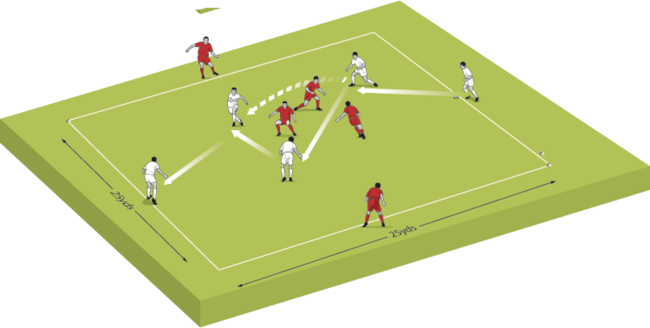
Not every soccer formation naturally produces this role. Some systems kill it by over-specialization. Others are built for it.
The 4-3-3 is the classic modern home. In a three-man midfield, the two “number 8s” are typically box-to-box players. One might lean more attacking (the late runner), the other more defensive (the ball-winner), but both are expected to cover the full flank and contribute at both ends. The 4-3-3 formation provides the structural balance that allows one midfielder to surge forward while the other holds.
The 4-4-2 with a flat midfield four also demands two central midfielders who can do it all – defend the wide channels, support the strikers, and cover vast ground. Think of the classic Steven Gerrard-Frank Lampard partnership debate; both were 4-4-2 box-to-box engines at their peaks.
The 4-2,3-1 can utilize a box-to-box player as one of the double pivots, but it often asks them to be more positional, sacrificing some attacking freedom for defensive stability. It’s a more restrained version of the role.
Where does the role die? In a rigid 4-2,2-2 or a system with a pure single pivot and two advanced number 10s. There’s no space or tactical instruction for the all-action runner. Their energy becomes redundant.
{{IMG: A tactical diagram showing the movement arcs of a box-to-box midfielder (blue) in a 4.
Training the Box-to-Box Profile: Drills That Build Footballers, Not Just Fitness
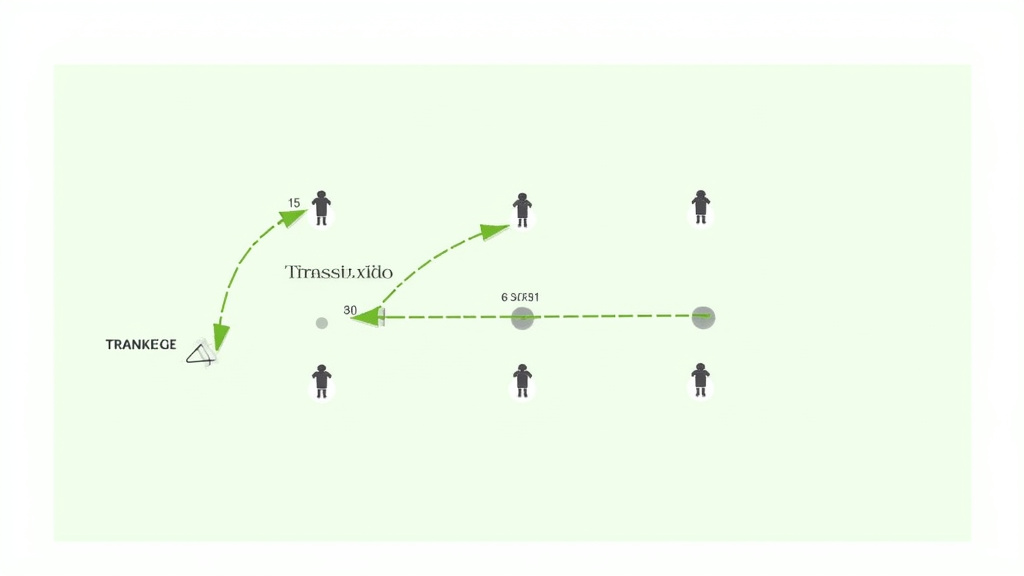
You don’t create a Jude Bellingham with endurance laps. You create him with drills that fuse physical demand with constant decision-making. Here are three core exercises.
1. The Transition Rondo
- Setup: 6v2 or 7v2 rondo in a 15×15 yard grid. Two defenders in the middle.
- The Drill: The attacking team must complete 8 consecutive passes. On the 8th pass, the coach shouts “Transition!” and immediately serves a new ball to one of the two defenders, who now become attackers with the original attackers becoming defenders.
- The Why: This mimics the instantaneous shift from possession to pressing after a loss. It trains the midfielder’s brain to switch from a calm, circulating mode to an aggressive, ball-winning mode in less than a second. It builds the defensive reaction speed.
2. Shuttle Runs into Finishing
- Setup: Cones at 0, 10, and “,20 yards. A goal with a goalkeeper.
- The Drill: Player starts at 0. Sprints to 10-yard cone and back, then to 20-yard cone and back. Immediately upon returning to 0, they receive a pass from a coach and must take one touch to control and one to shoot.
- The Why: This replicates the physical sequence of a game: a high-intensity defensive recovery run (tracking back) followed by an explosive attacking movement (arriving in the box). It trains the legs to fire and the mind to stay focused for a technical action under fatigue.
3. Overloaded Small-Sided Game
- Setup: 5v5 on a 40×30 yard pitch, with two floating neutral players who always play with the team in possession (creating a 7v5 overload).
- The Drill: Normal game, but with the condition that goals scored from a first-time finish after a cross from the wide neutral player count double.
- The Why: The overload encourages constant movement and passing to find the free man. The double-goal rule incentivizes midfielders to make late, untracked runs into the box to meet crosses – the signature box-to-box goal. It teaches spacing, timing, and attacking intent within a chaotic, game-like environment.
I once coached a talented, energetic 16-year-old who could run forever. We did nothing but fitness and basic passing drills for a season. He got fitter. He also became more predictable. In games, he’d make the same curved run from deep every time, whether the space was there or not. We had built an engine, not a driver. The next season, we replaced half his fitness work with these decision-heavy drills. His game intelligence – and his value – skyrocketed.
These drills force players to think while their heart rate is at 180. That’s the sweet spot.
How Data Analytics Identifies the Real Box-to-Box Talent
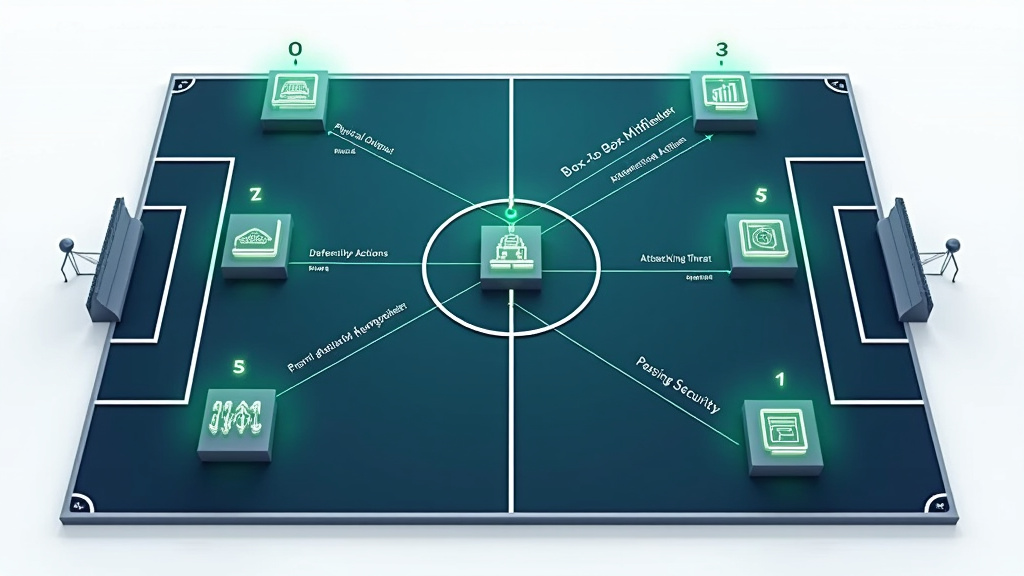
Scouts no longer just look for “energy” or “work rate.” Data provides the forensic proof. When analyzing a potential box-to-box midfielder, top clubs now cross-reference these key metrics.
| Metric Category | Key Performance Indicators (KPIs) | What It Reveals | Benchmark (Top 5 League) |
|---|---|---|---|
| Physical Output | Total Distance, High-Intensity Distance, Sprints | The engine capacity. Can they sustain output? | 11.5km+ total, >1.2km high-intensity |
| Defensive Actions | Tackles Attempted, Interceptions, Pressures | Ball-winning activity and reading of passes. Proactivity. | 3+ tackles, 2+ interceptions per 90 |
| Ball Progression | Progressive Carries Distance, Progressive Passes | Ability to move the team up the pitch with ball at feet or pass. | 200+ yards progressive carries, 6+ progressive passes |
| Attacking Threat | Shots, xG (Expected Goals), Touches in Opp. Box | Willingness and effectiveness in the final third. | 2+ shots, 3+ touches in opp. box per 90 |
| Passing Security | Pass Completion % (Total & Opp. Half) | Technical reliability under different levels of pressure. | >85% total, >80% in opposition half |
A player who ranks in the 80th percentile or higher across all five categories is a rare, genuine box-to-box asset. A player with elite physical and defensive numbers but bottom-tier attacking threat is just a defensive midfielder. The data doesn’t lie, and it has ended many careers built on the myth of “he covers a lot of ground.”
The modern prototype, like Bellingham, will also show elite numbers for “shot-creating actions” and “goal-creating actions,” blurring the line between midfielder and forward. This is the evolution of the role.
Frequently Asked Questions
Can a slow player be a good box-to-box midfielder?
No. The “box-to-box” prefix implies movement between both penalty areas. While top-end sprint speed isn’t the primary requirement, the ability to accelerate repeatedly over 10-15 yards is non-negotiable. A player lacking this explosive mobility cannot fulfill the pressing and covering demands of the role. They might be a brilliant deep-lying playmaker or a defensive shield, but they are not box-to-box.
Is the box-to-box midfielder a dying role in modern football?
The opposite. It has evolved and is thriving. Highly structured pressing systems, like those of Jurgen Klopp and Pep Guardiola, demand midfielders who can win the ball high and immediately support the attack. The modern “number 8” in a 4-3-3 is a tactically refined box-to-box player. The role is less about endless, aimless running and more about intelligent, explosive actions in specific phases.
What’s the difference between a box-to-box midfielder and a central midfielder?
“Central midfielder” is a broad positional category. A box-to-box midfielder is a specific role within that category, defined by its all-action, two-way requirements. A deep-lying playmaker is also a central midfielder, but their job is to dictate tempo from deep, not to make lung-busting runs into the box. The box-to-box role is a subset with the most comprehensive and physically demanding job description.
Who are the best current box-to-box midfielders in the world?
Jude Bellingham (Real Madrid) is the current gold standard, blending goal-scoring with defensive work. Federico Valverde (Real Madrid) is the ultimate engine and ball-winner. Declan Rice (Arsenal) has evolved his game to add significant attacking threat to his defensive base. Players like Moises Caicedo (Chelsea) and Joao Palhinha (Fulham) exemplify the defensive powerhouse version of the role.
Can you have two box-to-box midfielders in the same team?
Yes, but it requires careful tactical balance. In a 4-3-3, the two number 8s are often box-to-box types, but they usually operate on a “see-saw” – when one advances, the other holds. Playing two ultra-aggressive box-to-box players in a 4-4-2 can leave huge gaps in midfield if they both get caught upfield simultaneously. The midfield balance must be coached.
The Bottom Line
Finding a true box-to-box midfielder is scouting’s hardest task. You’re looking for a player with the lungs of a distance runner, the tackle of a defender, the touch of a playmaker, and the finish of a striker, all governed by a coach’s tactical brain. It’s why they cost £100 million.
The role isn’t about being the best at any one thing. It’s about being very good at seven things, simultaneously, for 90 minutes. Stamina gets you on the team sheet. What you do with that stamina – the intelligent run, the timely tackle, the disguised pass – keeps you on it. That’s the difference between a player who works hard and a player who is the hard work.
For a foundational look at this position, the Wikipedia entry on the box-to-box midfielder provides a solid historical and definitional starting point.

I come from the “soccer heart” of Germany, the Ruhrpott. I have played, trained and followed soccer all my life and am a big fan of FC Schalke 04. I also enjoy following international soccer extensively.