Defensive Soccer Formations: When and Why to Use Them
To use a defensive formation in soccer, deploy it in three specific game states: when protecting a narrow lead, when facing a technically superior opponent, and during knockout competition ties. The aim is to trade territory for compactness, denying central space and forcing the opponent into predictable, low-percentage actions.
Most coaches get the timing wrong. They shift into a defensive shell as a panic reaction after conceding, which invites more pressure onto a disorganized team. The switch must be a pre-planned, proactive decision.
This guide breaks down the exact moments a defensive formation becomes your best weapon, the principles that make it work, and how to avoid the psychological traps that break a low block from the inside.
Key Takeaways
- Defensive formations are proactive tools for spatial control, not passive retreats. Their success depends on compactness and coordinated movement.
- The three clearest triggers are: protecting a lead (especially after the 70th minute), facing superior talent, and managing a two-legged knockout tie.
- A 5-3-2 formation provides the most robust defensive structure, with three center-backs creating a numerical advantage in the box.
- The concept of “rest defense” – your structure behind the ball while attacking – is more important than your nominal formation. A 3-2 rest structure prevents counters before they start.
- Player buy-in is non-negotiable. Frame deep defending as an intelligent, aggressive choice to win, not a negative tactic.
The 3 Game States That Demand a Defensive Formation
Choosing a defensive setup is a strategic calculation, not a default. You trade possession and wide areas for control of the most valuable real estate: the space in front of your goal. Get the calculation wrong, and you just hand the initiative to the opponent.
The first and most obvious trigger is protecting a lead, especially a narrow one. This isn’t about parking the bus from minute one. It’s about recognizing a game phase. If you go 1-0 up in the 65th minute, shifting to a more defensive structure like a 4-5-1 or a 5-4-1 is a percentage play. You conserve energy, reduce the risk of a sucker-punch equalizer, and force the opponent to break down an organized block. The later the goal, the stronger the case for the switch.
Facing a technically superior opponent is the second trigger. If their midfield trio can dribble past your press in their sleep, pressing high is suicide. A deep, compact block removes the space their playmakers want to operate in. It forces them to play in front of you, to make longer passes, or to attempt low-probability crosses. Diego Simeone’s Atlético Madrid built an era on this principle, using a disciplined 4-4-2 mid-block to frustrate possession-dominant teams like Barcelona.
The third scenario is the knockout tie, particularly in two-legged affairs like the Champions League. The away goals rule may be gone, but the strategic imperative remains. A 0-0 draw away from home is a fantastic result. Setting up in a resilient 5-3-2 formation from the start to secure that clean sheet is a valid, match-winning tactic. It’s about managing the tie over 180 minutes, not just the first 90.
A disciplined low block concedes an average of 60-70% possession but reduces the opponent’s Expected Goals (xG) by funneling shots into wide areas. The trade-off is deliberate: territory for control of the penalty box.
TL;DR: Switch to a defensive formation to protect a late lead, neutralize a superior technical opponent, or manage a two-legged knockout tie. The decision must be proactive, not reactive.
How Defensive Formations Actually Work: Fluidity Over Shape
Forget the numbers on the team sheet. A 4-3-3 on paper can be a 4-5-1 in defense. A 3-4-3 can become a 5-2-3. The formation label is just a starting point. What matters is the defensive structure – the distances between players, the cover shadows, and the coordinated movement as a unit.
The core principle is compactness. You want your defensive and midfield lines close together, both horizontally and vertically. This denies “pockets” or “between the lines” space where creative players thrive. A compact unit moves as a connected block, bending around the ball’s location but never stretching to the point of breaking.
This is where most amateur setups fail. They defend in a rigid shape, so a simple pass wide stretches them, creating gaps centrally. The solution is coaching relationships, not positions. The left-back must know his exact distance to the left-sided center-back and the left midfielder at all times. This web of relationships is what elite coaches like Pep Guardiola drill relentlessly.
A critical modern concept is rest defense. This is the structure you have behind the ball while you are attacking. It’s your insurance against the counter-attack. There are two common rest-defense structures, as outlined in modern soccer tactics guides.
| Rest Defense Structure | Player Arrangement | Best For | Vulnerability |
|—————————-|————————|————–|——————-|
| 2-3 Structure | 2 defenders, 3 midfielders sitting deeper | Teams that attack with both full-backs high | The space between the two defenders; requires excellent 1v1 defending |
| 3-2 Structure | 3 defenders, 2 midfielders holding | Teams that keep one full-back back for balance | Can be outnumbered in central midfield if the opponent breaks quickly |
A team with poor rest defense concedes cheap goals on the break. They win the ball, lose it immediately, and are caught with seven players ahead of the play. Good rest defense means you’re already in a solid defensive shape the moment you lose possession.
Common mistake: Coaching players to sprint back after losing the ball. By the time they turn, the counter-attack has already passed them. Effective defense starts during your own attack, with intelligent positioning.
Choosing Your Defensive Weapon: 5-3-2 vs. 4-4-2 vs. 4-5-1
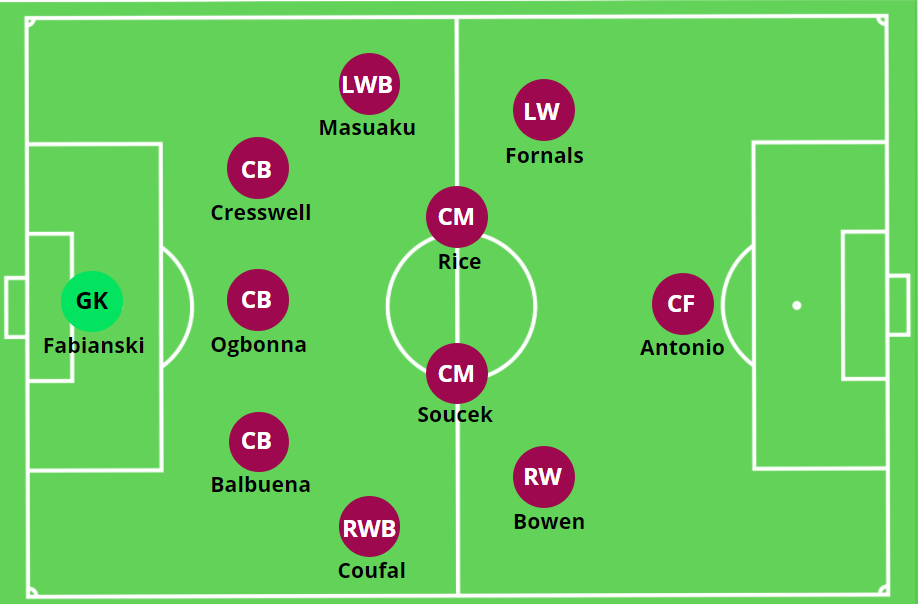
Not all defensive formations are created equal. Each offers a different balance of solidity, coverage, and transition threat. Your choice depends on your players and the specific threat you face.
The 5-3-2 formation (or its defensive variant, 5-4-1) is the fortress. It provides a five-man defensive line, creating a numerical overload in your own penalty area. The three central defenders can handle two strikers comfortably, with the wing-backs tracking opposition wingers. Its strength is box defending – it’s exceptionally hard to play through centrally. Teams like Antonio Conte’s Inter Milan have used it to win leagues. It’s the go-to for an ultra-defensive 5-3-2 setup when protecting a one-goal lead against relentless pressure.
The classic 4-4-2 is the balanced mid-block. It offers two solid banks of four, perfect for maintaining medium compactness. It’s less about total deep defending and more about controlling the middle third, engaging the opponent earlier. It requires tremendous discipline from the two central midfielders, especially the defensive midfielder, to shield the back four. A well-drilled 4-4-2 is brutally effective at forcing play wide and winning second balls.
The 4-5-1 is the transition specialist. With one striker, you sacrifice an outlet, but you gain an extra body in midfield to smother the opponent’s playmakers. This is often the shape a 4-3-3 or 4-2-3-1 takes when defending. Its main advantage is that upon winning the ball, you have multiple midfielders ready to spring forward into the defensive to attack shift. It’s the preferred shape for teams that want to be solid but still carry a potent counter-attack strategy.
| Formation | Primary Strength | Best Use Case | Key Player Role |
|---|---|---|---|
| 5-3-2 | Central compactness, box defense | Protecting a narrow lead; facing dual strikers | The wide center-back who must step into midfield |
| 4-4-2 | Two compact banks, forces play wide | Neutralizing a team that builds through central midfield | The two central midfielders who must work as a unit |
| 4-5-1 | Midfield control, transition speed | Facing a team with a dominant #10; looking to counter | The lone striker who must hold up play and link |
Your personnel decides the winner. If you have three competent center-backs, the 5-3-2 is a viable base. If your strength is a dynamic engine-room duo, the 4-4-2 makes sense. Never force a formation your players cannot execute.
The Psychology of the Low Block: Keeping 11 Players Bought In

The toughest part of implementing a low defensive block isn’t tactical. It’s psychological. For players raised on the idea that soccer is about attacking and possession, sitting deep can feel like a surrender. That mindset will crack your structure in ten minutes.
You must sell the plan as an active, aggressive choice. Frame it as controlling the game on your terms. “We are letting them have the ball here,” you point to the halfway line on the board, “because we want it there,” you tap the penalty spot. “Our discipline in this shape is a weapon. It frustrates them. It makes them impatient.”
This is where the coach’s communication is vital. Every player must understand their specific role within the collective suffering. The winger tracking back 70 yards isn’t “defending,” he’s executing the trap. The striker isolating two center-backs isn’t “lonely,” he’s the trigger for our fast break tactics. This narrative turns duty into purpose.
I learned this the hard way coaching a youth team against a far stronger side. We set up in a 4-5-1, but I didn’t explain the “why.” By the 30th minute, body language slumped. We were just passively absorbing pressure. At halftime, I drew the shape and showed them the three dangerous passes we had forced the opponent into making. Their eyes changed. The second half was a masterclass in organized resistance. We lost 1-0 from a set-piece, but the shift in their understanding was a bigger win.
I won’t set up a team in a deep block without first showing them video of Atlético Madrid’s 2014 Champions League run. Seeing world-class athletes like Diego Godín celebrate a blocked cross like a goal rewires the brain. It shows them defending is a skill, not a chore.
Manage energy and focus in bursts. A low block is mentally exhausting. Use natural breaks – goal kicks, throw-ins, injuries – to regroup, shout reminders about compactness, and praise specific actions. This constant reinforcement keeps the structure tight.
Drills to Build a Cohesive Defensive Unit
You cannot just tell a team to be compact. You have to train the muscle memory of moving as a unit. Static positional drills have their place, but the real learning happens in constrained games.
Start with the Positional Rondo with Direction. Set up a 40×30 yard grid with a small goal at each end. Play 8v4, but the team of 8 must maintain a specific shape (e.g., 4-4-0). They must keep possession while slowly progressing up the grid as a unit. The four defenders try to win it and score. This drill forces the eight outfield players to feel the correct distances between lines while under passive pressure. Break the shape, and you lose the ball.
The most effective drill for low block tactics is the Defensive Third Wave Game. Set up a full penalty area plus 10 yards. The attacking team has 7 players (including a goalkeeper) and must score against a defending team of 8 outfield players. The catch: the defenders start in their ideal low-block shape (e.g., a 5-3-2). The attackers have unlimited time. The defenders cannot tackle aggressively; they can only block, intercept, and shift. The sole objective for the defense is to prevent any shot from inside the 18-yard box for 5 minutes. It’s monotonous, grueling, and it builds the collective defensive instinct like nothing else.
- The Shadow Shifting Drill. No ball. Two lines of four cones represent your defensive and midfield lines. The coach stands at the front and points left or right. The entire unit of 8 players must shuffle laterally together, maintaining exact distances. Do this for 3 minutes. Then add a ball at the coach’s feet. The unit must now shift relative to the ball’s lateral movement. This builds the fundamental “move as one” reflex. Skip this, and your block will have seams.
- The Trigger Pass Recognition. In a half-pitch game, the defending team is set in their block. The coach serves the ball to the attacking team. The moment a defender intercepts or the goalkeeper catches it, two pre-designated players must sprint into predefined counter-attack channels. Drill this trigger until it’s automatic. The transition from winning the ball to launching the counter-attacking principles is what turns defense into attack.
TL;DR: Train compactness through directional possession games. Build low-block resilience with wave-defense drills. Make shifting and transition triggers automatic through repetition.
Frequently Asked Questions
What’s the difference between a low block and a mid-block?
low block defends deep in your own half, often with the entire team behind the ball, focusing on protecting the penalty area. A mid-block engages the opponent around the halfway line, aiming to win the ball back in the middle third and prevent easy progression. The low block tactics concede more territory for greater security; the mid-block tries to control more space.
Is a 5-3-2 formation only for defensive teams?
No. While it offers outstanding defensive solidity, a 5-3-2 can be very attacking with the right personnel. The wing-backs become primary wide attackers, and the two strikers can pin back opposing center-backs. Its defensive reputation comes from its use as a situational tool to protect leads, but as a system, it’s highly flexible in attacking transitions.
How do you beat a team using a defensive formation?
Patience and variety. Stretch the block horizontally with quick switches of play to exploit the slow lateral shift. Use decoy runs to create momentary gaps between defenders. Most importantly, score first. A defensive formation’s psychology is built around protecting a scoreline. Force them to chase the game, and their structure must change, opening space.
What is the most common mistake when switching to a defensive formation?
The switch happens too late and without conviction. A coach waits until the 88th minute to bring on a defender and tell everyone to “drop deep.” The resulting shape is a panicked, disorganized mess. The shift must be communicated clearly, rehearsed, and executed by the whole team at a pre-planned moment – like after scoring or at the start of the second half.
Can you use a defensive formation from the start of a match?
Absolutely, and top teams do it regularly in big away games or against vastly superior opponents. The key is to pair it with a clear offensive outlet. Starting with a deep defensive formation like a 5-4-1 signals an intent to be compact and strike on the break. It’s a legitimate strategy, not a negative one, when applied with a plan.
Before You Go
Using a defensive formation is a test of a team’s intelligence and discipline, not just its spirit. The right moment is defined by the scoreboard, the opponent’s quality, and the competition’s stakes. The right shape is defined by your players’ skills and the specific spaces you need to control.
Remember that the formation number is just a label. The real work is in the compactness, the coordinated shifts, and the pre-positioning of your rest defense. Drill the relationships between players, not just their positions.
Finally, win the mental battle. Make every player understand that their discipline within the block is the most aggressive thing on the pitch. It’s a choice that controls the game’s terms. When that clicks, a well-timed defensive shift isn’t a retreat – it’s the move that wins the match.

I come from the “soccer heart” of Germany, the Ruhrpott. I have played, trained and followed soccer all my life and am a big fan of FC Schalke 04. I also enjoy following international soccer extensively.