The True Origin of the False Nine Role in Soccer Revealed
The false nine in soccer wasn’t invented by a single person in one moment. It’s a tactical evolution that unfolded over a century, shaped by a series of pioneering players and coaches responding to the defensive systems of their day.
Most fans point to Lionel Messi or Johan Cruyff. That’s the surface-level story. The real history starts with a Victorian gentleman dropping deep to feed wingers, gets abandoned for a brute-force striker in Argentina, and is finally weaponized by a Hungarian to humiliate England. The false nine is less an invention and more a recurring answer to a simple question: what happens when your striker refuses to stand where the defenders expect him?
This guide traces that evolution from its 19th-century hints to its modern definition, naming the key figures who built the role piece by piece.
Key Takeaways
- The concept of a deep-lying forward appeared as early as the 1890s with G.O. Smith, but it was an individual playstyle, not a coached tactic.
- Nándor Hidegkuti of Hungary’s “Golden Team” in the 1950s is widely considered the first true, systematized false nine, designed to dismantle the popular W-M formation.
- Johan Cruyff didn’t invent the false nine; his fluid movement within Rinus Michels’ Total Football philosophy made positional roles more abstract.
- Francesco Totti’s successful deployment as a false nine by Roma coach Luciano Spalletti in 2006 was born from necessity due to injuries.
- Pep Guardiola’s use of Lionel Messi as a false nine in 2009 was a tactical masterclass that popularized the role for a new generation, but it was a refinement, not an origin.
The Early Glimmers: Individual Genius (1890s-1920s)
Before there was a tactic, there were players whose natural instincts defied convention. The earliest named figure is G.O. Smith, who played for Corinthians and England from 1892 to 1903. Smith wasn’t a target man. He operated as a creative hub, dropping into midfield to collect the ball and supply his wingers. This was a personal style, not a coached system. It worked because defenders of that era were taught to mark the opposing center-forward tightly and follow him everywhere. Smith simply led them into areas where they were useless.
A brief, more organized flirtation with the idea emerged in 1920s Argentina. Some teams, notably River Plate, experimented with a “V” or reverse arrowhead formation. In this setup, the central forward played the deepest, acting as a “conductor” for two inside forwards ahead of him. It was a short-lived experiment.
Common mistake: Crediting Johan Cruyff with inventing the false nine in the 1970s, the tactical concept of a withdrawn striker was documented and deployed decades before Total Football.
The system was quickly overshadowed by the rise of the powerful, goal-poaching goleador. Bernabé Ferreyra, known as “The Fierce One,” scored 206 goals in 197 games for River Plate from 1932 to 1939. His success cemented the traditional number nine as the undisputed focal point of attack, and the deep-lying “conductor” faded from Argentine football for a generation. This push-and-pull between creative withdrawal and pure finishing power is a constant theme in the role’s history.
TL;DR: Individual players like G.O. Smith dropped deep by instinct, and a brief Argentine tactical experiment in the 1920s was abandoned when traditional powerhouse strikers like Bernabé Ferreyra proved more effective for the era.
The First Tactical Success: Matthias Sindelar (1930s)
The first coach to deliberately deploy a withdrawn center-forward as a tactical weapon was Hugo Meisl, manager of Austria’s legendary “Wunderteam” of the early 1930s. His weapon of choice was Matthias Sindelar. Sindelar, nicknamed “The Paper Man” for his slight frame, was a technical marvel. Meisl built his system around Sindelar’s intelligence and movement, using him as a Scheiberl, a “little pusher” or playmaker, from a forward position.
Sindelar’s role was to drop into the space between the opposition’s defense and midfield, pulling central defenders out of position and creating chaos. This was a direct, coached response to the rigid man-marking prevalent at the time. If a defender followed Sindelar, he vacated a critical central area. If he didn’t, Sindelar had time and space to dictate play. The Wunderteam’s success, including a famous 5-0 victory over Scotland in 1931, showcased the potency of this approach. It proved a withdrawn forward could be the engine of a dominant team, not just a quirky individual.
| Player/Team | Era | Role | Why It Worked | Limitation |
|---|---|---|---|---|
| G.O. Smith (Corinthians/England) | 1890s-1900s | Deep-lying creator | Dragged man-markers out of position | Individual style, not a system |
| Argentine “V” Formation (e.g., River Plate) | 1920s | Deep-lying “conductor” | Organized play for inside forwards | Abandoned for powerful goleador model |
| Matthias Sindelar (Austria Wunderteam) | Early 1930s | Withdrawn center-forward (Scheiberl) | Exploited rigid man-marking systems | Relied heavily on one player’s genius |
TL;DR: Hugo Meisl’s Austria used Matthias Sindelar as a deliberate tactical weapon, a withdrawn center-forward who exploited rigid marking, making it the first notable coached success of the false nine concept.
Who Was the First True False Nine? Nándor Hidegkuti (1950s)
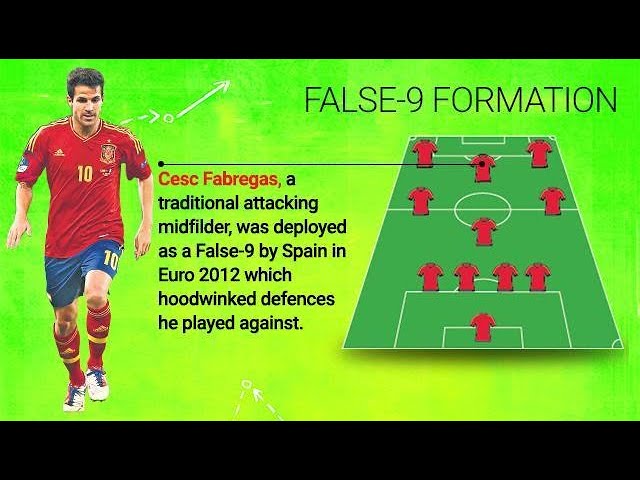
While Sindelar was a precursor, the player most often credited with being the first fully realized false nine is Nándor Hidegkuti of Hungary’s “Golden Team.” Under coach Gustáv Sebes in the early 1950s, Hidegkuti was assigned the number nine shirt but played as an advanced midfielder. This wasn’t just a player dropping deep; it was a systemic trap designed to destroy the dominant defensive formation of the era: the W-M.
The W-M formation relied on a center-half (the ‘M’ middle) marking the opposing center-forward (the ‘W’ tip). When Hidegkuti, wearing nine, retreated into midfield, the Hungarian center-half had a crisis. Should he follow, leaving a giant hole in the heart of his defense? Or should he stay, leaving Hidegkuli unmarked to orchestrate play? Hungary’s 6-3 demolition of England at Wembley in 1953 is the iconic example. England’s center-half, Harry Johnston, was famously “pulled out of the game” by Hidegkuti’s movement, creating space for Ferenc Puskás and Sándor Kocsis to wreak havoc.
Hidegkuti didn’t just wear the number nine; he weaponized its absence. His movement created a tactical black hole that swallowed the W-M formation’s defensive logic whole.
This was the birth of the false nine as a coherent, game-breaking doctrine. It was a direct, coached counter to a specific tactical system. The confusion it sowed is captured in contemporary match reports questioning whether Hidegkuti was a forward or a midfielder. He was both, and neither. He was the prototype.
Total Football and the Abstract Role: Johan Cruyff (1970s)

Johan Cruyff’s name is often, and incorrectly, linked with the invention of the false nine. His contribution was different and arguably more profound. Under Rinus Michels at Ajax and the Netherlands, Cruyff was the central figure in the Total Football system. In this philosophy, players were interchangeable, constantly rotating positions based on the flow of the game.
Cruyff would frequently start as a center-forward and then drift deep or wide, but so would other players. The false nine role, in this context, wasn’t a fixed assignment for one player. It was a temporary state any attacking player could occupy. The position dissolved into a principle of fluid movement and spatial creation. This abstracted the concept further from Hidegkuti’s specific, number-nine-based deception. It became less about confusing a specific marker and more about overloading zones and breaking structural partnerships all over the pitch. While Cruyff didn’t invent the false nine, his embodiment of Total Football made positional fluidity, the core idea behind the false nine, a fundamental tenet of modern soccer tactics guide.
TL;DR: Johan Cruyff’s role in Total Football abstracted the false nine concept into a principle of fluid movement, making it a system-wide philosophy rather than a fixed role for one player.
The Modern Reimagining: Francesco Totti (2006)

The modern false nine narrative often jumps from Cruyff to Messi, skipping a crucial, pragmatic chapter written in Rome. In the 2005-2006 season, AS Roma coach Luciano Spalletti faced an injury crisis that left him without a fit traditional striker. His solution was to deploy the veteran playmaker Francesco Totti as a centravanti di fatto, a center-forward in name only.
Totti, wearing the number ten, operated from a central forward position but spent most of his time between the lines, pulling center-backs out and allowing midfielders like Rodrigo Taddei and Simone Perrotta to burst into the space he vacated. The result was immediate and spectacular. Roma went on a then-Serie A record of eleven consecutive victories and won the Coppa Italia. This wasn’t a philosophical revolution like Total Football; it was a practical, successful adaptation that proved the false nine could be a primary system, not just a tactical wrinkle. A detailed Bleacher Report tactical analysis of this period highlights how Totti’s interpretation differed from his predecessors, focusing on creating space for runners rather than solely on his own playmaking.
The Contemporary Icon: Lionel Messi (2009)
Pep Guardiola’s deployment of Lionel Messi as a false nine for Barcelona, most famously in a 6-2 win at Real Madrid’s Bernabéu in 2009, is what cemented the role in the contemporary football lexicon. Guardiola didn’t invent it, but he perfected it for the modern game with the perfect player. Messi, starting centrally, would drop deep towards midfield, drawing one or both center-backs with him. This created a domino effect.
If the center-backs followed, huge gaps opened behind them for runners like Thierry Henry and Samuel Eto’o to attack diagonally. If they held their line, Messi turned unmarked in the most dangerous area on the pitch, facing the defense with momentum. It was a “tactical masterclass” that neutralized defensive midfielders and fractured back lines. Messi’s unique blend of dribbling, passing vision, and lethal finishing made him the ultimate false nine, a player who could both create the chance and finish it himself. This era demonstrated how the false nine could be the central pillar of a dominant, possession-based system like Barcelona’s 4-3-3, influencing a generation of coaches and players and reshaping how teams defend against a single, transcendent talent.
Why the False Nine Works: The Tactical Mechanics
The effectiveness of the false nine boils down to creating a defensive dilemma with no good answer. In a standard 4-3-3 formation, the two central defenders mark the opposing central striker. When that striker disappears into midfield, the defenders have three bad choices, each with a severe consequence.
First, one defender can follow the false nine into midfield. This leaves a huge gap in the defensive line for a winger or attacking midfielder to exploit with a diagonal run. Second, both defenders can hold their line. This leaves the false nine unmarked in a pocket of space between the lines, where he can turn and play a killer pass or shoot. Third, a defensive midfielder can be tasked with picking up the false nine. This pulls that midfielder out of his protective position, weakening the shield in front of the defense and creating space elsewhere.
Common mistake: Deploying a false nine without the right supporting players, the space he creates is useless unless wingers or midfielders are coached to make aggressive, diagonal runs into the channels he vacates.
The system forces the opponent to break their defensive structure. It turns a coordinated back four or a disciplined midfield block into a reactive, compromised unit. This is why it was so effective against rigid systems like the W-M and remains a potent tool against deep-lying, organized defenses today. It’s a proactive way to disrupt rather than passively trying to break down.
The Impact on Traditional Strikers and Modern Formations
The rise of the false nine has had a paradoxical effect on the traditional number nine. On one hand, it created a new archetype: the creative, mobile forward. On the other, it marginalized the classic penalty-box poacher. Strikers like Luca Toni, a World Cup winner, have joked that the false nine “ruined football” for players of his type. The demand shifted from pure finishing to linking play, dropping deep, and creating space.
This evolution directly influences modern tactical systems. Formations like the 4-3-3 with a false nine became a blueprint for possession-dominant teams. It also prompted defensive adaptations, such as the rise of the sweeper-keeper and the back-three system, where an extra central defender can step up to mark the false nine without leaving the defensive line understaffed. The ongoing tactical chess match between creating and denying space ensures the principles behind the false nine, fluid movement and positional interchange, remain central to the highest levels of the game, even if the specific role isn’t used in every match.
| Defensive Response | What It Looks Like | Counter by the False Nine Team |
|---|---|---|
| Center-back follows the false nine | A gap opens in defensive line | Through-ball to winger making diagonal run |
| Center-backs hold their line | False nine receives ball unmarked between lines | Turn and shoot, or slip in overlapping full-back |
| Defensive midfielder marks the false nine | Midfield shield is broken | Quick combination play to exploit space in front of defense |
| Switch to a back three | Extra defender can step up | Stretch play wide and switch flanks rapidly |
TL;DR: The false nine forces defenders into a no-win situation, creating space either behind them or in front of them, which has permanently altered the skillset demanded of strikers and the defensive formations used to stop them.
Frequently Asked Questions
Did Johan Cruyff invent the false nine?
No. While Cruyff’s fluid movement in Total Football popularized the idea of positional interchange, the false nine as a specific tactical role was documented decades earlier. Nándor Hidegkuti in the 1950s is the most cited originator of the systematized version.
What’s the difference between a false nine and a deep-lying forward?
deep-lying forward, like a trequartista, is primarily a playmaker who starts behind the strikers. A false nine is a player assigned the central striker’s position (number nine) who deliberately vacates it to create confusion. The key difference is the starting point and the defensive reaction it triggers.
Can any team play with a false nine?
No. It requires a specific player profile, excellent technical ability, vision, and comfort receiving the ball under pressure in midfield, and a team drilled to exploit the space he creates. Without intelligent runs from wingers or attacking midfielders, the false nine becomes isolated and ineffective.
Is the false nine still used today?
Yes, but often as a situational tool rather than a permanent system. Coaches use it to disrupt specific opponents or to utilize a particular player’s skillset. It’s less common as a week-in, week-out formation compared to the late 2000s.
Who is the best false nine of all time?
Lionel Messi is the most effective due to his unparalleled ability to both create and score from the position. However, Nándor Hidegkuti is the most historically important for defining the role, and Francesco Totti demonstrated its viability as a primary system in modern football.
Before You Go
The story of the false nine is a story of football’s intellectual evolution. It moved from an individual’s instinct (Smith) to a short-lived experiment (Argentina’s V), to a weapon against a specific formation (Hidegkuti vs. the W-M), to a principle of fluidity (Cruyff), and finally to a modern tactical staple (Totti, Messi). It proves that tactics are a dialogue, not a monologue. For every innovation in player roles, there is a defensive counter-innovation. The next chapter in this story is already being written by coaches tweaking modern formations and defensive systems to solve the puzzle all over again. The search for the next player who can wear the number nine and make it disappear continues.

I come from the “soccer heart” of Germany, the Ruhrpott. I have played, trained and followed soccer all my life and am a big fan of FC Schalke 04. I also enjoy following international soccer extensively.