Lamine Yamal World Cup Status: Will He Play? Injury Update
Lamine Yamal is expected to play in the 2026 World Cup for Spain, but he will likely miss at least the opening match against Cape Verde on June 15. A hamstring injury in mid-April set a 4-6 week recovery timeline, putting his readiness for the early group stage in doubt. Coach Luis de la Fuente included him in the squad, anticipating a phased return during the tournament.
The mistake most fans make is penciling him into the starting eleven for game one. They see the squad list and assume full fitness. That assumption ignores the specific mechanics of a hamstring tear and the non-negotiable biology of muscle repair.
Here is the breakdown of his injury, the real recovery calendar, and how Spain plans to navigate his probable absence.
Key Takeaways
- Yamal’s Grade 2 hamstring strain typically needs 4-6 weeks to heal, pushing his return window to early June, just before the tournament.
- He is a major doubt for Spain’s first two World Cup matches (vs. Cape Verde on June 15 and Saudi Arabia on June 21). A more realistic target is the final group game or the knockout stage.
- Barcelona’s conservative treatment choice aims for long-term health, but sports medicine cites a 30% recurrence rate for hamstring injuries, demanding extreme caution.
- Spain’s coach, Luis de la Fuente, has prepared contingencies, with players like Victor Muñoz ready to step in, ensuring the team’s structure doesn’t collapse.
- Yamal’s mental readiness after injury is as critical as his physical fitness, especially for an 18-year-old carrying a nation’s hopes in a World Cup.
Lamine Yamal’s Injury: The Specifics and Timeline
He pulled up in a Barcelona match in mid-April, grabbing the back of his left leg. The club’s statement confirmed a hamstring injury in the biceps femoris muscle. They ruled him out for the rest of the club season immediately.
A Grade 2 hamstring strain involves a partial tear of the muscle fibers, resulting in clear pain, weakness, and loss of function. The standard medical protocol for a professional athlete targets a return to full training within four to six weeks, with the later end of that range being more common for wide receivers and wingers who rely on explosive sprinting.
The calendar is unforgiving. The injury happened around April 15. A six-week recovery lands on May 27. Spain’s pre-World Cup camp begins in early June. That gives him, at best, one week of integrated team training before the flight to the host nation.
TL;DR: A mid-April hamstring strain sets a late May return date, leaving minimal time for team integration before the World Cup starts on June 11.
The Medical Reality: Conservative Treatment vs. Recurrence Risk
Barcelona opted for conservative treatment. No surgery. That means rest, targeted physiotherapy, and a very controlled loading program. It’s the standard path, but it’s not a guarantee.
The first time I saw a top talent rush back from a similar tear, it was a Bundesliga winger about a decade ago. He felt fine in training, started a cup match, and tore it again in the 35th minute. He was out for four more months. The club medical staff had cleared him. His brain had overridden the lingering muscle weakness.
Common mistake: Assuming “return to training” means “match ready” — the muscle heals, but the neuro-muscular coordination for top-speed changes lags. Push it in a game and the re-injury risk within the first month spikes to nearly one in three.
That 30% recurrence figure comes from sports medicine specialists like Dr. Pedro Luis Ripoll, who has cautioned about Yamal’s case. The location of the tear matters more than the grade. If it’s at the tendon-muscle junction, the healing is slower and the risk is higher. Barcelona hasn’t released that detail.
Will He Actually Play? Analyzing the Group Stage Schedule
Spain’s group stage is a blessing for this situation. They face Cape Verde and Saudi Arabia before a tougher clash with Uruguay. The schedule allows for patience.
| Spain Group Stage Match | Date | Yamal’s Likely Status | Rationale |
|---|---|---|---|
| vs. Cape Verde | June 15 | Out | This falls exactly at the 8-week mark post-injury. Even if fit, no coach risks a starter in the opener after zero match rhythm. |
| vs. Saudi Arabia | June 21 | Major Doubt / Bench | Could be on the bench for a late 10-15 minute cameo if recovery is perfect. A start remains highly unlikely. |
| vs. Uruguay | June 26 | Possible Starter | This is the earliest realistic start target. He would have 10+ days of full training by then and the game has stakes for seeding. |
Luis de la Fuente has said they won’t rush it. But he also admitted players take risks at a World Cup. The decision will come down to Yamal’s own feeling in those final training sessions. Does he trust his leg to explode past a defender? Does he hesitate?
I expect him to play against Uruguay. Maybe not the full 90, but a start to build rhythm for the knockout rounds. That’s the smart play. Chasing the record-breaking young debutants list by forcing game one is how you lose a player for the entire tournament.
Spain’s World Cup Plan Without Yamal

Photo: La Moncloa / Wikimedia Commons / Attribution
_(cropped).jpg)
De la Fuente is not a rookie. He has a plan B, and probably a plan C. The squad selection hinted at it. The inclusion of versatile forwards and the omission of certain stars points to a flexible system.
Yamal’s role on the right wing is irreplaceable in a direct sense. His ability to cut inside and shoot or hold width and cross defines Spain’s attack. But the system can adapt.
- Shift Nico Williams: Deploy Nico on the right, his natural side, and start Ferran Torres or another left-footed option on the left. This maintains verticality.
- The Victor Muñoz Option: Use a more traditional, defensively solid winger like Muñoz to lock down the flank, especially if leading against Cape Verde. It’s less glamorous but tournament-smart.
- Formation Change: Switch to a 3-5-2, using the wing-backs for width and packing the midfield. This hides the absence of a pure right-winger altogether.
The 2026 football season has seen Spain test these looks in friendlies for this exact scenario. De la Fuente knows his football icon is not a machine. The team’s performance exercises and tactical drilling have prepared them to win the first two games through control, not just Yamal’s magic.
I wouldn’t start him against Saudi Arabia even if he’s medically cleared. Give him 20 minutes off the bench with the game already won. Let him feel the pitch, the contact, the pace. Then you have a fully tuned weapon for Uruguay and beyond. That’s how you manage a prodigy.
The Bigger Picture: Yamal’s Legacy and Pressure
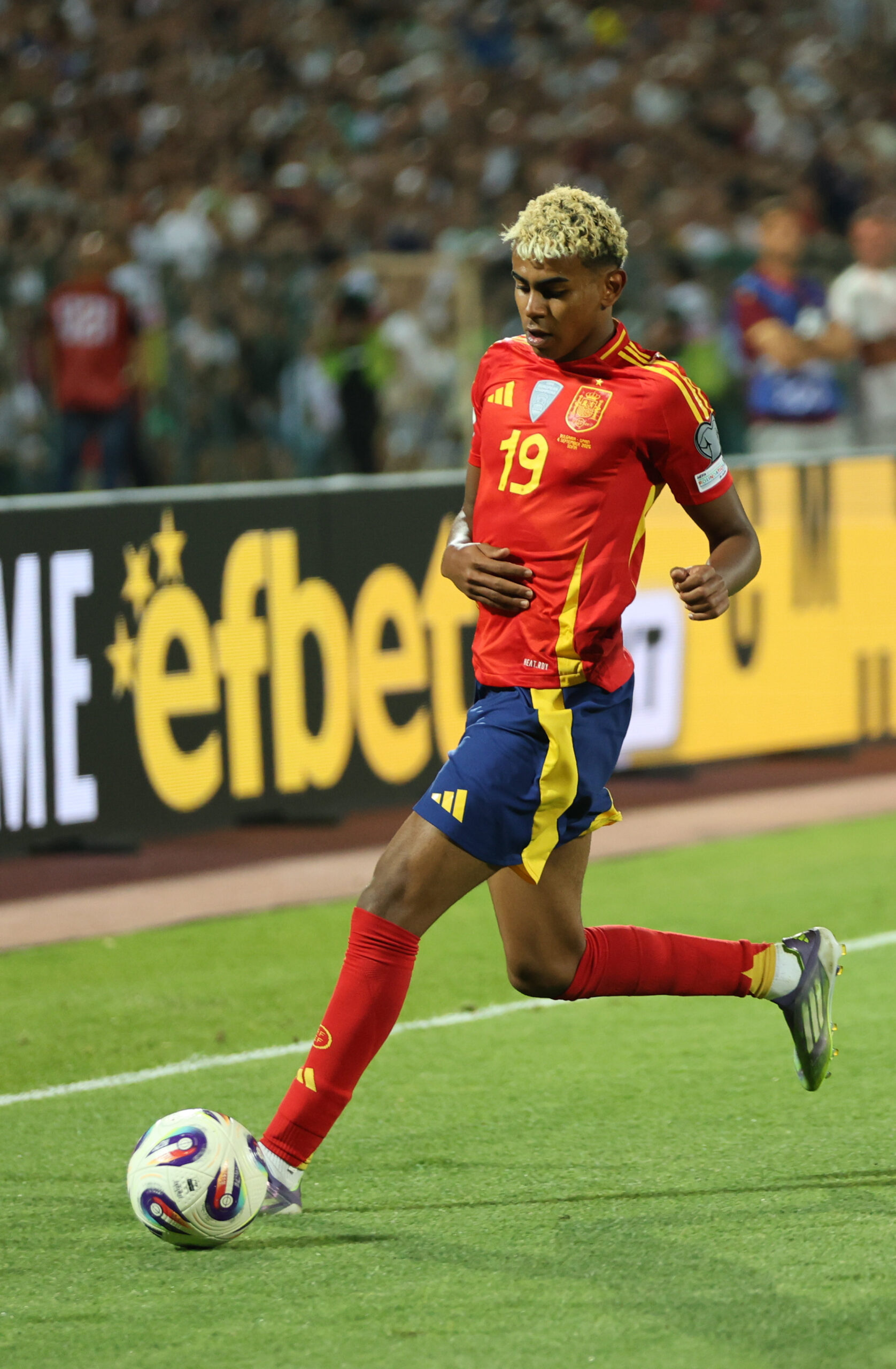
Photo: Biso / Wikimedia Commons / CC BY 4.0

An 18-year-old with this weight is rare. Pelé was 17 in 1958. Messi was 19 at his first World Cup in 2006. Yamal is already a European champion and the main man for his country.
The pressure isn’t just physical. It’s the global expectation that he’ll be the standout player of 2026. That’s a mental load that changes how you feel a twinge in your leg. The fear of re-injury can be as limiting as the injury itself.
His Instagram football stars status means every update is dissected. A video of him jogging sparks “HE’S BACK” headlines. It’s noise. The real work happens in the quiet gym sessions, the isolated strengthening, the slow rebuild of confidence. This athletic conditioning phase is more important than any tactical talk.
Can a teenager join the list of Argentinian football legends like Maradona and Messi by winning a World Cup? The path goes through his left hamstring first. Spain’s medical team will monitor his recovery nutrition and sleep data as closely as his training stats.
TL;DR: Yamal’s talent makes him indispensable, but Spain’s tournament strategy and his long-term career depend on a flawless, patient recovery—not a heroic rush.
Frequently Asked Questions
What exact injury does Lamine Yamal have?
He has a hamstring injury, specifically to the biceps femoris muscle in his left leg. Barcelona confirmed it as a strain, which medical reports suggest is likely a Grade 2 partial tear, occurring in mid-April.
Which World Cup games will Lamine Yamal miss?
He is expected to miss Spain’s World Cup opener against Cape Verde on June 15. He is also a major doubt for the second group game against Saudi Arabia on June 21. The earliest probable start is the final group match against Uruguay on June 26.
Is Lamine Yamal in Spain’s 2026 World Cup squad?
Yes. Head coach Luis de la Fuente included Yamal in his final 23-man squad for the tournament, signaling strong confidence that the winger will recover in time to contribute during the competition.
How long does a hamstring injury take to heal?
Grade 2 hamstring strain typically requires four to six weeks for a professional athlete to return to full training. Yamal’s injury timeline places his return in late May to early June, just before the World Cup begins.
Who will replace Lamine Yamal if he can’t play?
Coach De la Fuente has several options: shifting Nico Williams to the right wing, starting the more defensive Victor Muñoz, or changing the team’s formation entirely to a 3-5-2 to compensate for the lack of a specialist right-winger.
Could this injury affect his long-term career?
Yes, if mismanaged. Hamstring injuries have a high recurrence rate. Rushing back risks a more severe tear that could impact his explosive pace, the cornerstone of his game. Barcelona and Spain’s conservative approach is aimed at protecting his long-term future, which involves a typical retirement range two decades from now.
The Bottom Line
Lamine Yamal will be at the World Cup. He will likely play a crucial role in the knockout stages. But banking on him for the first 180 minutes of the tournament is a fantasy built on hope, not physiology.
Spain has the squad depth and tactical flexibility to advance without him. The smart money is on a cautious, phased return. Watch the training reports in early June. Listen for the word “discomfort.” That’s the real signal.
His World Cup achievements potential is immense, but it hinges on the next few weeks of silent, diligent rehab more than any moment of brilliance on the pitch. Spain knows it. He should too.

I come from the “soccer heart” of Germany, the Ruhrpott. I have played, trained and followed soccer all my life and am a big fan of FC Schalke 04. I also enjoy following international soccer extensively.