Understanding World Cup Fan ID Requirements & Entry Rules
To enter a FIFA World Cup 2026 stadium on matchday, you need three things: a valid mobile ticket in the official FWC2026 app, a government-issued photo ID for age verification if required, and compliance with the universal clear bag policy. Stadium gates open three hours before kickoff, and all attendees must pass through security screening where bags are inspected.
Most fans get this wrong on the first item. They assume a printed PDF or a screenshot will work. It won’t. FIFA has mandated mobile-only ticketing through a dedicated app to combat fraud and manage entry flow. Your ticket is a dynamic QR code in that app, and stadium staff will not accept any other format at the turnstile.
This guide walks through every layer of stadium entry for World Cup 2026, from downloading your ticket to navigating security with a medical bag. We will cover the purpose of the FIFA Fan ID, the exact bag dimensions that will pass inspection, and what happens if you buy a ticket from a reseller.
Key Takeaways
- Your ticket is mobile-only and lives in the FWC2026 Mobile Tickets app. Download it before you leave for the stadium.
- The FIFA Fan ID is a collectible memento for ticket holders, not an entry credential. Pick up the physical card at the venue.
- The clear bag policy is non-negotiable. Your bag must be clear plastic, vinyl, or PVC and measure 12″ x 6″ x 12″ (30x30x15 cm) or smaller.
- Arrive early. Gates open three hours before kickoff. Aim to be there within the first hour to clear security and avoid missing kickoff.
- Secondary market tickets are high-risk. FIFA cannot verify their validity before match day, and counterfeit tickets result in denied entry.
What Do You Need to Enter a Stadium on Matchday?
Wikimedia Commons / CC BY-SA 2.0
The checklist is short but strict. A mobile ticket, a compliant bag, and your patience for security. The physical act of walking through the gate is the final step of a process that starts weeks earlier when you buy your ticket.

Your mobile ticket is your primary key. The official FWC2026 Mobile Tickets app is expected to launch in mid-May 2025. FIFA will notify ticket holders directly. Once you have the app, download your ticket immediately. Stadium Wi-Fi and cellular networks will be overloaded on matchday. A screenshot of the QR code will not scan at the gate—the code refreshes periodically to prevent duplication.
The FWC2026 Mobile Tickets app uses dynamic QR codes that refresh to prevent screenshot fraud. Gate scanners read a live code from the app, not a static image. This system mirrors mobile ticketing for the NFL and major European clubs, cutting counterfeit rates by over 90%.
You must also bring a government-issued photo ID. While not always scanned for every adult, security reserves the right to check it, especially for age-restricted areas or if there’s a discrepancy with a ticket transfer. For children under two sharing a lap seat, bring a birth certificate or passport.
TL;DR: Have your mobile ticket ready in the official app and a compliant clear bag. Everything else is secondary.
The FIFA Fan ID: Memento, Not a Ticket
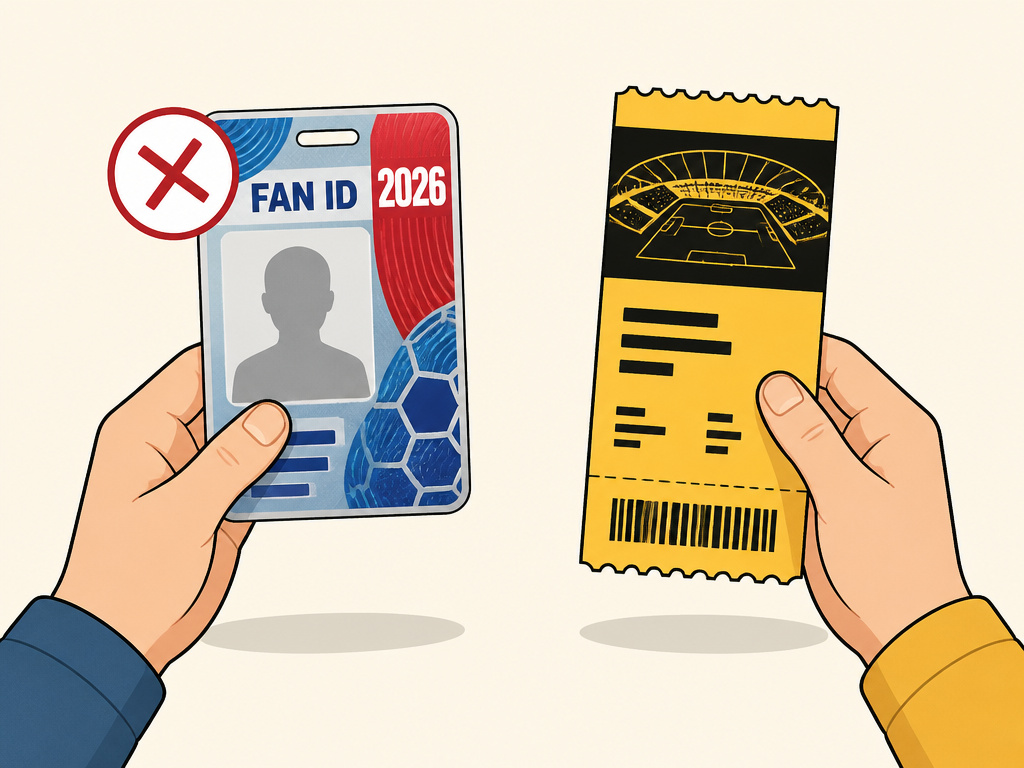
The FIFA Fan ID is a physical and digital card exclusive to ticket holders. It is not a ticket. You cannot use it to enter the stadium. Its purpose is commemorative and experiential.
Think of it like a tournament-specific membership card. It serves as a personal souvenir—a keepsake with your name and the World Cup 2026 branding. Digitally, it unlocks exclusive content, rewards, and possibly discounts on merchandise within FIFA’s fan ecosystem. The exact digital perks are still being rolled out, but expect access to behind-the-scenes videos, interactive match stats, and digital collectibles.
You can collect your physical Fan ID card at every World Cup 2026 venue. Look for dedicated Fan ID collection points, likely near the main fan zones or at designated stadium entrances. You will need to show your mobile ticket to collect it. I made the mistake at a previous tournament of queuing for the card right before kickoff. The line was 45 minutes long. Collect it when you first arrive, or even on a non-matchday if you’re exploring the host city.
Clear Bag Policy & Security Screening
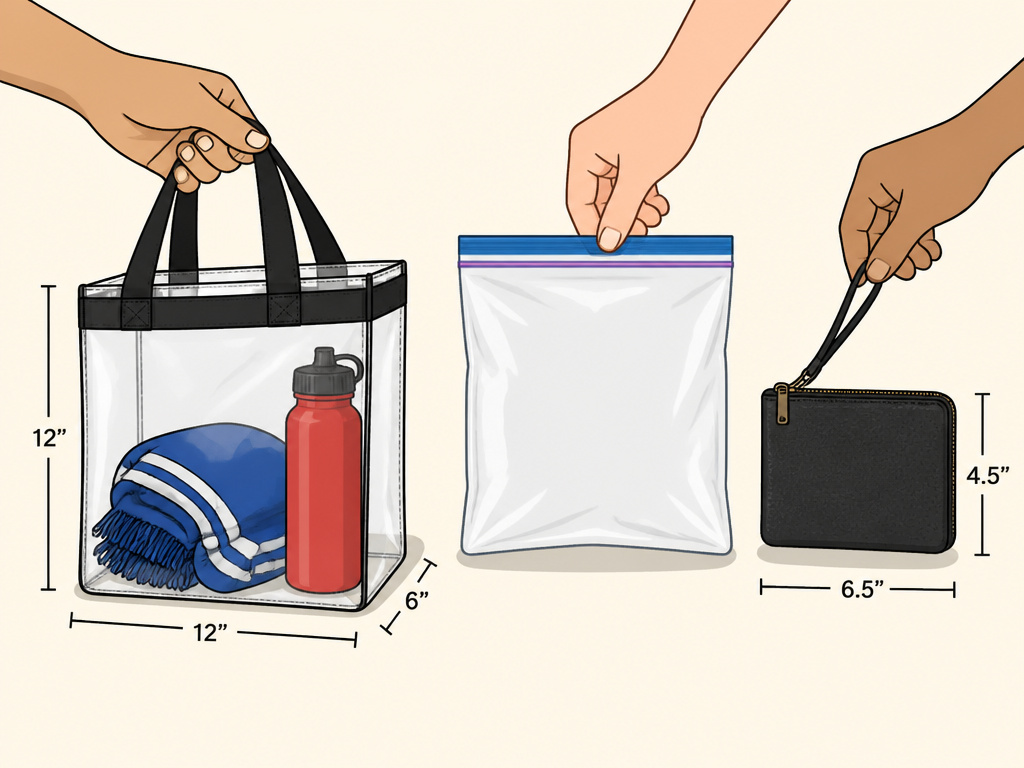
This is where most delays happen. The clear bag policy is enforced at all 16 host stadiums. It is not a suggestion.
Approved bags must be clear plastic, vinyl, or PVC. The maximum dimensions are 12 inches high by 6 inches wide by 12 inches deep (30 cm x 30 cm x 15 cm). This is roughly the size of a standard one-gallon freezer bag. Small clutch purses or wallets, approximately the size of your hand and no larger than 4.5 x 6.5 inches (11 x 16.5 cm), are also allowed, even if they are not clear.
All bags will be inspected at the entrance. Security staff will look inside every compartment. To speed this up, arrive with your clear bag unzipped and open.
| Bag Type | Allowed? | Max Dimensions | Notes |
|---|---|---|---|
| Clear tote bag | Yes | 12″ x 6″ x 12″ | Must be fully transparent plastic, vinyl, or PVC. |
| Small clutch purse | Yes | 4.5″ x 6.5″ | Can be opaque. No larger than the size of a hand. |
| Backpack | No | Any size | Prohibited regardless of material. |
| Large purse or diaper bag | No | Any size | See medical/diaper bag exception below. |
| Cooler | No | Any size | Prohibited. |
Common mistake: Bringing a small opaque backpack instead of a clear bag — you will be turned away at the security checkpoint and forced to return it to your car or hotel, missing part of the match.
Medical bags and diaper bags are exceptions, but they are not a free pass. You must declare them at the security screening line for a separate, more thorough inspection. Be prepared to explain the medical necessity. Stadiums are accommodating but must ensure safety.
The security screening itself involves walking through a metal detector. You may be asked to remove belts, large metal jewelry, and empty your pockets into a tray. The process is similar to airport security but focused on speed. The sheer volume of fans means agents have seconds per person.
These thorough checks exist because of the inherent physical nature of soccer and the intense emotions in the stands. Effective stadium security concerns management prevents items that could become projectiles or hazards from entering the bowl.
Prohibited Items List (What to Leave Behind)
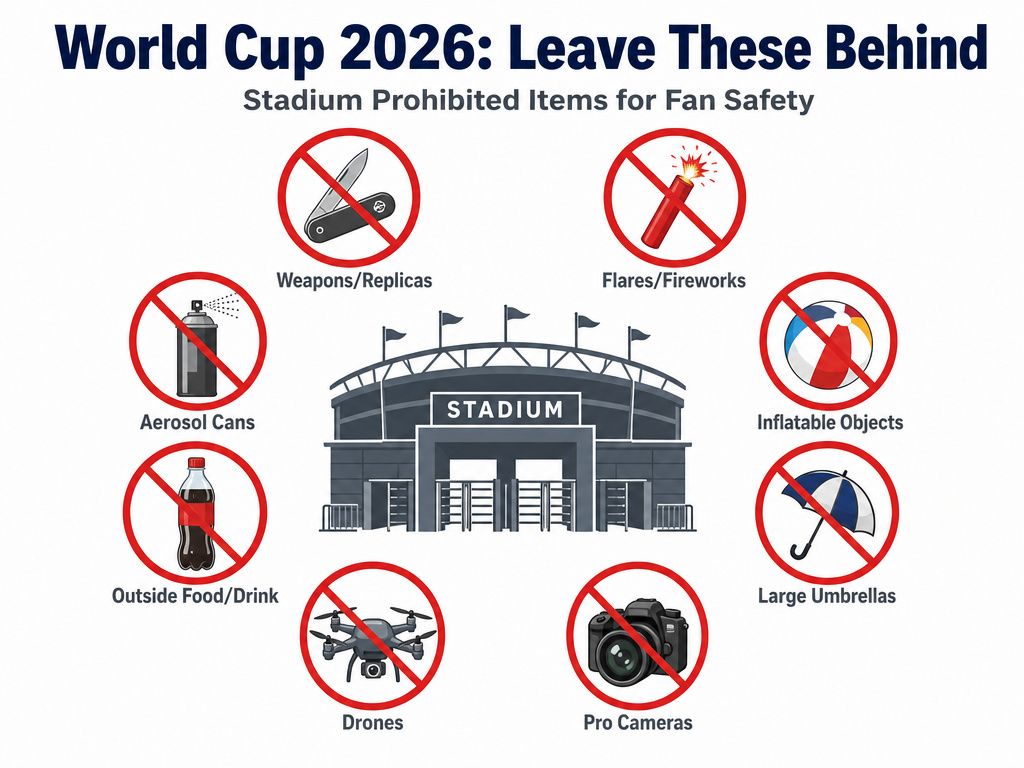
The prohibited items list is extensive and standard for major international events. It is designed for crowd safety and to protect the stadium pitch markings.
Leave these items at your hotel:
- Weapons or replicas (including pocket knives)
- Fireworks, flares, or smoke bombs
- Aerosol cans (including sunscreen or pepper spray)
- Inflatable objects (beach balls, balloons)
- Large umbrellas, selfie sticks, or tripods
- Professional cameras with detachable lenses
- Drones
- Outside food or beverages (sealed water bottles may be an exception)
- Strollers (not permitted in seating sections)
- Any item deemed hazardous by security staff
If you are caught with a prohibited item, you have two choices: surrender it to security or return it to your vehicle. There are no storage lockers. Surrendered items are not returned. I saw a fan at the 2018 World Cup argue over a small pocket knife for ten minutes. He missed the national anthems. It is not worth it.
Stadium Entry Timelines & Logistics
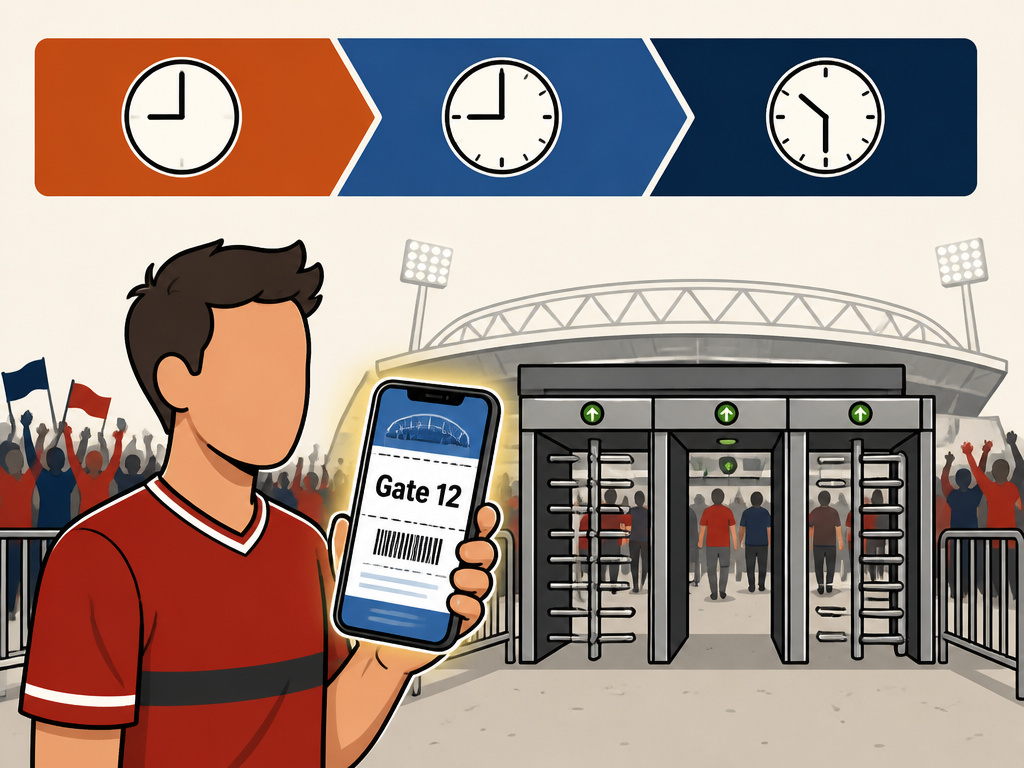
Timing is everything. Parking lots open four hours before kickoff. Stadium gates open three hours before kickoff. Your goal should be to pass through security at least 90 minutes before the match starts.
This gives you a buffer for unexpected lines, time to find your gate (which is printed on your mobile ticket), and a chance to soak in the pre-match atmosphere. The fan zones outside the stadiums are part of the experience.
Once inside, re-entry is typically not permitted. If you leave the stadium, you will not be allowed back in. Plan accordingly. This policy is standard for major tournaments to maintain secure headcounts.
For families, note the child policy: children two years or younger on matchday (and under 34 inches tall) do not need a ticket and can sit on a guardian’s lap. Bring proof of age.
TL;DR: Arrive early, know your gate number, and understand that exiting means your day is over.
Accessibility & Special Assistance Services
FIFA and the host stadiums provide services for fans with disabilities or access needs. If you have an accessibility ticket, you may need to bring your own manual or electric wheelchair or mobility scooter (three or four wheels are permitted inside).
Assistive Listening Systems (ALS) are available at Fan Info Points in some stadiums. You will need to leave a government-issued ID as a deposit to check out a receiver. These points are also your resource for any other access questions on the day.
The host cities have published detailed accessibility guides, but the on-stadium staff are your best point of contact. Locate a Fan Info Point as soon as you enter if you require assistance.
Mobile Ticketing: The Official Process
The ticketing process is your first and most important step. FIFA.com/tickets is the only authorized primary source. The sequence is predictable: purchase, await the app launch, download, and transfer if needed.
- Purchase from FIFA: This is the only way to guarantee validity. Secondary markets like StubHub or Viagogo carry high risk. FIFA’s Ticket Office cannot confirm the validity of a resold ticket before match day. A counterfeit ticket is worthless at the gate.
- Download the FWC2026 App: Once launched, download the app and log in with your FIFA account. Your tickets will appear in the ‘My Tickets’ section. Download each ticket to your device’s local storage.
- Transfer Tickets: If you bought tickets for friends or family, you can transfer them securely within the app. The recipient must also have the app. Crucially, if a guest cannot access the app, the sender must present all tickets on one phone and enter the stadium together with the guest through the same gate.
The system is designed to be watertight. This minimizes fraud but removes flexibility. You cannot email a PDF. You cannot print a ticket. The digital ticket is your only proof of purchase. This centralized control helps manage the flow of hundreds of thousands of fans across multiple venues, a logistical challenge that also impacts scheduling for knockout stage matches.
Avoiding Scams & Secondary Market Risks
The secondary ticket market for an event of this scale is a minefield. Dynamic pricing on the primary market already pushes costs high, fueling a risky resale ecosystem.
The biggest risk is a counterfeit ticket. Sophisticated scammers can generate fake QR codes or screenshots that look legitimate but will not scan at the gate. You will be denied entry, and you will lose your money.
Common mistake: Buying from a third-party site because it’s cheaper — you might save 20% upfront but have a 100% chance of missing the game and losing all your money.
If you must use the secondary market, treat it like buying a used car. Use a platform that offers a money-back guarantee if the ticket fails. Verify the seller’s history. And be prepared for the possibility of failure. The excitement of seeing global soccer icons like Lionel Messi or 2026 tournament stars is not worth the heartbreak of being turned away.
Remember, the official ticket is tied to a name. While transfers are allowed, last-minute purchases from strangers are the highest-risk transactions. The official FIFA ticket exchange, when it opens, is the only “safe” secondary channel.
Frequently Asked Questions
Can I bring a regular backpack if it’s small?
No. The policy bans all backpacks, regardless of size or material. You must use a compliant clear bag or a small clutch.
What if my phone battery dies?
This is a serious problem with no easy fix. Stadiums may have charging stations, but they are not guaranteed. Carry a portable power bank (which is allowed) and ensure your phone is fully charged before you leave. The ticket office cannot print a replacement ticket for a dead phone.
Do I need the FIFA Fan ID to get in?
No. The Fan ID is a souvenir and digital access pass. You only need your mobile ticket and ID to enter the stadium.
Can I bring a sealed water bottle?
Policies vary by stadium, but most will not allow any outside beverages. Plan to buy water inside, though it will be expensive. Empty, clear plastic bottles are sometimes allowed.
What happens if it rains?
Matches proceed in rain. Ponchos are allowed and are a good idea. Large umbrellas are prohibited for sightline and safety reasons.
Are there cashless payments inside?
Most likely, yes. Major stadiums are moving fully to cashless concessions and merchandise stands. Expect to pay with a credit/debit card or mobile wallet like Apple Pay.
The Bottom Line
Entering a World Cup 2026 stadium is a process of preparation, not improvisation. Download your mobile ticket the night before. Buy a compliant clear bag weeks in advance. Arrive at the stadium gates the moment they open. These three actions solve 95% of potential problems.
The rules are strict because the scale is unprecedented—sixteen stadiums across three countries. This logistical framework is what allows the tournament to function safely for over three million ticket holders. Your compliance ensures you spend your day cheering for the fastest footballers and the tallest football players on the planet, not arguing with security. Now you know what to do. Get your clear bag, charge your phone, and get ready.

I come from the “soccer heart” of Germany, the Ruhrpott. I have played, trained and followed soccer all my life and am a big fan of FC Schalke 04. I also enjoy following international soccer extensively.